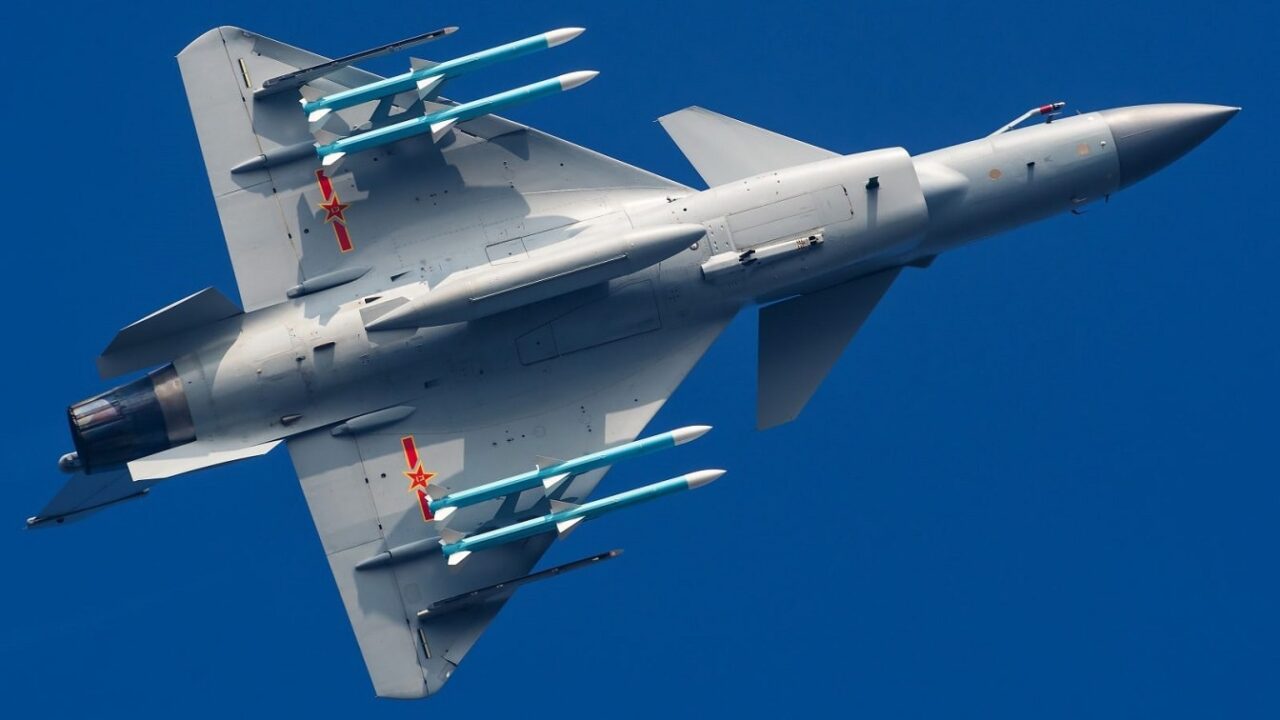
Summary and Key Points: A reported PLAAF training encounter featured a J-10C pilot achieving a simulated “shootdown” of a J-20 during head-to-head air combat maneuvering.
-The key wasn’t a miracle radar lock—it was dependent targeting.
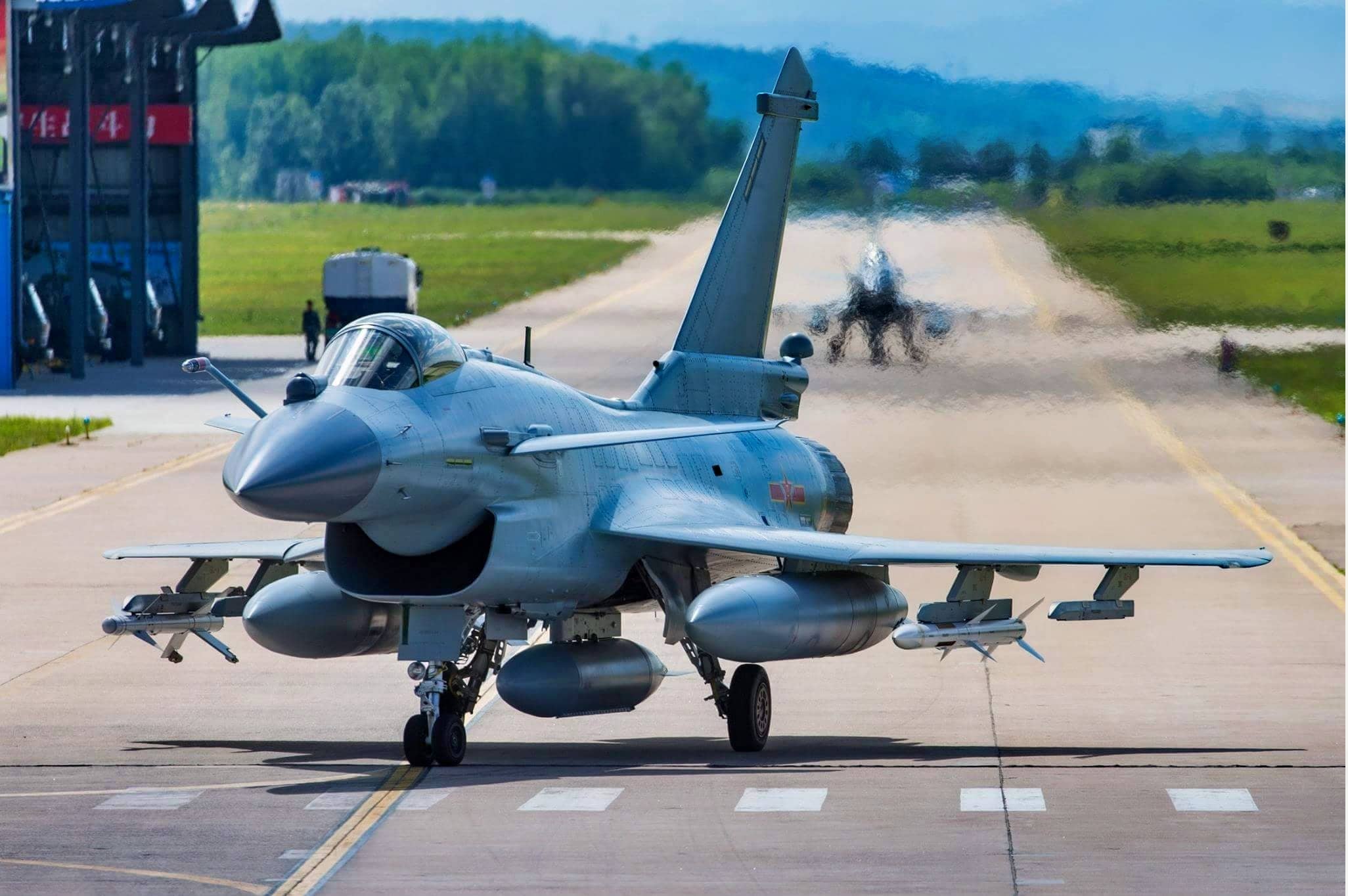
J-10C Fighter from China. Image Credit: Creative Commons.
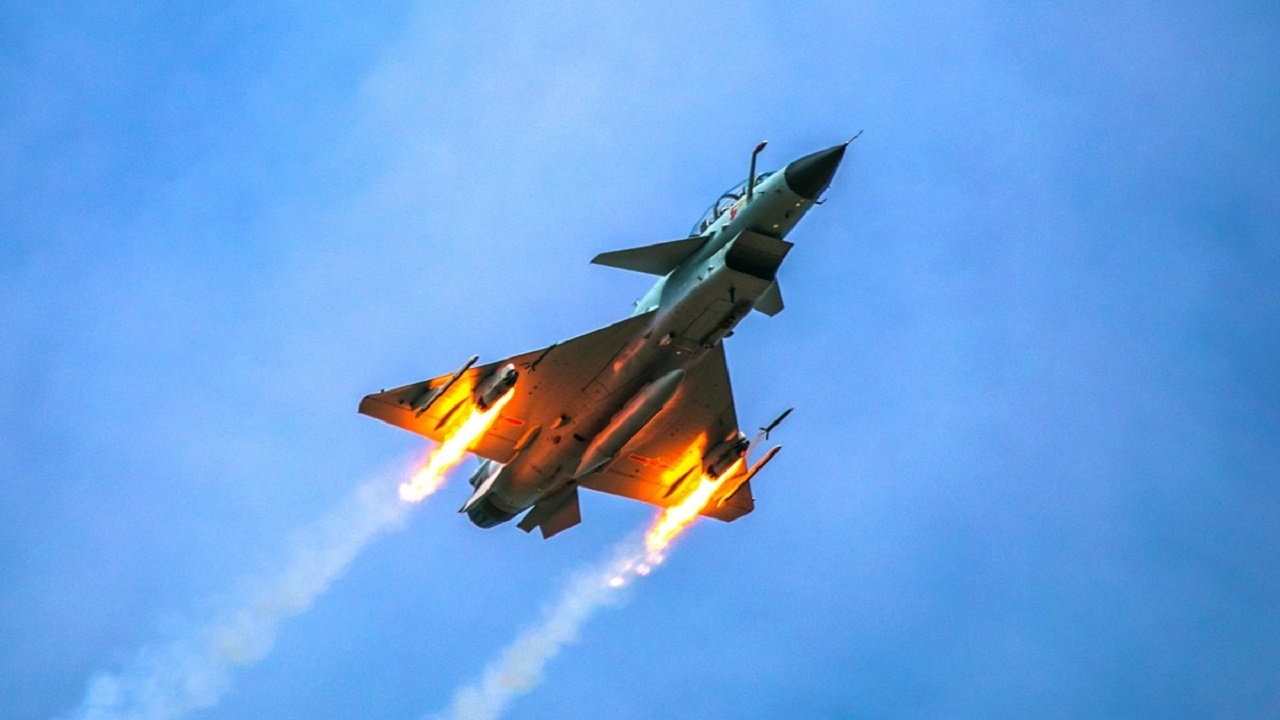
J-10 Fighter. Image Credit: Creative Commons.
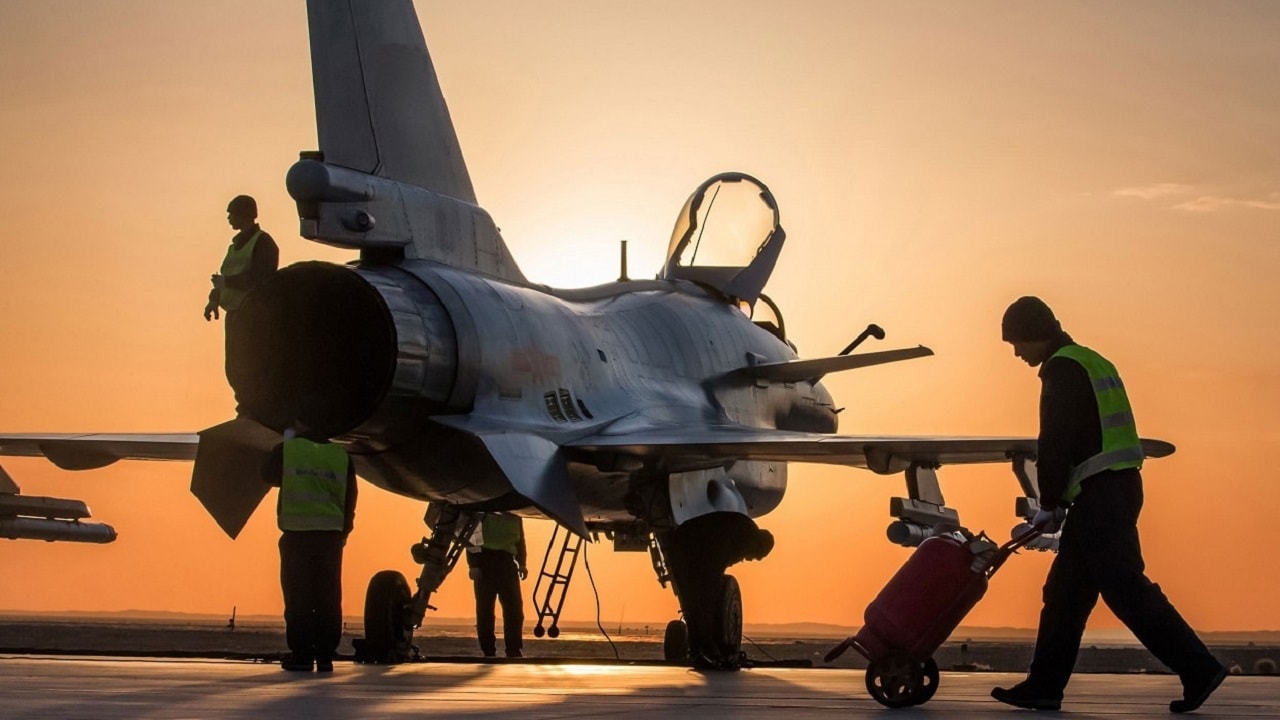
Chinese J-10 fighter. Image Credit: Creative Commons.
-After losing contact following a missile launch, the pilot requested off-board sensing support from other friendly units, then used datalinked updates to keep the engagement alive until the missile found its target.
-The takeaway is straightforward: stealth is hardest to beat when it stays at range, but once a fight compresses into close geometry, smaller jets can exploit agility—especially when a networked “system” helps solve the targeting problem.
J-10C “Downs” a J-20 in Training: The Off-Board Targeting Trick That Made It Possible
Late last year, an India-based news publication claimed that one of the most famous fighter aircraft ever built in the People’s Republic of China (PRC), the 5th-generation heavyweight twin-engine stealthy Chengdu J-20, was “downed” by one of the same company’s airframes, a 4th-generation middleweight J-10C single-engine fighter.
The incident was not an actual shoot-down but occurred during a war games drill that took place earlier in the year.
The J-20 was built to evade radar detection and launch ordnance at long distances. Therefore, it should have been challenging for the J-10C model to detect and develop a firing solution first.
The J-20 should have seen the older-generation jet well before it was visible on the J-10’s radar and been in a position for a first shot.
The India-based Eurasian Times story was secondary reporting from Chinese media that had carried details of the exercise as soon as they became known.
The story was carried in the government-run English-language Global Times, which was in turn also referencing reporting from the PRC’s state-controlled China Central Television (CCTV) network.
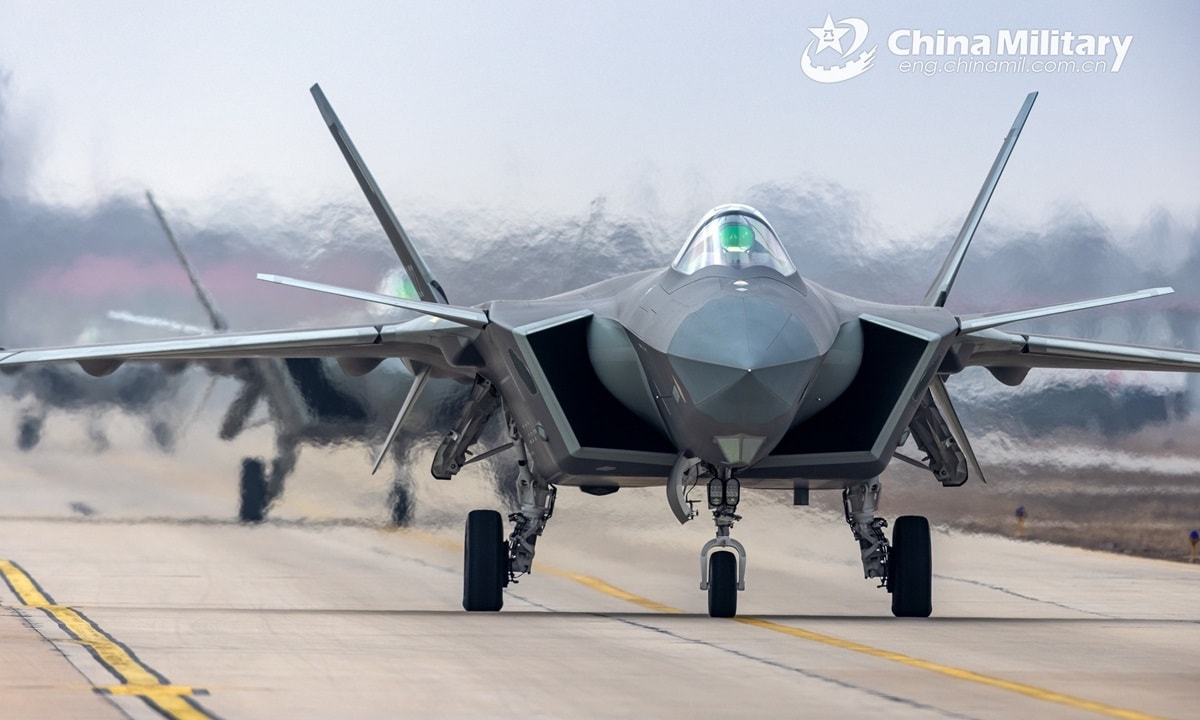
J-20 fighter. Image Credit: Chinese military.
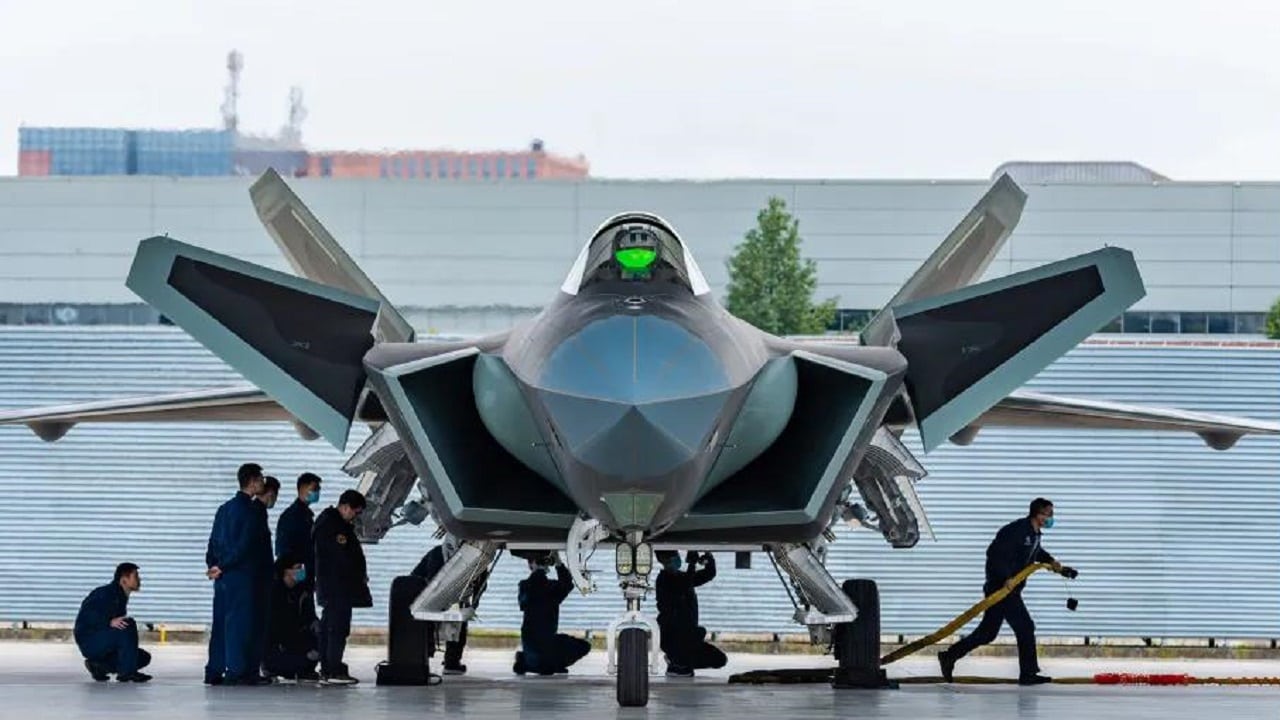
J-20. Image Credit: Chinese Internet.
The actual air combat maneuvering (ACM) training exercise was initially reported by the China Bugle, in an official media account from the PRC People’s Liberation Army’s (PLA) news media center on Thursday, July 31.
The report was a “sneak preview” of a documentary film on the J-10C and its pilot that was scheduled to be aired on Friday, August 1.
Dependent Targeting Takes Down J-20 Fighter
The J-10 “shot down” took place against the J-20 when the two aircraft went into a head-to-head engagement against one another.
The smaller, but one-generation-older, aircraft “won” the face-off between the two, despite the larger aeroplane being the stealthier platform.
This report appeared in the China Bugle, detailing the air-to-air encounter.
The details of the training exercise were released in the Friday, August 1 documentary as planned.
The story on the military channel of CCTV reported details from the pilot of the J-10C on how he “shot down” the stealth aircraft. In the course of the broadcast, the channel reported the account from the pilot of the J-10C, relating his details of how he “won” against the more advanced J-20.
During the confrontational exercise—one that involved multiple types of aircraft currently operated by the PLAAF—the J-10C pilot Xiao Nan reportedly discovered that his aircraft could no longer detect the opposing target after he launched a missile.
He then requested that another friendly unit scan for any enemy aircraft, as he suspected the target he could not see might be a stealth platform.
The other possibility he considered at the time was that his radar was jammed by his opponent, according to the CCTV report.
The missile he launched eventually found its target, marking that first time that a J-10C had successfully “shot down” an opposing stealth aircraft in the class of the J-20.
Part of what made this intercept successful was that the pilot was able to utilize a variant on dependent targeting.
This maneuver involves using off-board sensors to provide information or detect changes in a target and then transmitting this information to the shooter via datalink.
Don’t Get Inside the Callbox
This is the first time his unit had achieved combat results against a higher-generation warplane during an exercise, Xiao was quoted as saying in the CCTV report. He emphasized that without the support of the “system,” other aircraft, and the sensors he utilized, there would be no chance to defeat a stealth aircraft.
But by utilizing the off-board system support, the J-10C is still “in its prime” and up to the task of taking on more advanced fighters.
Western pilots who read the accounts and spoke to me also pointed out that in a nose-to-nose encounter, the smaller aircraft is always going to have an initial advantage in maneuverability “if the the larger stealthy aircraft is not able to take him out BVR [beyond visual range].”
“The larger aeroplane cannot afford to get ‘stuck inside the callbox’ against a more nimble opponent,” said one former fighter pilot. “That puts the more advanced fighter – stealthy or not – at a disadvantage.”
About the Author: Reuben F. Johnson
Reuben F. Johnson has thirty-six years of experience analyzing and reporting on foreign weapons systems, defense technologies, and international arms export policy. Johnson is the Director of Research at the Casimir Pulaski Foundation. He is also a survivor of the Russian invasion of Ukraine in February 2022. He worked for years in the American defense industry as a foreign technology analyst and later as a consultant for the U.S. Department of Defense, the Departments of the Navy and Air Force, and the governments of the United Kingdom and Australia. In 2022-2023, he won two awards in a row for his defense reporting. He holds a bachelor’s degree from DePauw University and a master’s degree from Miami University in Ohio, specializing in Soviet and Russian studies. He lives in Warsaw.