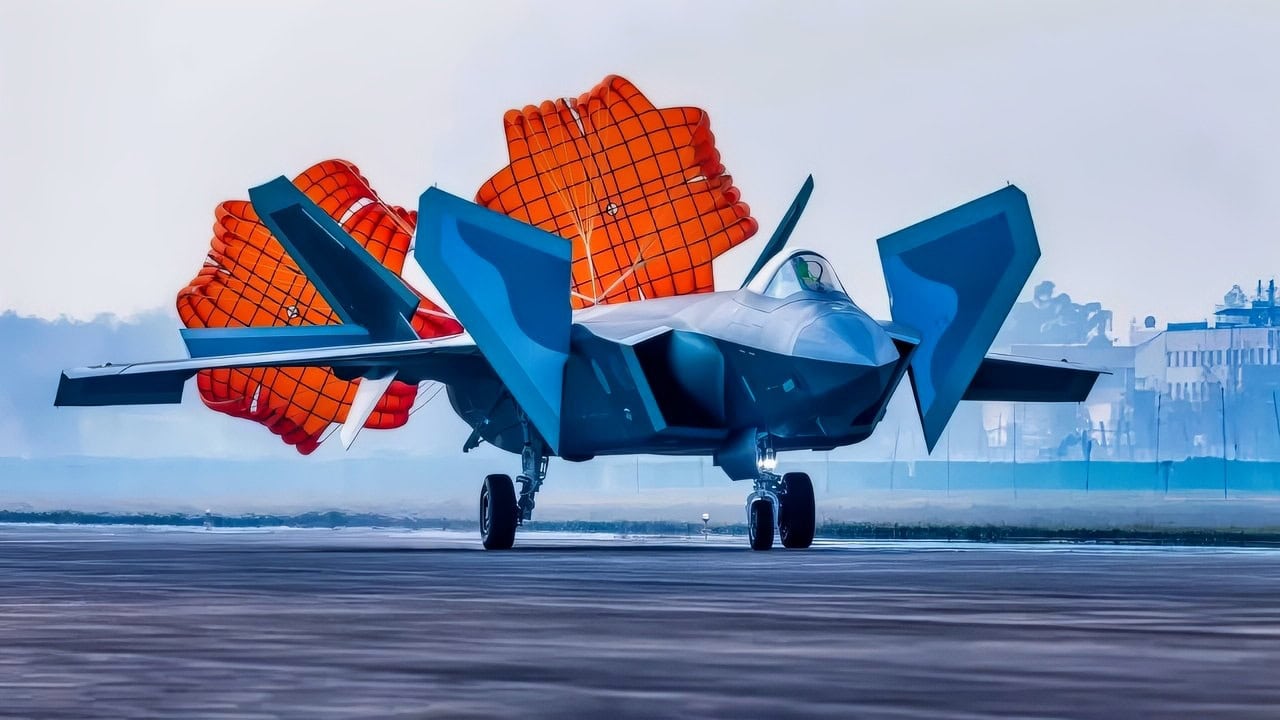
China’s J-20S Has One Job: Command Drones Like a Quarterback
Chinese military expert Zhang Xuefeng in a recent interview revealed a cornucopia of details about the Chengdu J-20 stealth fighter.
Speaking to China Central Television (CCTV) on the occasion of the 15th anniversary of the J-20’s first official flight in January 2011, Zhang discussed the plans for a comprehensive upgrade of the platform.
Chinese officials also released a new video of the flight from 15 years ago. But Zhang spoke about plans to design the J-20 to be capable of carrying out a new mission.
The plans involve the two-seat version of the aircraft, the J-20S. (The “S” added to a Chinese fighter-aircraft designator is commonly used to denote a second-cockpit model.)
The J-20S design makes this the world’s first twin-seat stealth fighter. It retains medium- and long-range air superiority mission capabilities, as well as being used for precision strike missions against ground and maritime targets. It demonstrates prominent situational awareness, electronic jamming, and tactical command-and-control capabilities.
The CCTV broadcast stated that the J-20S is also capable of acting as a forward tactical airborne command post. In this role, the aircraft directs a group of other platforms and plays a role similar to that of a quarterback.
The pilot is able to carry out mission objectives on his own but can also hand off specific missions to other platforms, Zhang explained. The rear-seat pilot or weapon system officer is there to handle some of the workload as well, controlling and coordinating with drones.
This separation of mission functions maximizes the effectiveness of the entire combat system, said Zhang. Reducing the load on the pilot makes the aircraft more than just a multirole fighter.
A Third Variant for J-20
The J-20S is officially the third version of the Chengdu fighter. Previous variants include the original J-20 that first flew in 2011, and the J-20A, which featured a new engine and new avionics.
The J-20A began production in July 2020, with its original Russian AL-31FN engine replaced by an advanced Chinese-designed WS-10C in late 2019. That aircraft was first seen at Air Show China 2021, at Zhuhai in Guangdong Province.
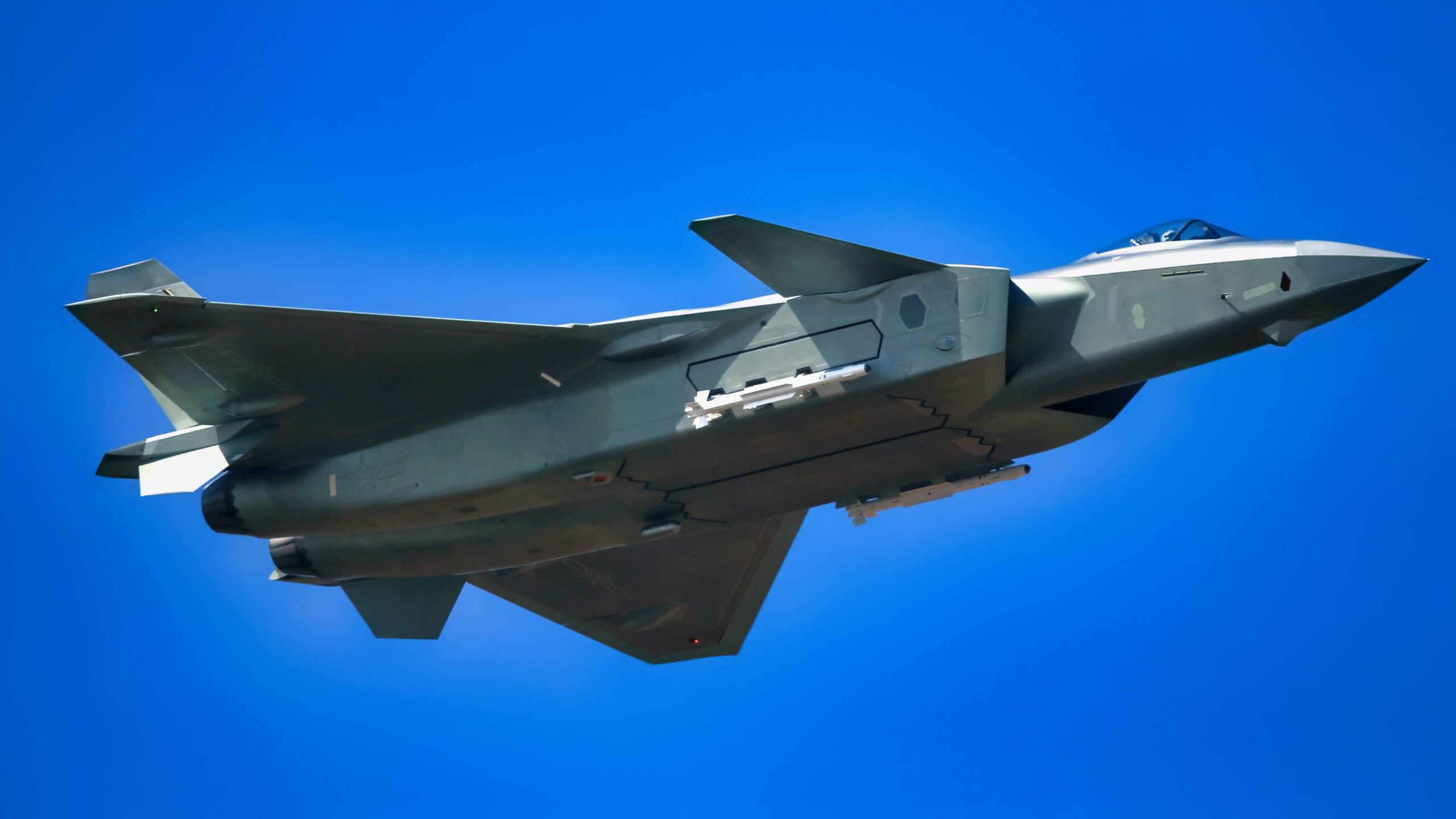
J-20 Fighter. Image Credit: Creative Commons.
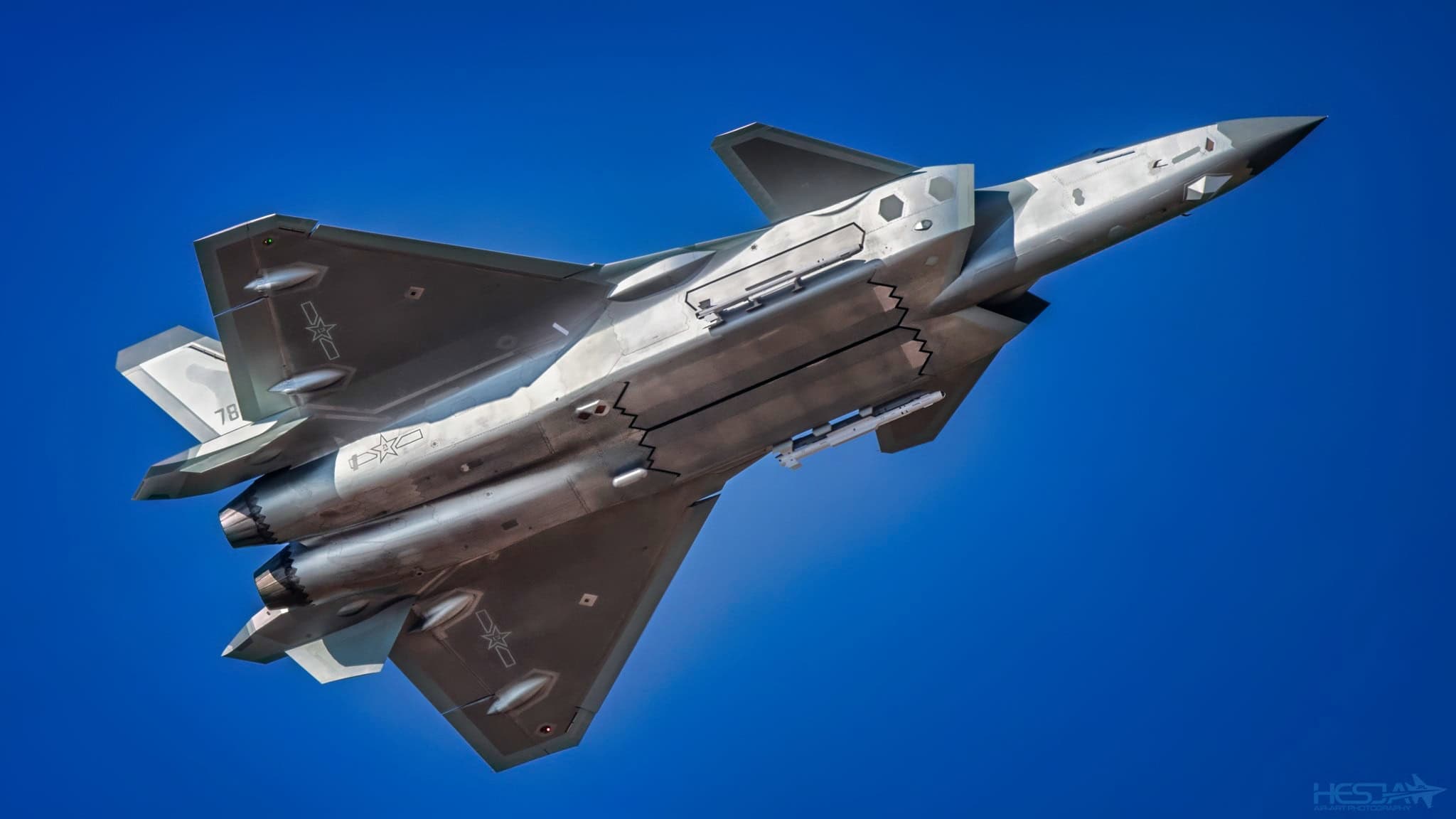
J-20 Fighter from China. Image Credit: Creative Commons.

J-20 Fighter. Image Credit: Chinese CCTV.
Based on a People’s Liberation Army Air Force (PLAAF) promotional recruitment video from January 2021, it appeared the J-20A variant flying with WS10C engines had already entered service with the 172nd Air Brigade at the Flight Test and Training Base at Cangzhou-Cangxian, in Hebei Province.
This base is part of the PLA’s Central Theater Command, but at the time it was not possible to discern how many of these upgraded aircraft had been transferred to the unit. That brigade was also the first to receive the initial J-20 versions in 2017. This unit is responsible for training instructors and developing a training program for any new aircraft achieving initial operating capability with the PLAAF.
Taking Over The JH-7A Mission: Aircraft Carrier Killer?
The J-20S is optimized for several mission profiles, but some are currently performed by the Xi’an JH-7A. This aircraft was first introduced into service in 1990 and has been a workhorse for both the PLAAF and PLA Navy for decades.
Having two seats like the JH-7A, and the range of the initial J-20 aircraft, permits the J-20S to not only attack targets on the sea surface, but also target strategically important facilities on land–all at extended ranges.
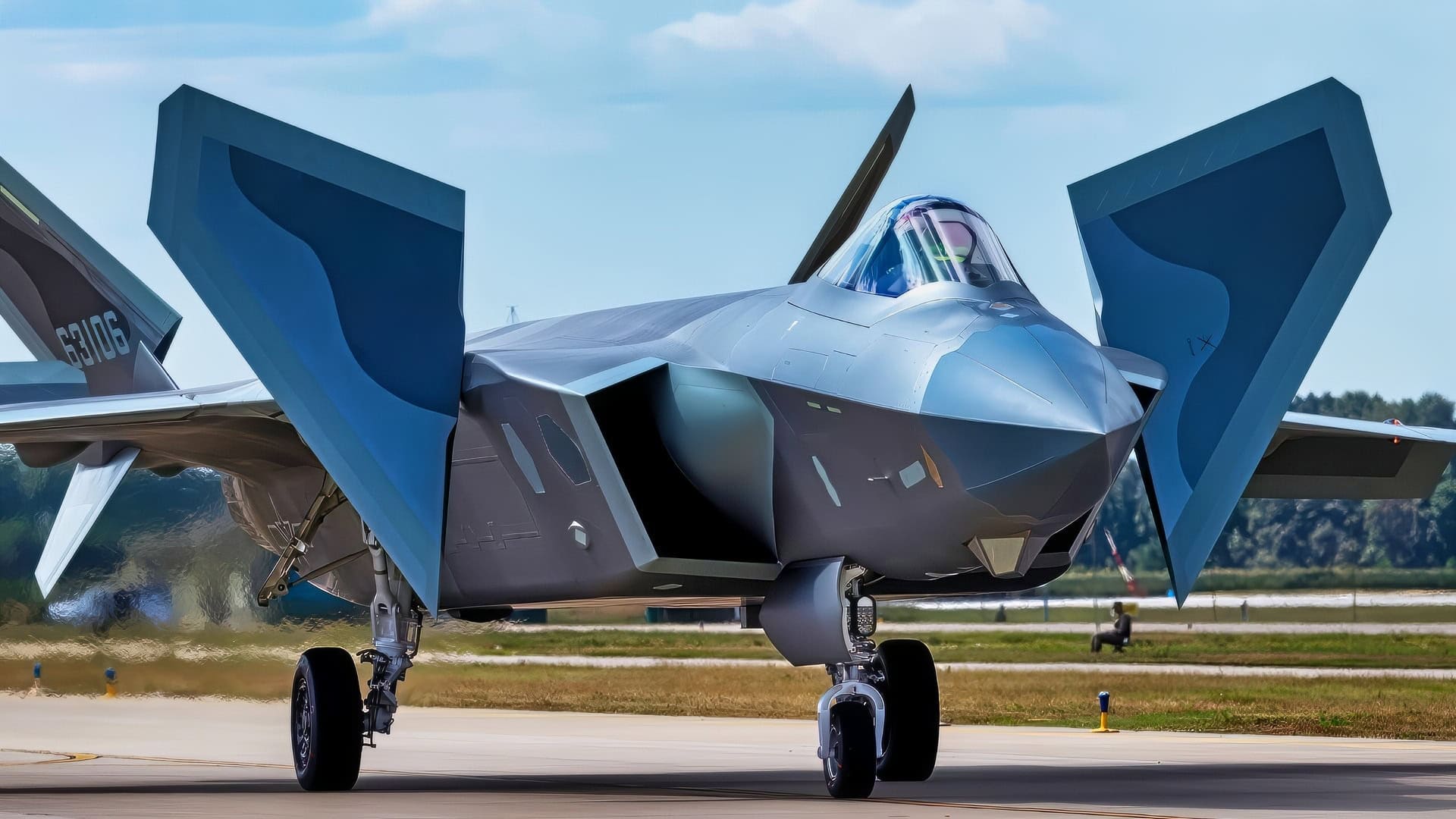
J-20 Fighter 2025 Photo. Image Credit: Creative Commons.
The J-20S’s maritime strike capability and its weapons load are unclear. But the aircraft is another first for China; adding the maritime strike mission makes it a multirole platform, which is not the norm for stealthy airframes of this type. That would mean the J-20S, could, for example, attack U.S. Navy aircraft carriers in a conflict.
For a long time now, Beijing has pursued the expansion and modernization of its aerial maritime-strike capabilities. This has led to the creation of new hypersonic missiles and modernized bombers that can be survivable in contested airspace. The addition of these new capabilities to the J-20S is anticipated in the next upgrade–making this aircraft the new PLAAF, and possibly PLAN, workhorse attack aircraft.
About the Author: Reuben F. Johnson
Reuben F. Johnson has thirty-six years of experience analyzing and reporting on foreign weapons systems, defense technologies, and international arms export policy. Johnson is the Director of Research at the Casimir Pulaski Foundation. He is also a survivor of the Russian invasion of Ukraine in February 2022. He worked for years in the American defense industry as a foreign technology analyst and later as a consultant for the U.S. Department of Defense, the Departments of the Navy and Air Force, and the governments of the United Kingdom and Australia. In 2022-2023, he won two awards in a row for his defense reporting. He holds a bachelor’s degree from DePauw University and a master’s degree from Miami University in Ohio, specializing in Soviet and Russian studies. He lives in Warsaw.