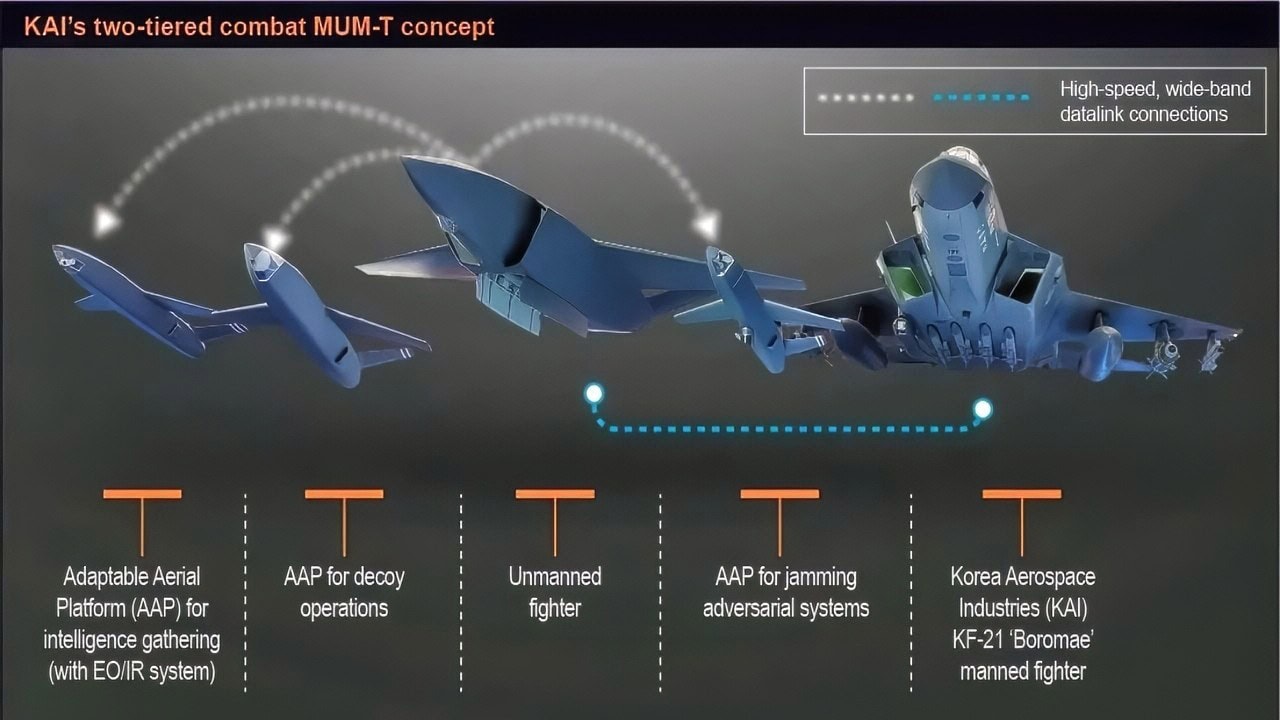
Key Points and Summary – South Korea is set to receive its first operational KF-21 Boramae fighters in 2026, marking a historic milestone in the nation’s aviation history.
-Produced by Korea Aerospace Industries (KAI), the 4.5-generation jet features one of the fastest development cycles in modern history and is designed to replace aging F-4 and F-5 fleets while reducing reliance on foreign suppliers.
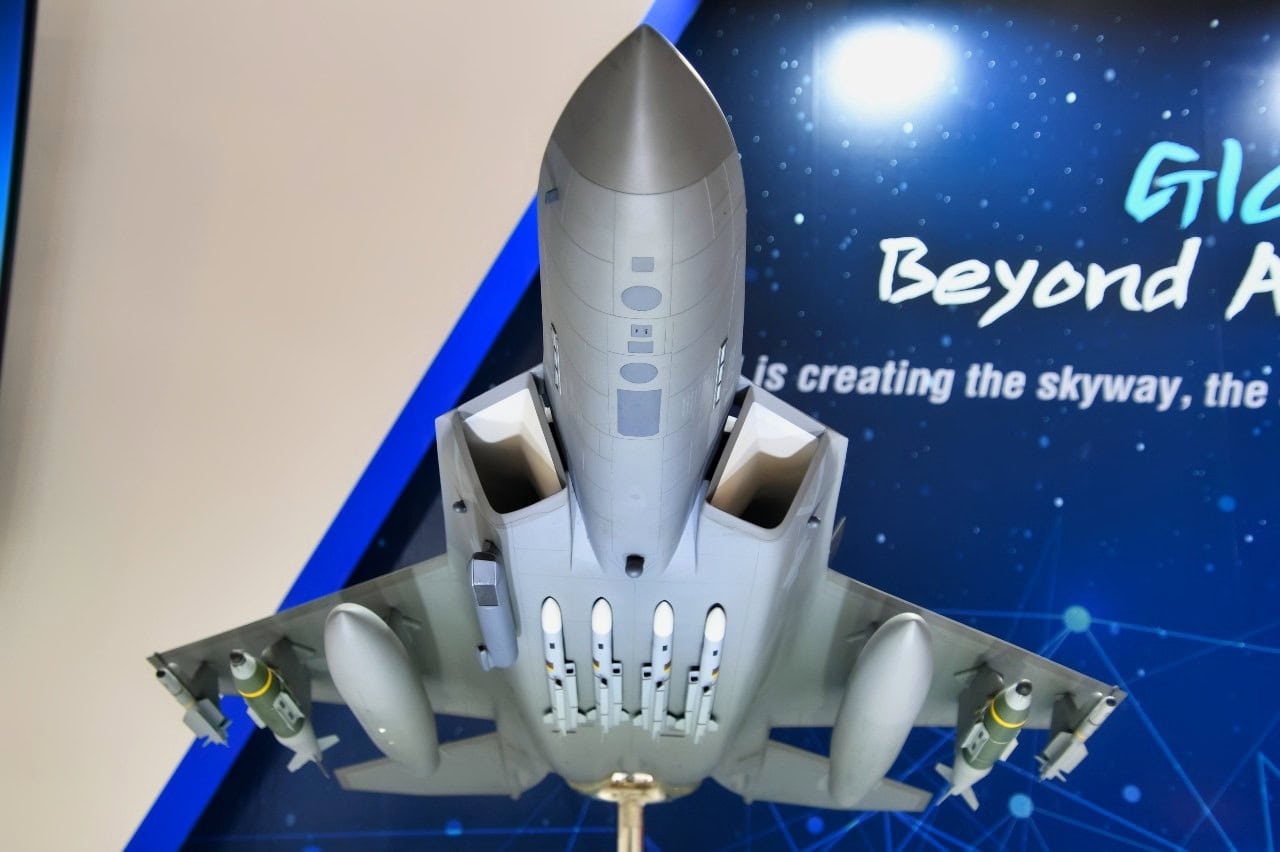
South Korea’s KF-21 Boramae is entering mass production, positioning KAI as a global defense leader. With Poland and other buyers interested, can it challenge the F-35 in export markets?
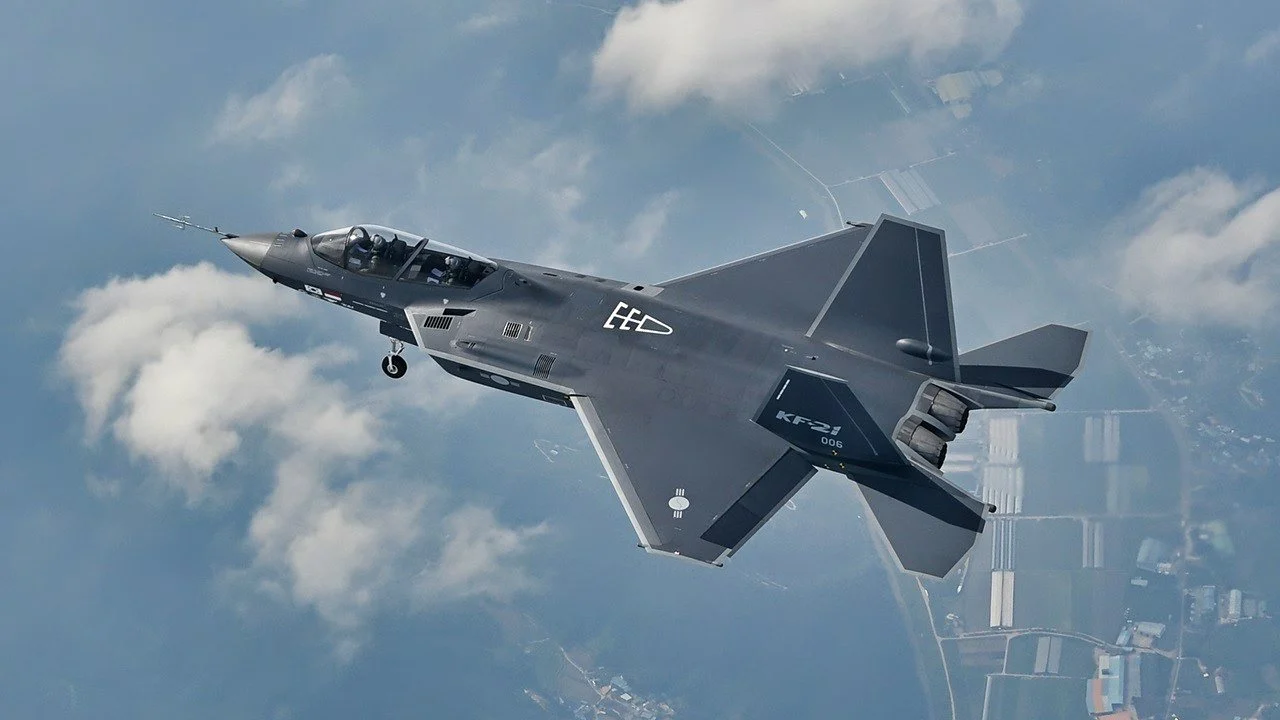
KF-21 Boramae. Image Credit: Creative Commons.
-Although currently powered by licensed General Electric F414 engines, the program showcases South Korea’s growing technological autonomy with domestic breakthroughs like Hanwha’s AESA radar and future plans for indigenous engines.
Fast-Tracked to the Frontlines: South Korea’s KF-21 Boramae Fighter Enters Service in 2026
The Republic of Korea Air Force (ROKAF) enjoys the distinction of overseeing the design and production of a fighter aircraft that has seen one of the most rapid front-to-back developmental cycles in modern combat aviation history. As of 2026, the force is scheduled to receive its initial operational KF-21 Boramae aircraft, the ROK’s first domestically developed supersonic fighter.
These 20 aircraft had begun production and assembly only two years ago. Their introduction into service with the ROKAF will, as ROK news services have reported, be a watershed moment establishing the country’s technological sovereignty. That sovereignty is demonstrated by the ability of its industry to develop a supersonic fighter aircraft and, following that, make the product available for export to other nations.
Although the prime contractor, Korea Aerospace Industries (KAI), initiated production of the first 20 Batch-I KF-21 aircraft in July 2024, the fighter’s development began more than 10 years ago. This seemingly rapid progress towards an upcoming delivery schedule was first reported by the Korea JoongAng Daily just last week.
The handover of this first initial batch of production aircraft will mark one of the most complex defense programmes South Korea has ever embarked on. When the KF-21 enters service with the ROKAF, which will officially mark the program’s transition from a developmental effort to a frontline fighter, it will be nothing short of a historical moment in the modernization of the ROK’s military aviation sector.
Many Objectives – One Aircraft
KAI was tasked with developing the KF-21 to fulfil a number of requirements within the armed forces. Additionally, the program has a larger mission to meet specific strategic ambitions.
One of the most important things was for the ROKAF to have a modern 4.5-generation aircraft that is a contemporary of the US F-35. The force needed this not-quite-5th-generation fighter to replace 1960-era platforms like the F-4 Phantom II and F-5 Tiger II. These aircraft were no longer survivable in a 21st-century combat environment.
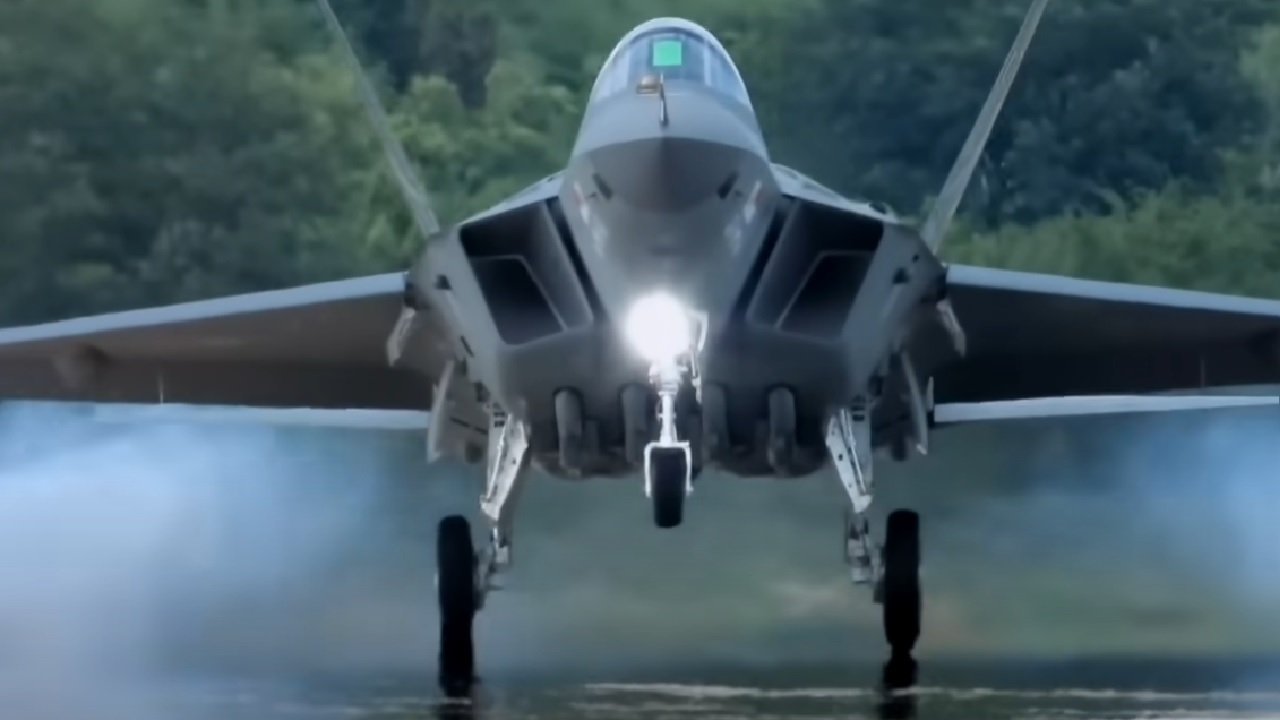
KF-21 screenshot from first flight. Image Credit: YouTube Screenshot.
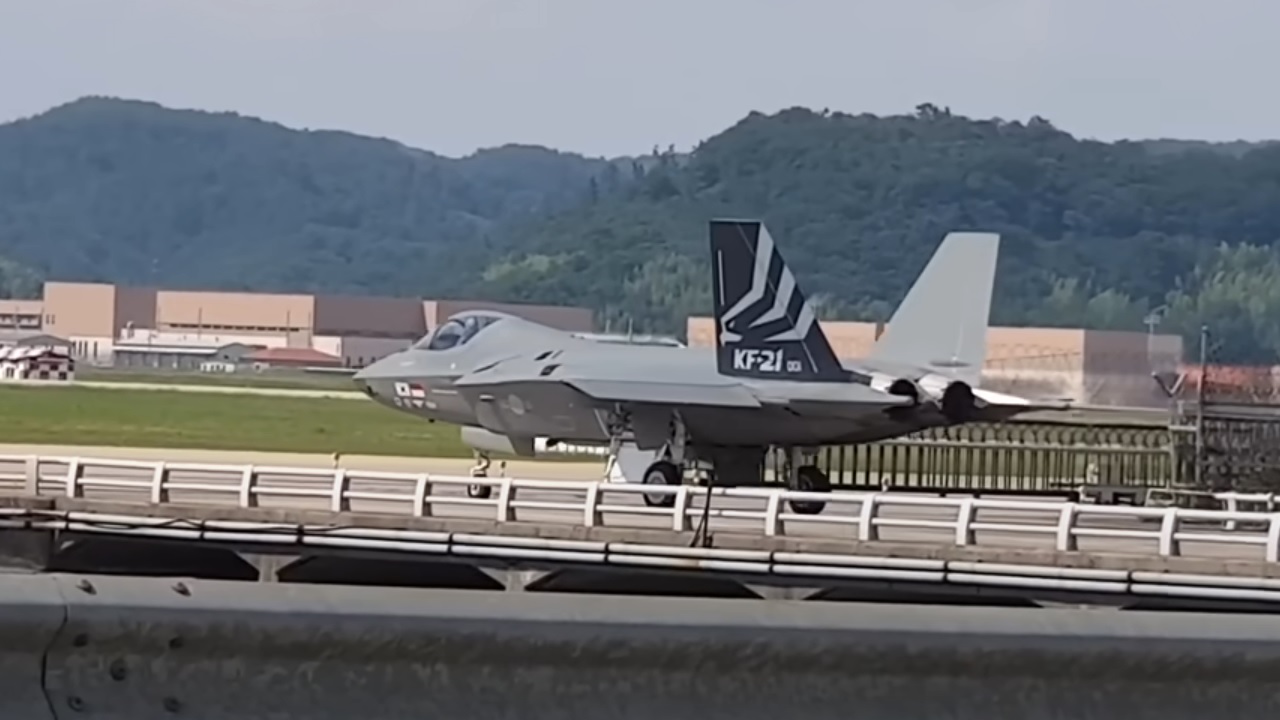
KF-21 fighter undergoing tests in South Korea. Image Credit: YouTube screenshot.
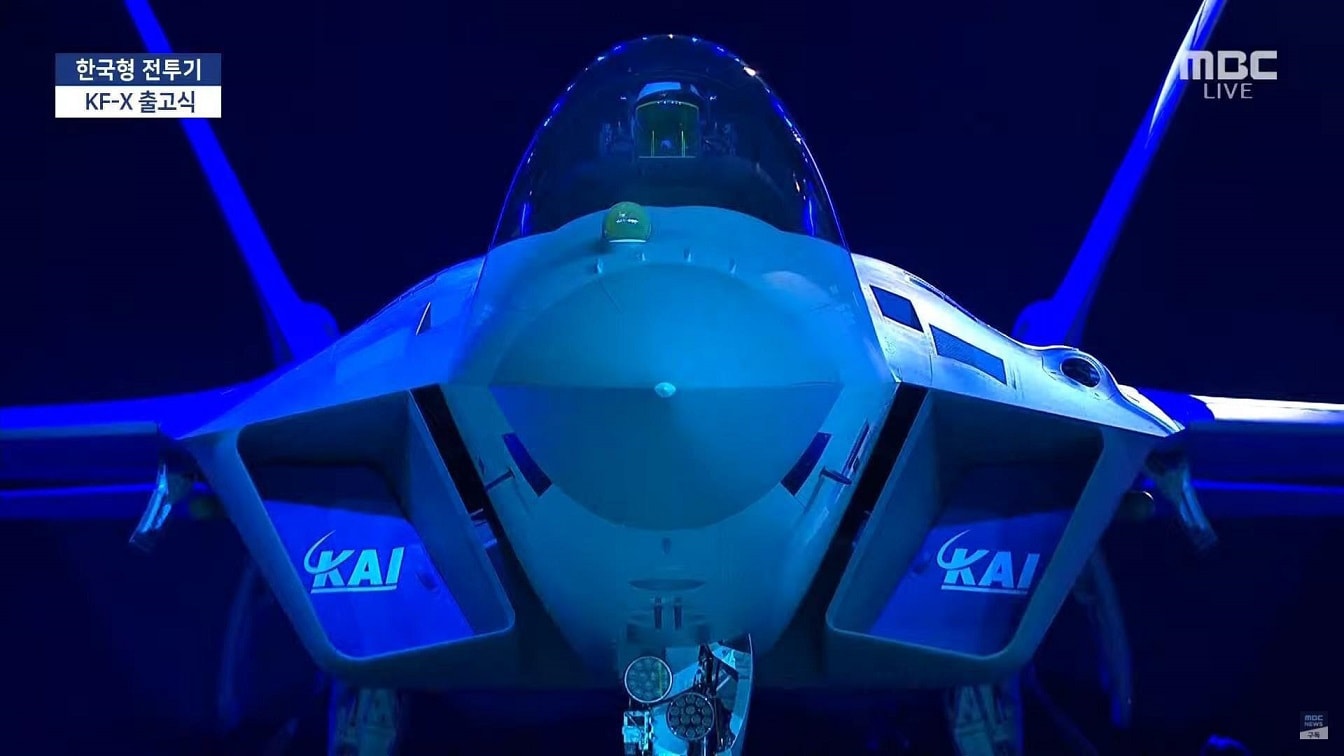
KF-21 Fighter. Image Credit: Screenshot.
Up until this time, the ROK had been procuring its fighter aircraft off-the-shelf from the US or, as was the case later with the F-16 procurements in the late 1980s, license-assembled on production lines in the ROK in the 1990s. So, a second ambition was a long-term plan by the ROK to reduce to the extent possible its reliance on foreign suppliers for its combat aircraft.
A third ambition that went hand in hand with this desire to reduce dependence on US-designed aircraft was to build up the ROK industry to the point where it could become as autonomous as possible in the production of its own combat aircraft. This was to begin with major ROK firms like KAI and Samsung producing aircraft like the F-16 in Korean factories, and then transition to building Korean-developed platforms. In the end, the goal was to make South Korea a member of the small number of nations capable of designing and producing advanced fighter jets.
Generations and Technologies
What the maturation of its own industry has permitted the ROK to do is develop a military strategy in which it can employ the most advanced US models in its inventory, like the F-35, and dedicate them largely to specialized missions. In parallel, Seoul could develop its own 4.5-gen aircraft for missions where the 5th-gen capabilities of the F-35 would be overkill.
Making the Boromae a 4.5-generation fighter creates a design in which some – but not all –stealth techniques are employed. For example, the KF-21 uses the concept of reducing an aircraft’s radar cross-section by shaping the fuselage into a blended body design. For now, it still does not use an internal weapons bay and carries its stores externally.
Its performance is enhanced by an advanced digital fly-by-wire flight control system and the use of two General Electric F414 engines—the same as the powerplant installed in the US Navy’s F/A-18E/F Super Hornet. Although this is an American engine, South Korea’s Hanwha has a contract to supply 40 F414s, to be built under license for the KF-21 program.
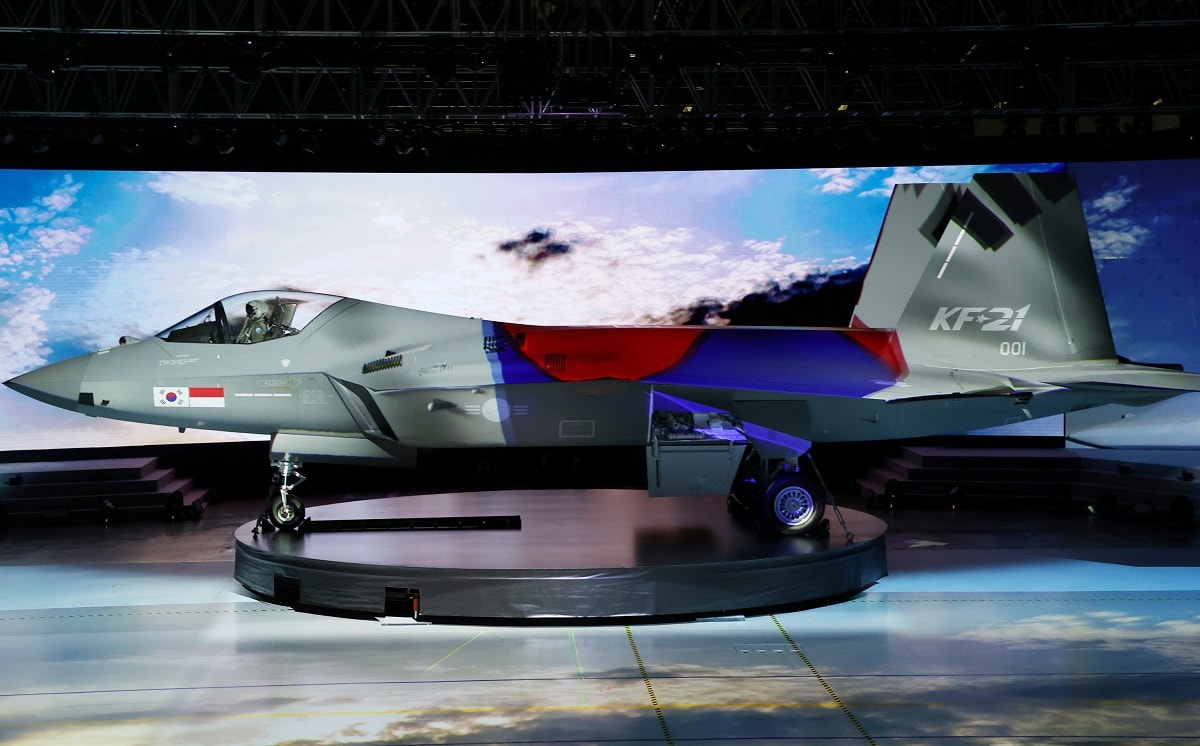
Image Credit: Media Handout.
At the same time, the company has announced its intention to develop its own engine design that will eventually replace the US model. Hanwha has also developed its own active electronically scanned array (AESA) radar system that will be installed on the KF-21.
As a recent profile in the program points out, “for South Korea, the significance of the KF-21 extends well beyond airframes and flight hours. The programme has forced the domestic industry to master complex systems integration, digital design, flight-test management, and sustainment planning at a level previously reserved for established aerospace powers.”
The Boramae is not just an example of South Korean engineering capability, but, more importantly, the industry’s ability to realize its ambition to earn a niche in the world’s increasingly active yet competitive global fighter market.
About the Author: Reuben F. Johnson
Reuben F. Johnson has thirty-six years of experience analyzing and reporting on foreign weapons systems, defense technologies, and international arms export policy. Johnson is the Director of Research at the Casimir Pulaski Foundation. He is also a survivor of the Russian invasion of Ukraine in February 2022. He worked for years in the American defense industry as a foreign technology analyst and later as a consultant for the U.S. Department of Defense, the Departments of the Navy and Air Force, and the governments of the United Kingdom and Australia. In 2022-2023, he won two awards in a row for his defense reporting. He holds a bachelor’s degree from DePauw University and a master’s degree from Miami University in Ohio, specializing in Soviet and Russian studies. He lives in Warsaw.