
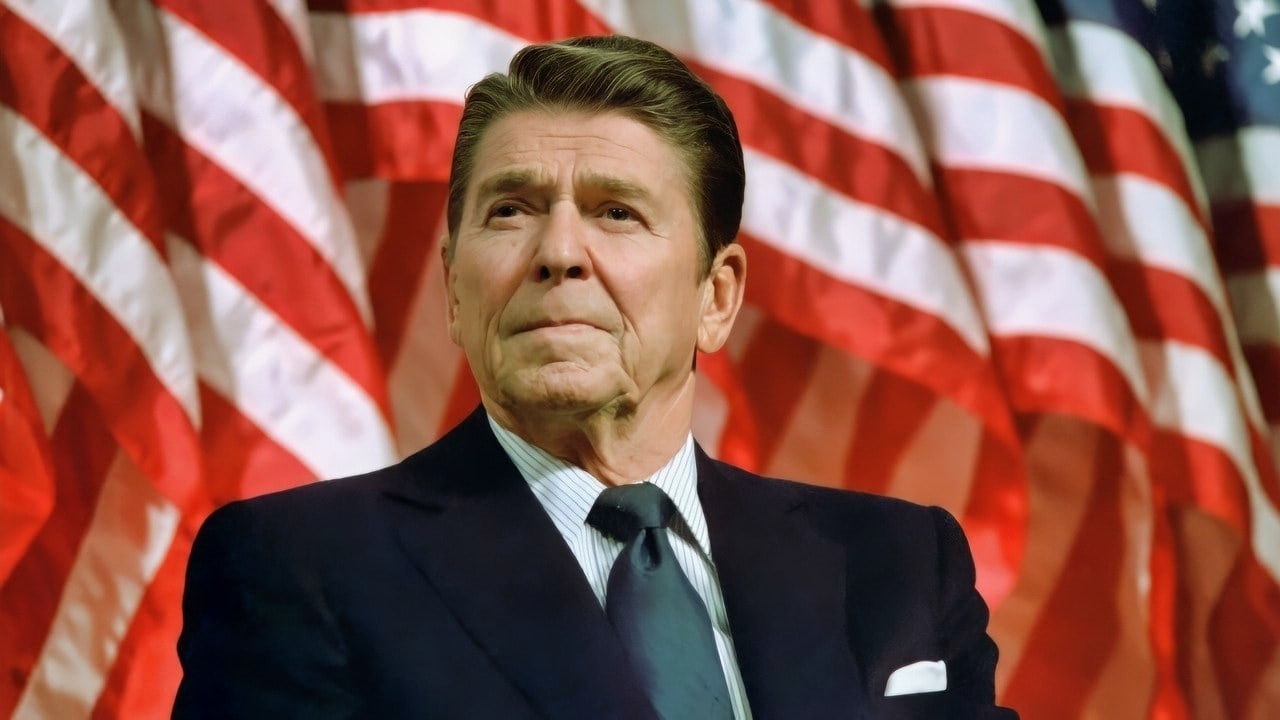
Summary and Key Points: At the 1985 Geneva Summit, President Ronald Reagan and Soviet Premier Mikhail Gorbachev issued a joint statement declaring that a nuclear war cannot be won and must never be fought — a declaration that helped pave the way for the START and INF treaties and defined the logic of nuclear deterrence for a generation.
-Reagan believed nuclear weapons existed only to prevent their own use, not to serve as instruments of conventional military pressure. That consensus held through the Cold War’s end. Vladimir Putin has spent the last decade systematically dismantling it, treating nuclear threats as a routine tool of coercive diplomacy in ways Reagan explicitly rejected.
Quote of the Day: Why A Nuclear War Would Be a Tragic Mistake
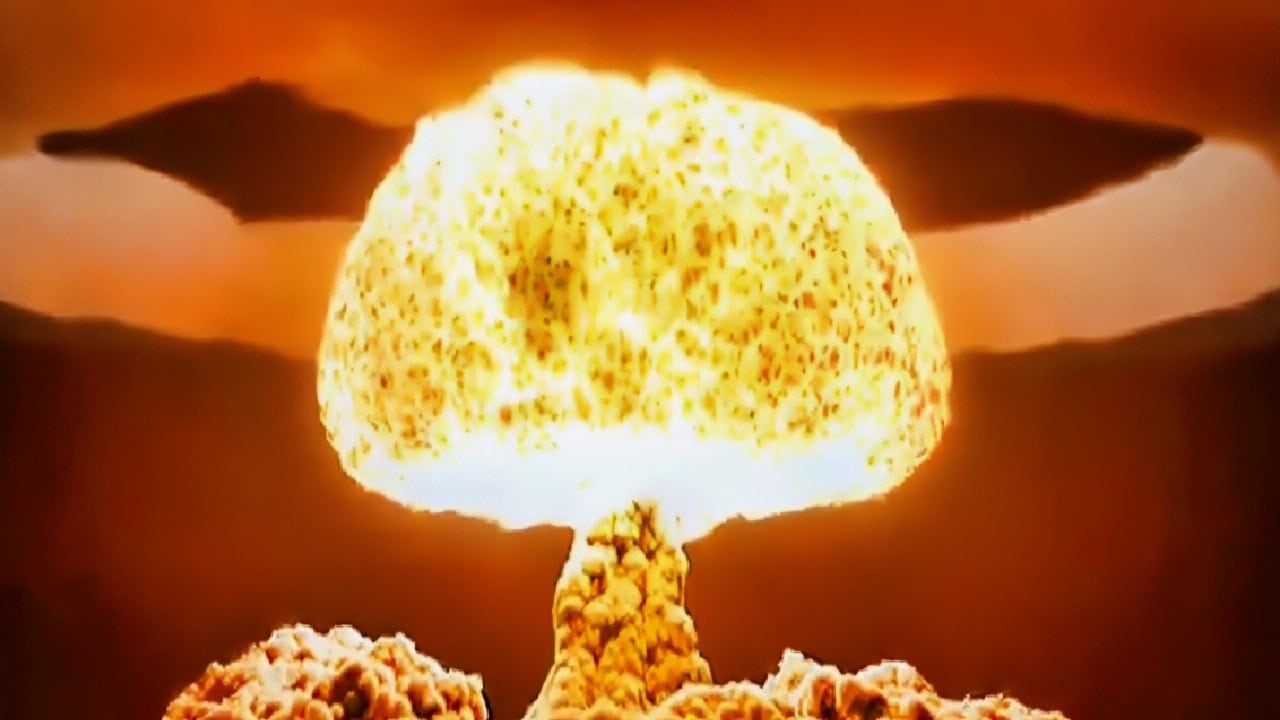
Nuclear Bomb Detonation. Image Credit: Creative Commons.
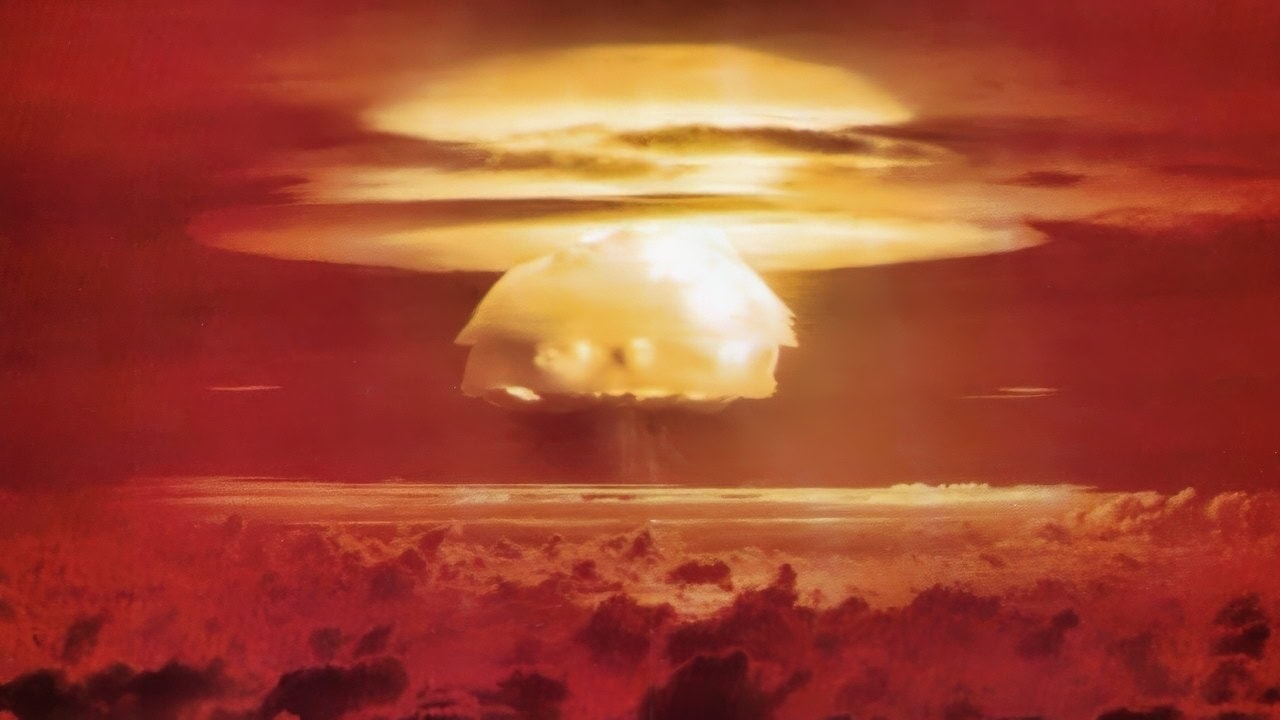
Nuclear Bomb Detonation. Image Credit: Creative Commons.
The quote, “A nuclear war cannot be won and must never be fought. The only value in our two nations possessing nuclear weapons is to make sure they will never be used,” was from a joint statement issued by President Reagan and Soviet Premier Mikhail Gorbachev at the 1985 Geneva Summit.
The two leaders issued this as part of a larger statement announcing that the countries had agreed to an ongoing dialogue process to reduce nuclear risks and promote nonproliferation and disarmament.
It paved the way for vital arms control treaties between the two countries, such as the Strategic Arms Reduction Treaty (START) and the Intermediate-range Nuclear Forces (INF) Treaty, and thus served as a valuable confidence-building measure that helped produce concrete actions with demonstrable results.
It also sends a clear and powerful message to the public about their governments’ intentions.
What Was The Meaning Behind Reagan’s Quote:
Reagan’s statement meant that nuclear weapons serve no purpose other than to deter an adversary from using their own, as a nuclear exchange would result in total destruction for all parties, making victory impossible.
He believed that shifting from a strategy of winning a nuclear war to using these weapons only to prevent a nuclear conflict was the only sane approach.
Reagan’s intent was to reduce the risks of nuclear catastrophe and work towards a world where nuclear weapons were eventually eliminated, aiming for safety and stability rather than military superiority.
His message was often delivered to show a firm dedication to peace and to stress that nuclear weapons should not be considered “usable” in a conventional military conflict, something the Russians under Putin continue to spin as a possible tactic and threat against the West.

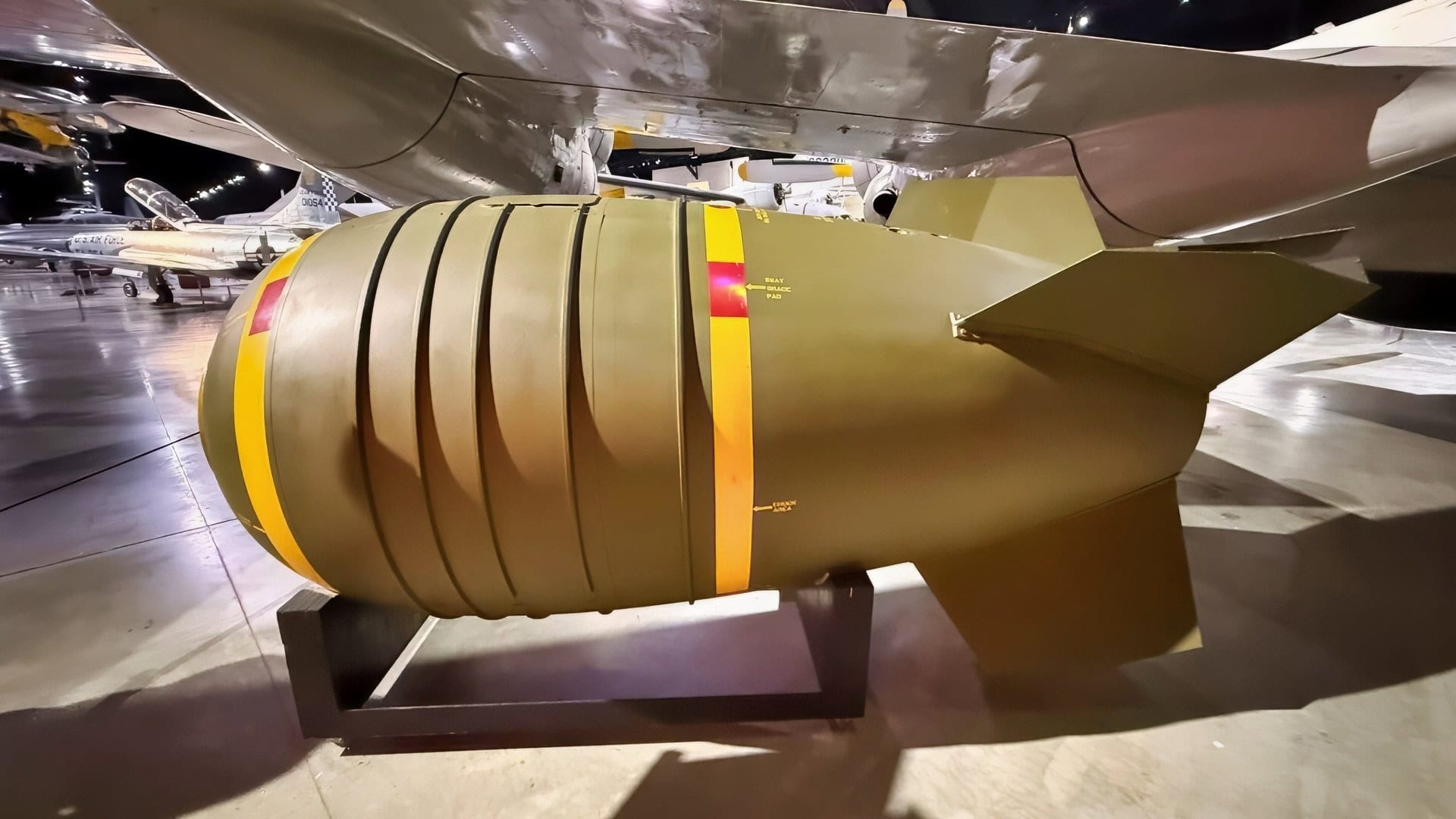
Fat Man Nuclear Bomb from National Museum of the U.S. Air Force. 19FortyFive.com Image.
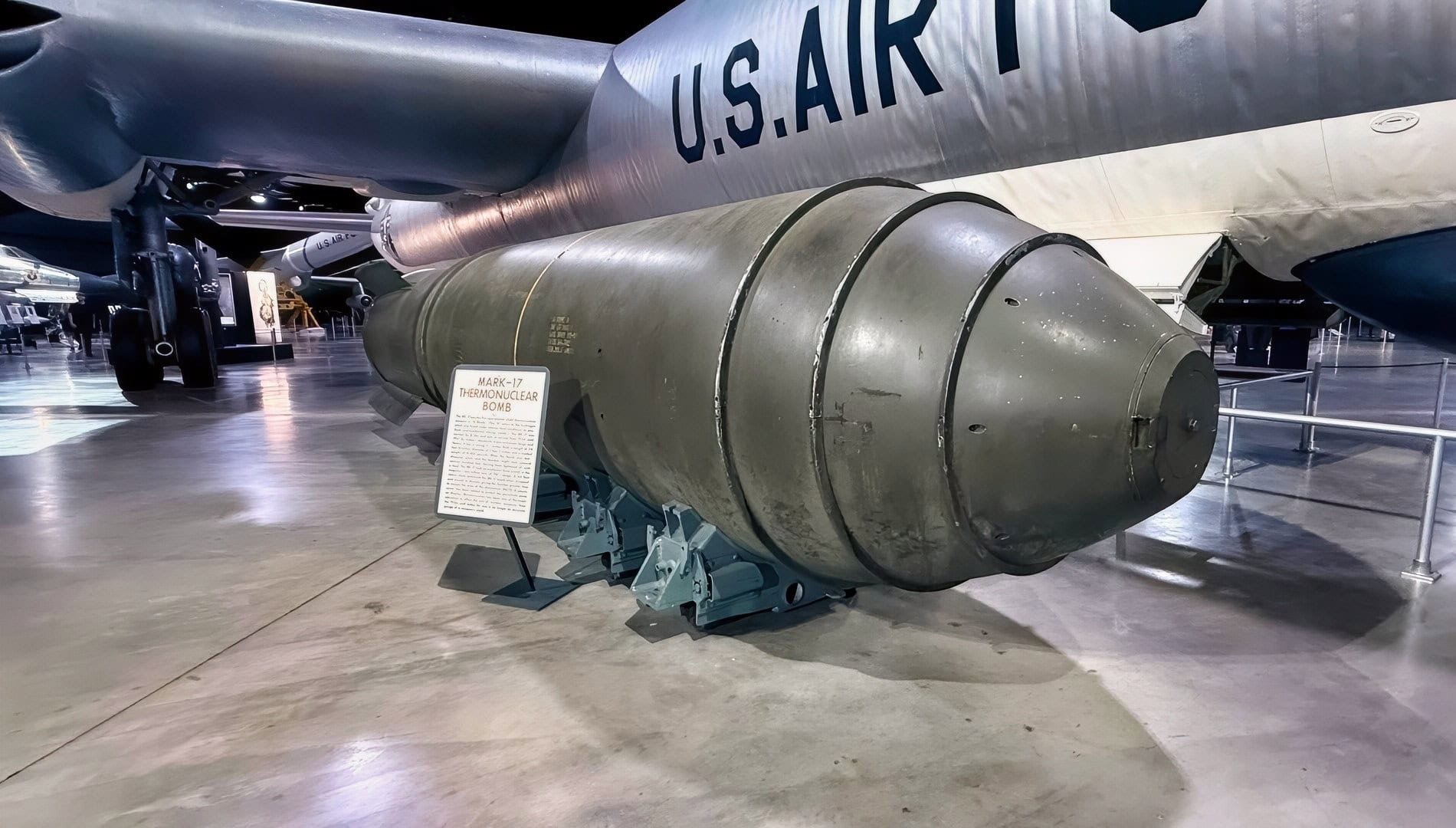
Mark-17 Nuclear Bomb 19FortyFive.com Image
Nuclear Bomber Image Taken at National Museum of the Air Force by 19FortyFive.com
Mutually Assured Destruction Only Stoked Fear:
In the aftermath of World War II, the United States and the Soviet Union built huge nuclear arsenals. And in doing so, the yield of the nuclear weapons increased several times over, as did the accuracy of the delivery systems.
The Doomsday Clock crept dangerously close to midnight during the Cuban Missile Crisis.
It was during this heightened escalation that the term “Mutually Assured Destruction” (MAD) first appeared. Each country assumed that the other had enough nuclear weaponry to destroy the other.
If one superpower attempted a first strike on the other, they themselves would also be destroyed. However, the MAD theory implied that both would be deterred from doing so.
The MAD scenario sparked fear in each superpower, as well as elsewhere in the world, believing that one misstep could trigger nuclear winter.
Ronald Reagan, the 40th President Of The United States:
Ronald Reagan was the 40th president of the United States, serving two terms, 1981–1989, as a Republican who transformed American politics with conservative “Reaganomics,” increased military spending, and adopted a hardline stance against Soviet communism, helping end the Cold War.
A former Hollywood actor and two-term governor of California (1967–1975), the “Great Communicator” survived an assassination attempt in 1981 by John Hinckley Jr., and oversaw a major economic boom, leaving office as a very popular figure.
Early Life And “The Gipper”:
Reagan was born on February 6, 1911, above a small general store in Tampico, Illinois, to Jack and Nelle Reagan. His father was a salesman, but also an alcoholic. Reagan later lamented the time he had to drag his passed-out father into the house from the snow.
Reagan graduated from his high school class as president of the class in Dixon, Illinois, in 1928, and played both football and basketball. He graduated from Eureka College with just a “C” average in 1932.
After college, he landed a job as a sports broadcaster in Davenport, Iowa, for $10 per game. He later did Big Ten football games and recreated Chicago Cubs broadcasts.
In 1937, while in California covering the Cubs’ spring training, he was spotted by Warner Brothers Studios and offered a movie contract. In a movie career that spanned from 1937 to 1957, he made over 50 films, but his best was probably “Knute Rockne, All-American,” in which he portrayed George Gipp, who delivered the now-famous “Win one for the Gipper” speech.
World War II Service:
Reagan was a member of the US Army Cavalry Reserve, but when the US entered World War II, his nearsightedness kept him out of combat.
He was assigned to the Army Air Corps First Motion Picture Unit. Reagan narrated training films for new recruits and appeared in several patriotic films aimed at aiding the war effort.
Some of these included, “Rear Gunner” (1943) made at the request of the Air Corps, which had a shortage of pilots and aerial gunners. Other movies included Mr. Gardenia Jones (1942), Jap Zero (1943), and For God and Country (1943).
He was married to actress Jane Wyman from 1940 to 1948, and then met and married Nancy Davis, whom he remained devoted to until his death many years later.
Reagan’s Early Democrat Politics And Head of SAG:
Reagan was raised as a staunch Democrat; both of his parents were strong FDR supporters. He was elected head of the Screen Actors Guild in 1947 and was very active in trying to eliminate the Communist influence in the film industry.
However, he was also wary and disagreed with the rising tide of the House of Representatives’ Committee on Un-American Activities, which in the late 1940s investigated Communist infiltration of Hollywood, which he thought went too far.
He switched from Democrat to Republican during the 1960 Presidential Election, making speeches for Richard Nixon, who lost a close election to JFK.
Governor of California:
He decided to run in 1966 and served as the 33rd Governor of California for two terms, from January 2, 1967, to January 6, 1975.
A Republican, he was elected in 1966 and re-elected in 1970, focusing on conservative policies such as welfare reform, increasing tax revenues to create a budget surplus, and taking a hard line on campus protests.
President of The United States:
In 1980, Reagan secured the Republican nomination and was running against incumbent Jimmy Carter, and implemented significant tax cuts, deregulation, and reduced domestic spending.
He routed Carter, carrying 44 states and 489 electoral votes to Carter’s six and 49 electoral votes.
In 1984, Reagan won an even bigger landslide victory over Democrat Walter Mondale, taking 49 states to Mondale’s one. The 1984 election was the last time a Republican candidate swept all of New England and the southern states.
Reagan Doctrine Wins The Cold War:
The Reagan Doctrine helped end the Cold War by providing overt and covert aid to anti-communist resistance movements to “roll back” Soviet influence in Africa, Asia, and Latin America.
His “Evil Empire” speech framed the Cold War as a moral struggle of good vs. evil. He was criticized for it, but it served as a turning point in the Cold War.
This strategy, combined with intense military spending and economic pressure, forced the Soviet Union into costly proxy wars, contributing to its economic collapse, which eventually led to the dissolution of the Soviet Union.
Reagan’s strategy placed an enormous strain on the Soviets’ already strained economy, which they could no longer compete with the US.
President Reagan died on June 5, 2004, and was buried in California.
About the Author: Steve Balestrieri
Steve Balestrieri is a National Security Columnist. He served as a US Army Special Forces NCO and Warrant Officer. In addition to writing on defense, he covers the NFL for PatsFans.com and is a member of the Pro Football Writers of America (PFWA). His work was regularly featured in many military publications.