
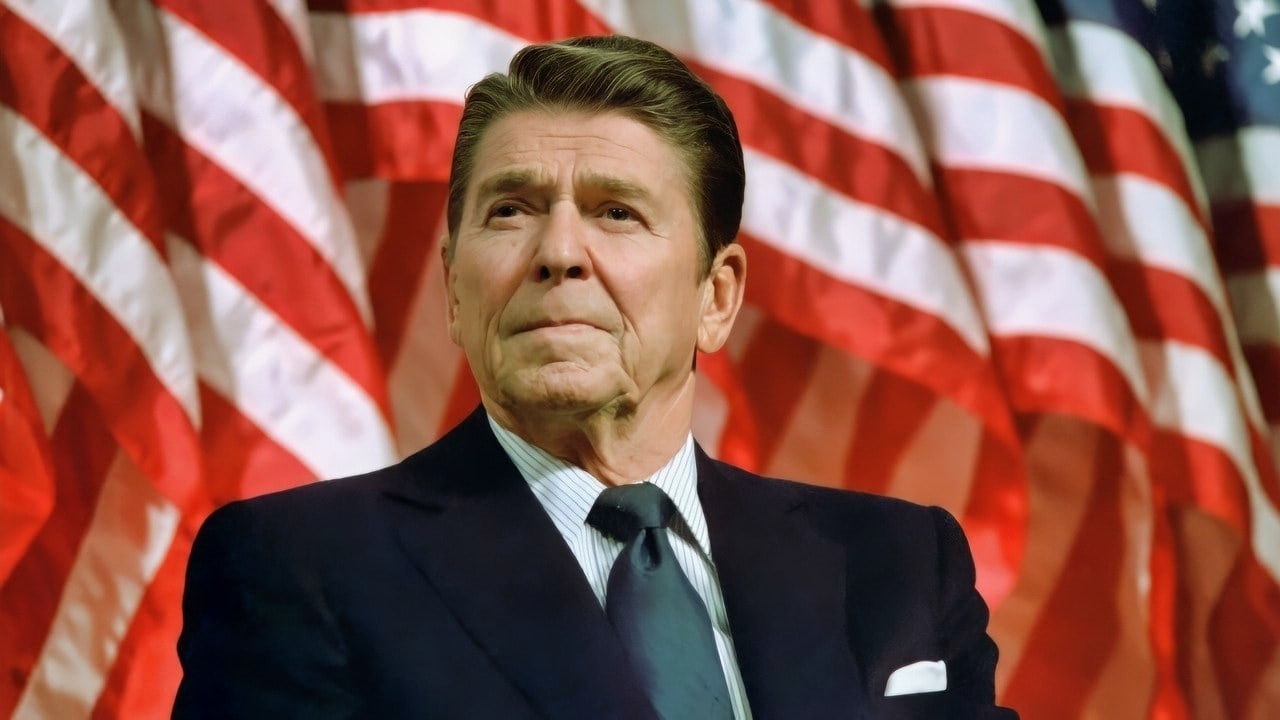
Synopsis: Ronald Reagan’s 1982 quote—wars happen when an adversary thinks you’re not strong—captures the logic behind his “Peace Through Strength” worldview.
-This piece places the quote in its moment: economic turbulence at home and a tense Cold War abroad.
-It then traces how Reagan translated deterrence into policy, from expanding U.S. defense capacity to backing anti-Soviet “freedom fighters” and elevating what became known as the Reagan Doctrine.
-The profile also acknowledges the complications—Beirut, Iran-Contra—while arguing Reagan’s combination of firmness and negotiation helped set conditions that contributed to the Cold War’s end.
“Peace Through Strength,” Summed Up In 1 Quote
“You’ve never gone into a war because you were too strong; you go into them when the other fellow thinks you aren’t strong.” – President Ronald Reagan
Sometimes, presidents make famous comments at times when it seems that very few people are listening. President Ronald Reagan made this memorable statement at a 1982 fundraiser for U.S. Senate Candidate Pete Wilson.
This was a time of substantial political difficulty for Reagan.
The domestic economy was in horrible shape, with high unemployment, high inflation, and high interest rates. The Cold War was at its apogee.
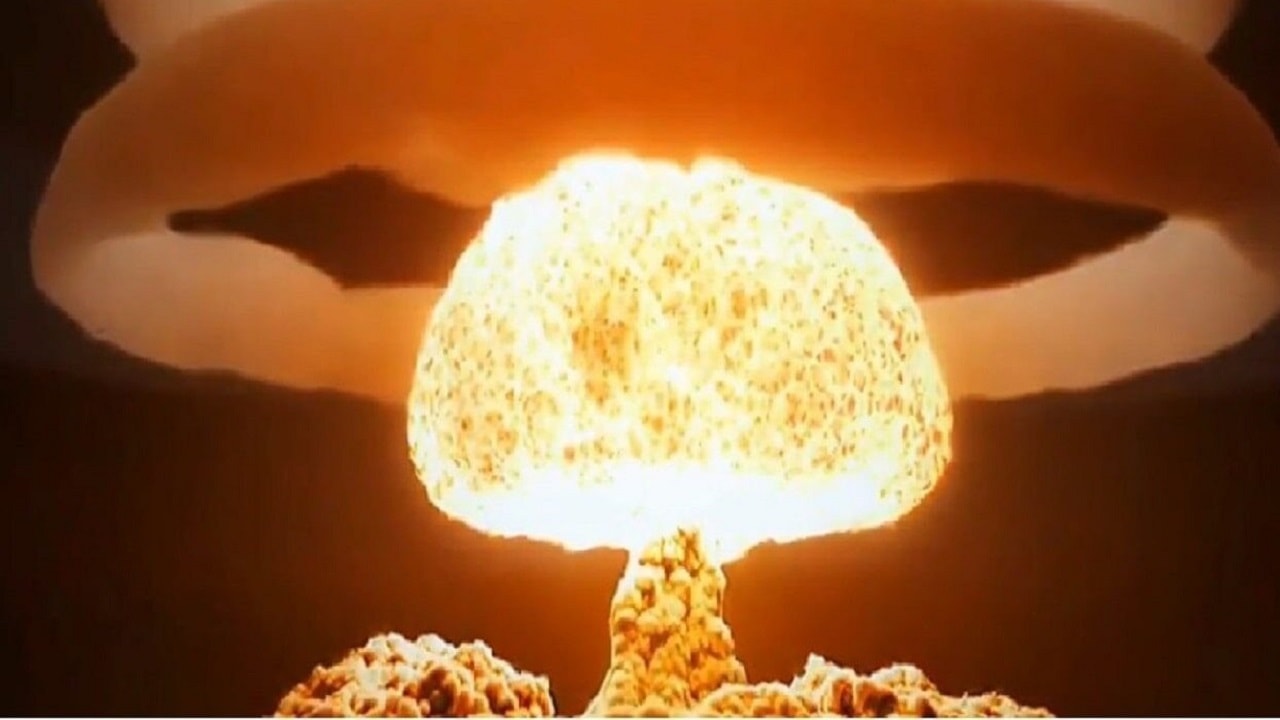
Nuclear weapons test during the Cold War. Image Credit: Creative Commons.
The Soviet Union was increasing pressure on the United States in the Western Hemisphere, and the end of the struggle with the Russian Empire was nowhere in sight.
Here is the complete Reagan statement from that fundraising speech: “I just thought you’d like to know about the attitude of those who are guarding our shores, because they are the real freedom fighters. It is by doing their job and doing it right that they can be a deterrent to war. And our goal is peace. And you’ve never gone into a war because you were too strong; you go into them when the other fellow thinks you aren’t strong. And we’re going to continue.”
Peace Through Strength Is Born
This became the basis of Reagan’s main foreign policy dictum – “Peace Through Strength.”
It was the impetus for the massive defense buildup and the expansion of U.S. military power to deter enemies.
The idea was to outspend the Soviets militarily and instill fear in the Kremlin.
Reagan’s doctrine was not about the prevailing era of détente with the Soviet Union. Reagan had no desire to live with global Communism.
He wanted to win the Cold War and push Communism into the dustbin of history.
Conservative Internationalism
Reagan supported “freedom fighters” who were against Soviet expansion.
He believed in covert wars against Russian influence and aggression in Afghanistan, Nicaragua, and Angola.
This would involve a combination of intelligence operations, military aid, and the promotion of ideals of democracy and freedom.
Reagan developed what would become the theory of “Conservative Internationalism.”
This meant a judicious projection of military power where American ideals of democracy and individual liberty were attainable.
Reagan mistrusted international organizations and believed that the United States should lead the world from a position of strength.
Biography of Ronald Reagan
Ronald Wilson Reagan was born in Tampico, Illinois, on February 6, 1911. He spent his youth serving as a lifeguard at the local lake, where he learned the value of hard work and responsibility.
He studied at Eureka College and played football while appearing in school plays. Reagan became a successful radio broadcaster.
In 1937, he tried his hand at acting and conducted a screen test that won him a contract with Warner Bros. in Hollywood.
He would go on to appear in 53 movies – most famously as George Gipp in “Knute Rockne, All American.”
Reagan got his first taste of political leadership as the head of the Screen Actors Guild in Hollywood.
He fought communism in the union and learned how to negotiate with formidable adversaries while relying on bedrock principles. Reagan later landed a position as a spokesman for General Electric and began a series of speeches that honored U.S. ingenuity, capitalism, anti-communism, and the belief that the Soviet Union could ultimately be defeated.
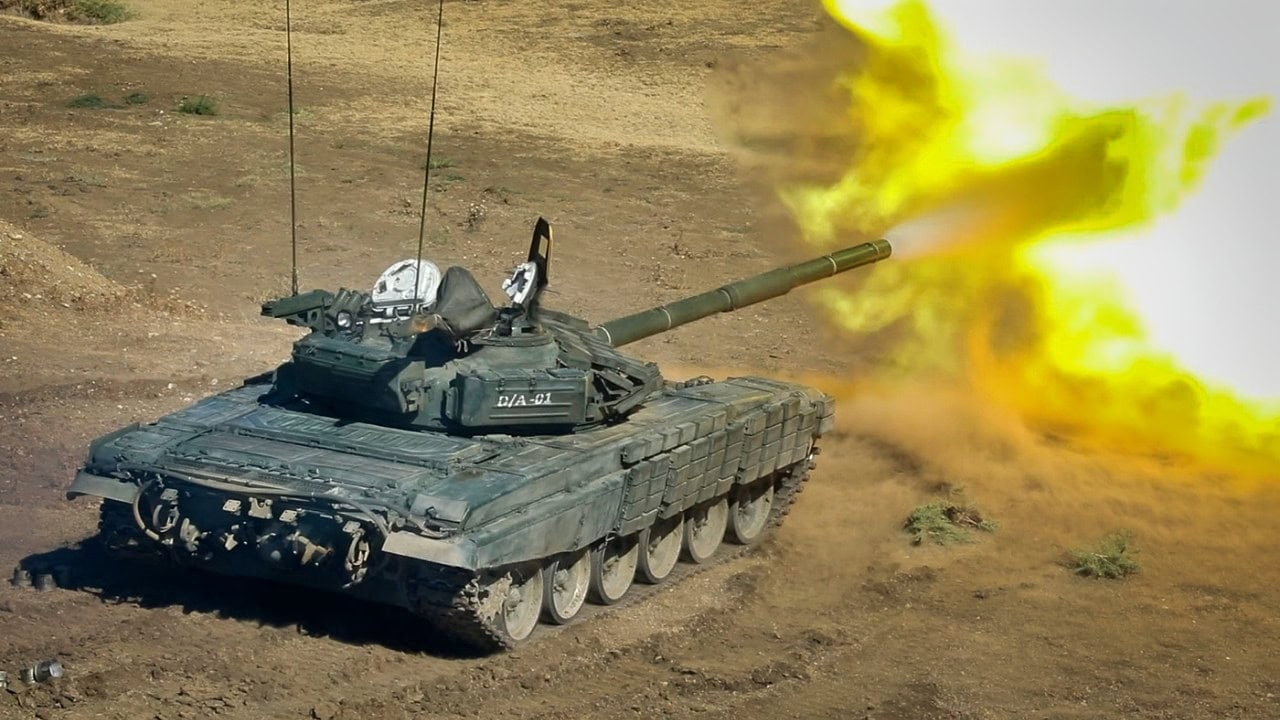
T-72 Tank. Image Credit: Creative Commons.
In 1966, he ran for governor of California and won. He was re-elected in 1970. Reagan ran for president in 1976 and nearly defeated Gerald Ford in a primary.
But in 1980, his goal of becoming the Commander-in-Chief was achieved when he defeated President Jimmy Carter.
The result was a landslide of 489 electoral votes to 49 for Carter.
Reagan was shot 70 days after taking office but survived.
He told his wife that he “forgot to duck,” and this helped his approval ratings hit new heights. After the economy began to recover following tax cuts and regulatory slashing, Reagan ran for re-election against Walter Mondale.
He won a historic landslide with the campaign slogan “Bringing America Back Stronger, Prouder, and Better.”
The Failure of the Iran-Contra Scandal
Reagan’s legacy was tarnished by the Iran-Contra scandal, which saw his popularity tumble. The administration tried to sell arms to Iran, with the proceeds going to fund the Contra freedom fighters in Central America.
Many Americans thought that Reagan was asleep at the wheel and did not know that his inner circle of foreign policy zealots was trying to run international security policy illegally.
Beirut Terrorism Scorches the Reagan Doctrine
Reagan won back admiration for his diplomatic summits with the Soviets that were to help end the Cold War.
His “Peace Through Strength” strategy was more popular than ever. While the invasion of Grenada had military difficulties, it was ultimately successful.
Another challenge was with terrorism as his administration led a deployment to the Middle East where truck bombs killed 241 American military personnel at the U.S. Marine Corps barracks in Beirut, Lebanon.
“Tear Down This Wall!”
Ronald Reagan had a mostly successful run as Commander-in-Chief. He was a master negotiator and communicator. He often wrote his own foreign policy speeches, including demanding that the leader of the Soviet Union “tear down this wall.”
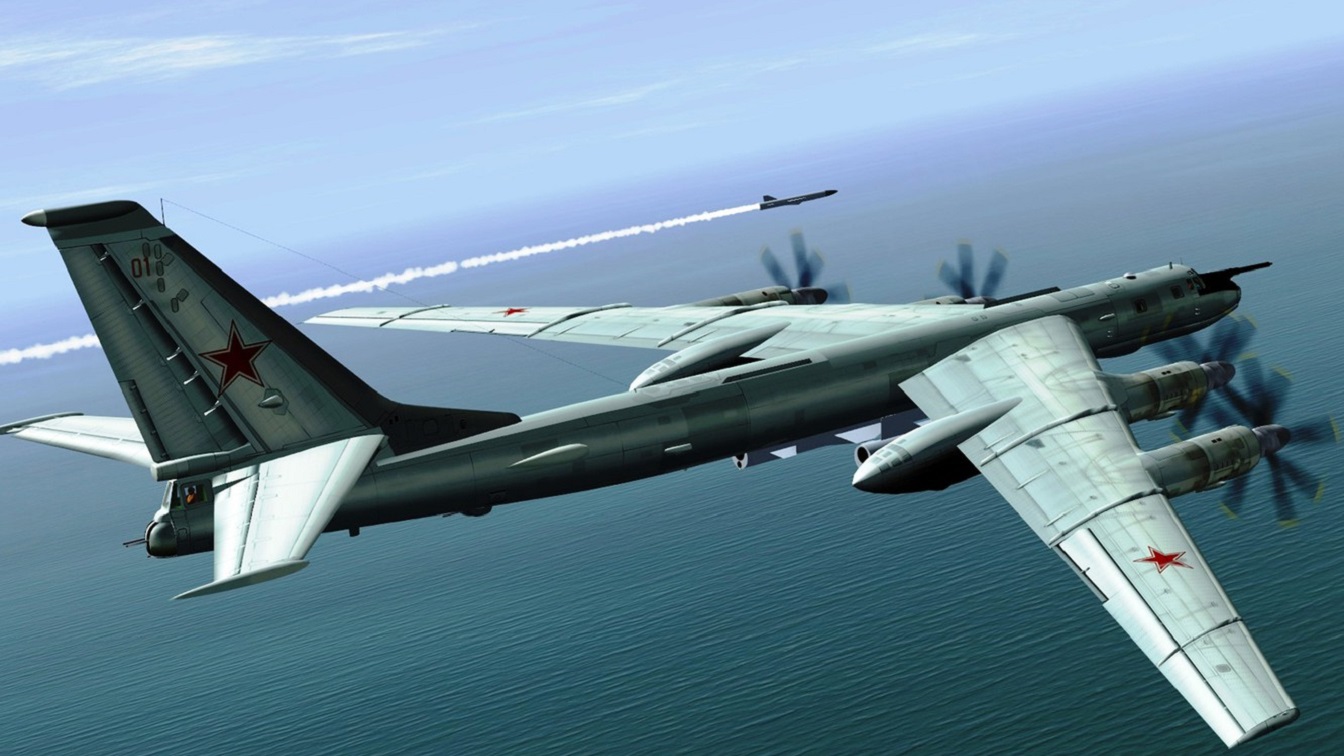
Tu-95MS. Computer generated image. Image Credit: Creative Commons.
He held firm to pro-America principles and stuck to the belief that his ideology could win the Cold War and remove many nuclear weapons from U.S. and Soviet stockpiles.
Iran-Contra was the low point and damaged his legacy, but Reagan will be known for his foreign policy doctrine that showed Communism could be rolled back and defeated.
His Reagan Doctrine is well known and has positively influenced many Republican foreign policy decisions of the last 40 years.
About the Author: Brent M. Eastwood
Author of now over 3,000 articles on defense issues, Brent M. Eastwood, PhD is the author of Don’t Turn Your Back On the World: a Conservative Foreign Policy and Humans, Machines, and Data: Future Trends in Warfare plus two other books. Brent was the founder and CEO of a tech firm that predicted world events using artificial intelligence. He served as a legislative fellow for US Senator Tim Scott and advised the senator on defense and foreign policy issues. He has taught at American University, George Washington University, and George Mason University. Brent is a former US Army Infantry officer. He can be followed on X @BMEastwood.