
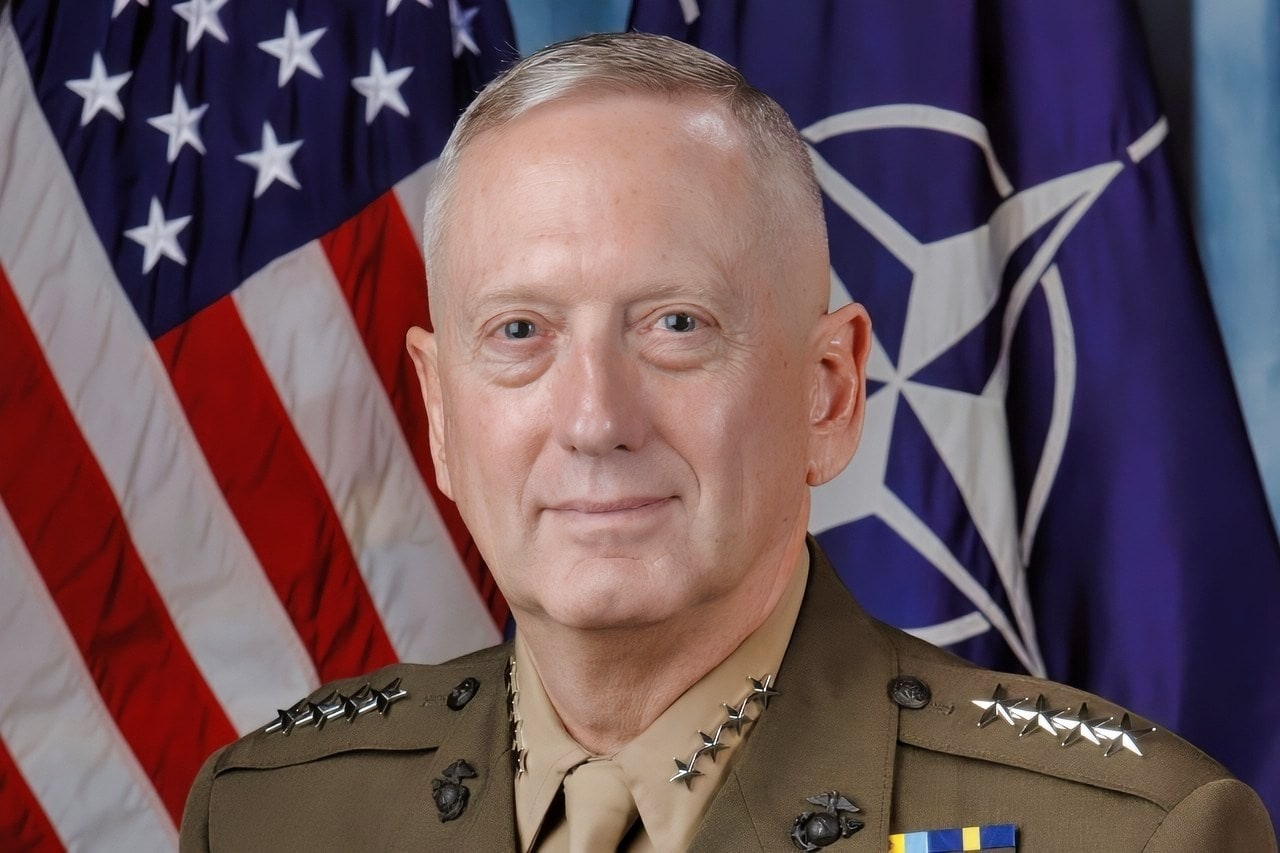
Synopsis: A famous maxim attributed to Jim Mattis—“Be polite, be professional, but have a plan to kill everybody you meet”—frames a career built on discipline, readiness, and hard-edged realism.
-The piece traces Mattis from Washington state to ROTC, then through Marine infantry command, Desert Storm with Task Force Ripper, and leadership roles in Afghanistan and Iraq.
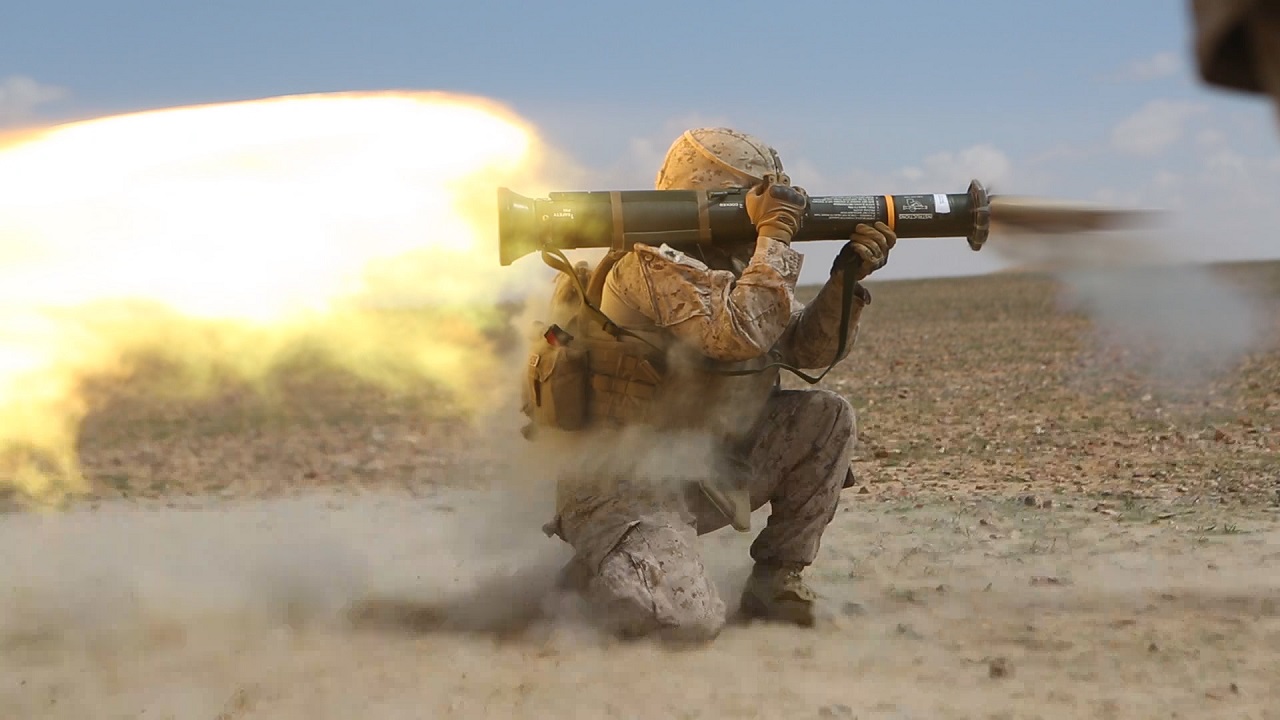
A Marine with Company G, 2nd Battalion, 7th Marine Regiment, Special Purpose Marine Air Ground Task Force – Crisis Response – Central Command, fires an AT4 antitank rocket launcher in the Central Command area of operations, March 23, 2015. The 2/7 Marines participated in a range that tests their ability to conduct an integrated combined arms assault against a simulated enemy position. (U.S. Marine Corps photo by Cpl. Will Perkins/Released)
-It follows his rise to four-star posts shaping doctrine and coalition operations, culminating as CENTCOM commander and later Secretary of Defense.
-Nicknamed “Chaos” and “Warrior Monk,” Mattis is portrayed as an intellectual commander whose civility never replaced tactical vigilance—and whose influence still echoes in U.S. strategy.
Jim Mattis’ Most Famous Quote—and What It Reveals About His Leadership
“Be polite, be professional, but have a plan to kill everybody you meet,” is one of many colorful quotes attributed to former Secretary of Defense Jim Mattis during his tour in Iraq as a Marine Corps officer. It was intended as a reminder to remain outwardly civil and professional while inwardly remaining mentally and tactically prepared for any threat. This attitude of respect and vigilance defined Mattis’ career as an officer and civilian leader.
Early Life and Military Service
James N. Mattis was born on September 8, 1950, in Pullman, Washington, and grew up in Richland, Washington. His early life was shaped by a disciplined family environment and a deep interest in history and strategy.
After graduating from Richland High School in 1968, he attended Central Washington University, where he earned a degree in history and joined the Marine Corps through the ROTC program. In January 1972, Mattis was commissioned as a second lieutenant, marking the beginning of a military career that would span across four decades.
As a junior officer, Mattis served as a rifle and weapons platoon commander in the 3rd Marine Division. Later, as a captain, he commanded both a rifle company and a weapons company in the 1st Marine Brigade. His leadership abilities were evident early on, and as a major, he took charge of the Marine Corps recruiting station in Portland, Oregon, a role that honed his administrative and organizational skills.
First Deployments to the Middle East
Mattis’ first combat experience came during the Gulf War. As a lieutenant colonel, he commanded the 1st Battalion, 7th Marines, which formed part of Regimental Combat Team 7 (also known as “Task Force Ripper”).
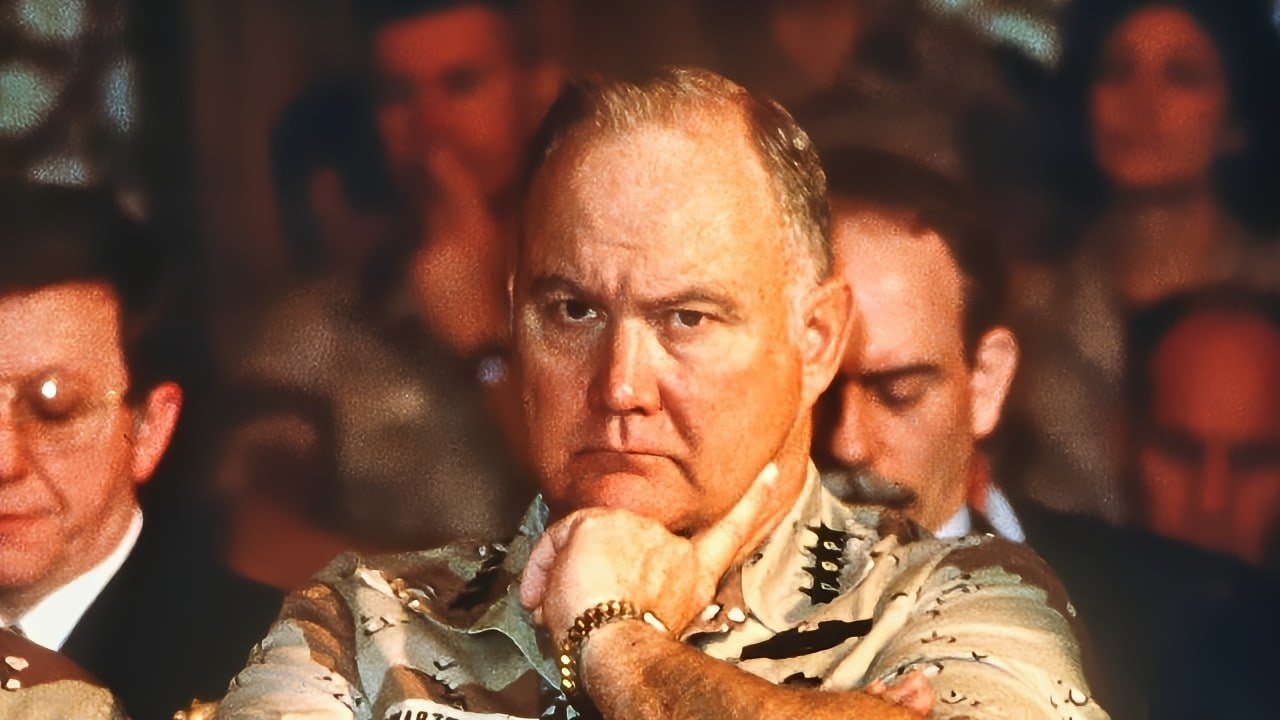
Paul D. Wolfowitz, under secretary of defense for policy, right, takes notes while Gen. Colin Powell, chairman, Joint Chiefs of Staff, and Gen. Norman Schwarzkopf, commander-in-chief, U.S. Central Command, listen to Secretary of Defense Richard Cheney answer questions from the media. The men are taking part in a press conference held by U.S. and Saudi Arabian officials during Operation Desert Storm.
His battalion spearheaded the assault that liberated Kuwait during Operations Desert Shield and Desert Storm. For his leadership and valor, Mattis received the Bronze Star Medal with Valor. After the war, he was promoted to colonel and awarded the prestigious “Edson’s Eagle,” a rare emblem given to the colonel who best exemplifies the fighting spirit of Marine legend Merritt A. Edson. He wore this honor until his promotion to brigadier general in 1997.
Mattis played a critical role in the early stages of the War on Terror. As a brigadier general, he commanded the 1st Marine Expeditionary Brigade and led Task Force 58 in southern Afghanistan. This made him the first Marine to command a naval task force in combat, integrating land and sea operations during a pivotal moment in U.S. military history. His reputation as a bold and innovative leader grew further during the Iraq War.
Promoted to major general, Mattis commanded the 1st Marine Division during the 2003 invasion of Iraq and subsequent stabilization efforts. He directed operations during the First Battle of Fallujah in April 2004 and helped plan Operation Phantom Fury later that year, demonstrating exceptional skill in urban warfare and counterinsurgency strategy.
Rising Through the Ranks
Mattis continued to rise through the ranks. As a lieutenant general, he served in key leadership roles, including commanding the Marine Corps Combat Development Command at Quantico—and later I Marine Expeditionary Force and Marine Forces Central Command. These positions placed him at the center of U.S. military operations in the Middle East.
In 2007, Mattis became a four-star general and assumed dual responsibilities as Commander of U.S. Joint Forces Command and NATO’s Supreme Allied Commander Transformation. In these roles, he focused on modernizing military doctrine and improving NATO’s operational capabilities.

U.S. Soldiers assigned to 12th Combat Aviation Brigade conduct pre-flight checks on an AH-64D Apache longbow helicopter at the Grafenwoehr Training Area, Germany, Sept. 28, 2022. 12th CAB is among other units assigned to V Corps, America’s Forward Deployed Corps in Europe. They work alongside NATO Allies and regional security partners to provide combat-ready forces, execute joint and multinational training exercises, and retain command and control for all rotational and assigned units in the European Theater. (U.S. Army photo by Sgt. Randis Monroe)
From 2010 to 2013, Mattis served as Commander of U.S. Central Command, overseeing U.S. military operations across the Middle East and Central Asia.
He directed campaigns in Iraq and Afghanistan and managed complex regional challenges involving Iran, Syria, and Yemen while commanding more than 200,000 personnel.
Known by nicknames such as “Mad Dog,” callsign “Chaos,” and “Warrior Monk,” Mattis earned a reputation as both a fierce combat leader and a dedicated intellectual. He maintained a personal library of more than 7,000 books on military history, strategy, and culture.
He always emphasized the importance of understanding local contexts in warfare. His approach combined tactical aggression with scholarly insight, and he influenced modern counterinsurgency doctrine and civil-military relations.
Post-Military Career
Mattis retired from the Marine Corps in 2013 after 43 years of service. He then joined Stanford University’s Hoover Institution as a visiting fellow, focusing on leadership and national security issues. In 2016, he co-edited Warriors & Citizens: American Views of Our Military, a book examining civil-military relations in the United States.
Later that year, President-elect Donald Trump nominated him as Secretary of Defense, and he was confirmed in January 2017 after Congress granted a waiver allowing him to serve despite being less than seven years removed from active duty.
Mattis resigned from the position in December 2018, concluding a brief but impactful tenure in civilian leadership.
Throughout his career, Mattis received numerous awards, including two Defense Distinguished Service Medals, the Navy Distinguished Service Medal, the Defense Superior Service Medal, the Legion of Merit, and the Bronze Star Medal with Valor. These honors reflect his exceptional contributions to battlefield leadership and strategic planning.
He maintained civility even when he disagreed with people, while also thinking practically and strategically.
Many regard Mattis as one of the most influential American military figures of the last 20 years.
About the Author: Isaac Seitz
Isaac Seitz, a Defense Columnist, graduated from Patrick Henry College’s Strategic Intelligence and National Security program. He has also studied Russian at Middlebury Language Schools and has worked as an intelligence Analyst in the private sector.