
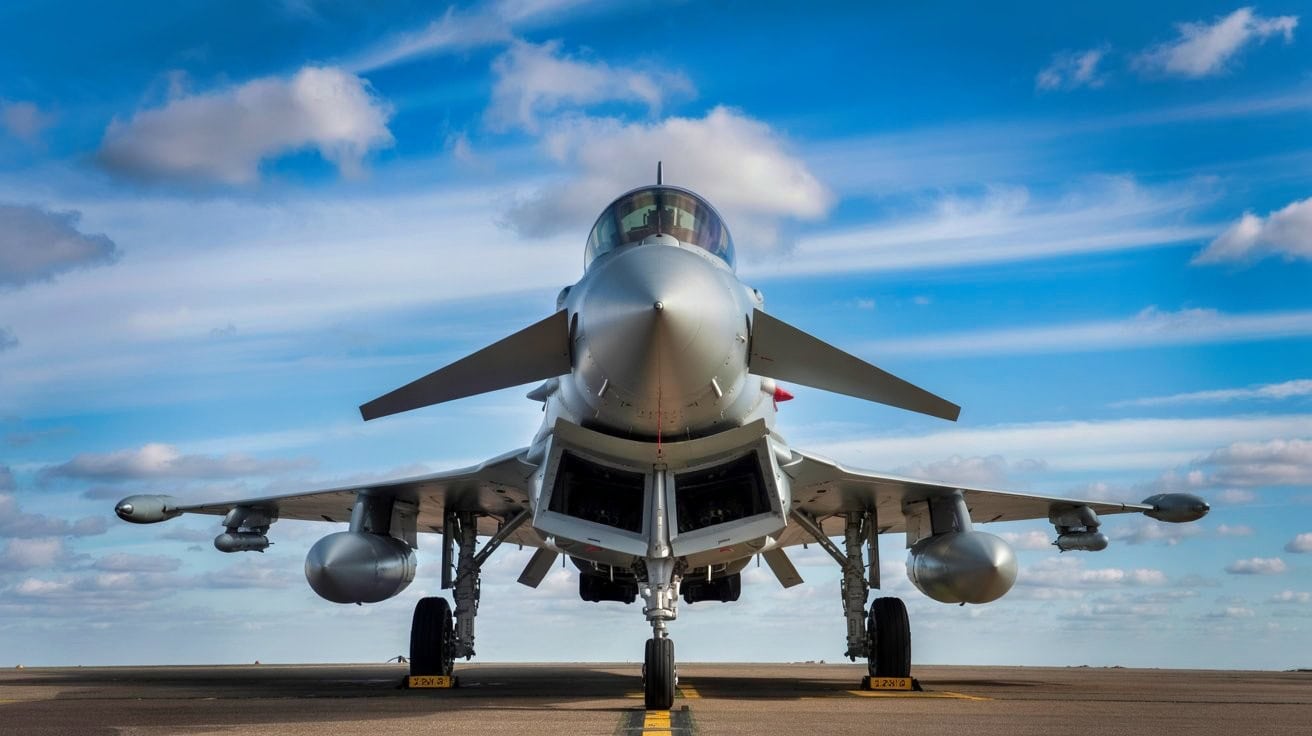
Key Points and Summary – The Eurofighter Typhoon remains a highly capable 4+ generation swing-role fighter, prized in NATO and export markets for its agility, Meteor missile, Captor-E AESA radar, and PIRATE IRST. But it is not truly stealthy, and that becomes a growing liability against Russian Su-57s and prospective MiG-41s designed to penetrate or evade air defenses. While upgrades in engines, sensors, and materials keep the Typhoon relevant into the 2030s, its limitations against fifth- and sixth-generation threats are clear. Over the next decade, current and prospective Eurofighter operators may increasingly see the F-35 as the only path to genuine stealth parity.
Eurofighter Typhoon Pilots May Soon Need an F-35 Upgrade
I have always admired the Eurofighter Typhoon. It is a fourth-generation fighter jet, but has some modern characteristics. It is perfect for NATO alliance countries and air forces of the developing world that need to police borders and serve as hunter-killers of enemy airplanes.
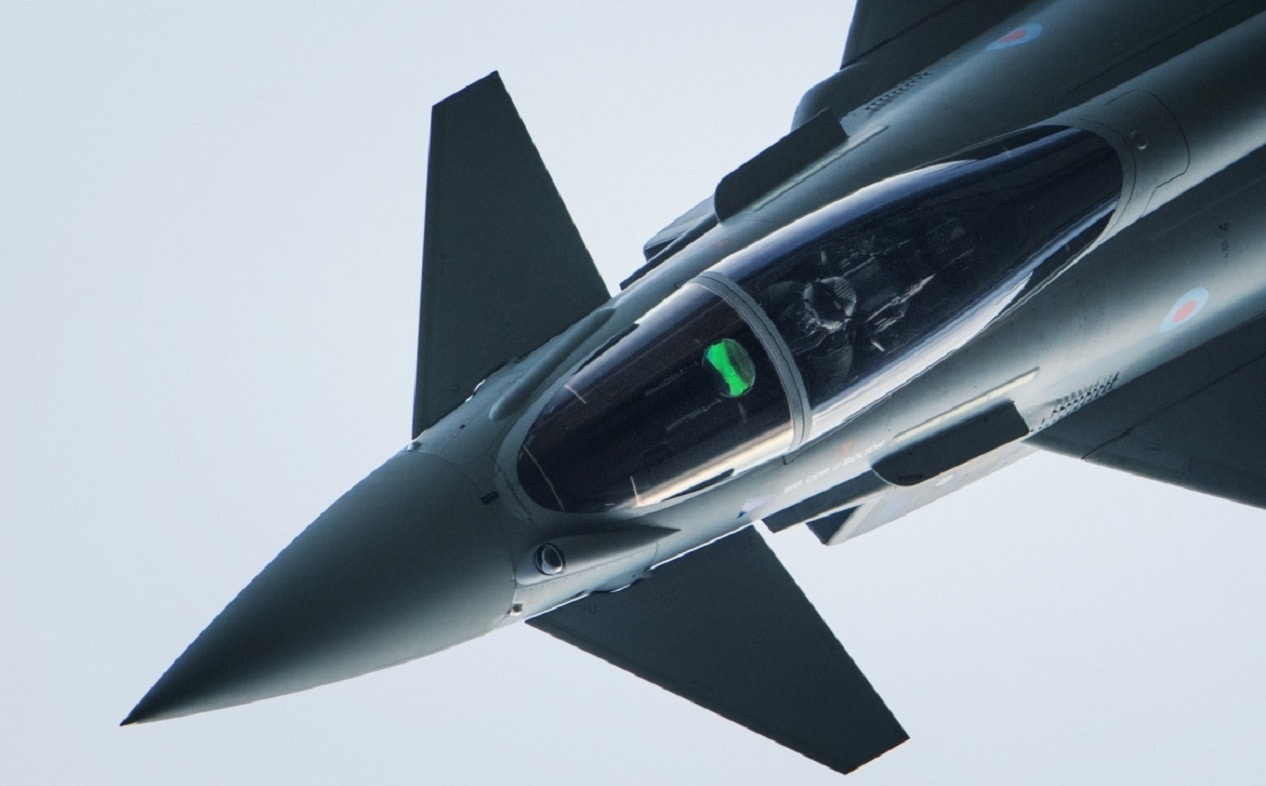
Eurofighter Typhoon.
The Typhoon also has a swing-role feature that allows it to toggle between mission sets while in-air. That means it can start off in an air superiority dog-fighter mode, then switch to ground strike in the same sortie.
This is important for a potential fight with Russian forces, should Russian President Vladimir Putin ever order a strike against a NATO member-state. The Typhoon could make mincemeat of Russian tanks and armored personnel vehicles while eliminating air bases and other military targets.
Keeping Up With Russia In Stealth Flight
However, the Eurofighter Typhoon is not fully stealthy, and that is a problem when confronting the Su-57. This might mean it would back down from a battle with radar-evading airplanes such as the Felon.
The Eurofighter Is Popular on the Export Market
Still, the Eurofighter Typhoon has enjoyed a good run on the export market.
Its upgraded variants attract countries that passed on the F-35. The Typhoon is built by a four-country European consortium, and more are being produced as new customers come online.

U.S Air Force Captain Kristin “BEO” Wolfe, F-35A Lightning II Demonstration Team Commander, flies during a demonstration at the Oregon International Airshow in McMinnville, Ore., Aug. 20, 2022. The F-35 Demo team travels around the United States and around the world, showcasing the world’s most technologically advanced fifth-generation fighter jet. (U.S. Air National Guard photo by Master Sgt. John Winn)
The countries involved in designing and building the Typhoon are Germany, Italy, Spain, and the United Kingdom.
The consortium has plans to sell the Eurofighter to Austria, Poland, Turkey, and Saudi Arabia. This will keep manufacturing lines going for several years into the future.
The Typhoon has “a blend of flexibility, modernization, and affordability,” according to Simple Flying. It is better than when it first came out, at which time it was seen as competition for the F-16 and F-15.
Upgrades to the Eurofighter Typhoon
The Eurofighter is not completely stealthy, but it does have radar-evading characteristics.
It could now be compared to the American F-15EX.
Both are fourth-generation “+” or “++” fighters. The Eurofighter consortium believes that the Typhoon’s amount of space-aged metals (15 percent of the entire airplane) can help it absorb radar.
These materials also result in a fighter jet that is 30 percent lighter than its competitors.
The airplane sports modernized EJ200 engines with 90 kN of thrust each. When you combine that propulsion system with its lighter airframe, the improved Typhoon can be faster and more agile. It can reach a top speed of Mach 2.0 and a maximum altitude of 55,000 feet.
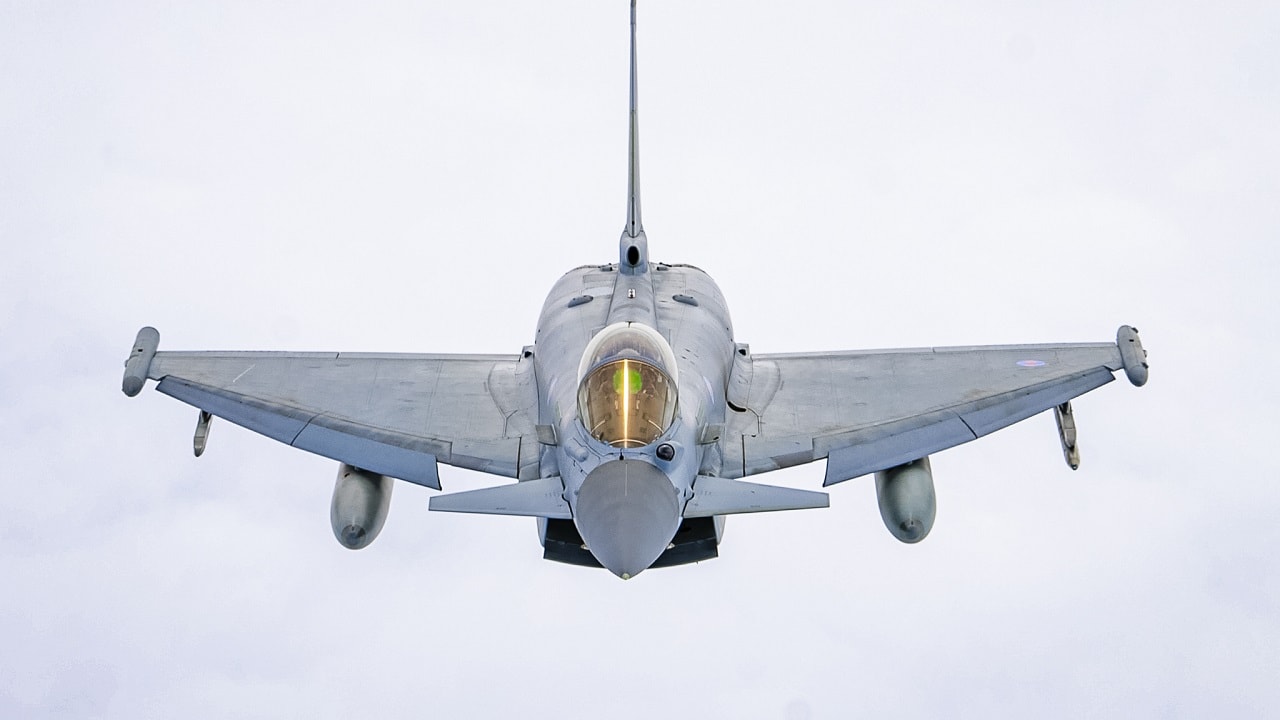
A UK Eurofighter Typhoon flies above the Baltics on 25 May 2022.
UK and Czech fighter jets have been taking part in air defence training over the Baltic region. UK Eurofighter Typhoons, F-35s and Czech Gripens were involved in an exercise as part of Neptune Shield 22 (NESH22), a multinational maritime vigilance activity. NESH22 has seen a range of multi-domain activities between air, land and maritime assets across Europe and in the Baltic and Mediterranean Seas. It runs from 17 to 31 May 2022.
The Typhoon also features the Captor-E active electronically scanned array (AESA) radar and Meteor long-range air-to-air missile—the latter make it a dogfighter to be reckoned with.
The Eurofighter partnership thinks that the improved Typhoon has the best situational awareness in its class. The AESA radar has a 50 percent broader array than earlier versions with fixed-plate systems. The Pirate System (Passive Infra-Red Airborne Tracking Equipment) is an outstanding apparatus for identifying and tracking enemy aircraft.
Competing Against Friendly and Enemy Airplanes
Competition is also improving, however. The United States is producing the sixth-generation F-47, which will be ultra-stealthy. There is no indication the F-47 will be sold overseas, but it is still a measuring stick for the Eurofighter.
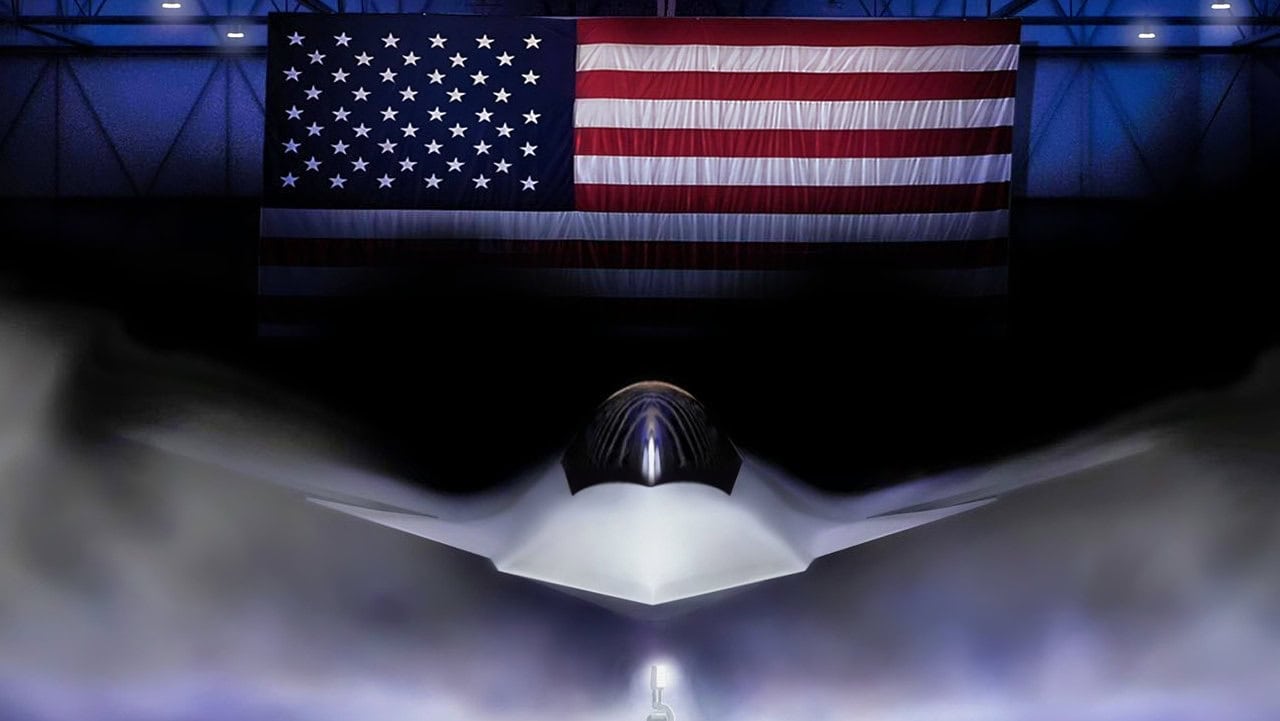
F-47 Fighter from U.S. Air Force.
Russia in the meantime is working on its PAK DP sixth-generation warbird, also known as the MiG-41.
This may fly as fast as Mach 4 and reach near-space altitudes.
It is not clear if the consortium can improve on the Typhoon’s radar evasion. This shortcoming could make the European airplane outdated by the 2030s and could hurt future sales—countries will likely prefer the stealthy fifth-generation F-35. The Eurofighter must continue updating to remain relevant.
Russia’s Aerial Hijinks With Stealth Airplanes Are a Problem
The Su-57—and the MiG-41, should it come to fruition—would be problematic for the Typhoon. If these stealthy airplanes entered a NATO member’s Air Defense Identification Zone, they may elude sensors and air defenses.
This would negate the main qualities of the Eurofighter, namely its intercepting capabilities and air policing mode.
This means the Eurofighter could be obsolete by the mid-2030s. That doesn’t mean alliance members should panic. The countries that fly the Typhoon simply must be aware of its limitations—and perhaps focus future purchases on the F-35.
The European consortium should not be stressed.
Whatever Russian fighters are developed, the Typhoon has been optimized over the years for air policing. I’m still fine with the Eurofighter Typhoon for the next decade.
The airplane has admirable qualities and upgrades that keep it relevant.
The countries that fly it must make a decision in the next 10 years, though. If these nations want to compete with the Su-57 and MiG-41, they may want to consider purchasing the F-35.
About the Author: Brent M. Eastwood
Author of now over 3,000 articles on defense issues, Brent M. Eastwood, PhD is the author of Don’t Turn Your Back On the World: a Conservative Foreign Policy and Humans, Machines, and Data: Future Trends in Warfare plus two other books. Brent was the founder and CEO of a tech firm that predicted world events using artificial intelligence. He served as a legislative fellow for US Senator Tim Scott and advised the senator on defense and foreign policy issues. He has taught at American University, George Washington University, and George Mason University. Brent is a former US Army Infantry officer. He can be followed on X @BMEastwood.