
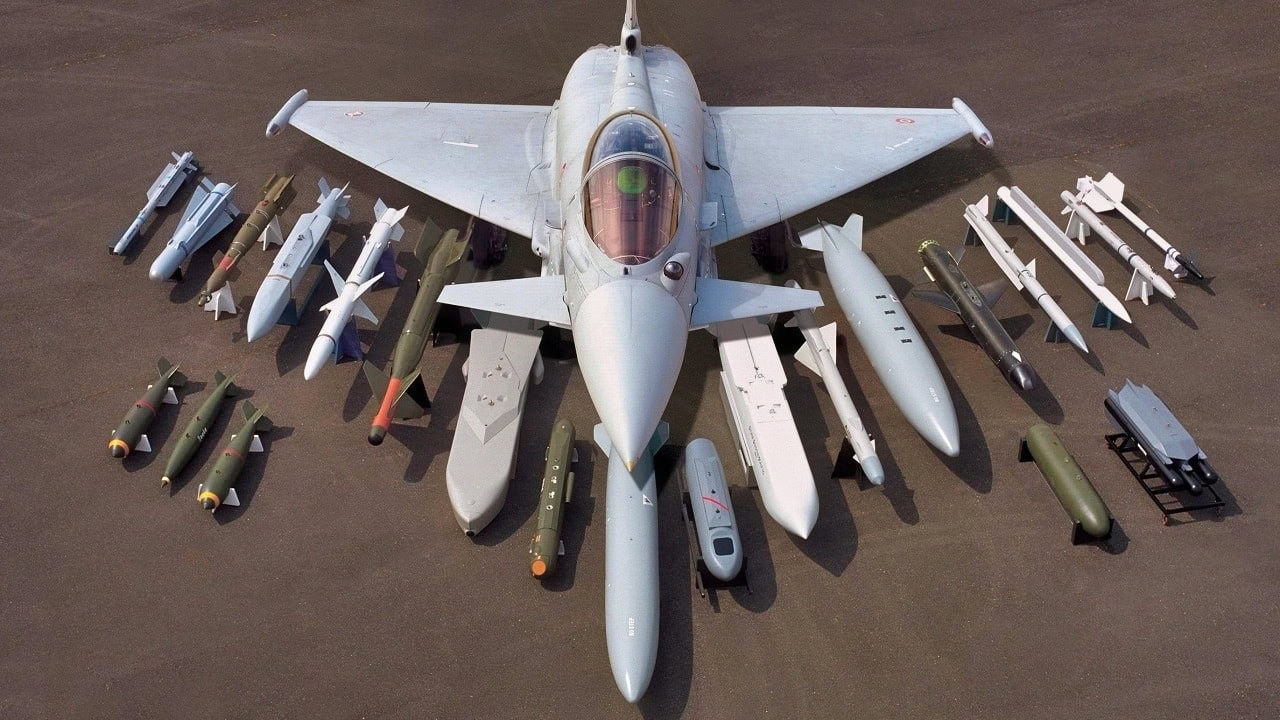
Key Points and Summary – The Eurofighter Typhoon lacks true stealth, a growing handicap in a world filling up with F-35s, J-20s, and future sixth-generation jets.
-Yet Isaac Seitz argues the Typhoon is far from obsolete. Ongoing LTE and MLU upgrades will overhaul its avionics, EW suite, and computing, while new Tranche 5 jets with AESA radar and AREXIS EW extend its relevance into the 2060s.
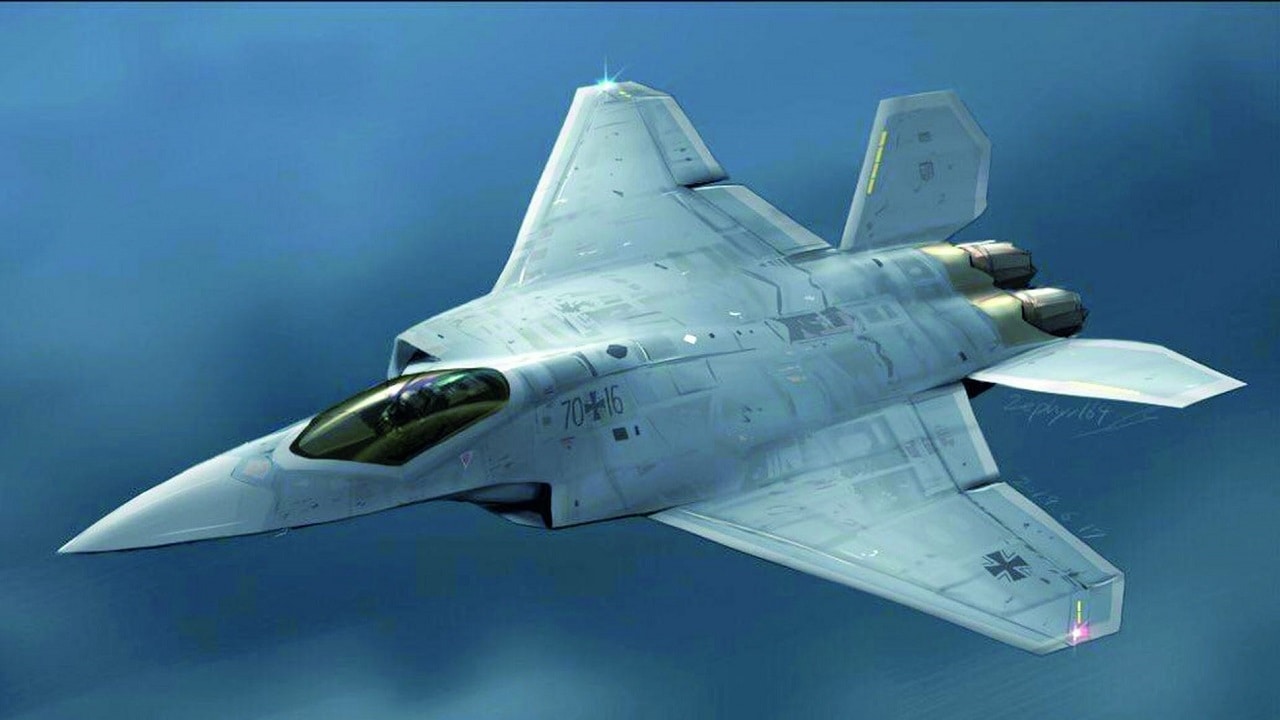
FCAS. Image Credit: Creative Commons.
-Meanwhile, the ambitious FCAS “system of systems” promises a stealthy New Generation Fighter but faces political, industrial, and schedule risk.
Seitz’s bottom line: Europe needs a dual-track strategy—modernize Typhoon now while carefully, not blindly, pursuing FCAS.
Can the Eurofighter Typhoon Fight On Until 6th-Gen Jets Arrive?
The Eurofighter Typhoon is currently one of the most advanced fourth-generation fighters in operation in Europe.
The fighter boasts advanced avionics, high-performance engines, and an extensive combat range.
Its biggest weakness, however, is that the fighter lacks any stealth capabilities.
In today’s environment, dominated by fifth- and soon-to-be sixth-generation fighter jets, the question is whether it is worth upgrading the Eurofighter or if the resources would be better spent on other projects, such as the Future Combat Air System (FCAS).
Does Stealth Render the Eurofighter Typhoon Obsolete?
In modern air combat, stealth can mean the difference between life and death.
By far the most significant criticism made against the Eurofighter is its lack of any stealth capabilities.
To enhance its survivability, the aircraft is equipped with electronic warfare systems.
It also reportedly incorporates other measures, such as radar-absorbent materials on certain surfaces, concealed jet inlets, and the use of composite materials.
These are useful and do reduce their radar cross-section from the front, but these systems simply cannot provide the same level of survivability that actual stealth fighters have.
Stealth fighters are also becoming increasingly more common.
Less than twenty years ago, the United States held a monopoly on stealth fighters; now this is no longer the case.
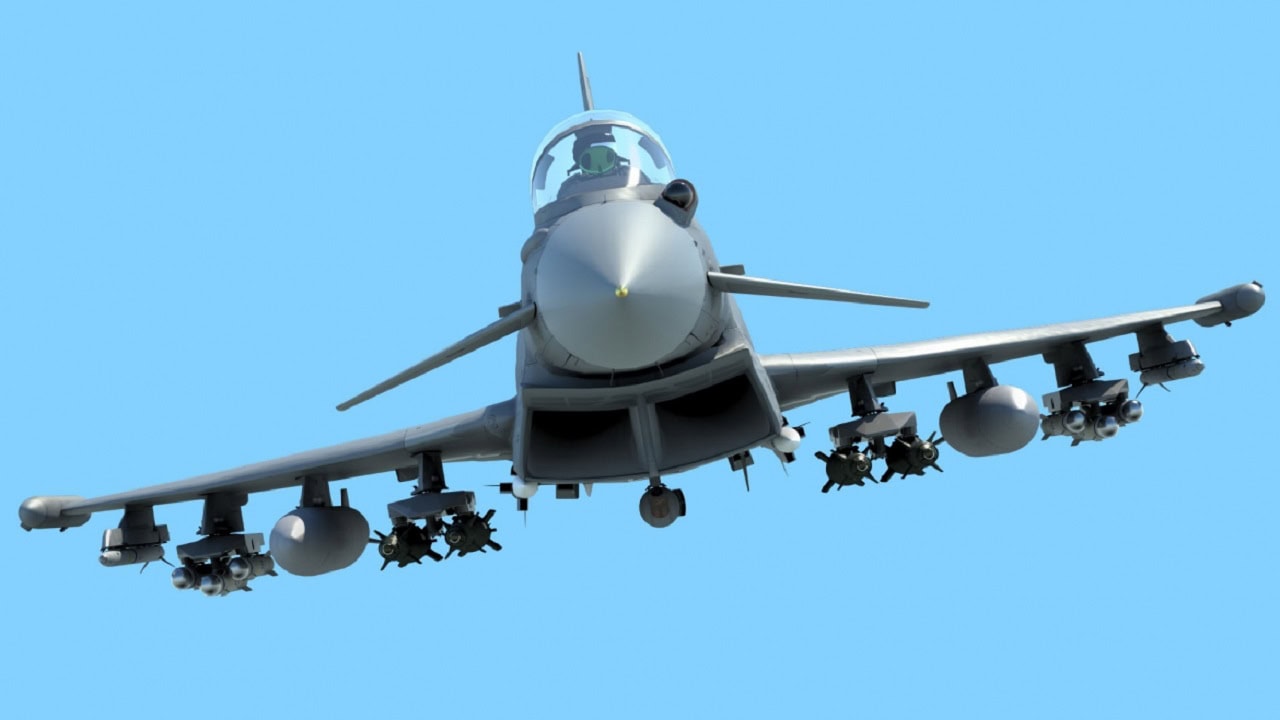
Typhoon fitted with the common launcher (computer generated image: for illustrative purposes only)
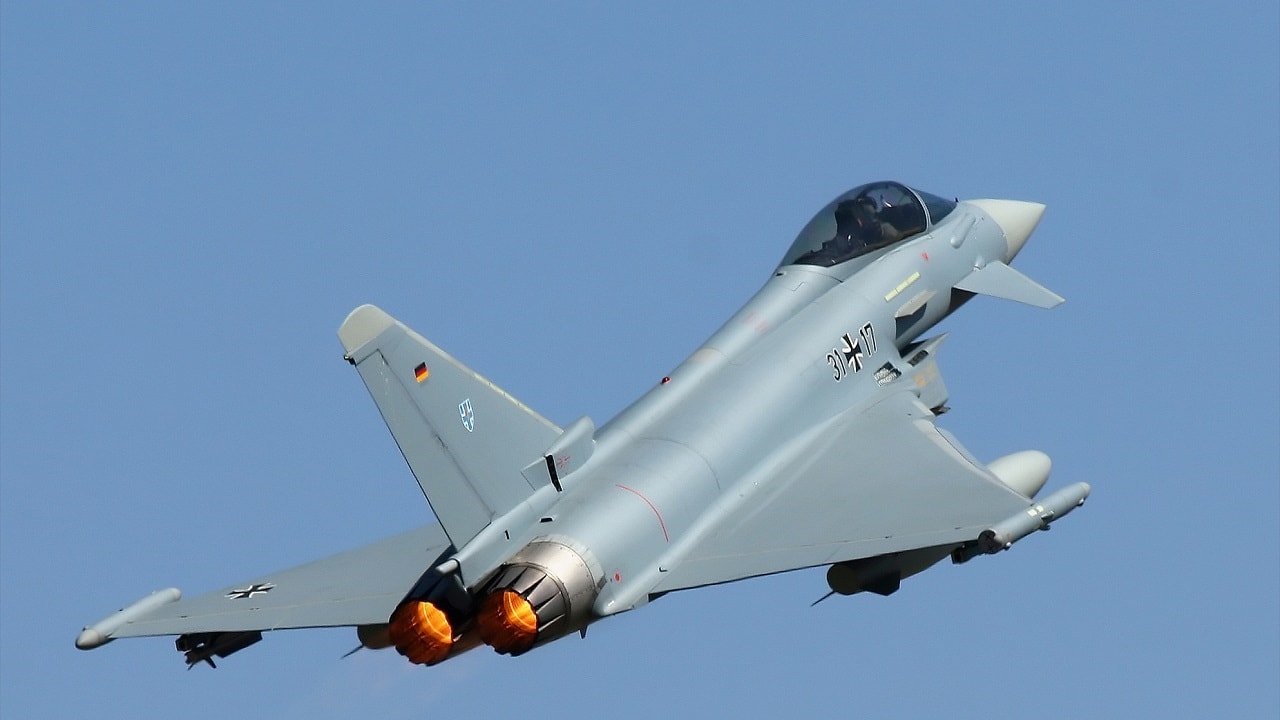
German Air Force Eurofighter. Image Credit: Creative Commons.
China has two stealth fighters currently in service, with its first sixth-generation prototypes undergoing flight tests.
Despite its incredibly slow rate of production, Russia’s Su-57 appears to have found its first buyer in Algeria, and there is a strong chance that India will also procure the fighter.
This does not even mention the F-35, which has been a hit in the Western arms market. All of this is to say that the Eurofighter is up against some stiff competition.
Why the Eurofighter is Still Relevant?
However, I do not think that the Eurofighter is obsolete.
It continues to perform the majority of combat missions for several European nations and remains a competent aircraft in both air-to-air and air-to-ground roles.
Its versatility and reliability have made it a cornerstone of NATO operations, and its continued relevance is being ensured through a series of modernization programs.
These include the Long-Term Evolution (LTE) and Mid-Life Upgrade (MLU) initiatives, which aim to extend the Typhoon’s operational life well into the 2060s.
These upgrades are not superficial. They involve a complete overhaul of the aircraft’s avionics, electronic warfare systems, and computing architecture. The LTE program, for example, introduces human-machine interfacing, modular systems for rapid capability insertion, and improved human-machine interfaces.
The aircraft is also being adapted to operate alongside unmanned systems, such as Loyal Wingman drones, and to integrate with future sixth-generation platforms.
Germany has already committed to purchasing 20 new Tranche 5 Typhoons, which will feature advanced AESA radars and AREXIS electronic warfare suites. These jets are expected to replace the aging Tornado fleet and will be delivered between 2031 and 2034.
From a strategic standpoint, the Typhoon offers immediate and reliable combat mass. While sixth-generation platforms like FCAS are still in development, the Typhoon is available now and can be upgraded to meet current or future needs.
It supports European defense autonomy and reduces reliance on non-European platforms such as the American F-35. This is particularly important given the geopolitical uncertainties and the need for Europe to maintain a robust and independent defense posture.
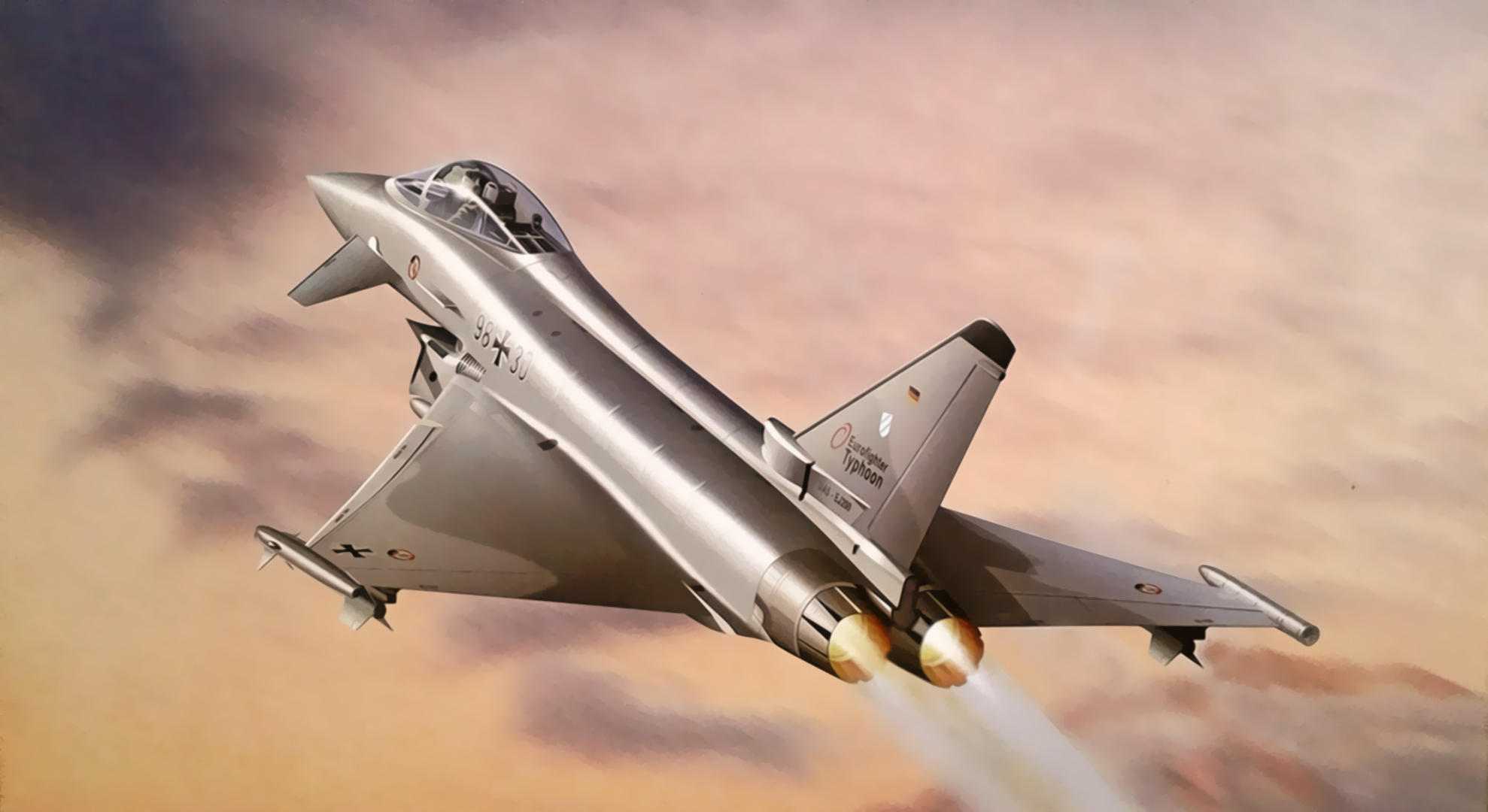
Eurofighter Typhoon. Image Credit: Creative Commons.
The Future Combat Air System (FCAS)
On the other hand, the Future Combat Air System is envisioned as the next generation of European air power. Led by France, Germany, and Spain, FCAS is conceived as a “system of systems” that includes a New Generation Fighter (NGF), autonomous Remote Carriers (RCs), and a Combat Cloud for seamless multi-domain operations.
The NGF is expected to replace both the Rafale and the Typhoon; the entire system is designed to operate in highly contested environments, featuring advanced stealth, cyber resilience, and AI-driven decision-making.
FCAS is an ambitious project, but it has not gone without its challenges. Industrial disagreements, particularly between Dassault and Airbus over leadership and workshare, have caused delays.
Political uncertainty and differing national priorities further complicate the program’s progress. Although demonstrator flights are expected by 2027 or 2028, full operational capability is not expected until around 2040. This extended timeline raises concerns about whether FCAS can be delivered on schedule and within budget.
What is the Future of European Air Power?
Moreover, the complexity of FCAS makes it a high-risk investment. While its capabilities are revolutionary, they are also unproven.
The system’s success depends on overcoming significant technical, industrial, and political hurdles. In contrast, the Typhoon is a known quantity.
Its production lines are active, its costs are predictable, and its upgrades are already underway. It offers a lower-risk path to maintaining air superiority in the near to medium term.
The investment strategy, therefore, should not be an either/or proposition. A balanced approach that continues to modernize the Typhoon while cautiously advancing FCAS development is the most prudent course.
This dual-track strategy ensures that Europe maintains combat readiness today while preparing for the challenges of tomorrow.
It also supports the European aerospace industry, preserves jobs, and reinforces strategic autonomy.
About the Author: Isaac Seitz
Isaac Seitz, a Defense Columnist, graduated from Patrick Henry College’s Strategic Intelligence and National Security program. He has also studied Russian at Middlebury Language Schools and has worked as an intelligence Analyst in the private sector.