
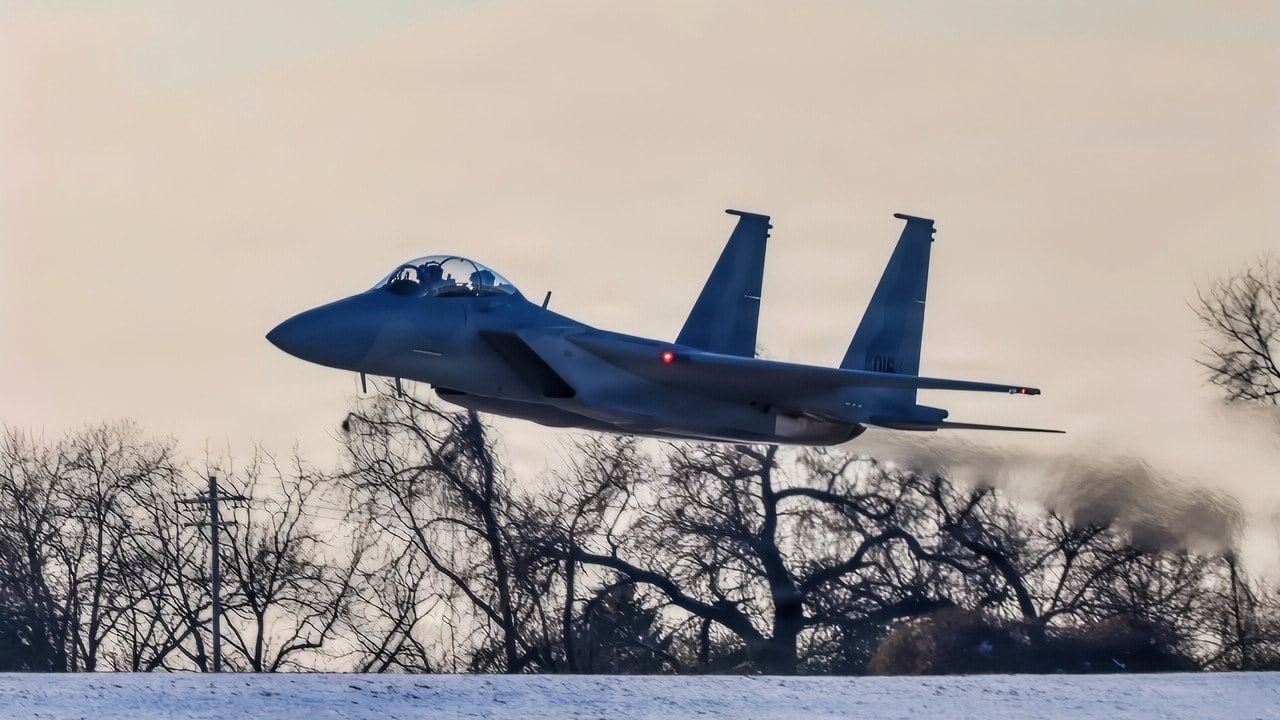
Summary and Key Points – The F-15EX Eagle II is positioned as a long-serving, high-performance fighter that can bridge the gap into the 2040s through upgrades, open architecture, and extended airframe life.
-Replacing legacy F-15C/Ds, it is framed as a “day two/day three” deep-penetration option once bombers suppress enemy air defenses.
-The aircraft is portrayed as a missile-heavy platform capable of carrying 12 AMRAAMs, pairing that loadout with an AESA radar and EPAWSS for survivability and situational awareness.
-With Mach 2.5 speed, high payload, and strong range, it is presented as a practical Indo-Pacific workhorse until sixth-generation programs mature.
Forget Stealth: The F-15EX Eagle II Fighter’s Biggest Advantage Is 16,000 Hours and Rapid Upgrades
The F-15EX Eagle II is a hot rod that makes pilots drool.
The speed and maneuverability are delicious.
The robust weapons systems and survivability make it a deft competitor to China, Russia, and North Korea.
This warbird could easily fly into the 2040s with an updatable airframe that can incorporate newer AESA radar iterations and improved electronic warfare suites to address future combat concerns.
Deep Penetrator After American Bombing Missions
The F-15EX is replacing the F-15 C/D.
The Eagle II can strike deep into enemy territory on Day Two or Three of warfare after enemy air defenses are suppressed by B-2 and B-21 bombers.
The advent of the Eagle II is warranted, even though it is not fully stealth, but it has some radar-evading features.
Sensor fusion is an enviable trait of the F-15EX. This allows the airplane to take data from multiple sources, such as radar, GPS, and infrared systems, to make a single capability for surviving in contested environments, increasing situational awareness, and minimizing pilot workload.
Air National Guard Units Are Excitedly Flying the F-15EX Eagle II
The F-15EX reached Initial Operational Capability in July 2024, with the first fighters delivered to the Oregon Air National Guard.
Can you imagine being a reserve pilot on the F-15EX? Let’s say your day job is pushing a mouse around on a PC in your office.
Once a month, you get to fly the Eagle II. This is certainly an irresistible aspect that will help the modern Air Force dominate the fight against some of the best pilots in the business, improving its combat performance.
Boeing Is Ready to Pump Out the Eagle II in Numbers
The Air Force wants at least 100 F-15EXs. This is a heady goal, and workers at the Boeing plant in St. Louis were on strike last year, but the defense contractor has navigated the action, and employees are fired up to deliver the new warbird on time and under budget. Boeing should be able to build two jets per month by 2027. The production lines are already ramped up.
Sixteen Thousand Hours of Flight Time Available
The F-15EX has an initial service life of 8,000 hours, which can extend to 16,000 hours with future upgrades.
That means it can fly until the 2040s. The airframe is solid. There is an open systems architecture to facilitate easier feature updates.
This Baby Is a Missile Truck
The Eagle II can also serve as a missile truck, bringing doom to the enemy.
The warbird has a penchant for launching robust and accurate AMRAAMs.
Twelve of these missiles can be deployed. These have a range of 87 miles. Standoff, beyond-visual-range (BVR) missiles will be a strong factor in future air combat. The Chinese have sold their BVR projectiles to Pakistan, which used them successfully during a huge dogfight with India last year.
Some Indian pilots never knew what hit them. This kinetic missile fight has put the flying world on notice that missiles like the AMRAAM and the Chinese PL-15 for their J-10C fighter jets will be instrumental in future wars.
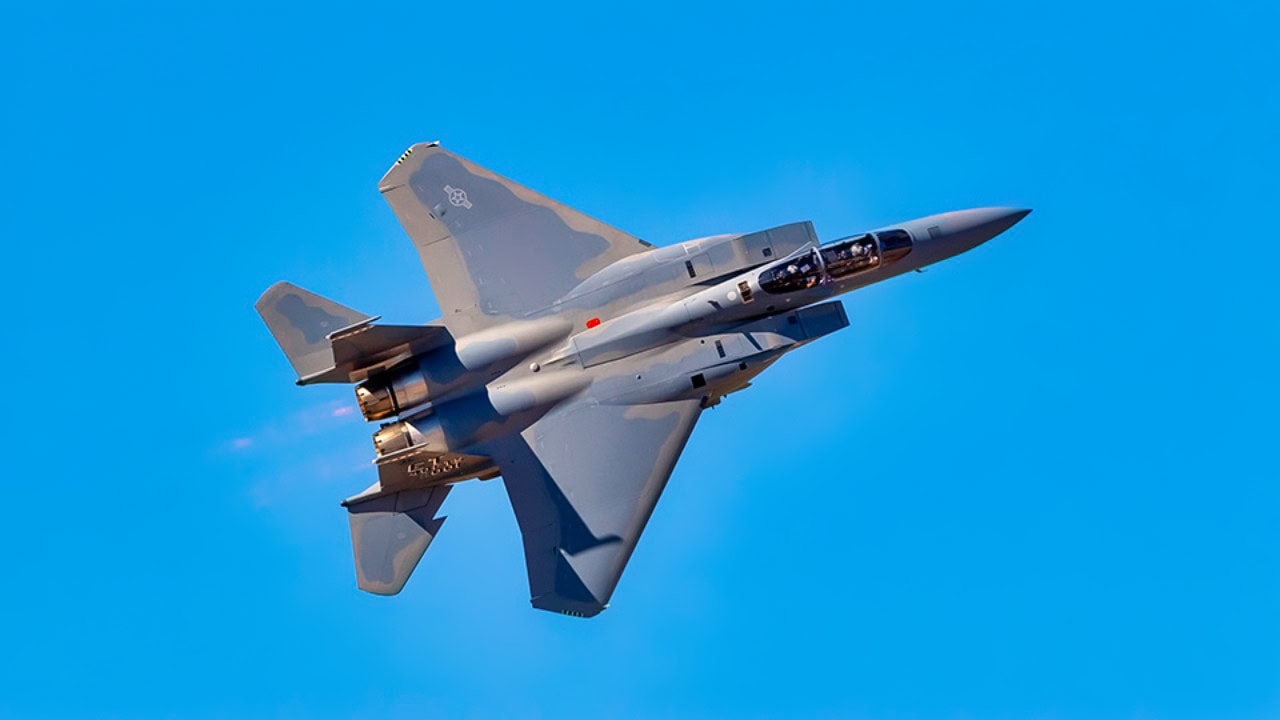
F-15EX Eagle II Fighter from Boeing.
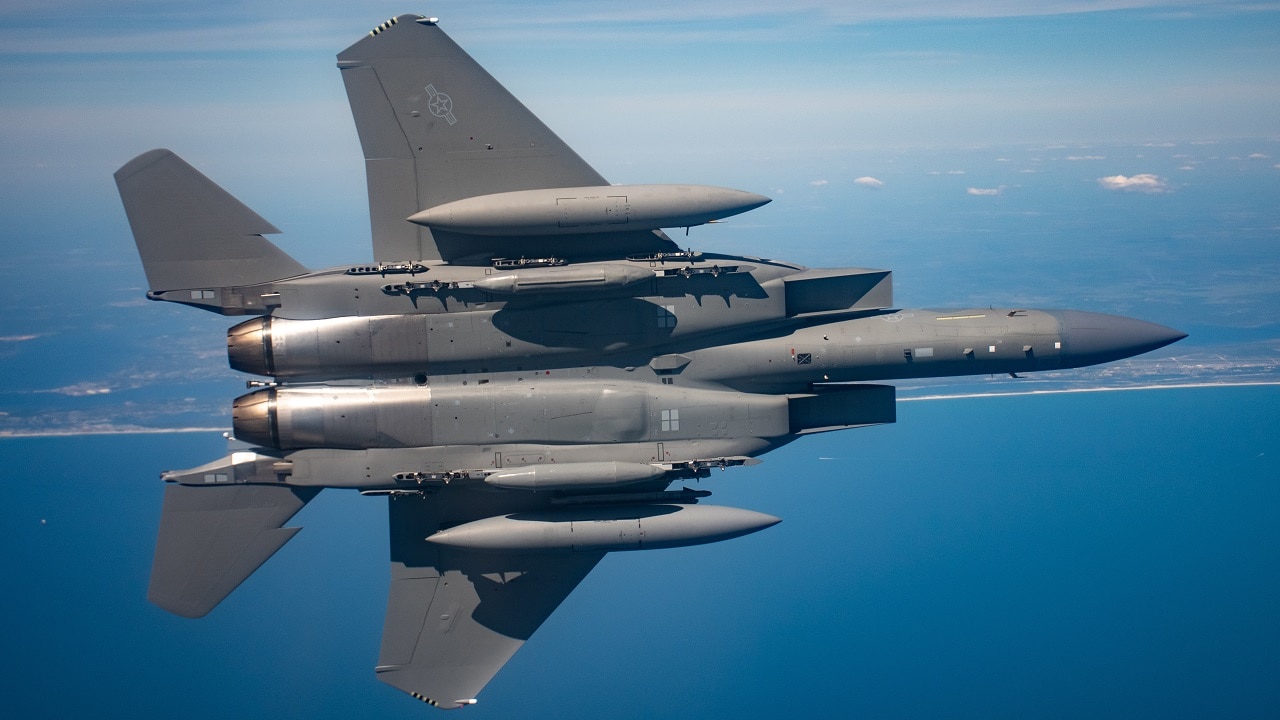
An F-15EX Eagle II from the 85th Test and Evaluation Squadron, 53rd Wing, takes flight for the first time out of Eglin Air Force Base, Fla., April 26, 2021, prior to departure for Northern Edge 2021. The F-15EX brings next-generation combat technology to a highly successful fighter airframe that is capable of projecting power across multiple domains for the Joint Force. (U.S Air Force photo by 1st Lt Savanah Bray)
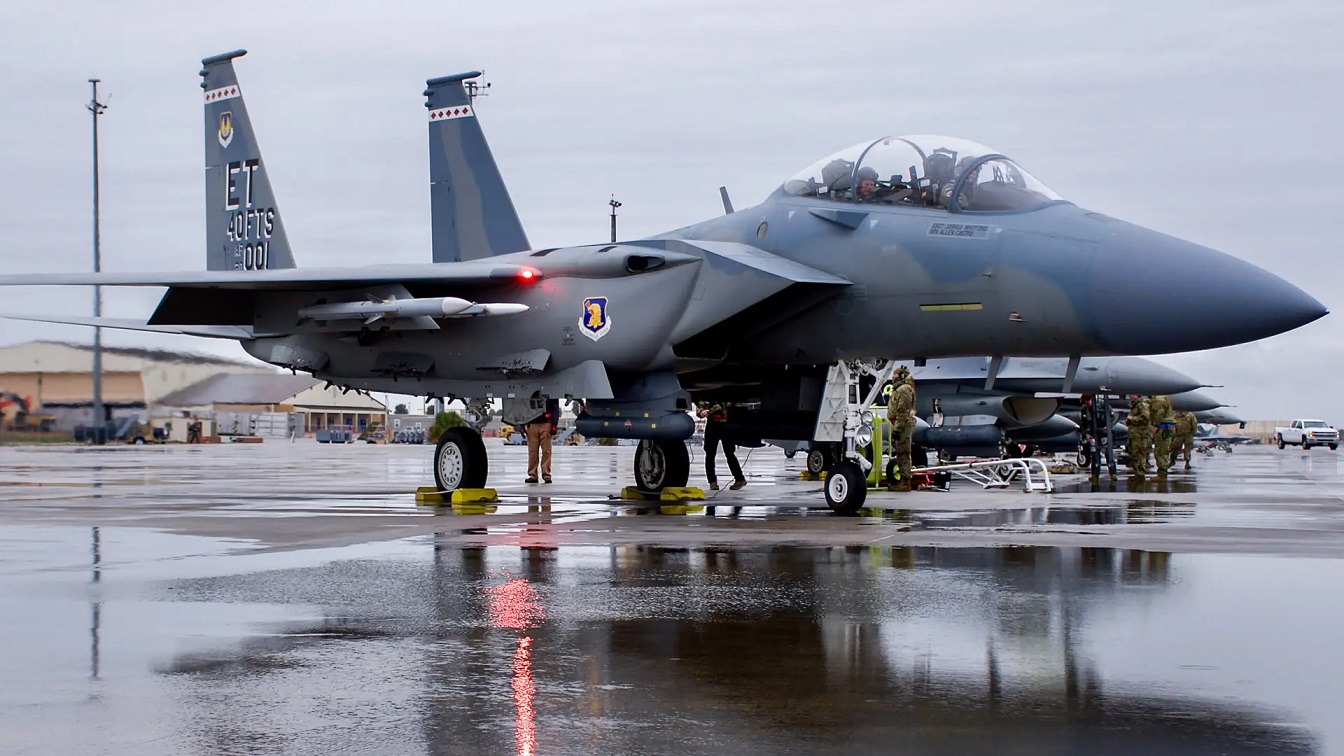
F-15EX. Image Credit: U.S. Air Force.
The F-15EX also features the AN/APG-82 AESA radar, plus the Eagle Passive Active Warning Survivability System (EPAWSS). This makes situational awareness and survivability possible in a multi-threat environment.
Knifing Through the Air at MACH 2.5 Speed
And this airplane is a scorcher, capable of MACH 2.5. The ceiling is 50,000 feet with a payload of nearly 30,000 pounds. Service life is over 20,000 hours, providing long-term capability to serve valiantly over the next two decades before upgrades are needed.
Long-range Ability for East Asian Deployment
The F-15EX has a combat radius of 791 miles. The range can be extended with aerial refueling.
This makes it a good asset for East Asia and could be a regular customer flying out of Guam and Okinawa. In fact, some F-15EX were flown out of Kadena Air Base during the Resolute Force Pacific exercise in July 2025.
The Eagle II will be a great transition airplane until the F-47 NGAD is built in numbers. Boeing also has the contract for the F-47, and the aerospace behemoth thinks the F-47 could conduct its first flight by 2028. That may be optimistic, but the F-15EX will give Boeing some time to remove the kinks and mitigate early difficulties of a sixth-generation fighter production effort.
This Airplane Has Much Potential
The F-15EX’s agility and diverse range of missions are important. The warbird will be upgradable after the next 15 years. It can bring 12 AMRAAMs to the fight and dominate the skies. Deployments to the Indo-Pacific will make China take notice, as China excels in BVR missile combat.
Boeing has outdone itself with the F-15EX Eagle II. It may not be fully stealthy, but it can be a difference-maker until the F-47 enters serial production.
The Eagle II should be built regularly soon, and two airplanes a month is a decent manufacturing rate.
Older F-15 pilots will be happy to know that the original Eagle’s combat prowess will live on with the F-15EX. It can serve into the 2040s, giving the Air Force confidence that it will dominate the skies for the next two decades or more.
About the Author: Brent M. Eastwood
Author of now over 3,000 articles on defense issues, Brent M. Eastwood, PhD is the author of Don’t Turn Your Back On the World: a Conservative Foreign Policy and Humans, Machines, and Data: Future Trends in Warfare plus two other books. Brent was the founder and CEO of a tech firm that predicted world events using artificial intelligence. He served as a legislative fellow for US Senator Tim Scott and advised the senator on defense and foreign policy issues. He has taught at American University, George Washington University, and George Mason University. Brent is a former US Army Infantry officer. He can be followed on X @BMEastwood.