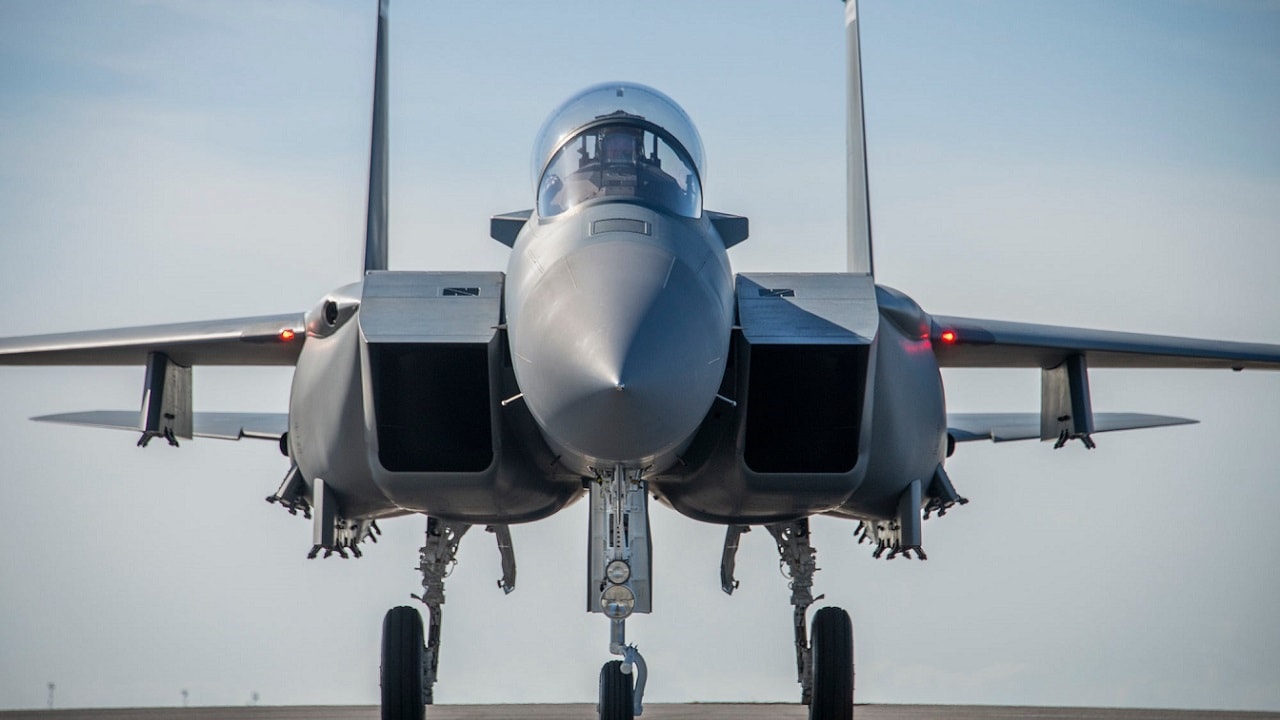
Key Points and Summary – Israel’s new F-15IA deal adds fresh-built, Israel-specific Eagles to complement its existing F-15I fleet, pairing long range with a heavy weapon load thanks to conformal fuel tanks that free up hardpoints for munitions. The F-15IA is expected to mirror much of the F-15EX’s performance, but with mission systems and integration tuned for Israeli weapons and operational needs.
-That same “sovereign” customization logic also defines Israel’s F-35I Adir—unique among F-35 operators for the leeway granted to incorporate domestic electronics and optimize compatibility.
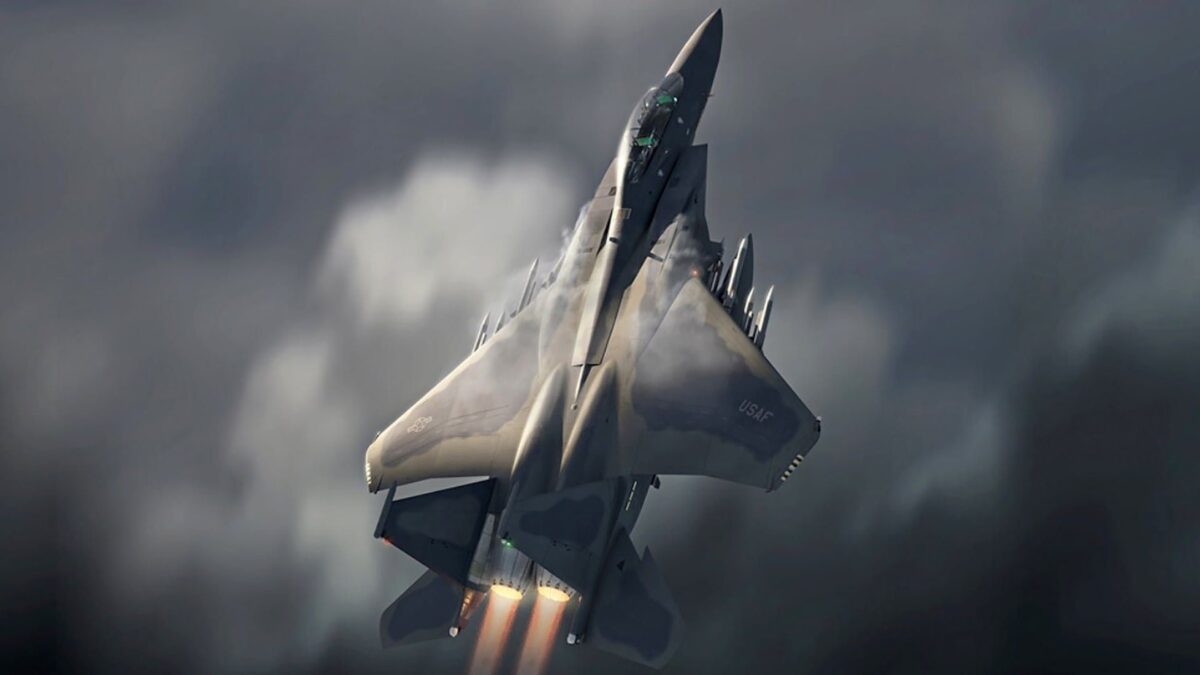
Boeing F-15EX. Image: Boeing artist rendition.
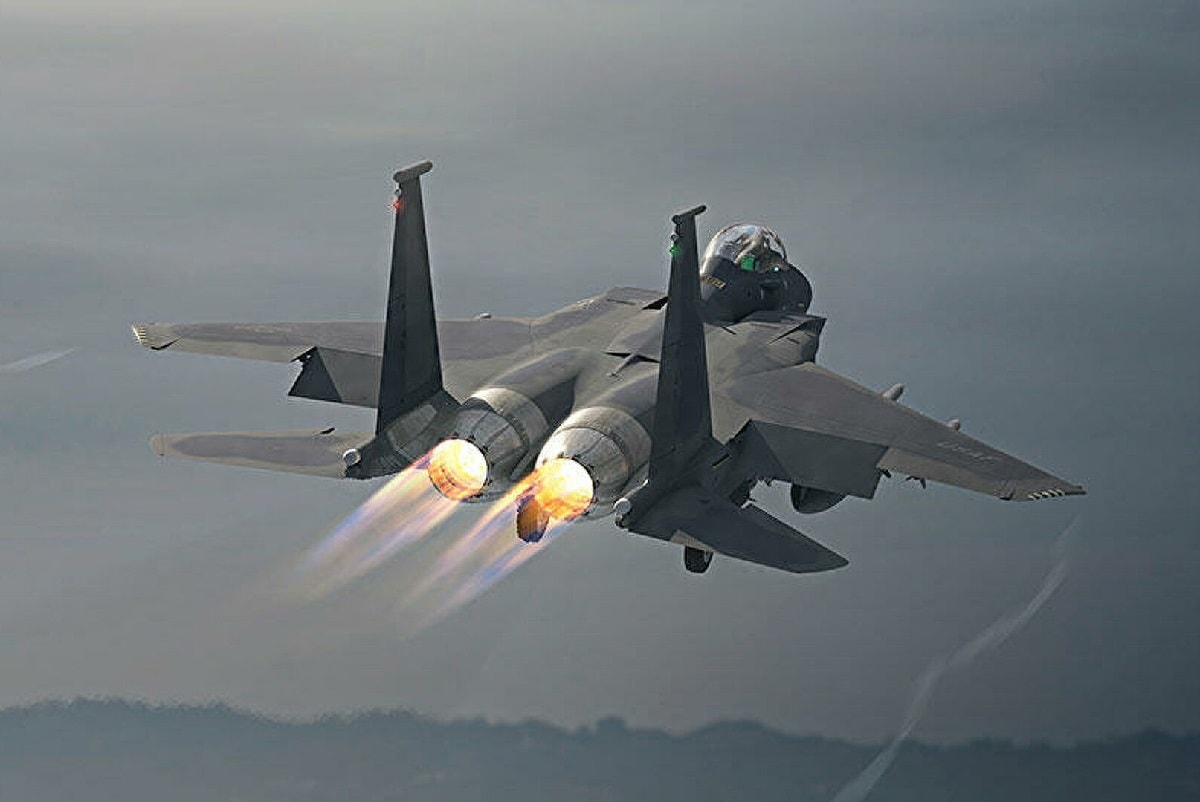
Boeing F-15EX Eagle II. Artist Image from Boeing.
-Recent long-range strike operations underscore why Israel values a mixed fleet: stealth for access, and large non-stealth platforms for standoff payload and persistence.
F-15IA: Israel Gets Its Own Version of the F-15EX Eagle II
Israel recently secured a weapons deal with the United States for F-15IA jets, new-builds that augment the previously purchased F-15I jets already in service with the Israeli Air Force.
The specially built jets carry the I designation, a nod to their intended customer, Israel, and they are made to Israeli specifications.
Large conformal fuel tanks give the F-15Is and the F-15IAs significantly more fuel than standard-build F-15s and do not occupy hardpoints that could otherwise be used for weaponry.
Instead, the F-15I’s conformal fuel tanks, mounted to the outsides of the jet’s engine air intakes, offer additional real estate for more weaponry, expanding the jet’s payload capacity.
For Israel, an increase in fuel capacity is a significant modification.
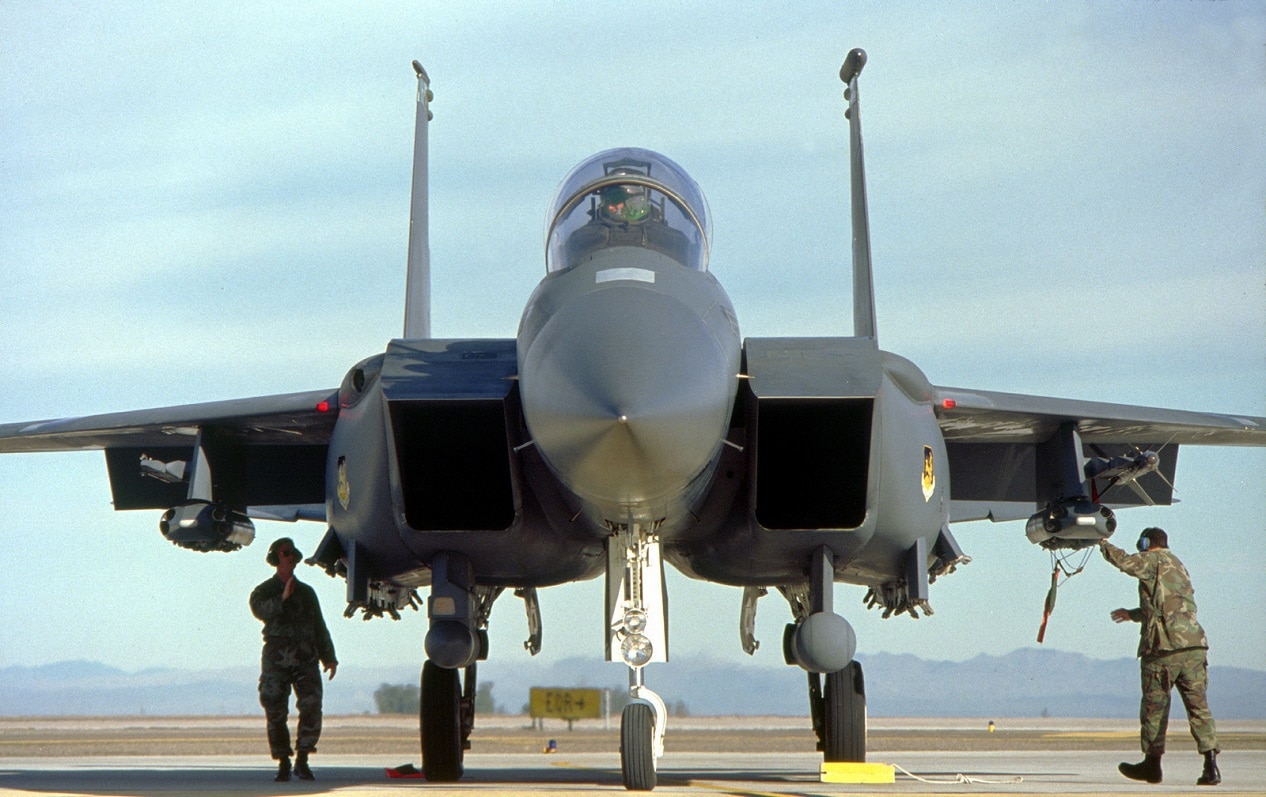
Staff Sgt. Dave Smith and Senior Airman John Pusieski from the 58th Operational Support Squadron, 58th Fighter Wing, peform last-minute checks and arm practice bombs on an F-15E Eagle aircraft from the 461st Fighter Squadron.
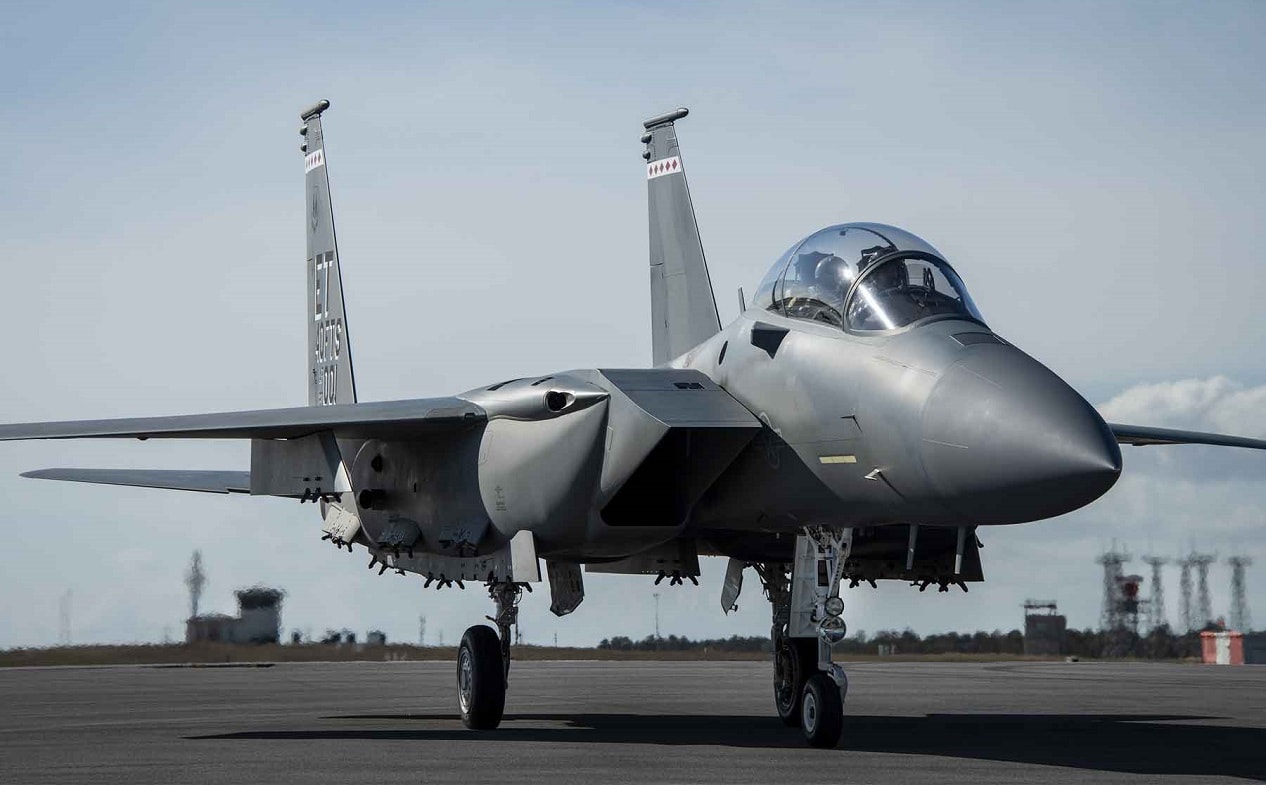
F-15EX. Image Credit: Boeing.
Though the country operates a small fleet of aerial refueling tankers, those jets are modified civilian aircraft and, as a result, not optimal for military applications.
Additionally, Israel’s tanker fleet is relatively aged, and a tanker capability gap could arise from its eventual retirement, possibly without immediate replacement.
These new F-15IA jets are, in essence, an Israel-specific variant of the F-15EX, similar to the F-15I, an Israeli derivative of the F-15E.
In terms of performance, the F-15IA is expected to be quite similar to the F-15EX Eagle II: similar engines, radar, power generation, and payload capacity.
But where it differs is in the sovereignty of its mission system. While the F-15EX Eagle II is an American fighter meant to use American weapons, the F-15IA is an Israeli-spec jet optimized for Israeli weapons.
Custom F-15?
But the F-15I is not the only American jet that has undergone significant modifications for the Israeli Air Force: the F-35I has too.
In fact, the country is the only partner in the multinational, American-led F-35 program that Washington has allowed any leeway to modify its stealth fighters.
Superficially, the Israeli-spec F-35s, a variant called F-35I, are similar to the other F-35A stealth fighters in service worldwide.
Internally, however, the jets are optimized for operations with Israeli equipment: both Israeli weaponry and digital architecture. The World Air Forces Directory states that Israel has 38 active F-35Is, with additional aircraft on order.
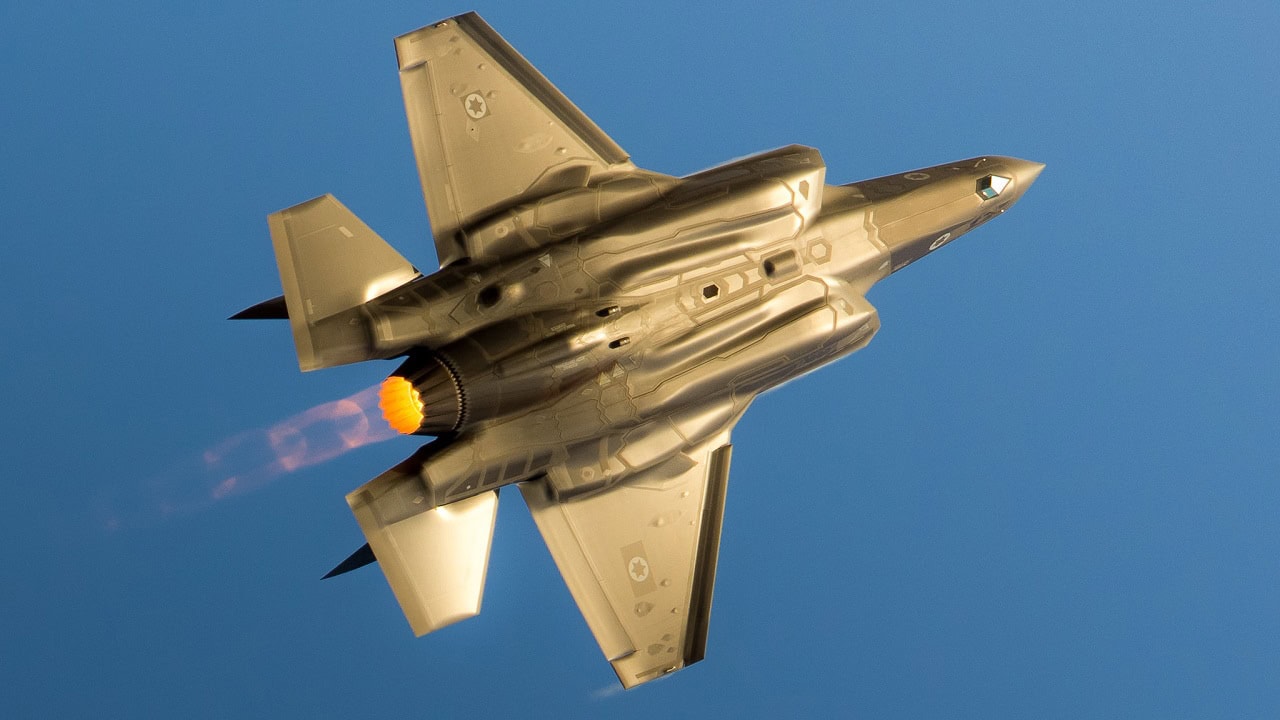
F-35I Adir. Image Credit: Creative Commons.
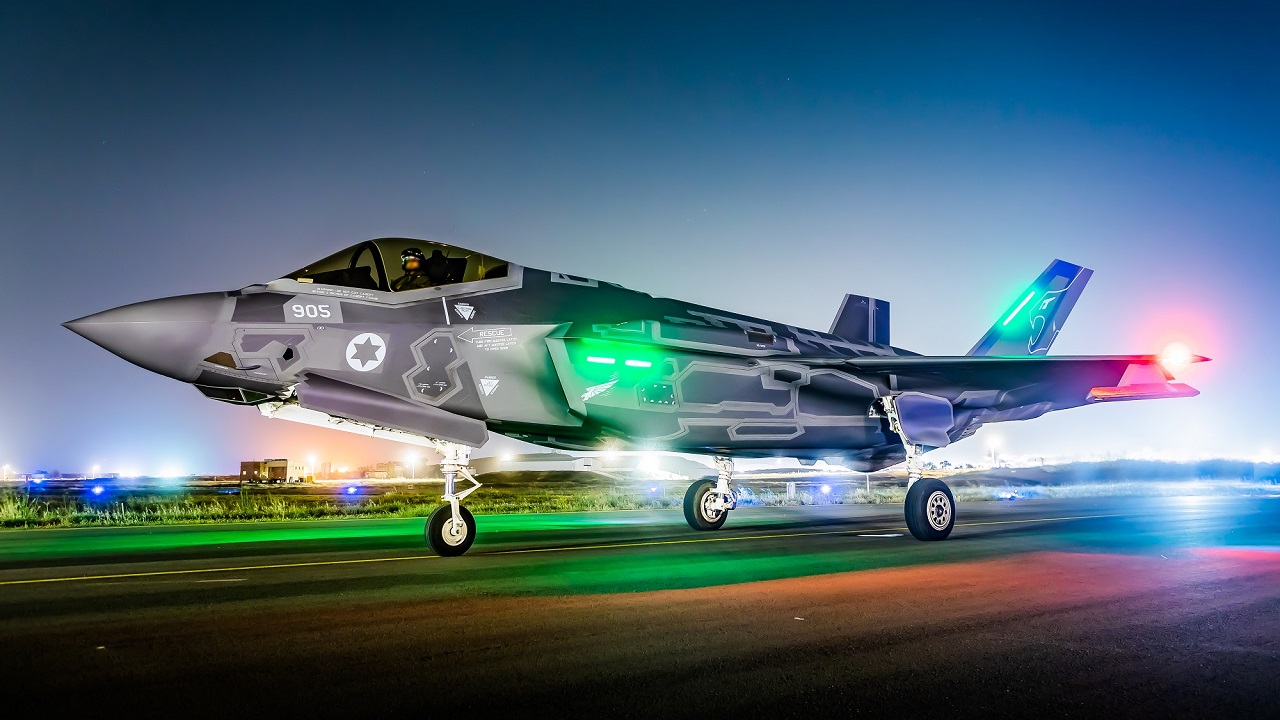
F-35I Adir serving in Israel’s Air Force. Image Credit: Creative Commons.
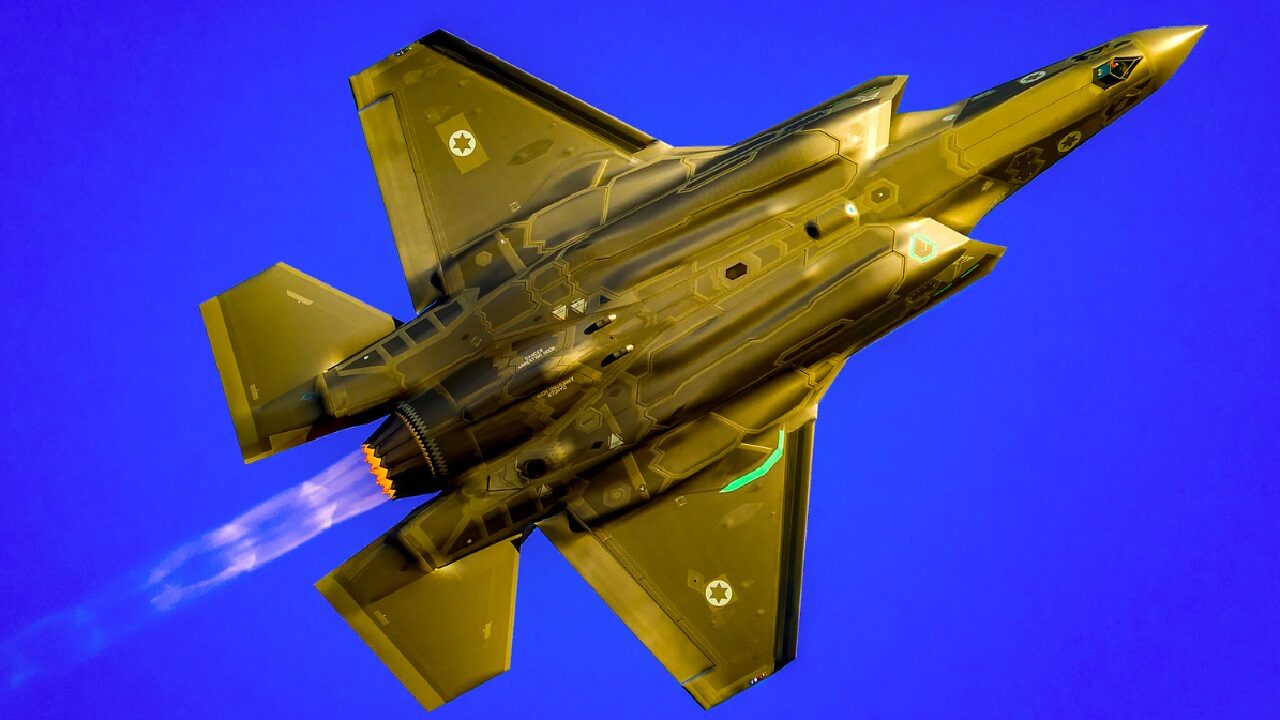
F-35I Adir. Image Credit: IDF Air Force.
Israel’s own electronics are one of the primary differentiating factors that set the jets apart from their F-35A counterparts.
In addition to countermeasures and other sensors that enhance the jet’s survivability in contested aerial environments, the F-35I also integrates more easily with Israeli weapons than would be possible with the standard-issue F-35A. In essence, better compatibility.
All F-35s, across the various variants, are equipped with the AN/ASQ-239 electronic warfare countermeasure system, “a next-generation electronic warfare suite providing offensive and defensive options for the pilot and aircraft to counter current and emerging threats. Its advanced technology optimizes situational awareness while helping to identify, monitor, analyze, and respond to threats,” the firm behind the system, BAE Systems, explains.
“Advanced avionics and sensors provide a real-time, 360º view of the battlespace, maximizing detection ranges and giving pilots evasion, engagement, countermeasure, and jamming options.” Israel, therefore, was given the green light to modify the BAE electronic warfare suite to ensure optimal compatibility with its own systems.
But in addition to some of the jet’s internals, the F-35I’s wings are also built in Israel, given the somewhat different components those jets require.
But why was Israel allowed to modify its fifth-generation stealth jets when no other country on earth was given that unique permission?
Though a complex, multi-faced topic, that decision was made, in part, by Israel’s unique security position within the Middle East at the heart of a region that has been hostile to the country.
Dovetailing with that security landscape is the United States’ commitment to preserving Israel’s technological edge over other regional actors. Political arguments for or against aside, the modification permissions granted to Israel align with ensuring the country’s military superiority in the Middle East.
That argument holds too for Israel’s successful F-15I bid.
And the utility of that decision has been recently made relatively clear. Late last year, Israel concluded its Operation Days of Repentance, a series of three strikes against around twenty targets across the Middle East, including Syria, Iraq, and Iran. The strikes against Iran were the most significant strikes on that country since the Iran-Iraq War that spanned the 1980s.
Both Israel’s F-35Is and F-15Is participated in the operation. But rather than being employed as an air superiority fighter, as the F-15’s engineers originally envisioned, Israel leveraged that Cold War-era warplane as a fighter-bomber.
Thanks to its pair of high-thrust engines and outsized payload capacity, as well as the additional range offered by the jet’s conformal fuel tanks, not only can F-15Is ferry significantly more payload than the stealthy F-35I, they can also fire outsize weaponry that would otherwise not physically fit in the F-35I’s internal weapons bay.
F-15IA: The Bottomline
It will be some time yet before Israel’s newly ordered aircraft arrive in-country for active service.
But the jets have shown that, despite the shift in aerial warfare toward advanced, fifth-generation aircraft, there is still a role for proven fourth-generation aircraft, albeit with essential modernizations.
About the Author: Caleb Larson
Caleb Larson is an American multiformat journalist based in Berlin, Germany. His work covers the intersection of conflict and society, focusing on American foreign policy and European security. He has reported from Germany, Russia, and the United States. Most recently, he covered the war in Ukraine, reporting extensively on the war’s shifting battle lines from Donbas and writing on the war’s civilian and humanitarian toll. Previously, he worked as a Defense Reporter for POLITICO Europe. You can follow his latest work on X.