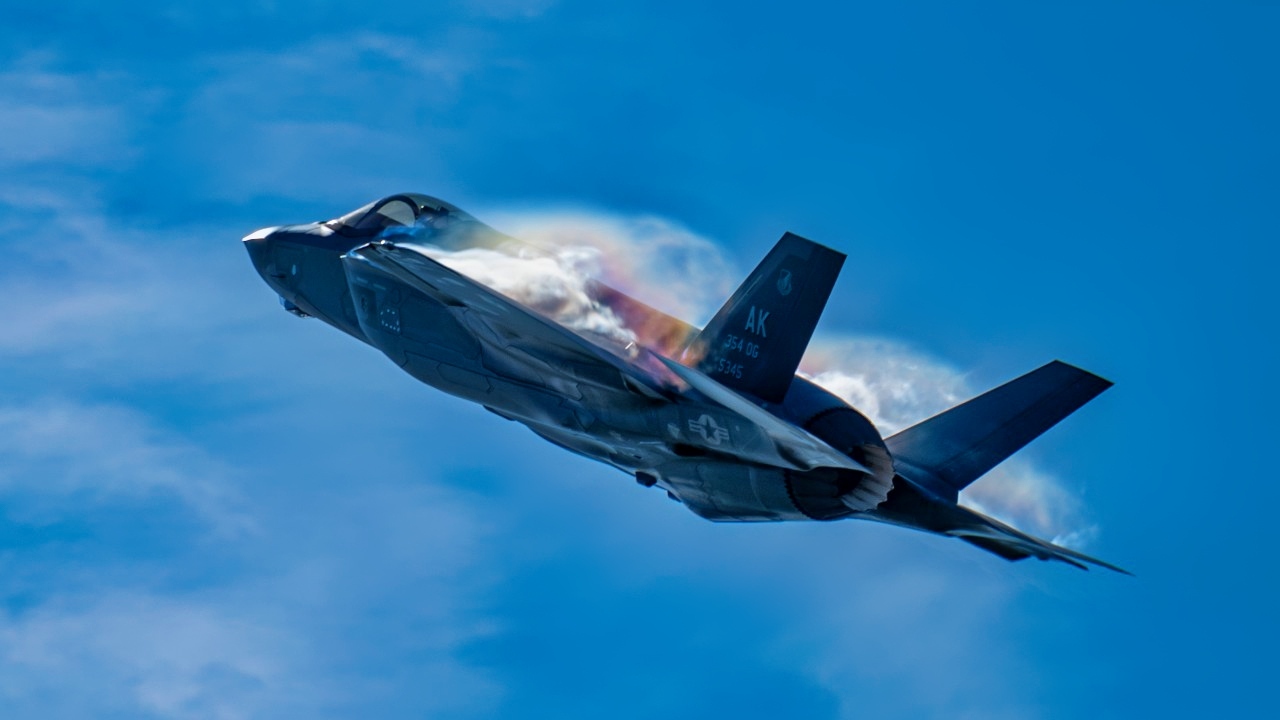
Summary and Key Points: The F-35’s combat edge increasingly comes from computing rather than airframe performance alone. Sensor fusion pulls EO/IR, infrared, navigation, electronic warfare, and weapons data into a single coherent picture, then cross-references Mission Data Files to identify threats and plan attacks from safer stand-off ranges.
-Regular “software drop” upgrades expand capability by adding weapons integration, faster processing, and improved guidance performance for existing missiles.
-Open-architecture standards aim to speed modernization without rebuilding the jet’s digital backbone.
-But growing connectivity introduces risk: compromised data, degraded targeting, or corrupted navigation could undermine missions.
-The F-35’s long-term advantage depends on hardening its networks as aggressively as it upgrades them.
The F-35’s Real Weapon Is Its Computer—And It Keeps Getting Smarter
Upgrades to the F-35 continue to improve an impressive airframe.
Identifying a Chinese or Russian 5th-generation jet from safe stand-off ranges, ensuring a smooth and successful “glide slope” landing onto a carrier deck, merging otherwise disparate pools of information into a single organized, integrated picture for pilots, and quickly integrating new, paradigm-changing air-dropped weapons are all capabilities now fundamental to the operation of the F-35 Joint Strike Fighter.
These factors help explain why the F-35 is often referred to as a “flying computer,” alongside its more general reputation as a high-speed, stealthy, and maneuverable multi-role attack fighter.
Much, if not most, of the jet’s advanced performance is made possible by advanced computing, something easily overlooked or even eclipsed by the jet’s other, more visible and well-known attributes.
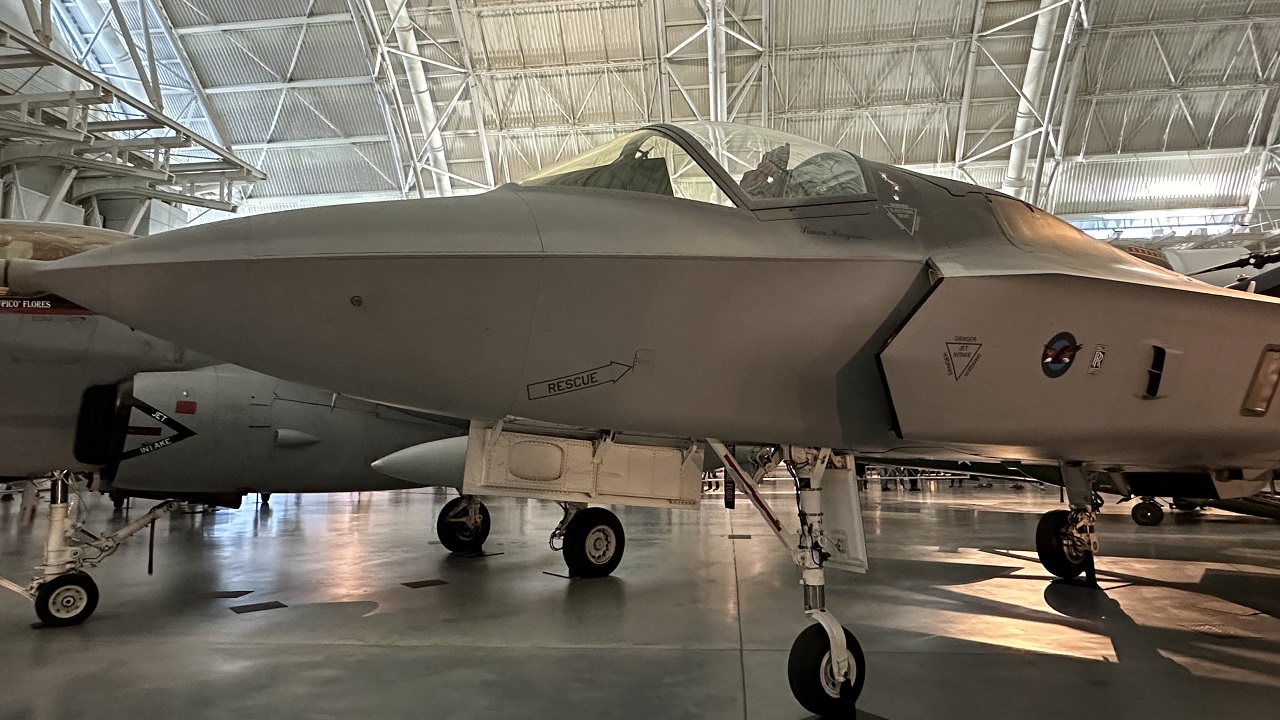
X-35B Joint Strike Fighter. Image taken on October 1, 2022 at National Air and Space Museum.
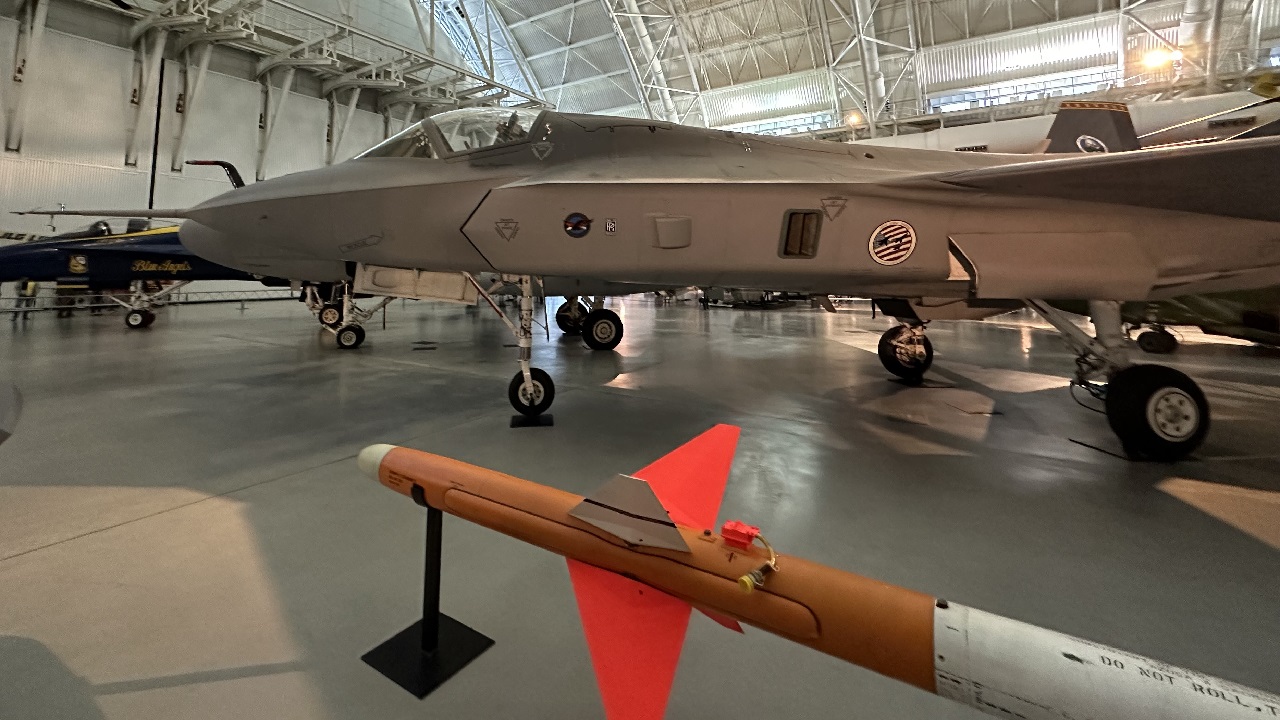
X-35B Joint Strike Fighter. Image taken on October 1, 2022 at National Air and Space Museum.
While many F-35 missions and operations, of course, directly pertain to a “kinetic” kill, attack, or combat engagement, they are all largely enabled by computer technology.
Sensor Fusion and AI
The jet’s well-known “sensor fusion,” which relies upon an advanced, AI-like ability to gather, distill, integrate, and present vast amounts of otherwise overwhelming data, is enabled by computing.
This means infrared and EO/IR sensor data, navigational and terrain specifics, weapons guidance technology and even EW information are all compiled, analyzed in relation to one another and presented to pilots in an integrated single picture. F-35 computing also enables its sensors to complete rapid threat identification and attack planning at safer, undetected stand-off ranges by bouncing incoming data off of its Mission Data Files database library cataloging known threats.
F-35 computing also brings the jet’s crucial “software drop” updates to fruition, an incremental upgrade process which continuously adds new weapons interfaces, improved sensing and high-speed AI-enabled information processing.
The “fourth” software drop, for example, integrates the paradigm-changing Stormbreaker bomb into the jet, introducing unprecedented attack ranges of up to 40 nautical miles, two-way course-correcting datalinks, and all-weather targeting technology.
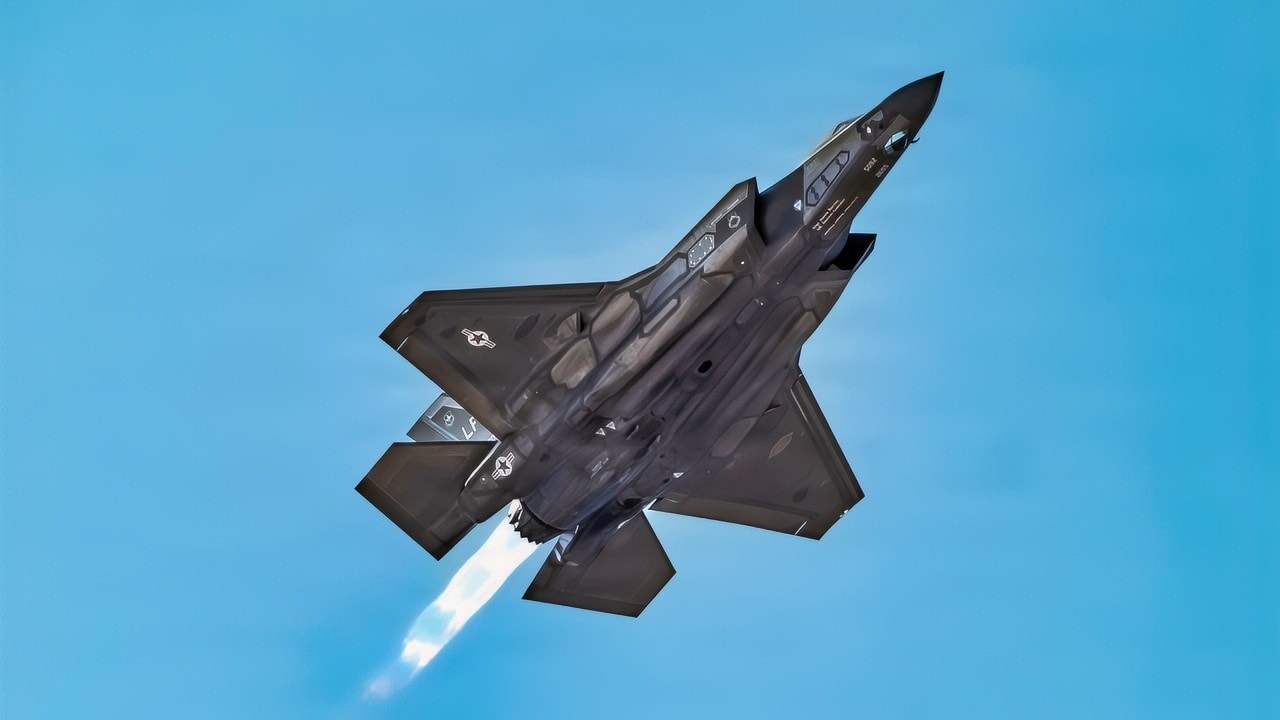
A U.S. Air Force F-35A Lightning II, assigned to the 56th Fighter Wing, takes flight, Nov. 26, 2025, at Luke Air Force Base, Arizona. The F-35A’s is designed for missions ranging from air superiority and electronic warfare. The 56th FW’s training programs emphasize interoperability, ensuring F-35A pilots can effectively collaborate with partner nations to achieve shared objectives. (U.S. Air Force photo by Airman 1st Class Belinda Guachun-Chichay)
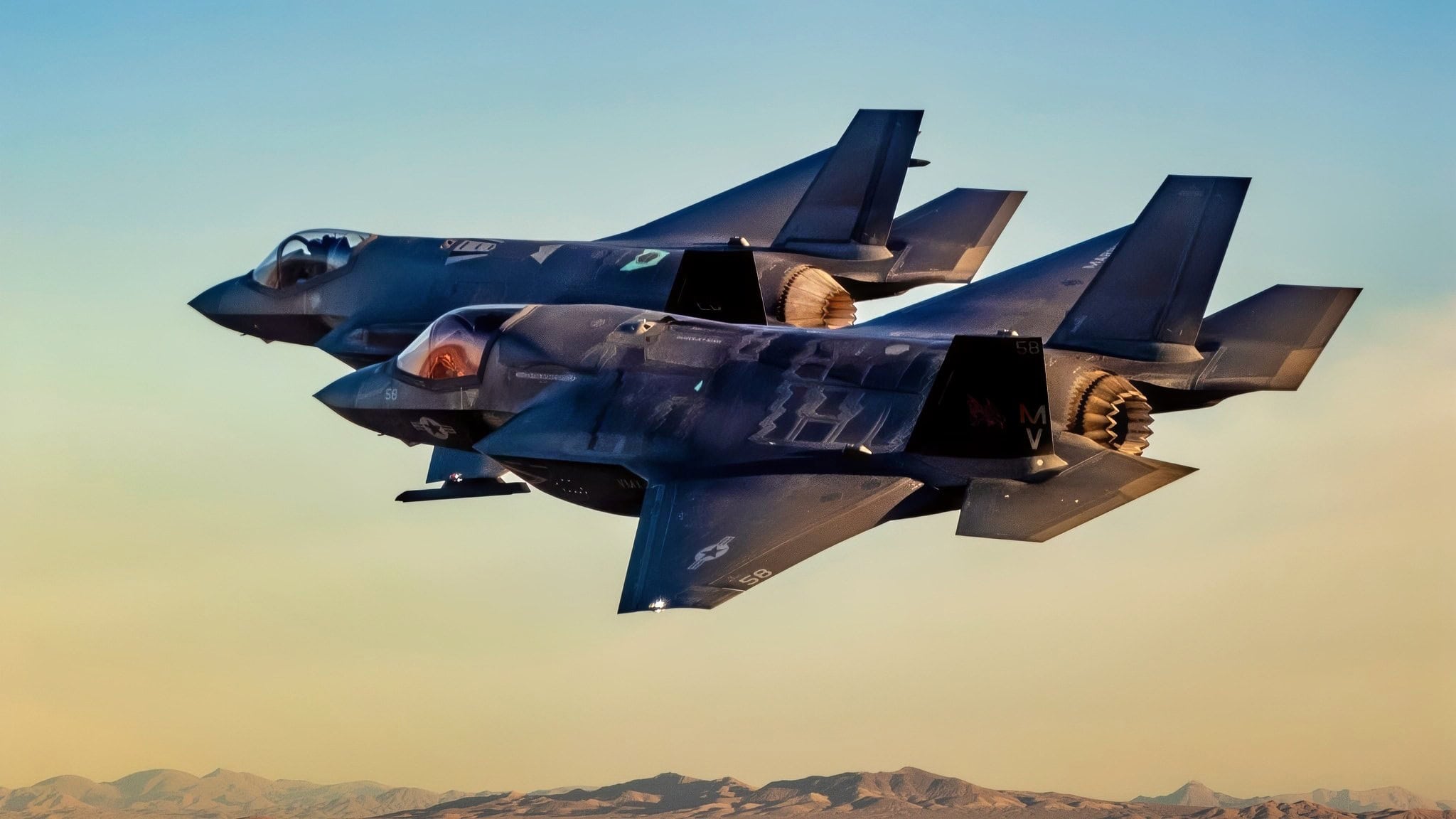
Test pilots with the 461st Flight Test Squadron, 412th Test Wing, return to Edwards Air Force Base, California, on January 21 after conducting a TR-3 AIM-120 live fire mission over the Pacific Test Range. The F-35 Integrated Test Force at Edwards is responsible for developmental testing of all three F-35 aircraft variants across the joint-services. (Courtesy Photo)
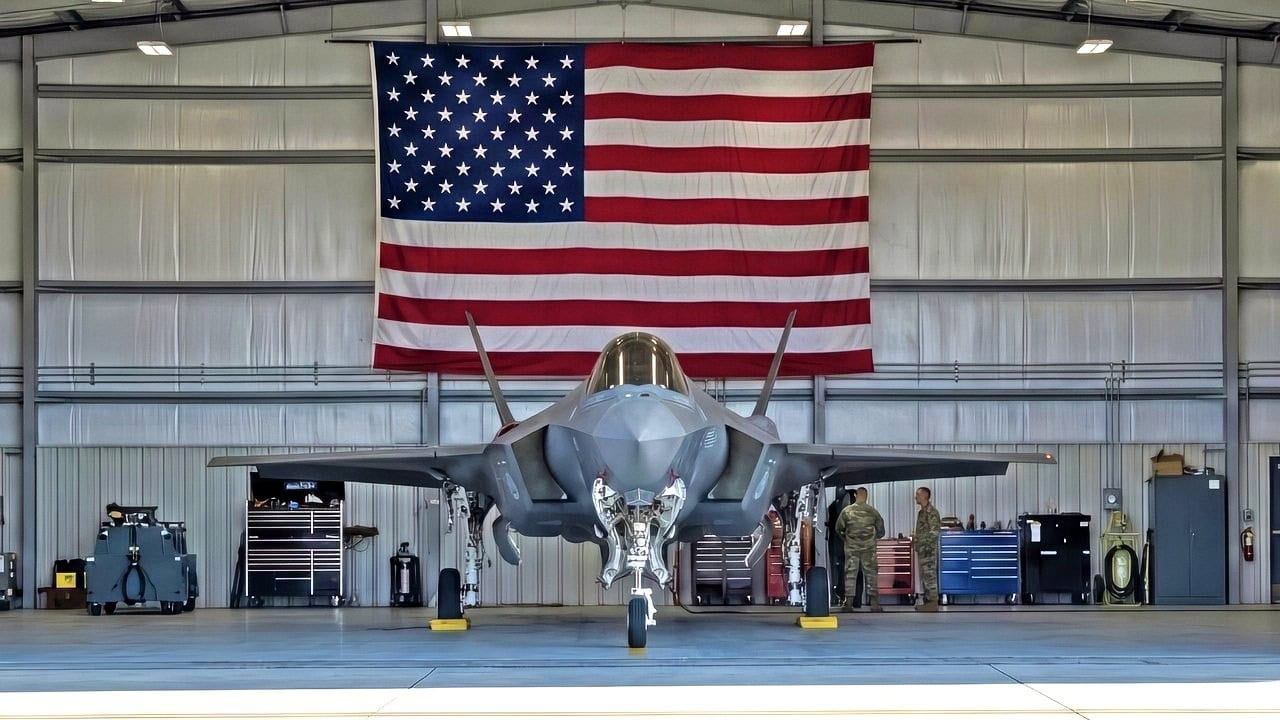
F-35 in the Hanger. Image Credit: Nano Banana Pro.
Computing also plays a key role in precision targeting, as software upgrades can, in many cases, improve the performance of air-to-air and air-to-ground weapons.
This is particularly true for the F-35s AIM-120 and AIM-9X weapons, which have received flight-path and guidance technology enhancements through the integration of new software.
Much of this evolving process, or ongoing iteration of software upgrades to ensure continuous modernization, is made possible by common technical standards.
Often referred to as “open architecture,” the intent is to engineer a system with interoperable IP protocols so that new technologies can be quickly integrated without having to “re-construct” the aircraft’s computing infrastructure.
This kind of cyber-reliant modernization trajectory for the F-35, intended to ensure the stealth jet retains its performance edge well into the 2070s and beyond, also needs to ensure that computer systems are sufficiently “hardened” against cyberattacks and intruders.
Hack-Proof F-35
While all of the F-35’s advanced computing is naturally bringing unparalleled and potentially breakthrough systems to war in ways that may not have even been anticipated, added computer networking can also introduce new vulnerabilities.
What if an F-35’s computer was somehow “hacked,” derailed, denied service, or fed wrong information?
Pilots could be fed incorrect targets or given erroneous navigational details. Also of great concern, what if weapons targeting were compromised as well?
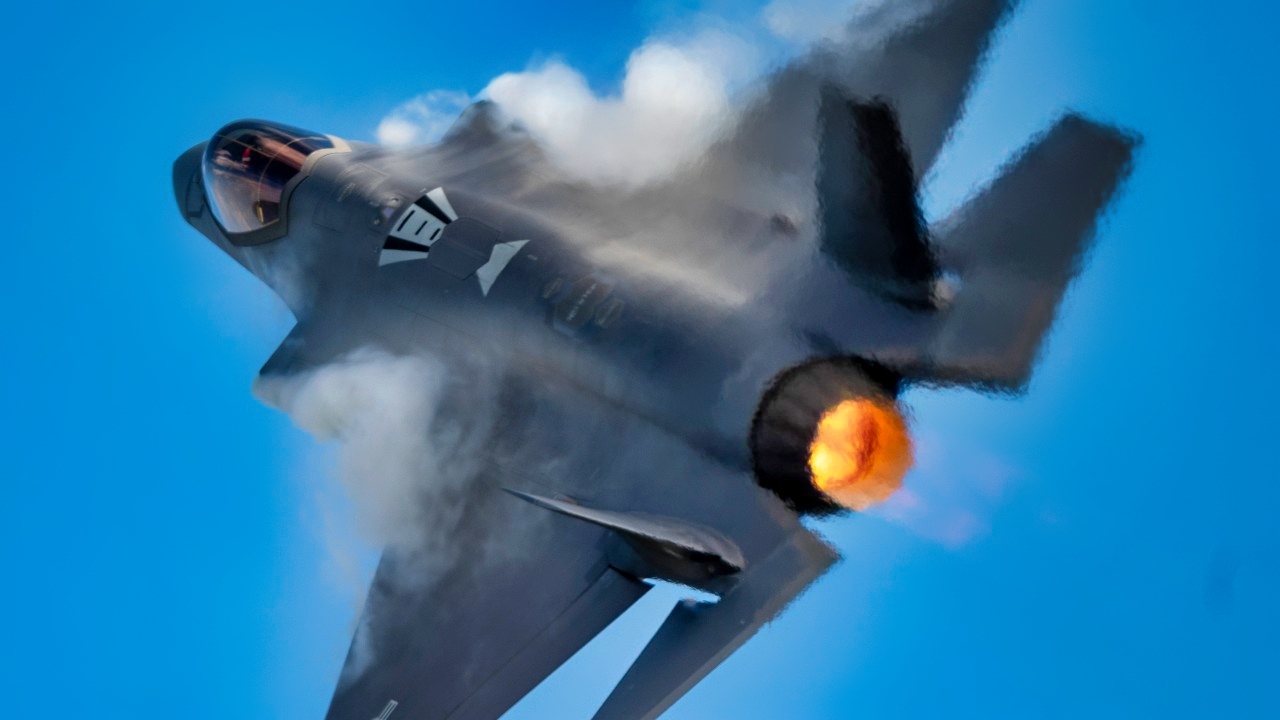
U.S. Air Force Maj. Melanie “Mach” Kluesner, the pilot for the F-35A Demonstration Team, performs aerial maneuvers in a USAF F-35A Lightning II during the practice day before the airshow at Jacksonville Naval Air Station, Florida, on 18 October, 2024. The practice day ensures that the team is able to safely and properly display the power, agility, and lethality of America’s 5th generation fighter jet. (U.S. Air Force photo by Senior Airman Nicholas Rupiper)
Across all weapons systems, including the F-35, the advantages and challenges of increased computer reliability can be described as a dual-pronged phenomenon.
Increased computer modernization, data sharing, and organized streams of information can also increase vulnerability. Are the unprecedented advantages afforded by advancing computing and software upgrades offset by an increased susceptibility to cyberattack?
Greater networking of combat nodes means an intruder could have a significant impact on multiple systems by merely penetrating or compromising a single platform, node, or point of entry. The need to safeguard F-35 computing has been on the Pentagon’s radar for many years now.
Interestingly, as early as 2016, the Air Force was working intensively on the need to “bake in” cyber protections and resilience.
About the Author: Kris Osborn, President of Warrior Maven and Aviation Expert
Kris Osborn is the President of Warrior Maven – Center for Military Modernization. Osborn previously served at the Pentagon as a highly qualified expert in the Office of the Assistant Secretary of the Army—Acquisition, Logistics & Technology. Osborn has also worked as an anchor and on-air military specialist at national TV networks. He has appeared as a guest military expert on Fox News, MSNBC, The Military Channel, and The HistoryChannel. He also has a Master’s Degree in Comparative Literature from Columbia.