
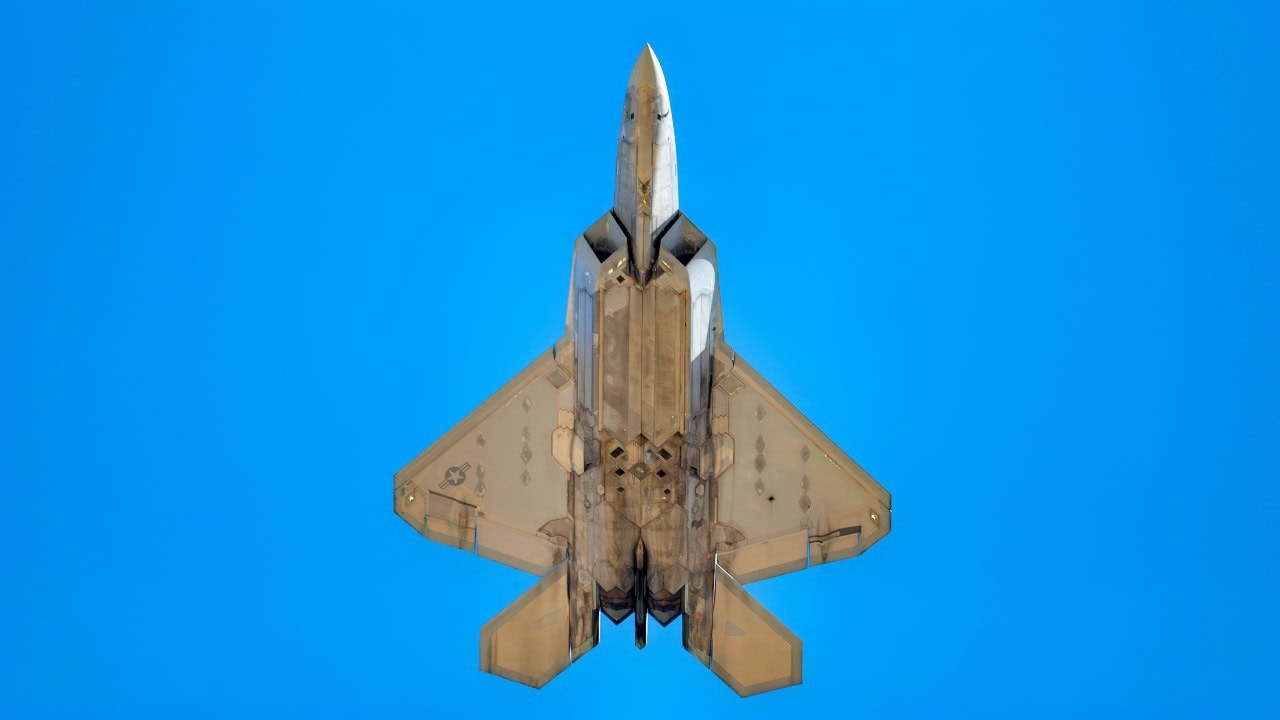
Summary and Key Points: Defense analyst Harrison Kass evaluates the confrontation between U.S. 5th-generation stealth fighters and the Russian S-400 Triumf.
-As of March 13, 2026, the F-22 Raptor and F-35 Lightning II have demonstrated superior electronic warfare (EW) and sensor fusion capabilities during Operation Epic Fury.
-This report analyzes the S-400’s 600km detection range versus the F-22’s 0.0001 m² radar cross-section (RCS).
-Kass explores the F-35’s role as a “flying sensor node” using EOTS and DAS to coordinate standoff strikes, concluding that stealth aircraft maintain a decisive advantage in Suppression of Enemy Air Defenses (SEAD).
The Stealth Duel: Why the F-22 and F-35 Still Hold the Edge Over Russia’s S-400
One persistent question in modern air warfare is how fifth-generation stealth fighters, like the F-22 and F-35, would fare against advanced air defense systems, such as the S-400, widely considered one of the most advanced surface-to-air missile (SAM) systems in the world.
The F-22 and F-35, meanwhile, were designed specifically to penetrate dense air defense networks, setting the stage for a potential confrontation with deep implications for the broader contest between stealth technology and modern defense systems.
And in short, the answer is complicated.

F-22 Raptor At National Museum of the Air Force. Photo Taken by Harry J. Kazianis for 19FortyFive Back in July 2025.

F-22 Raptor Exhibit Explainer 19FortyFive Photo. Taken By Harry J. Kazianis in July 2025 at the National Museum of the Air Force.

F-22 Raptor Model. Image Credit: 19FortyFive.com
Guarding the Skies
The S-400 Triumf entered Russian service in 2007, succeeding the S-300 series.
Designed to defend large areas against aircraft, cruise missiles, and ballistic missiles, the S-400 has a maximum engagement range of up to 400 kilometers using the 40N6 missile (and others) and a radar detection range of up to 600 kilometers for large aircraft.
The system can target up to 80 targets simultaneously.
Once deployed, the 40N6 travels at Mach 14, with an engagement altitude of up to 30 kilometers, and relies on semi-active and active radar homing (depending on missile type) for guidance. But the S-400 does not operate alone; it is part of a layered integrated air defense system (IADS) that also includes early-warning radars, command posts, shorter-range SAM systems, and fighter aircraft.
Dominating the Skies
The F-22 Raptor is still the world’s premier air superiority fighter, despite debuting a generation ago. Designed during the late Cold War, the F-22 emphasizes stealth, speed, and sensor dominance, with a maximum speed of Mach 2.25 and a combat radius of 760 miles.
The world’s first stealth fighter, the F-22, has a radar cross-section (RCS) often estimated around 0.0001-0.0002 square meters.
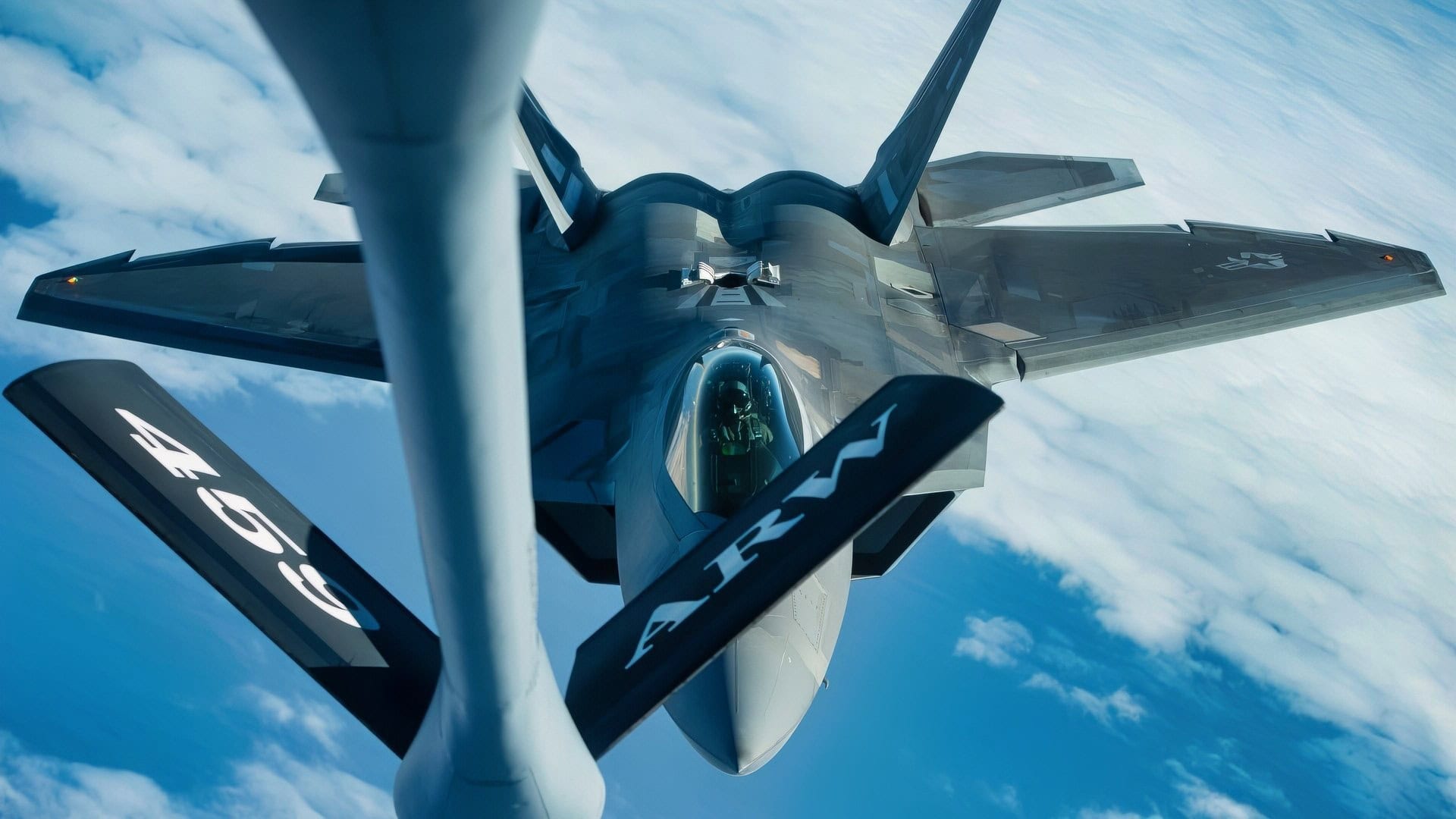
An F-22 Raptor from the Hawaii Air National Guard’s 199th Fighter Squadron, conducts aerial refueling with a KC-135 Stratotanker near Joint Base Pearl Harbor-Hickam, Hawaii, Jan. 15, 2019. The F-22 Raptors conducted interoperability training with the B-2 Spirit bomber deployed here from Whiteman Air Force Base, Missouri. The bombers and more than 200 Airmen are deployed in support of U.S. Strategic Command’s bomber task force mission. Bomber aircraft regularly rotate through the Indo-Pacific region to integrate capabilities with key regional partners and maintain a high state of aircrew proficiency. (U.S. Air Force photo by Master Sgt. Russ Scalf)

An F-35A Lightning II flown by a 65th Aggressor Squadron (AGRS) pilot takes off for its first flight with a new paint scheme at Nellis Air Force Base, Nevada, May 26, 2022. The mission of the 65 AGRS is to know, teach and replicate fifth-generation air adversaries tactics. (U.S. Air Force photo by Airman 1st Class Josey Blades)
The F-35 Lightning II, meanwhile, serves a different role than the F-22. While still stealthy, the F-35 prioritizes sensor fusion and battlefield networking, not air superiority, to serve as a battlefield quarterback, so to speak.
The slower, less agile F-35 has a top speed of Mach 1.6 and an estimated RCS of 0.001 square meters. The F-35 is also equipped with a Distributed Aperture System (DAS), an Electro-Optical Targeting System (EOTS), and the ability to share advanced data across multiple platforms. Indeed, the F-35 is often described less as a fighter and more as a flying sensor node that connects multiple elements of the battle space.
F-22 v S-400
In a direct contest between the F-22 and the S-400, stealth gives the aircraft a significant advantage, reducing the SAMs’ detection range. Long-range radar may detect something, but is unlikely to provide fire-control-quality targeting.
Also, the F-22 can jam or degrade radar signals with its EW capabilities. The F-22 can also launch standoff weapons before entering engagement zones, targeting the SAM and related infrastructure.
But the SAM is part of a layered radar system that combines multiple frequencies, meaning the F-22 is not impervious to detection. Still, the F-22 was designed to destroy these networks through suppression of enemy air defenses (SEAD) and carries an advantage in the confrontation.
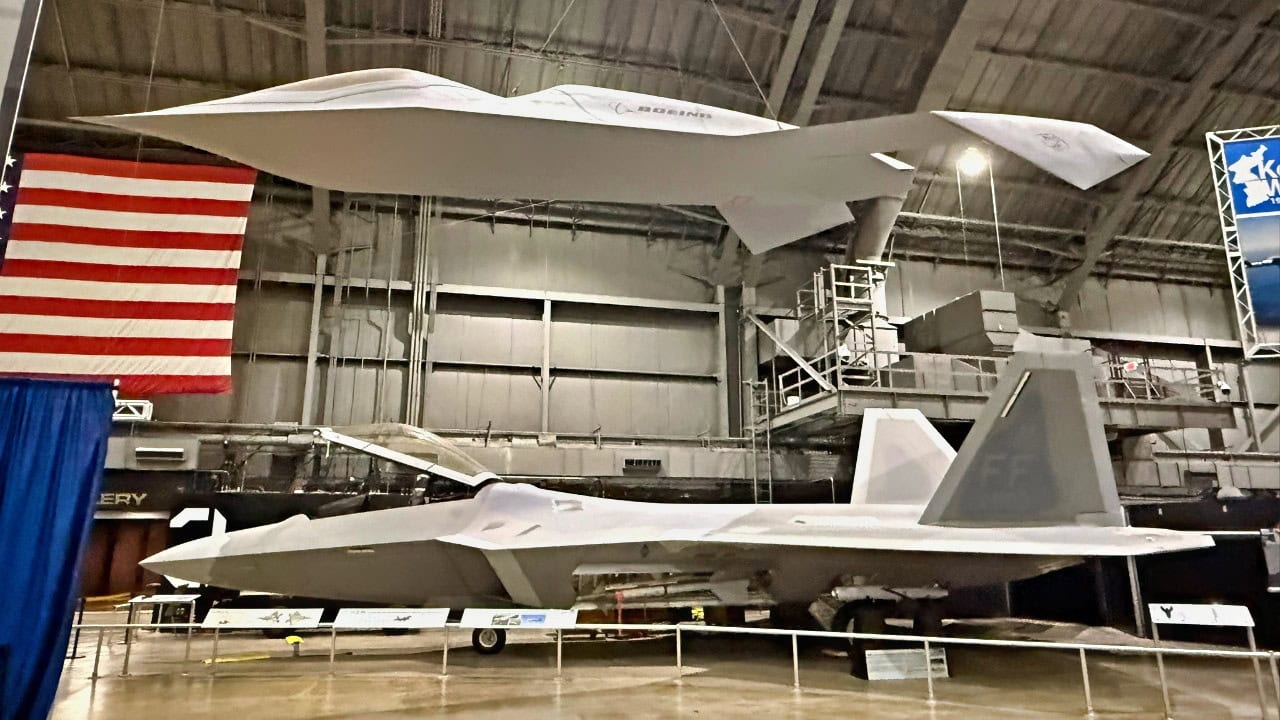
YF-118G. Image taken by Harry J. Kazianis for 19FortyFive.
F-35 v S-400
The F-35 would approach the confrontation differently; instead of relying solely on stealth, it would integrate intelligence from multiple sensors, share targeting data with other aircraft, and identify radar emitters across the battle space.
This would allow the F-35 to map air defense networks and guide standoff weapons accordingly. Using sensor fusion, networked warfare, and electronic attack, the F-35 would operate as the eyes of a strike package, enabling other assets to eliminate air defenses and clear the way for safer operations.
Real World Expectations
Though a direct one-on-one contest between a stealth fighter and an S-400 battery is unlikely, because modern air combat typically involves multi-layered operations, the S-400 would be part of a much larger defense network rather than operating alone.
A more typical sequence, as Operation Epic Fury demonstrated, would be cyber and electronic warfare attacks followed by cruise missile strikes on radar sites with stealth aircraft, then penetrating radar coverage.
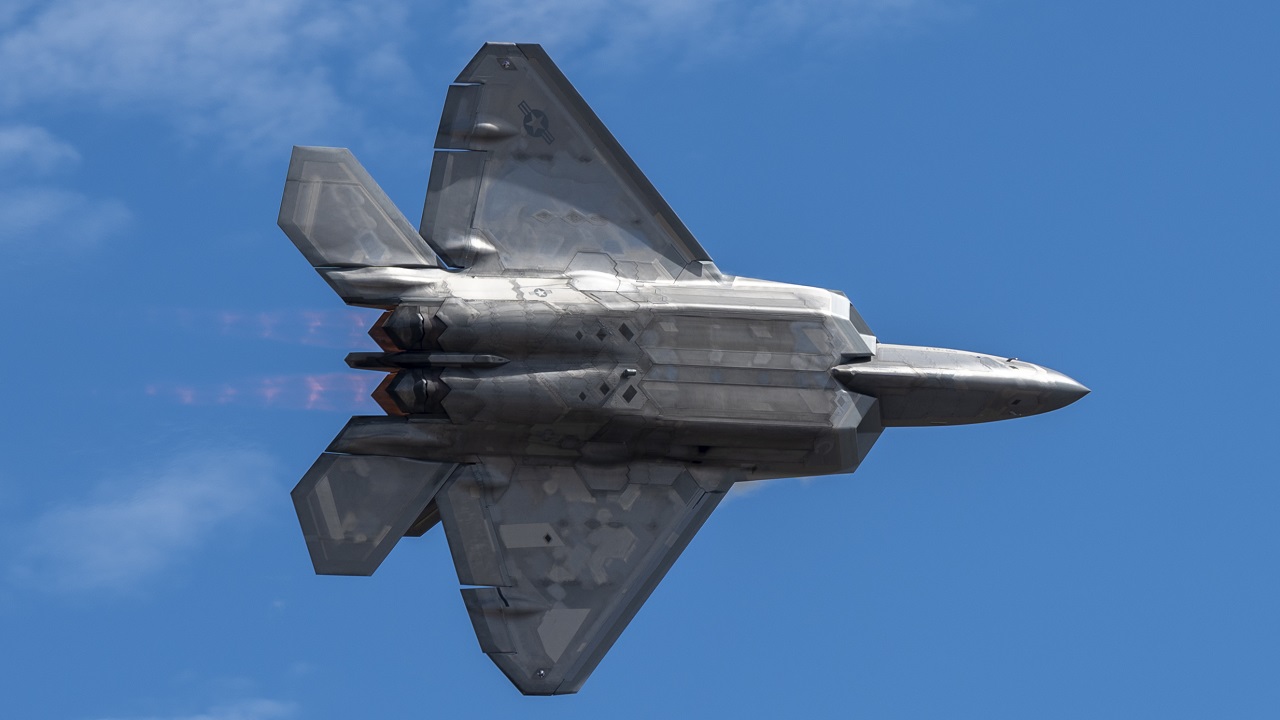
A U.S. Air Force F-22 Raptor conducts a heritage flight during the 2022 Marine Corps Air Station Miramar Air Show at MCAS Miramar, San Diego, California, Sept. 24, 2022. The F-22 Raptor is the Air Force’s fifth-generation fighter aircraft. Its combination of stealth, super-cruise, maneuverability, and integrated avionics, coupled with improved supportability, represents an exponential leap in war-fighting capabilities. The theme for the 2022 MCAS Miramar Air Show, “Marines Fight, Evolve and Win,” reflects the Marine Corps’ ongoing modernization efforts to prepare for future conflicts. (U.S. Air Force photo by Adam Bowles)
But aside from sequencing, in a confrontation, stealth aircraft probably maintains an advantage over the S-400. Why? The aircraft benefits from reduced radar detection, EW capabilities, standoff weapons, and integrated battlefield networking.
Yet, the S-400 remains a formidable system entirely capable of posing a threat, ensuring that any confrontation remains complex and dangerous.
About the Author: Harrison Kass
Harrison Kass is an attorney and journalist covering national security, technology, and politics. Previously, he was a political staffer and candidate, and a US Air Force pilot selectee. He holds a JD from the University of Oregon and a master’s in global journalism and international relations from NYU.