

Summary and Key Points: Dr. Brent M. Eastwood, a defense analyst and author, evaluates the U.S. Air Force’s transition toward a “Super” and “Sixth-Gen” fleet. Following the successful decapitation strikes of Operation Epic Fury in Iran, Eastwood analyzes the four critical programs: the F-22 Super, the “Ferrari” F-35, the F-47 NGAD, and the B-21 Raider.
-This 19FortyFive report explores the strategic necessity of these platforms in the Indo-Pacific, where the U.S. lacks a partner as robust as Israel.
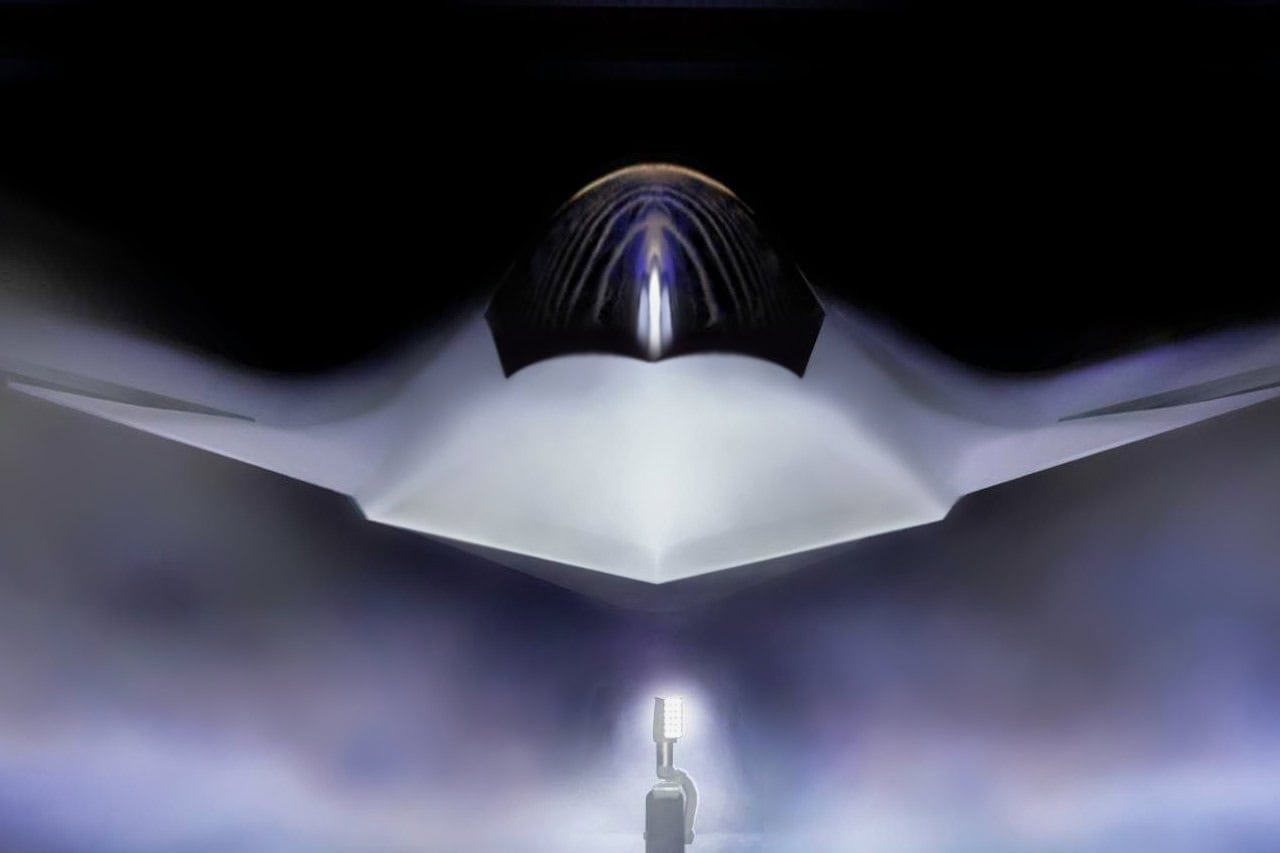
Shown is a graphical artist rendering of the Next Generation Air Dominance (NGAD) Platform. The rendering highlights the Air Force’s sixth generation fighter, the F-47. The NGAD Platform will bring lethal, next-generation technologies to ensure air superiority for the Joint Force in any conflict. (U.S. Air Force graphic)
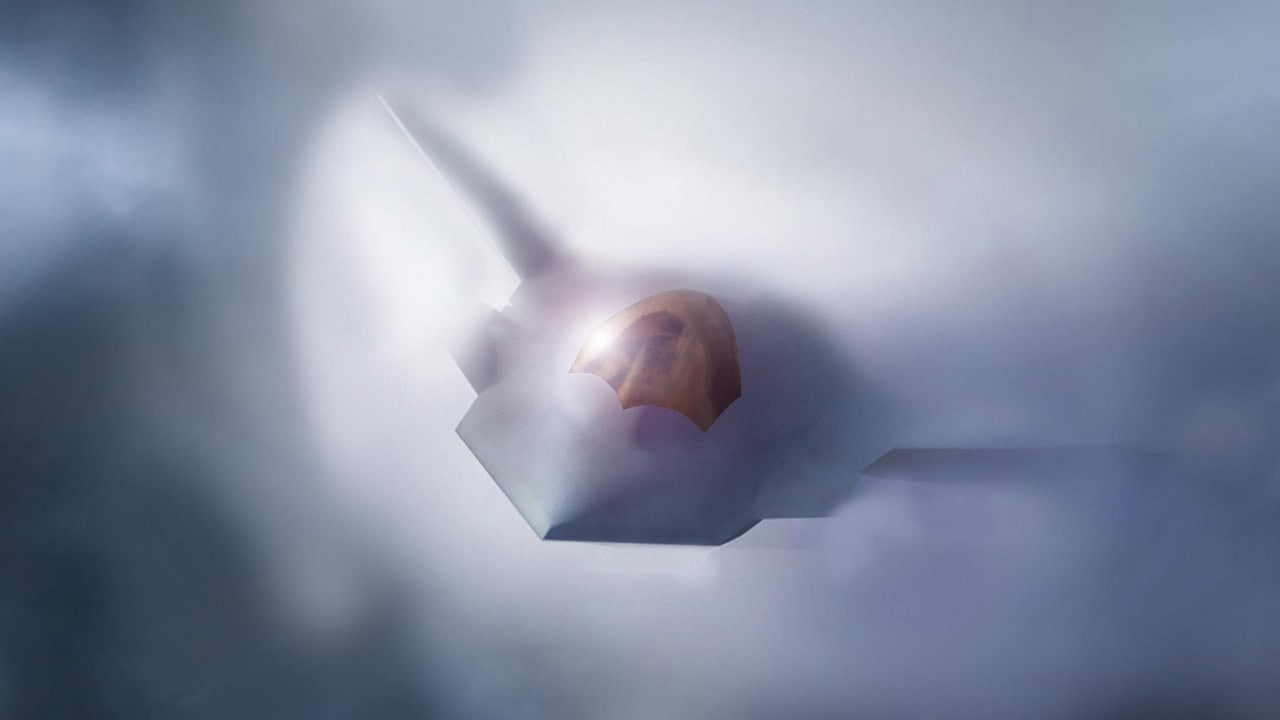
F-47 Fighter. Image Credit: U.S. Air Force.
-Eastwood concludes that while the current fleet is formidable, the F-47’s Mach 2.5+ speed and the B-21’s hypersonic capabilities are essential to deterring China.
Beyond Epic Fury in Iran: Why the U.S. Air Force Needs the “Super” F-22 and “Ferrari” F-35
The current operation in Iran has included the use of nearly all warplane types in the U.S. Air Force fleet. Except for a friendly-fire incident that saw three F-15E Strike Eagles shot down, Operation Epic Fury has been a success for the Air Force.
Fighter jets and bombers have been actively engaged in missions to suppress enemy air defenses, punish command and control centers, and take out not only the Supreme Leader of the country, but also dozens of his associates.
Four New Programs Will Be Undertaken
The fleet has been successful during this war, but what about the future? Are upgraded airplanes such as the “Ferrari” F-35, the “Super” F-22, and future models such as the F-47 NGAD and B-21 Raider, still needed, or is the current level of sophistication sufficient? We know these upgrades and new warplanes will cost significant amounts of money. The F-47 alone could cost as much as $300 million per unit.
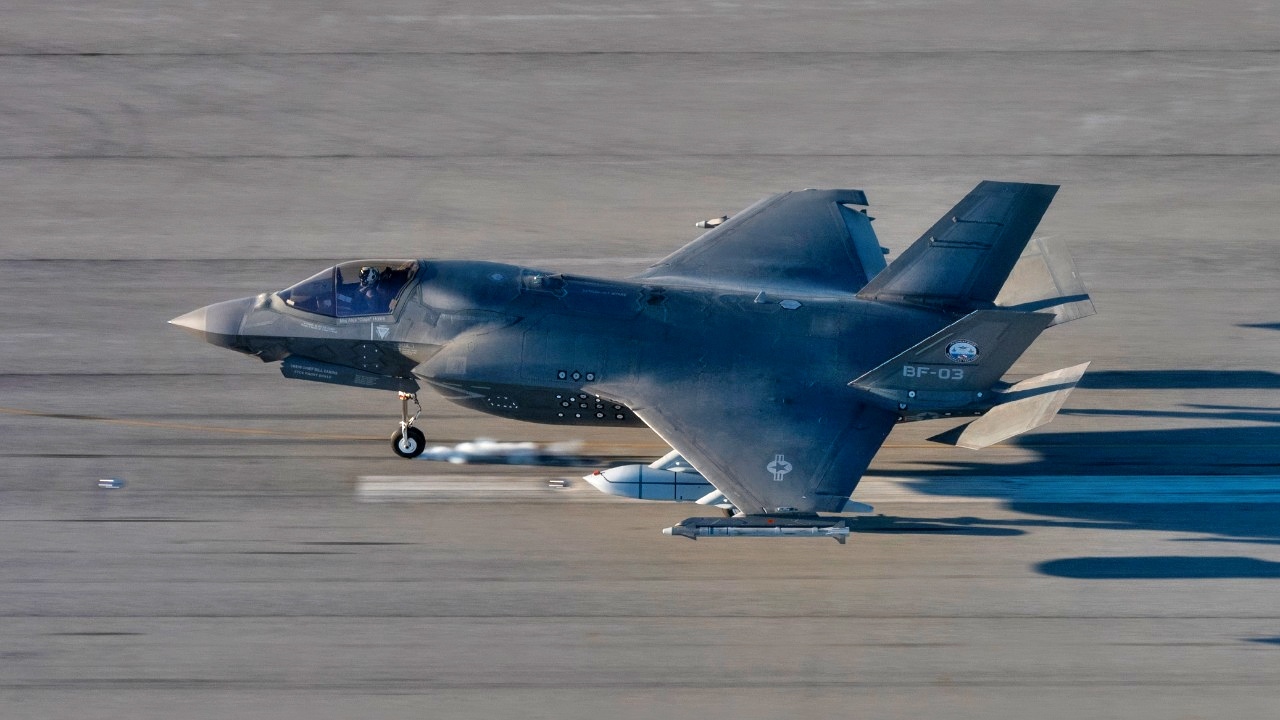
NAS PATUXENT RIVER, Md. — An F-35 Lightning II test pilot conducts the first flight test to certify the F-35B short takeoff and vertical landing variant of the fighter aircraft for carrying the AGM-158C Long-Range Anti-Ship Missile (LRASM). As part of ongoing weapon integration efforts, the Pax River F-35 Integrated Test Force (Pax ITF) team for the first time flew test flights Jan. 14 with two AGM-158 loaded on external stations. LRASM is a defined near-term solution for the Offensive Anti-Surface Warfare (OASuW) air-launch capability gap that will provide flexible, long-range, advanced, anti-surface capability against high-threat maritime targets. The Pax River ITF’s mission is to effectively plan, coordinate, and conduct safe, secure, and efficient flight test for F-35B and C variants, and provide necessary and timely data to support program verification / certification and fleet operational requirements.
The United States Will Not Have Israeli Help in the Indo-Pacific
But threats are still evolving. Further, in Iran, the Israelis have done yeomen’s work neutralizing Iranian defenses too. In a potential conflict with China, the United States may not have the benefit of such a robust ally. Japan could help the United States intervene during a Chinese attack on Taiwan, but the Japan Air Self-Defense Force is nowhere near as large as Israel’s air force; Taiwan is limited in the air, too.
The F-22 Will Become ‘Super’
The F-22 entered active duty in 2005, but the airframes are getting old. The F-22 Super would have new weapons, manned-unmanned teaming, better sensors and radars, and other upgrades that would make it a fifth-generation-plus fighter.
The F-22’s radar would become a powerful APG-77 Active Electronically Scanned Array model. Ground strike operations would be improved, with better surface targeting options thanks to synthetic aperture radar mapping. More connectivity to Link 16 data would be added. Stealth coatings would become more radar-absorbent.
‘Ferrari’ F-35 Is Coming Soon
The F-35 Ferrari’s boosters claim it could have 80 percent of the capabilities of new sixth-generation fighters at half the cost of the F-47.
The upgraded F-35 would have improved passive infrared sensors. Better stealth technologies would be incorporated.

Ferrari at the Mecum Car Auction. Image Credit: Harry J. Kazianis

F-35D of Ferrari F-35 Fighter Mock Up Illustration. Image Created with Ideogram.
It would be the correct platform for more long-range weapons. Data fusion would be excellent, and there would be dozens more hardware and software upgrades.
F-47 NGAD Is Exciting
The F-47 NGAD is envisioned as the premier sixth-generation fighter in the Air Force fleet. It is planned to be ultra-stealthy—even more radar-evasive than the F-35 and F-22.
There are plans for it to speed along at Mach 2.5 or faster, and it will be designed to control loyal wingman Collaborative Combat Aircraft drones for better reconnaissance acquisition, electronic warfare duties, and ground strike.
The NGAD will be a flying super computer, likely bolstered by artificial intelligence in the cockpit. The F-47 is also planned to fire hypersonic weapons—some of which may be nuclear-tipped.
B-21 Raider Will Be Dominant
The B-21 Raider will have higher levels of stealth than the nearly invisible B-2 Spirit bomber. The new strike aircraft will have longer range and the ability to launch hypersonic missiles. The B-21 will fly faster than Mach 0.8, with a maximum altitude of 50,000 feet and range of 6,000 nautical miles.
The B-21 will be upgraded for decades thanks to its open systems architecture. It can also guide Collaborative Combat Aircraft. The Raider is nuclear-capable to uphold the aerial leg of the U.S. nuclear triad.
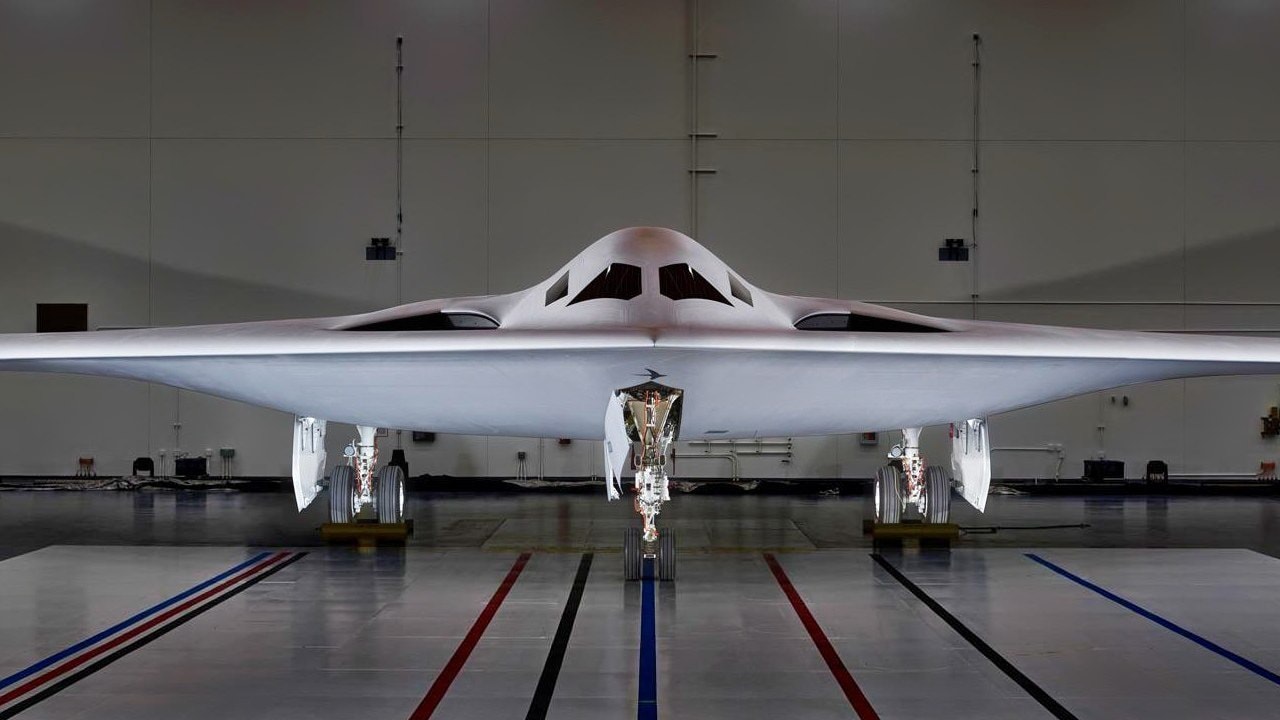
B-21 Raider Bomber U.S. Air Force.
Can the U.S. Defense Industrial Base Keep Up?
These aircraft all sound great, but does the aerospace industrial base have enough strength and manpower to produce these airplanes?
There will be supply chain issues and difficulty attracting enough workers. However, the F-47 may fly as soon as 2028, and there are B-21s coming off the production lines as we speak. The F-35 has been built for decades, and the manufacturing efforts are humming along fine, while the F-22 has shown before that it can receive upgrade.
Congressional Support Is Essential
To keep developing these warbirds, Congress must be on board. U.S. Senator Mike Rounds of South Dakota is a huge proponent of the B-21. He would love to have at least 150 built, as the Raider will be based in his state. The F-47 has much buy-in from Republicans on Capitol Hill since President Donald Trump is fully behind the new NGAD.
F-35s and F-22s are upgradable, and lawmakers from both parties are likely to support new improvements to the Ferrari and Super standard.
But politically, things can change in a heartbeat. Midterm elections this year could reform the composition of the Senate and House of Representatives. Airplanes associated with Trump like the NGAD could be curtailed or even cancelled by a new president in 2029.
Newly elected Democrats could be skeptical that the United States has enough funding to support all four projects at once.
What Is the Magic Number?
Some new F-47s and B-21s will enter service, though it is not clear how many will be acquired. The Air Force wants at least 100 B-21s, and some have called for more than 150 to be produced. The Air Force would like 185 F-47s to ultimately replace the F-22 arsenal.
In all, the Air Force may not get everything it wants. But the B-21 has been successful so far hitting its milestones, and if the F-47 flies in 2028, it will be a feather in the cap for the Air Force and its acquisition efforts.
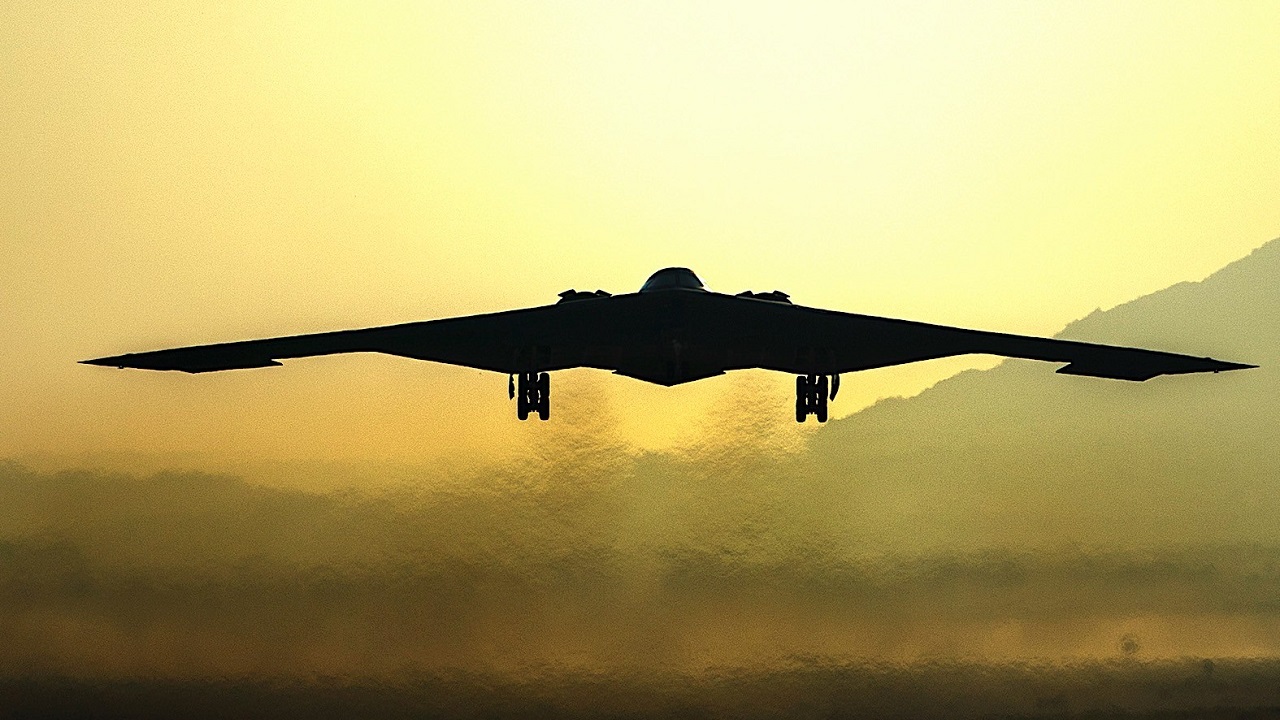
B-2 Bomber. Image Credit. U.S. Air Force.
Today’s Fleet Is Not Too Shabby
Existing U.S. aircraft are impressive. It would be nice to have new airframes and updated features on the fighter jets, but the Air Force could still wait five to ten years, and overall performance would not be significantly affected. Potential conflict with Russia and China is on the horizon, though, and the service will need everything it can muster in the air at all times.
About the Author: Brent M. Eastwood
Author of now over 3,000 articles on defense issues, Brent M. Eastwood, PhD is the author of Don’t Turn Your Back On the World: a Conservative Foreign Policy and Humans, Machines, and Data: Future Trends in Warfare plus two other books. Brent was the founder and CEO of a tech firm that predicted world events using artificial intelligence. He served as a legislative fellow for US Senator Tim Scott and advised the senator on defense and foreign policy issues. He has taught at American University, George Washington University, and George Mason University. Brent is a former US Army Infantry officer. He can be followed on X @BMEastwood.