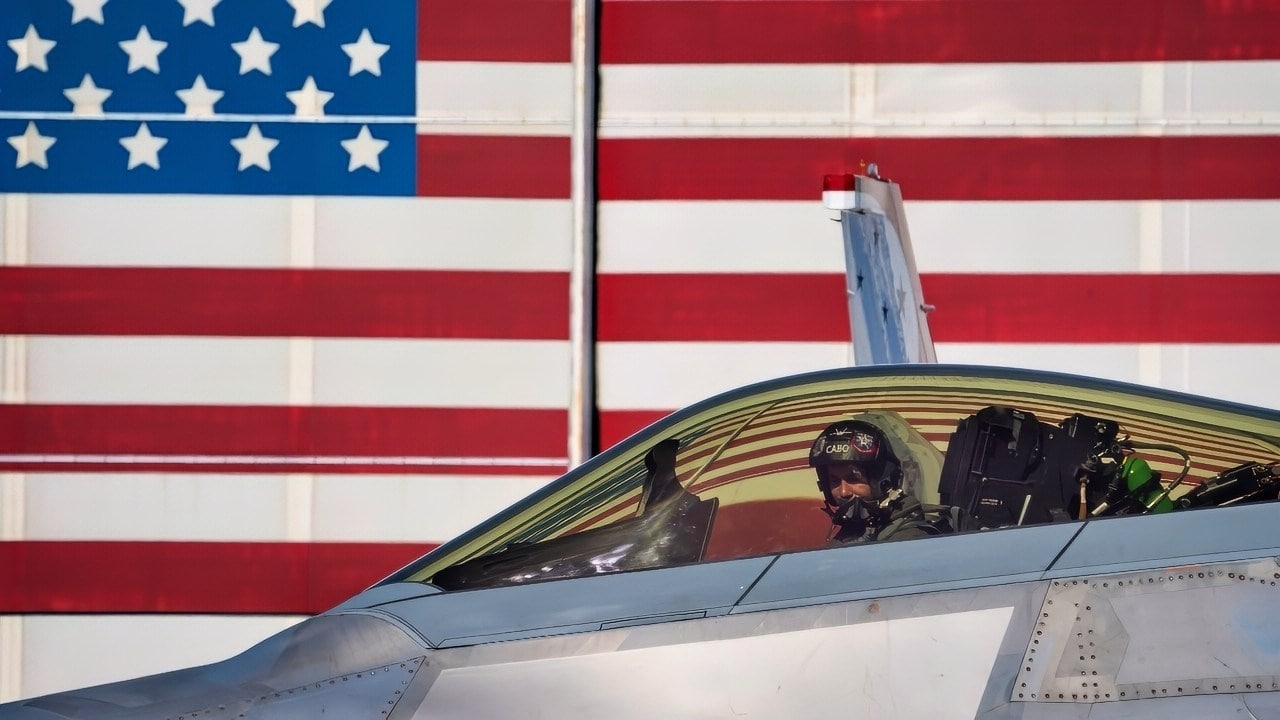
Summary and Key Points: Lockheed Martin has officially transitioned the F-22 Raptor into its “Raptor 2.0” configuration at the 2026 AFA Warfare Symposium.
-By integrating Low-Drag Tank and Pylon (LDTP) systems and underwing Infrared Search and Track (IRST) pods, the Air Force is rectifying the platform’s historic range and passive-sensing limitations.
-These hardware upgrades, supported by President Trump’s “F-22 Super” initiative, serve as a high-tech bridge until the Boeing F-47 NGAD enters service.
-This modernization ensures air dominance in the Indo-Pacific and Operation Lion’s Roar, allowing the Raptor to detect stealthy J-20 threats while maintaining electromagnetic silence.
The F-22 Super: How New Stealth Tanks and IRST Pods are Transforming the Raptor into a 6th-Gen Bridge
New images of a model F-22 Raptor made a splash across social media this week. They seemed to show a dramatic improvement to the world’s premier fifth-generation fighter. In the images, a scale model of the air superiority fighter shows the Raptor outfitted with a pair of low-observable drop tanks, as well as a pair of podded sensors—one under each of the Raptor’s wings.
The images were first seen during the Air & Space Forces Association’s annual Warfare Symposium and were later posted to Instagram.
The Raptor is reportedly able to jettison the extra external fuel stores, something that would presumably restore some stealth to the fighter that is lost by integrating the tanks. Remarkably, Lockheed Martin claims that the changes do not adversely affect flight performance or the jet’s stealth characteristics.
Perhaps one of the first photos of the souped-up F-22 was taken in 2024 and posted to X. Although the image is rather grainy, it appears to show an F-22 Raptor in flight, equipped with the same low-observable drop tanks and podded sensors seen more recently on the scale model.
Present Capabilities and Future Upgrades
The Raptor has received several upgrade packages since entering service. These focused primarily on software updates, streamlining the jet’s networking with other aircraft, and improving the integration of newer, advanced weapons. One of the first updates improved the stealth fighter’s APG-77 Active Electronically Scanned Array radar and augmented its electronic warfare capabilities.
Perhaps the F-22’s most far-reaching updates came in two tranches, one in the late 2000s and another in the mid-2010s: the Increment 2 and Increment 3 modernization packages. These improved the jet’s synthetic aperture radar mapping, giving pilots a level of granularity they previously lacked, and expanded the jet from an exclusively air superiority fighter into a potent strike platform as well.

F-22 Raptor Model. Image Credit: 19FortyFive.com
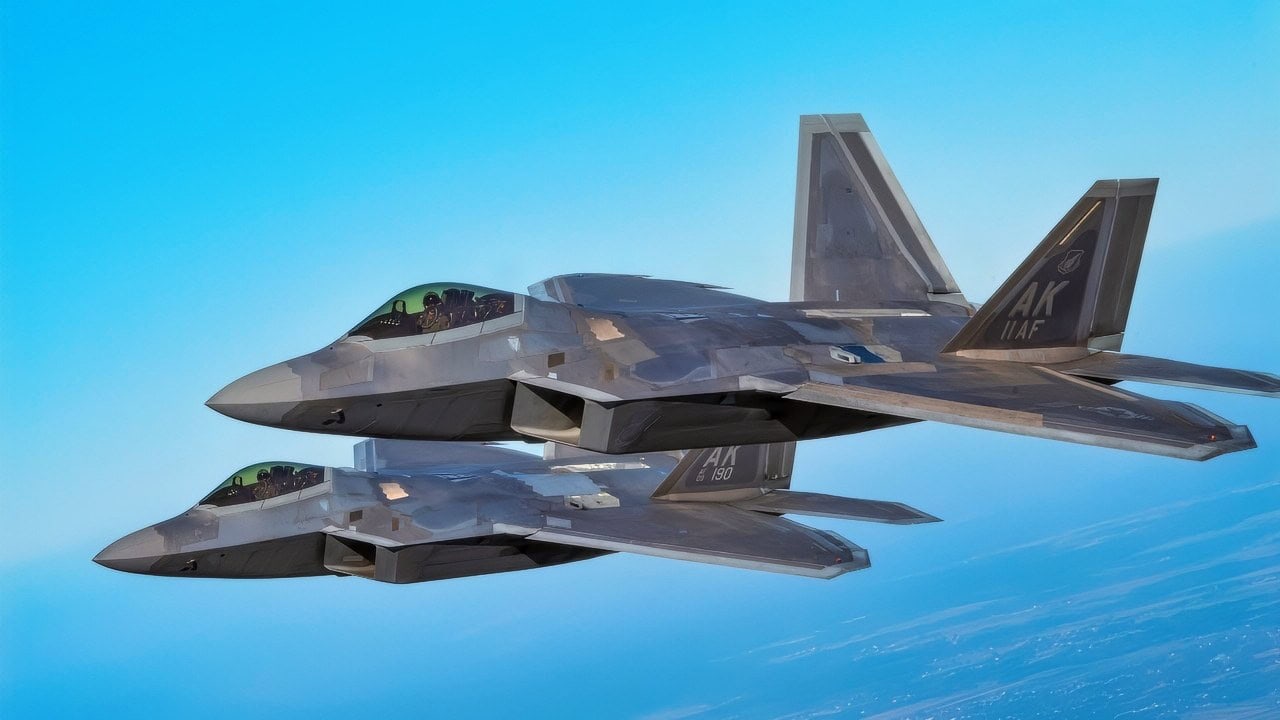
Two U.S. Air Force F-22 Raptors assigned to the 90th Expeditionary Fighter Squadron conduct a two-ship formation during the NATO Air Shielding media day, Oct. 12, 2022 at Łask Air Base, Poland. The Raptors uphold the Air Shielding mission alongside Polish F-16s and Italian Eurofighter Typhoons. The event showcased the importance of NATO’s Air Shielding mission and the interoperability among the U.S. and NATO Allies to international media through trilateral aerial demonstrations and interviews with service members. The U.S. remains dedicated to our security commitments with our NATO Alliance and postured to defend NATO territory. (U.S. Air Force photo by Staff Sergeant Danielle Sukhlall)
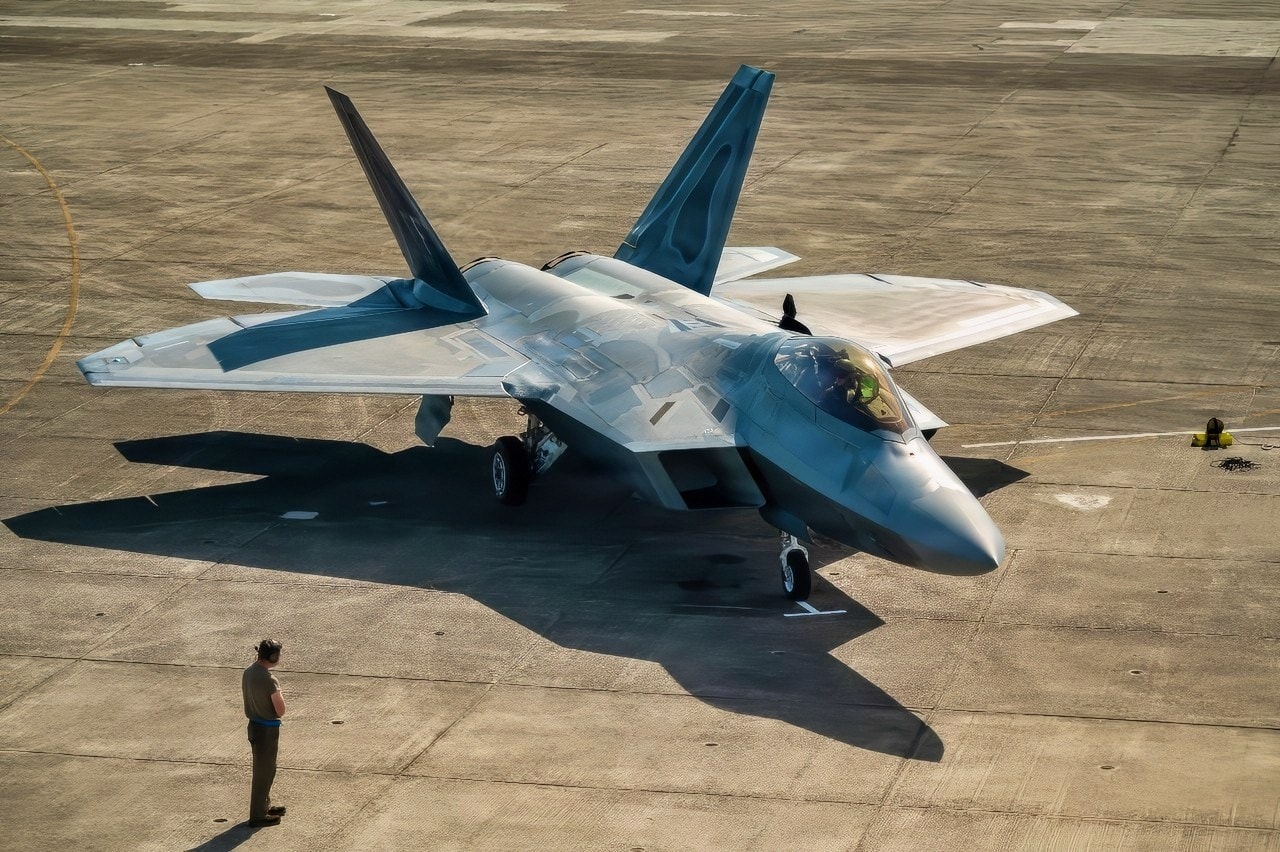
A U.S. Air Force F-22 Raptor waits to taxi on the flight line in Ceiba, Puerto Rico, Jan. 4, 2026. U.S. military forces are deployed to the Caribbean in support of the U.S. Southern Command mission, Department of War-directed operations, and the president’s priorities to disrupt illicit drug trafficking and protect the homeland. (U.S. Air Force photo)
As new weapons entered service, the Raptor, too, expanded its munitions package. And while the F-22 is considered a stealthier platform than the F-35 multi-role fifth-generation fighter, it is not as flexible as the F-35, despite its upgrades.
There could be more changes to the Raptor in the future.
“We’re going to do an F-55 and – I think, if we get the right price, we have to get the right price – that’ll be two engines and a super upgrade on the F-35, and then we’re going to do the F-22,” U.S. President Donald Trump said to reporters during a trip to Doha.
“I think the most beautiful fighter jet in the world is the F-22 but we’re going to do an F-22 Super and it’ll be a very modern version of the F-22 fighter jet,” Trump added. “We’re going to be going with it pretty quickly.”
It is somewhat unclear if Trump’s comments indicated a brand-new jet on the horizon or if he meant something else entirely. “There’s no limitation on the airplane itself that drives it. That will be a decision in terms of force management and how soon any replacements or other technologies might come along, so we’re posturing beyond seven years,” OJ Sanchez, of Lockheed Martin explained to Defense One. “We’re continuing to think, ‘How do we keep the airplane relevant?’”
Thanks to the Obey Amendment, a congressionally approved ban on F-22 Raptor exports to any foreign country, the jet’s production line was shuttered years ago. But upgrades such as low-observable drop tanks still can augment its capabilities.
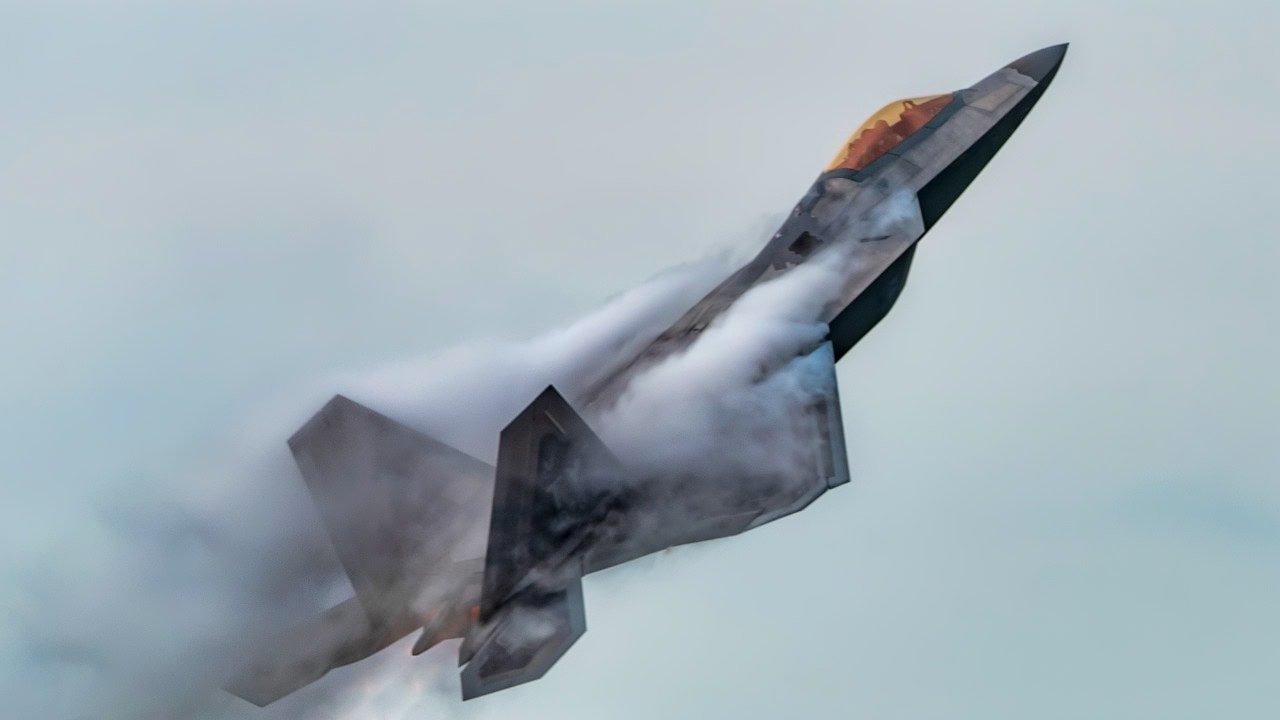
U.S. Air Force Maj. Paul Lopez, F-22 Demo Team commander, pulls into the vertical during the Battle Creek Field of Flight air show July 7, 2019. Maj. Lopez has over 1,500 hours flying both the F-15 Eagle and the F-22 Raptor and is in his second year as the commander of the F-22 Raptor Demonstration Team. (U.S. Air Force photo by 2nd Lt. Samuel Eckholm).
“It’s less about how long is it going to be in service and more about the unique capability that it brings to ensure air superiority, wherever it’s needed,” Sanchez said. “So the Air Force has asked us to move forward with that modernization program, and then we’ll see how long the aircraft endures.”
F-47 Next Generation Air Dominance and the Future of Air Superiority
While the U.S. Air Force anticipated flying the F-22 into the 2040s, the Raptor’s retirement depends in part on the rollout of the F-47, the winner of the Next Generation Air Dominance competition to find the Raptor’s replacement.
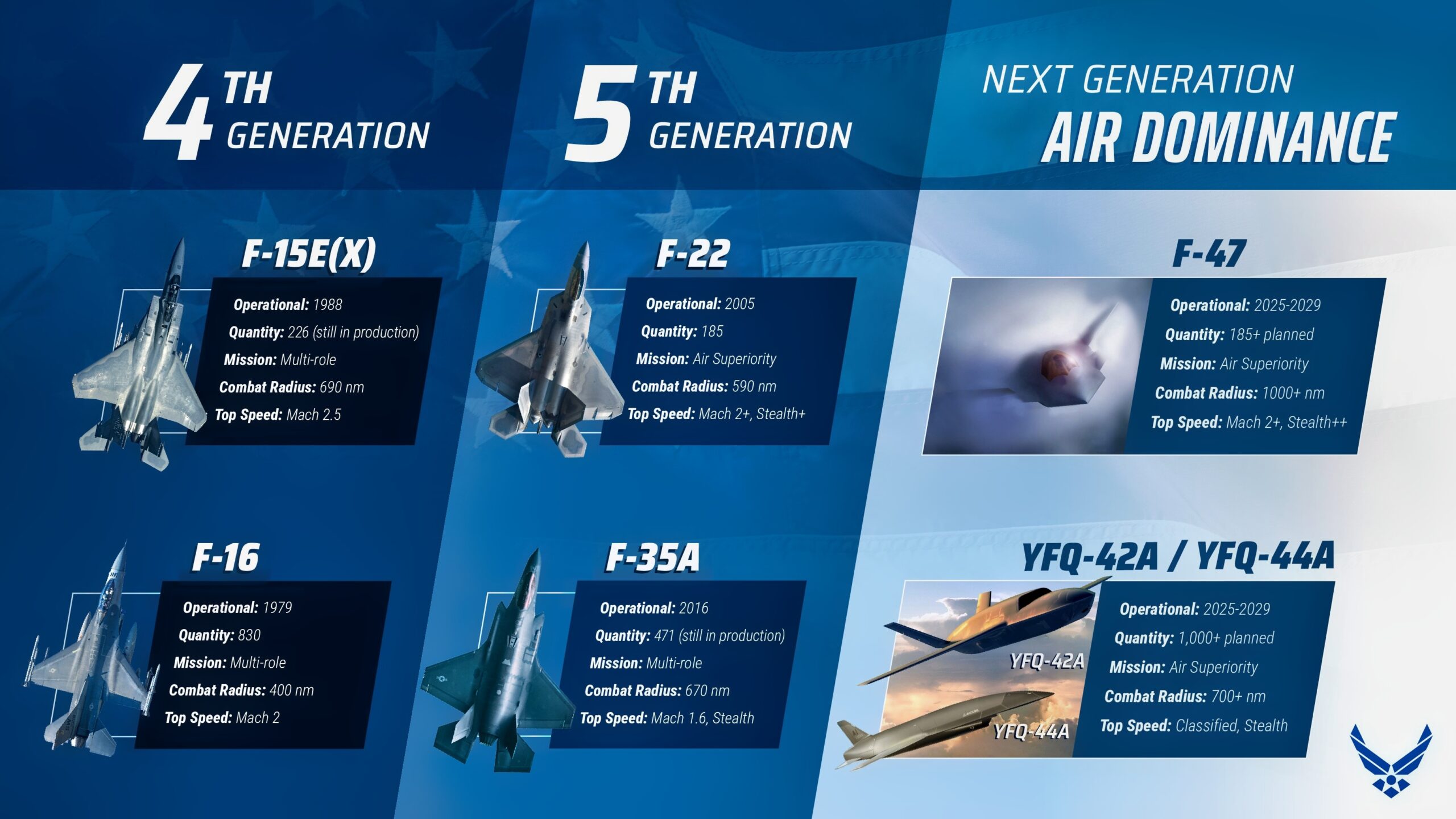
F-47 Infographic. Image Credit: U.S. Air Force
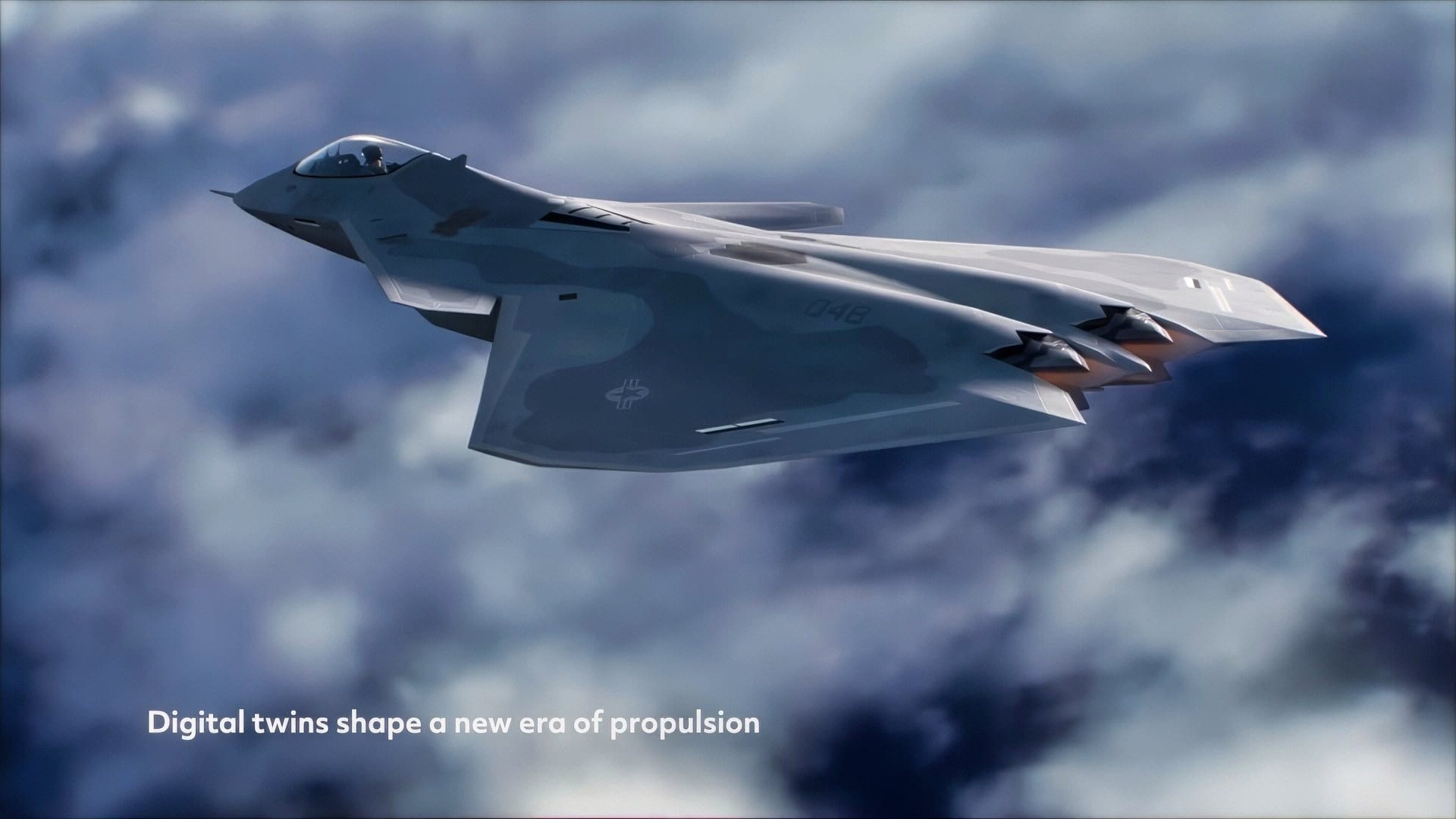
F-47 NGAD Fighter Possible Image. Image Credit: Screenshot.
Secured by Boeing, the F-47 will be the United States’ first sixth-generation fighter (the upcoming B-21 Raider is a sixth-generation bomber). It would take over the air superiority role from the F-22 and gradually phase out its ancestor.
Although recent reporting indicates the F-47 program is on track for flight in 2028, any delay to the F-47’s rollout would force the Air Force to keep the Raptor fleet in service longer than planned.
The F-47 program may stay on schedule and at budget, but until it is accepted into the U.S. Air Force in large numbers, the Air Force will continue to depend on its Raptor fleet.
About the Author: Caleb Larson
Caleb Larson is an American multiformat journalist based in Berlin, Germany. His work covers the intersection of conflict and society, focusing on American foreign policy and European security. He has reported from Germany, Russia, and the United States. Most recently, he covered the war in Ukraine, reporting extensively on the war’s shifting battle lines from Donbas and writing on the war’s civilian and humanitarian toll. Previously, he worked as a Defense Reporter for POLITICO Europe. You can follow his latest work on X.