

Summary and Key Points: In a now-famous 2013 encounter, two Iranian F-4 Phantoms moved to intercept a U.S. MQ-1 Predator operating near Iran when an escorting F-22 Raptor quietly took control of the situation.
-The Raptor pilot reportedly slipped beneath the lead F-4 to inspect its weapons load, then pulled up alongside—still unseen—before breaking radio silence with a simple warning to leave.
-The moment underscored the gap between legacy fighters and modern stealth: the F-4s had the speed and payload to menace an unarmed drone, but no reliable way to detect the aircraft protecting it.
F-22 “Go Home” Moment: The Day Iran’s F-4s Never Saw the Raptor Coming
In a story that has been retold many times, in 2013, an F-22 Raptor pilot told Iranian F-4 Phantom pilots to “go home” after he undetected flew underneath them and pulled up alongside.
The F-22 was escorting a US drone when the two Iranian fighter jets moved to intercept it, and the F-22s responded to the situation. The incident highlighted the F-22’s stealth capabilities, as the Iranian pilots were utterly unaware of the F-22’s presence until the pilot spoke to them directly.
The Americans had just recently been flying escort missions for the Predator drones after an incident in 2012, when two Russian-made Su-25 Frogfoot ground attack aircraft expended all of their ammunition in an attempt to shoot down the drone.
The most embarrassing aspect for the Iranians was that the drone had recorded the entire incident with its cameras. The Su-25, like its American counterpart, the A-10 Thunderbolt, is designed for close air support, not air superiority or air defense, and it left me feeling embarrassed.
The Incident In International Airspace
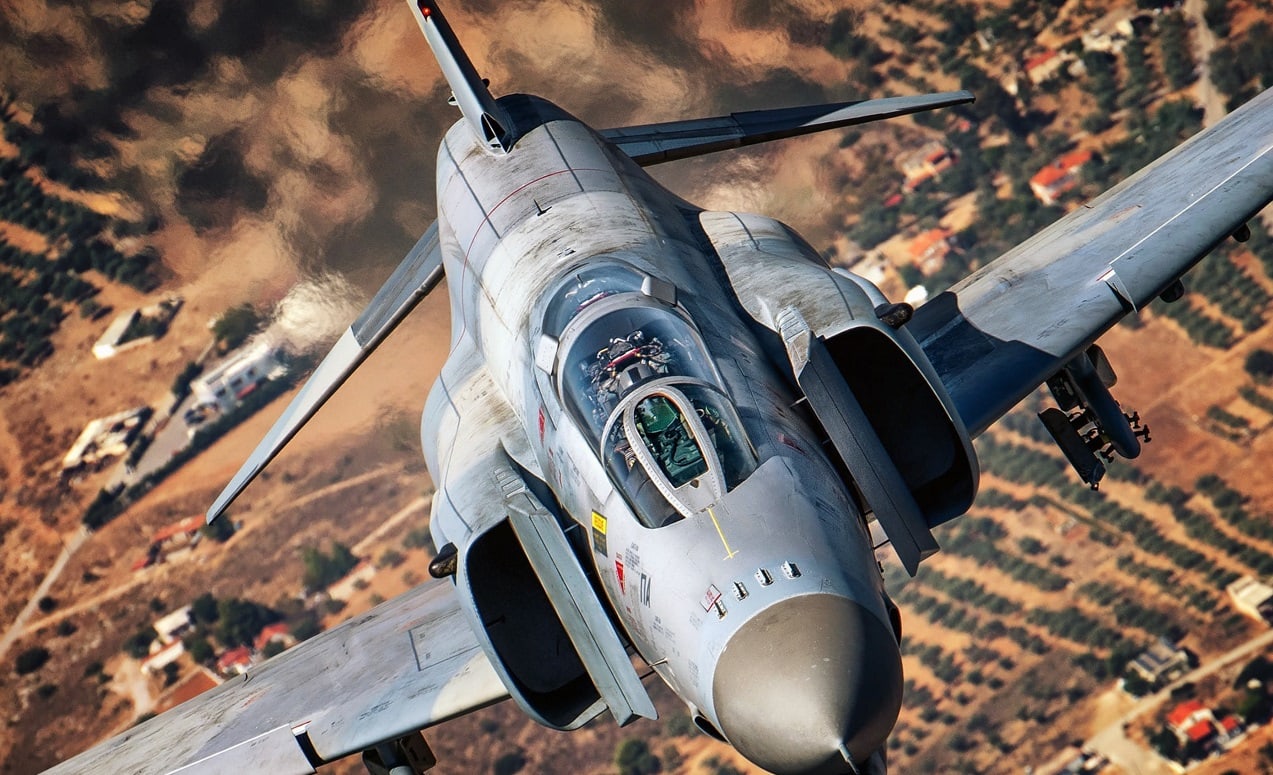
F-4 Phantom. Image Credit: Creative Commons.
In 2013, two Iranian F-4 Phantoms attempted to intercept a US MQ-1 Predator drone that two F-22 Raptors were escorting in international airspace near Iran. The Iranian pilots were not aware of the F-22’s presence, highlighting the stealth of the Raptor.
The Iranian pilots, flying Vietnam War-era F-4s, had no chance from the start. After the incident involving the Su-25s that left Iran embarrassed, they must have assumed that the F-4 Phantoms, despite being obsolete as frontline fighters, would make quick work of the MQ-1 drone, which has a top speed of just 135 mph due to its small four-cylinder engine.
The Predator drone was operating off the Iranian coast in international airspace, conducting reconnaissance when the F-4s closed in. With one F-4 hanging back, the other began closing with the MQ-1, maintaining its course some four miles outside Iran’s territorial airspace.
The F-4 Phantom served in the U.S. Air Force, Navy, and Marine Corps, starting in 1961, and remained in service for the United States until as late as 1996. The heavy aircraft is often referred to as a fighter/bomber. Still, it was intended to serve as a high-speed interceptor in an era when speed was crucial.
With a top speed of Mach 2.23 (1,711 mph) and nine external hardpoints capable of carrying as much as 18,650 pounds of ordnance, the Phantoms are obsolete but still pack quite a punch, such as against an unarmed, slow drone.
The Iranian Pilots Were Not Alone
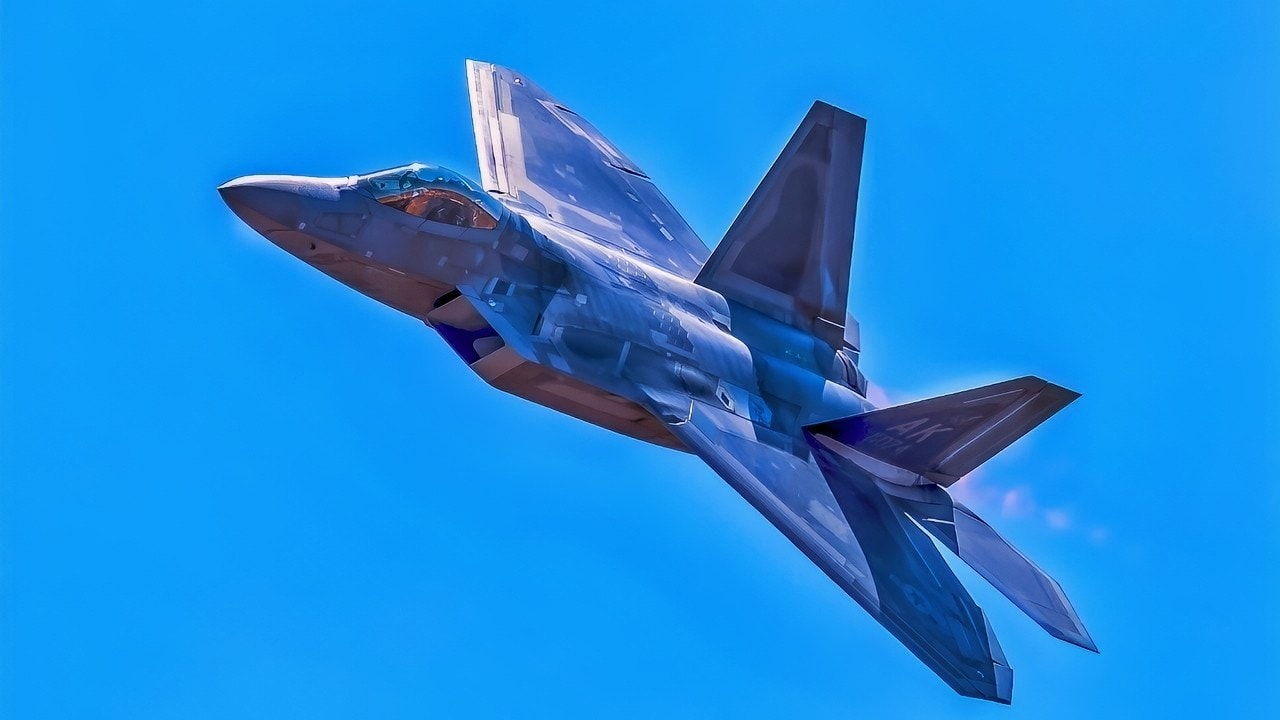
F-22 Raptor Fighter Flying High. Image Credit: Creative Commons.
The Iranian pilots, sensing an easy shoot down of an American drone, were completely unaware that they were not the only aircraft trailing the drone.
A U.S. Air Force F-22 Raptor piloted by USAF Reservist Lt. Col. Kevin “Showtime” Sutterfield was also flying undetected nearby, eyeing the Iranian fighter pilot as he began to make his move, completely unaware of his presence.
LTC Sutterfield closed with the Iranian F-4 Phantom in Hollywood style worthy of his callsign, sliding the stealthy Raptor under and to the side of the Phantom, unknown to the Iranian pilot or his wingman, to inspect the F-4’s weapons.
He was not impressed by what he inspected on the Phantom.
The F-22 Raptor Is a Far Better Aircraft Than The F-4
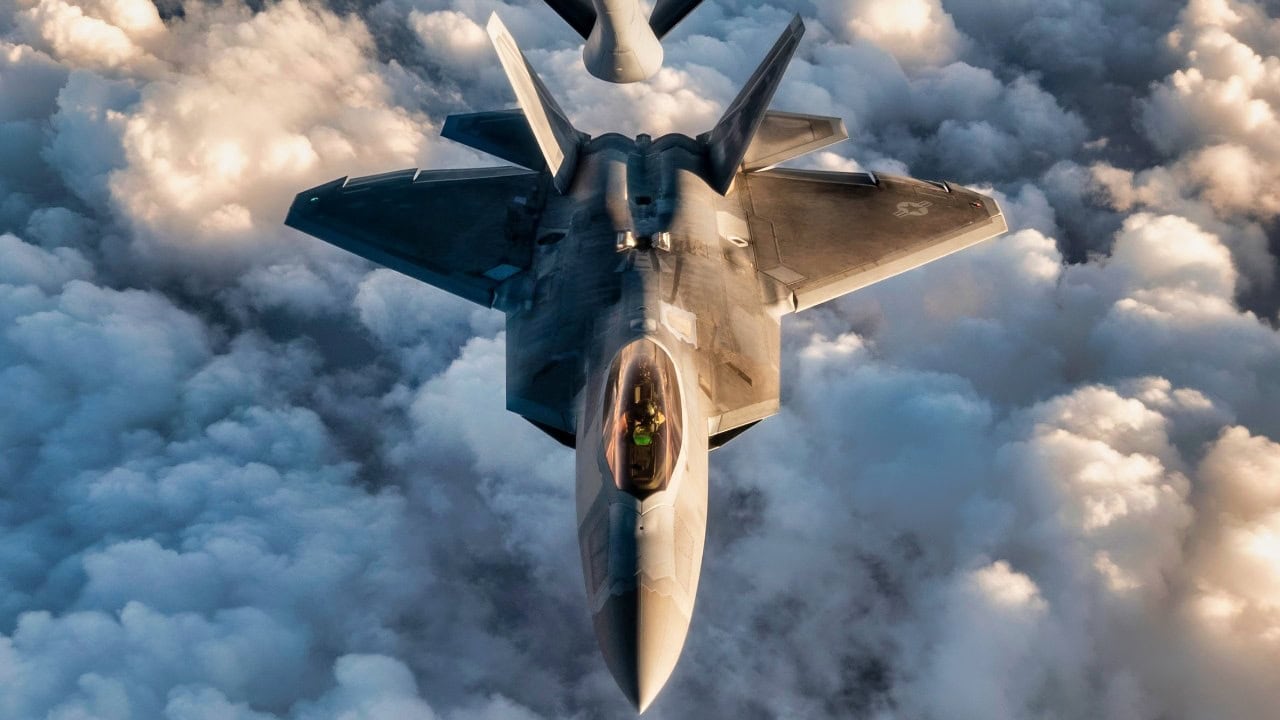
A U.S. Air Force F-22 Raptor departs after being refueled by a KC-135 Stratotanker over the U.S. Central Command area of responsibility November 5, 2024. Raptors provide air dominance and conduct missions delivering airpower within the region. (U.S. Air Force photo)
What LTC Sutterfield knew was that due to its stealth, thrust-vectoring, and advanced avionics, the Raptor, despite being outnumbered 2-1, was clearly in control of the situation.
The results would have been decidedly one-sided in favor of the F-22, and that’s when he decided to inform the Iranians of the situation.
From beneath the F-4 Phantom, now only miles from its MQ-1 Predator target, Sutterfield banked left and picked up some altitude. He brought his Raptor up and alongside the Phantom just in time to see what must have been one very shocked Iranian fighter pilot. As Alex Hollings wrote, the Iranian pilot probably shat his pants.
Sutterfield then, in totally cool Hollywood style, broke radio silence and hailed the Iranian fighter.
“You really oughta go home.”
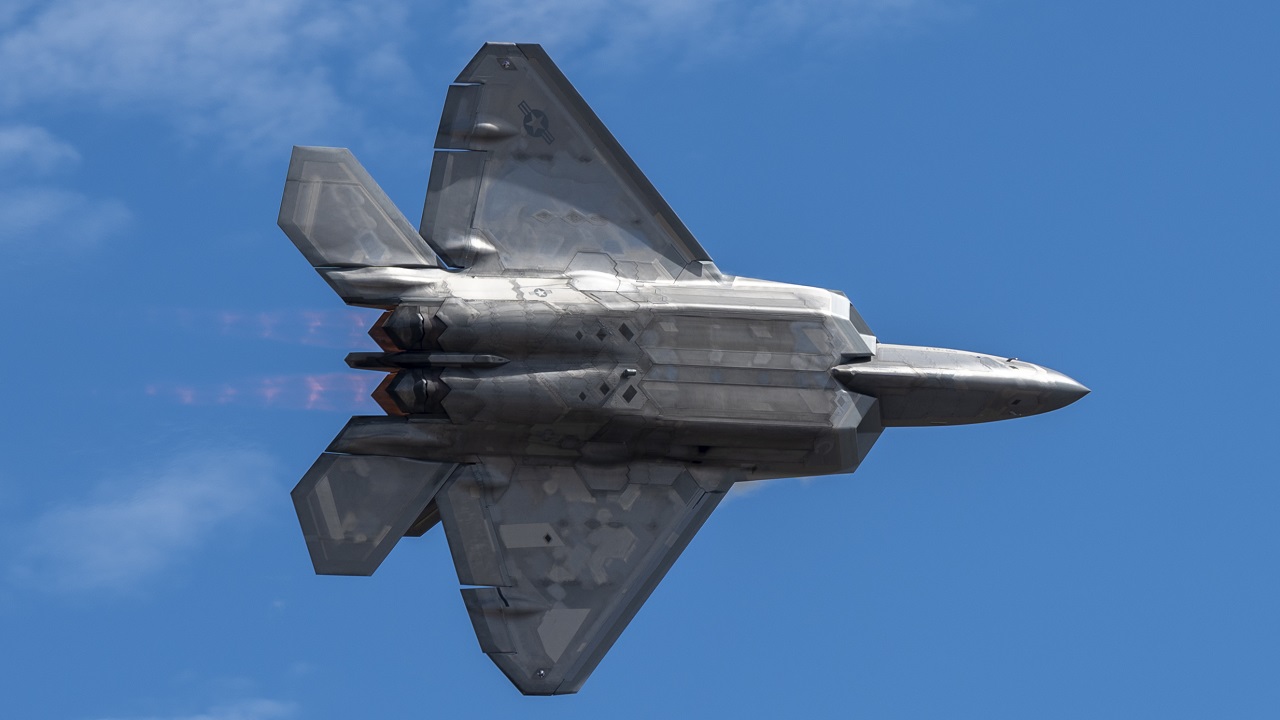
A U.S. Air Force F-22 Raptor conducts a heritage flight during the 2022 Marine Corps Air Station Miramar Air Show at MCAS Miramar, San Diego, California, Sept. 24, 2022. The F-22 Raptor is the Air Force’s fifth-generation fighter aircraft. Its combination of stealth, super-cruise, maneuverability, and integrated avionics, coupled with improved supportability, represents an exponential leap in war-fighting capabilities. The theme for the 2022 MCAS Miramar Air Show, “Marines Fight, Evolve and Win,” reflects the Marine Corps’ ongoing modernization efforts to prepare for future conflicts. (U.S. Air Force photo by Adam Bowles)
This was akin to the “Top Gun” film, where Tom Cruise’s Maverick flies upside down over the top of a new Soviet MiG and flips him the bird. But this was better, because it was real.
The Iranian F-4 pilot and his wingman, miles away, wasted no time and promptly bugged out for home. Like in Top Gun, no one was shot down; an American aircraft was saved, and the Iranian pilots, like the Soviet ones in the film, left the area red-faced with embarrassment.
Then-USAF Chief of Staff Gen. Mark Welsh not only confirmed that the fighter jets providing HVAAE (High Value Air Asset Escort) were F-22 stealth fighters, but also said that: “He [the Raptor pilot] flew under their aircraft [the F-4s] to check out their weapons load without them knowing that he was there, and then pulled up on their left wing and then called them and said ‘you really ought to go home‘”
The Significance Of The Encounter
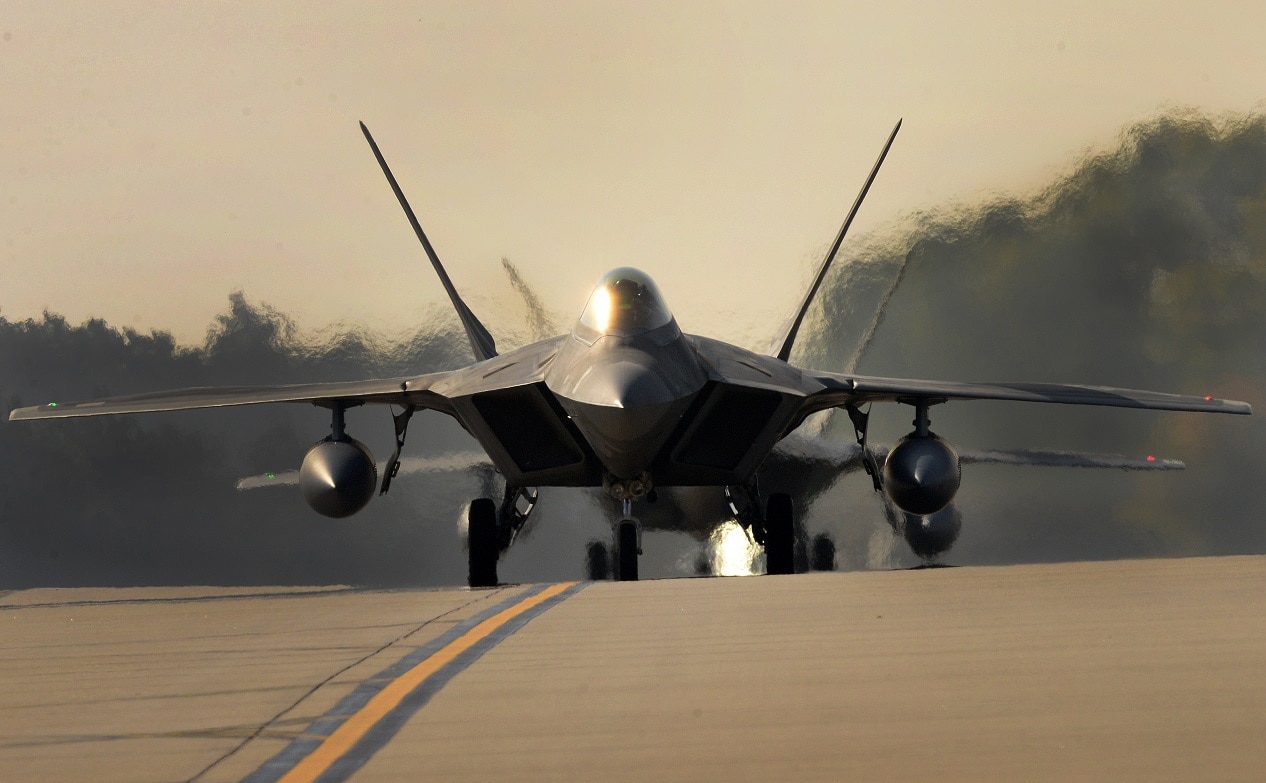
F-22 Raptors assigned to the 1st Fighter Wing, Joint Base Langley-Eustis, Va. arrives at Royal Air Force Lakenheath, England Oct. 5, 2018. The Raptors will train with U.S. allies and partners as a demonstration of U.S. commitment to European regional security. (U.S. Air Force photo/ Tech. Sgt. Matthew Plew)
The event became a widely discussed example of the F-22’s technological superiority and advanced stealth capabilities, which enabled it to operate with near impunity in the face of potential threats.
About the Author: Steve Balestrieri
Steve Balestrieri is a National Security Columnist. He served as a US Army Special Forces NCO and Warrant Officer. In addition to writing on defense, he covers the NFL for PatsFans.com and is a member of the Pro Football Writers of America (PFWA). His work was regularly featured in many military publications.