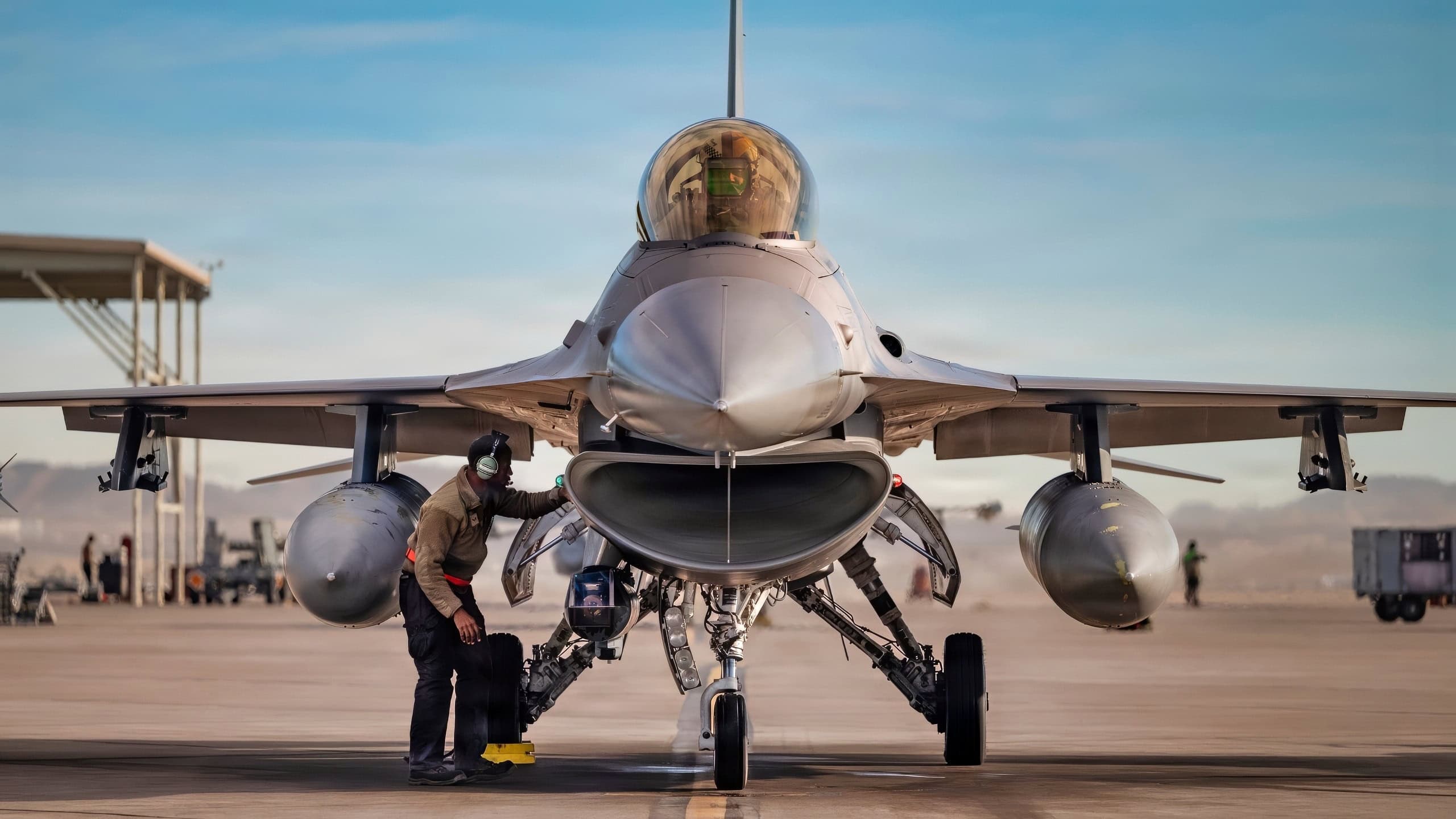
Iran’s Missile Attacks Have Dropped 90% Since the War Began — U.S. Intelligence Still Can’t Say How Many Are Hidden in Underground Missile Cities
Iranian missile attacks dropped by as much as 90 percent since the opening days of Operation Epic Fury.
Yet, there is a lingering, and likely troubling, question about what kind of remaining arsenal the Iranian Revolutionary Guard Corps has.
The IRGC is still launching attacks, and many of their ballistic missiles operate with precision guidance technologies such as inertial navigation systems or GPS.

A U.S. Air Force B-52H Stratofortress strategic bomber assigned to the 69th Expeditionary Bomb Squadron flies within the U.S. Central Command area of responsibility, Nov. 15, 2024. The B-52H provides strategic options and flexibility to U.S. and coalition senior leaders with the aircraft’s ability to employ a wide range of weapons with precision and deliver a decisive response to adversaries who threaten peace and security across the region. (U.S. Air Force photo)
Despite the more than 13,000 bombing sorties over Iran and the devastation unleashed by Operation Epic Fury upon Iran’s missile stockpile, the IRGC does seem to remain capable of offensive missile attacks.
There are several key factors to consider here.
One factor may be Iran’s potential strategy; Iran is known to have massive underground missile cities where it stores small boats, drones, and missiles, and it is likely difficult for U.S. and Israeli commanders to locate exactly where all of them are.
Iran is known to have spent decades building up its missile arsenal in anticipation of this kind of war scenario.
How much does Iran have left?
Is the IRGC deliberately holding back to ensure it retains offensive attack capability for weeks or months into the future in the event of protracted conflict?
This strategy, if true, may yield some short-term benefits, yet Operation Epic Fury has targeted Iran’s production capacity and destroyed missile and drone manufacturing locations.
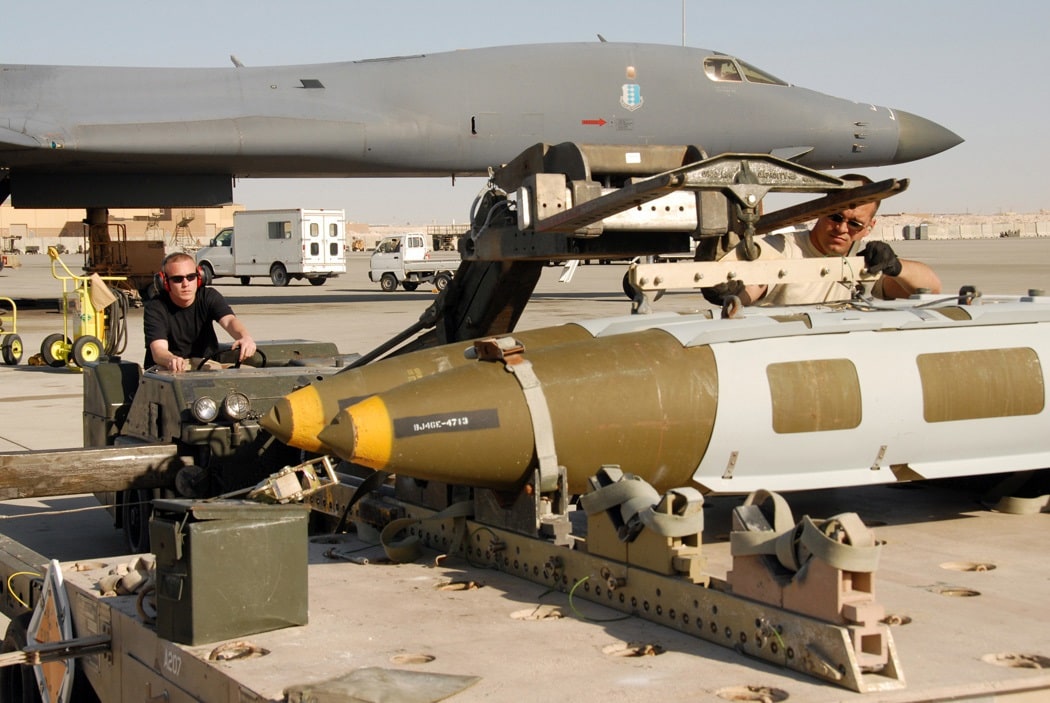
U.S. Air Force Airman 1st Class Kenneth Nealis, right, and Senior Airman Christopher Silas, both weapons load crew members assigned to the 379th Expeditionary Aircraft Maintenance Squadron, transfer a 2,000 pound GBU-31 Joint Direct Attack Munition to a lift truck for loading onto a B-1B Lancer aircraft March 29, 2007, in Southwest Asia. (U.S. Air Force photo by Airman 1st Class Gustavo Gonzalez) (Released)
Iran’s ability to maintain its arsenal over time would seem to be very much in question, given the destruction caused by Epic Fury.
Iran Still Has Missiles
At the moment, however, multiple news reports are citing a U.S. intelligence community assessment that found that Iran does, indeed, still maintain a sizable weapons arsenal.
A report in the New York Times cites U.S. intelligence findings that Iran’s use of decoy launchers makes it difficult for U.S. commanders to know how many they have left.
Other reports claim that the Iranians are having success rebuilding launchers and reconstituting underground storage areas by digging them out of the rubble after airstrikes.
Escape U.S. Targeting
The difficulty Iran will likely face, however, will be in sustaining this over the long term, given the targeting, ISR, and sensor-to-shooter times the U.S. military is capable of achieving.
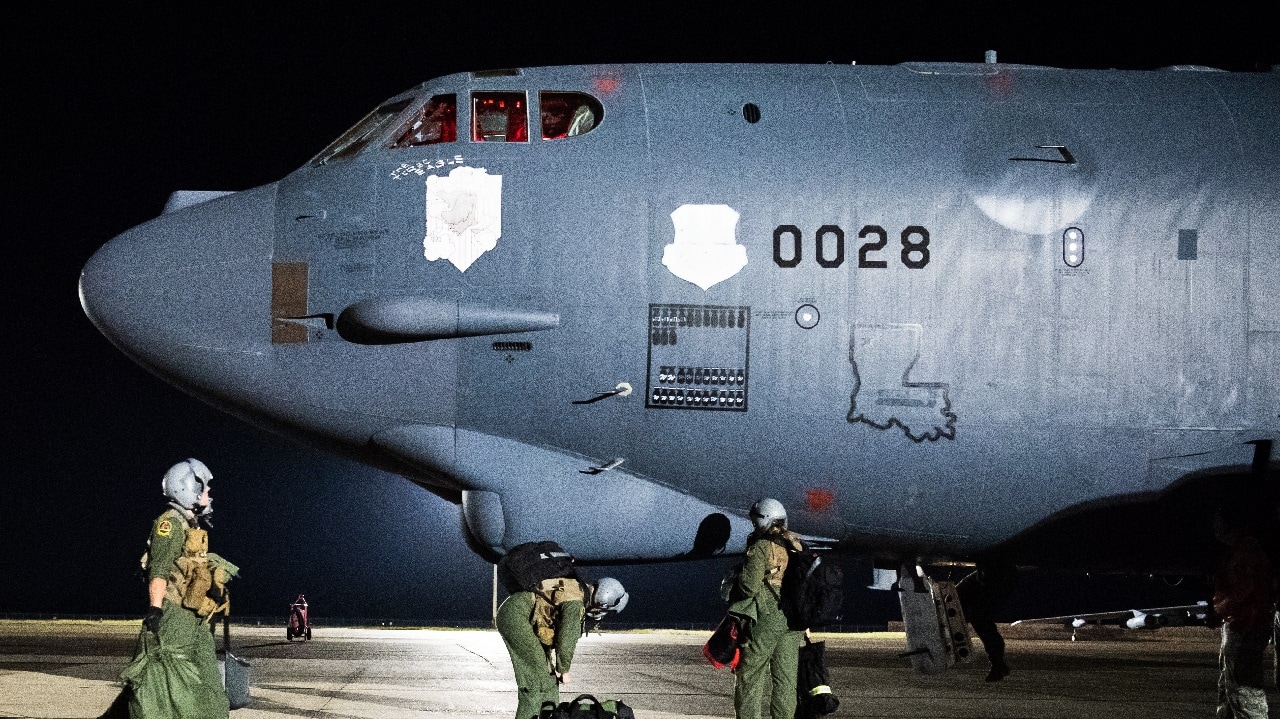
Airmen from the 96th Bomb Sqaudron load gear onto a B-52H Stratofortress at Barksdale Air Force Base, La., Oct. 13, 2020. The crew took part in a NATO crossover exercise designed to increase interoperability with NATO mission partners. (U.S. Air Force photo by Airman 1st Class Jacob B. Wrightsman)
For instance, U.S. command and control linking aerial drones with fixed-wing attack planes and ground-based command sensors has created a situation in which targets can be hit within minutes, or even seconds, of being seen by drones, sensors, or aircraft.
There is very little latency, and the often-described sensor-to-shooter connection is increasingly networked and fortified by AI-enabled computing.
Therefore, launchers do not have much time to shoot, because once they emerge, they are quickly seen and destroyed by U.S. airpower.
If Iran’s ability to build missiles is crippled or destroyed, then it will inevitably hit a wall at some point and lose the ability to launch attacks.
New Iranian Weapons
Yet another concern concerns the range.
During his address to the nation, President Donald Trump said there were long-range Iranian missile capabilities that were previously unknown.
He went on to say they had been destroyed by U.S. airpower, yet it does make sense in light of open-source analysis of Iran’s missile arsenal.
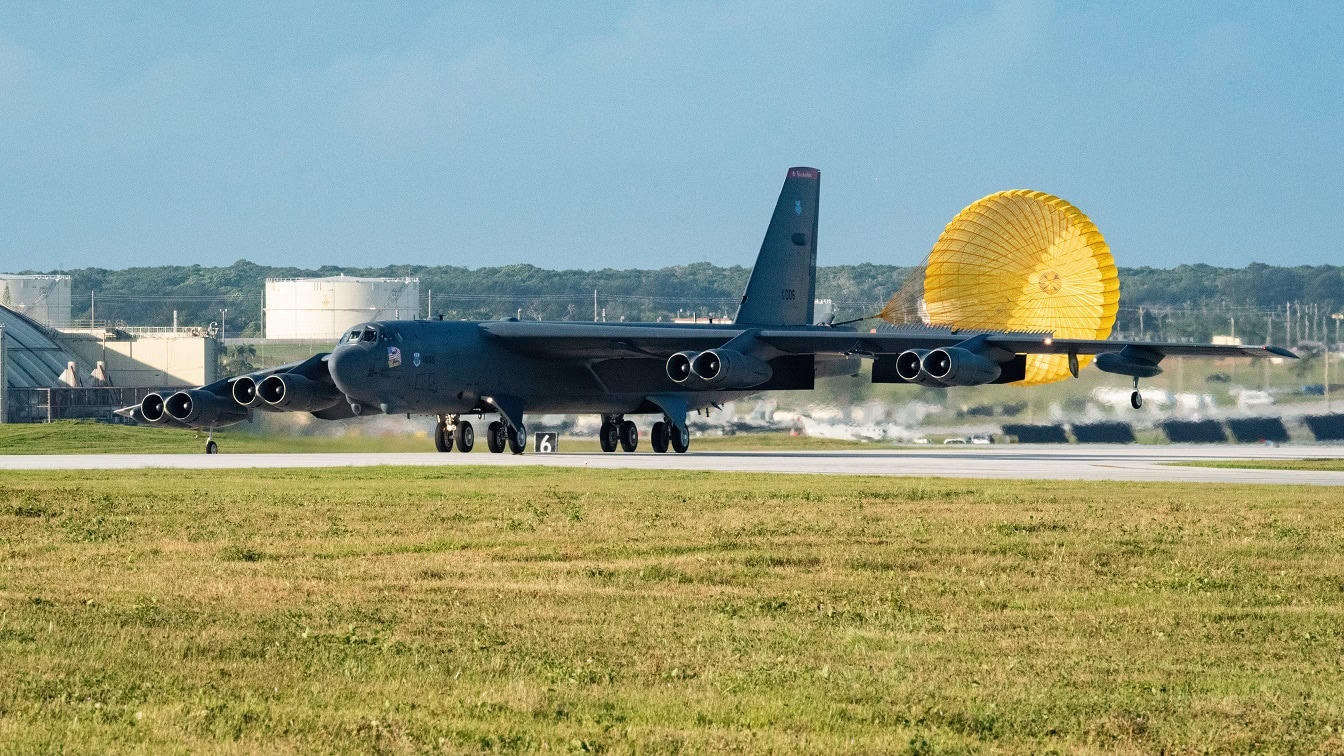
A B-52 Stratofortress from Barksdale Air Force Base, prepares to land on a flightline in support of a Bomber Task Force mission at Andersen Air Force Base, Guam, Feb. 9th, 2022. BTF missions demonstrate lethality and interoperability in support of a free and open Indo-Pacific. (U.S. Air Force photo by Senior Airman Jonathan E. Ramos)
An interesting assessment in an essay titled “Iran Watch” from the Center for Strategic and International Studies mentioned a new, long-range variant of the Iranian missile, the Khorramshahr, capable of reaching 3,000km.
This range can naturally place parts of Europe at risk, and this missile variant may be the reason why Iran was able to fire a missile as far as Diego Garcia.
About the Author: Kris Osborn
Kris Osborn is the President of Warrior Maven – Center for Military Modernization. Osborn previously served at the Pentagon as a highly qualified expert in the Office of the Assistant Secretary of the Army—Acquisition, Logistics & Technology. Osborn has also worked as an anchor and on-air military specialist at national TV networks. He has appeared as a guest military expert on Fox News, MSNBC, The Military Channel, and The History Channel. He also has a Masters Degree in Comparative Literature from Columbia University.