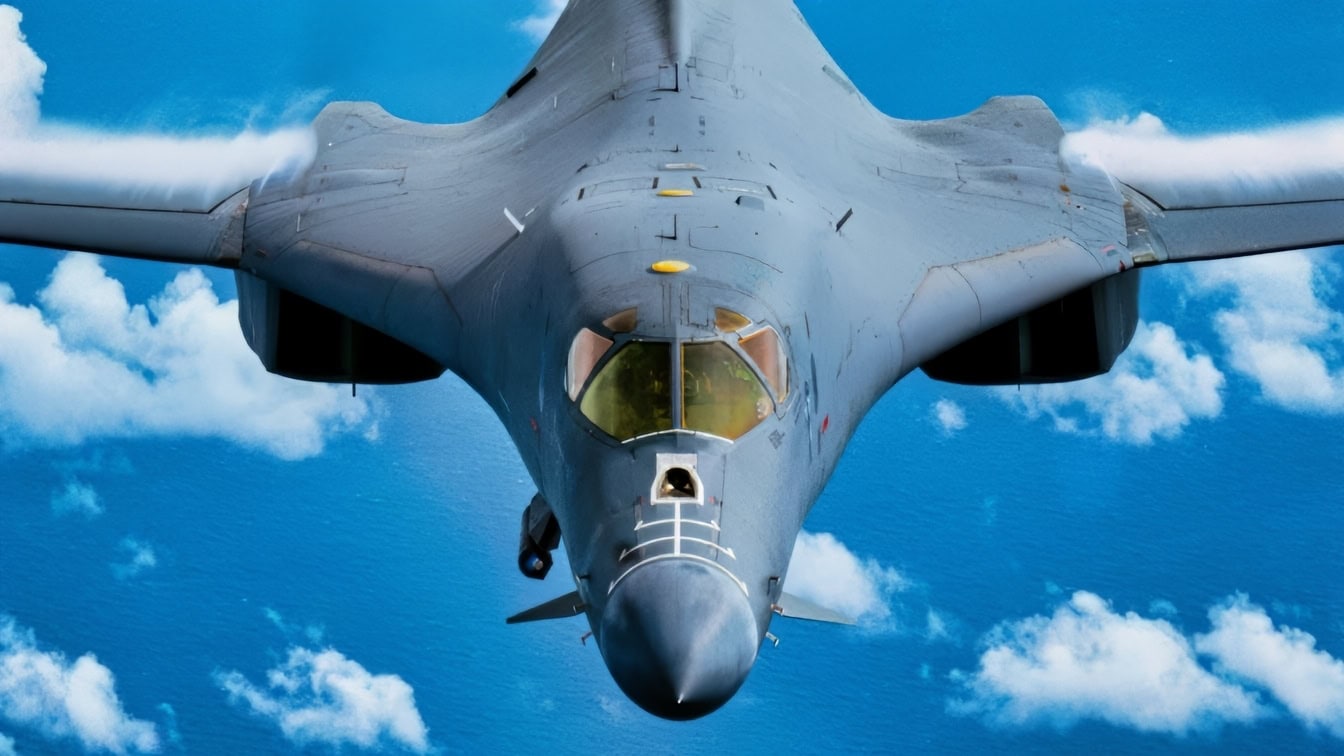
Summary and Key Points: This article is a rebuttal to Dr. James Holmes’ 19FortyFive piece, “Air Power Just Failed Its Biggest Test: What the Iran War Proved About Winning Wars,” by explaining why Operation Epic Fury did not demonstrate a failure of airpower, but rather the failure of simplistic, land-centric thinking about war. The central thesis is that military campaigns must be measured against their assigned political and strategic objectives—not against a supposed requirement to occupy territory, overthrow regimes, or insert ground forces. In Iran, the objective was to destroy, disrupt, deter, and deny Iran’s ability to threaten U.S. and allied interests, not to conquer or govern the country. By that standard, airpower succeeded by rapidly imposing strategic effects across Iran’s military system while avoiding the costs, casualties, escalation risks, and political liabilities of a ground war.
What History Teaches Us
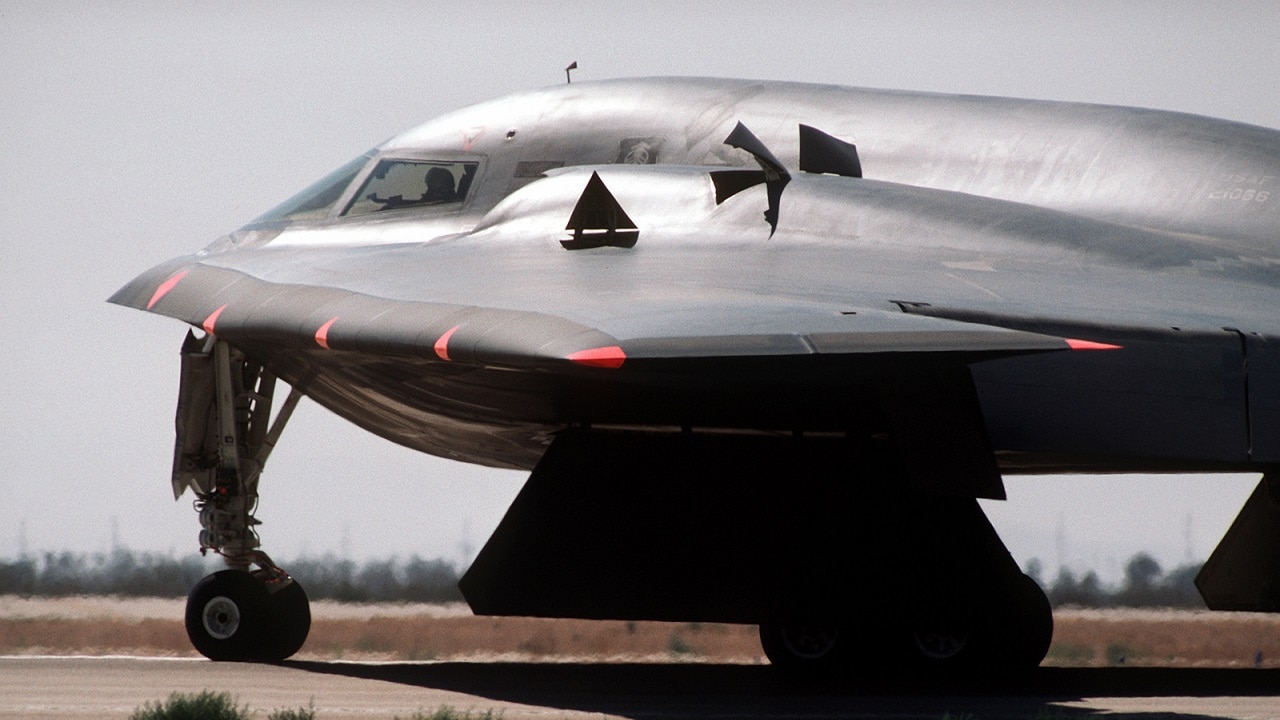
A left side view of the front of a B-2 advanced technology bomber aircraft as it prepares for its first flight, at the Air Force Flight Test Center.
A recent article in 19FortyFive, “Air Power Just Failed Its Biggest Test: What the Iran War Proved About Winning Wars,” argues that Operation Epic Fury proved airpower failed because it cannot control territory, overthrow regimes, or substitute for “the man on the scene with a gun.” Its conclusion is categorical: “Land combat decides who wins.” That assertion is wrong and reflects a fundamental misunderstanding of war, strategy, joint operations, and military force.
Wars are political struggles in which military force is applied, alongside other instruments of national power, to achieve specific objectives under specific conditions. Those objectives are not universal; they vary by adversary, geography, political context, escalation risk, desired end state, and acceptable cost.
To declare that land combat unconditionally determines who wins is to conflate a possible mechanism of control with the purpose of war itself. The proper question is not whether airpower seized Tehran, occupied Iran, or replaced the Islamic Republic. Those were not the necessary measures of success unless regime change and occupation were the stated objectives—which they were not. The proper question is whether the campaign achieved its assigned objectives to “obliterate Iran’s ballistic missile arsenal and production capacity, annihilate its navy, sever its support for terrorist proxies, and ensure the world’s leading state sponsor of terrorism will never acquire a nuclear weapon.” CENTCOM’s plan was designed to accomplish those objectives without committing large U.S. ground forces to another Middle Eastern land war.
Measured against those objectives, airpower did not fail. It did what modern airpower is uniquely suited to do: rapidly impose strategic, operational, and tactical effects across an adversary’s system of power while limiting U.S. personnel exposure, maintaining escalation control, and avoiding the costs of ground occupation.
The flaw in the “airpower failed” argument begins with a false premise. James Holmes asserts that Epic Fury was “as close to a pure air campaign as America has fought” and therefore constituted a laboratory for testing “extravagant claims” about airpower. But no serious modern airman argues that airpower is a magic wand that solves every political problem or always eliminates the need for other instruments of national power. The real claim is that airpower can achieve decisive effects when integrated into a campaign designed around desired outcomes for that specific contingency, rather than as a default to occupation.
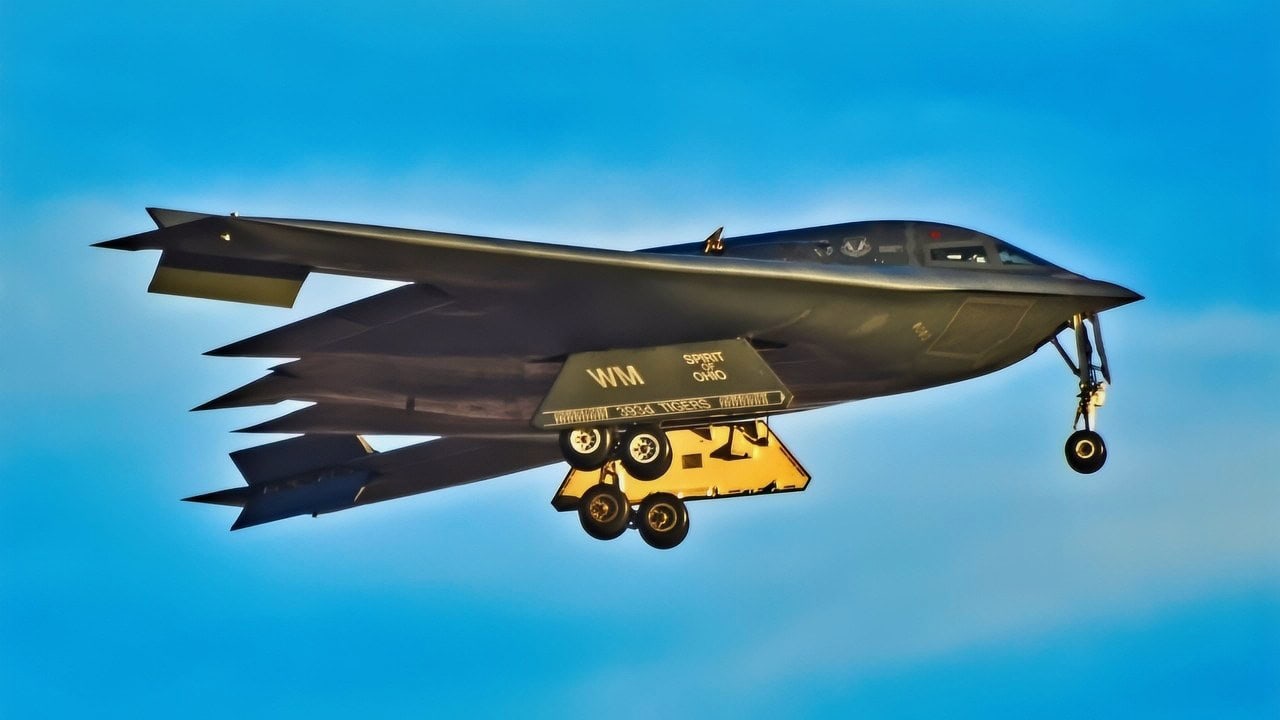
B-2A Spirit Stealth Bomber. Image Credit: Creative Commons.
There is an enormous difference between “airpower cannot do everything” and “airpower failed.” The former is obvious. The latter is unsupported.
Holmes leans on Corbett and Wylie to argue that control of land is the final determinant of war. Those thinkers are worth reading, but not as scripture immune from context. Corbett wrote before stealth, precision, global ISR, cyber, space-enabled command and control, electronic warfare, remotely piloted systems, hypersonics, and modern integrated air campaigns. Wylie’s “man on the scene with a gun” remains useful as a metaphor for certain kinds of control, but it is not a universal law.
In the 21st century, control is not always synonymous with physical occupation. Control can mean denying an adversary the ability to act, paralyzing command relationships, negating fielded forces before they can engage, suppressing air defenses, closing missile launch windows, disrupting logistics, disabling ports, severing communications, degrading energy systems, or imposing costs that alter an adversary’s calculus. In some conflicts, territorial occupation may be essential. In others, it is strategically unnecessary, politically counterproductive, or operationally foolish.
Joint doctrine recognizes this reality. Modern joint planning is not built around a single domain or mechanism of victory. It is built around translating national guidance into objectives, ways and means, risk, and desired military end states, rather than rote adherence to operations in one domain as the solution to every war. That matters because Holmes reverses the logic of joint doctrine. He begins by asserting that combat in the land domain is key to victory, then judges every conflict against that standard. A strategist begins with political objectives and designs the campaign accordingly.
Had the objective in Iran been to occupy the country, dismantle the regime, administer its population, and transfer sovereignty to another authority, then yes, ground forces would have been required. But that would have been a vastly different war with vastly different costs, risks, timelines, and consequences. It also would have repeated the kind of open-ended ground commitment the United States has spent two decades learning to avoid—precisely because ground warfare has not delivered the strategic outcomes promised by Holmes and other land-power absolutists.
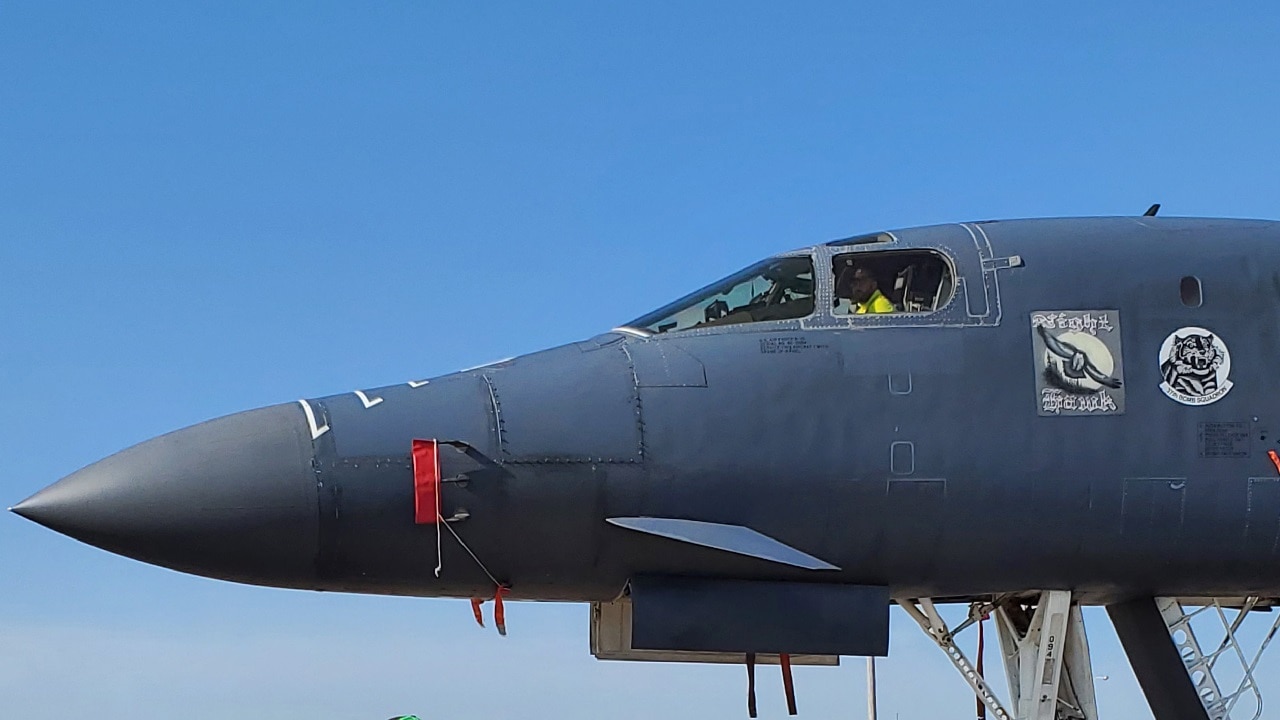
A B-1B Lancer, tail number 86-0094, is moved across Douglas
Blvd. to the Maintenance Repair and Overhaul Technology Center (MROTC) to receive an initial portion of Gate 1 of programmed depot maintenance April 21. 567th AMXS personnel will perform three days of maintenance which include single system checks on 40 individual actuators validating voltage outputs as
well as interrogating each actuator for hydraulic leaks. After single systems are completed, the horizontal stabilizers will be removed from the aircraft. This is the first time that horizontal stabilizers have ever been removed at the MROTC. Once complete, the aircraft and horizontal stabilizers will be brought back across Douglas to the 569th AMXS strip facility for plastic media blasting. Once stripped, the horizontal stabilizers will be routed to the 76th Commodities Maintenance Group for overhaul and repairs. (U.S. Air Force photo/Kelly White)
The irony is that the wars most often cited by ground-power advocates hardly vindicate their case. Korea ended in an armistice, not a decisive political settlement. Vietnam ended in defeat despite a massive ground commitment. Iraq and Afghanistan saw American land forces occupy capitals, topple governments, and control terrain—yet neither produced the durable political outcomes promised by their architects. If “boots on the ground” are the magic ingredient, recent American history is an odd place to look for proof.
The fact that airpower did not accomplish an objective it was not assigned is not evidence of failure. It is evident that the critic has chosen the wrong metric.
Operation Desert Storm provides a useful comparison. The objective in 1991 was not to occupy Iraq or depose Saddam Hussein. It was to eject Iraqi forces from Kuwait and restore Kuwaiti sovereignty. That objective was achieved through a joint campaign in which airpower first dismantled Iraq’s national command structure, air defenses, air force, logistics, communications, and fielded armies. The coalition ground operations that followed during the last 10 percent of the war were extraordinarily successful—but because the air campaign had already shattered the Iraqi military. To say Desert Storm was “won on land” is to mistake the final act for the whole performance.
The same analytic mistake appears in discussions of Kosovo. NATO did not occupy Belgrade or defeat Serbia with ground forces. Airpower, combined with diplomacy, alliance cohesion, and other pressures, compelled Slobodan Milosevic to accept NATO’s terms. One may debate the details, but it is impossible to sustain the claim that land combat always decides who wins.
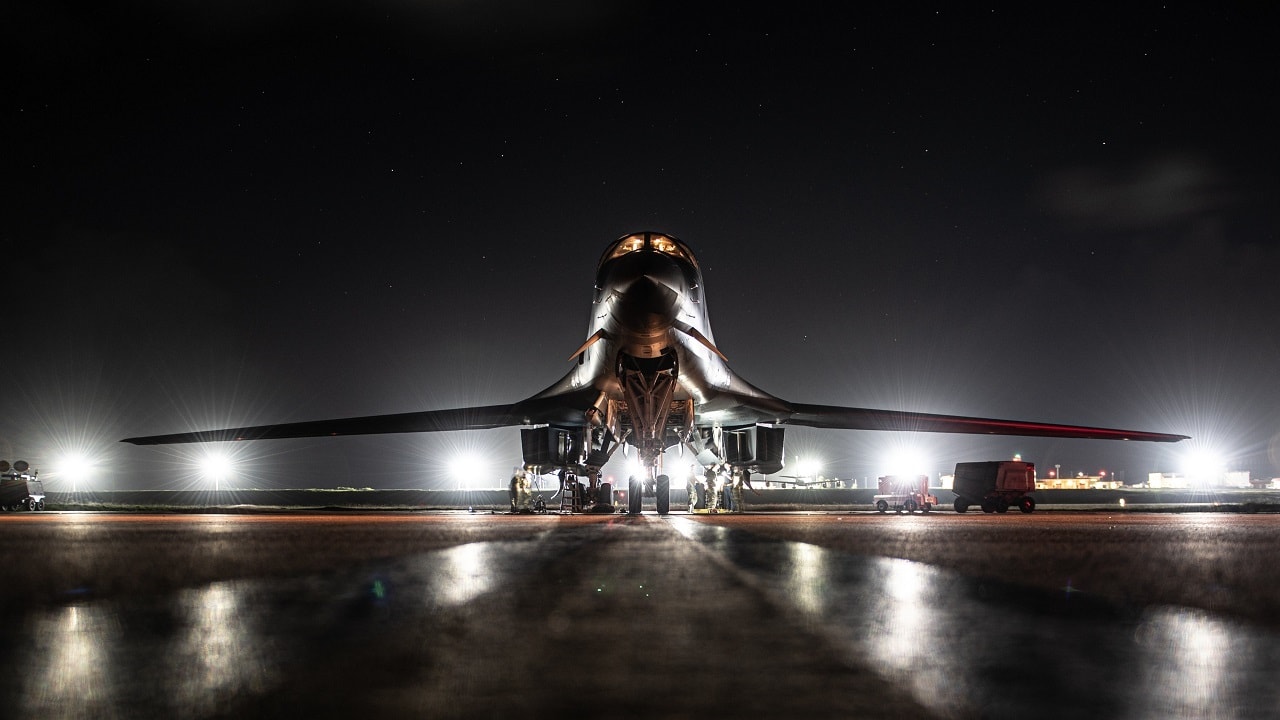
B-1B Lancer Bomber. Image Credit: U.S. Air Force.
Holmes also treats regime survival as evidence of airpower’s inadequacy. That is another non sequitur. Regime change is not the only measure of success in war. Recent U.S. experience should make us wary of assuming that replacing regimes is synonymous with strategic victory. Land forces can seize capitals, remove dictators, and control terrain—yet still fail to achieve enduring strategic success if the political conditions are not present.
Those who argue that ground combat “decides who wins” must explain why years of ground combat in Vietnam did not deliver strategic success; why occupying Iraq did not produce the expected political outcome; why two decades of ground presence in Afghanistan ended in failure; and why Russia’s land invasion of Ukraine has failed to deliver the quick political victory Moscow expected. Land power is essential in many circumstances, but it is not a talisman.
The lesson is not that land power wins. The lesson is that no domain is inherently decisive, separate from strategy. Air, land, sea, space, cyber, information, economic power, alliance cohesion, and diplomacy all matter depending on the contingency. The job of U.S. military professionals is to integrate capabilities to achieve objectives directed by the President—not to elevate one domain into a theory of universal victory.
Airpower’s value lies in its ability to create effects at speed, scale, range, and precision. It can strike an adversary’s critical systems without first fighting through every layer of fielded forces. It can hold mobile and fixed targets at risk across an entire theater, compress decision-making time, impose costs while reducing the requirement for large occupying forces, and deny the adversary freedom of action while providing friendly forces the freedom to engage. Those are not merely supporting functions; airpower is often central to joint success.
The description of air and sea power as “enablers for the most part—not war winners” is a relic of linear, domain-centric thinking. It assumes that war culminates in physical occupation and that all other forms of military power merely prepare the way. But modern warfare is increasingly about systems: command, sensors, missiles, logistics, finance, information, energy, and political will. Defeating or coercing an adversary often requires disrupting the systems that enable it to act, rather than occupying its territory.
That is the essence of an effects-based approach to operations. The goal is not to serve a target list or to inflict destruction for its own sake. The goal is to identify critical vulnerabilities and apply force in ways that produce desired strategic and operational effects. Sometimes that requires a ground maneuver. Sometimes it requires maritime control, cyber operations, space-enabled ISR, or airpower operating across the depth and breadth of an adversary’s system. Often, it requires all the above. But it does not require every war to depend on land combat to secure the desired outcome.
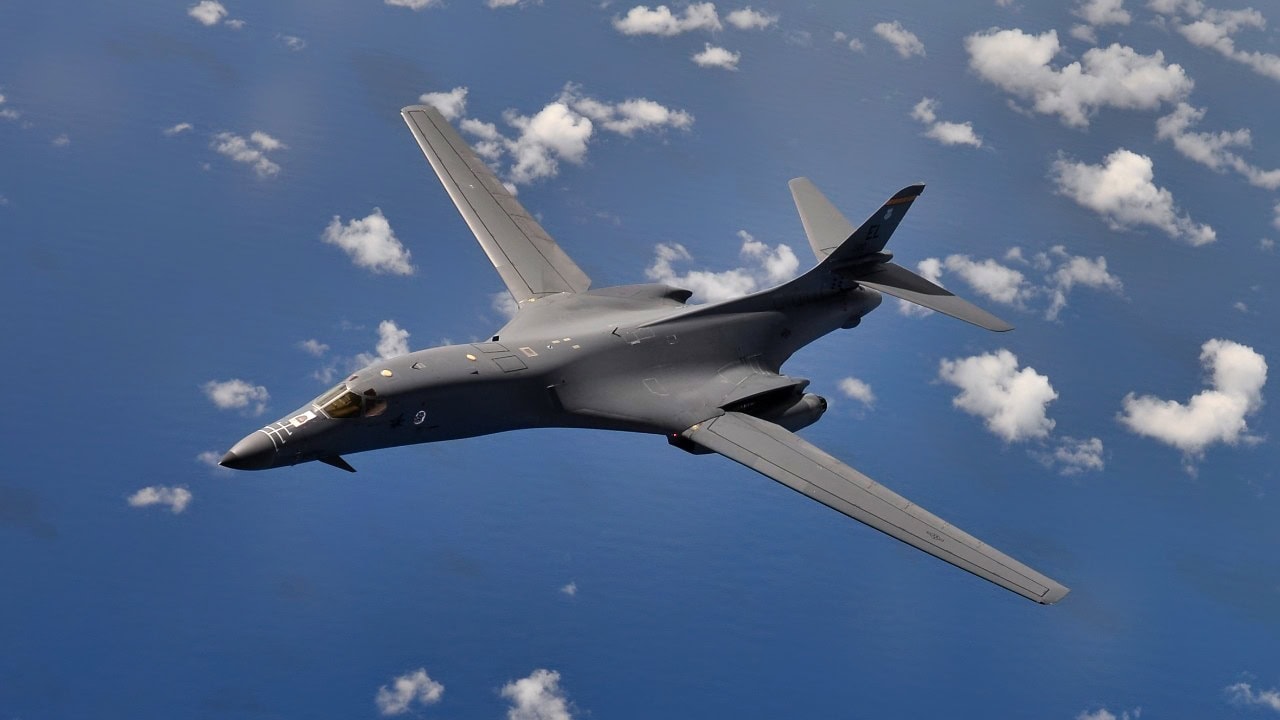
A U.S. Air Force B-1B Lancer assigned to the 37th Expeditionary Bomb Squadron, deployed from Ellsworth Air Force Base, South Dakota, flies over the Pacific Ocean during a training sortie that included practicing low-level bomb runs, low-level maneuvering and high-altitude standoff weapons employment August 9, 2017. The strategic global strike capability of these aerial platforms deters potential adversaries and provides reassurance to our allies and partners that the United States is capable of defending its national security interests in the Indo-Asia-Pacific region. (U.S. Air Force photo by Senior Airman Alexa Ann Henderson)
The Iran case is especially ill-suited to Holmes’ conclusion. Iran is a large country with complex terrain, a population of more than 80 million, a hardened internal security apparatus, and numerous avenues for proxy retaliation. A large-scale ground invasion would have been strategically reckless absent a clear requirement to occupy the country. It would have consumed enormous resources, increased U.S. casualties, inflamed regional instability, and invited the quagmire adversaries hope the United States will enter.
Airpower offered a better option: impose severe military costs, reduce Iran’s ability to project violence, maintain lethal pressure at will, and preserve political flexibility. That is not failure. That is strategy.
Holmes also mischaracterizes airmen. He claims aviators assume that “the ability to visit destruction on an enemy from the air equates to control, and thus to military strategic success.” That may be a convenient straw man, but it does not reflect reality. Modern airmen do not equate destruction with success. They assess whether operations produce desired effects. Destroying an aircraft shelter, missile launcher, command node, bridge, transformer yard, radar, or naval facility matters only insofar as it changes the adversary’s behavior or capacity. Effects, not destruction, are the measure.
This distinction is central to successful campaign design. A poor air campaign can produce impressive explosions but little strategic value. A well-designed air campaign attacks the enemy as a system, in parallel, to create cascading effects. That was the transformation created by the Desert Storm air campaign. It remains the correct way to think about the use of military power today.
The “land combat decides who wins” formulation also risks undermining jointness. True jointness is not forcing every campaign into a land-centric template. Nor is it giving each service equal roles to play, like little league rules. True jointness means selecting the right forces, under the right command relationships, to achieve the right effects at the right time. Joint force operations should be organized around objectives—not service component predispositions dressed up as strategic wisdom.
The danger of teaching future officers that “land combat decides who wins” is that it encourages intellectual laziness. It substitutes a slogan for analysis. It teaches students to ask, “Where is the ground component?” before asking, “What is the objective?” It privileges occupation over coercion, control of terrain over control of effects, and historical analogy over strategic judgment.
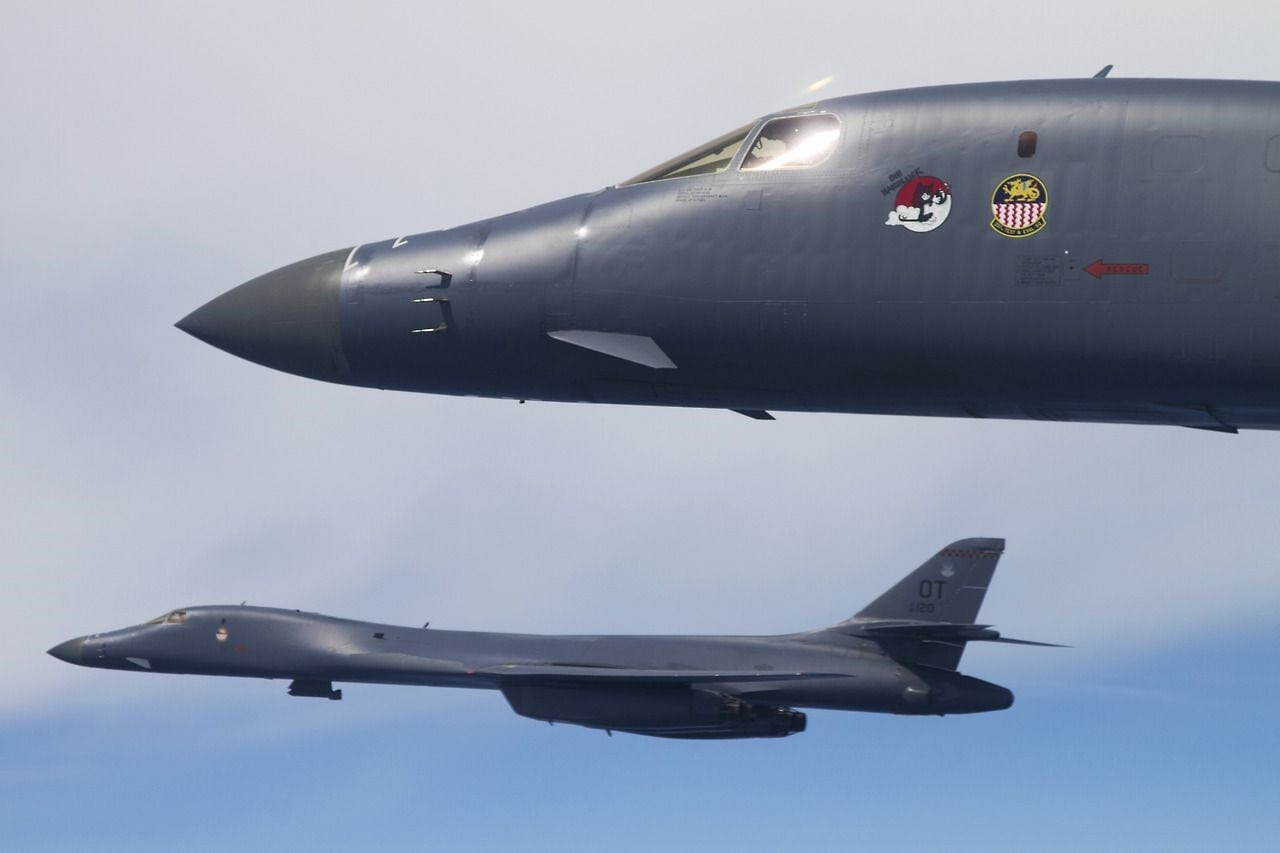
Two B-1B Bombers. Image Credit: US Air Force.
Professional military education should do better. It should teach officers that every conflict has its own conditions; that objectives must be clearly defined; that military power must be tailored to political purpose; that strategic success is not measured by the presence of soldiers on terrain unless that presence is necessary to achieve the end state; and that the domains of warfare are not ends in themselves.
Airpower Did Not Fail the Iran ‘Test’
Airpower did not fail its biggest test in Iran. The test was not whether aircraft could become infantry. The test was whether the United States could use military power—with airpower as the predominant component, integrated with other instruments—to rapidly reduce a dangerous adversary’s nuclear and military capacity, protect U.S. and allied interests, and avoid a costly ground war. Measured against those objectives, the air campaign over Iran was a resounding success and demonstrated airpower’s enduring relevance.
Epic Fury’s central lesson is that strategy must first define what success requires before critics can credibly declare failure. If the objective is occupation, then occupation forces are required. If the objective is regime replacement, then a much larger political-military enterprise is required. If the objective is to destroy, disrupt, deter, deny, and compel at an acceptable cost and risk, airpower may not only be sufficient—it may be the most effective instrument available.
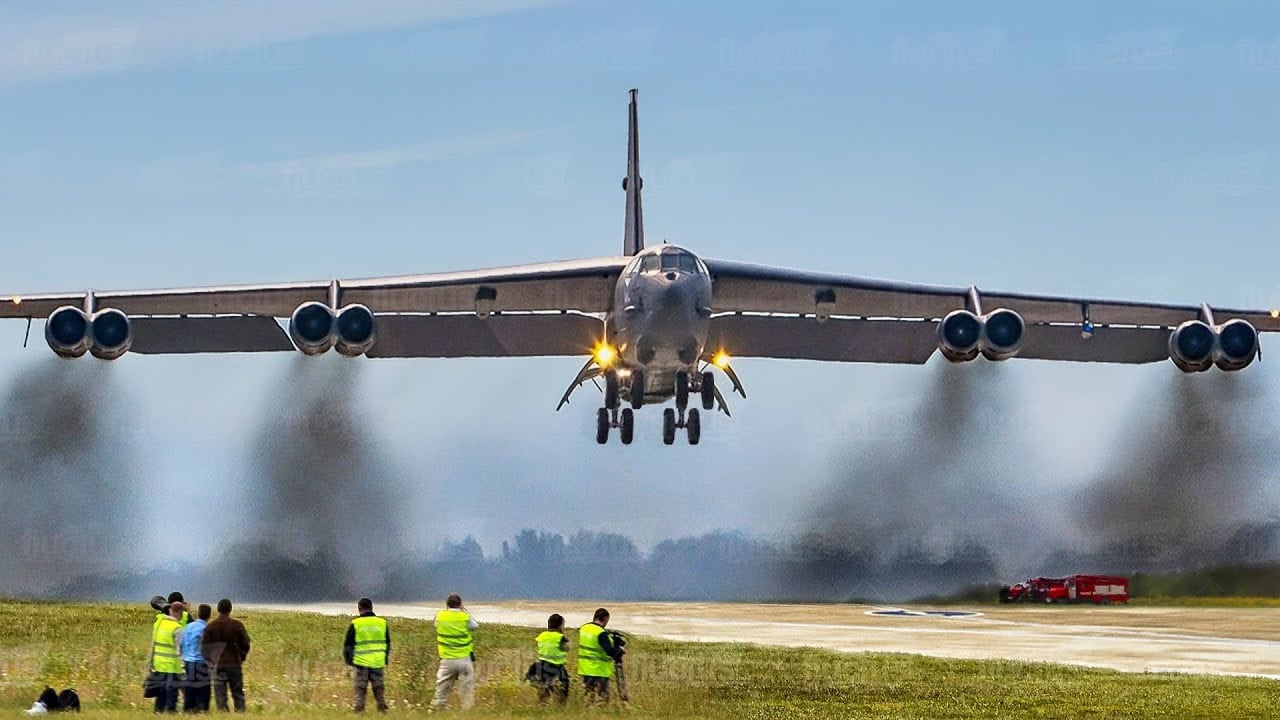
B-52 Bomber. Image Credit: Creative Commons.
War is not won by slogans. It is won by aligning objectives, strategy, capabilities, and effects. The United States does not need another generation of officers taught to worship terrain for its own sake. It needs strategists who understand that victory means achieving political objectives. In Iran, as in many future conflicts, the decisive question is not whether a soldier stands on a particular piece of ground. It will be a question of whether the adversary can still do what the United States set out to prevent.
That is the measure that matters. And by that measure, airpower remains indispensable—not as a supporting arm, not as a lesser enabler, but as a central instrument of joint warfare.
About the Author: Lt. Gen. David A. Deptula
Lt. Gen. David A. Deptula, USAF (Ret.), is the Dean of the Mitchell Institute for Aerospace Studies. He has been involved in planning and executing multiple major coalition air campaigns and was a Joint Task Force commander twice during his long military career. He is also a board member at a variety of institutions, an independent consultant, and a worldwide commentator on strategy, security, and related military issues. Follow him on X and LinkedIn.