
Summary and Key Points: The United States, Israel, and Iran spent the summer of 2025 testing a question that has divided Washington and Jerusalem for a generation: can air power alone force a hostile government to bend? Operation Epic Fury, one of the most concentrated air campaigns since the Gulf War, offered an answer — and it lands squarely in a debate that stretches from the Pentagon to NATO capitals to the Israeli security cabinet. What the Iran campaign revealed about the limits of air power is now reshaping how the United States and its allies plan for the next confrontation.
What History Teaches Us:
In a sense, the Iran war constituted a laboratory for testing the more extravagant claims advanced by air-power boosters since the inception of military aviation. My verdict: falsified. Claims that air power represents a decisive implement of warfare have always been inflated, and remain so. Operation Epic Fury, an almost completely aerial campaign, reaffirms that air power does not win wars by itself, let alone change hostile regimes. Why? Because air supremacy does not equate to control of ground. And in the end, control of ground is what determines the outcome of martial strife. It empowers an armed force to compel.
Land combat decides who wins.
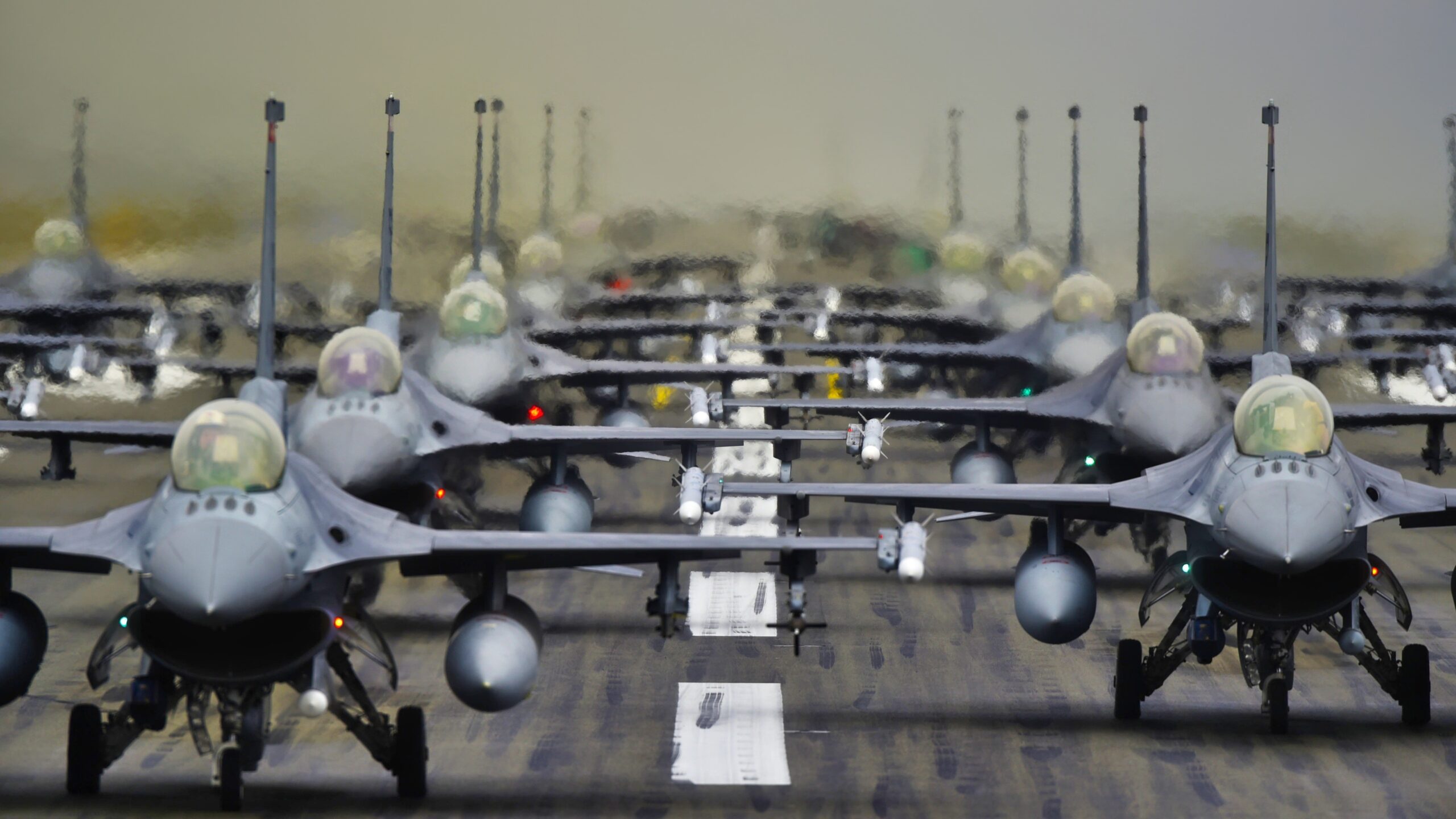
F-16 Fighter in a Elephant Walk. Image Credit: Creative Commons.
Beyond doubt, air power represents an indispensable part of any composite fighting force. But it cannot deliver control of key terrain by itself. It is necessary but insufficient for victory. Nor is this a knock on air power, by the way. Sea power—my realm—falls into the same category. Ships do not control territory, although shipboard marines might once they land. A maritime force can send all the carrier aircraft it likes to bombard land targets. Or it can deal out missile strikes or gunfire. In littoral combat, though, the navy is an enabler for marines and soldiers battling on dry earth. It is a supporting arm of “joint,” multiservice warfare—not a decisive one.
Air and sea power are enablers for the most part—not war winners. Now, there are exceptions. For instance, I could see aviators and mariners denying China access to Taiwan. That’s no small thing. But such exceptions prove the rule. As far as defeating the People’s Liberation Army in its entirety, let alone toppling the communist regime in Beijing?
There are at least two ways to gauge Epic Fury’s success against Iran: legal and strategic. Why legal? Well, the Iran war was an assault on a sovereign state, no matter how loathsome its ruling regime. Over a century ago the German sociologist Max Weber fashioned the classic definition of sovereignty: it stems from a monopoly on the use of force within certain geographic boundaries we call borders. (Weber specified the legitimate use of force, but he must have meant lawful. He doubtless would have disapproved of the legitimacy of the Islamic Republic’s use of force to slaughter protesters in their thousands last January. But it was lawful under the mullahs’ regime.)
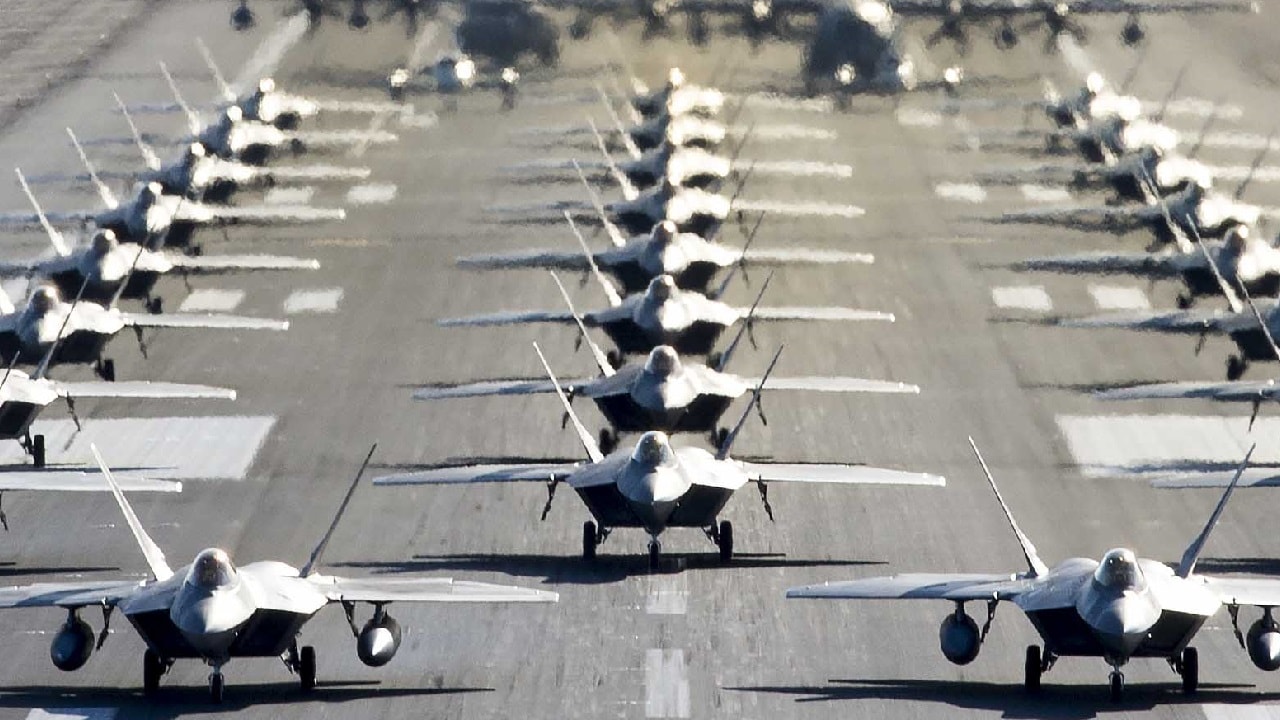
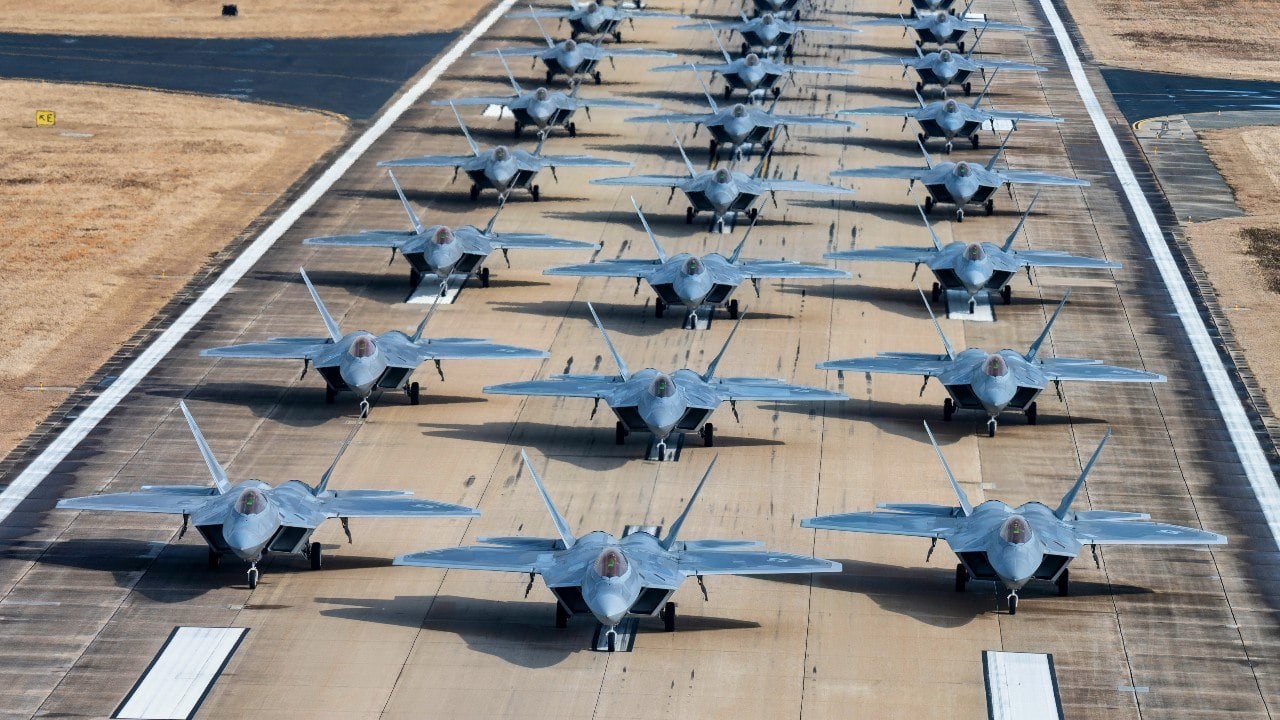
U.S. Air Force F-22 Raptors, E-3 Sentrys, C-17 Globemaster IIIs, C-130J Herculeses and C-12F Hurons participate in a close formation taxi known as an elephant walk at Joint Base Elmendorf-Richardson, Alaska, May 5, 2020. This event displayed the ability of the 3rd Wing, 176th Wing and the 477th Fighter Group to maintain constant readiness throughout COVID-19 by Total Force Integration between active-duty, Guard and Reserve units to continue defending the U.S. homeland and ensuring a free and open Indo-Pacific. (U.S. Air Force photo by Senior Airman Jonathan Valdes Montijo)
To oust a hostile regime, military action must terminate the regime’s monopoly on force and transfer it to someone more palatable. Epic Fury certainly set back the Islamic Republic’s armed capabilities, an agreeable outcome, but air and missile forces cannot rule a country. With no ground component to Epic Fury, regime change was always a forlorn hope. Even an outright military victory was apt to prove elusive.
Next, strategic. Some observations from two famed strategic commentators. Writing about naval power a century-plus ago, in his masterful Some Principles of Maritime Strategy, Sir Julian Corbett pointed out that wars are ultimately won on land because people live on land. “Since men live upon the land and not upon the sea,” he writes, “great issues between nations at war have always been decided—except in the rarest cases—either by what your army can do against your enemy’s territory and national life, or else by the fear of what the fleet makes it possible for your army to do.” (I never have gotten that fear part. How about what the fleet actually makes if possible for the army to do?) For Corbett, in other words, the navy was a supporting arm of a joint—multiservice— land/sea effort.
Naval warfare was invaluable, but Corbett questions whether it could ever prove decisive in itself. “Unaided, naval pressure can only work by a process of exhaustion. Its effects must always be slow, and so galling both to our own commercial community and to neutrals, that the tendency is always to accept terms of peace that are far from conclusive.” In other words, this intrinsically slow-moving approach tends to alienate friendly or neutral maritime trading nations while affronting constituencies at home—and thus levying pressure for an early peace. Interfering with mercantile shipping does not set well. The U.S. Navy blockade of the Strait of Hormuz constitutes a case in point. It was an effective blockade, but in force too briefly to impose gradual exhaustion on Iran.
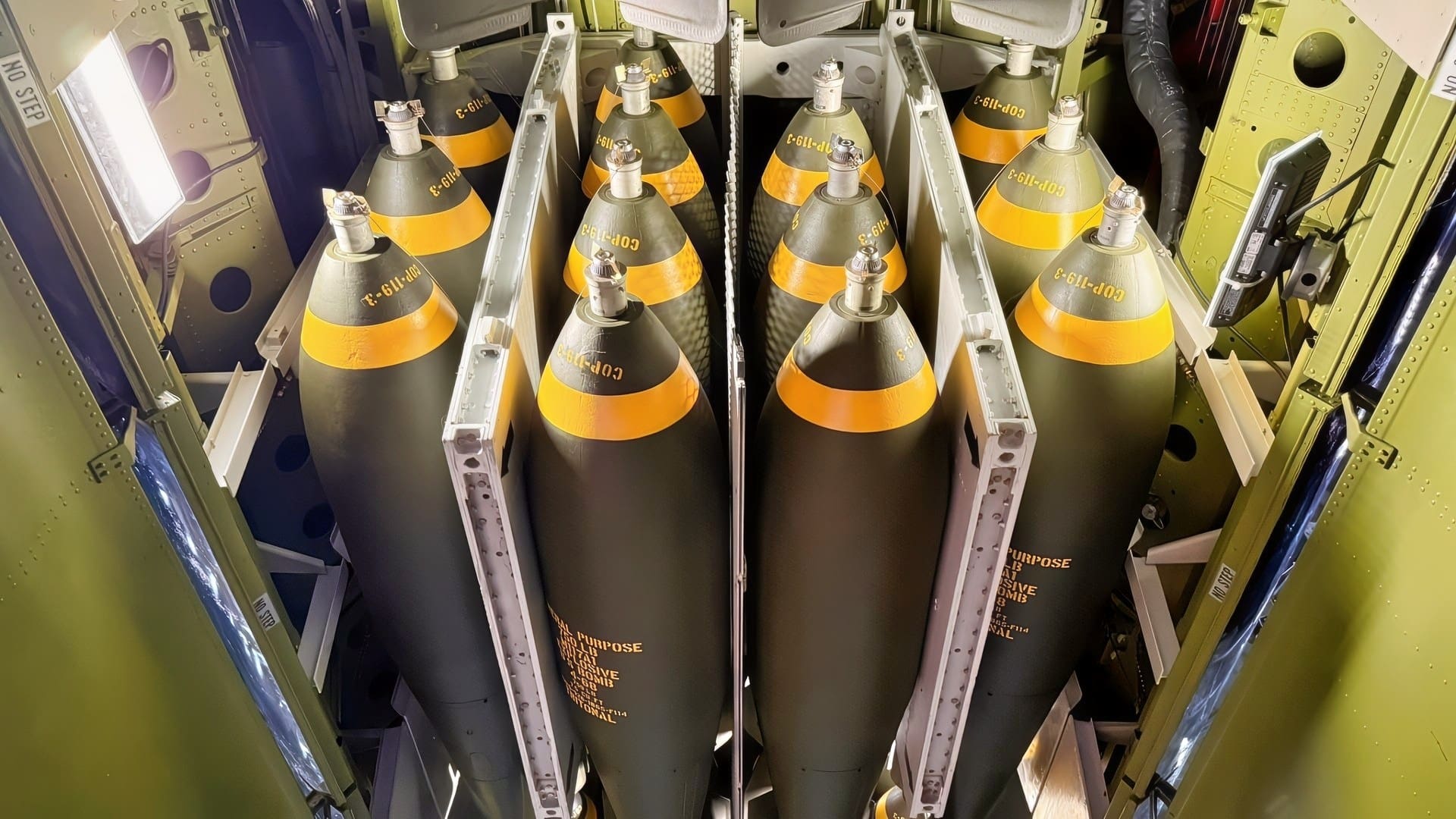
19FortyFive.com B-52 Bomber Bombs. By Harry J. Kazianis in 2025 from the National Museum of the Air Force.
So Washington agreed to cancel it.
Corbett viewed land combat as the decisive implement in maritime strategy, offering the possibility of a swift victory. In other words, he was an apostle of “jointery,” the art and science of choreographing armed forces across geophysical domains. He lived at the dawn of military aviation, but there is little reason to doubt he would have applied the same logic to air power. Yes, air forces can reach farther inland than the steam-powered Royal Navy of his day, and these days they can deliver precision firepower against a multitude of targets. Epic Fury reaffirmed that. Even so, air forces do not control turf any more than the Royal Navy did. Air strikes come and go.
Corbett would nod knowingly at the inconclusive results of Epic Fury.
Which us brings us to Admiral J. C. Wylie. A decorated World War II veteran, ship captain, and Naval War College faculty member, Wylie composed a short treatise called Military Strategy: A General Theory of Power Control that provides some of the most penetrating insight you will ever encounter. We assign six pages of Military Strategy in Newport, and students quote it without fail. It resonates.
Wylie strikes a Corbettian note at times, but in fact he goes further than Corbett did with regard to joint warfare. He maintains that the goal of military strategy is control. By that he means control of critical real estate or objects on land. Wylie presents a metaphor. To coerce an unwilling antagonist, he says, the strategist “must establish, or must present as an inevitable prospect, a man on the scene with a gun. This is the soldier.” The soldier must actually stand on the scene, or at least “be potentially available, and clearly seen as potentially available, for use as the ultimate arbiter.”
That is, the soldier must actually be there, or hostile leaders must believe the man with a gun will inevitably be there to impose control if they balk. “The ultimate determinant in war,” writes Wylie,“is the man on the scene with the gun. This man is the final power in war. He is control. He determines who wins” (his emphasis). Aviators and mariners exist to abet the soldier trudging the scene toting a gun.
Wylie goes into detail on the excesses and shortcomings of air and sea power. He observes that both are “cumulative” undertakings, a scattershot approach to warfare. To prevail—that is to say, on land—a fighting force must stage “sequential” offensives leading toward the final goal. In other words, the force mounts tactical actions in sequence, one after the other, until it reaches the final goal. Transcribed onto the map or chart, sequential operations look like continuous vectors or curves. One action comes after the last. The U.S. military’s transpacific offensives in World War II were quintessential sequential campaigns, aimed at dismantling the Japanese Empire.
But air and sea power are different. Cumulative operations do not proceed along continuous vectors or curves on the map or nautical chart. They consist of numerous small-scale tactical actions all over the map or chart, unconnected to one another in time and geographic space. Plot them and there is a paintsplatter effect. No individual event is that consequential. Together, cumulative actions grind down a foe. Submarine raiding in the Pacific was a cumulative campaign, as was strategic bombing of Japan.

PHILIPPINE SEA (Feb. 24, 2024) A U.S. Air Force B-52 Stratofortress, attached to the 5th Bomb Wing, and aircraft attached to Carrier Air Wing (CVW) 11, fly in formation over the Nimitz-class aircraft carrier USS Theodore Roosevelt (CVN 71), Feb. 24, 2024. Theodore Roosevelt, flagship of Carrier Strike Group Nine, is underway conducting routine operations in the U.S. 7th Fleet area of operations. U.S. 7th Fleet is the U.S. Navy’s largest forward-deployed numbered fleet, and routinely interacts and operates with allies and partners in preserving a free and open Indo-Pacific region. (U.S. Navy photo by Mass Communication Specialist 1st Class Thomas Gooley)
Invaluable but not decisive.
Wylie insists that cumulative operations are a difference-maker in closely matched contests. They are enablers for successful sequential operations. But he denies that they decide wars by themselves. Epic Fury brought the air and sea enablers to bear without a meaningful ground component that could have produced victory. No soldier on the scene with a gun = no control = incomplete victory at best.
Admiral Wylie also goes into why joint debates are so frustrating, stymieing creative strategy-making. He concludes that the armed services start from radically different assumptions when debating strategy. He postulates that the physical domain where a force operates shapes how the members of that force think about strategy, operations, and tactics. It molds what members regard as self-evident—and by definition it is hard to convince people to jettison what they consider self-evident. Here’s the important point relating to Epic Fury. Wylie asserts that aviators assume the ability to visit destruction on an enemy from the air equates to control, and thus to military strategic success.
Epic Fury unleashed devastation from the air—but it could not impose control. So the Islamic Republic survives, albeit debilitated.
No doubt Wylie would include naval aviation in his acerbic analysis of airmen’s assumptions, not just ground-based air forces. But there is a difference. U.S. naval aviation is a fighter force, deploying no strategic bombers. An aircraft is a big ship, but not big enough to embark a massive bomber. Accordingly, American naval aviators concern themselves chiefly with defeating enemy aircraft and with furnishing support to forces on the surface, meaning the fleet or expeditionary forces bestriding coastal zones. Their assumptions differ somewhat from those of strategic-bombing proponents.
In short, Wylie denies that airborne destruction is control. Air forces come, deliver ordnance and depart whereas ground forces—soldiers on the scene with guns—go and stay.
So there you have it from some of the greats. Neither Weber nor Corbett nor Wylie would be shocked at the outcome in the Gulf region.
Nor should we be. Let’s bear this in mind the next time we contemplate military action.
About the Author: Dr. James Holmes, U.S. Naval War College
James Holmes is J. C. Wylie Chair of Maritime Strategy at the U.S. Naval War College and a Distinguished Fellow at the Brute Krulak Center for Innovation and Future Warfare, Marine Corps University. The views voiced here are his alone.