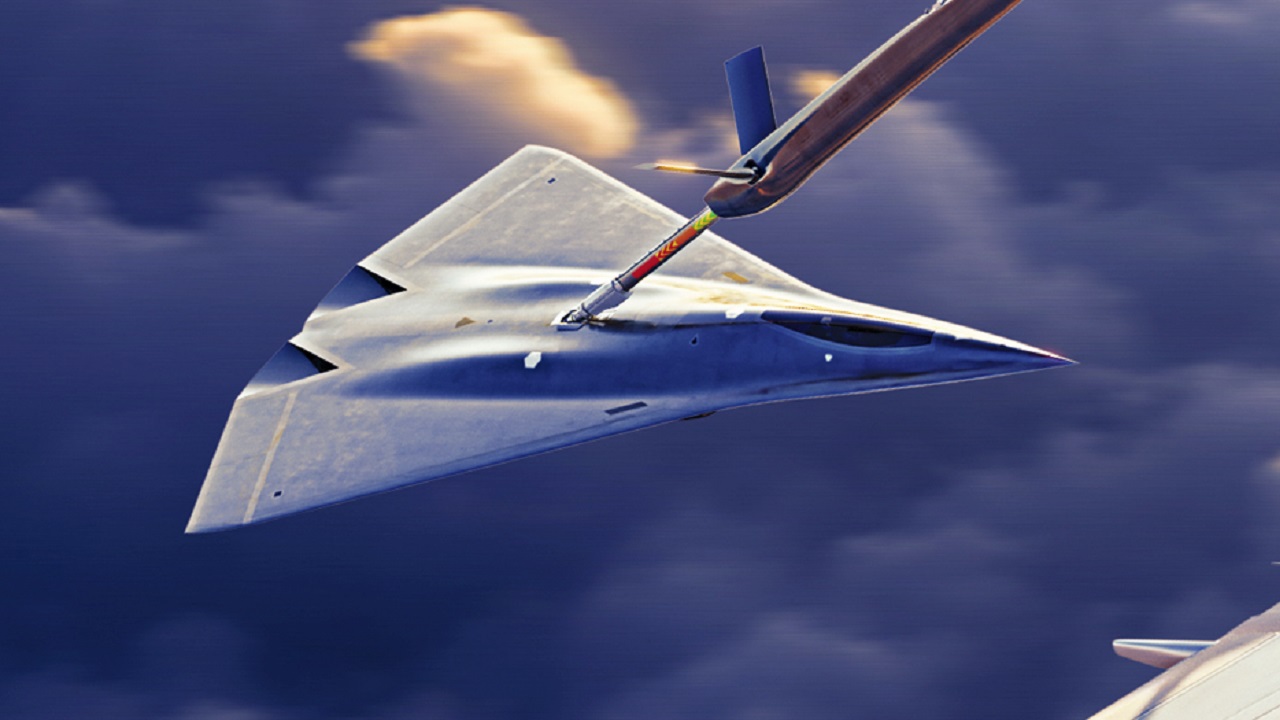
The Iran War Proved It: The F-47 and B-21 Raider Will Not Save US Airpower – For more than a century, military power was measured by platforms. Battleships determined naval supremacy. Tanks dominated land warfare. Aircraft carriers project power across oceans. Air forces competed to build ever-more advanced fighters and bombers, believing that technological superiority in individual systems would decide wars.
That era is over.
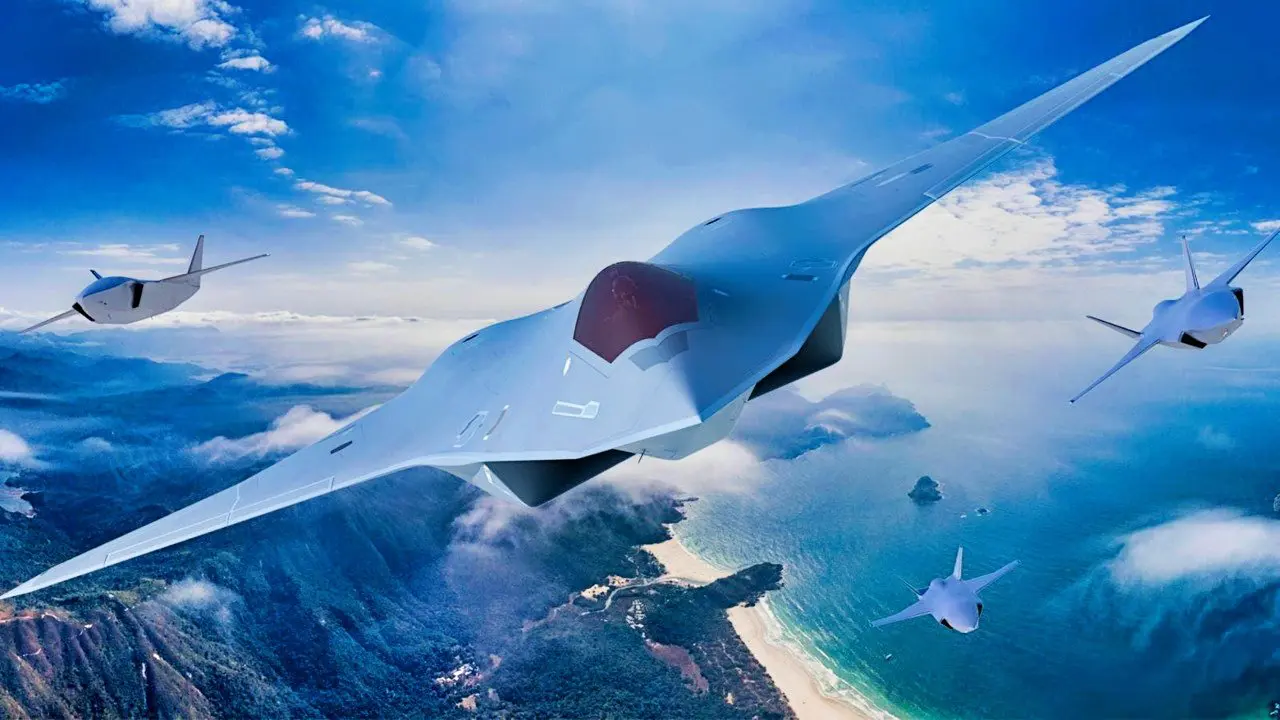
NGAD fighter from U.S. Air Force.
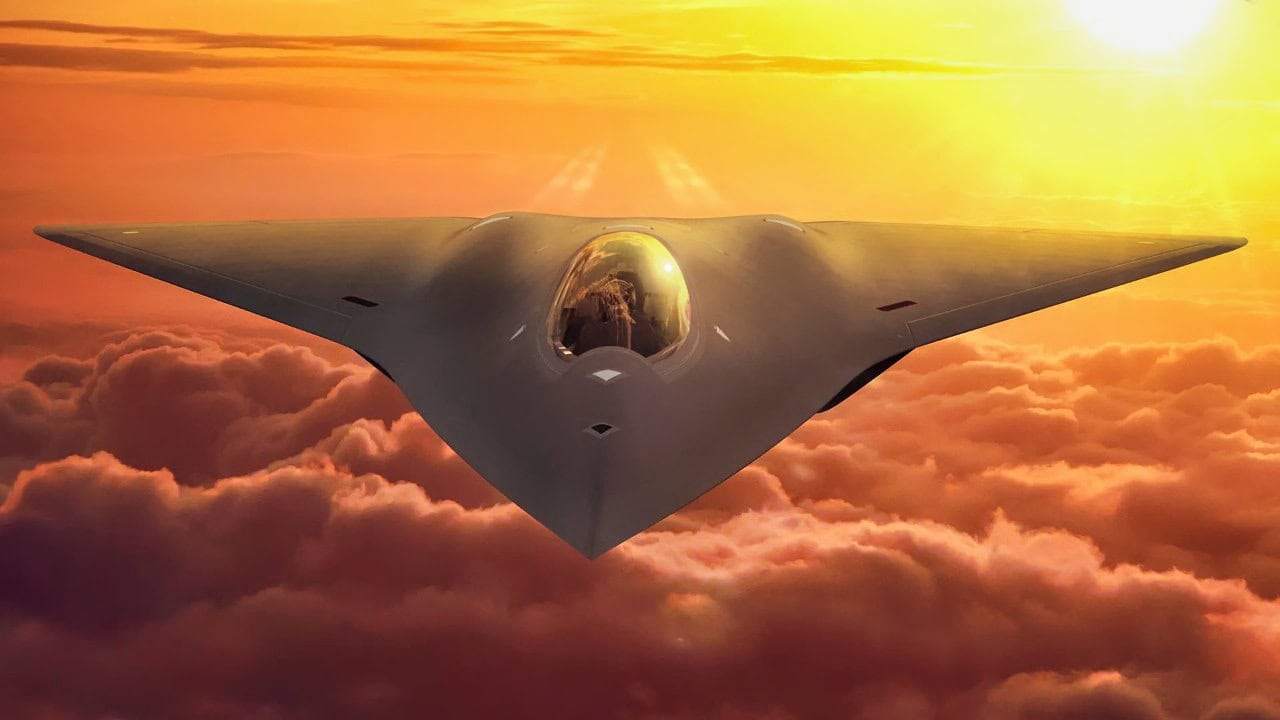
NGAD Fighter via Lockheed Martin.
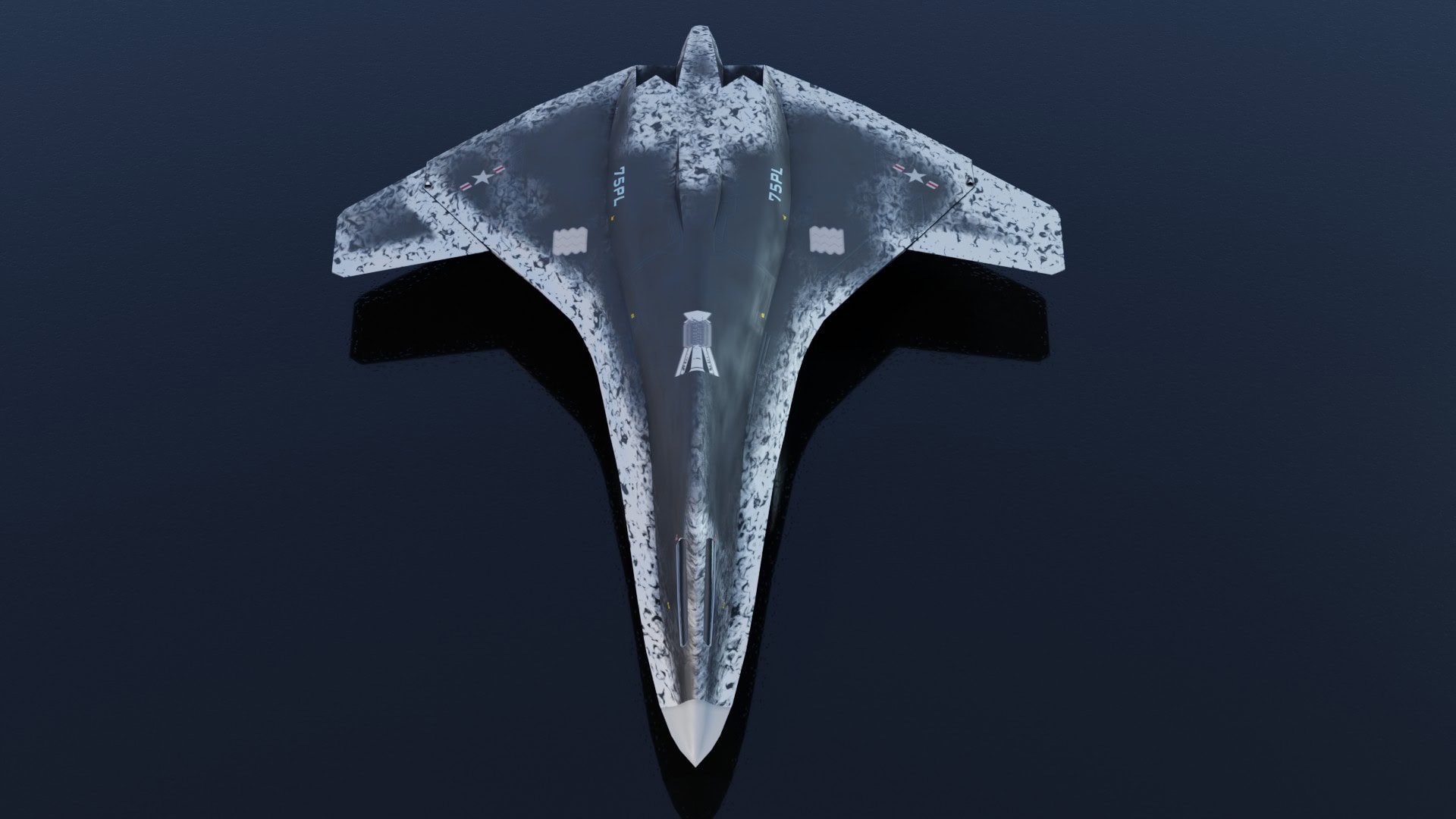
NGAD Fighter Mock Up. Image Credit: Creative Commons.
The great lesson of both the Iran War and the Ukraine War is not that fighters are obsolete or that bombers are dead. Nor is it that drones have completely replaced manned aircraft. Instead, these conflicts have revealed something far more significant: the individual platform no longer sits at the center of warfare.
What matters now is the network.
The military that can best integrate drones, missiles, manned aircraft, electronic warfare (EW), cyber capabilities, sensors, and industrial production into a coherent whole will prevail. The side that can sustain those networks through prolonged attritional warfare will win. The side that cannot replenish losses, manufacture munitions en masse, and adapt its systems rapidly enough will lose, regardless of how advanced its individual platforms may be.
Iran understood this reality. Increasingly, China does as well. The United States, however, remains trapped in an older way of thinking, pouring vast sums into a handful of exquisite aircraft while neglecting the industrial and technological ecosystem that modern warfare actually requires.
America’s Faith in Exquisite Systems Like the B-21 and F-47
The F-22 Raptor. The F-35 Lightning II. The B-2 Spirit long-range stealth bomber and its successor, the B-21 Raider. The much-ballyhooed F-47, sixth-generation Next-Generation Air Dominance (NGAD) warplane. These are the systems that Washington believes put the “super” in “superpower.” The same goes for Washington’s fixation on exquisite air defense systems, like the expensive Terminal High-Altitude Area Defense (THAAD) launcher and its even more expensive interceptors.
And that’s not the only expensive system that America has come to rely on to wage war.
Business & Industrial Challenges: The Problem with the F-47 and B-21
In the age of asymmetrical, industrial-scale wars of attrition, though, a small grouping of next-generation, expensive systems is insufficient to stop the kinds of attacks rivals like Iran or China will subject US forces to in warfare. Mass-produced, affordable weapons systems that are expendable and replaceable are the way these wars are fought.
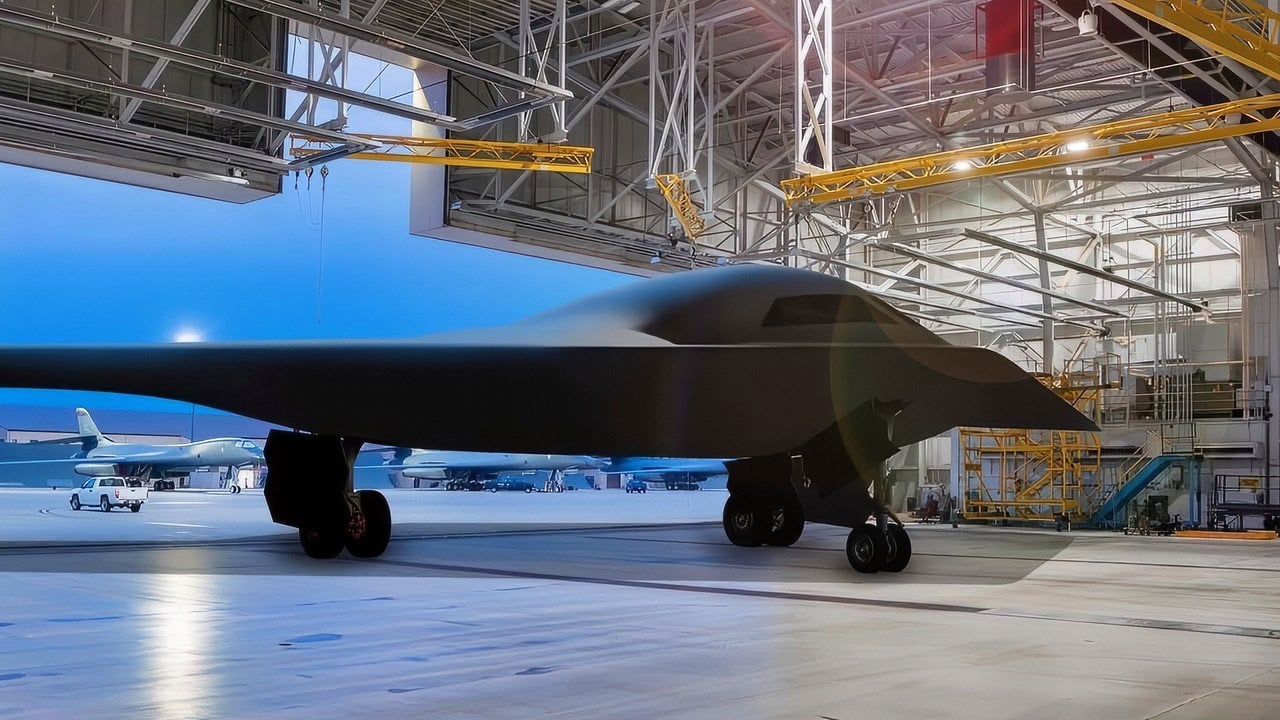
Artist rendering of a B-21 Raider in a hangar at Ellsworth Air Force Base, South Dakota, one of the future bases to host the new airframe. AFCEC is leading a $1 billion construction effort at Ellsworth to deliver sustainable infrastructure to meet warfighter demands for bomber airpower. (U.S. Air Force graphic)
There are currently two systems the United States Air Force is advancing, the F-47 and the B-21 Raider. In one case, the F-47 is set to cost an astonishing $300 million per plane.
And the USAF wants anywhere between 200 and 300 of these planes over the next 20 years. What’s more, there is little evidence that the F-47 will achieve the desired strategic effects against foes, like Iran, any more than a fleet of F-35s did in the last round of fighting against hardened Tehran.
The B-21 Raider, while an excellent plane from an engineering standpoint, remains problematic, too. It’s a replacement for America’s B-2 Spirit long-range stealth bomber. That is slated to cost between $700 and $730 million per craft. The Air Force wants at least 100 units. In fact, the Pentagon assessed that, for the program to be truly viable, they need closer to 300 of these planes.
The Real Bottleneck: Industrial Capacity
Pentagon planners assume that these exquisite platforms are needed because they must be capable of waging warfare from beyond visual range (BVR) and of penetrating enemy air defenses stealthily.
Both of these assessments are wrong. Consider the recent Iran War. Yes, BVR warfare, like in the Ukraine War, defined much of the air war. Yet, for BVR warfare to succeed, the United States needs bountiful supplies of precision-guided standoff munitions.
The problem is less that the Americans lack stealth planes and bombers and, therefore, need new–even costlier and more complex–systems to wage tomorrow’s wars. The real issue is that the United States’ defense industrial base cannot totally mass-produce the standoff weapons America needs for the kind of warfare that the F-47 and B-21 Raider are built for.
Yet, there is far more money going into these fantasy warplane and bomber projects than into programs to truly enhance America’s ailing defense industrial base.
There’s another component of the new way of war that is completely missing in America’s plans. Drones. Unmanned systems are the defining feature of all these modern battlefields. Not only does America need wave upon wave of drones, but it requires the ability for manned planes to deploy and manage squadrons of “Loyal Wingmen” drones.
Sure, the F-47 and B-21 are being built to utilize manned-unmanned teaming (MUMT). But the United States already possesses a bevy of advanced warplanes, such as the F-22 and F-35. Instead of building two new boondoggles, just enhance what we’ve already got!
The Wrong Military for the Wrong War
Iran defeated the United States with missile and drone swarms. The Americans exhausted their critical supply of key weapons systems within little over 100 days of warfare, and were forced to sue for a ceasefire partly because of that depletion.
We don’t need B-21 and F-47s.
We need drones, missiles, hypersonic weapons, and cheaper air defenses.
But the Pentagon can’t seem to break its fixation with the next new platform. And the defense contractors of America are more than happy to sell the Pentagon and Congress the dream of the wünderwaffe, so long as they get their oversized cut of the taxpayer loot.
In the real world, however, medium-sized powers, like Iran, run circles around the United States because the US military is designed to fight the wrong war in the wrong century.
About the Author: Brandon J. Weichert
Brandon J. Weichert is the Senior National Security Editor at 19FortyFive.com. He also manages The Weichert Brief on Substack. Weichert also hosts “National Security Talk” on Rumble. He is the author of four bestselling national security books, the most recent of which is A Disaster of Our Own Making: How the West Lost Ukraine (Encounter Books). Follow him via Twitter/X @WeTheBrandon.