
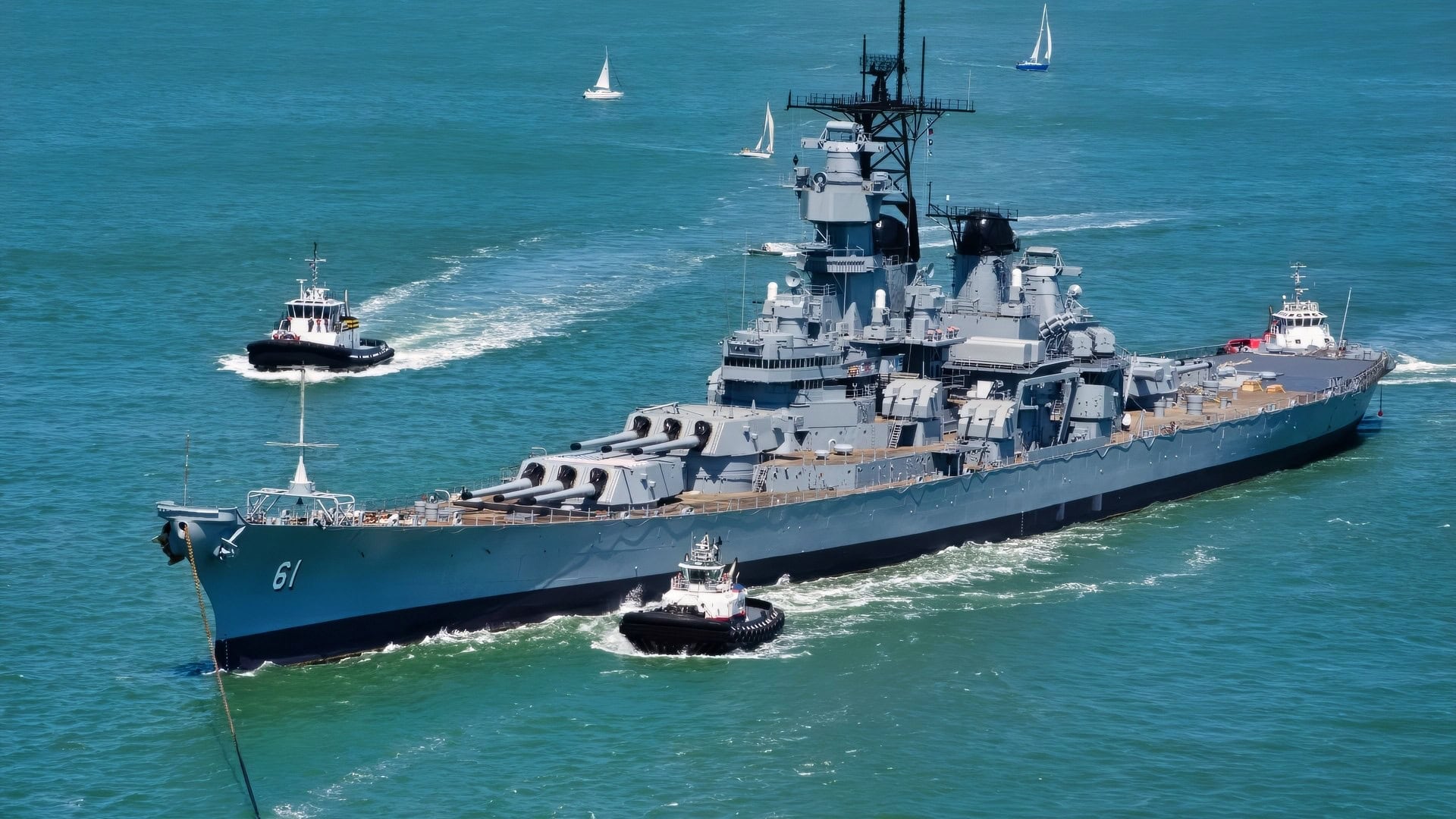
USS Iowa: From World War II and Korea to the 1989 Turret Two Explosion –USS Iowa cost about $110 million to build, according to the State Historical Society of Iowa. The figure is a historical estimate rather than a modern audited program total. The New York Navy Yard in Brooklyn laid the keel on June 27, 1940, launched the ship on August 27, 1942, and commissioned BB-61 on February 22, 1943. Keel laying to active service took 970 days.
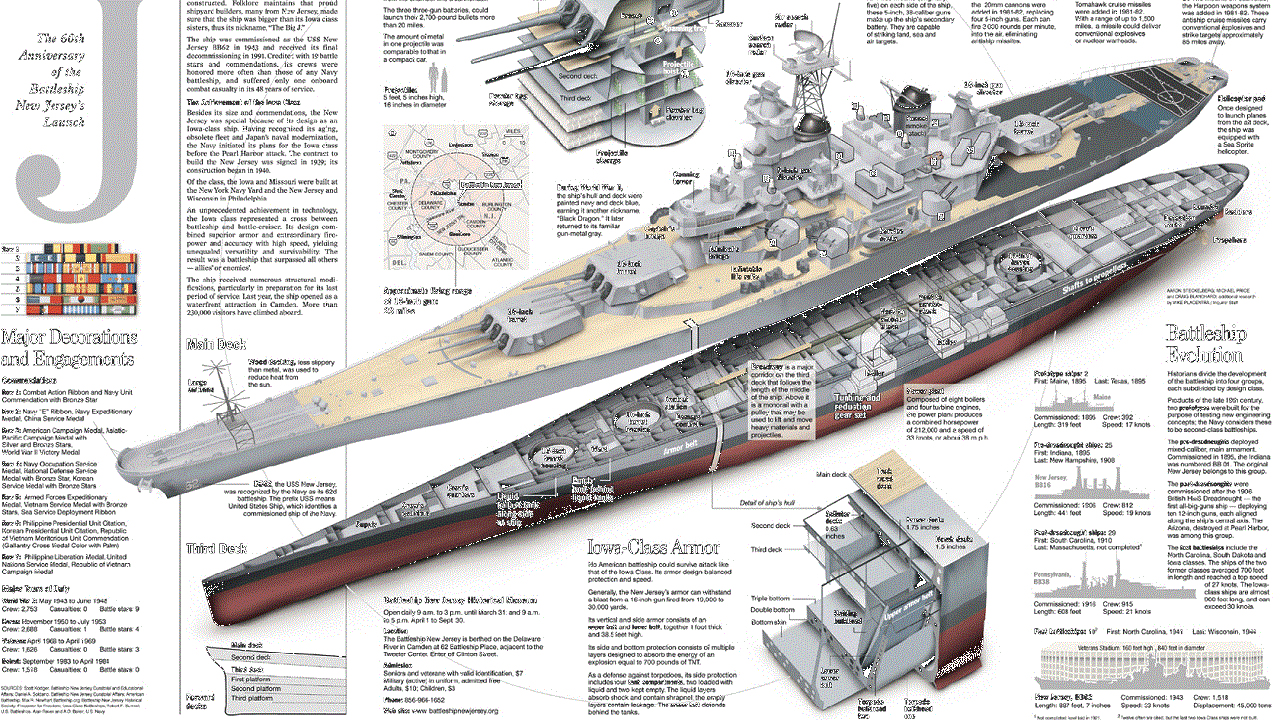
Ilo Browne Wallace, wife of Vice President Henry Wallace, sponsored the launch. Iowa measured 887 feet 3 inches from bow to stern and 108 feet 2 inches across the beam. The Navy commonly listed the design at 45,000 tons, while wartime and later full-load displacement reached the upper 50,000-ton range.
USS Iowa Logo 19FortyFive Image.
Eight boilers supplied four General Electric geared steam turbines producing 212,000 shaft horsepower through four propellers. The machinery gave Iowa a rated speed of 33 knots, enough to keep pace with the fast aircraft carriers and become the center of American naval warfare.
The main battery consisted of nine 16-inch/50-caliber Mark 7 guns in three three-gun turrets. Each barrel fired a 2,700-pound armor-piercing projectile more than 23 miles. A full armor-piercing broadside placed 24,300 pounds of steel in the air. Iowa also entered World War II with twenty 5-inch/38-caliber guns and a large battery of 40-mm and 20-mm anti-aircraft weapons.
New York Navy Yard Built USS Iowa for Speed and Heavy Gunfire
Iowa was the lead ship of the final American battleship class. Six hulls were authorized, although only Iowa, New Jersey, Missouri, and Wisconsin reached service. Illinois and Kentucky were never completed. The class cost roughly $100 million to $110 million per ship, an immense wartime investment built around a clear mission.
The Navy wanted a battleship capable of accompanying fast carrier task forces and defeating major Japanese surface ships. Iowa combined the Mark 7 gun with radar fire control and heavy armor around the machinery, magazines, and gun houses. The ship was faster than the earlier North Carolina and South Dakota classes without giving up the nine-gun broadside.
USS Iowa. 19FortyFive image.
Speed demanded a long hull and a large propulsion plant. Eight machinery rooms alternated between boiler and engine compartments, reducing the chance that a single hit would disable the entire plant. Iowa’s World War II complement reached 151 officers and 2,637 enlisted personnel.
The main guns were built for armored targets. Their 2,700-pound Mark 8 projectile gave the 16-inch/50 exceptional penetration and retained striking power at long range. The combination of shell weight, muzzle velocity, and radar fire control explains why the Iowa class became the standard for the American fast battleship.
President Roosevelt Crossed the Atlantic Aboard Iowa
Iowa’s first operational assignment was in the Atlantic, where the Navy held the new battleship ready against a possible sortie by the German battleship Tirpitz. In November 1943, the ship carried President Franklin D. Roosevelt and senior military leaders to North Africa on the first leg of their journey to the Cairo and Tehran conferences.
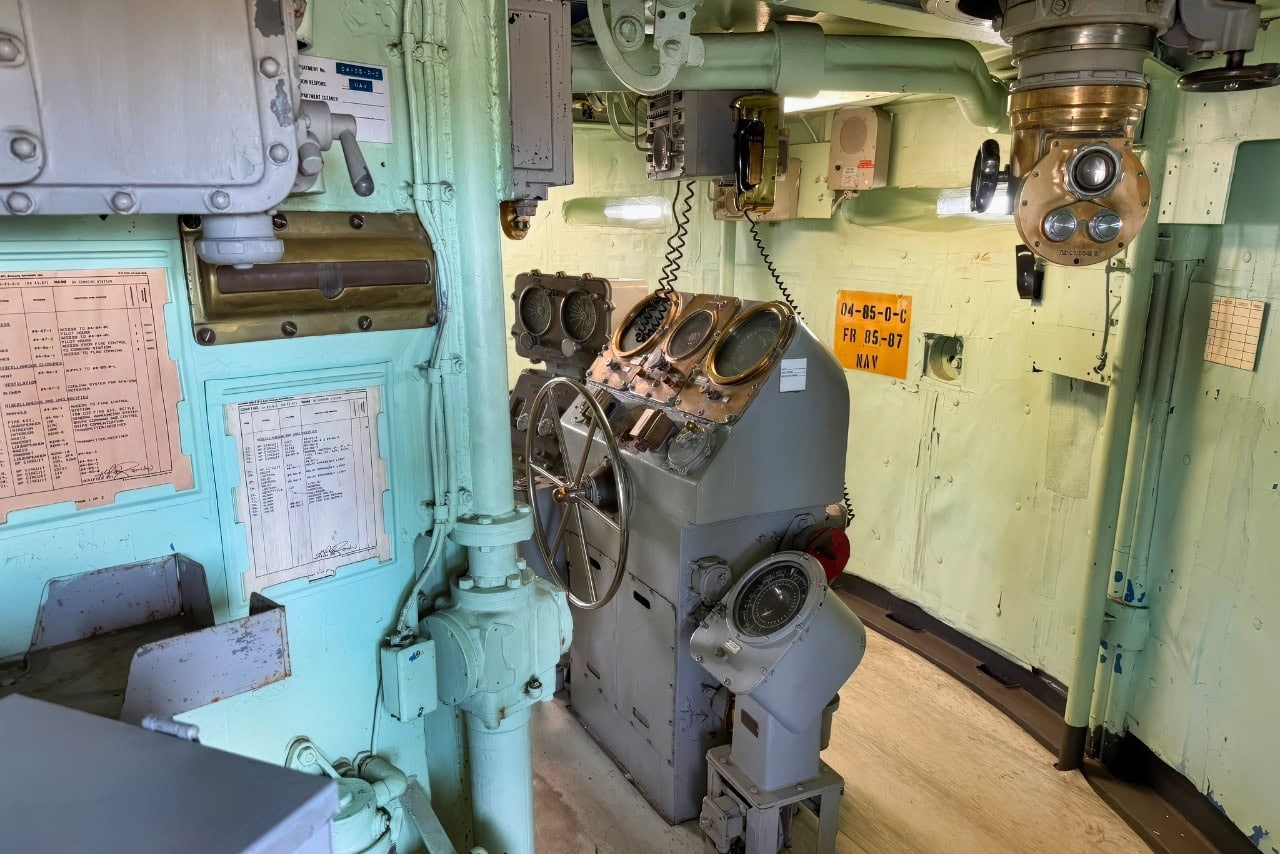
The crew installed a bathtub for Roosevelt, who used a wheelchair and needed assistance moving around the ship. The presidential cabin and bathtub remain aboard today.
USS Iowa battleship. Image Credit: Creative Commons.
The voyage also produced one of the strangest near-disasters of the war. During a torpedo drill on November 14, the destroyer USS William D. Porter accidentally launched a live torpedo toward Iowa. After breaking radio silence to warn the battleship, the destroyer watched Iowa turn hard and avoid the weapon. The torpedo detonated in Iowa’s wake while Roosevelt was aboard.
Iowa’s Big Guns Fought a Cruiser at Truk
Iowa transferred to the Pacific at the beginning of 1944 and supported operations in the Marshall Islands. The ship bombarded positions at Kwajalein and Eniwetok, protected carriers during raids, and provided a fast, heavily armed surface escort.
Its most important direct action against an enemy warship came during the February 1944 raid on Truk. The damaged Japanese light cruiser Katori attempted to escape after American carrier strikes. Iowa fired 46 16-inch shells and 124 5-inch rounds, scoring multiple hits as the cruiser continued fighting until it rolled over and sank.
On March 18, Japanese shore batteries at Mili Atoll struck Iowa with two 4.7-inch shells. The hits caused limited damage, and the battleship remained in action.
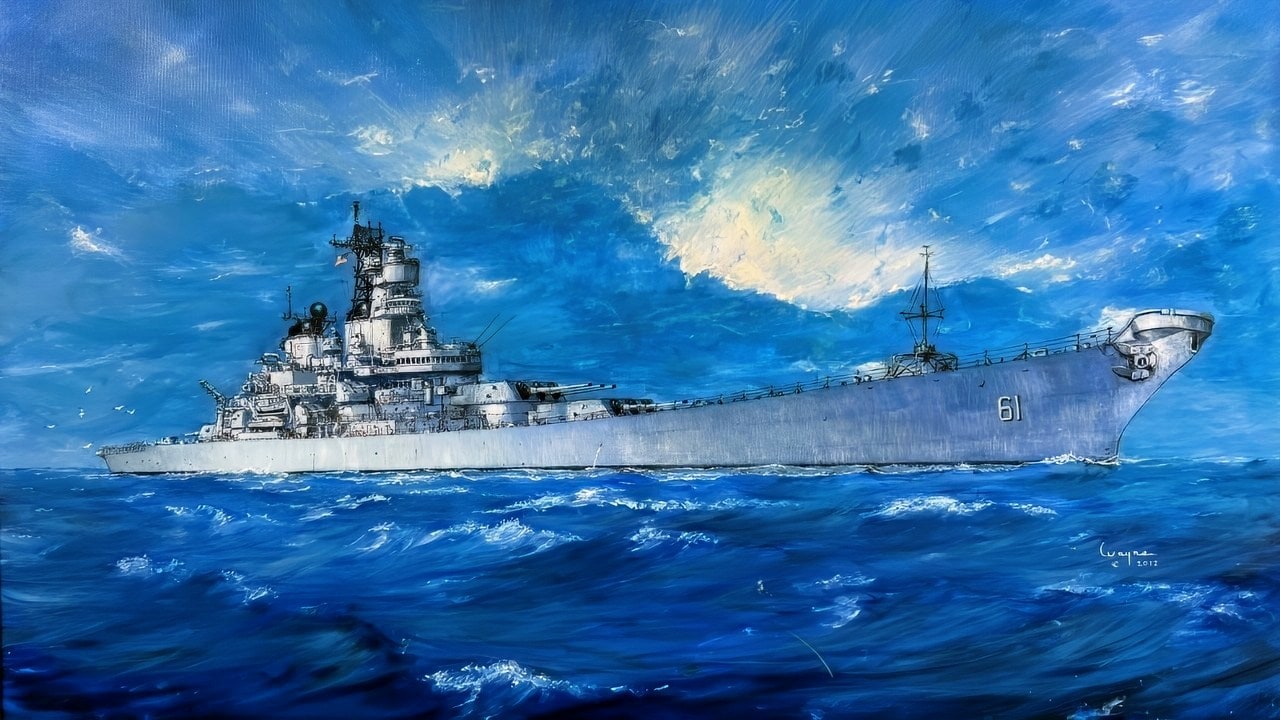
Image taken by Harry J. Kazianis aboard the USS Iowa on August 15, 2025. Image is of a painting of the USS Iowa of the Iowa-Class. USS New Jersey is also a Iowa-Class battleship.
Iowa spent much of the rest of the war screening carriers. She operated during the Marianas campaign, the Battle of the Philippine Sea, strikes on Palau, and the Battle of Leyte Gulf. Iowa and the other fast battleships came close to a surface engagement at Leyte, but Admiral William Halsey took the force north after Japanese decoy carriers. The Japanese Center Force attacked escort carriers off Samar and withdrew before Iowa arrived.
Typhoon Cobra struck the Third Fleet in December 1944, sinking three destroyers and damaging many ships. Iowa suffered relatively minor damage and returned to operations. In 1945, she supported the Okinawa campaign, screened carrier strikes against Japan, and bombarded industrial targets at Muroran and Hitachi.
Iowa entered Tokyo Bay before Japan’s formal surrender on September 2, 1945. The ship finished World War II with nine battle stars. She never fought another battleship, but her record covered shore bombardment, carrier defense, and one of the few surface actions involving an Iowa-class ship.
The Korean War Brought USS Iowa Back to Active Service
The Navy decommissioned Iowa on March 24, 1949, as the postwar fleet contracted. North Korea’s invasion of South Korea changed the calculation. The ship returned to commission on August 25, 1951, and sailed for the Western Pacific the following spring.
Wartime and postwar overhauls enclosed the bridge and improved search and fire-control radar. The main battery and propulsion plant remained fundamentally unchanged, allowing Iowa to return with the same heavy guns and speed that had defined the original design.
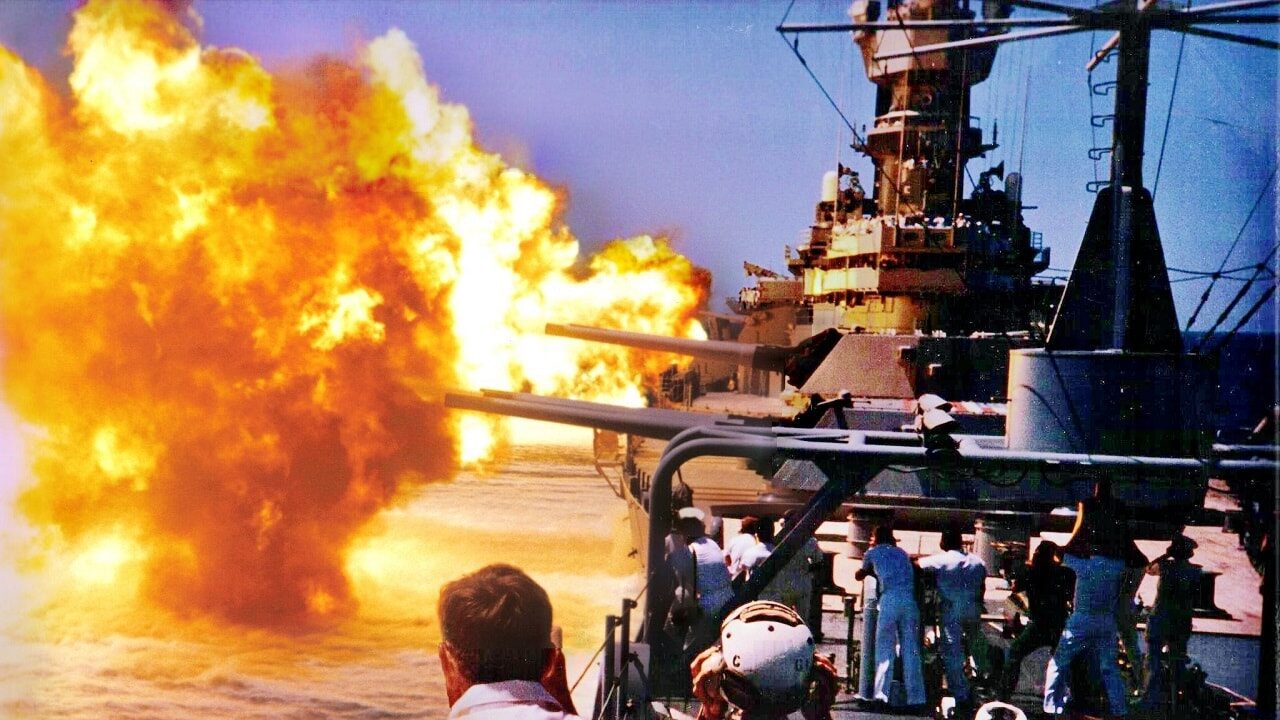
Battleship USS Iowa. Image Credit: Creative Commons.
Iowa became the Seventh Fleet flagship and began combat operations off Korea on April 8, 1952. Her guns struck rail lines, tunnels, supply areas, coastal batteries, and troop concentrations around Songjin, Hungnam, Wonsan, and Kojo. The Iowa-class deployment to Korea demonstrated why the Navy still valued a ship able to deliver sustained heavy gunfire without consuming aircraft sorties.
The State Historical Society of Iowa says the ship fired roughly twice as many 16-inch shells during Korea as it had during World War II. Iowa received two more battle stars, bringing its career total to 11. The Navy decommissioned the battleship again on February 24, 1958.
The Reagan Buildup Turned Iowa Into a Missile Battleship
Iowa remained in reserve for nearly a quarter-century. The Reagan administration’s plan for a 600-ship Navy brought all four completed Iowa-class ships back. The Navy’s early estimate placed Iowa’s reactivation at $384 million plus $16 million for outfitting and post-delivery work.
The rebuild kept all nine 16-inch guns but removed four twin 5-inch mounts, leaving twelve 5-inch barrels. Eight armored box launchers carried 32 Tomahawk cruise missiles. Four quad launchers held 16 Harpoon anti-ship missiles, while four Phalanx close-in weapon systems gave Iowa a radar-directed final defense against aircraft and incoming missiles.
New air- and surface-search radars, satellite communications, electronic-warfare equipment, and modern command systems joined machinery designed during World War II. Pioneer unmanned aircraft eventually supplied over-the-horizon reconnaissance and gunfire spotting. The Iowa-class return to active service created a rare combination of armor, large guns, and long-range cruise missiles.
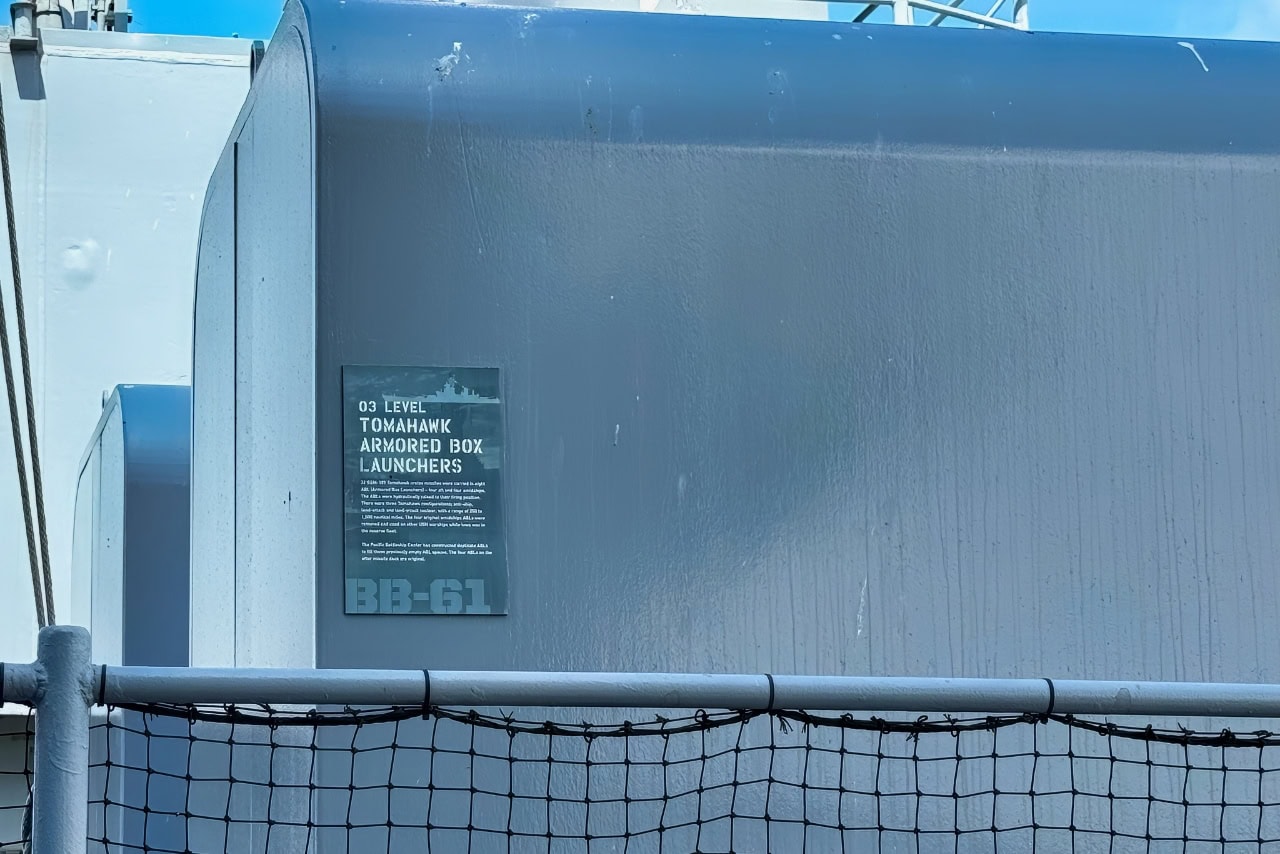
USS Iowa 19FortyFive image of Tomahawk Missiles on USS Iowa.
Iowa was recommissioned on April 28, 1984. The ship participated in NATO exercises, operated near Central America, and was deployed to the Persian Gulf during the tanker conflict between Iran and Iraq. The missile-era battleship had a smaller crew than its World War II complement, but it still depended on sailors trained to operate a complex mechanical main battery built in the 1940s.
Turret Two Exploded With Five Powder Bags in the Open Breech
At approximately 9:55 a.m. on April 19, 1989, Iowa was conducting a gunnery exercise northeast of Puerto Rico. Five bags of D846 propellant had been loaded into the open chamber of the center gun in Turret Two behind a 2,700-pound projectile. The propellant ignited before the breech was closed.
A rapid series of three explosions swept through the center gun room and lower levels of the turret. The explosions killed 47 sailors assigned to Turret Two. The blast and fire remained largely contained by the armored structure, while the surviving crew cooled the turret and flooded the magazines and powder-handling spaces. Those actions helped keep the fire from reaching additional tons of propellant.
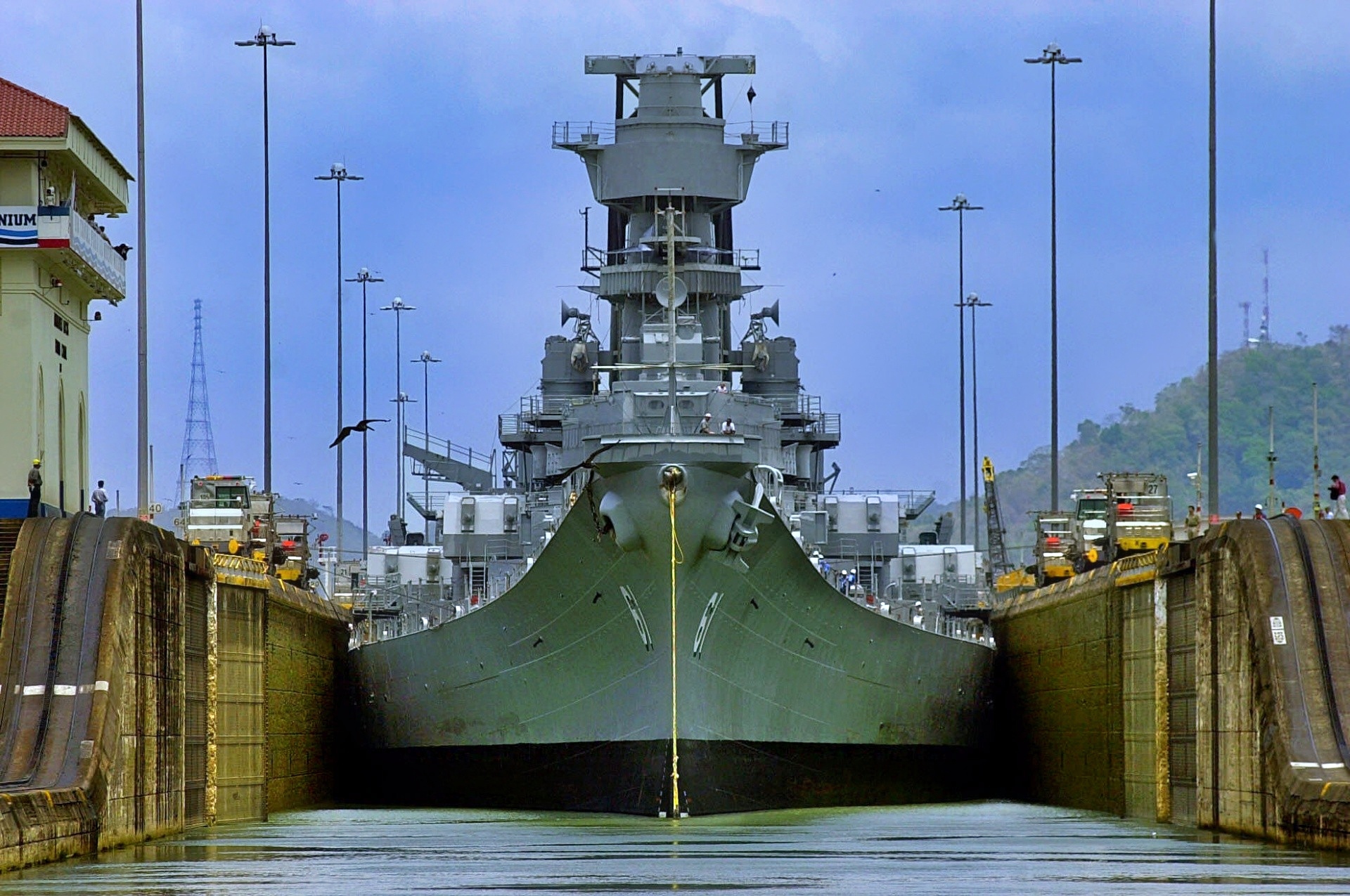
USS Iowa Battleship. Image Credit: Creative Commons.
The accident involved a powder-and-projectile combination that was not authorized under the existing firing tables. Navy and Inspector General reviews also found improperly approved gunnery experimentation and failures to follow certain procedures. The Government Accountability Office stressed an essential limit: those violations were serious, but neither the Navy nor GAO concluded that the experimental combination caused the explosion.
GAO also found concerns involving supervisory manning and training for 16-inch gun operations. Some training records had been destroyed, never created, or could not be located, making it impossible to establish the exact preparation of every Turret Two sailor. GAO did not find a fleetwide pattern showing that the battleships’ guns or propellant were generally unsafe.
The Navy Initially Blamed Clayton Hartwig
The Navy’s first investigation concluded that the explosion resulted from a deliberate act, “most probably” committed by Gunner’s Mate Second Class Clayton Hartwig, who died in the turret. Investigators relied on residue described as foreign material on the projectile’s rotating band and an FBI-assisted psychological assessment. The technical theory centered on an improvised chemical ignition device placed among the powder bags.
The investigation then moved beyond technical evidence into Hartwig’s private life. Leaks generated claims about his relationship with another sailor, his insurance policy, and a possible personal motive. The public accusation became inseparable from the tragedy even though Hartwig could not answer it.
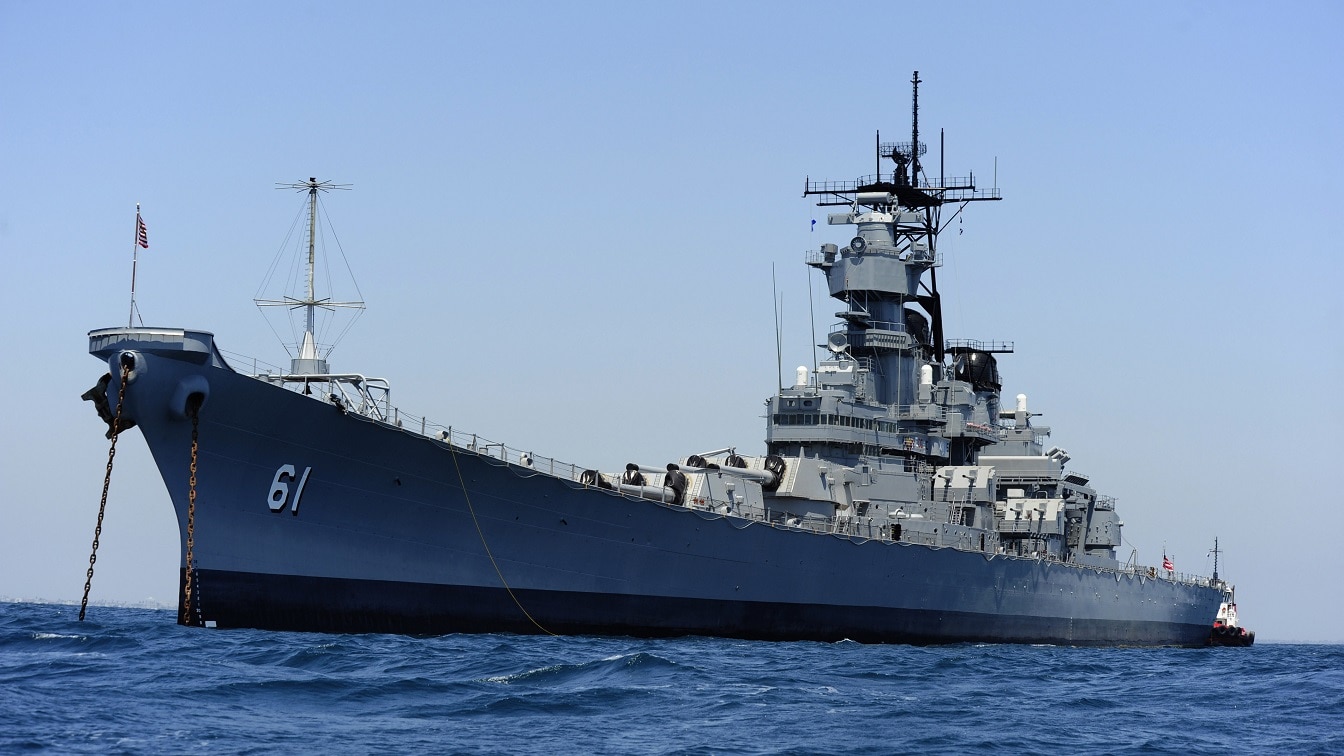
The former USS Iowa (BB 61) sits at anchor off Naval Weapons Station Seal Beach, Calif. The battleship is being prepared for berthing in San Pedro, Calif., as a floating museum. (U.S. Navy photo by Mass Communications Specialist 1st Class Eli J. Medellin/Released)
Congressional investigators sharply criticized the process. Evidence had been disturbed or discarded; the turret was cleaned soon after the explosion; and the Navy adopted an intentional-act theory before completing every technical test. The initial inquiry’s reliance on a psychological reconstruction of a dead sailor drew particular criticism.
Later evidence failed to sustain the accusation against Hartwig, adding a second controversy to the loss of 47 sailors. The dispute surrounding the Iowa turret explosion continued for more than two years after the fire was extinguished.
Sandia Found a Possible Accidental Ignition Mechanism
The Department of Energy’s Sandia National Laboratories conducted an independent technical review for GAO. Its scientists examined the material found on the projectile, the powder’s stability, the loading process, and the possibility that the powder bags had been pushed too far forward by the hydraulic rammer.
The material evidence did not support the certainty claimed in the first Navy investigation. Sandia found steel-wool fibers, calcium, chlorine, glycols, and other debris elsewhere in the turret and on other projectiles. Several substances came from the maritime environment, routine cleaning products, grease, or equipment used in gun maintenance. Sandia concluded there was no explicit physical evidence that the proposed chemical ignition device had been present.
Sandia also confirmed that the five powder bags had been substantially over-rammed against the projectile’s base. Under normal loading, the rammer moved slowly, leaving space between the bags and the shell. Tests showed that a high-speed overram could fracture propellant pellets, release hot particles, and ignite the black-powder patch on an adjacent bag.
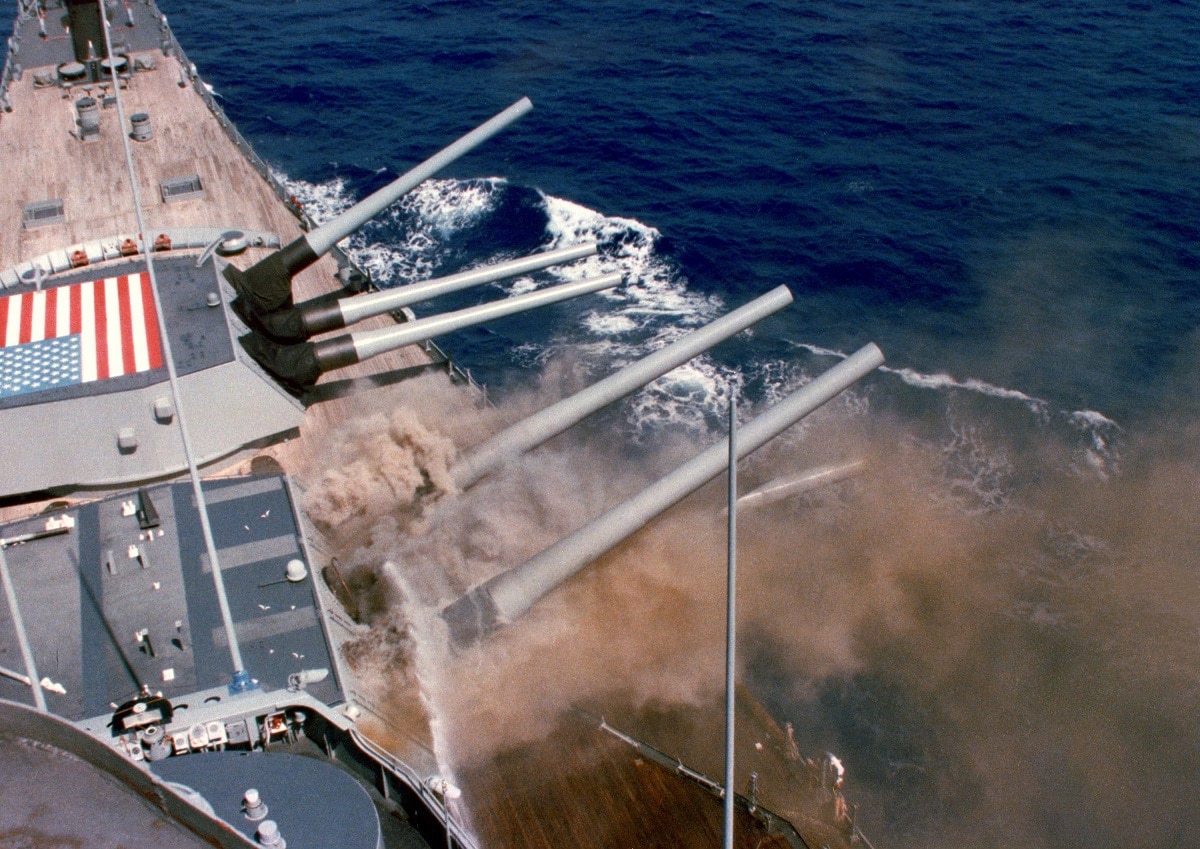
USS Iowa. Image: U.S. Navy.
That finding requires precise language. Sandia did not prove that an over-ramp caused the Iowa explosion. Its final report described high-speed overram as a possible cause and acknowledged that unresolved evidence might prevent a complete reconstruction. The actual rammer speed at the critical moment was never definitively established.
The tests changed the official inquiry. They demonstrated a credible accidental mechanism that the first investigation had rejected. The Navy suspended 16-inch firing, reopened the inquiry, conducted full-scale tests, and considered controls governing rammer speed, powder placement, and bag configuration.
The Navy Exonerated Hartwig but Left the Cause Undetermined
On October 17, 1991, Chief of Naval Operations Adm. Frank Kelso announced that the Navy had wrongly accused Hartwig and apologized to his family. The Navy said there was no clear and convincing evidence supporting its original claim that Hartwig had deliberately caused the explosion.
The reversal did not convert Sandia’s overram theory into an official finding of fact. The Navy maintained that the precise cause remained undetermined. A deliberate act had not been established, and an accidental overram remained possible rather than proven.
Turret Two never returned to service. Superficial repairs allowed it to be trained forward, and the damaged internal machinery and preserved components remained sealed inside. Iowa completed another European and Mediterranean before returning to the United States.
Iowa Became a Museum With Turret Two Still Aboard
The Navy decommissioned Iowa for the final time on October 26, 1990. Across three commissioned periods, the ship accumulated slightly more than 19 years of active service. She entered reserve, moved through Philadelphia, Newport, and Suisun Bay, and was finally struck from the Naval Vessel Register in 2006.
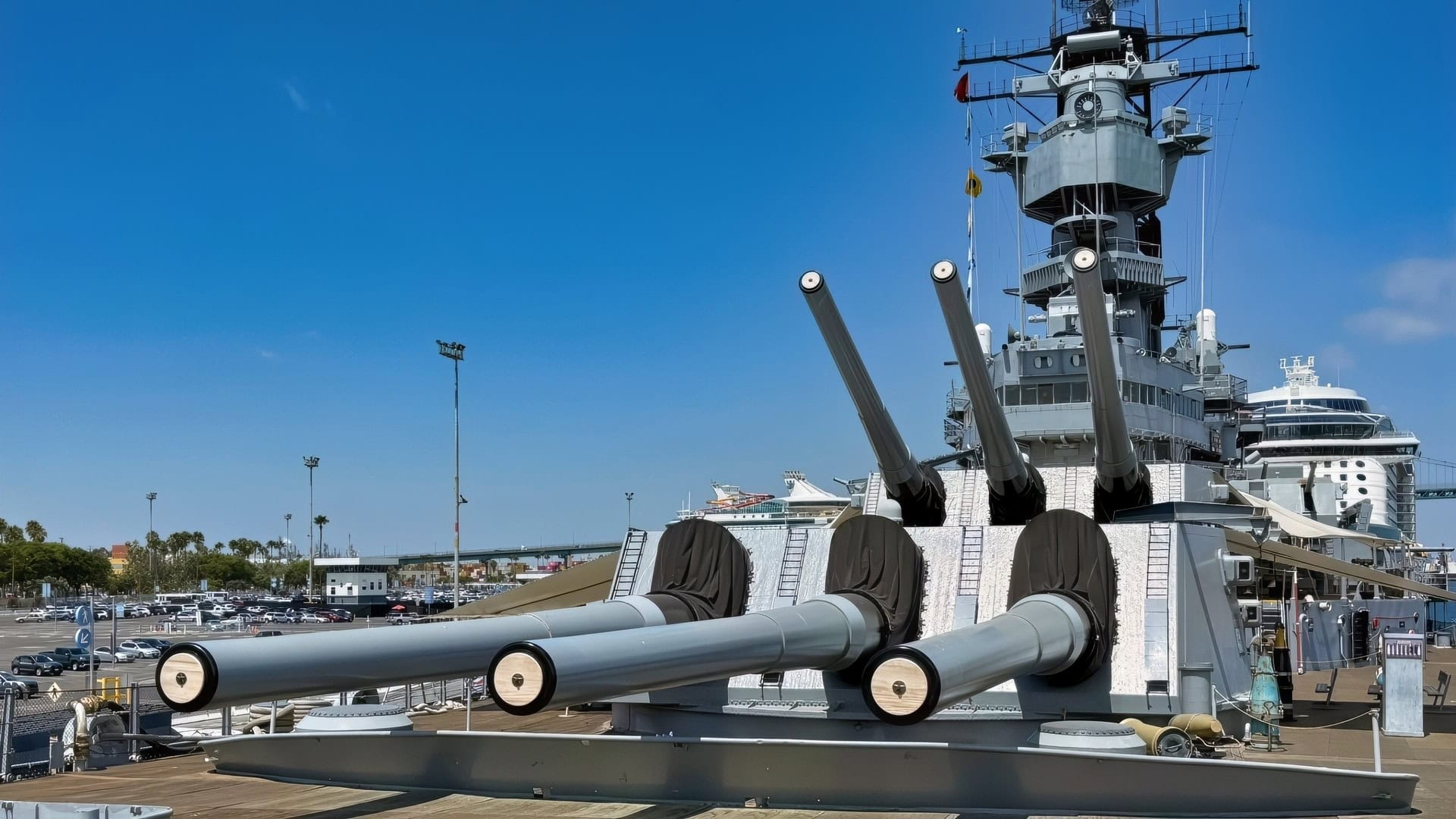
USS Iowa Battleship Guns 19FortyFive.com Image
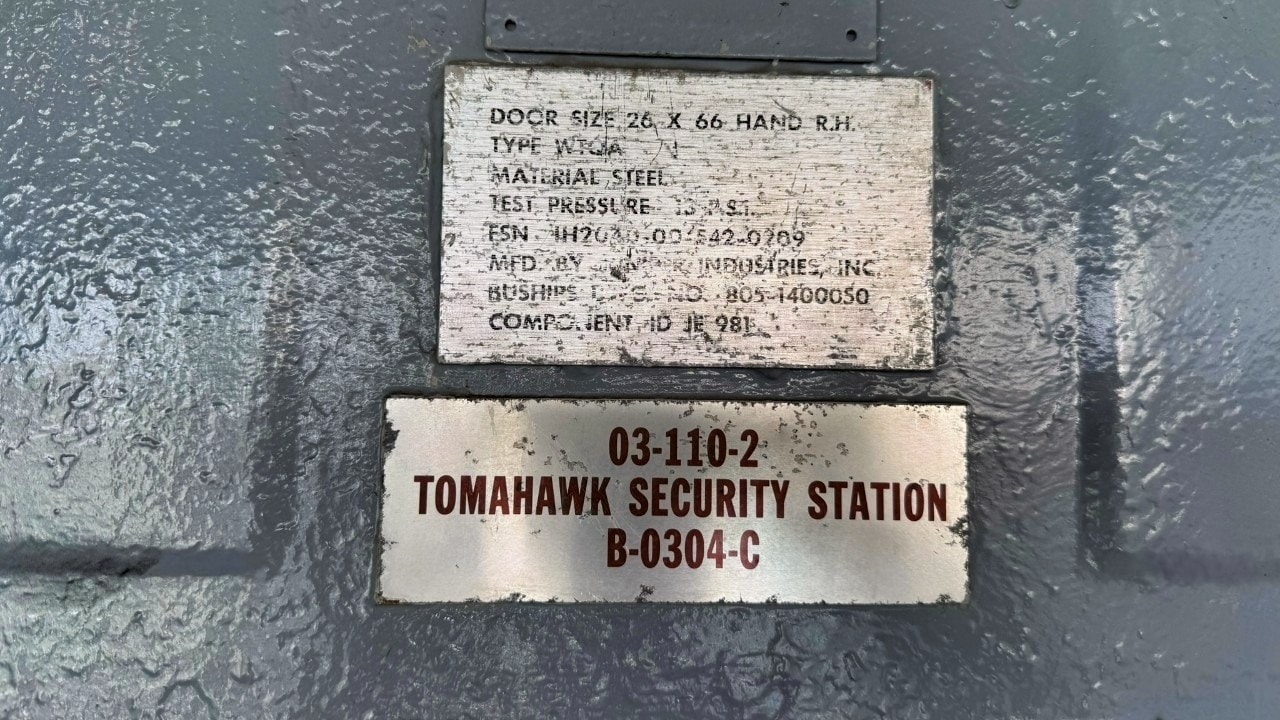
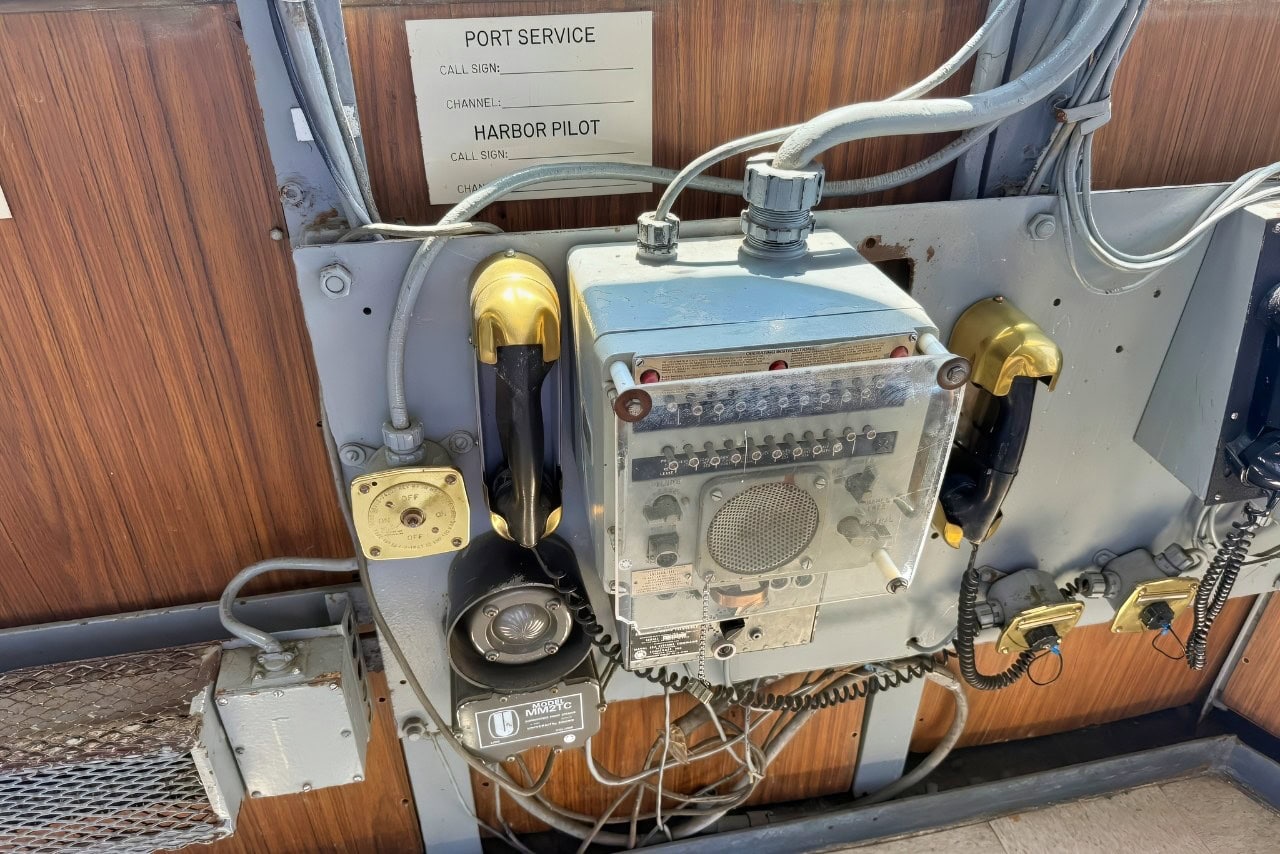
Battleship USS Iowa Tomahawk Missile Container. Taken by Harry J. Kazianis for 19FortyFive.com abord USS Iowa.
The Navy donated the battleship to the Pacific Battleship Center in 2012. Iowa opened to the public at the Port of Los Angeles that July and now serves as the anchor of the National Museum of the Surface Navy.
The ship is open daily from 10 a.m. to 4 p.m. at 250 South Harbor Boulevard in San Pedro. Turret Two remains aboard, and every April 19 the museum holds a ceremony on the fantail for the 47 sailors killed in 1989.
The Final Salvo: One Expert Says She Was Retired Too Early
“You know she was retired too early,” noted a former US Navy officer with decades of expertise who retired a few years ago. “USS Iowa was a powerhouse that had maybe a decade left to serve. I always thought she had more time. Sadly, the era of the battleship has ended, or maybe not, if the Trump-class does get built. I honestly think all of the Iowa-class warships were retired too early.”
About the Author: Harry J. Kazianis
Harry J. Kazianis (@Grecianformula) was the former Senior Director of National Security Affairs at the Center for the National Interest (CFTNI), a foreign policy think tank founded by Richard Nixon based in Washington, DC. Harry has over a decade of experience in think tanks and national security publishing. His ideas have been published in the NY Times, The Washington Post, The Wall Street Journal, CNN, and many other outlets worldwide. He has held positions at CSIS, the Heritage Foundation, the University of Nottingham, and several other institutions related to national security research and studies. He is the former Executive Editor of the National Interest and the Diplomat. He holds a Master’s degree focusing on international affairs from Harvard University.