
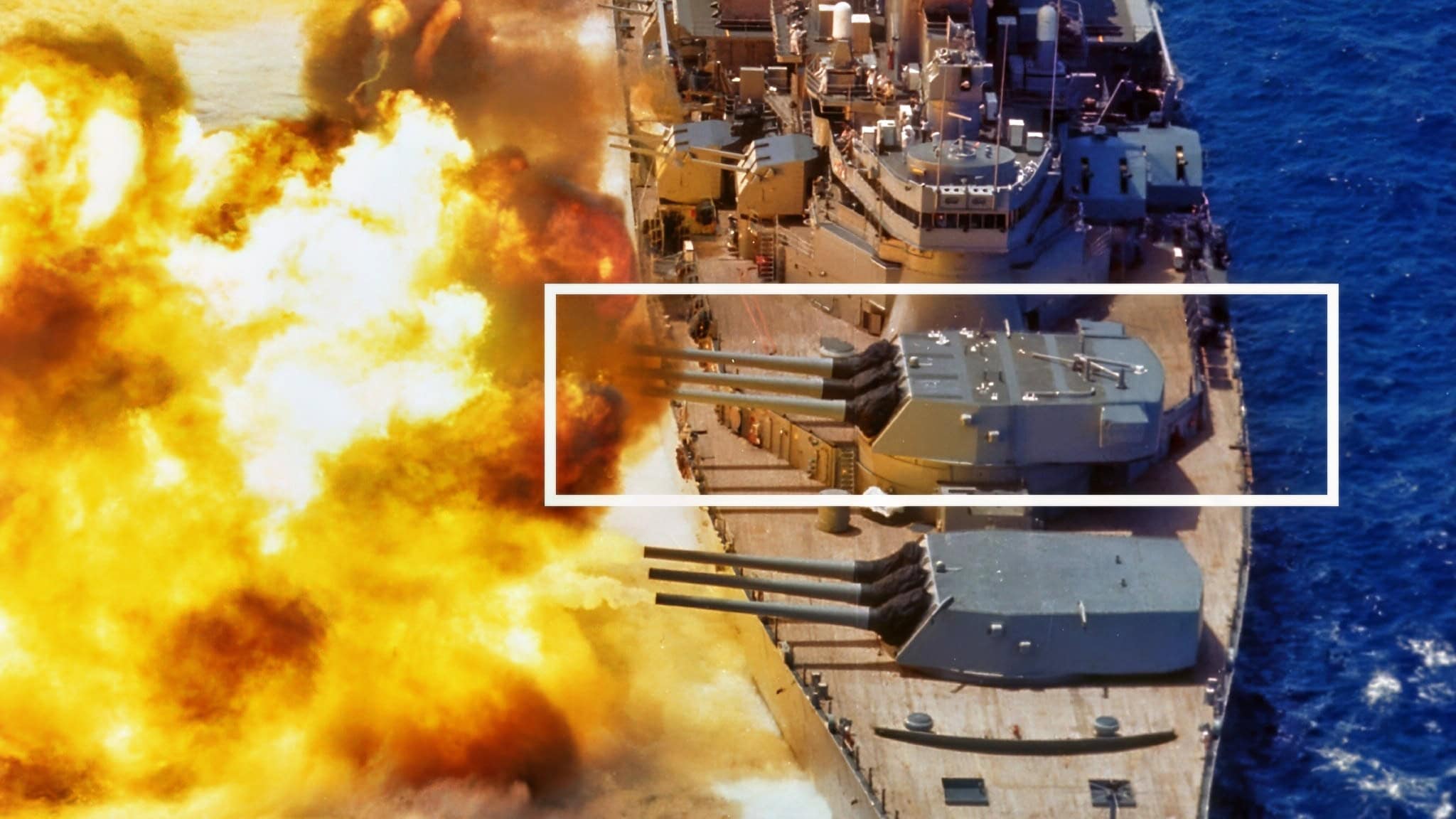
Key Points and Summary – In April 1989, a catastrophic explosion in Turret 2 aboard the battleship USS Iowa killed 47 sailors during a gunnery exercise in the Caribbean.
-Expert Christian D. Orr walks through how neglected maintenance, risky powder experiments, and command pressure to impress the brass set the stage for disaster—then how the Navy’s initial investigation bungled the search for truth and accountability.
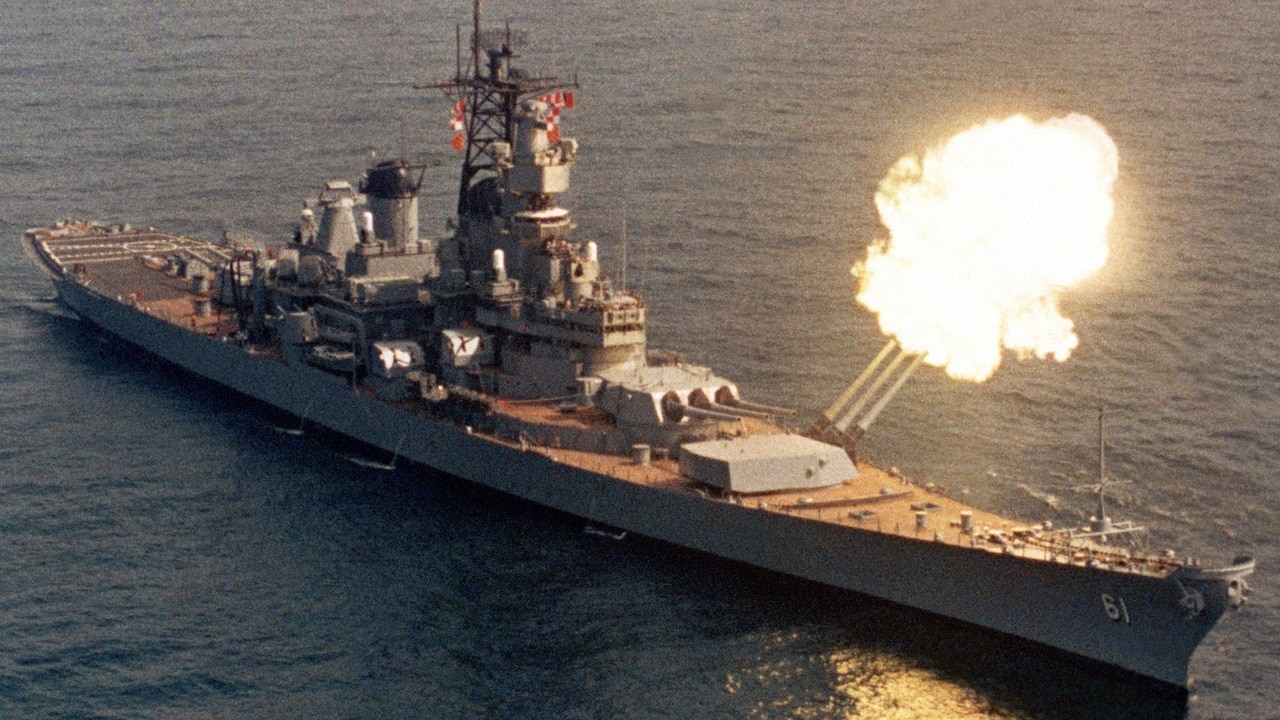
An aerial starboard bow view of the battleship USS IOWA (BB 61) firing a 2,700-pound projectile from the barrel of a forward 16-inch gun during sea trials off the coast of Mississippi. The IOWA is scheduled to be recommissioned into the fleet on April 28, 1984, after completion of modernization/reactivation construction at Ingalls Shipbuilding, Pascagoula, Mississippi.
-He contrasts this tragedy with earlier close calls on the first USS Iowa and closes with the ship’s second life as a museum in San Pedro, where the fallen turret crew is honored every single year by name and story.
Battleship USS Iowa’s Tragic Turret Explosion of 1989
The Iowa-class battleships of the U.S. Navy never engaged any enemy battleships—though the lead ship of the class, the USS Iowa (BB-61), did sink an enemy warship during World War II, the Imperial Japanese Navy (IJN) light cruiser Katori.
Nonetheless, they still have to be considered the most successful battleships of all-time, serving for 58 years and firing their guns in anger during World War II, the Korean War, the Vietnam War, the 1983 Lebanon campaign, and a final hurrah during the 1991 Persian Gulf War. Indeed, one of the Iowas, the USS New Jersey (BB-62), is America’s most decorated battleship.
However, these mighty warships also suffered their fair share of tragedies. The worst befell the lead ship of the class, a mere year-and-a-half before her final decommissioning.
What Went Wrong, When, Where, Why, and Who
The tragic tale took place on April 19, 1989. On that fateful day, the Iowa was scheduled to conduct a live-fire exercise with her massive 16-inch guns in the waters of the Caribbean Sea—260 nautical miles northeast of Puerto Rico.
At 9:53 a.m., the center barrel in the Number 2 turret exploded, sending a fireball between 1,400 and 1,600 degrees Celsius and traveling at 2,000 feet per second with a pressure of 4,000 psi erupting out the center gun’s open breech.
This catastrophic explosion caved in the hatch between the center gun room and the turret officer’s booth and buckled the bulkheads separating the center gun room from the left and right gun rooms.
Another explosion occurred nine minutes later. The second blast was most likely caused by a buildup of carbon monoxide gas, after the heat and fire from the initial explosion ignited one ton’s worth of powder bags in the powder-handling area of the turret.
Forty-seven of the Iowa’s seamen lost their lives; seven died from blast injuries, 10 from blunt force injuries, and 30 from thermal injuries.
What went wrong? In a word, negligence. Multiple warning signs went unheeded, and, as stated by the title of an article by We Are The Mighty, “The Navy’s investigation of the USS Iowa turret explosion was seriously bungled.” Consider the following:
-In late May 1988, the ship’s brand-new skipper, Captain Fred Moosally, canceled a $1 million repair project for the gun turrets, deciding to use the funds to upgrade the ship’s power plant instead.
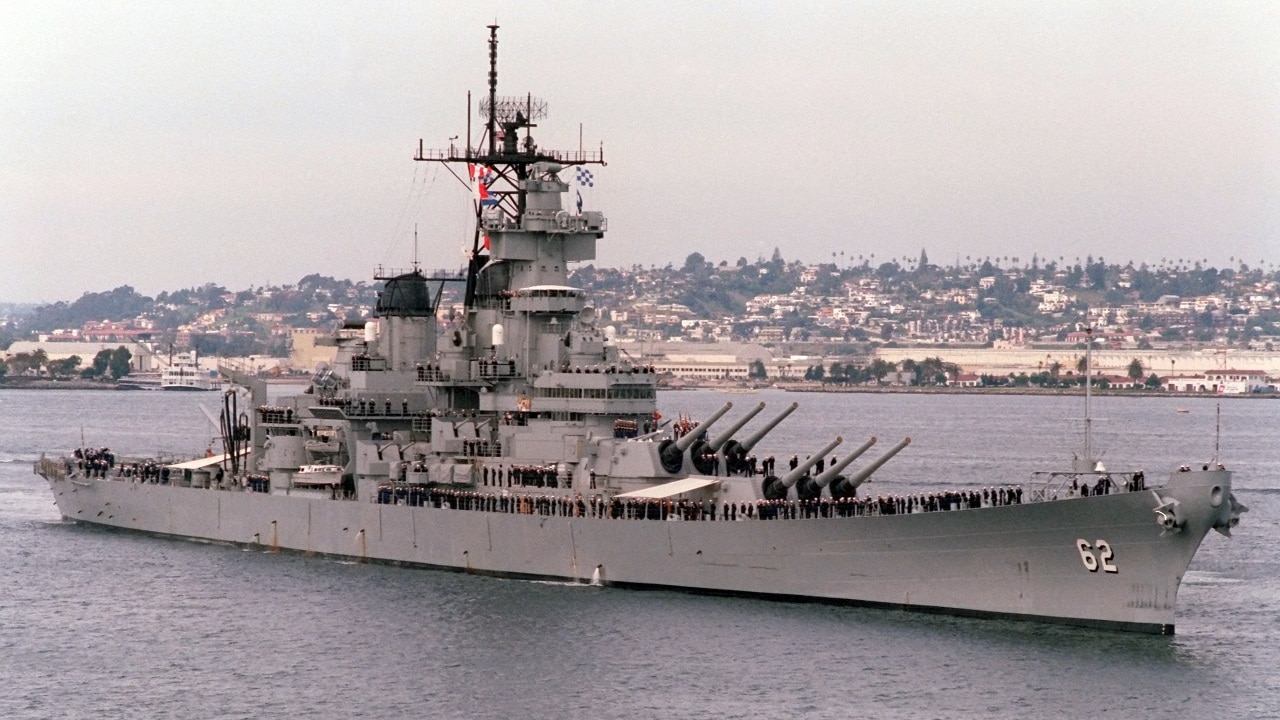
Iowa-class battleship.
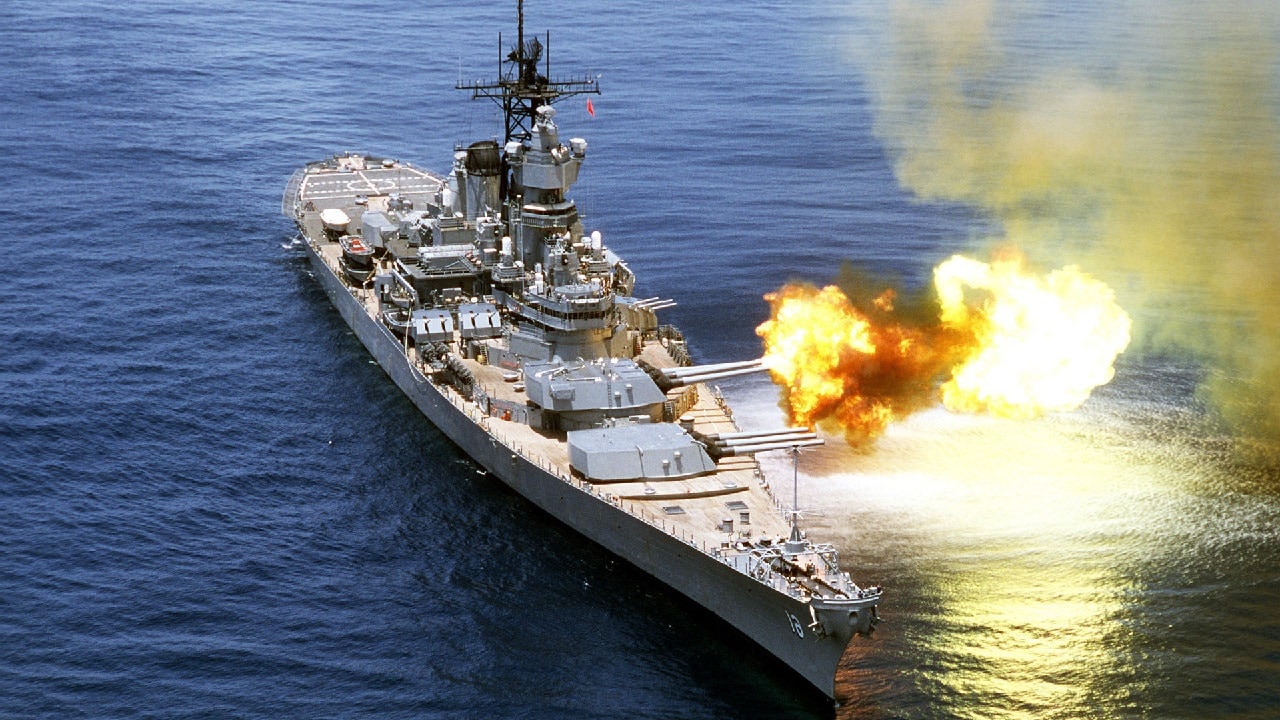
USS Iowa. Image Credit: Creative Commons.
-Between September 1988 and January 1989, the Iowa’s crewmen reportedly conducted little training with her main guns, in part because of ongoing, serious maintenance issues with the turrets. According to Ensign Dan Meyer, the Officer in Charge of the vessel’s Number 2 turret, morale and operational readiness among the turret crews suffered greatly.
-The Iowa’s master chief fire controlman, Stephen Skelley, and gunnery officer, Lieutenant Commander Kenneth Michael Costigan, somehow persuaded Captain Moosally (who had a reputation for being eager to impress the brass) to conduct an experiment using 1940s-vintage D-846 powder lots to fire 2,700-lb. shells. Never mind that D-846 was specifically designed to fire 1,900-lb. shells. More crucially, printed on each D-846 powder canister were the words, “WARNING: Do Not Use with 2,700-pound projectiles!”
Skelley went ahead with the D-846 experiment anyway, his official excuse being a desire to improve the guns’ accuracy. The rest is horrific history.
Somehow, Captain Moosally and Master Chief Skelley were able to retire from the Navy, doing so in May 1990 and the fall of 1998, respectively. In a 2001 interview with the Washington Post, Moosally stated, “Only God knows what really happened in that turret. We’re never really going to know for sure.”
Battleship Foreshadowing? An Earlier USS Iowa’s [BB-#4’s] Incidents
BB-61 wasn’t the only vessel bearing the USS Iowa moniker to suffer damage in scary incidents. Sailors tend to be a superstitious lot, so some of them probably can’t help but wonder if USS Iowa is a jinxed ship name, akin to the HMS Prince of Wales ship name in the case of Great Britain’s Royal Navy.
Fortunately, in the case of the pre-dreadnought battleship USS Iowa (BB-4)—which had performed magnificently during the Spanish-American War—neither one of her incidents resulted in loss of life.
-The first incident took place on July 20, 1898, when, while patrolling off Santiago de Cuba, the manhole gasket blew out in the battleship’s fireroom. Fortunately, the quick-thinking actions of Fireman 2nd Class Robert Penn saved the ship from further damage. Risking serious scalding from the mercilessly hot water that erupted from the boiler, Penn hauled the fire while standing on a board thrown across a coal bucket, only a foot above the boiling water. He subsequently received the Medal of Honor for his heroism.
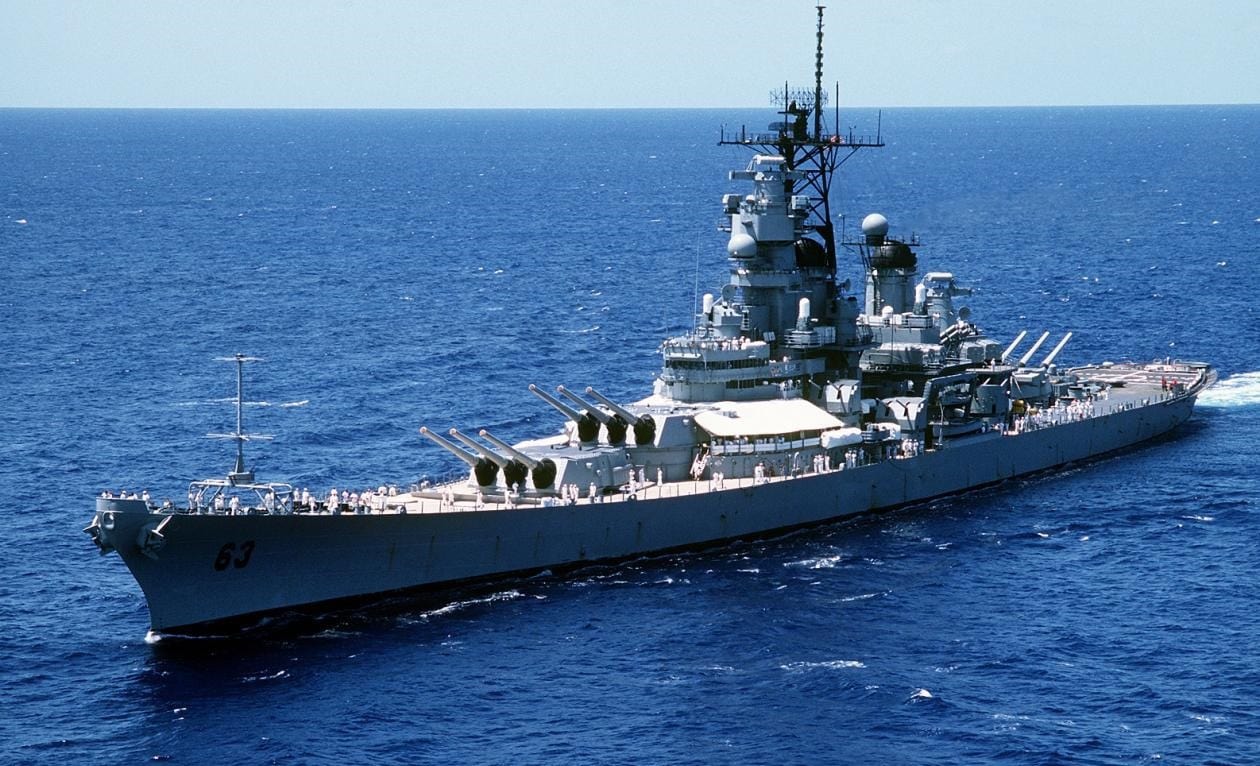
USS Iowa. Image Credit: Creative Commons.
-The second incident took place on Sept. 8, 1901, when the four-masted sailing ship May Flint (previously the SS Persian Monarch) collided with the Iowa off of San Francisco Bay; May Flint’s hull was pierced by BB-4’s ram bow, and she sank within 15 minutes.
Where Is She Now?
As is true of all of her sister ships, BB-61 has been converted into a floating museum and is docked at the Pacific Battleship Center in San Pedro’s Downtown Harbor.
This reporter has done the Iowa tour multiple times and can personally vouch that it never gets boring.
But as might be expected, there is also a solemn aspect of the tour.
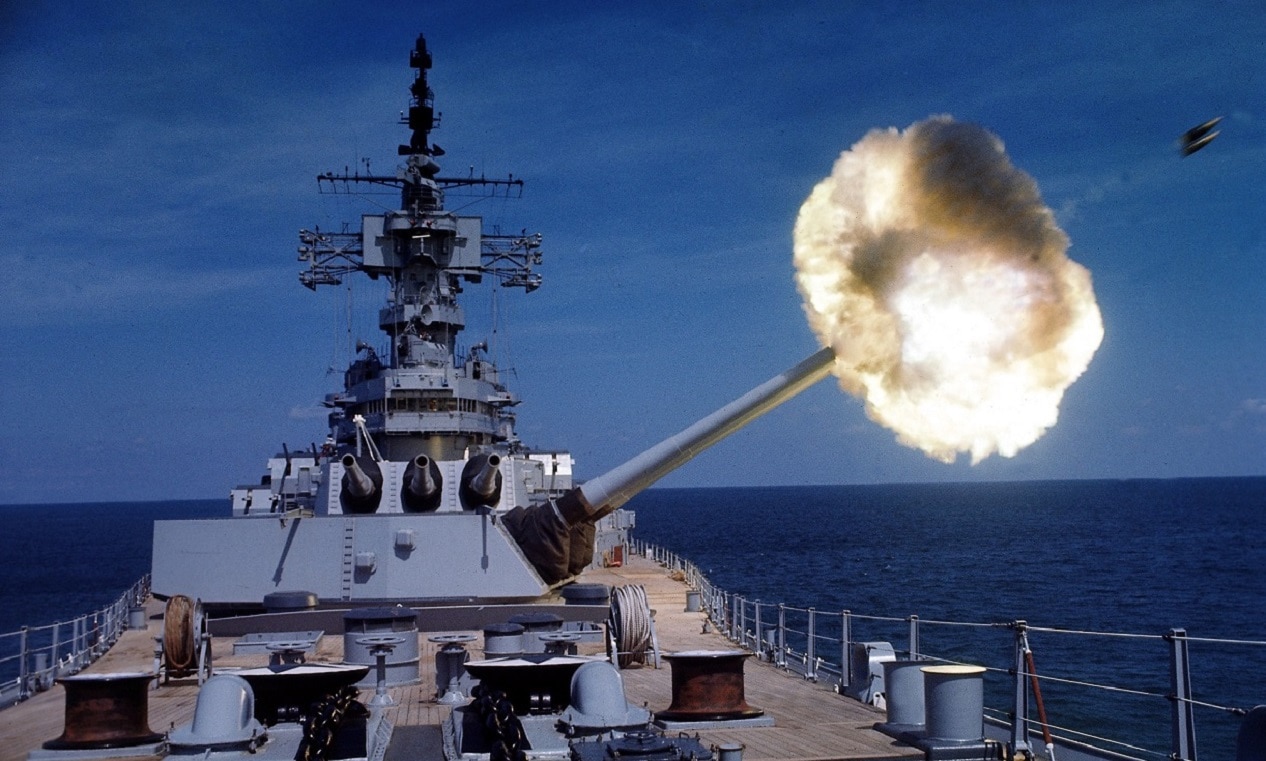
USS New Jersey Iowa-Class Battleship. Image Credit: US Navy.
It includes an exhibit featuring multiple battleship tragedies and unfortunate incidents, including both BB-61’s and BB-4’s. In addition, the museum hosts an annual memorial ceremony for the deceased crewmen of Turret 2.
Fair winds and following seas, sailors of the Iowa, we have the watch.
About the Author: Christian D. Orr, Defense Expert
Christian D. Orr is a Senior Defense Editor. He is a former Air Force Security Forces officer, Federal law enforcement officer, and private military contractor (with assignments worked in Iraq, the United Arab Emirates, Kosovo, Japan, Germany, and the Pentagon). Chris holds a B.A. in International Relations from the University of Southern California (USC) and an M.A. in Intelligence Studies (concentration in Terrorism Studies) from American Military University (AMU). He is also the author of the newly published book “Five Decades of a Fabulous Firearm: Celebrating the 50th Anniversary of the Beretta 92 Pistol Series.”