
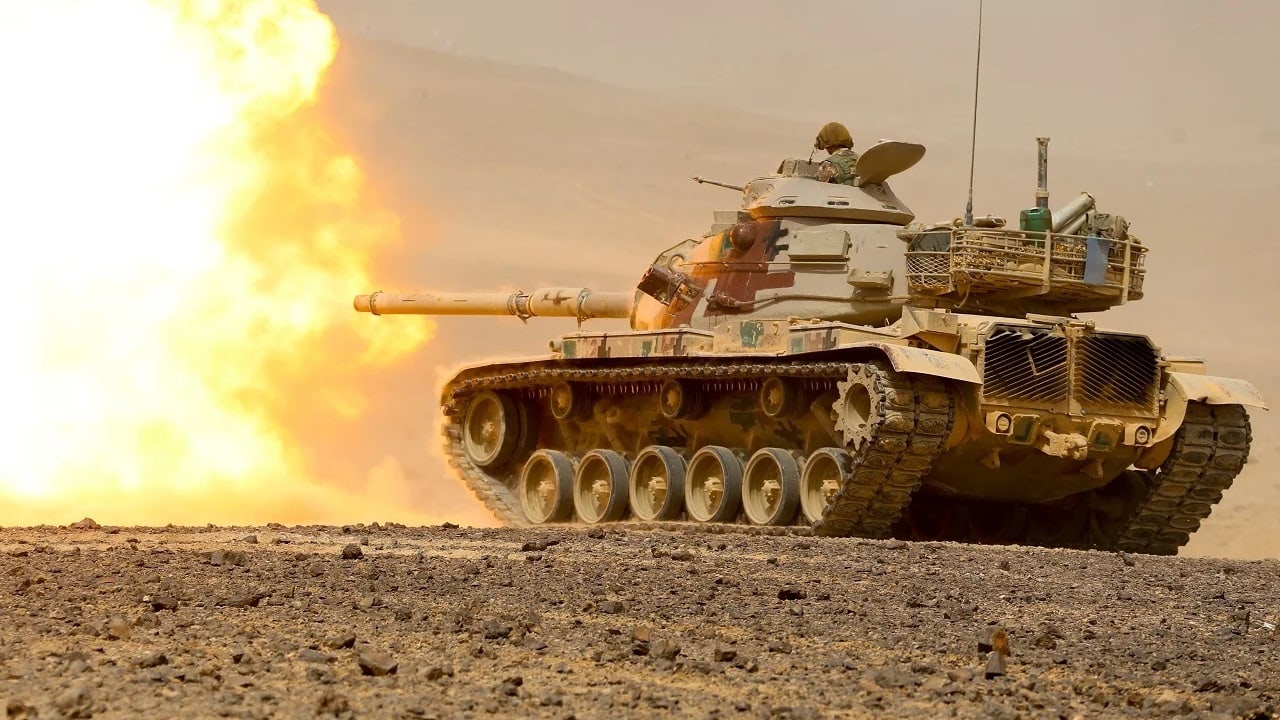
One Cold War tank stalwart stood above the rest during the days when a full-fledged armored assault from the Soviet Union could happen at any time.
The U.S. Army depended on the esteemed M60A3 Patton main battle tank to quell the Russian hordes and their allies from streaming through the Fulda Gap and taking all of Western Europe before the Americans could react.
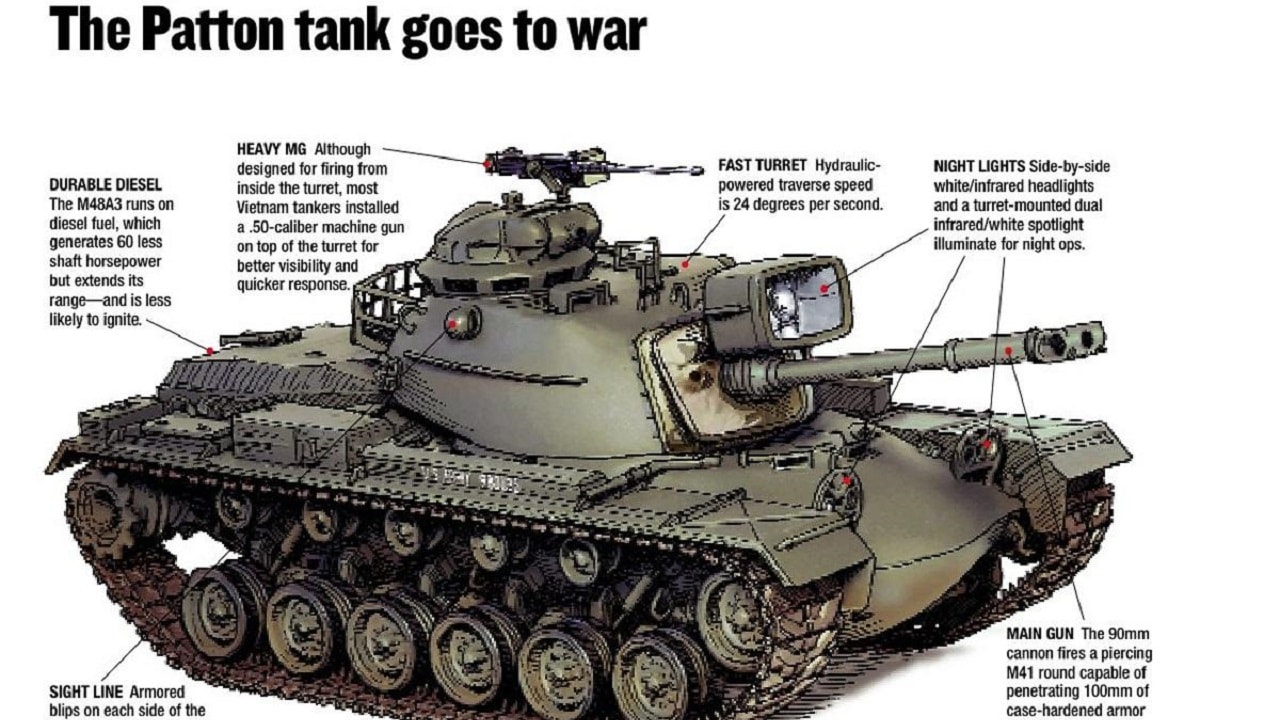
M60 Tank. Image Credit: Creative Commons.
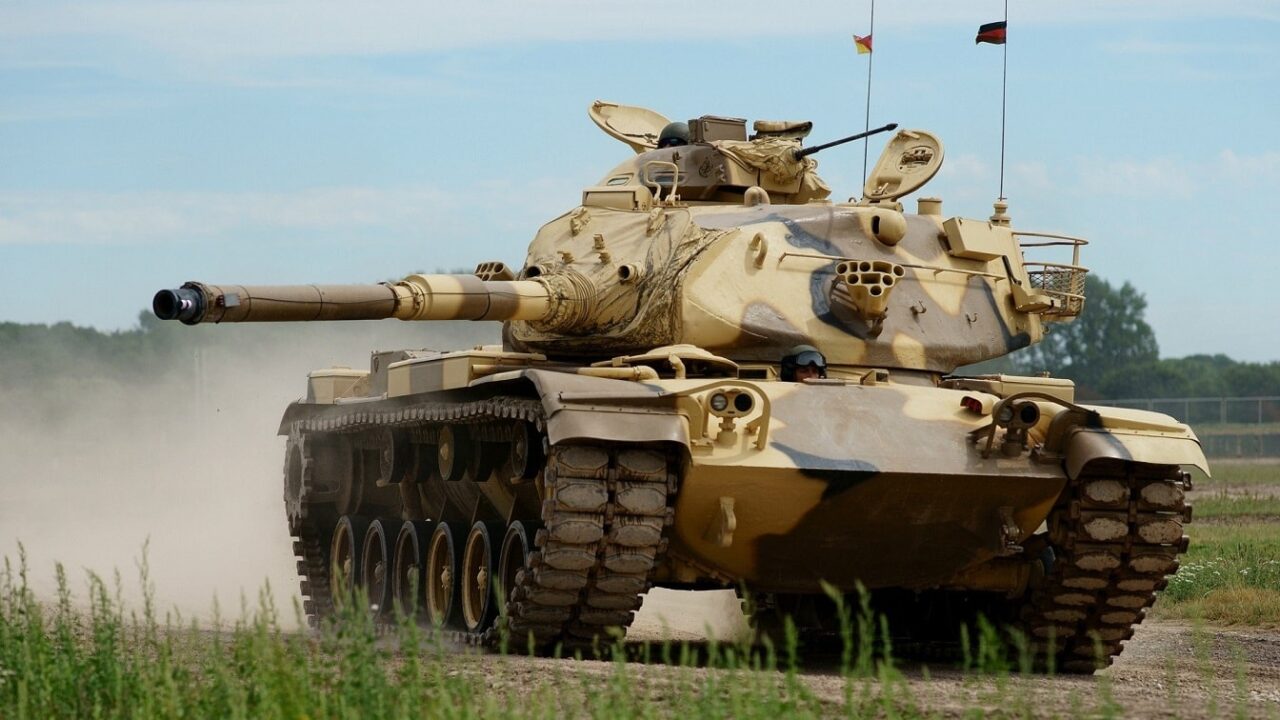
US M60 tank. Image Credit: Creative Commons.
The M60 emerged from the M48 Patton family of tanks. The Russians’ main battle tanks were becoming more advanced with better protection and survivability after World War Two.
The Soviets had beefed up their armored presence in the 1950s and 1960s, and the M60 Patton needed constant improvements to keep up.
The Pathway to the M1 Abrams
The M60A3 had a new fire control system that could send more accurate rounds downrange. Its armor was much better, allowing it to thrive in battle against the Soviets.
The M60A3 was also advanced enough to prop up the tank corps while the new XM1 Program, which would become the M1 Abrams, was being developed.
So the tank was more of a stopgap solution, requiring the best-trained soldiers to operate it in potential one-on-one showdowns against Warsaw Pact enemies.
Learning from Massive Tank Battles in the Middle East
The M60A3 tanks were also planned to answer Soviet advances in their own armored tactics, techniques, and procedures.
The Kremlin’s generals were examining tank actions during the Arab-Israeli wars. Numerous armored chariots found success and failure on the desert battlefields. Would there also be a huge, decisive tank battle in Europe?
The Soviets believed their T-54/55s and T-62s needed to answer this challenge.
It would be a game of numbers, and the Americans would use air support and artillery to eliminate as many Soviet tanks as possible.
Maneuver warfare would require accurate firing and stingy armored reconnaissance thrusts, protected from the rear by heavy guns and multiple launch rocket systems.
This Tank Was a Force of Nature
The Americans and the M60A3 would need to be operating at maximum efficacy and resilience to win a tank-on-tank engagement that could save Europe.
There were new anti-tank missiles to account for on the future battlefield. War would be fought at night in sometimes wintry conditions in Western Europe.
M60A3 crews would need to be at the top of their game, and they finally thought they had a tank that could pull its weight.
The M60A3 did not look any different on the outside from previous M60s. There was that familiar long 105mm gun.
The turret was still rounded with a large bustle. But that is where the common elements ended. The M60A3 was totally different inside.
There would no longer be a need for a gunner to create his own target solution manually. There was now an automatic laser rangefinder.
One Shot, One Kill
The M60A3 could fire one round at a target instead of many and had a high probability of destroying an enemy tank on the first shot.
There was a more sophisticated fire control computer onboard that also increased the gunner’s effectiveness and efficiency.
Crews could now acquire a target, create a firing solution, send the round downrange, and unleash hell on the enemy more quickly.
The first round could destroy the target, rather than requiring several shots, as earlier M60 variants needed to eliminate enemy tanks.
New Thermal Sight Was Top-notch
The M60A3’s new Tank Thermal Sight was perfect for European battlefields. Poor weather was normal in the fall, winter, and spring. The conditions were often foggy, making it more difficult to target enemy tanks without thermal imagery.
The new sight solved those problems and also allowed the M60A3 to be a good night fighter in poor weather.
The new tank also had “thick cast steel armor” for better crew survivability. Soldiers could live through a strike that would cause an internal fire with a new modern flame suppression system.
To confuse the enemy, the M60A3 could launch smoke canisters to mask movements.
Powerplant Was Dependable
The M60A3 utilized the tried-and-tested Continental AVDS-1790 air-cooled V12 diesel engine, which produced around 750 horsepower.
Most tankers and maintainers were well familiar with this powerplant, and soldiers could fix any problems on the fly. Allies were also able to work on the Continental engine with ease.
The CD-850 transmission was dependable as well.
More than 5,000 M60A3s were produced for the United States and its allies.
The tank was an important weapon for the Americans to field during the M1 Abrams transition.
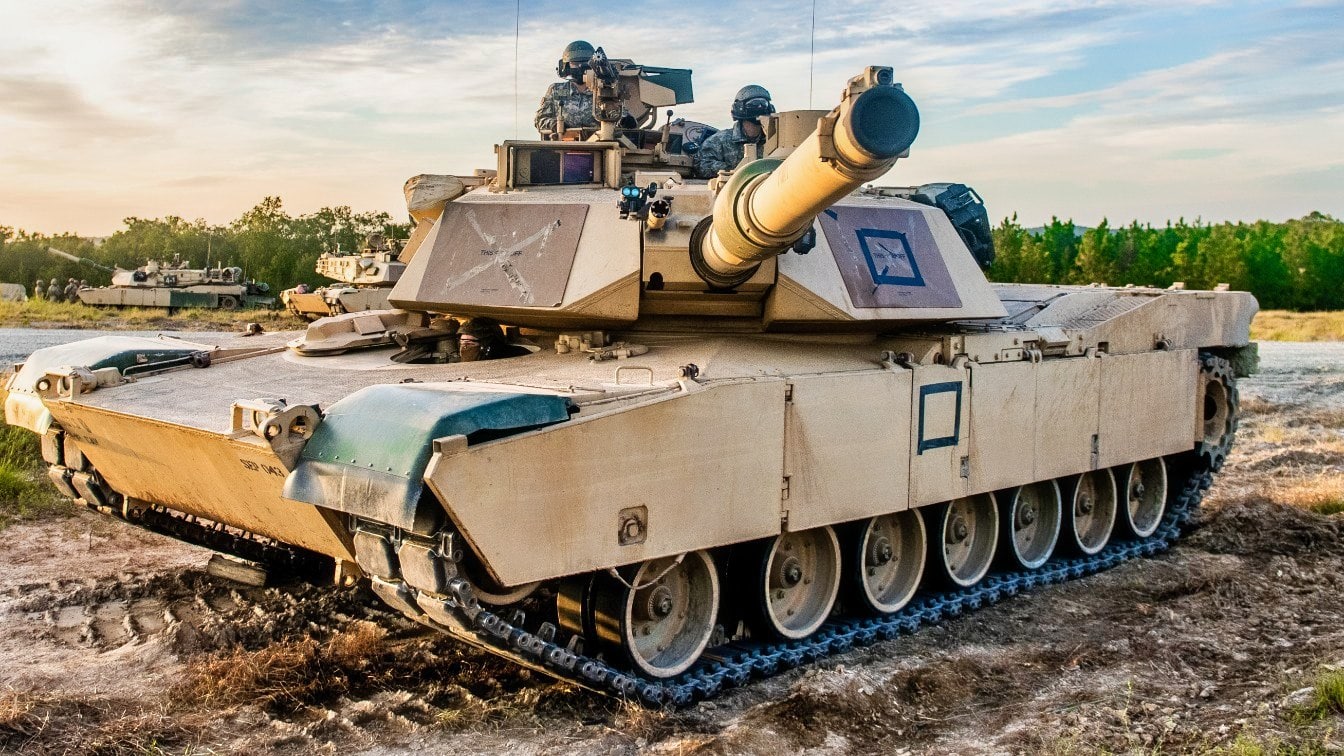
FORT BENNING, Ga. – Students in Armor Basic Officer Leader Course Class 20-005 conduct a platoon situational training exercise, Sept. 22, 2020, at Good Hope Maneuver Training Area on Harmony Church. Students train as both an attacking force and a defending force using the U.S. Army’s M1 Abrams Main Battle Tank. (U.S. Army photo by Patrick A. Albright, Maneuver Center of Excellence and Fort Benning Public Affairs)
Without the efficacy of the M60A3, there could never have been the Abrams. The M60A3 should go down as an important Cold War relic for the United States and NATO.
The Soviets and the Warsaw Pact would have been forced to fight the M60A3 with less powerful tanks, and they would have paid the price.
The M60A3 still makes many American veterans smile when they remember their service on this armored beast.
MORE – Battleship USS Iowa Didn’t Have to Retire
About the Author: Brent M. Eastwood, PhD
Author of now over 3,600 articles on defense issues, Brent M. Eastwood, PhD, is the author of Don’t Turn Your Back On the World: A Conservative Foreign Policy and Humans, Machines, and Data: Future Trends in Warfare, plus two other books. Brent was the founder and CEO of a tech firm that predicted world events using artificial intelligence. He served as a legislative fellow for US Senator Tim Scott and advised the senator on defense and foreign policy issues. He has taught at American University, George Washington University, and George Mason University. Brent is a former US Army Infantry officer. He can be followed on X @BMEastwood.