
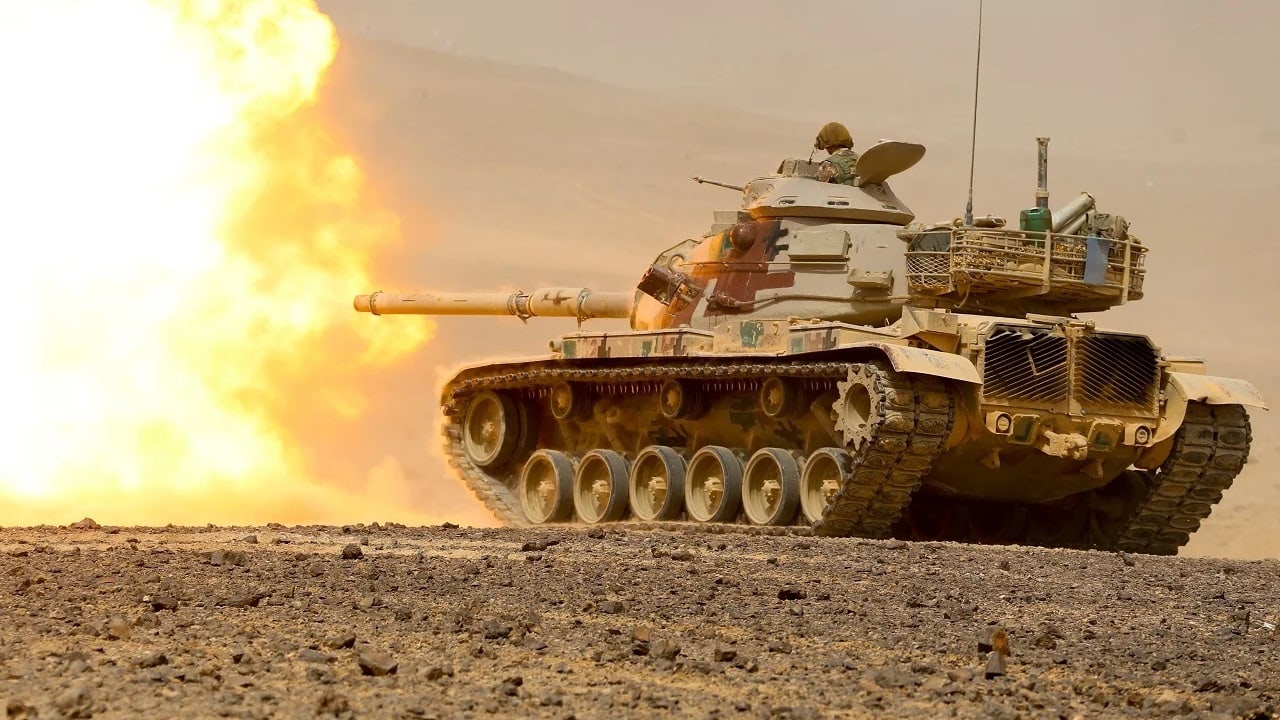
The M60A3 Tank Is Old – But Upgrades Keep It Rolling Along Around the World
In January 2025, Brazil announced that it would return a number of its long-stored M60A3 tanks to operational service rather than immediately replacing them with more modern platforms, citing delays in Leopard 1 modernization and the need to maintain armored capability in the interim.
The decision reportedly involved restoring at least 17 tanks that had previously been retired, highlighting a broader trend: Cold War-era armor is not disappearing as quickly as expected.
At the same time, defense exhibitions like EDEX 2025 have showcased radical modernization concepts for the M60 platform, including upgraded turrets and new fire-control systems. There have even been proposals to convert the tank into a lighter, more mobile anti-armor platform.
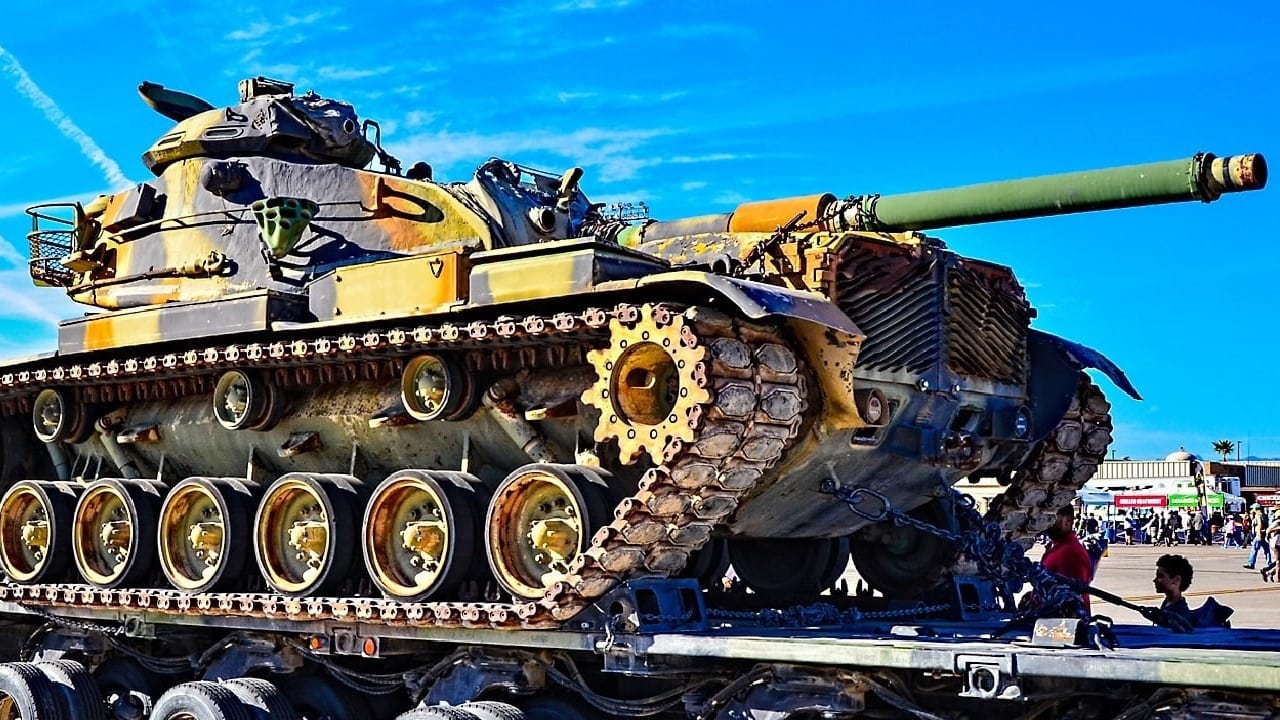
M60 Tank. Image Credit: Creative Commons.
The M60A3, introduced over four decades ago, remains in active service with multiple countries and continues to receive upgrades — and, even today, is still seen as a viable combat asset in many operational contexts.
Understanding why this American tank has such staying power requires looking well beyond its age: this is not just an old design that has lingered in service, after all.
Instead, the M60A3 is the final and most capable iteration of a design that focused on incremental improvement and logistical simplicity. It is an adaptable machine with traits that continue to shape how militaries manage their armored fleets and design new assets with the future in mind.
The Final Evolution of the Patton Line
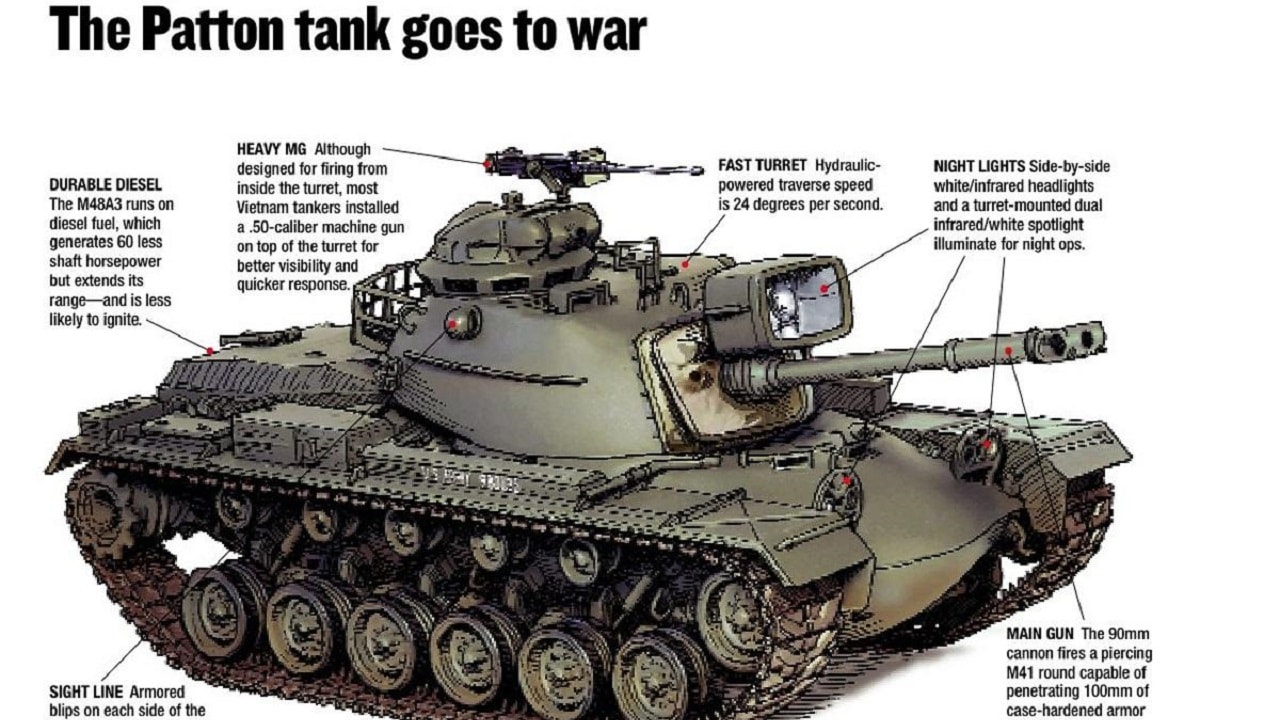
The M60A3 is the last major production variant of the U.S. M60 main battle tank, itself a direct successor to the M48 Patton. The original M60 entered service in 1960, but the A3 variant — introduced in the late 1970s — represented a significant internal redesign rather than a superficial upgrade.
At its core, the M60A3 retains the same basic platform, with a steel-armored hull and a 105mm M68 main gun, manned by a crew of four. The M68 was derived from the British L7 gun, which had become NATO’s standard tank weapon due to its efficiency and effectiveness against Soviet armor.
The A3’s fire control system was special, too. It introduced a laser rangefinder and integrated a ballistic computer, allowing for more accurate first-round hits. That was a major shift in tank doctrine at the time because it reduced engagement time and improved survivability. Perhaps the most important addition, though, was the Tank Thermal Sight (TTS), which enabled crews to detect and engage targets at night or in poor visibility. That capability gave NATO forces a significant advantage over many Soviet-era tanks, which at the time relied on less effective infrared systems.
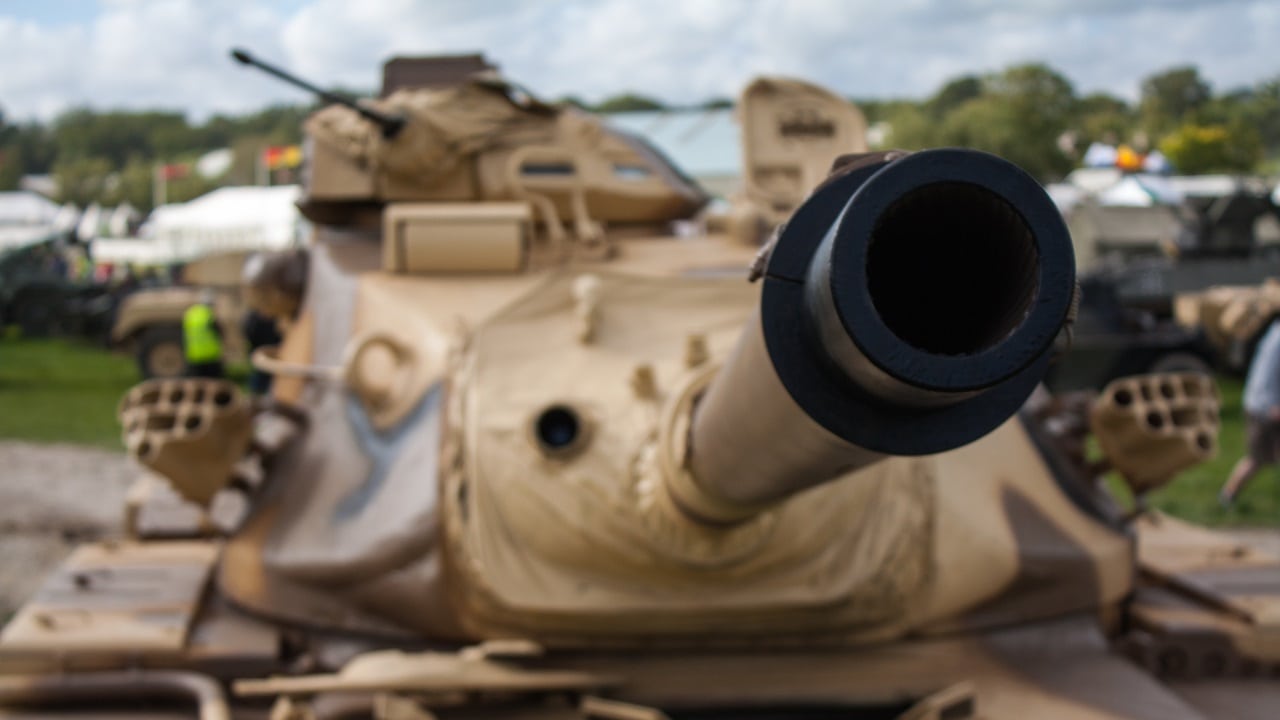
M60 Tank. Image Credit: Creative Commons.
On the outside, the M60A3 looked similar to earlier variants. Internally, though, it was a far more capable fighting vehicle, designed to operate on a battlefield increasingly defined by speed and precision.
Why the M60A3 Was Built
The M60A3 is a product of the Cold War. By the 1970s, NATO planners acknowledged a growing threat from large numbers of Soviet tanks, particularly the T-54/55 and T-62, which were deployed in significant numbers across Eastern Europe. Those tanks weren’t necessarily superior, but they were numerous, and at the time, Soviet doctrine focused on fielding large numbers of armored vehicles during offenses. NATO’s response wasn’t to match them in terms of quantity but to build new assets that improved on quality – specifically, the ability to detect and destroy enemy tanks from larger ranges and under a wider range of conditions. The M60A3 was part of that response.
Rather than designing an entirely new tank, the U.S. chose to upgrade an existing platform to extend its service life while the next-generation M1 Abrams was still in development. This allowed the U.S. Army to field new capabilities more quickly and at a lower cost.
It also had the knock-on effect of ensuring that armored units in Europe remained credible against Soviet forces during that particularly critical part of the Cold War. The result was a tank that was hugely effective within its intended role, serving as a stopgap until more advanced systems later entered service.
Who Still Uses the M60A3 and Why
Despite its age, the M60A3 remains in service with multiple countries, many of which continue to rely on it as a core component of their armored forces. One of the most prominent operators is Taiwan, which maintains a fleet of several hundred M60A3 tanks as part of its ground defense strategy.
These tanks are being upgraded even as Taiwan begins receiving newer systems, such as the M1A2T Abrams. In March 2025, reports described how upgraded versions of the M60A3 main battle tank were sighted at a training facility following reports that 40 of the tanks were set to receive upgrades to their main gun and ballistic fire control computer systems.
Egypt is another major operator, with a large inventory of M60-series tanks that continue to form a significant portion of its armored forces.
Turkey is also heavily upgrading its M60 fleet into variants such as the M60T Sabra, incorporating new and improved armor and active protection systems.
The fact that the M60A3 remains such a crucial asset in these countries is, in part, a product of its relatively simple maintenance compared to more modern systems. It is also still extremely effective in certain operational roles, particularly where the threat environment doesn’t require cutting-edge armor.
M60 Tank. Image Credit: Creative Commons.
And, upgrading an existing fleet is typically much cheaper than procuring entirely new tanks. It’s that combination that has kept the M60A3 relevant long after its original designers expected it to be retired.
How the M60A3 Keeps Evolving
Over the years, the platform has undergone many upgrades, turning the tank into something very different from its original configuration. One of the most significant modernization efforts has been the integration of advanced fire control systems, including digital ballistic computers and improved optics.
Those upgrades have improved accuracy and kept the tank competitive. That is particularly true against older and less advanced adversaries.
There have also been a series of engine upgrades in some variants, increasing horsepower and improving mobility. The M60T Sabra, for example, replaced the Continental AVDS-1790-2 diesel engine, which produces 750 horsepower, with the MTU MT 881 Ka-501 diesel engine, which produces 1,000 horsepower. Combined with a new transmission, the tank’s power-to-weight ratio was significantly upgraded, giving it better acceleration and cross-country mobility.
More advanced programs, such as Turkey’s M60T modernization, have added modular armor and active protection systems designed to counter modern anti-tank guided missiles.
At the more experimental end of the spectrum, new turret designs like the Cockerill 3105 have been proposed, effectively turning the M60 into a lighter and more flexible platform capable of fulfilling roles well beyond traditional tank warfare.
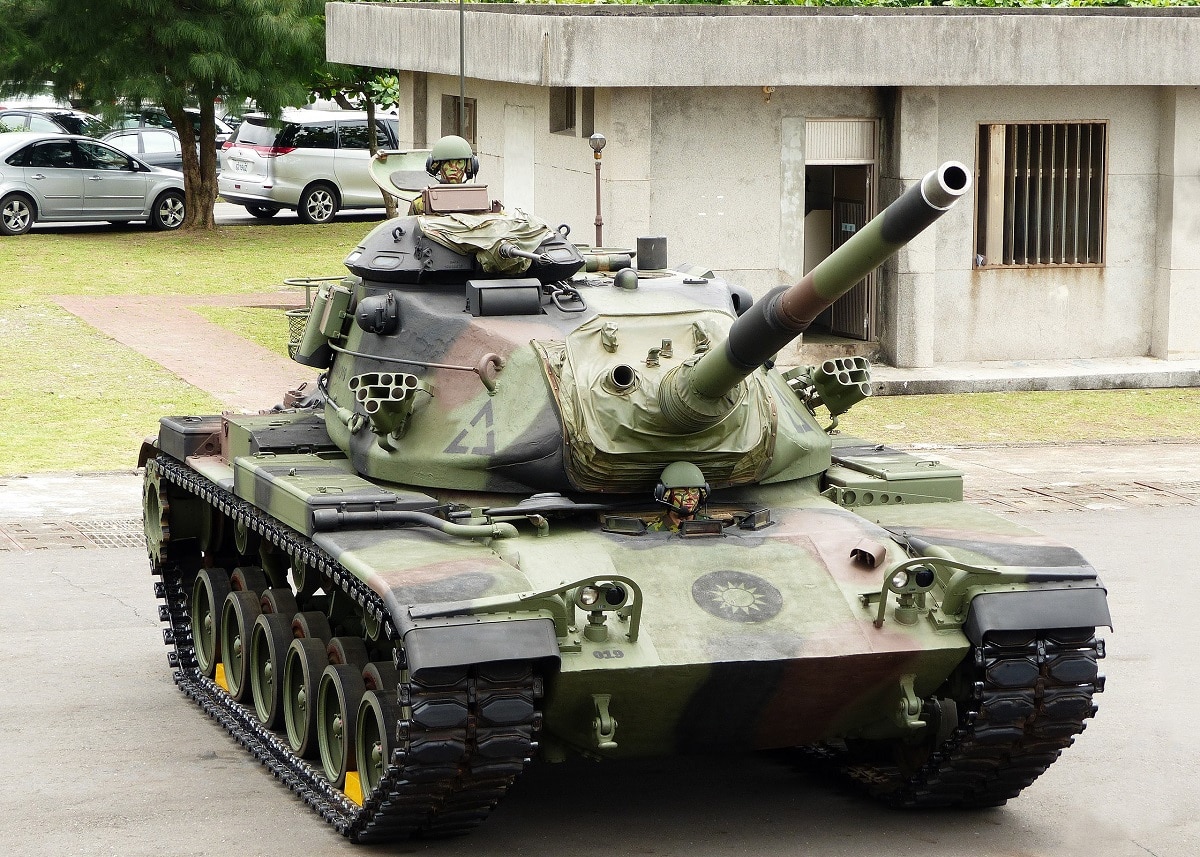
ROC M60 tank. Image: Creative Commons.
The M60A3 is clearly no longer a standard, single vehicle, but a platform that has been adapted to a wide range of operational requirements, depending on the needs (and resources) of the country using it.
The M60A3 was never intended to remain in service into the 2020s, having been designed as an interim solution—but its continued use across multiple countries shows how adaptable design and architecture can endure.
READ MORE – Iran Claims to Have Hit a Navy Aircraft Carrier With a Missile
READ MORE – Iran Came Close to Hitting a Navy Super Hornet
About the Author: Jack Buckby
Jack Buckby is a British researcher and analyst specialising in defence and national security, based in New York. His work focuses on military capability, procurement, and strategic competition, producing and editing analysis for policy and defence audiences. He brings extensive editorial experience, with a career output spanning over 1,000 articles at 19FortyFive and National Security Journal, and has previously authored books and papers on extremism and deradicalisation.

