
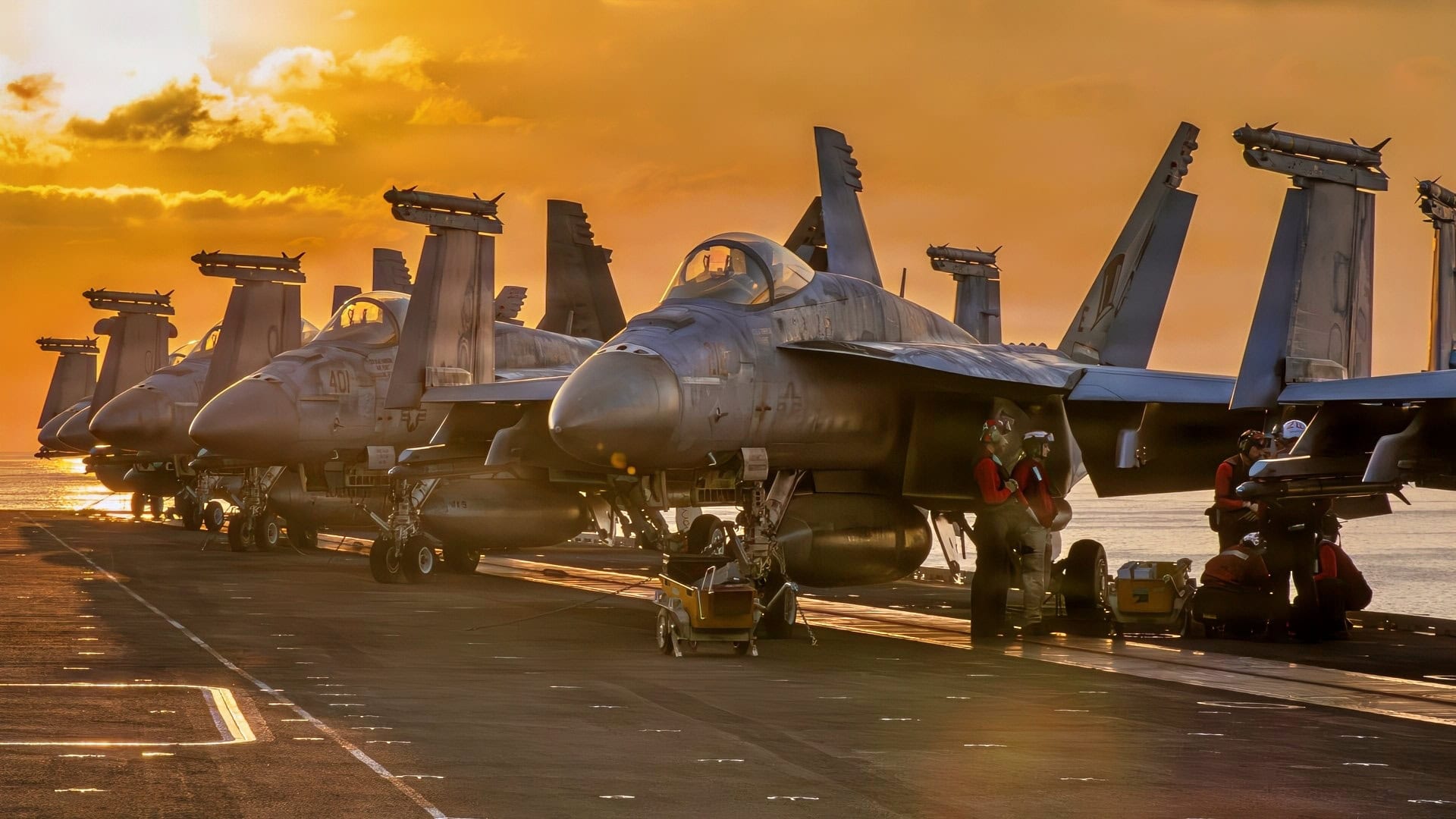
Iran Keeps Saying It Hit a U.S. Navy Aircraft Carrier. And America Just Says No Way
On March 25, 2026, Iran’s military claimed it had successfully struck the U.S. Navy aircraft carrier USS Abraham Lincoln with shore-launched cruise missiles – but within hours, U.S. officials pushed back, stating that the carrier remained fully operational and continued launching combat sorties against Iranian targets.
The claim came from Iranian state-linked outlets, including IRNA and Press TV, which reported that coastal missile batteries had targeted the carrier in regional waters. According to those reports, the strike either hit the vessel or forced it to reposition as part of an effort to assert Iran’s “maritime sovereignty.”
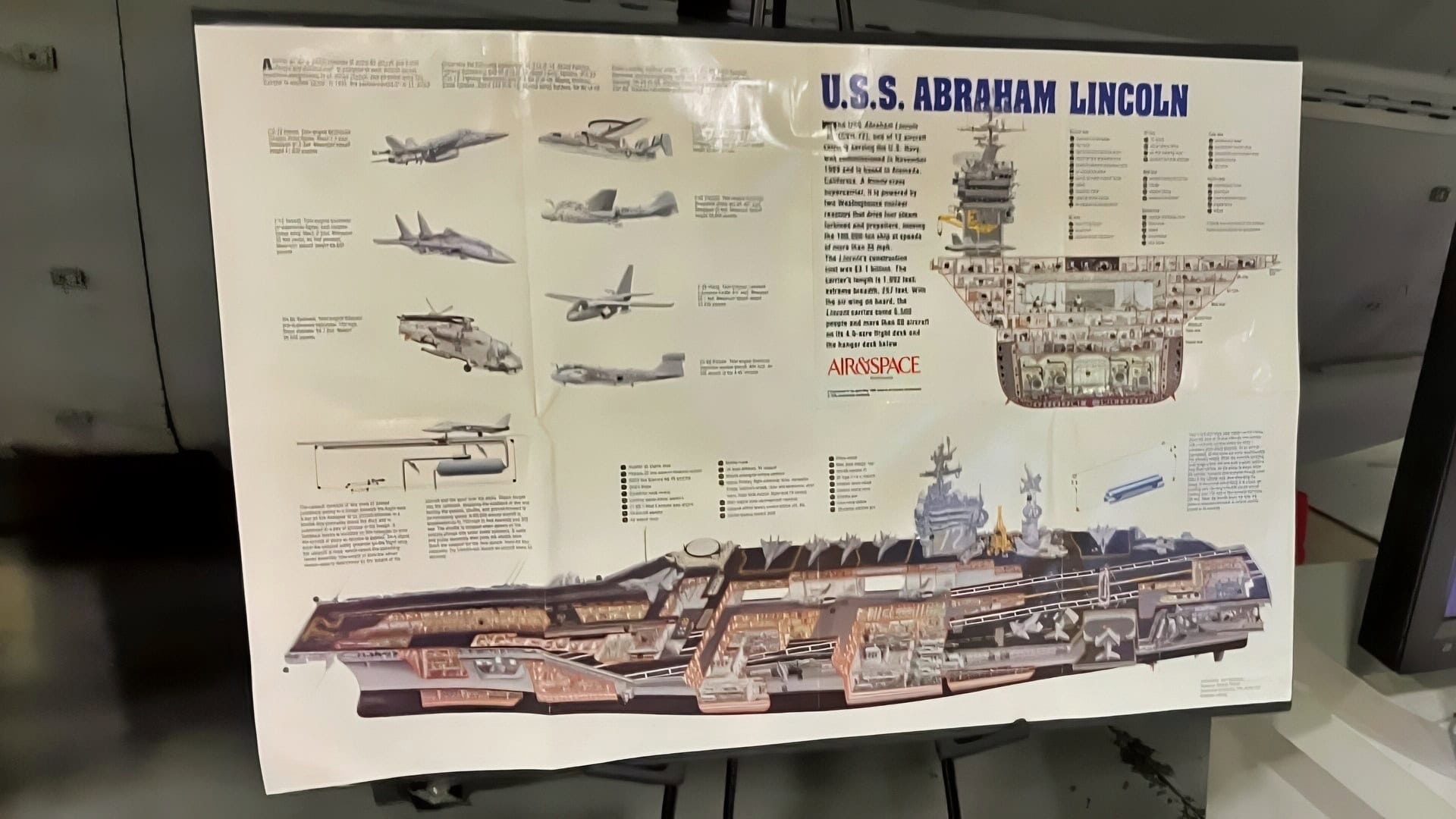
Aviation Museum of Kentucky USS Abraham Lincoln Carrier Photo. 19FortyFive.com Image.
U.S. Central Command (CENTCOM) issued a public statement on March 26 on the social media platform X, claiming, “USS Abraham Lincoln continues flight operations against military targets in Iran while sailing in regional waters.” The post included images of aircraft launching from the aircraft carrier.
Additional reporting suggested that while a missile engagement may have occurred, there is no confirmed evidence that the carrier was hit or forced out of action.
What Iran Claimed – And What Can Be Verified
Iran’s version of events has been consistent across multiple state-linked channels.
IRNA and Press TV reported that shore-launched cruise missiles targeted the USS Abraham Lincoln and that the attack was successful or forced the carrier to change position. Iranian Navy Commander Rear Adm. Shahram Irani also warned publicly that the aircraft carrier is under “constant surveillance” and that it would be engaged if it entered the range of Iranian missile systems.
Separate reporting from Iran’s Fars News Agency claimed that the strike was part of a larger missile barrage intended to push U.S. naval forces away from Iranian waters.
Not only did CENTCOM insist that carrier operations continue as normal, but there have also been explicit denials that the missile hit the carrier.
In an additional statement, U.S. Central Command insisted that the ship was not hit, and that the Iranian missile “didn’t even come close.”
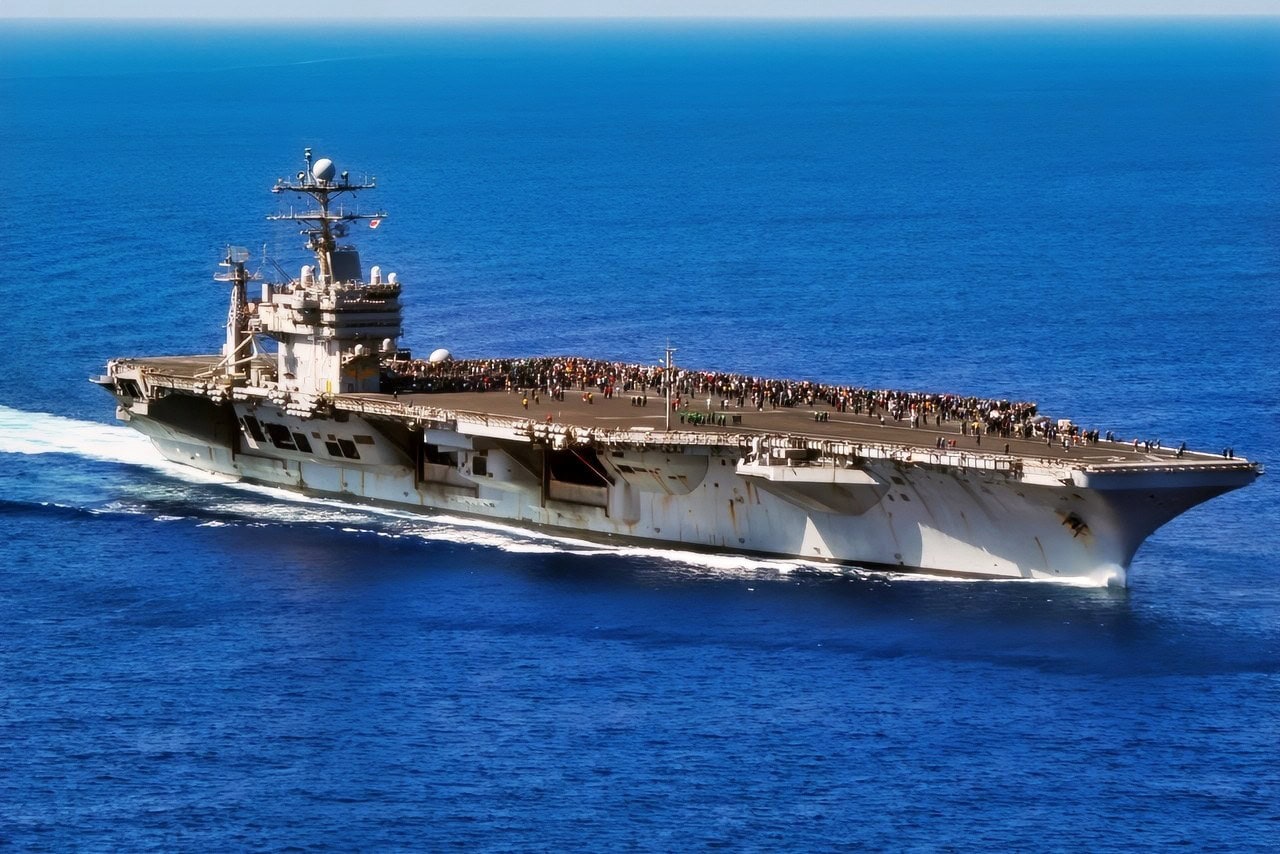
ATLANTIC OCEAN (Aug. 6, 2012) F/A-18 Hornets and Super Hornets from Carrier Air Wing (CVW) 2 fly in formation as MH-60S Seahawk helicopters assigned to the Golden Falcons of Helicopter Sea Combat Squadron (HSC) 12 fire flares during an air power demonstration above the Nimitz-class aircraft carrier USS Abraham Lincoln (CVN 72). Lincoln is returning to the United States after the completion of an eight-month change-of-homeport deployment during which she operated in the U.S. 5th, 6th and 7th Fleet areas of responsibility. (U.S. Navy photo by Mass Communication Specialist Seaman Zachary A. Anderson/Released)
There is no imagery, no satellite evidence, and no third-party confirmation that a missile struck the vessel or that the strike caused any damage.
Did A Missile Engagement Even Occur?
While Iran’s claim of a successful strike appears to be false, multiple sources have suggested that some form of missile engagement likely did take place.
On March 25, U.S. President Donald Trump said that U.S. forces successfully intercepted 100 Iranian missiles and confirmed that no missile successfully struck an American target. The president made the comments during a fundraising event for the National Republican Congressional Committee, reiterating previous claims to reporters and guests that the U.S. had “knocked out their navy” and “knocked out everything.”
On the topic of Iranian missile strikes, the president said: “100 missiles going 2,000 miles an hour were coming at this element of importance, tremendous power and importance. And of the 100 missiles coming at us, 100 missiles were immediately shot down, shot out of the air, fall into the sea. Not one missile got through.”
100 missiles being fired at U.S. targets represents one of the largest direct missile engagements between Iran and U.S. naval forces in decades. The weapons used likely included anti-ship cruise missiles such as the Qader, which are designed to fly at low altitude and evade radar before striking surface vessels. The systems are specifically intended to threaten high-value assets, such as aircraft carriers.
However, U.S. carrier strike groups are built around layered defense systems. Guided-missile destroyers and cruisers equipped with the Aegis combat system provide long-range interception with SM-series missiles, and electronic warfare systems provide additional protection.
The incident may have, therefore, unfolded like this: Iranian missiles were launched, U.S. defenses were engaged, and the missiles were intercepted, and Iran exaggerated the outcome for strategic messaging.
That pattern is consistent with earlier incidents in the same conflict, where Iran has repeatedly claimed successful strikes that have been denied by U.S. officials. It’s also reminiscent of claims by Iranian officials, including the late Ayatollah Ruhollah Khomeini, of Iranian “victory” after failed missile strikes on the Al Udeid Air Base in June 23, 2025.
U.S. Carriers Operating Under Sustained Pressure
Regardless of whether the USS Abraham Lincoln was ever in immediate danger, the incident is a good reminder of the sustained pressure under which U.S. aircraft carriers and strike groups are now operating.
The USS Abraham Lincoln is currently one of the primary U.S. strike platforms in the region. At the same time, the USS Gerald R. Ford – the Navy’s most advanced carrier – has been temporarily sidelined following a fire earlier in March and a series of other maintenance issues. That reduces redundancy and places a greater burden on remaining carriers.
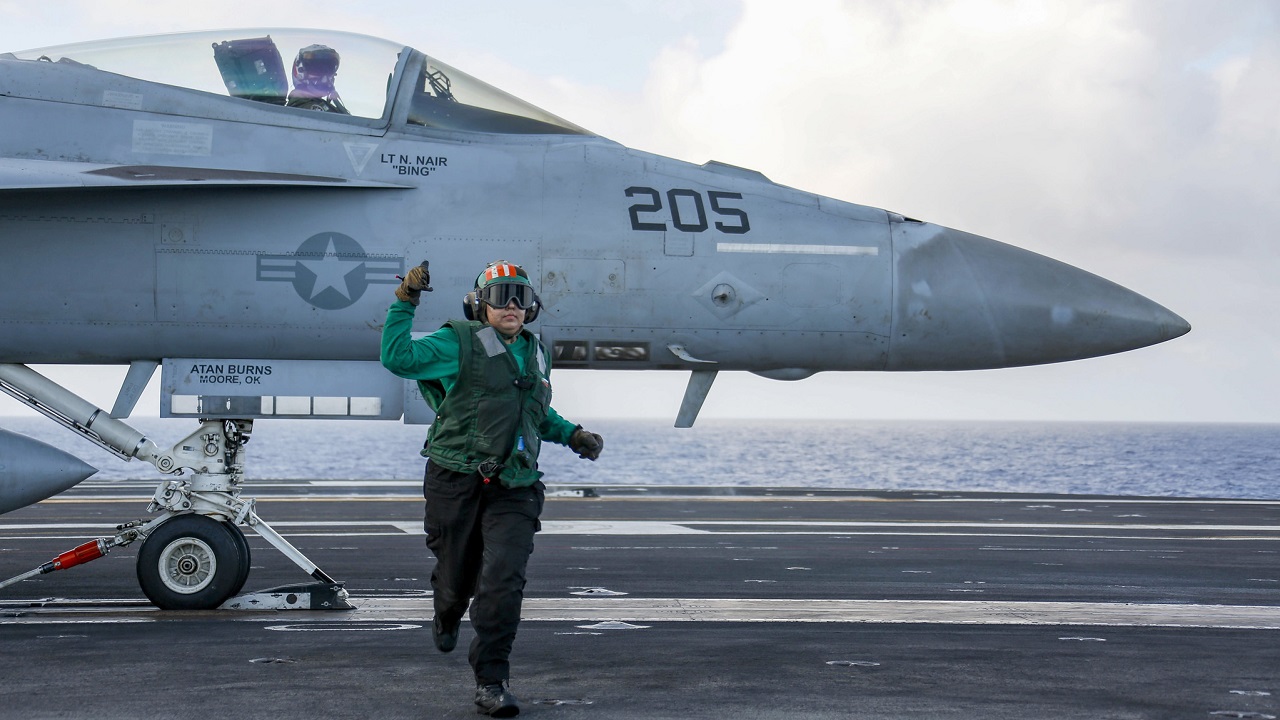
Aviation Boatswain’s Mate (Equipment) 3rd Class Anatalia Zamora, from Midland, Texas, runs to a safe distance before an F/A-18E Super Hornet assigned to the “Tophatters” of Strike Fighter Squadron (VFA) 14 launches from the flight deck of the Nimitz-class aircraft carrier USS Abraham Lincoln (CVN 72). The Abraham Lincoln Carrier Strike Group is on a scheduled deployment in the U.S. 7th Fleet area of operations to enhance interoperability through alliances and partnerships while serving as a ready-response force in support of a free and open Indo-Pacific region. (U.S. Navy photo by Mass Communication Specialist 3rd Class Michael Singley) 220228-N-MM912-1137
Iran’s strategy appears to reflect this reality, though it also lacks many other options. Rather than needing to destroy a carrier outright – a difficult task – it can apply pressure through repeated missile threats, forcing U.S. naval forces to operate defensively and expend interceptors.
Even unsuccessful attacks like this impose costs.
The State Of Iran’s Missile Arsenal
While it’s difficult to determine exactly how much of Iran’s missile arsenal has been degraded in the conflict so far, U.S. and Israeli officials have provided some indicators.
On March 27, a Reuters report claimed that the U.S. could only determine with certainty that it had destroyed roughly one-third of Iran’s missile arsenal. The report cited five people familiar with U.S. intelligence and said that the status of around another third of the missile arsenal is currently unclear, but that it was “likely damaged, destroyed, or buried.”
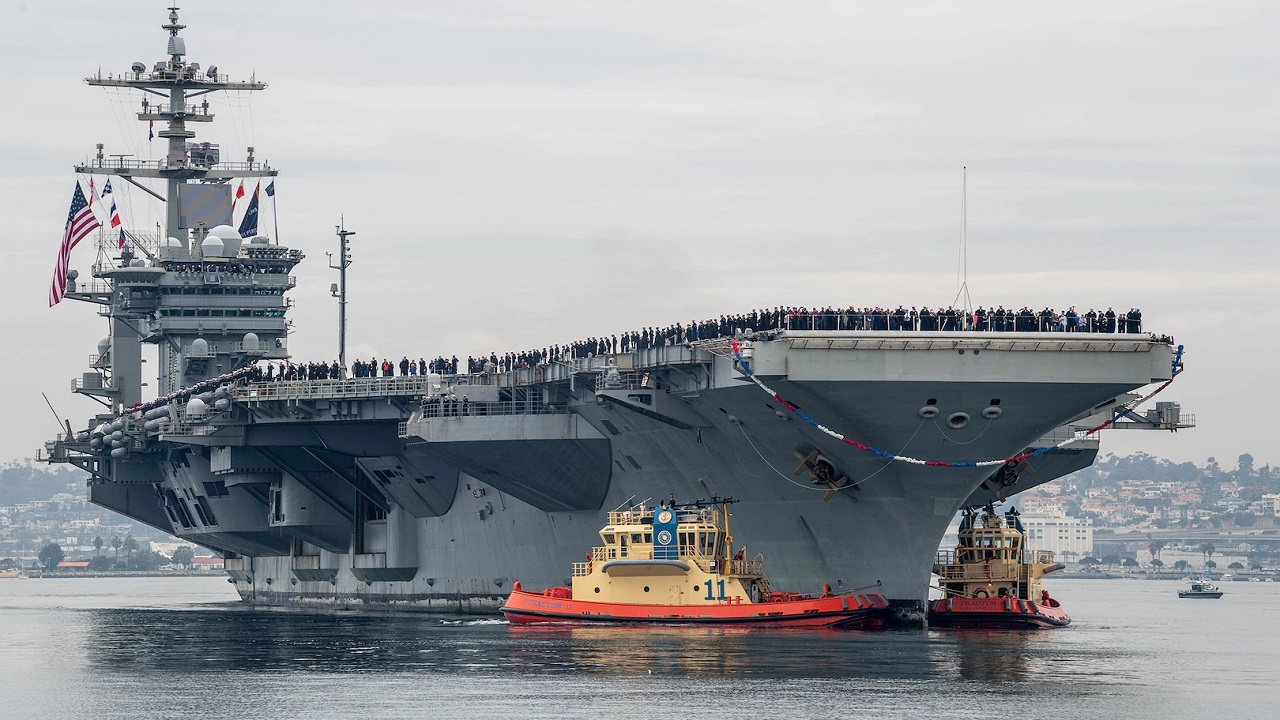
USS Abraham Lincoln back in 2015.
The same sources said that Iran’s drone capability is believed to have been impacted to roughly the same extent.
The news followed a claim by CENTOM in the days prior that suggested U.S. and Israeli forces had destroyed or badly damaged “most” of the Iranian facilities used to build missiles, drones, and warships.
About the Author: Jack Buckby
Jack Buckby is a British researcher and analyst specialising in defence and national security, based in New York. His work focuses on military capability, procurement, and strategic competition, producing and editing analysis for policy and defence audiences. He brings extensive editorial experience, with a career output spanning over 1,000 articles at 19FortyFive and National Security Journal, and has previously authored books and papers on extremism and deradicalisation.