
The Crete Pivot and the Fire: Why the USS Gerald R. Ford Aircraft Carrier is Leaving the Red Sea
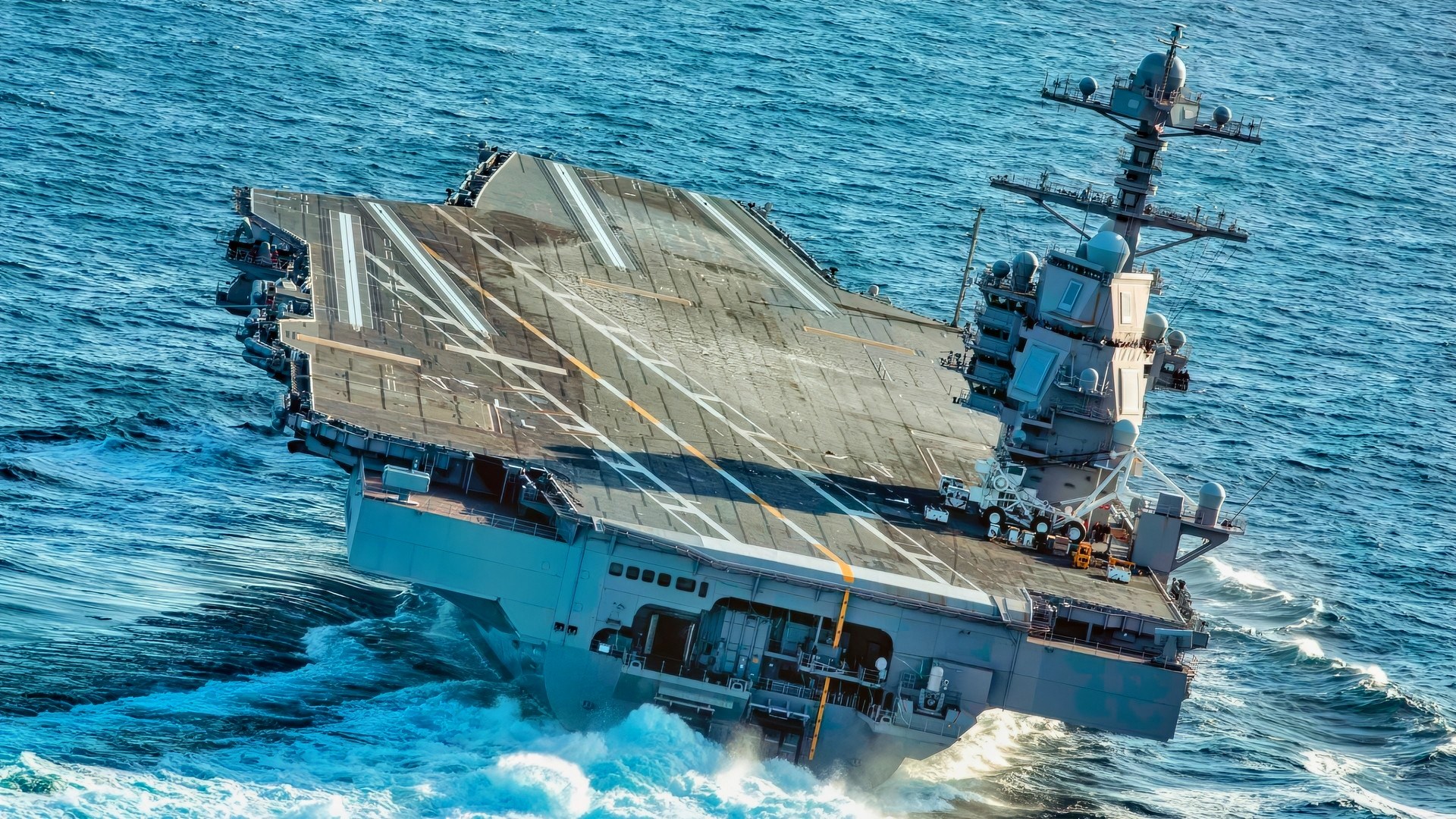
The USS Gerald R. Ford (CVN-78) is, appropriately enough (from a semantic standpoint), the lead ship of the United States Navy’s Ford-class nuclear-powered supercarriers, which are slated to replace the time-honored and battle-proven but again Nimitz-class supercarriers.
Indeed, thus far, she’s the only ship of her class to be commissioned, and she has already earned her proverbial spurs in combat multiple times over.
In the spirit of the title of Audie Murphy’s bestselling autobiography, one could say that the Ford has been “To Hell and Back.” (For any non-history buffs out there, Maj. Audie Leon Murphy [June 20, 1925 – May 28, 1971] was the most decorated American combat soldier of World War II).
Indeed, “hell” may sadly be appropriate for describing the many trials and tribulations USS Gerald R. Ford and her intrepid crew (no aircraft carrier-related pun intended), maybe not in the exact literal sense, but awfully darn close: the warship recently suffered a fire, and the repair work could indeed be a hellishly long and arduous process.
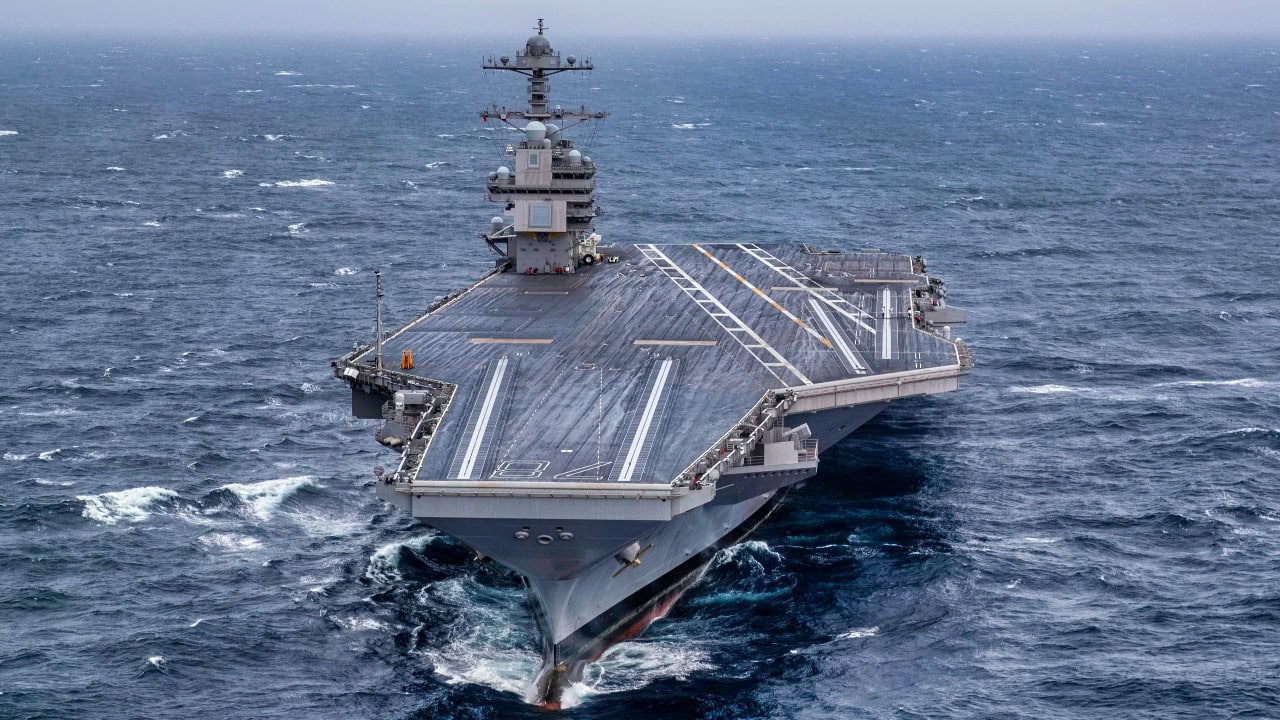
ATLANTIC OCEAN (Oct. 27, 2019) USS Gerald R. Ford (CVN 78) steams in the Atlantic Ocean for the first time since July 2018. Ford is conducting sea trials following its 15 month post-shakedown availability. (U.S. Navy photo by Mass Communication Specialist 3rd Class Connor Loessin)
Bottom Line Up Front (BLUF)
News on this disturbing development comes from Mallory Shelbourne and Sam Lagrone in a March 18, 2026, report for USNI News (“USNI” as in U.S. Naval Institute, that is).
To wit: “Carrier USS Gerald R. Ford (CVN-78) is preparing to leave the Red Sea to undergo repairs at the U.S. Navy base on Crete after a fire last week required several hours of damage control efforts, USNI News has learned…Ford will travel to Naval Support Activity Souda Bay for more than a week of pierside repairs, a senior U.S. official confirmed to USNI News on Tuesday. The official confirmed a report in a local Greek news outlet that said Ford is returning to Crete … The March 12 fire, which occurred in the aft laundry facility, resulted in a major damage control response that displaced sailors across the carrier and disrupted operations throughout the ship, the source confirmed to USNI News.”
Fortunately, none of Ford’s crew members lost their lives in the incident. However, over 200 seamen were treated for smoke inhalation and returned to duty; one sailor was medevac’ed from the vessel after being injured in the damage control effort and is in stable condition, whilst two others were treated for lacerations.
Moreover, the smoke damage extended to the berthing, requiring the Navy to remove 1,000 mattresses from the USS John F. Kennedy (CVN-79), which, ironically enough, is the next ship in the Ford class awaiting commissioning.

Aircraft Carrier USS Gerald R. Ford Diagram. Image Credit: Creative Commons.
Official Statements on the Incident
An unnamed spokesperson for the U.S. 5th Fleet told USNI News in a statement that “Ship’s force is inspecting and overhauling affected spaces, and the cause of the fire is under investigation…The ship continues to operate in the Red Sea, accomplishing U.S. Central Command tasking in support of Operation Epic Fury.”
Meanwhile, an unnamed Pentagon spokesperson told USNI News that “Due to the fire, several berthing spaces and subsequently, more than 100 racks (beds) were lost … An immediate plan to acquire replacement cots has already been established. The resiliency and mental grit of our sailors have enabled USS Gerald R. Ford (CVN 78) to support ongoing operations.”
Could Have Been Worse
At first, that one-week timeframe for repairing the Ford’s fire damage sounds awfully optimistic.
But then again, perhaps that’s because this writer is thinking in terms of *routine* maintenance, refueling, and overhaul procedures, not emergency damage repair.
That routine procedure is known as “RCOH”, which stands for “refueling and complex overhaul,” and it’s a procedure that entails cutting a massive hole into the hull and replacing everything from catapult systems to water purifiers. CVNs must undergo this procedure once every 25 years.
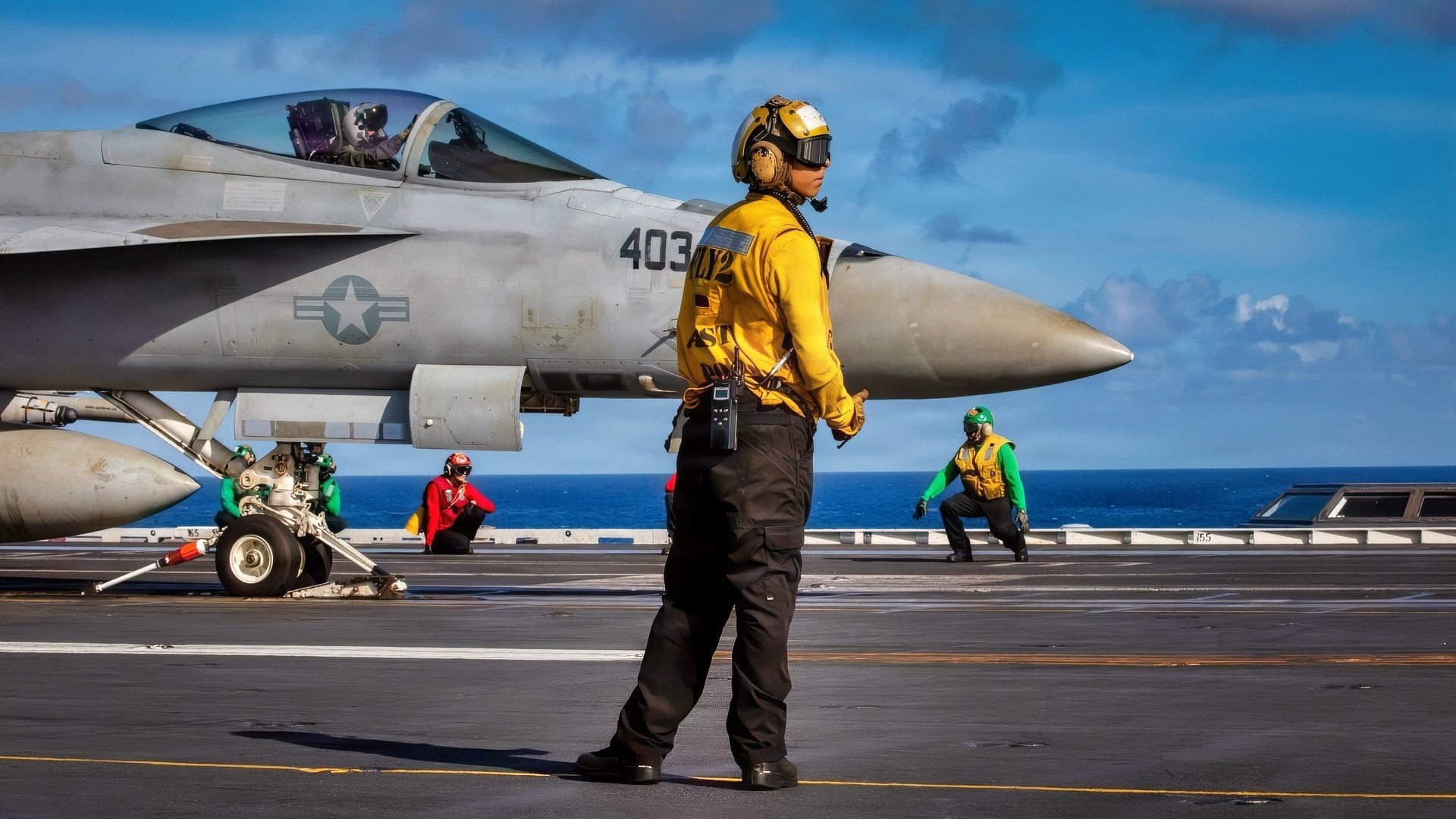
A U.S. Sailor signals to an F/A-18E Super Hornet aircraft, attached to Strike Fighter Squadron 87, during flight deck operations on the flight deck of the world’s largest aircraft carrier, Ford-class aircraft carrier USS Gerald R. Ford (CVN 78), while underway in the Caribbean Sea, Jan. 3, 2026. U.S. military forces are deployed to the Caribbean in support of the U.S. Southern Command mission, Department of War-directed operations, and the president’s priorities to disrupt illicit drug trafficking and protect the homeland. (U.S. Navy photo)
Depending on the ship’s condition and the scope of upgrades, RCOH can span three to four years — in some cases, even up to six years (e.g., the USS George Washington [CVN-73]).
However, given the urgency of Ford’s current ops temp, she and her crew definitely can’t afford to wait that long.
About the Author: Christian D. Orr
Christian D. Orr is a Senior Defense Editor. He is a former Air Force Security Forces officer, Federal law enforcement officer, and private military contractor (with assignments worked in Iraq, the United Arab Emirates, Kosovo, Japan, Germany, and the Pentagon). Chris holds a B.A. in International Relations from the University of Southern California (USC) and an M.A. in Intelligence Studies (with a concentration in Terrorism Studies) from American Military University (AMU). He is also the author of the newly published book “Five Decades of a Fabulous Firearm: Celebrating the 50th Anniversary of the Beretta 92 Pistol Series.”