
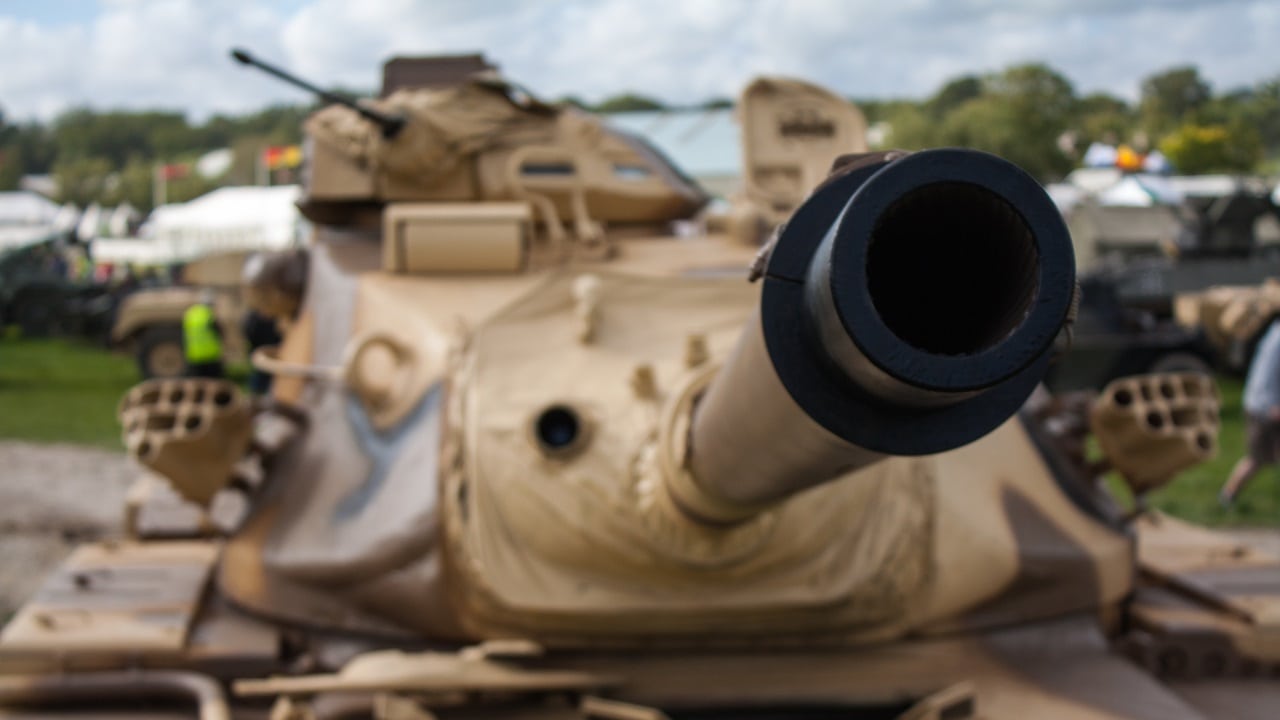
Summary and Key Points: The Super M60 was a comprehensive 1980s upgrade package designed to bridge the gap between the M60 series and the M1 Abrams.
-Developed by Teledyne Continental Motors, the prototype featured a massive 1,200 hp AVCR-1790-1B engine and a revolutionary hydropneumatic suspension, more than doubling its cross-country speed to 38 km/h.
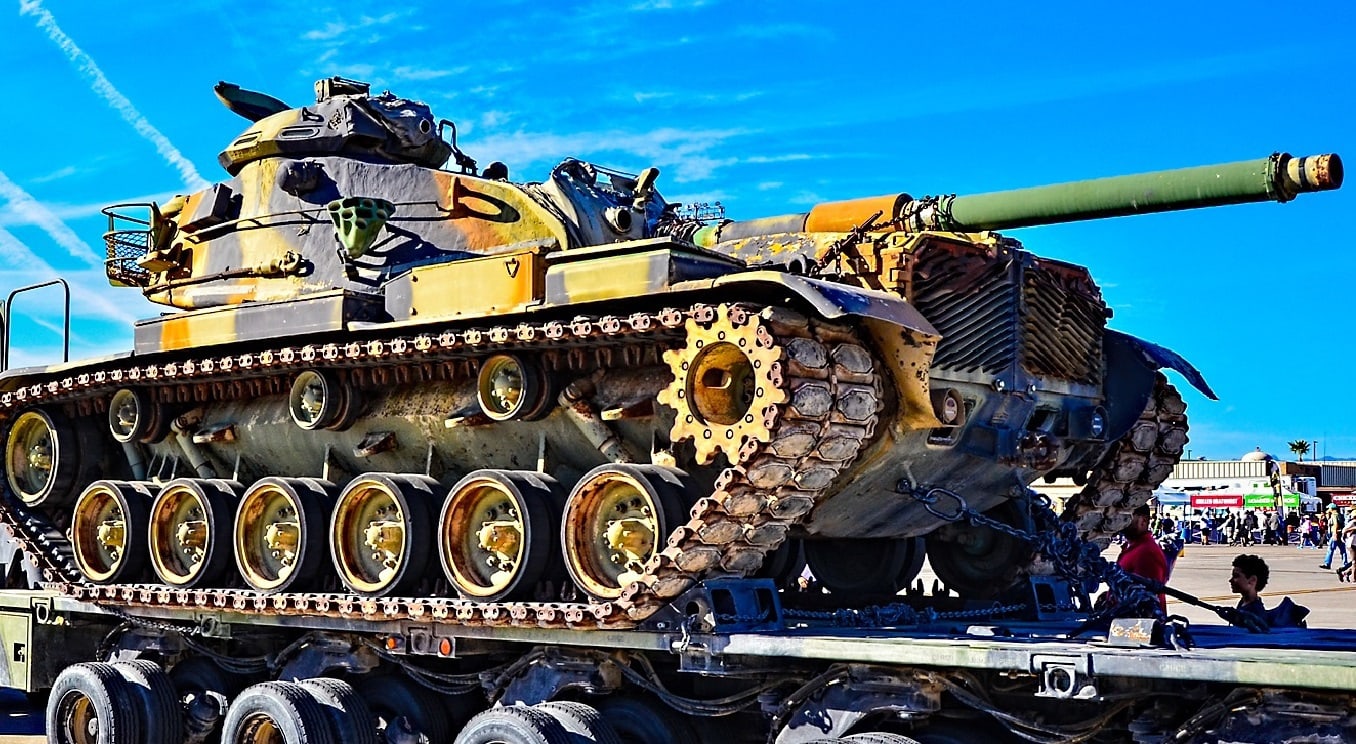
Image Credit: Creative Commons.
-To counter modern anti-tank missiles, it was encased in a distinctive shell of appliqué armor, significantly increasing its survivability.
-Despite its impressive performance on paper, the program failed to secure an export customer and was eventually sidelined by the end of the Cold War.
Lost to the Cold War: The Tragic Story of the Only Super M60 Ever Built
The United States produced more than 15,000 M60 Main Battle Tanks. The M60 was in service from 1959 to 1991, being retired after Operation Desert Storm.
However, National Guard units continued to use the M60 until 1997.
One variant, the “Super” M60 tank, was a comprehensive upgrade package for the M60 main battle tank. It was offered for export in the early 1980s to increase protection, firepower, and mobility for the M60A1 and A3.
While this upgrade package promised to dramatically increase the combat power of the United States and allied tank fleets, no country ever bought it, and the program had effectively ceased by the end of the Cold War. Only one prototype was built.
Meet The M60 Super Main Battle Tank Prototype
Advances in anti-tank guided missile (ATGM) technology in the 1970s left the M60 MBT increasingly vulnerable.
Teledyne Continental Motors came up with a solution to the M60’s woes. Instead of simply replacing it, they would offer an upgrade to the M60 platform to improve its overall performance. The Super upgrade was developed in an attempt to bridge the gap between the M60 series and the M1 Abrams. Development began in 1978, when Teledyne leased an M60A1 from the U.S. Army. Two main areas of focus for improvements were armor protection and mobility.
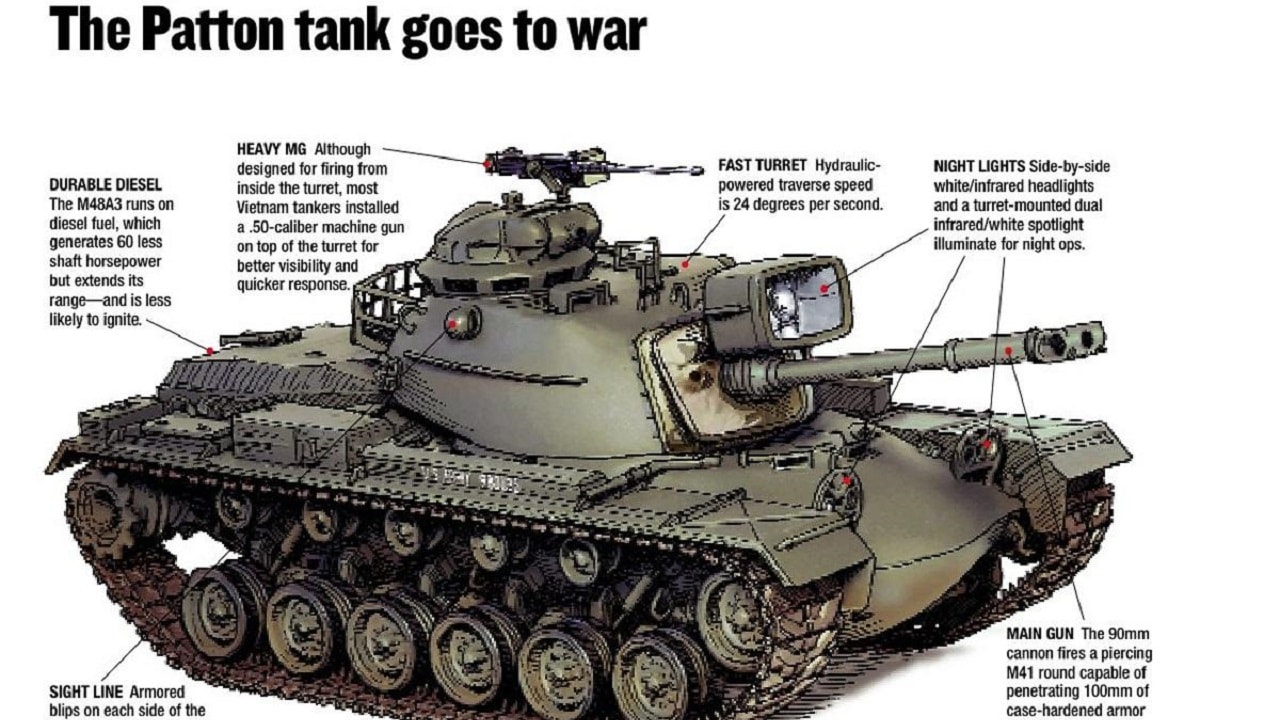
M60 Tank. Image Credit: Creative Commons.
Improved Engine and Transmission
Teledyne Continental replaced the standard Continental AVDS-1790-2 engine, which produced 750 hp, and used a Continental AVCR-1790-1B 29.3-liter, 12-cylinder V-type engine for the Super. The AVCR was a popular choice for U.S. armored vehicles during the Cold War.
Originally a gasoline engine, the series evolved into the air-cooled, twin-turbocharged AVDS-1790 diesel, which produced 750–1200 horsepower to power tanks such as the M48 Patton, M60, and M103. This engine was oupled to a Renk RK-304 transmission with four forward gears and four reverse gears.
The torsion bar suspension was replaced with a National Waterlift Company hydropneumatic suspension, the same one used on the General Motors M-1.
All of this increased the power-to-weight ratio, despite the 4.75-ton weight increase, to 23.1 hp/ton. The tank’s cross-country speed also went from 14 kilometers per hour cross-country to 38 km/h, vastly improving its ability to navigate rough terrain.
The M60 Super’s Increased Armor Protection
The Super M60 weighed more than the standard M60A1 MBT because of the add-on armor intended to protect the tank against modern anti-tank shaped-charge munitions. This new shell consisted of appliqué armor and angled surfaces on the turret and on the front and sides of the hull, as well as side skirts to aid protection against high-explosive anti-tank projectiles.
According to armor details, the turret had about 406 mm of rolled homogeneous armor (RHA) at a 30-degree angle, while the hull had around 368 mm of RHA at a 73-degree angle, and the lower front plate sloped at about 45 degrees.
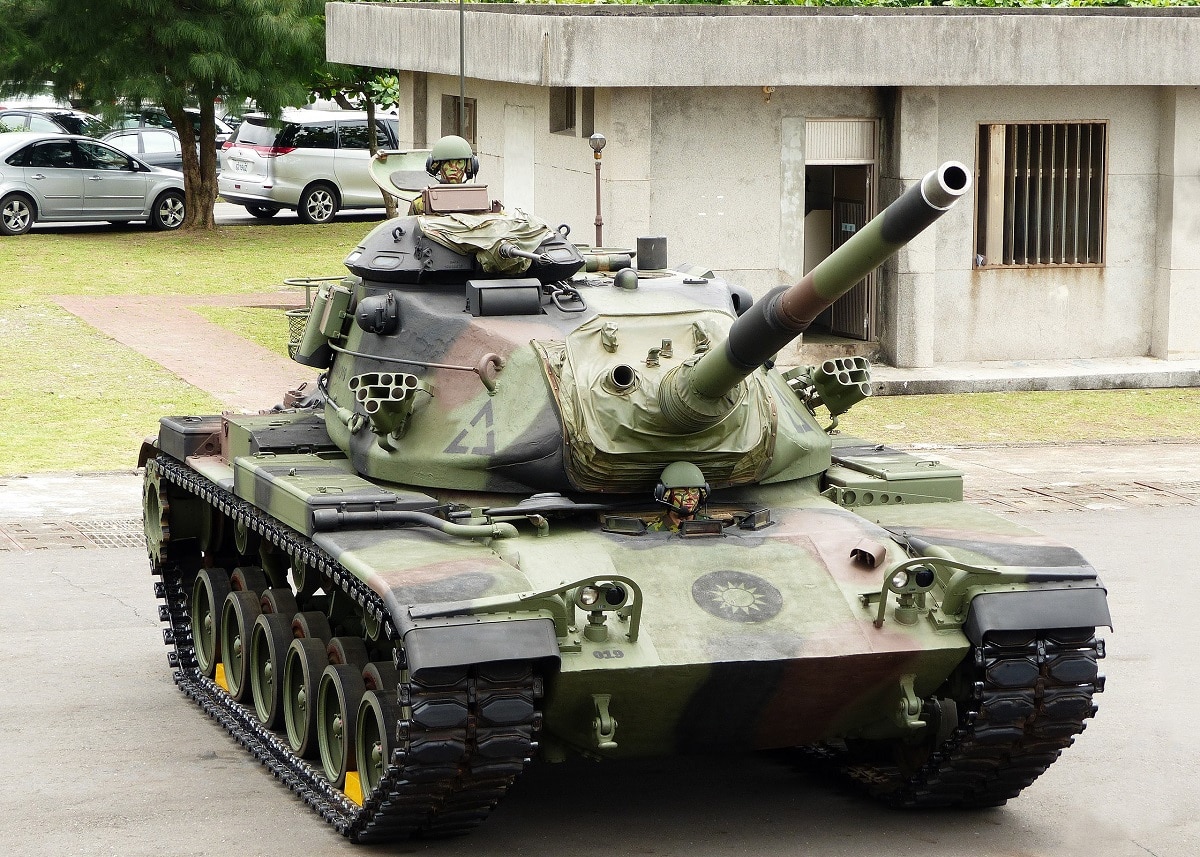
ROC M60 tank. Image: Creative Commons.
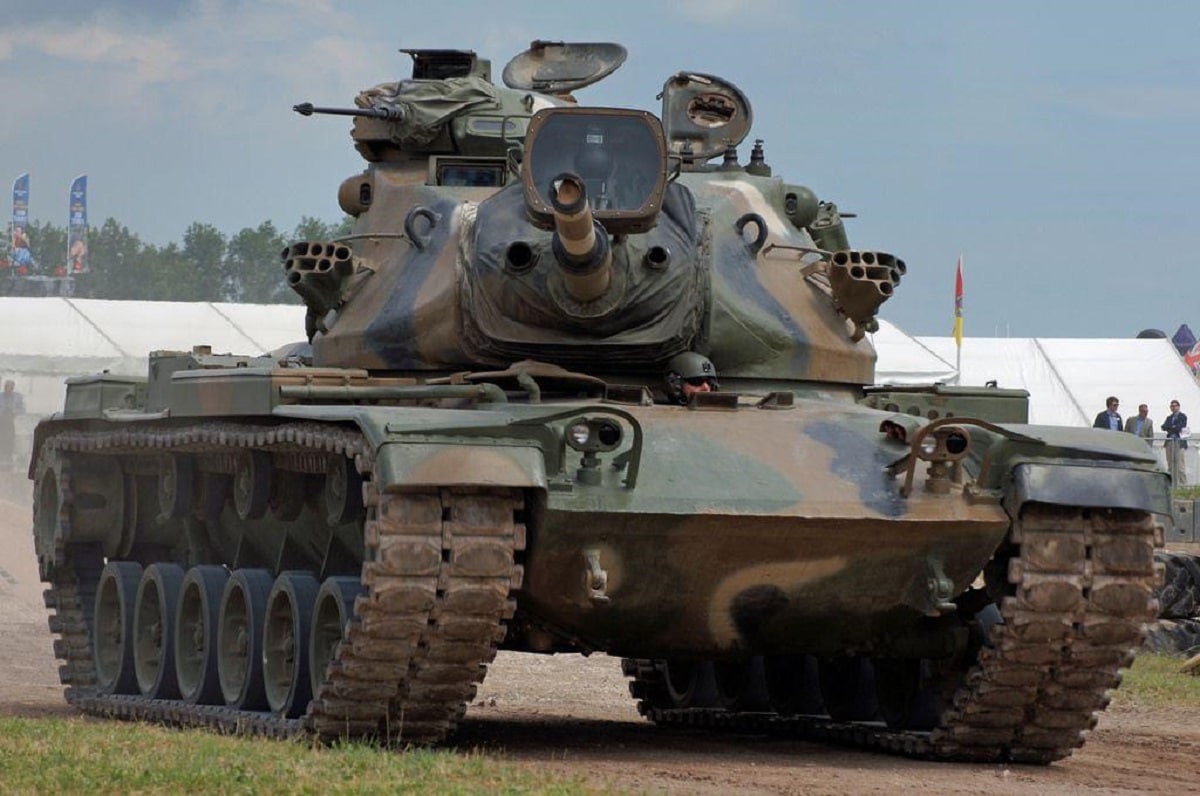
M60 Patton Tank. Image: Creative Commons.
RHA is a type of steel plating with consistent hardness and microstructure, produced by hot-rolling steel into thick plates. RHA was long considered the benchmark for armor protection quality, although modern vehicles now use composite alternatives.
To further improve protection, the M19 cupola was replaced with a lower-profile cupola, which retained a pintle mount for a .50-caliber M2 machine gun. The M60 Super kept the AN/VVS-2 thermal imaging system, which provided low-light capabilities, while aiming was aided by the AN/VVG-2 laser rangefinder and the M21 ballistic computer system, which already featured on the M60A3 series.
M60 Super MBT Specifications
Crew: 4
Length: 9.5 m
Width: 7.09 m
Height: 4.19 m
Weight: 56.3 tons
Main armament: 105mm M68A1E2 (63 rounds)
Secondary armament: 7.62mm M240C (6,000 rounds) & optional pintle mounted .50-caliber M2 (600 rounds)
Main Gun Elevation: -10° / 20°
Engine: Teledyne Continental AVCR-1790-1B diesel, 1,180 – 1,200 hp
Maximum speed on road: 72 km/h – 74 km/h (44.6 to 47 mph)
Maximum range: 500 km (310 miles)
Unfortunately, there was not a market for the M60 Super. Only one prototype was produced.
About the Author: Steve Balestrieri
Steve Balestrieri is a National Security Columnist. He served as a US Army Special Forces NCO and Warrant Officer. In addition to writing on defense, he covers the NFL for PatsFans.com and is a member of the Pro Football Writers of America (PFWA). His work was regularly featured in many military publications.