
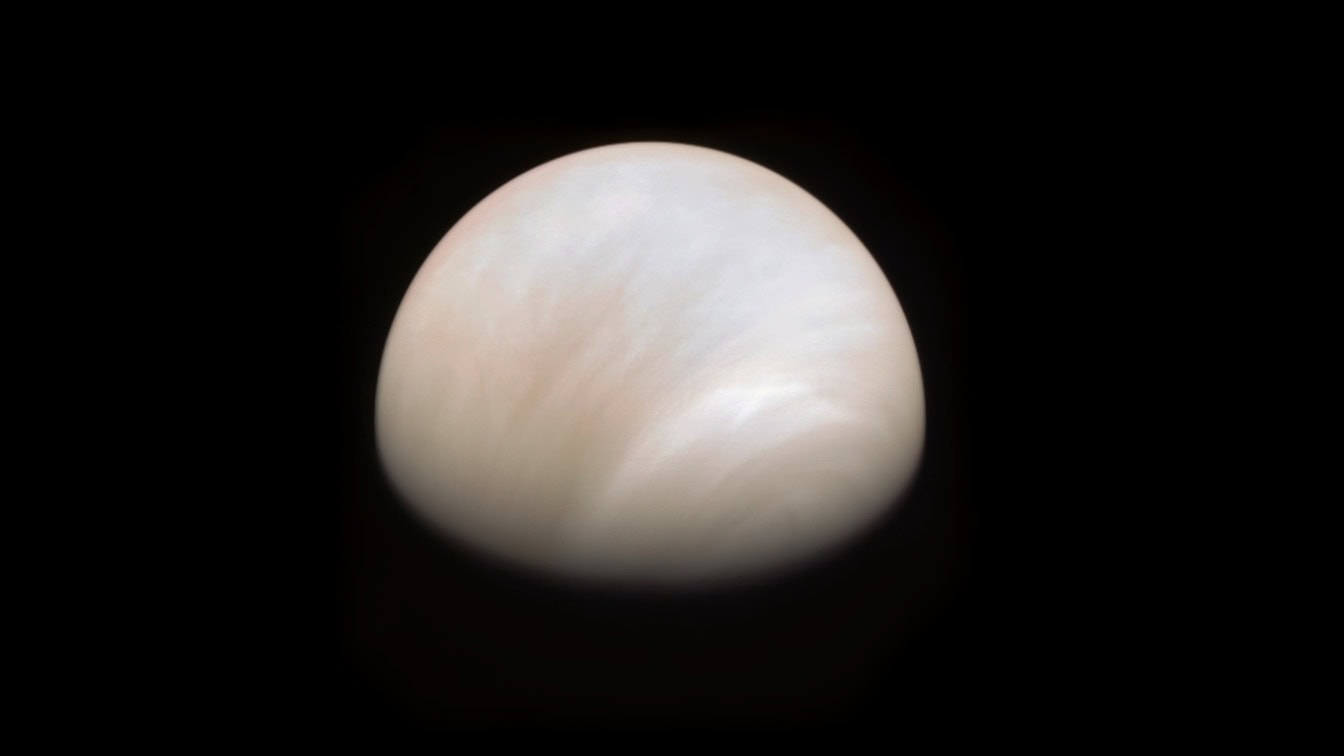
Summary and Key Points: In February 1961, the Soviet Union launched Venera 1, the first spacecraft ever sent from Earth toward another planet. Built with solar panels, sun sensors, and a single course-correction engine, the probe was meant to fly past Venus and radio home what it found. Its launch and escape from Earth succeeded, but its orientation system failed about a week later, and contact was lost for good. Tracking calculations indicate Venera 1 still coasted past Venus that May, within roughly 100,000 kilometers, silent and unpowered. The mission counted as a launch success and a scientific loss, and the lessons it produced shaped the Soviet probes that followed.
The Soviet Mission to Venus
Launched by the Soviet Union in February 1961, during the height of the Space Race, the Venera 1 mission was designed to reach Venus. Though the mission ultimately failed before reaching Venus, it still represented a major technological milestone, laying the foundation for one of history’s most successful planetary exploration programs.
The Early Space Race
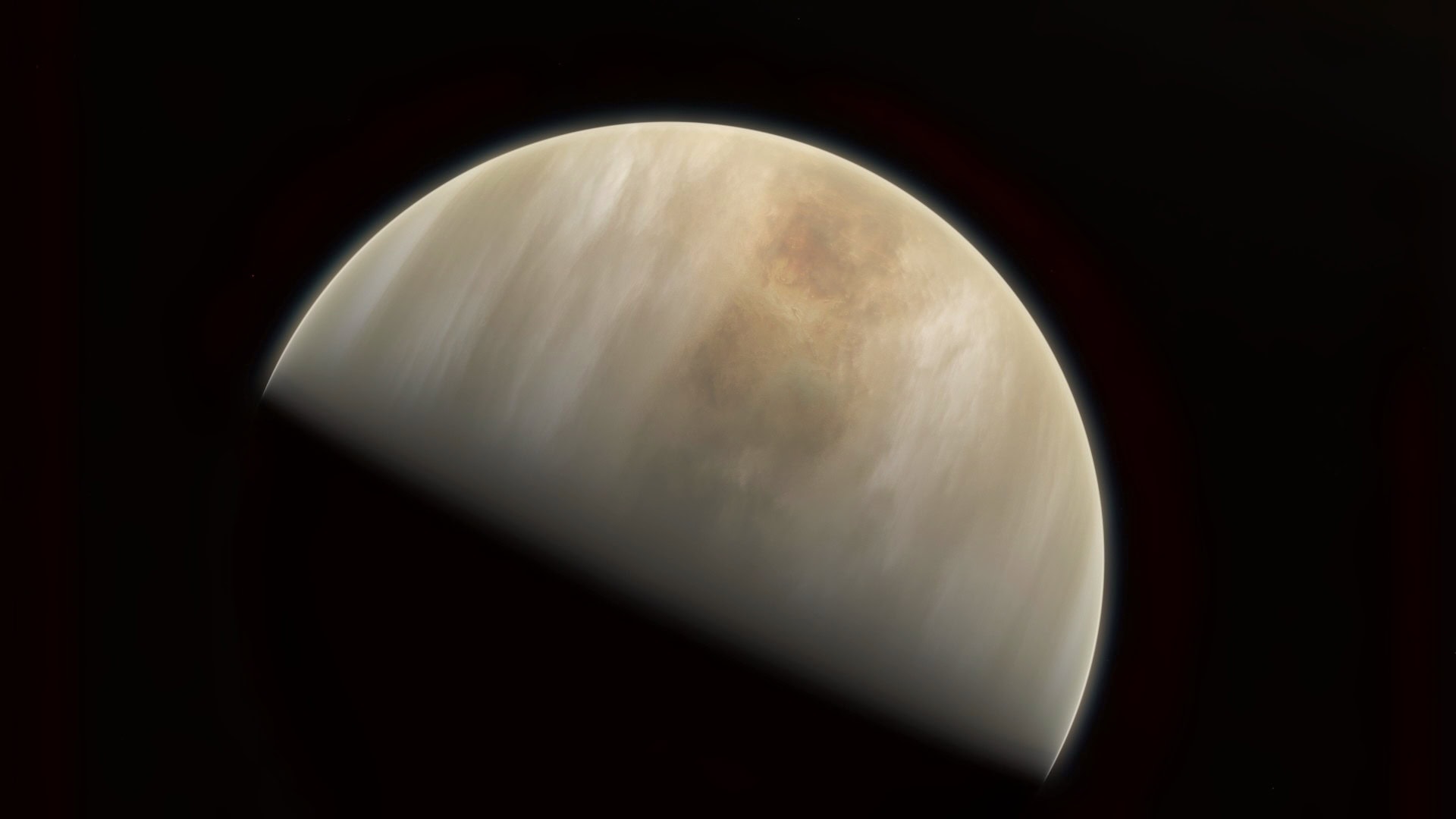
This artistic impression depicts our Solar System neighbour Venus, where scientists have confirmed the detection of phosphine molecules. The molecules were detected in the Venusian high clouds in data from the James Clerk Maxwell Telescope and the Atacama Large Millimeter/submillimeter Array, in which ESO is a partner. Astronomers have speculated for decades that life could exist in Venus’s high clouds. The detection of phosphine could point to such extra-terrestrial “aerial” life. NASA Photo.
In the early 1960s, the USSR and the United States competed with one another for technical prestige, as a way to demonstrate the superiority of their respective economic systems. The Soviets took an early lead, with Sputnik in 1957 and Yuri Gagarin in 1961 demonstrating the ambition and formidability of the Soviets. Seeking to one-up each other, both superpowers quickly expanded their designs beyond Earth’s orbit. The Moon remained the immediate objective, but Venus also became an attractive target because, after Mars, it was the closest planetary neighbor, of a similar size to Earth. And because Venus was covered in a mysterious cloud that prevented astronomers from seeing the surface, there was an appeal in discovering what might exist beneath those clouds.
Introducing Venera 1
Venera 1, as the name implies, was the first spacecraft in the Soviet Venera planetary exploration program. Launched February 12, 1961, the spacecraft weighed roughly 1,400 pounds and was intended to perform humanity’s first flyby of Venus.

Venus vs. Earth. Image: Creative Commons
Designed to transmit scientific measurements during the cruise and flyby, the mission profile called for the spacecraft to launch from Earth, escape Earth’s gravity, coast millions of miles through interplanetary space, and pass within roughly 60,000 to 100,000 kilometers of Venus. But in 1961, executing such a mission profile represented an extraordinary engineering challenge.
Because spacecraft do not fly directly toward another planet (Earth and Venus are both in constant orbit around the Sun), engineers had to calculate an intercept trajectory. The rocket would need to first accelerate the probe beyond Earth’s gravity; the spacecraft would then coast around the Sun on a heliocentric orbit. Along the way, the small course-correction engine was planned to refine the trajectory. This would represent one of the first examples of deep-space mission planning in human history.
Loaded with Tech
Venera 1’s major spacecraft systems included communications, power, stabilization, and scientific. With respect to communications, the spacecraft featured a radio transmitter that maintained contact with Earth. Commands were sent from Soviet tracking stations, and telemetry returned the spacecraft’s health data. For power, Venera 1 relied on solar panels that supplied electrical power.
Rechargeable batteries stored energy. This is one of the earliest Soviet deep-space uses of solar power. For stabilization, sun sensors maintained spacecraft orientation while attitude-control thrusters adjusted pointing.
Correct orientation was essential for communications, solar power, and thermal control. On the scientific side, Venera was outfitted with instruments intended to study cosmic rays, solar wind, interplanetary magnetic fields, charged particles, and micrometeoroids. Although primitive by today’s standards, Venera 1’s systems formed the template for many of the planetary probes that have followed.
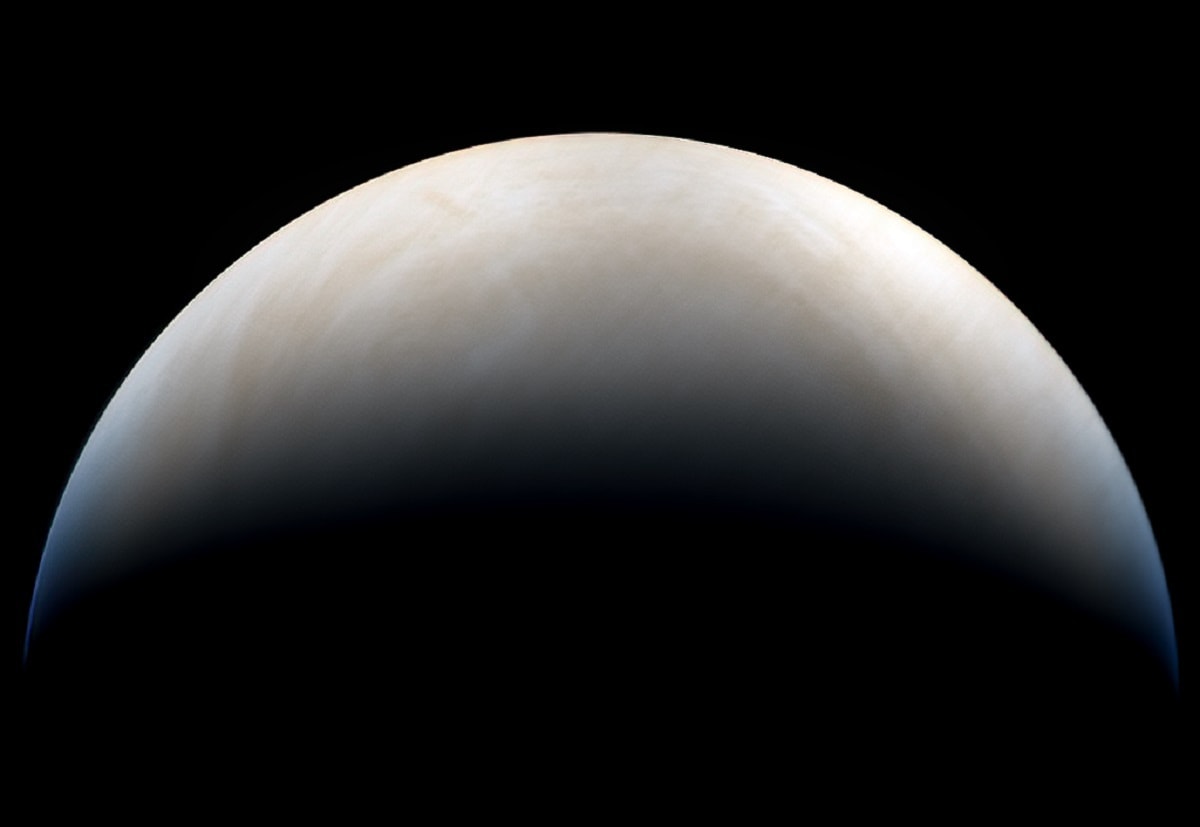
Venus. Image: Creative Commons.
Failing En Route
After the initial launch and Earth departure were successful, communications with the probe stayed stable for several days. Then contact became increasingly unreliable, most likely owing to a malfunction in the spacecraft’s orientation system.
If a spacecraft cannot maintain the correct orientation, then the solar panels lose efficiency, the antennas are no longer pointed toward Earth, and thermal conditions deteriorate. The final communication was received roughly one week after launch as the probe continued silently towards Venus.
Did Venera 1 reach Venus? Probably. Calculations suggest that Venera 1 likely flew past Venus in May 1961, likely passing within 100,000 kilometers of the planet. By then it was no longer transmitting, though, meaning the mission became an engineering success in terms of launching but a communications and scientific failure.
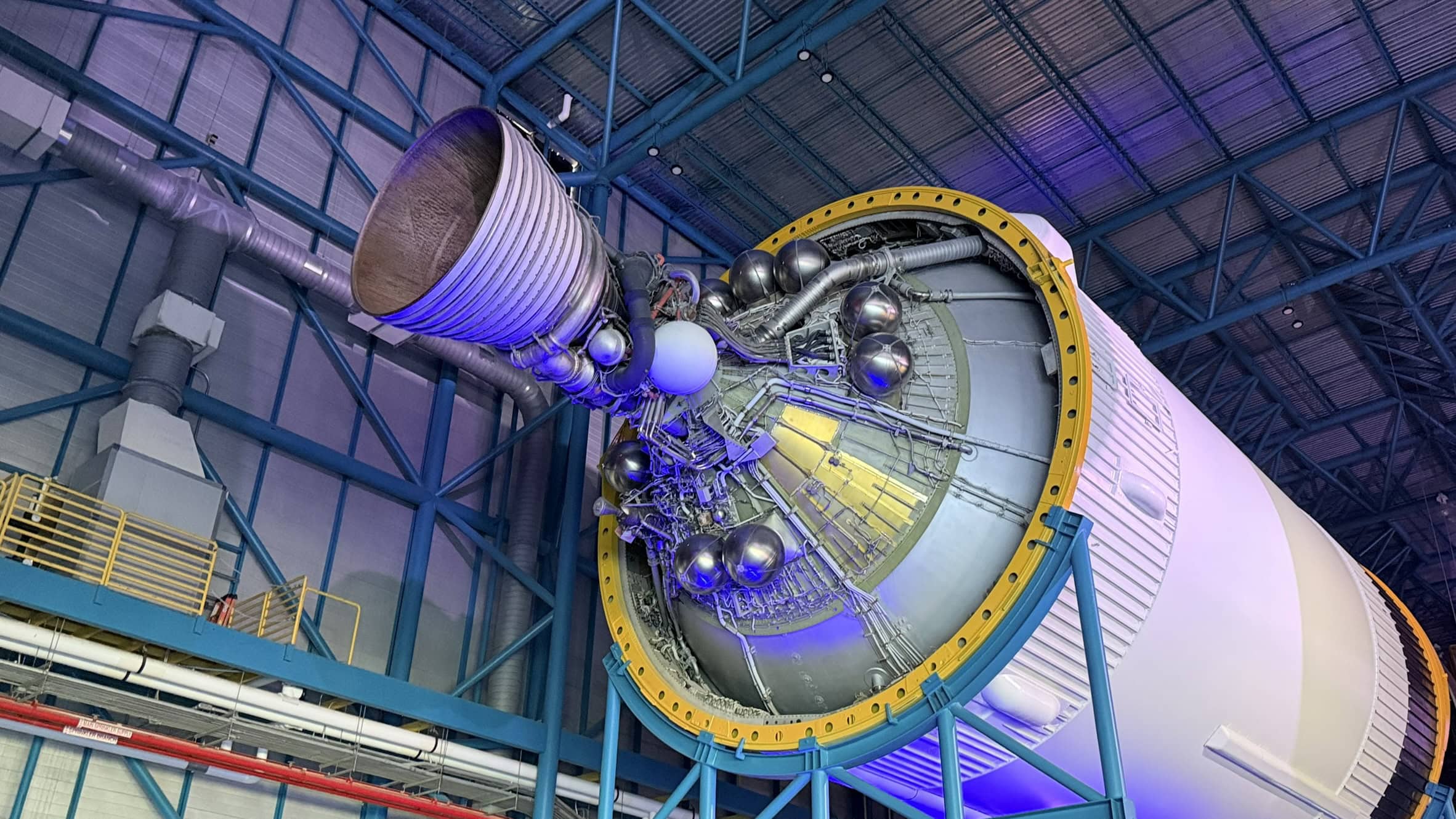
Saturn V Rocket. Kennedy Space Center Photo by Harry J. Kazianis for 19FortyFive.com
Enduring Legacy
Venera 1’s failure still yielded valuable lessons. Engineers learned about the challenges associated with deep-space communications, thermal management, and long-duration reliability. Those lessons directly influenced later Venera missions, which later succeeded. Indeed, the USSR continued improving its spacecraft through the 1960s and 1970s and eventually managed to land on and photograph the surface of Venus. Ultimately, Venera was a marked success of the Soviet space program, extending the Cold War competition beyond Earth’s orbit.
About the Author: Harrison Kass
Harrison Kass is a writer and attorney focused on national security, technology, and political culture. His work has appeared in Tablet, City Journal, The Hill, The Spectator, and The Cipher Brief. He holds a JD from the University of Oregon and a master’s in Global & Joint Program Studies from NYU. More at harrisonkass.com.