
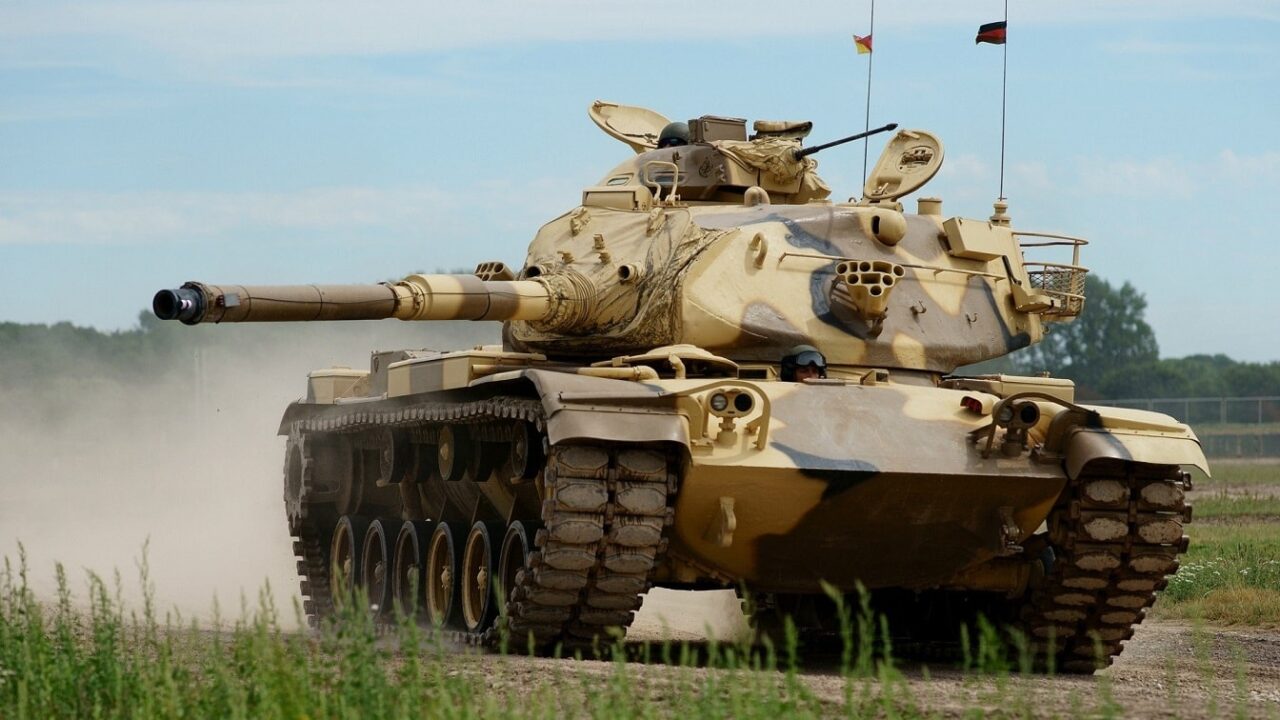
Summary and Key Points: The M60A2 “Starship” represents a unique, albeit failed, chapter in American armored history. Designed as a high-tech “bridge” between the M60 and the experimental MBT-70, the Starship featured a radical 152mm gun-launcher capable of firing MGM-51 Shillelagh missiles.
-However, its “space-age” turret was plagued by immense complexity, poor reliability, and a combustible casing system prone to catastrophic detonations.
M60 Tank. Image Credit: Creative Commons.
-By 1981, after only 526 units had been produced, the Army phased out the Starship, eventually converting hulls back into standard M60A3s or engineering vehicles, proving that complexity is often the enemy on the battlefield.
In 2 Words: Total Failure
The “Starship” Failure: America’s M60A2 Tank Summed Up in 2 Words
The US produced over 15,000 M60 Main Battle Tanks during its service, which ran from 1959 to 1991 after the Desert Storm war with Iraq. However, National Guard units used the M60 until 1997.
But one variant, the M60A2, known as the “Starship” was an American main battle tank (MBT) produced in the 1970s (526 units) designed as a bridge between the M60 and the MBT-70, featuring a 152mm gun/launcher and Shillelagh guided missile capability.
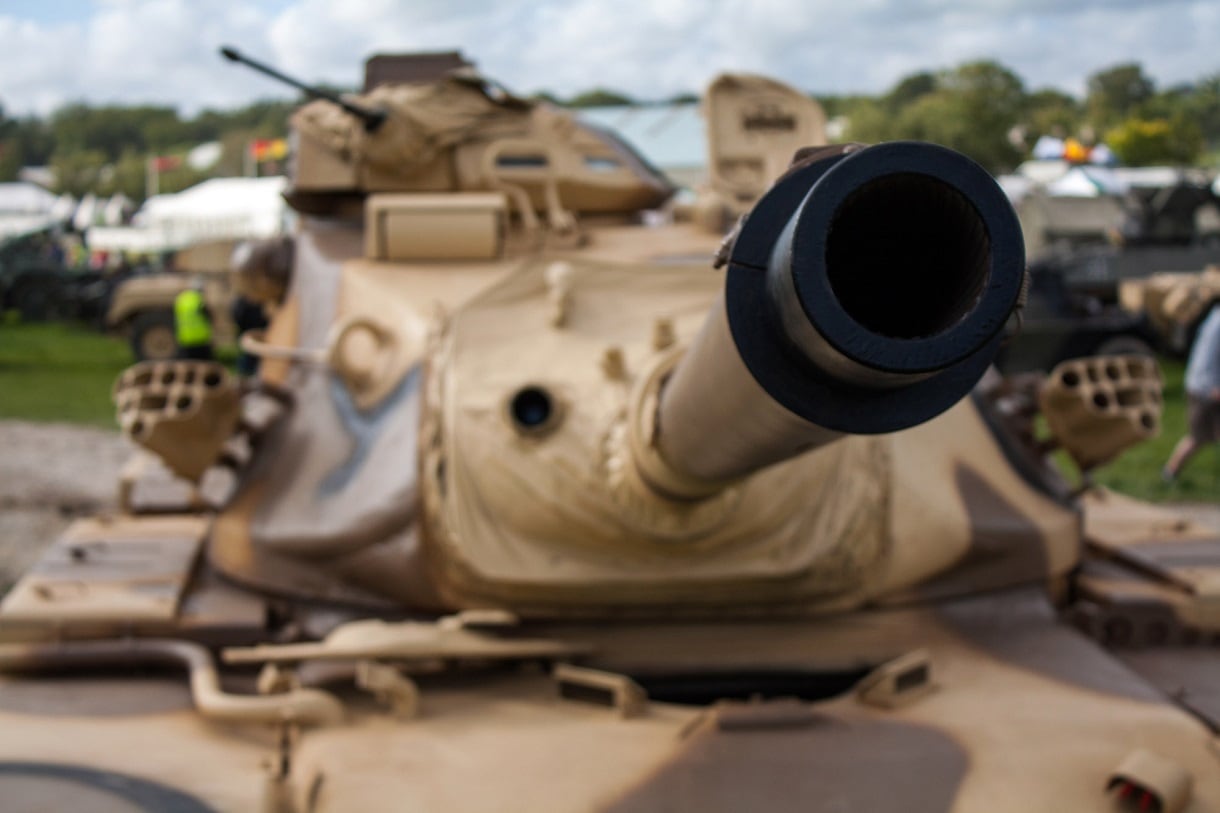
Image: Creative Commons.
Known for its low-profile turret, it was designed for long-range, precise engagement but suffered from high complexity and poor reliability, resulting in a short service life that ended around 1981.
The M60A2 “Starship’s” 152mm Main Gun
The 152mm XM162 gun-launcher could fire conventional ammunition and the MGM-51 Shillelagh anti-tank guided missile (ATGM). However, the 152mm main gun was very slow in reloading time.
However, the 152mm did have certain “advantages,” at least on paper.
The gun-launcher was considerably smaller, and it weighed half as much as the M68 rifled cannon. The large 152mm caliber allowed for more powerful HEAT and HE rounds with bigger warheads to defeat Soviet armor. The gun allowed for Shillelagh missile launching capability. And the combustible casings were cheaper to manufacture than classic shells.
The combustible cases for 152mm guns, notably the M157 used with M409A1 rounds for the M551 Sheridan/M60A2 “Starship” gun-launchers, are designed to burn completely upon firing, eliminating the need for shell extraction in cramped turrets.
These fiberboard-like tubes, composed of nitrocellulose fibers and resin, act as a propellant container and a lubricant/coolant to reduce barrel wear.
However, these combustible cases were plagued by the residue of hot, smoldering propellant left in the chamber after firing. This residue could ignite the next round immediately upon loading, causing a catastrophic detonation. This fault accounted for 39 percent of catastrophic detonations in Sheridan tanks.
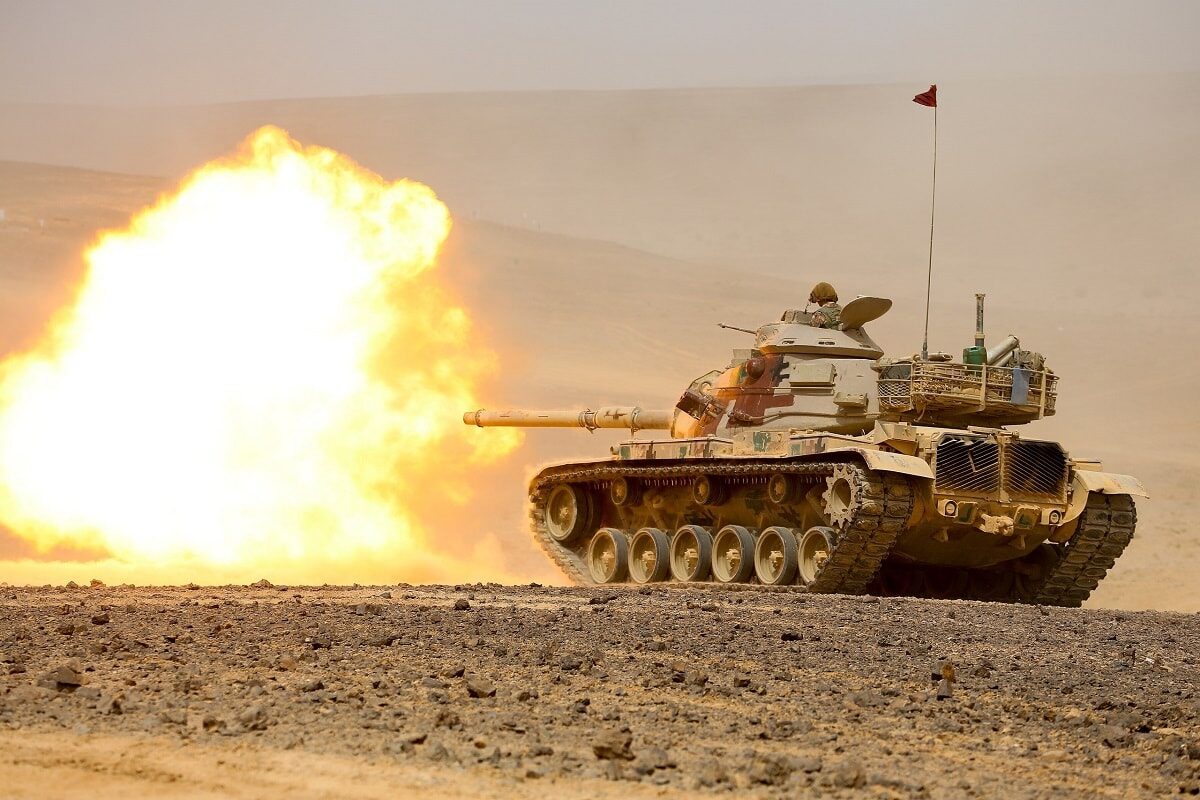
An M60A1 tank from the Royal Jordanian Armed Forces fires a round at a range in Wadi Shadiyah during a massive military demonstration in front of dignitaries and media, May 18. HRH Prince Feisal, the Supreme Commander of the JAF, Chairman of the Joint Chief-of-Staff Gen. Mashal Al Zaben and Gen. Lloyd Austin III, head of the U.S. Central Command, were among those who attended the culminating event of the two-week, multinational Exercise Eager Lion 2015. In addition to the U.S. and the Hashemite Kingdom of Jordan, participating nations included Australia, Bahrain, Belgium, Canada, Egypt, France, Iraq, Italy, Kuwait, Lebanon, Pakistan, Poland, Qatar, Saudi Arabia, the United Arab Emirates, the U.K. and representatives from NATO.
The propellant was extremely volatile and prone to catching fire from the slightest spark. Unlike metal cases, combustible cases were fragile. They could easily break or tear during loading, spilling powder into the crew compartment.
If not properly protected, the casings would absorb moisture and swell. This caused the round to become stuck or impossible to load into the breach.
The Starship’s Tank Technology And Performance Issues
The M60A2 featured an advanced, for the time, laser rangefinder and a “space-age” designed turret, which earned it the “Starship” moniker. But perhaps the name wasn’t a compliment at all.
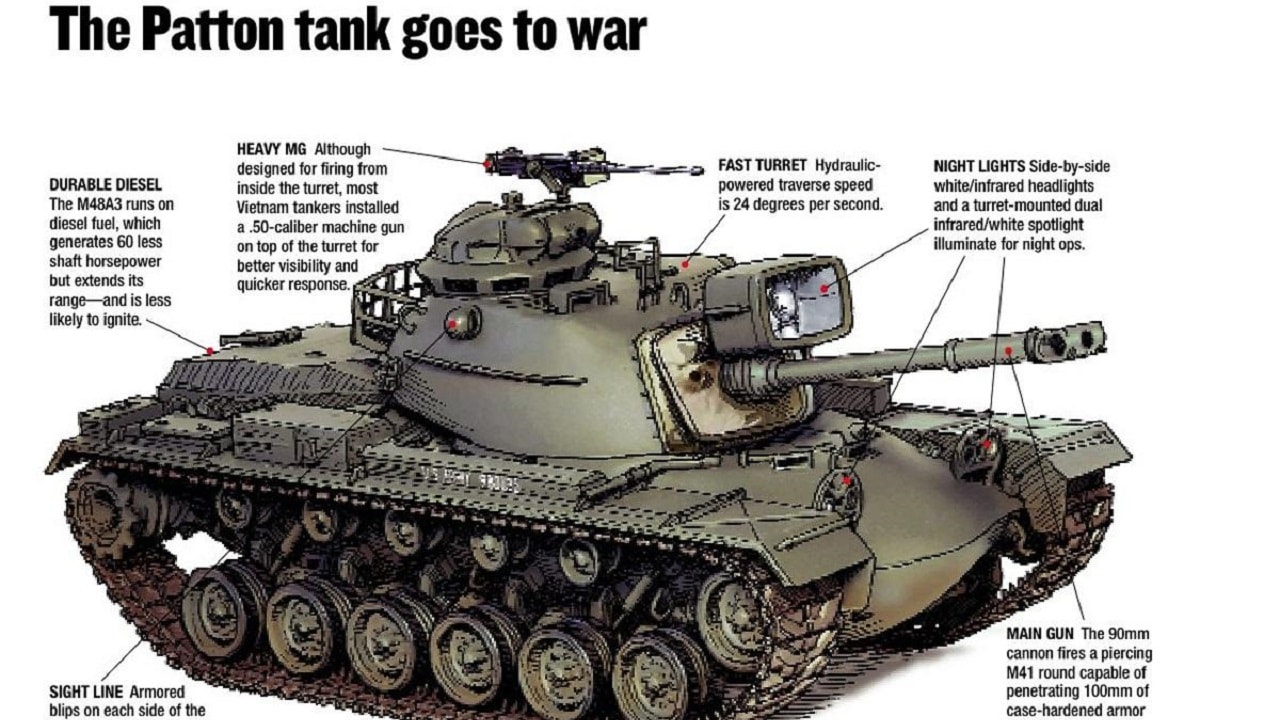
Armoredwarfare.com wrote that, “R.P.Hunnicutt, whose work is generally considered to be the bible of U.S. tank literature, mentions it as a nickname the crews gave their tanks because either it was too complex to operate, or because the interior reminded them of the popular TV show ‘Star Trek’.”
The M60A2 was plagued by complex, unreliable systems and a slow reload,, leading to it being deemed a “disappointment” compared to the standard M60. Night-fighting capabilities were hampered by a lack of effective night-vision devices, limiting the effective range to just 600 meters and making the Shillelagh missile unusable.
It was used as a stopgap during the Cold War in the 1970s, before being phased out and replaced. It has a strong turret front (292mm thick), but a vulnerable, large commander’s cupola, and relies heavily on its laser rangefinder for accurate long-range firing.
The Armor Was Identical To The M60A1, Other Than The Turret
The Army enhanced the M60 tank, adding better armor protection that improved the crew’s survivability.
The additional armor includes:
Upper frontal hull plate: 109mm (angled at 65 degrees, increased from 93mm)
Lower frontal hull plate: 143-85mm (angled at 55 degrees)
Side hull armor: 74-36mm
Rear hull armor: 41-30mm (the grill was 25mm thick)
Hull bottom: 19-13mm
Hull top: 36mm
The M60A2 was not a popular tank with crews due to issues with the main gun ammunition, laser rangefinding, and night-vision limitations. The Army limited the production of the M60A2 to just 526 tanks. It had all the limitations of the M60 MBT with the added issues of its own. It was not a stellar performer.
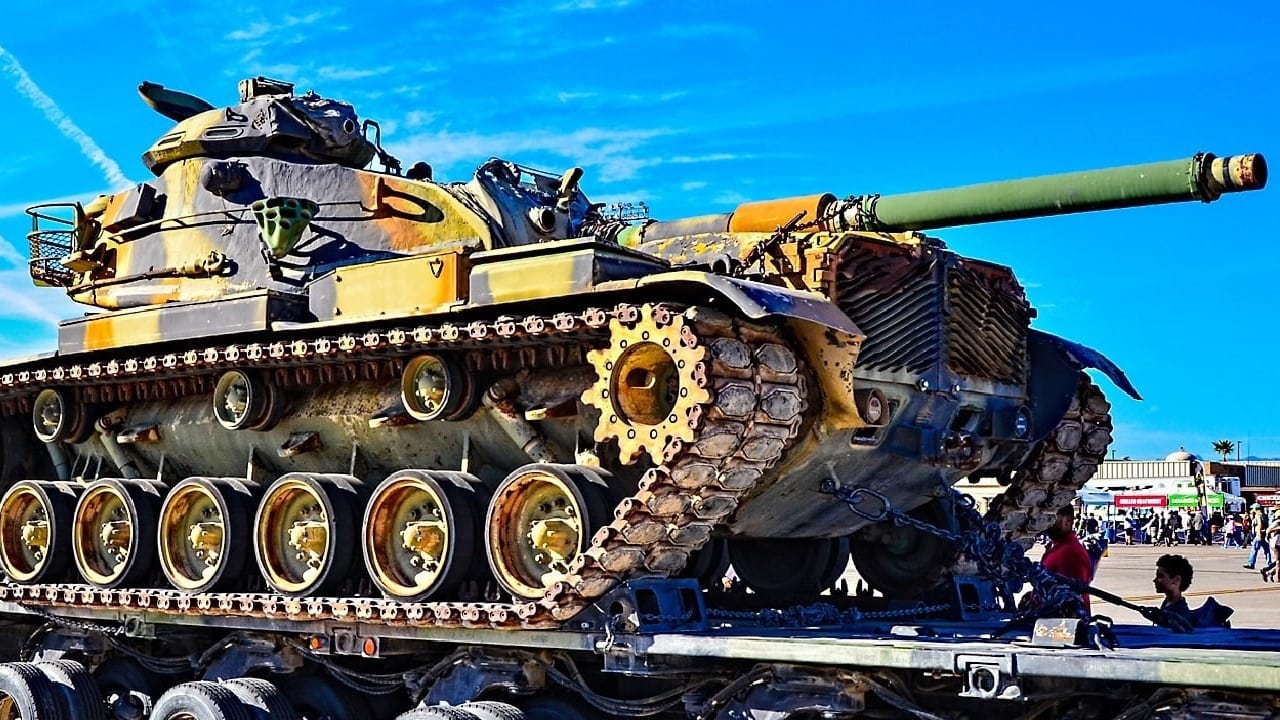
M60 Tank. Image Credit: Creative Commons.
Some of the tanks were deployed to Europe, but most of the retired M60A2s were returned to standard M60 configurations (M60A3) or converted into engineering vehicles.
About the Author: Steve Balestrieri
Steve Balestrieri is a National Security Columnist. He served as a US Army Special Forces NCO and Warrant Officer. In addition to writing on defense, he covers the NFL for PatsFans.com and is a member of the Pro Football Writers of America (PFWA). His work was regularly featured in many military publications.