
Ukraine on Tuesday executed a series of drone strikes on an industrial zone near Moscow, and across the whole country, strikes on three warehouses killed five people and wounded ten, CBS News reported, citing a regional governor.
Two of the warehouses belong to Wildberries, the Russian e-commerce giant that has frequently been struck by Ukrainian drones in recent weeks, as part of a sustained campaign by Ukraine.
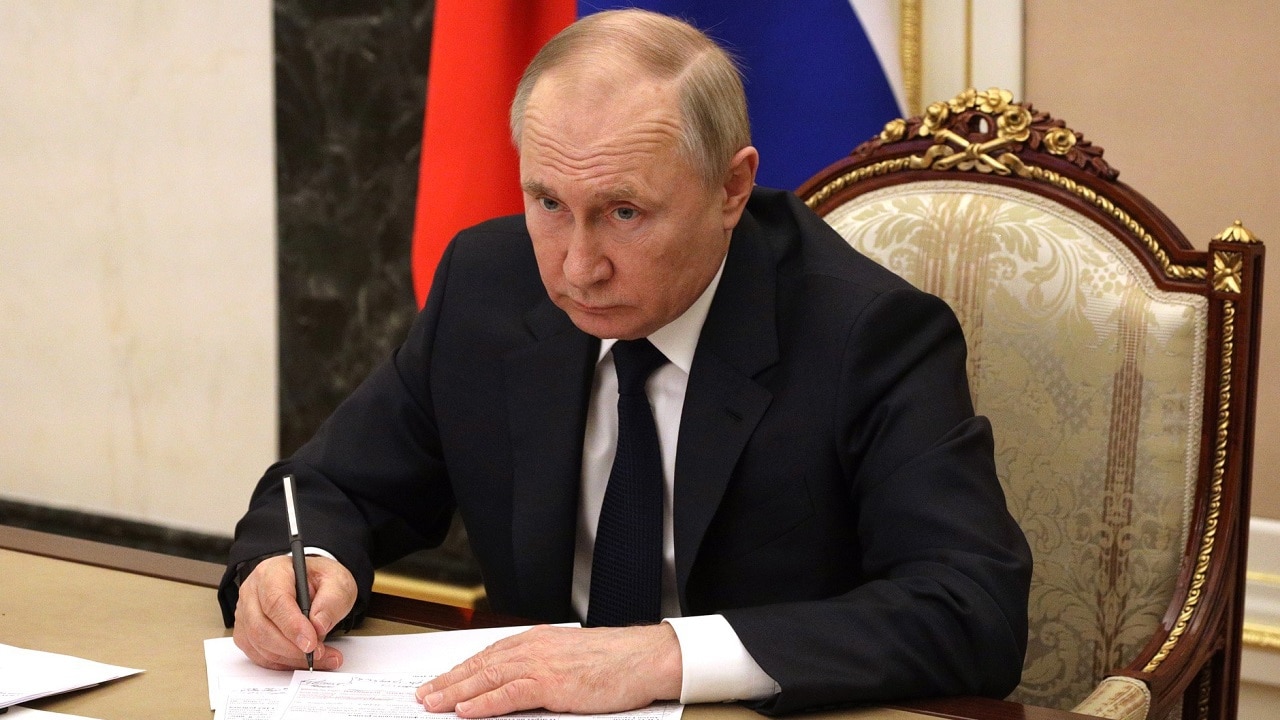
President of Russia Vladimir Putin Meeting with members of the Government (via videoconference).
One of the strikes took place in the Novoselki industrial zone outside Moscow, while another took place at a Wildberries facility in the Krasny Bor region in the Northwestern part of the country.
Another Wildberries warehouse was hit in the rural area of Emmaus, CBS News said.
The Financial Times had more details about the strikes, which followed another series of them the day before that left seven people dead.
FT stated that it was unclear whether the third strike, the one near Moscow, was at a Wildberries facility.
Why Wildberries?
The Wildberries attacks began in mid-July. Ukraine, FT said, sees the retailer, which has been called Russia’s answer to Amazon, “a key logistical hub for the transfer of parts used to produce drones that have wrought death and destruction on cities across Ukraine.”
Ukrainian officials also told Russia that they view the attacks as retaliation for Russia’s attacks on Ukraine’s private postal service, Nova Poshta.
Euronews had more on Tuesday about the Wildberries strikes, which have now numbered in the dozens since they began in July.
While Wildberries, as a matter of policy, does not sell military equipment directly to the Russian government, it does sell some goods that are frequently modified for military use.
The attacks have given Ukraine “a new pressure point on Moscow,” as Wildberries serves as both a major e-commerce hub for Russians and a place where many Russian small-business owners make their living.
Big Business
Wildberries, founded in 2004, has an “annual turnover” of 70-75 billion pounds (the equivalent of $94-100 million U.S. dollars), making it just over 2 percent of Russia’s GDP.
The company, per Euronews, employs about 50,000 staff, and including its logistics workforce, that number nearly doubles at seasonal peaks.
Tatiana Kim, the company’s founder, has been described as Russia’s wealthiest woman, and the first Russian woman billionaire.
Long before the strikes, Wildberries was hit with sanctions, along with most major Russian businesses, following the invasion of Ukraine. Separate sanctions, including from the U.K., have hit Wildberries’ banking arm.
Euronews went on to describe Wildberries as “too big to fail” for Russia, with the Russian Federation looking into ways to help the company and its associated businesses.
The state-owned VTB bank is expected to play some type of role in assisting the company.
The report also stated that sellers who do business on the Wildberries platform have been posting to Instagram — a platform that is officially banned in Russia since days after the invasion of Ukraine in 2022— to complain about the lack of support, and warning that Russia’s tax base could be decimated as a result of the strikes.
The London Times delved into Ukraine’s strategy regarding the Wildberries strikes this week. In addition to the stated reasons, another goal is “to issue a stark message to Kremlin-friendly oligarchs.”
Business in Belarus Weighs In
There’s been another call for action from the Russian government in the wake of the Wildberries strikes: From Belarus, whose government has been allied with Russia throughout the war.
According to BelSat, the Polish-based news outlet that is targeted towards Belarus, the Minsk Metropolitan Union of Entrepreneurs and Employers, an organization representing businesspeople, farmers, and companies in Belarus, has called for the government to “collaborate with both the business community and relevant authorities” to deal with Ukraine’s attacks on Wildberries locations.
“The scale of the issue is quite significant for the Belarusian economy,” the business group said, noting that over 22,000 business people in Belarus have their products in Wildberries locations in Russia.
The story notes that Belarusian businesspeople signed contracts not directly with Wildberries but with a separate Belarusian legal entity. The businesspeople went on to suggest a possible class action suit while calling on the government of Belarus, possibly through diplomatic channels.
MORE – Battleship USS Iowa Was Retired Too Soon
About the Author: Stephen Silver
Stephen Silver is an award-winning journalist, essayist, and film critic, and contributor to the Philadelphia Inquirer, the Jewish Telegraphic Agency, Broad Street Review, and Splice Today. The co-founder of the Philadelphia Film Critics Circle, Stephen lives in suburban Philadelphia with his wife and two sons. For over a decade, Stephen has authored thousands of articles that focus on politics, national security, technology, and the economy. Follow him on X (formerly Twitter) at @StephenSilver, and subscribe to his Substack newsletter.