
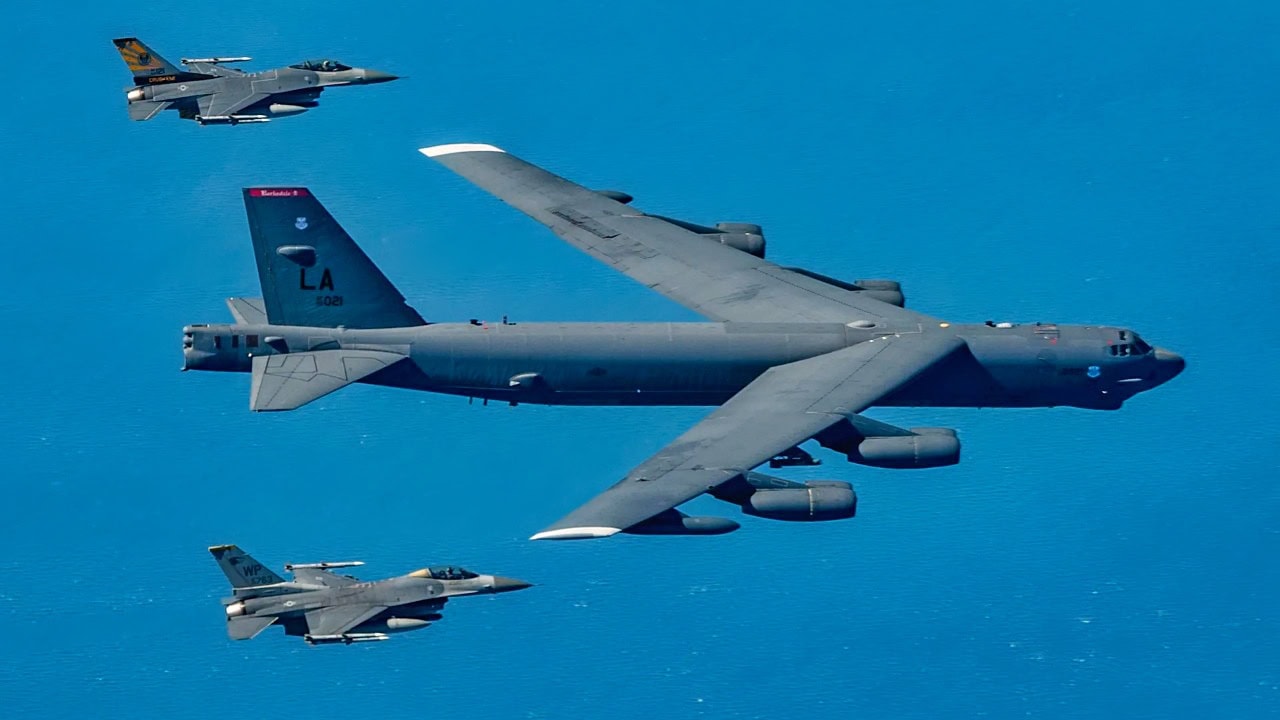
Summary and Key Points – World News Update – The United States and Iran spent this week testing whether a shaky ceasefire can hold, and Washington sent an unusually concrete signal: it began pulling its heavy bombers out of Britain and back toward home. As negotiators meet in Doha under Qatari and Pakistani mediation, the movement of American aircraft out of RAF Fairford has become a barometer of how seriously the two sides are looking for an off-ramp. What the U.S. Air Force does with the bombers still in Britain may say more about where the talks are heading than any official statement has.
Iran War Update
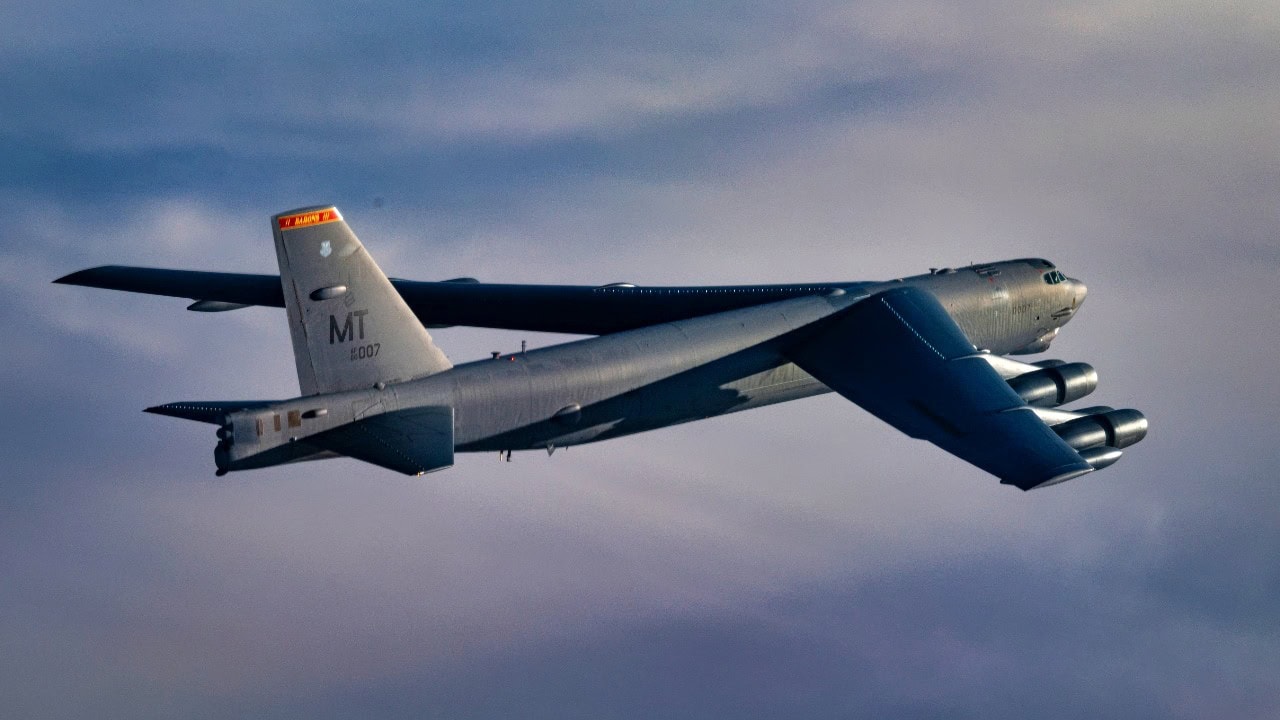
A U.S. Air Force B-52H Stratofortress from the 69th Expeditionary Bomb Squadron flies over the skies of Sweden for their celebration of their acceptance into NATO during Bomber Task Force 25-2, RAF Fairford, United Kingdom, March 11, 2025. These operations demonstrate the ability to rapidly deploy strategic assets in support of global stability. (U.S. Air Force photo by Master Sgt. Chris Hibben)

B-52J Bomber U.S. Air Force. Image Credit: Creative Commons.
All six B-52 Stratofortress bombers have left their stations at RAF Fairfield in the UK, presumably to return to the mainland United States.
The bombers were deployed to Fairfield to participate in Operation Epic Fury against Iran. However, as diplomatic talks continue, as shaky as they may be, the U.S. is slowly starting to draw down its forces. The current state of diplomacy between the U.S. and Iran is murky, as all parties continue to launch small strikes against each other. The memorandum of understanding (MOU), which was supposed to lay the groundwork for a future peace settlement, seems to have failed, but the U.S. nevertheless continues to draw down its forces as it quietly looks for an off-ramp.
U.S. Bombers Going Home
The departing B-52Hs were caught on camera by local aviation photographers, who observed the bombers departing in two waves of three. The last aircraft was spotted leaving on July 1st, marking the end of their presence in the UK and ending their involvement in operations against Iran.
The bombers initially arrived on March 8 and maintained a high operational tempo throughout the month, mainly utilizing JASSM stealthy cruise missiles. According to CENTCOM, the U.S. struck around 13,000 targets in Iran, but it is not clear how many of these were from the B-52s stationed at Fairfield.
Currently, there are still a dozen B-1B Lancers stationed at Fairfield, which also took part in Operation Epic Fury.
As of now, it is unknown whether the USAF intends to return its B-1s or keep them forward-deployed in case diplomatic talks go sideways.
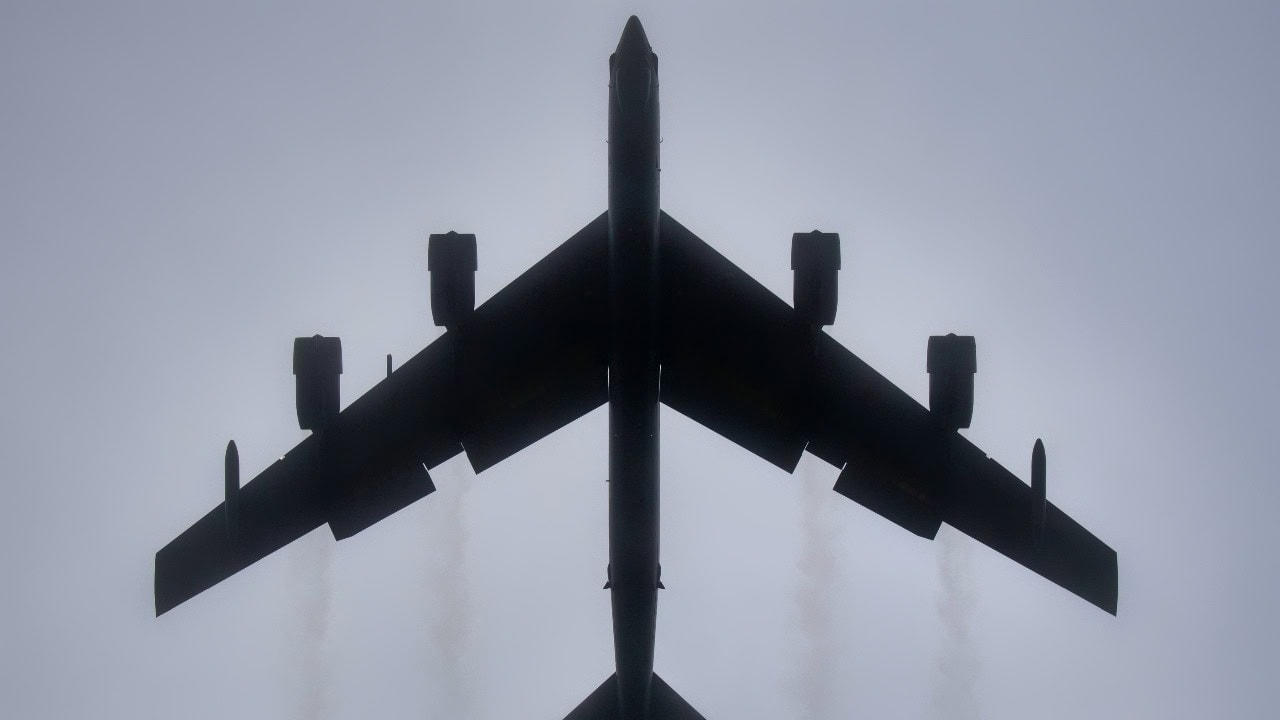
A B-52 Stratofortress takes off during Global Thunder 2019 at Barksdale Air Force Base, La., Nov. 5, 2018. Global Thunder is an annual U.S. Strategic Command (USSTRATCOM) exercise designed to provide training opportunities to test and validate command, control and operational procedures. The training is based on a notional scenario developed to drive execution of USSTRATCOM and component forces’ ability to support the geographic combatant commands, deter adversaries and, if necessary, employ forces as directed by the President of the United States. (U.S. Air Force photo by Airman 1st Class Lillian Miller)
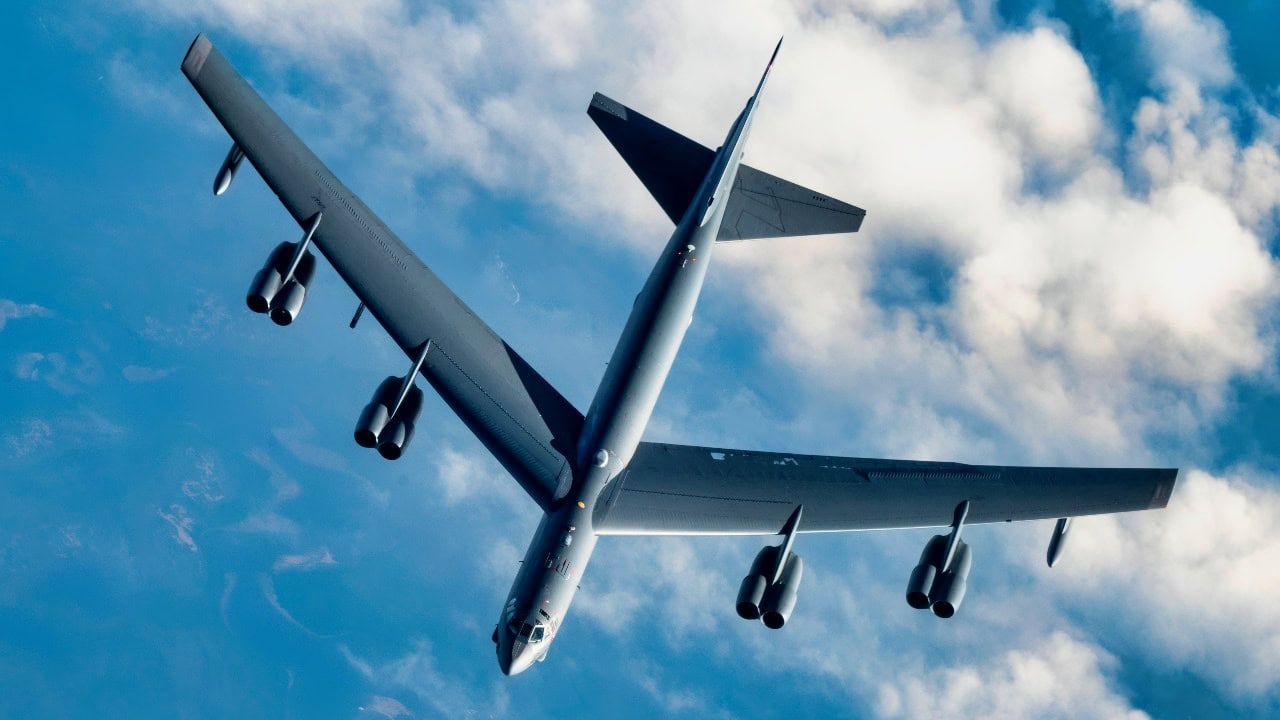
A U.S. Air Force B-52 Stratofortress departs after being refueled by KC-135 Stratotanker over the Pacific Northwest July 18, 2024. The 92nd Air Refueling Wing and 141st ARW’s ability to rapidly generate airpower at a moment’s notice was put to the test when Air Mobility Command’s Inspector General team conducted a no-notice Nuclear Operational Readiness Inspection, July 16–18, 2024. During the NORI, Airmen demonstrated how various capabilities at Fairchild AFB enable units to generate and provide, when directed, specially trained and equipped KC-135 Stratotanker aircrews to conduct critical air refueling of U.S. Strategic Command-assigned strategic bomber and command and control aircraft. (U.S. Air Force photo by Staff Sgt. Lawrence Sena)
Officially, the Air Force has made no mention of the bombers, nor has it clarified why the B-52s have left Fairfield. It is suspected that the move was done for diplomatic purposes, either as a show of goodwill or as a sign that negotiations are actually progressing.
What’s Going On in the Middle East?
On the diplomatic side, the situation is as clear as ever. That is to say, no one is quite sure what is happening. Despite the ceasefire still technically being in place, Iran and the U.S. exchanged fire with each other last week. CENTCOM reported that it had launched a series of “self-defense” strikes, to which the IRGC responded with drone/missile strikes against Kuwait and Bahrain.
Meanwhile, violence between Israel and Lebanon continues with no end in sight in Southern Lebanon, further straining the already fragile ceasefire between Iran and the U.S. While the violence in the Middle East seems to have decreased overall, the main issues of contention, such as Israel’s operations in Lebanon and Iran’s control over Hormuz, have still not been resolved.
Despite the still simmering tensions, there is some hope that negotiations are reaching somewhere.
Talks with Iran are currently being conducted through Qatar. “Qatar & Pakistan mediators concluded separate meetings with the US & Iranian negotiators in Doha today, with positive progress made on issues related to the Islamabad Memorandum of Understanding, building on the outcomes of the Lake Lucerne Summit,” Qatari Ministry of Foreign Affairs spokesman Majed Al Ansari and Pakistan’s foreign ministry said in a joint statement shared on social media. Vice President JD Vance echoed these sentiments. “I can’t commit to anything, because obviously it depends on what the Iranians are ultimately going to do,” the Vice President said. “What I can commit to is the president’s not going to send our military back in unless he has to, unless there’s a clearly defined purpose for it.”
The Current State of Diplomacy
Negotiations are currently on pause as Iran is currently taking several days to mourn the death of its Supreme Leader, Ali Khamenei, who was killed during the first week of Operation Epic Fury in an American airstrike. The funeral is expected to last until July 8, with representatives from more than 30 countries present for the processions.
Earlier, footage released by Iranian state media revealed that Gen. Ahmad Vahidi, the current commander of the IRGC, came out of hiding to attend the funeral. Vahidi disappeared from public on Feb 8 before the war started and was reportedly wounded or killed by an Israeli airstrike on Feb 28. Widely regarded as the architect of Iran’s current defensive strategy, he is the first to be seen in public in months.
Currently, the main topic under discussion in the U.S. and Iran (prior to Khamenei’s funeral) was the Straight of Hormuz. Under the conditions of the MOU, the U.S. withdrew its blockade over the Strait in hopes that Iran would do the same.
Officially, Iran is allowing traffic through the Strait provided that vessels follow the country’s recommended route. In the past week, Iran struck two commercial tankers for reportedly violating the points agreed upon in the MOU.
However, over the past week, it was reported that traffic through the Strait increased, with around 200 vessels crossing, though this is a far cry from the prewar levels of 200 ships per day. Currently, the issue of who governs the Strait remains unresolved, and Iran could close the vital waterway again (as it has done several times over the past month). However, in general, talks seem to be going well for the U.S.
About the Author: Isaac Seitz
Isaac Seitz, a Defense Columnist, graduated from Patrick Henry College’s Strategic Intelligence and National Security program. He has also studied Russian at Middlebury Language Schools and has worked as an intelligence Analyst in the private sector.