
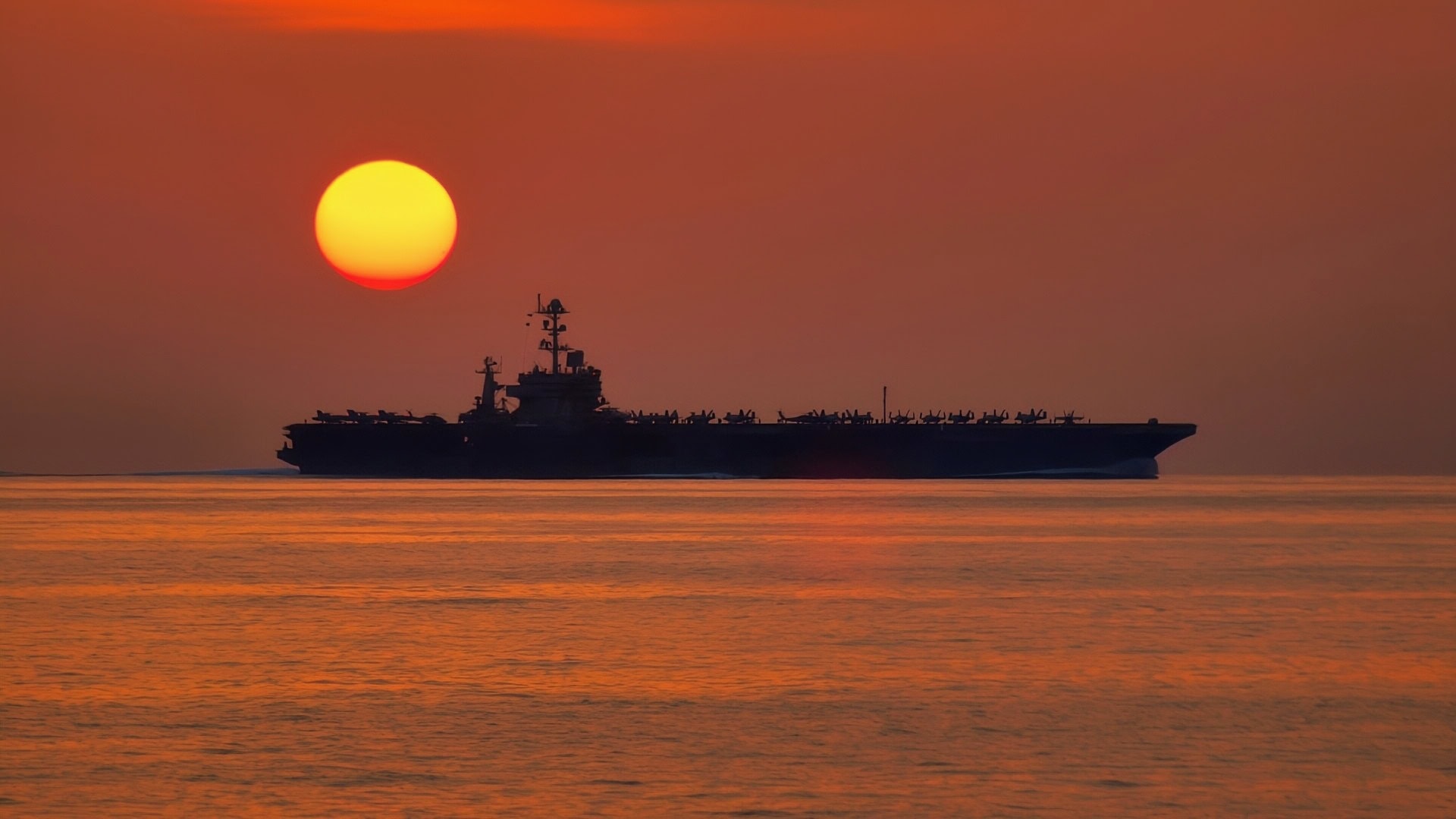
Kaiser’s Yard Launched 50 Aircraft Carriers From April 1943 to May 1944. Newport News Cannot Copy That Calendar: USS Casablanca went into the Columbia River on April 5, 1943. First Lady Eleanor Roosevelt sponsored the ship at Kaiser Shipbuilding in Vancouver, Washington. The Navy’s history office records the launch, the Navy’s acquisition on July 8, and commissioning on July 15, the same day she was reclassified CVE-55. Fourteen months later, on May 27, 1944, the same yard launched USS Munda, CVE-104, the fiftieth and last hull of the class. The Naval History and Heritage Command entry on Munda lists the dates: laid down March 29, launched May 27, Kaiser Vancouver. Fifty escort carriers left one yard in that window. That is a little better than one launch a week.
Building 50 Aircraft Carriers in Record Time
These were not the big fleet carriers, nor were they converted cargo ships.
The Maritime Administration classifies the Casablancas as the S4-S2-BB3 type, the first escort carriers designed as carriers from the keel up. Gibbs & Cox did the drawings.
A Casablanca-class ship was 512 feet 3 inches long and, in the Navy’s own figures, displaced 7,800 tons. Specialist sheets put a full load of nearly 11,000 tons. Two Skinner Uniflow reciprocating engines — not the scarce high-pressure turbines the Essex-class ships needed — made about 9,000 horsepower and a listed speed of 19 knots. The official complement was 860. The air group had 27 aircraft.
Sailors called them jeep carriers. The dark joke was that CVE stood for combustible, vulnerable, and expendable.
How This Was Done
Henry Kaiser had already been building Liberty ships with prefabricated sections in a merchant yard. In 1942, he offered the Navy a small, purpose-built carrier on that kind of schedule. A.D. Baker III, writing in the U.S. Naval Institute’s Naval History, says President Roosevelt asked Navy leaders on August 8, 1942, for fifty additional escort carriers built only for the U.S. Navy, to a design meant for that job, under the Maritime Commission, at a Kaiser yard.
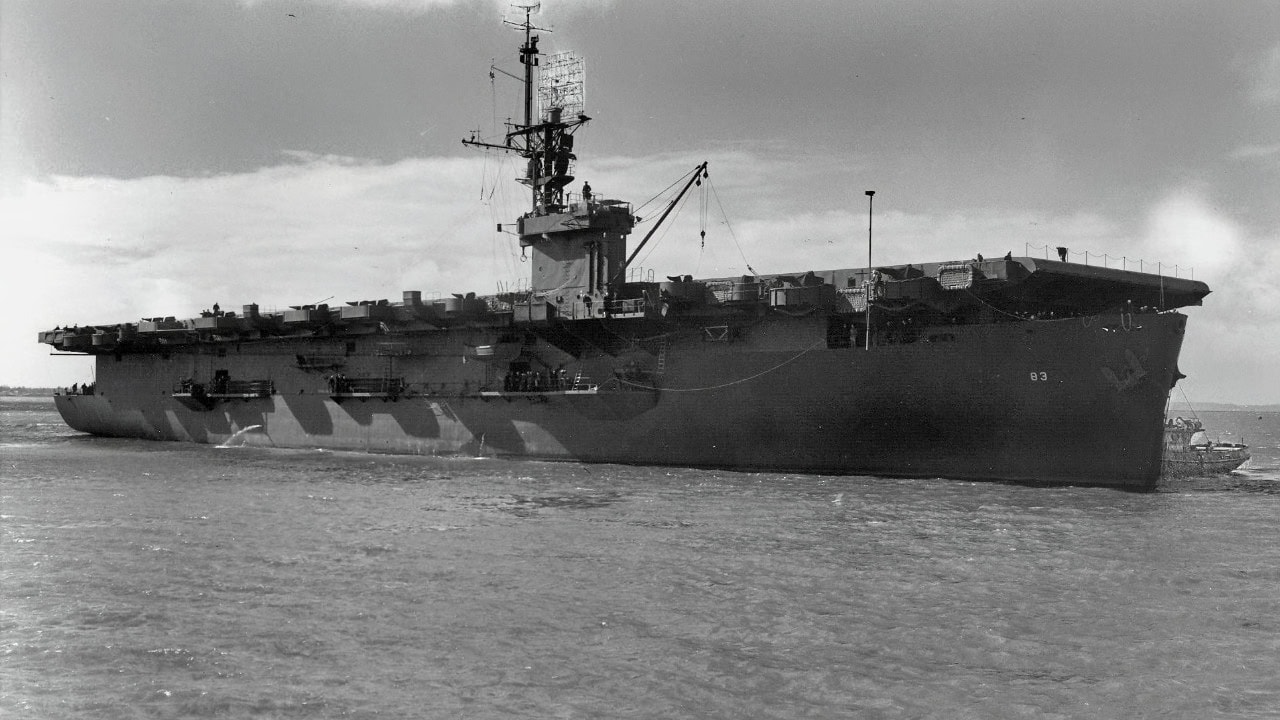
Casablanca-Class Aircraft Carrier
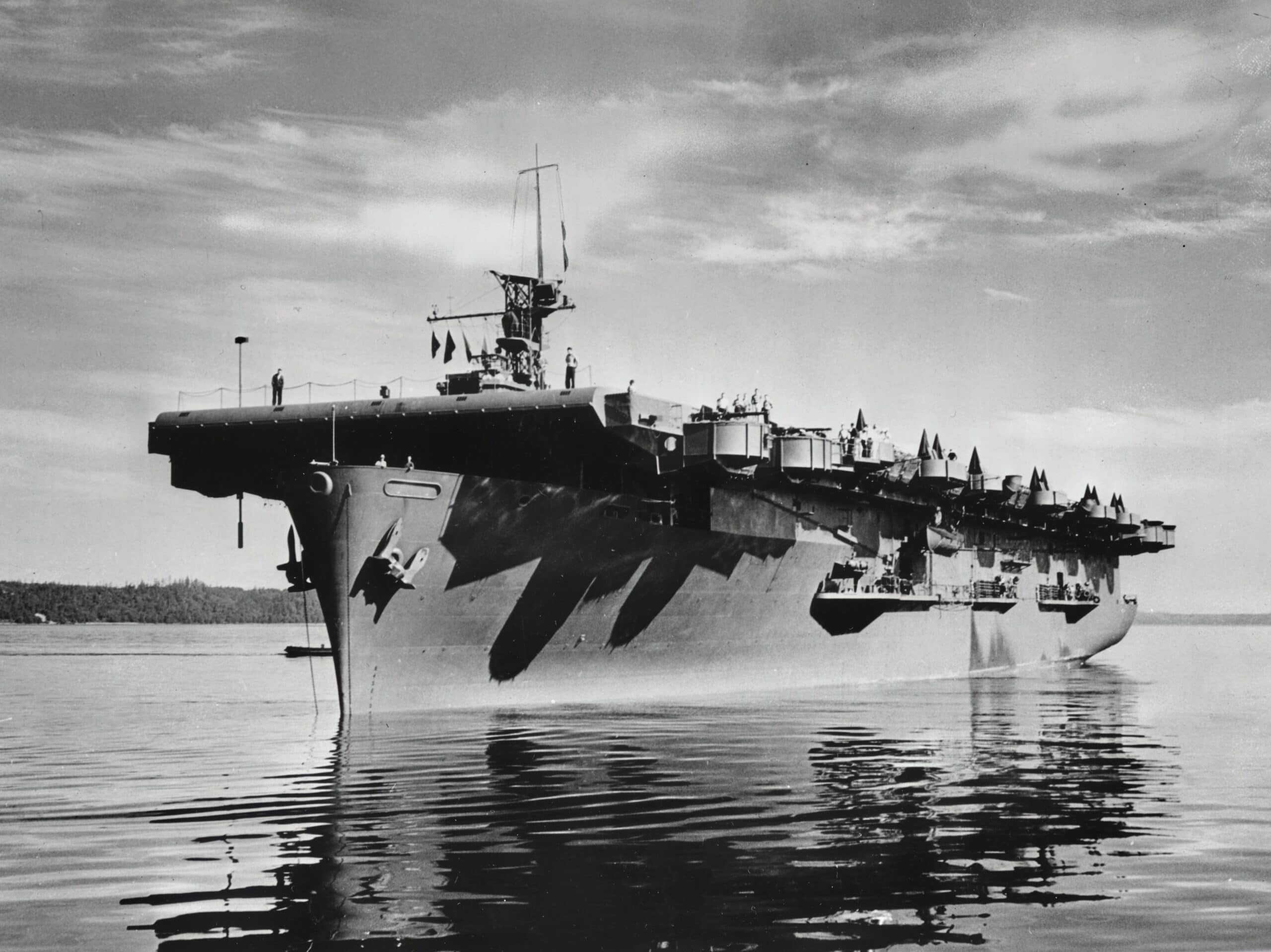
Casablanca-Class.
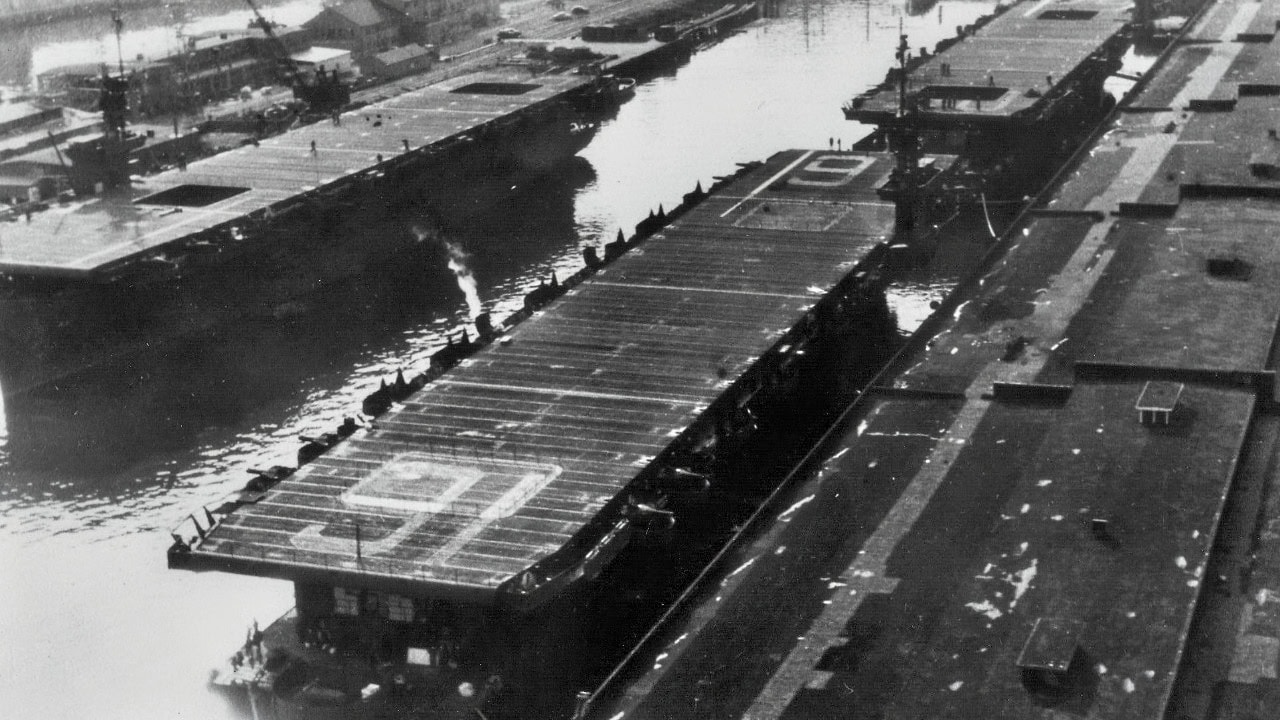
Casablanca-Class Escort Aircraft Carrier.
The first ship was supposed to arrive in eight months. Follow-on hulls were supposed to come at eight a month. Vancouver then ran CVE-55 through CVE-104 as a product line. Sections were built off the ways. A delay on one hull was not allowed to redesign the next. That only works if the Navy accepts a simple ship.
The ships earned their keep. At Samar on October 25, 1944, Taffy 3’s six Kaiser-built Casablancas — Fanshaw Bay, Gambier Bay, Kalinin Bay, Kitkun Bay, St. Lo, and White Plains — faced a Japanese surface force that included Yamato. Gambier Bay was sunk by gunfire. St. Lo was sunk by a kamikaze. The Navy’s Samar history is the official account. Five Casablancas were lost in the war.
A Kaiser company history later quoted Fleet Admiral Ernest King, writing on February 24, 1945, that he was pleased by the “fine battle performance of the escort carriers.”
This site has already covered that wartime production run and Kaiser’s fight to get the contract approved. The live question is why the same country cannot put a modern carrier on that calendar.
Why Can’t America Build Carriers Faster?
So why can’t America build carriers much faster, like during World War II?
Well, for starters, a Gerald R. Ford-class carrier displaces about 100,000 tons. That is roughly ten times the weight of a loaded Casablanca. Two A1B nuclear reactors drive it. Aircraft leave the deck on electromagnetic catapults. The arresting gear is a new system. The weapons elevators were a years-long problem on the lead ship. Several thousand sailors and an air wing live aboard. None of that can be knocked together from catalog plates in a former merchant yard.
Nuclear work needs a cleared workforce and a yard licensed to do it. The United States has allowed that combination to shrink to one waterfront: Huntington Ingalls Industries’ Newport News Shipbuilding in Virginia.
HII says it is the only American yard that can design, build, and refuel nuclear carriers. In November 2024, the company moved the mid-body of the future USS Enterprise so it could start assembling USS Doris Miller in the same dry dock. HII called that a first. Kaiser had several ways working at once because a 512-foot escort carrier fit the ways. Newport News is stacking two nuclear hulls in one basin because it lacks a second basin of that class. National Security Journal has put the Miller build at roughly fifteen years. The Navy’s own explanation is narrower: there was not enough physical room to build her modules on the old timetable.
The Calendar Now Runs in Years
Under the fiscal 2027 shipbuilding books, the future USS John F. Kennedy is due in March 2027, Enterprise in March 2031, and Doris Miller in February 2034. Miller’s delivery moved two years because, the Navy wrote, “shipbuilder construction footprint constraints” limited module work. USNI News quoted that sentence from the budget book. Stars and Stripes reported the shift in May.
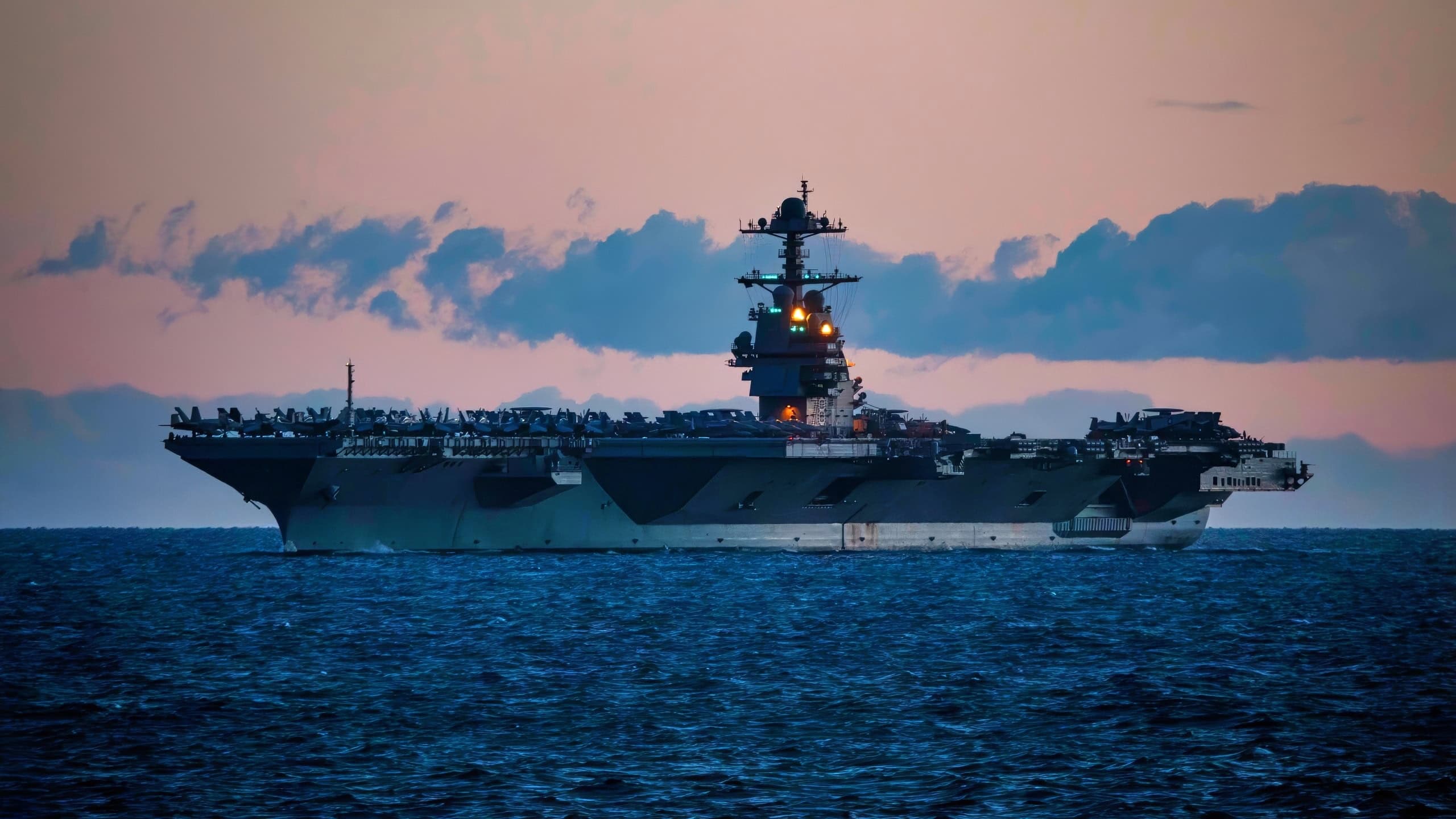
240105-N-LK647-1019 STRAIT OF GIBRALTAR (Jan. 5, 2024) A view from the Ticonderoga-class guided missile cruiser USS Normandy (CG 60) of the first-in-class aircraft carrier USS Gerald R. Ford (CVN 78), as the Ford Carrier Strike Group passes through the Strait of Gibraltar, Jan. 5, 2024. Normandy is part of the Gerald R. Ford Carrier Strike Group and is currently operating in the Mediterranean Sea, at the direction of the Secretary of Defense. The U.S. maintains forward-deployed, ready, and postured forces to deter aggression and support security and stability around the world. (U.S. Navy photo by Mass Communication Specialist 2nd Class Malachi Lakey)
Kennedy had already slipped while the yard finished certification of the Advanced Arresting Gear and work on the weapons elevators. She left Newport News on August 12, 2026, for INSURV acceptance trials, with seven of eleven weapons elevators complete. Delivery is still scheduled for March 2027. Naval Sea Systems Command had logged her builder’s trials on February 4, 2026 which just completed. Steel on that ship was cut more than a decade earlier.
This site has already walked through the footprint bottleneck and the earlier Essex-class contrast, when American yards still built fleet carriers in volume. Hiring more people helps. HII brought on thousands of shipbuilders in 2025 and reported higher throughput. Extra welders do not create a second nuclear dry dock. They also do not create idle suppliers. A spring look at the carrier industrial base found that about 10 percent of those shops were already at full capacity. A surge order hits a queue, not an empty floor.
The same narrow base has to repair the ships already in commission. Ford entered Norfolk Naval Shipyard on July 7, 2026, for her first planned incremental availability after a deployment of more than 300 days. The Navy announcement treated it as scheduled work. Public yards and Newport News pull from the same skilled labor pool. Time spent on a Ford repair is time not spent on Kennedy, Enterprise, or Miller.
Why the Kaiser Method Does Not Transfer
Mass production needs a design that stays still. Kaiser could freeze the Casablanca drawing and stamp out fifty copies in a merchant yard using prefabricated sections. The Ford class is still absorbing first-of-class systems. Electromagnetic launch (well, maybe), new arresting gear, new elevators, and a new reactor plant are not Liberty-ship fittings. When one of those systems runs late, the hull waits. Vancouver did not wait on a nuclear regulatory package or a software load for a catapult.
The United States could, on paper, build many small conventional carriers again in more than one yard. That would be a different ship and a different industrial plan. It is not the Ford-class plan. The Navy has chosen to put almost all of its sea-based aviation into a short list of nuclear decks. Each deck requires Newport News. Each deck takes the better part of a decade. Roosevelt accepted a lesser carrier to get a 1943–44 calendar. The current program has not accepted a lesser carrier.
About the Author: Harry J. Kazianis
Harry J. Kazianis (@Grecianformula) was the former Senior Director of National Security Affairs at the Center for the National Interest (CFTNI), a foreign policy think tank founded by Richard Nixon based in Washington, DC. Harry has over a decade of experience in think tanks and national security publishing. His ideas have been published in the NY Times, The Washington Post, The Wall Street Journal, CNN, and many other outlets worldwide. He has held positions at CSIS, the Heritage Foundation, the University of Nottingham, and several other institutions related to national security research and studies. He is the former Executive Editor of the National Interest and the Diplomat. He holds a Master’s degree focusing on international affairs from Harvard University.