
Today’s policymakers in Washington act as though the world is virtually the same as it was during the 2 peaks of U.S. global economic and military dominance.
The first period was the decade after the end of World War II, a conflict that had drastically thinned the ranks of the world’s great powers. Both Britain and France were badly weakened, while Germany and Japan were temporarily eliminated as meaningful players. Those developments left the Soviet Union as the only semi-credible geostrategic challenger to the United States. Moreover, even Moscow’s status as a true peer competitor was a bit of a stretch, given the USSR’s chronically dysfunctional economy.
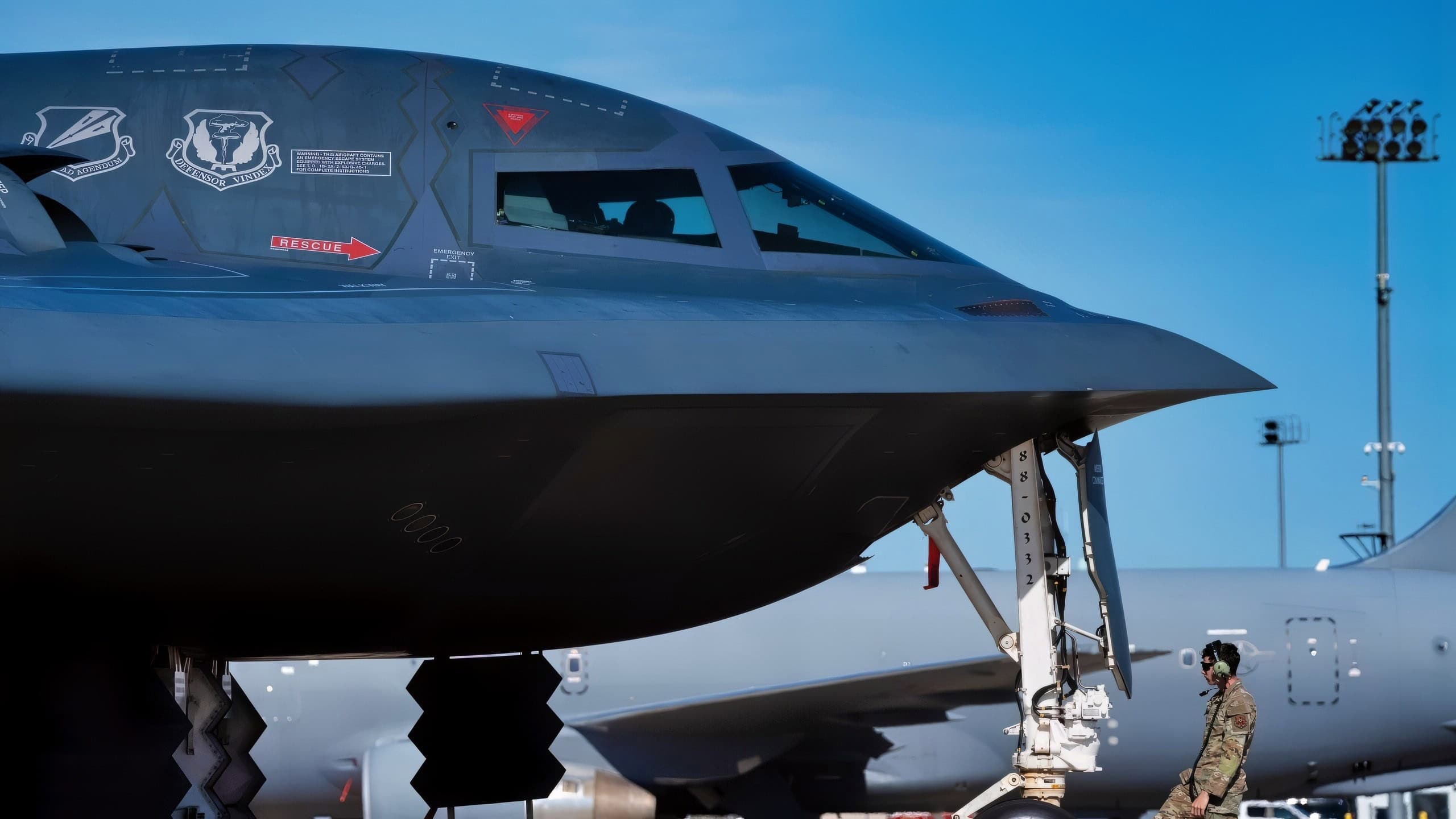
U.S. Air Force Staff Sgt. Hunter Kaloci, 393rd Bomber Generation Squadron crew chief, adjusts a wheel chock in front of a parked B-2 Spirit aircraft at Pease Air National Guard Base, New Hampshire, Sept. 20, 2025. The 393rd BGS provides worldwide combat capability by planning and conducting all aspects of on-aircraft maintenance, launch and recovery of B-2 aircraft in direct support of Joint Chiefs of Staff nuclear and conventional taskings. (U.S. Air Force photo by Staff Sgt. Joshua Hastings)
The second surge of U.S. dominance occurred in the 1990s and the initial years of the 21st century, following the collapse and dissolution of the Soviet Union and its satellite empire. Even though Germany and Japan had revived as major economic powers, and some significant new economic and diplomatic players, such as the European Union (EU) and the People’s Republic of China (PRC), were now factors, the United States was stronger economically and vastly stronger militarily than any would-be competitor.
Unfortunately, too many Western (especially American) foreign policy scholars and political leaders seem to believe that the United States is still operating in one of those two unipolar eras. The late Charles Krauthammer, a sagacious analyst, highlighted potential opportunities for Washington to exploit the unexpected second period of U.S. preeminence.
Yet even Krauthammer stressed the temporal limitations of Washington’s dominance, aptly labeling the period the “Unipolar Moment.” Other respected scholars, such as Professor Christopher Layne, made credible cases that the extent of Washington’s dominance was overrated even during the 1990s and early 2000s. The costly, bloody, and embarrassing U.S. failure in the Iraq War certainly supported that thesis.
The Unipolar Moment Is Over
There are now multiple signs that the unipolar moment has already passed. The rise of such major players as the PRC and India confirms that the ranks of the world’s leading powers are becoming more crowded. Delhi is a member of the global nuclear weapons club, and India now has the world’s fourth-largest economy, measured in terms of nominal Gross Domestic Product. India and the PRC also led the successful diplomatic revolt of the Global South against Washington’s effort to isolate Russia after Moscow escalated its war against Ukraine in 2022.
The failure of U.S. leaders to grasp the growing reality of military (as well as economic and diplomatic) multipolarity and make appropriate adjustments to the country’s foreign policy has led to Washington’s extremely perilous strategic overextension. The need for major policy changes has now become not merely important but urgent.
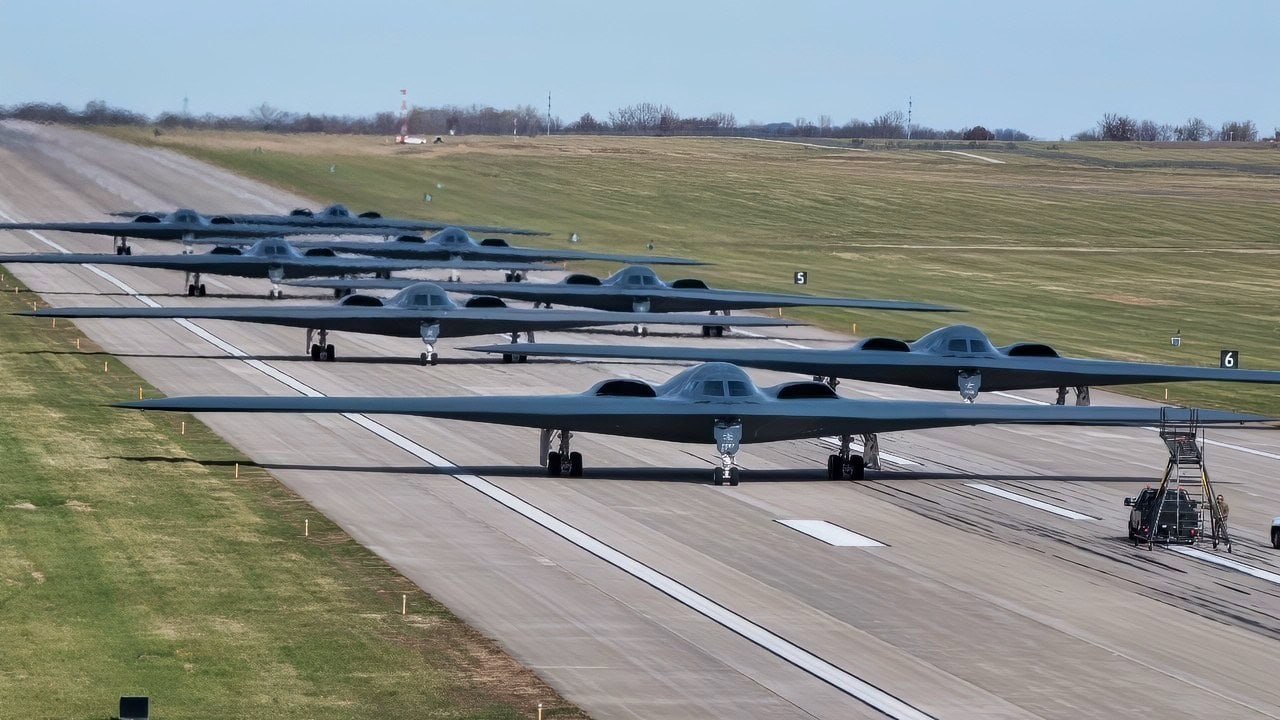
B-2 Spirit stealth bombers assigned to Whiteman Air Force Base taxi and take-off during exercise Spirit Vigilance on Whiteman Air Force Base on November 7th, 2022. Routine exercises like Spirit Vigilance assure our allies and partners that Whiteman Air Force Base is ready to execute nuclear operations and global strike anytime, anywhere. (U.S. Air Force photo by Airman 1st Class Bryson Britt)
Merely listing the vast extent of U.S. ambitions and commitments highlights the problem. Washington appears to be attempting simultaneously to achieve the following goals:
-Remain Europe’s hegemon via traditional U.S. dominance of NATO;
-Further undermine and weaken Russia;
-Police and stabilize the chronically volatile Middle East;
-Repel any challengers to Washington’s venerable hegemony in the Western Hemisphere;
-Contain the rapid economic and military rise of the PRC while militarily protecting Taiwan, South Korea, and other U.S. clients in East Asia;
-Play an active role in response to India and the rest of the Global South.
Such an absurdly extensive and expensive list is the functional definition of strategic overextension. Even during genuine unipolar periods, pursuing excessively ambitious goals placed severe strain on America’s military, economic, and political systems. Attempting to do so now risks a fatal breakdown.
The signs of failure are becoming both more numerous and more severe. The wars in Ukraine and Iran are especially telling. U.S. and NATO military leaders warn that stocks of key weapons are getting dangerously low. Air defense missiles and drones are especially being depleted at an alarming rate. One must ask: what would happen if an armed conflict broke out now on the Korean Peninsula, or in the Taiwan Strait? Could Washington fulfill its promises of providing U.S. military aid and protection to allies and clients in East Asia?
Moreover, that apparent deficiency applies to merely one set of weapons stocks because of two relatively small conflicts. Given the vast array of arms in the U.S. arsenal, the potential for serious shortages is daunting indeed. Yet, even though the United States had already allocated some $1.5 trillion for ‘defense” this year, the Trump administration was back requesting another $200 billion in March for the Iran war.
Just measured in terms of federal government financial outlays, the United States is badly overextended trying to protect its global commitments. The overall strains on the economy and society are even more damaging. It has become imperative to slash unnecessary foreign security obligations.
No More NATO
A good place to start is with phasing out U.S. membership in NATO over the next 5 years. That alliance originally emerged when a weak, demoralized collection of democratic countries in Western Europe needed U.S. protection to face the daunting military power of the Soviet Union. Today, the members of the European Union collectively have both a population and an economic output greater than those of the United States.
The EU faces the Russian Federation, which is a much smaller and weaker successor to the USSR. It is past time to transfer responsibility for Europe’s defense over to the EU or a new “Europeans only” organization. The need for Washington to make such a major policy shift is enhanced because there are now fundamental differences between the key political, economic, and security interests of Europe and the United States.
The Middle East Mistake
Perhaps even more urgent for America is the need to stop trying to police the Middle East. The United States has been mired for decades in vain efforts to stabilize that region. Two reasons for this chronic folly stand out: misguided support for Israel and an attempt to prevent destabilizing periodic spikes in the global price of oil. In the process, Washington has needlessly sacrificed thousands of its military personnel, wasted trillions in tax dollars, and gained a widespread reputation as a monstrous planetary bully that has slaughtered vast numbers of innocent civilians.
Neither supporting Israel nor the broader U.S. regional policing mission warrants incurring anything resembling the scope of such adverse consequences. From a purely financial standpoint, it would have been far less expensive for the United States to absorb the impact of periodic oil price spikes than to spend hundreds of billions of dollars maintaining an ongoing military presence and fighting numerous brushfire wars.
Tough by Right Calls to Make on NATO and Middle East
Just terminating the Middle East obsession and doing the same with respect to NATO would prune the bloated (and misnamed) annual “defense” budget and likely bring it under $600 billion within 5 years. Given the current projected spending, such a change could mean savings of approximately $1 trillion per year. Even more important, the reforms would be an explicit affirmation of a new national security strategy. It would underscore that the United States is again a prudent republic with limited security requirements rather than a rogue empire committed to global hegemony.
About the Author: Dr. Ted Galen Carpenter
Dr. Ted Galen Carpenter is a senior fellow at the Randolph Bourne Institute and a contributing editor at The National Security Journal and The American Conservative. He is the author of 13 books and more than 1,500 articles on national security, international affairs, and civil liberties. His latest book is Unreliable Watchdog: The News Media and U.S. Foreign Policy (2022).