
Summary and Key Points: Jack Buckby, a national security researcher and analyst, evaluates the tactical success of the U.S. Bomber Triad and stealth fighter wings during Operation Epic Fury.
-As of March 2026, the B-2 Spirit has utilized 2,000lb precision munitions to destroy hardened underground Iranian ballistic missile infrastructure.

A crew chief assigned to the 158th Fighter Wing, taxis an F-35A Lightning II fifth generation aircraft assigned to the wing at the Vermont Air National Guard Base, South Burlington, Vermont, May 2, 2022. The aircraft departed to Spangdahlem Air Base, Germany, to continue NATO’s Enhanced Air Policing mission along the Eastern Flank. (U.S. Air Force photo by Tech. Sgt. Richard Mekkri)
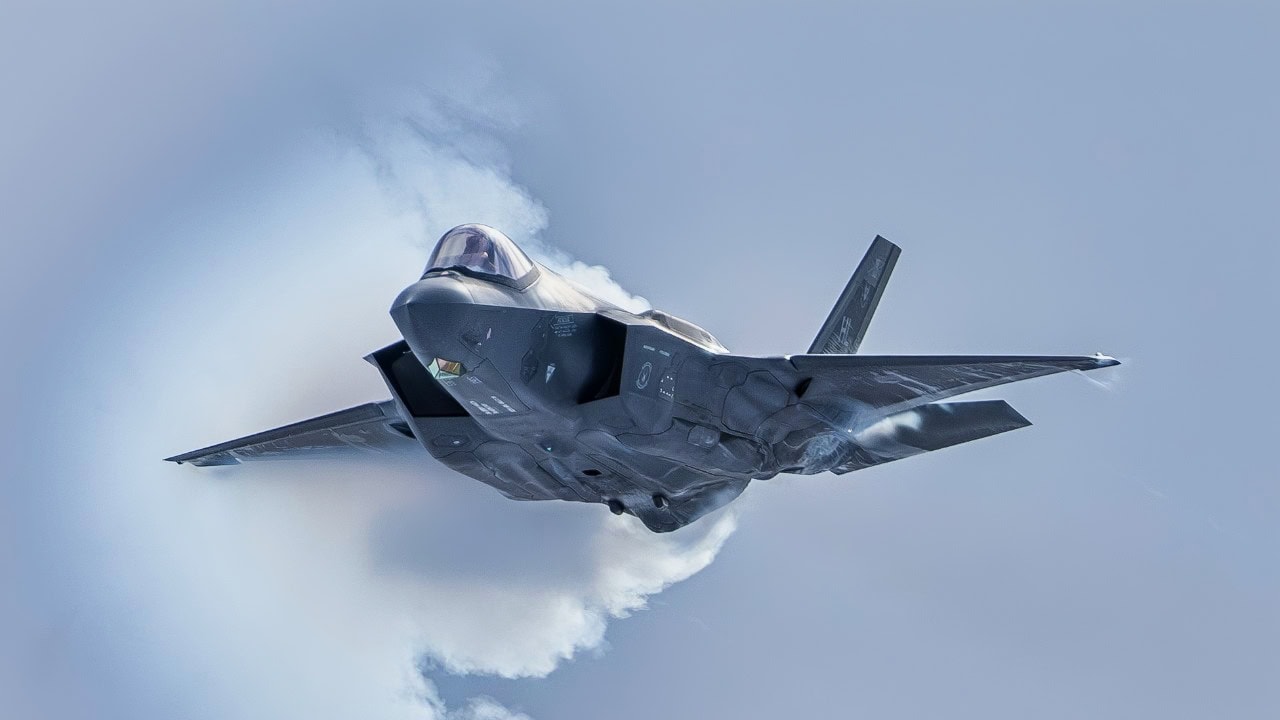
A U.S. Air Force F-35A Lightning II assigned to the F-35A Lightning II Demonstration Team performs a practice airshow performance at Hill Air Force Base, Utah, Jan. 11, 2023. The F-35 Demo Team performs rehearsal flights regularly to maintain required flying certifications and to uphold and maintain their mission and Air Force recruiting standards. (U.S. Air Force photo by Staff Sgt. Kaitlyn Ergish)
-This 19FortyFive report analyzes the synergy between the F-22 Raptor’s air superiority and the F-35’s advanced sensor coordination.
-Buckby concludes that while Iran’s Su-24 and F-14 fleets remained largely grounded, their reliance on Shahed drones and missile strikes against Bahrain and the UAE failed to halt the coalition’s total air dominance.
Stealth Surprise: Why the F-35 Lightning II is the “Nerve Center” of Operation Epic Fury In Iran (with Help from the F-22 and B-2)
Beginning on February 28, U.S. and Israeli forces launched coordinated attacks on Iranian military infrastructure as part of Operation Epic Fury, targeting missile bases, command centers, and leadership compounds across the country. And so far, the conflict has been defined by stealth aircraft and long-range strike systems.
The campaign has relied heavily on low-observable aircraft, including the U.S. Air Force’s B-2 Spirit stealth bomber, F-22 Raptor, and F-35 Lightning II fighter jets. The platforms are designed to operate inside heavily defended airspace while avoiding radar detection, making them central to the opening phase of modern air wars.
Within the first 72 hours of the campaign, U.S. forces reportedly struck more than 1,700 targets across Iran, striking Revolutionary Guard headquarters, missile launch sites, command infrastructure, and more.
At the same time, Iran’s response — before President Donald Trump indicated that the country’s navy and missile infrastructure had been “knocked out” — has largely relied on missile and drone attacks against Israel and U.S. bases across the Middle East, rather than large-scale fighter aircraft operations.
That is, of course, a result of the Iranian air force possessing no modern fighter jets and relying entirely on a mix of decades-old Russian and American aircraft.
Why the U.S. Used the B-2 Bomber
One of the most significant developments of the campaign was the use of the B-2 Spirit stealth bomber – not necessarily because it was surprising (it was not), but because it is the United States’ most advanced strategic strike platform.
B-2 bombers were deployed to strike hardened underground Iranian facilities, including ballistic missile infrastructure and fortified command sites. The aircraft is specifically designed for these kinds of missions. Its low radar cross-section allows it to penetrate advanced air-defense networks while carrying large payloads of precision-guided bombs.
During the Iran strikes, B-2s reportedly dropped 2,000lb precision munitions against missile facilities and underground targets that would be difficult to destroy with smaller weapons.
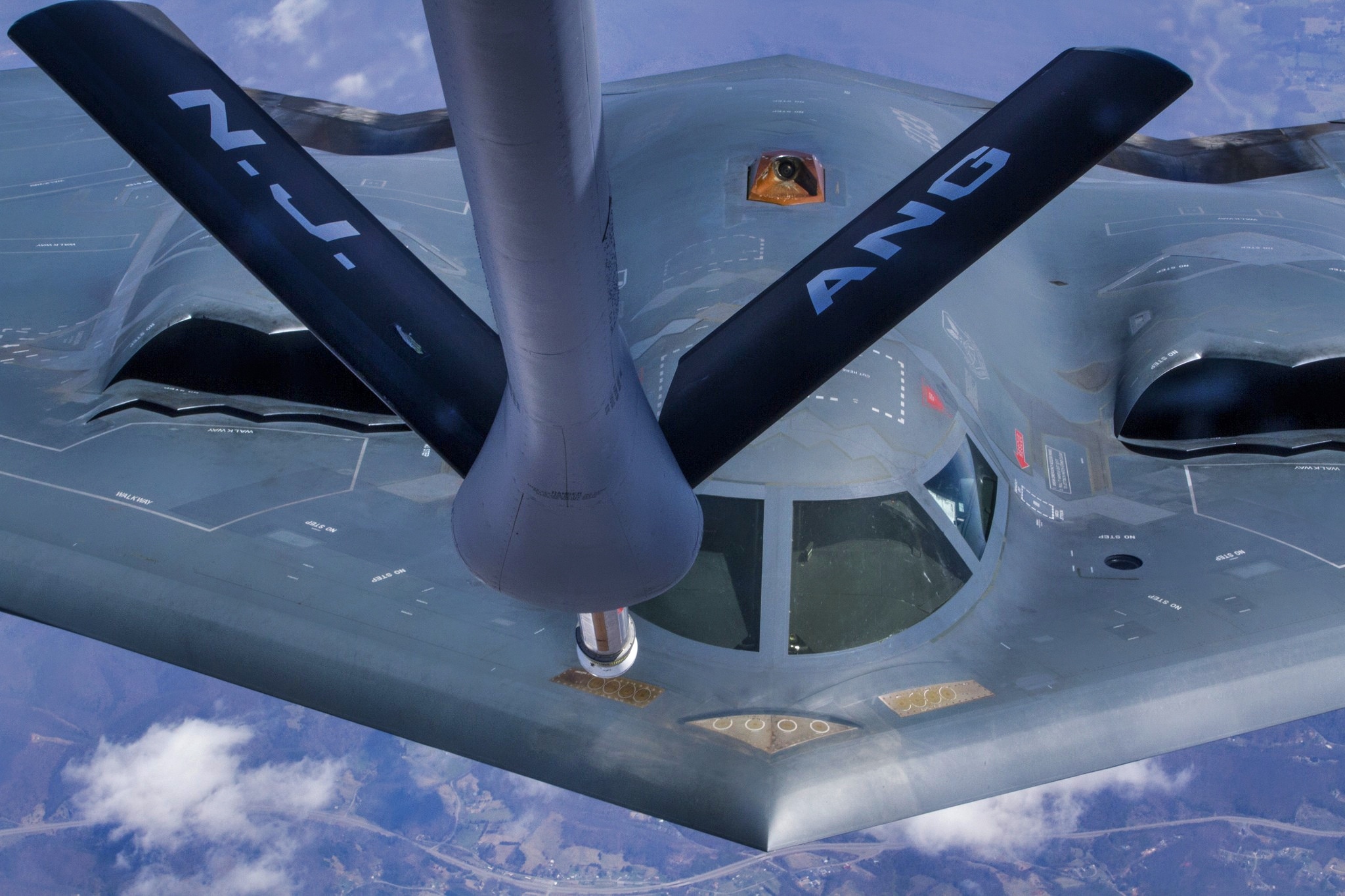
B-2 Spirit Stealth Bomber. Image Credit: Creative Commons.
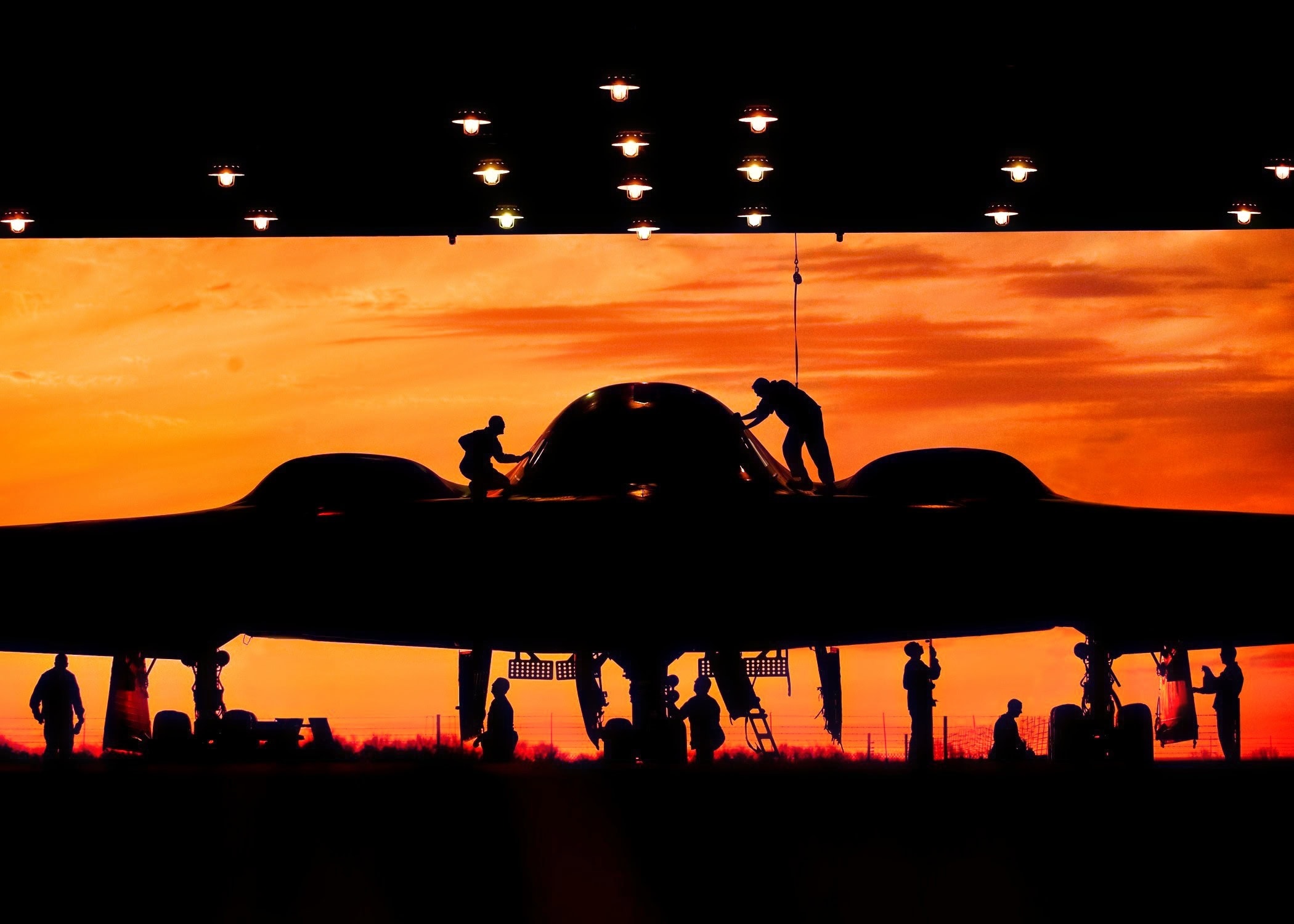
B-2 Spirit Bomber. Image Credit: Creative Commons.
The bomber’s long range also allows it to launch missions from distant bases while striking deep inside hostile territory. The deployment of these bombers so early in the campaign allowed U.S. forces to rapidly degrade Iran’s air defense systems and command networks, clearing the way for additional aircraft and weapons to operate later.
And, the arrival of B-2s in the theater was widely seen as a sign that the air campaign had entered a more intense phase focused on destroying Iran’s most hardened targets – paving the way for the successes Trump claimed had been made on March 3.
The Role of the F-22 and F-35
While the B-2 focused on strategic strike missions in Iran, stealth fighters such as the F-22 Raptor and F-35 Lightning II are playing different but equally important roles in the air campaign. The F-22 is primarily designed for air superiority, meaning it is tasked with controlling the skies and preventing enemy aircraft from threatening strike missions.
In Iran, Raptors have likely been tasked with escorting strike aircraft and ensuring that, if Iranian aircraft were deployed at all, they could not contest coalition air operations.
The F-35, meanwhile, serves a different function: it is both a stealth strike aircraft and an advanced sensor platform capable of detecting enemy radars and coordinating attacks across multiple systems.
During the operation, the United States has so far used a wide range of systems, spanning F-22s and F-35s, electronic-warfare aircraft, missiles, and drones, to conduct coordinated strikes across Iranian territory.
The stealth bombers are used to attack hardened targets, and the stealth fighters provide the protection they need, intelligence, and additional precision-strike capabilities. Together, the platforms are the backbone of the U.S. Air Force’s ability to conduct high-end combat operations successfully.
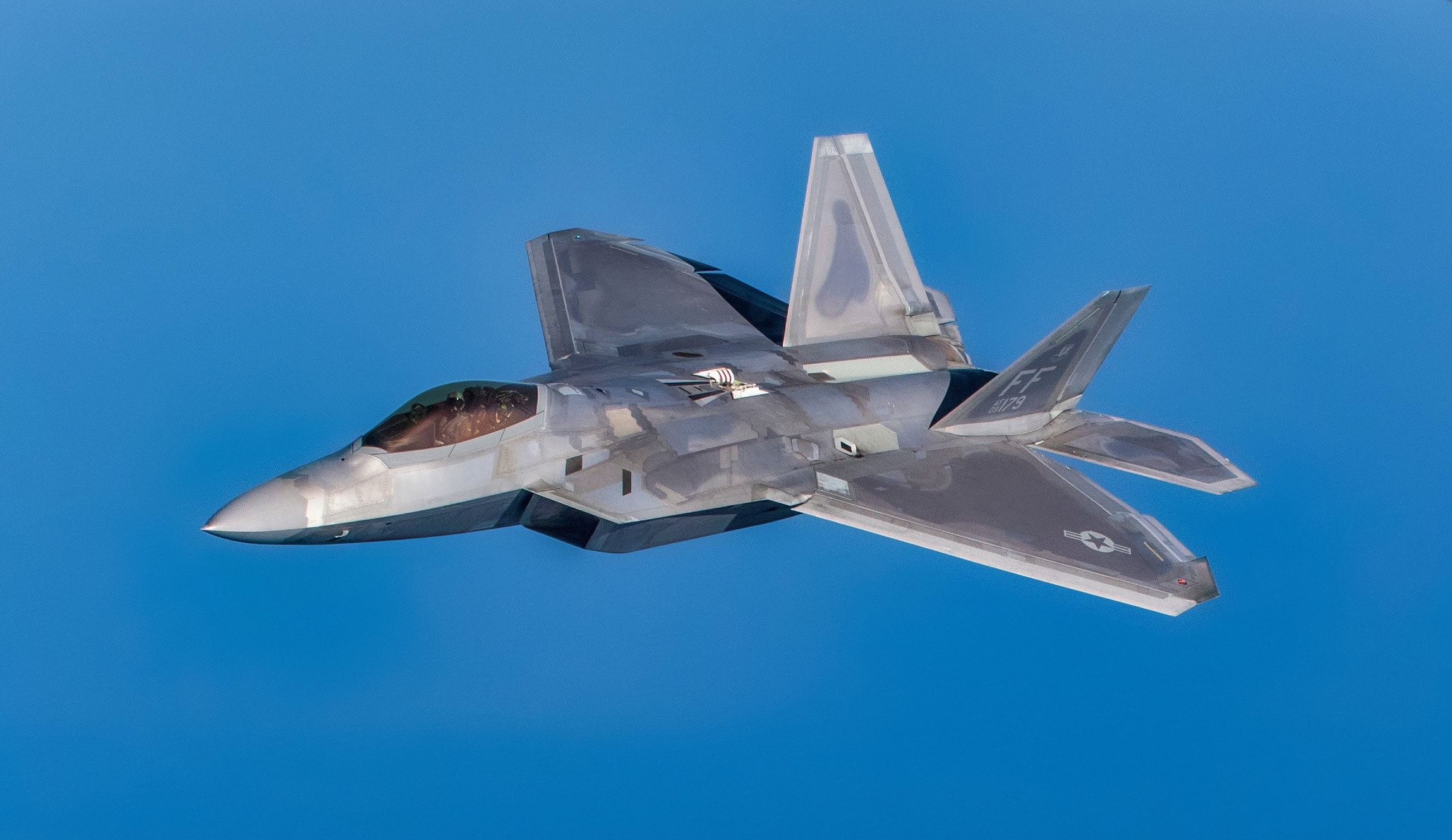
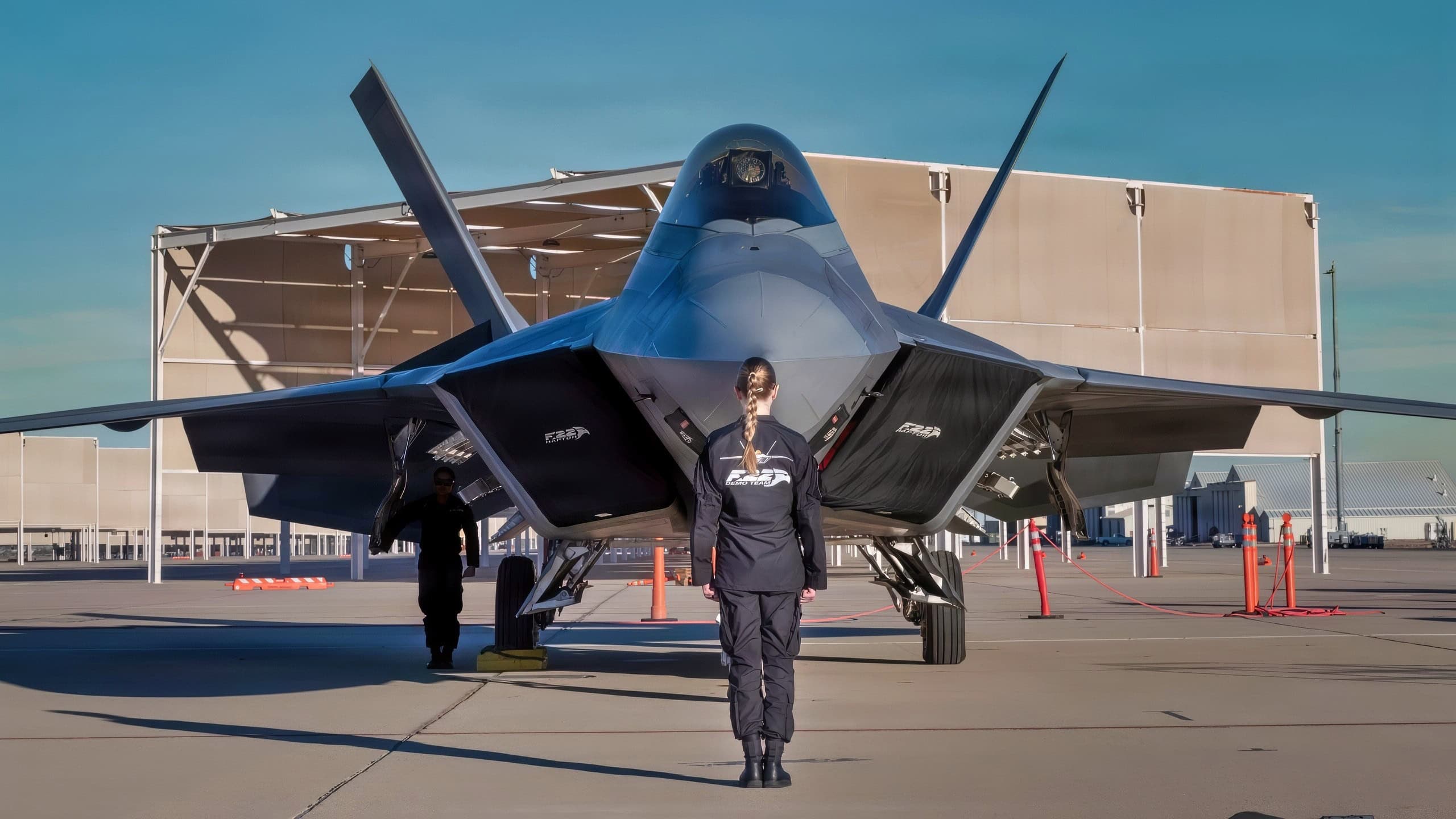
An F-22 Raptor assigned to the 192nd Fighter Wing, Virginia Air National Guard, Virginia flies over the Georgia coast during an air combat exercise at Sentry Savannah on May 5, 2022. Sentry Savannah is a joint force integrated exercise of fourth- and fifth-generation fighter jets, designed to showcase the Air Force’s air combat readiness in preparation for tomorrow’s fight. (U.S. Air Force photo by Senior Airman Erica Webster)
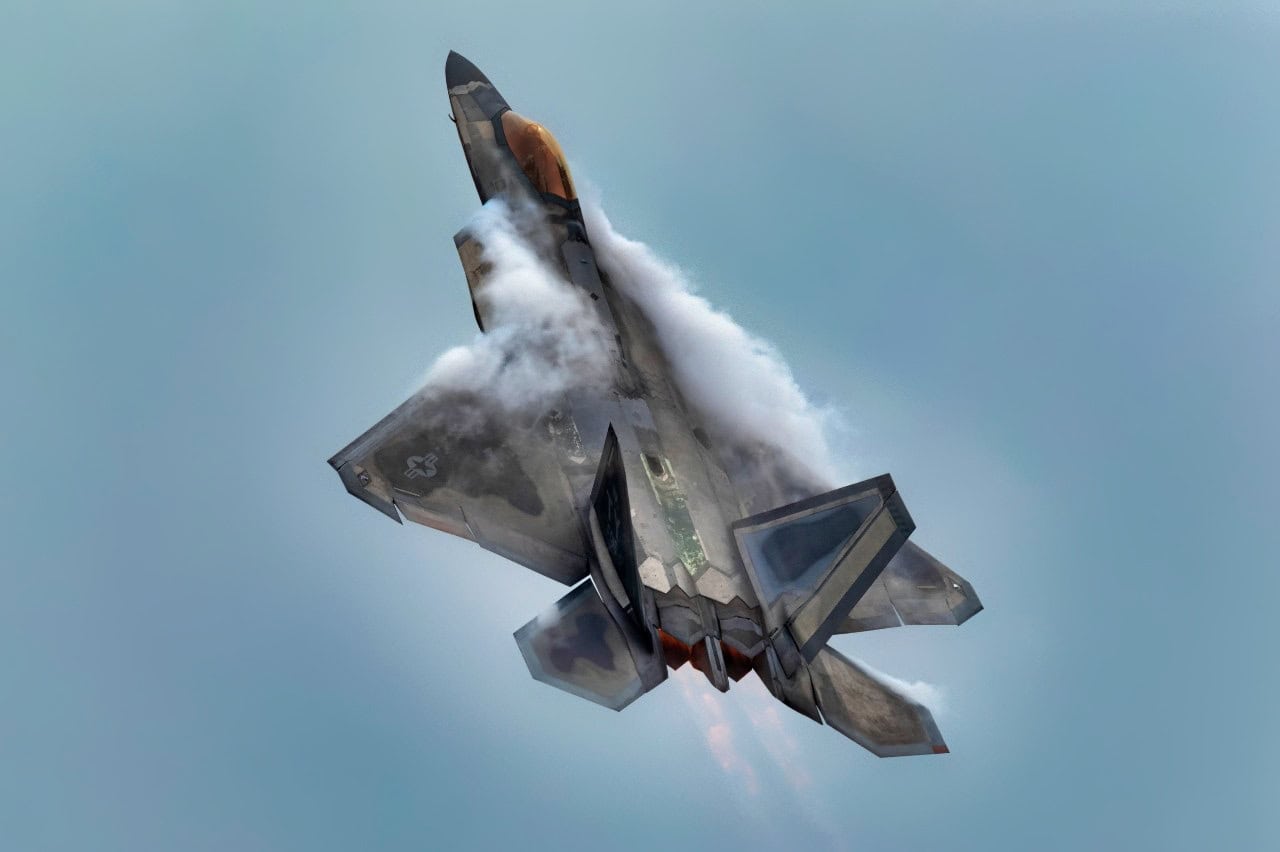
U.S. Air Force Maj. Josh Gunderson, F-22 Demo Team commander, performs maximum power takeoff during a demonstration for the 67th National Security Forum at Maxwell-Gunter Air Force Base, Montgomery, Alabama, May 11, 2021. The F-22 Raptor’s two Pratt and Whitney F119 Turbofan engines bring a combined 70,000 pounds of thrust, allowing the aircraft to takeoff straight into the vertical. (U.S. Air Force photo by Staff Sgt. Don Hudson)
How Iran Responded
Instead of launching large numbers of fighter sorties, which wouldn’t make sense given the age and generally poor condition of Tehran’s air assets, Iran responded primarily with missile and drone attacks.
Those attacks struck facilities and civilian infrastructure across Bahrain, Kuwait, Qatar, and the United Arab Emirates.
Before the war began, Iran’s fighter fleed included older aircraft like the F-4 Phantom, F-14 Tomcat, MiG-29, and Su-24 – and reports have indicated that at least two of its Su-24s were shot out of the sky by Qatar.
Because of the limitations of its air force, Iran has spent years developing a large arsenal of ballistic missiles and cruise missiles, and in recent years a huge fleet of unmanned aerial vehicles, to compensate for weaknesses in its conventional airpower.
Trump Says Iran’s Military “Knocked Out”
On March 3, President Trump said the opening wave of strikes had severely degraded the Iranian military. According to Trump, the operation had effectively “knocked out” major elements of Iran’s navy and other military assets.
However, the full extent of the damage remains difficult to independently verify while the conflict is ongoing.
About the Author Jack Buckby
Jack Buckby is a British researcher and analyst specialising in defence and national security, based in New York. His work focuses on military capability, procurement, and strategic competition, producing and editing analysis for policy and defence audiences. He brings extensive editorial experience, with a career output spanning over 1,000 articles at 19FortyFive and National Security Journal, and has previously authored books and papers on extremism and deradicalisation.