
Faster Than the F-35: Why the Pentagon Still Fears Iran’s Ancient F-14 Tomcat Fighters
Whether Iran’s air force is still able to fly F-14s is not known, but the possibility remains a potential concern to the Pentagon, given that the Tomcat has extremely threatening, F-22-like speed. While a handful of Iranian F-14s, even if they have been upgraded, may not be able to rival a large contingent of U.S. and European F-35s, their continued presence would present a credible threat.
It is not clear how many of the Tomcats may have been destroyed on the ground by the Israeli Air Force. Further, Iran may not have maintained its F-14s well enough to keep them functional and lethal.
The most important question, though, is how many F-14s does Iran have? What condition are they in? On the surface, it does not seem as though Iran’s industrial base and supply chain could maintain 1980s-era F-14 Tomcats. But perhaps Iran did its homework on U.S. Navy and Air Force service life extension programs. Perhaps some of the F-14’s electronics can be upgraded outside of specific, narrowly configured technical parameters.
Continuing Maintenance
The Iranian Air Force does not have working relationships with Western allies who operate U.S.-built fourth-generation aircraft. Butt perhaps some kind of surreptitious supply chain exists, or there are unanticipated similarities between Iran’s existing fleet of fighter jets and the parts needed for the F-14.
However, even if Iran is using enterprising methods of maintaining the fuselages of the F-14s and upgrading the aircraft’s electronics, weapons, and computing, there are hard limits to how long a decades-old airframe can remain viable.
The U.S. Navy’s F/A-18 and U.S. Air Force’s F-16 have relied on Service Life Extension Plans to extend flight hours of these aircraft by thousands of hours beyond what was originally intended. Some structural reinforcements, coupled with software upgrades and engine sustainment, may be able to keep Iranian F-14s functional in the short term, but it would seem extremely unlikely that Iran could keep them relevant over the space of decades.
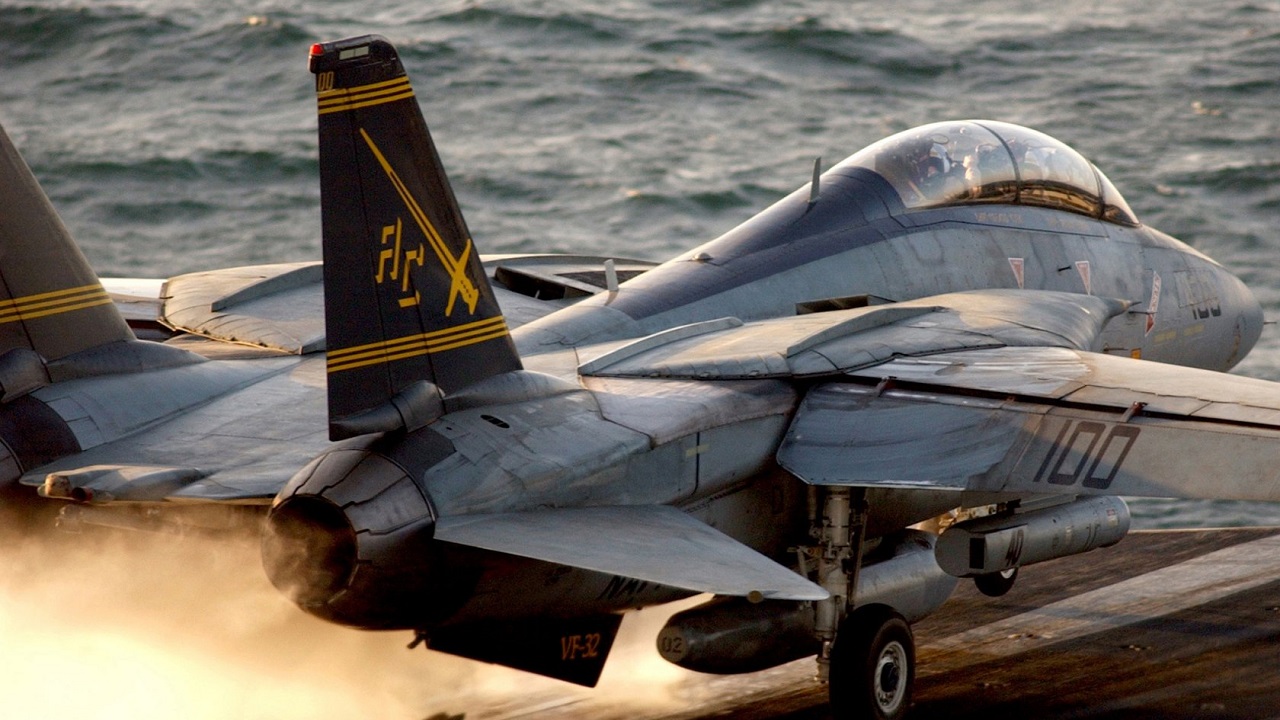
F-14 Tomcat. Image Credit: Creative Commons.
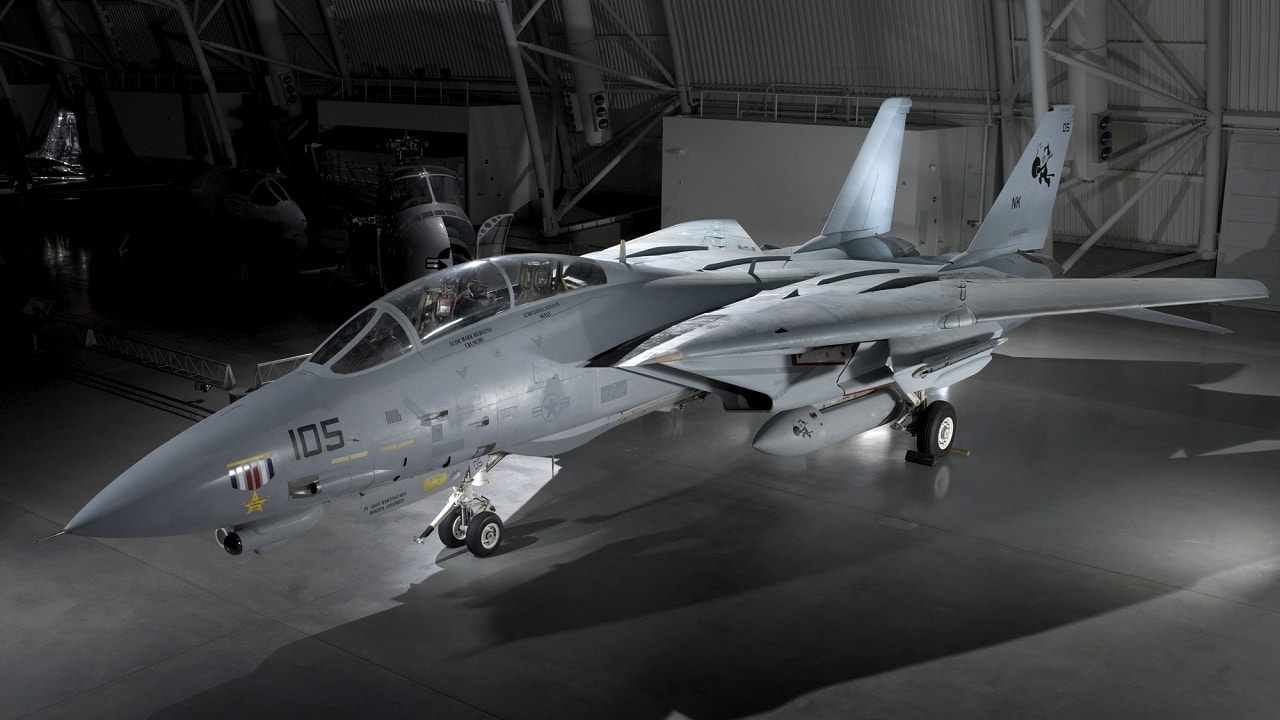
Grumman F-14D(R) Tomcat on display at the Steven F. Udvar-Hazy Center, National Air and Space Museum, Smithsonian Institution. Photograph by Dane Penland. [2006-24265]
Essentially, even if Iran has found a way to maintain its F-14s, they are bound to hit a wall.
Eventually, every airframe reaches a point at which it is no longer upgradeable.
Did F-14s Hit a Wall?
There are clearly built-in limits to how much an 1980s-era platform can be modernized. It may lack the interfaces and technical standards to integrate with modern technologies. This means the aircraft will essentially be unable to improve performance.
Further, the old aircraft’s lack of stealth puts it at a clear and decisive disadvantage when compared with existing fifth-generation aircraft. Even given these limits, the continued presence of Iranian F-14s does present a pressing and credible threat to the region, particularly to Israel, depending upon the number of operational F-35 variants Israel has.
While an F-35 is undoubtedly superior in many respects to an F-14, it is actually not as fast. With a listed speed of Mach 2.3, the F-14 is considerably faster than the F-35, which has a max speed of Mach 1.6.
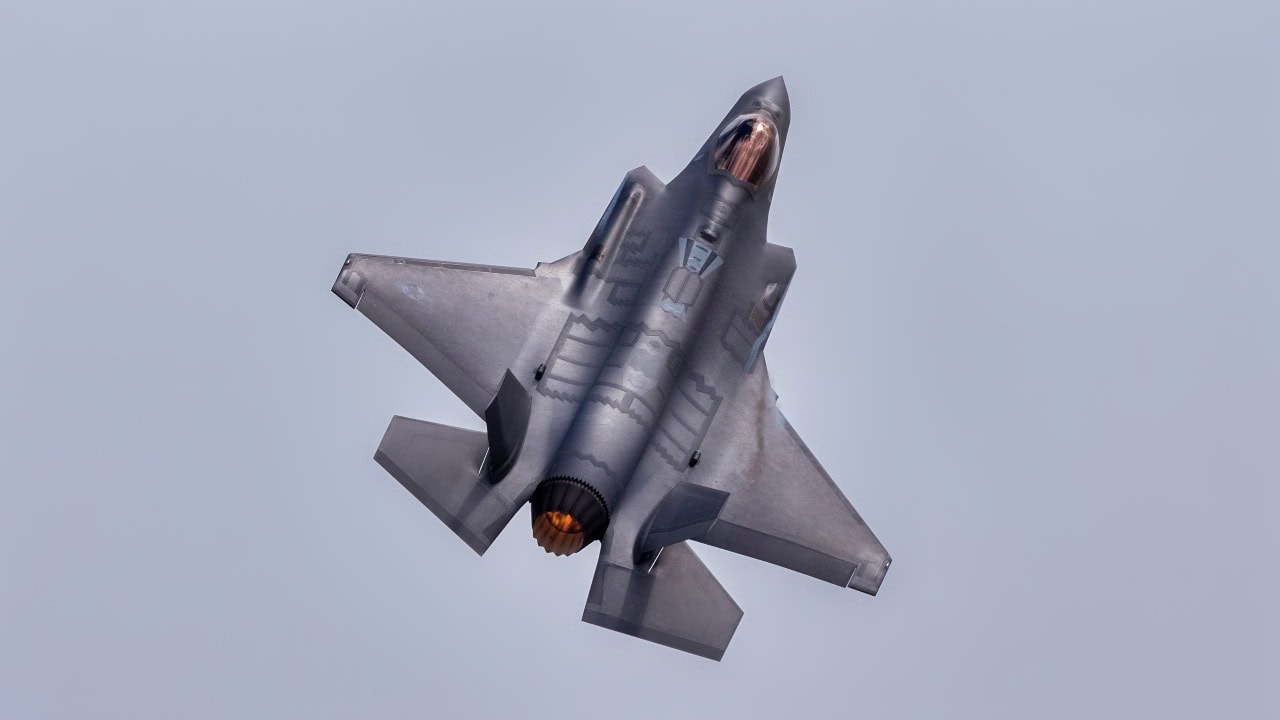
U.S. Air Force Capt. Kristin “BEO” Wolfe, the F-35A Demonstration Team pilot, climbs into the sky during a flight practice June 17, 2020, Hill Air Force Base, Utah. Air Combat Command’s single-ship aerial demonstration teams are required to regularly practice in order to maintain flight currencies and stay performance-ready. (U.S. Air Force photo by Capt. Kip Sumner)
The F-35 would likely need to use its advanced long-range sensors and next-generation weapons and guidance to prevail in an engagement with Iranian F-14s.
An F-35 might wish to avoid a dog-fight, and its advanced technologies suggest it might easily do so.
With stealth, upgraded software and sensors, and a new generation of weapons, an F-35 could most likely destroy an F-14 from standoff ranges before it is even detected.
About the Author: Aviation Expert Kris Osborn
Kris Osborn is the President of Warrior Maven – Center for Military Modernization. Osborn previously served at the Pentagon as a highly qualified expert in the Office of the Assistant Secretary of the Army—Acquisition, Logistics & Technology. Osborn has also worked as an anchor and on-air military specialist at national TV networks. He has appeared as a guest military expert on Fox News, MSNBC, The Military Channel, and The History Channel. He also has a Masters Degree in Comparative Literature from Columbia University.