
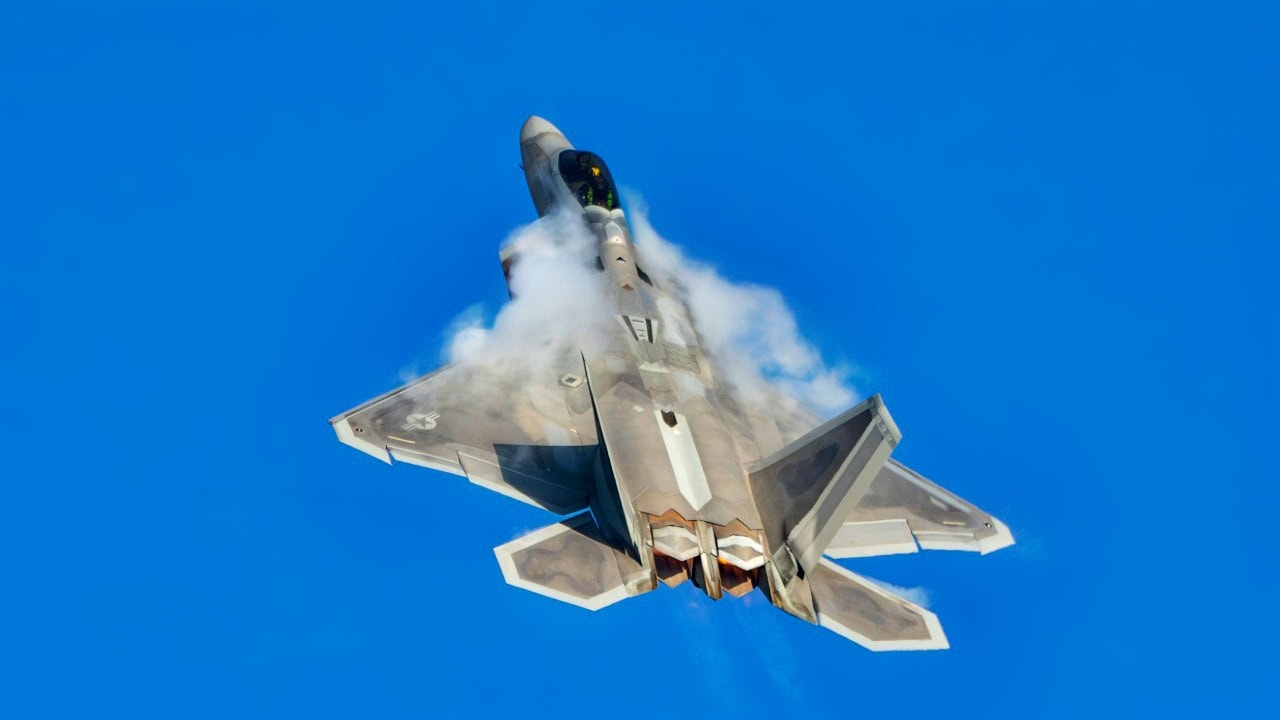
Summary and Key Points: Jack Buckby, a national security researcher and analyst, evaluates the simulated aerial engagements between German Air Force Eurofighter Typhoons and U.S. Air Force F-22 Raptors during the 2012 Red Flag-Alaska exercise.
-While the F-22 typically maintains a lopsided kill ratio through stealth and beyond-visual-range (BVR) combat, this report analyzes how the exercise’s Basic Fighter Maneuvers (BFM) neutralized these advantages.
F-22 Raptor. Image Credit: Creative Commons.
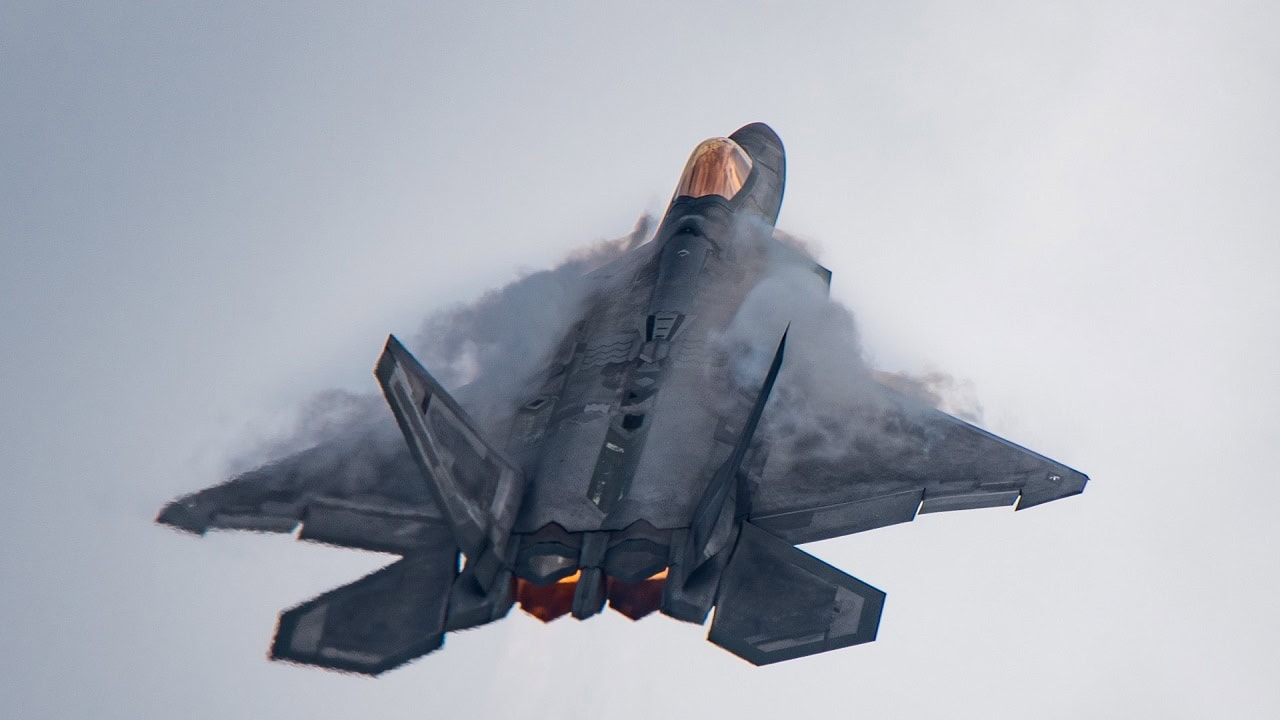
F-22 Raptor. Image Credit: Creative Commons.
-Buckby explores how the removal of external tanks and the enforcement of close-quarters dogfighting allowed German pilots from Tactical Air Force Wing 74 to leverage the Typhoon’s high-alpha maneuverability and score historic simulated victories.
The Day Eurofighter Typhoons Scored Kills on the F-22 Raptor
The F-22 Raptor is widely regarded as the most capable air-superiority fighter ever built, designed to combine stealth, sensor fusion, and long-range missiles to defeat enemy aircraft before they even know they are being targeted. But during a multinational exercise in Alaska in 2012, a handful of older European fighters managed to score simulated kills against the stealth jet.
That occurred during the Red Flag-Alaska exercise, where German Air Force Eurofighter Typhoons flew a series of close-range dogfights against U.S. Air Force F-22 Raptors.
When the exercise ended, some German pilots even joked that they had “Raptor salad for lunch,” sparking a debate among aviation analysts and enthusiasts about whether a fourth-generation fighter could truly defeat the United States’ most advanced air-superiority aircraft.
But the reality of those engagements is more complicated. The drills were designed to test specific combat scenarios and did not necessarily reflect how the aircraft would fight in real warfare.
The Red Flag Exercise That Sparked the Debate
During that exercise, Germany deployed eight Eurofighter Typhoons and around 150 personnel from Tactical Air Force Wing 74 (JG-74) to Eilson Air Force Base to participate in the drills.
Red Flag exercises like this typically involve hundreds of aircraft and are designed to simulate the first several missions of a high-intensity air war, allowing pilots to train against complex threats in a controlled environment. Within the exercise, a series of one-on-one Basic Fighter Maneuver (BFM) engagements – essentially simulated dogfights – were placed between individual Typhoons and F-22 Raptors.
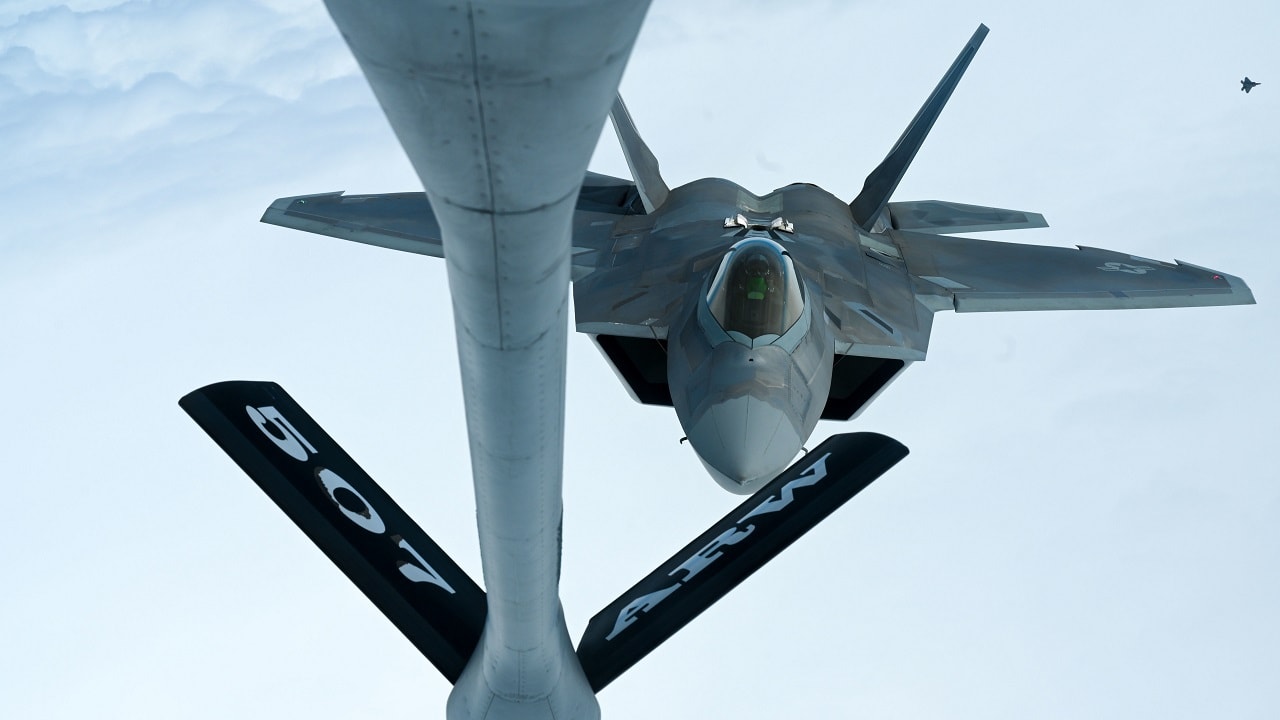
Eight F-22 Raptors with the 325th Fighter Wing at Tyndall Air Force Base, Florida, receive fuel from a KC-135 Stratotanker from the 507th Air Refueling Wing from Tinker Air Force Base, Oklahoma, Feb. 7, 2022, while the Okies flew to the U.S. Virgin Islands for training. (U.S. Air Force photo by Lauren Kelly)
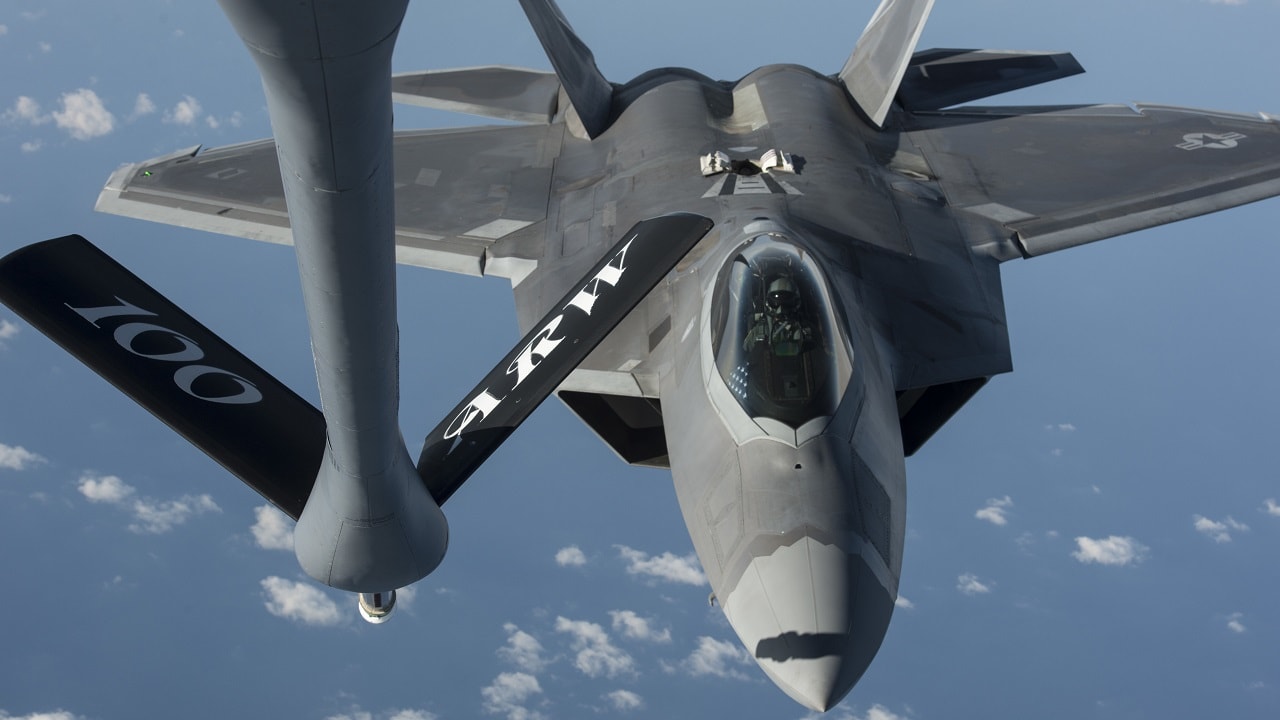
A U.S. Air Force F-22 Raptor from the 95th Fighter Squadron, Tyndall Air Force Base, Fla., moves into position behind a KC-135 Stratotanker from the 100th Air Refueling Wing, RAF Mildenhall Air Base, England, to conduct aerial refueling Sept. 4, 2015, over the Baltic Sea. The U.S. Air Force has deployed four F-22 Raptors, one C-17 Globemaster III, approximately 60 Airmen and associated equipment to Spangdahlem Air Base, Germany. While these aircraft and Airmen are in Europe, they will conduct air training with other Europe-based aircraft. (U.S. Air Force photo by Tech. Sgt. Jason Robertson/Released)
During some of those engagements, German pilots reported scoring simulated kills against the Raptors, a result that quickly circulated in the international aviation press and sparked discussion about the relative strengths of the two aircraft. Photos later appeared online showing German Typhoons displaying mock F-22 kill markings.
Why the Exercise Favored the Eurofighter
The simulated victories did not mean the Typhoon was a superior aircraft overall. Instead, they reflected the specific rules and conditions of the exercise – and how aircraft can deploy specific tactics to gain an advantage.
The engagements took place within visual range, meaning the fighters started close enough to see each other – effectively eliminating the F-22’s stealth and long-range detection advantages.
In real combat, the Raptor’s low-observable design and advanced sensors allow it to detect enemy aircraft first and fire beyond-visual-range missiles such as the AIM-120 AMRAAM before the opponent can respond. The exercise also reportedly required the F-22s to operate with external fuel tanks, which can reduce maneuverability and increase radar signature compared to the jet’s normal stealth configuration.
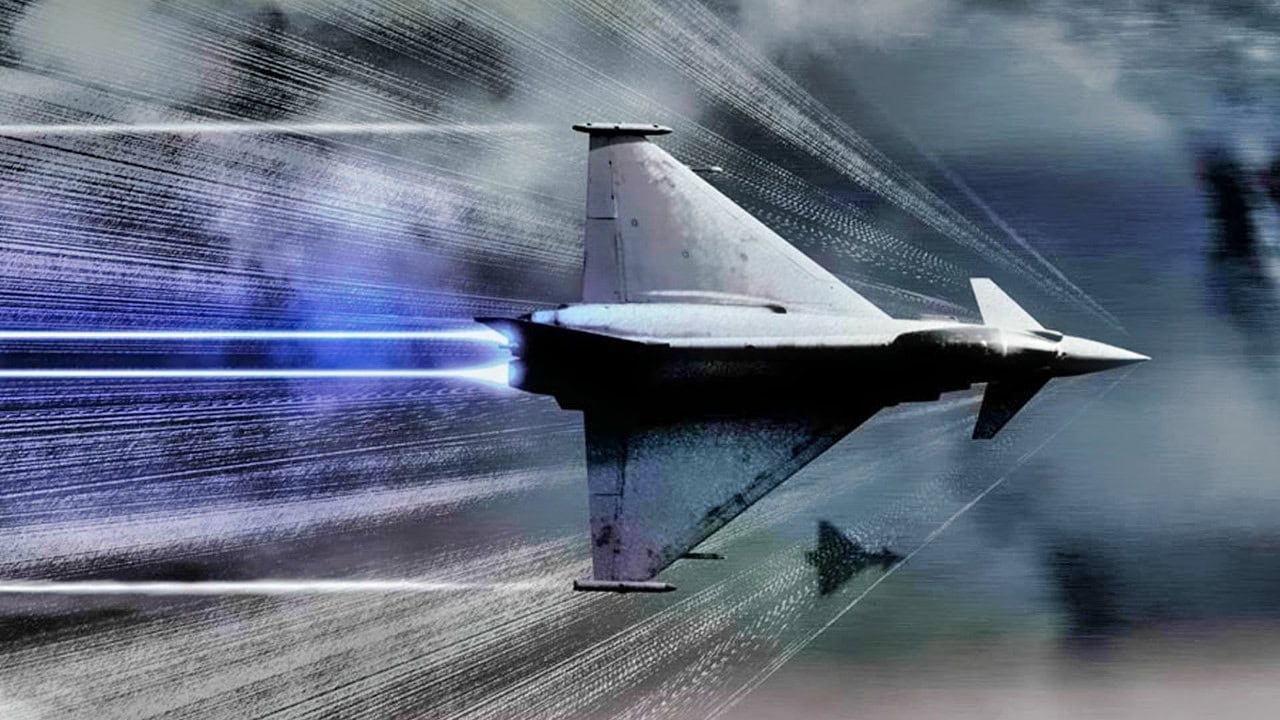
Eurofighter Typhoon Fighter. Image Credit: Creative Commons.
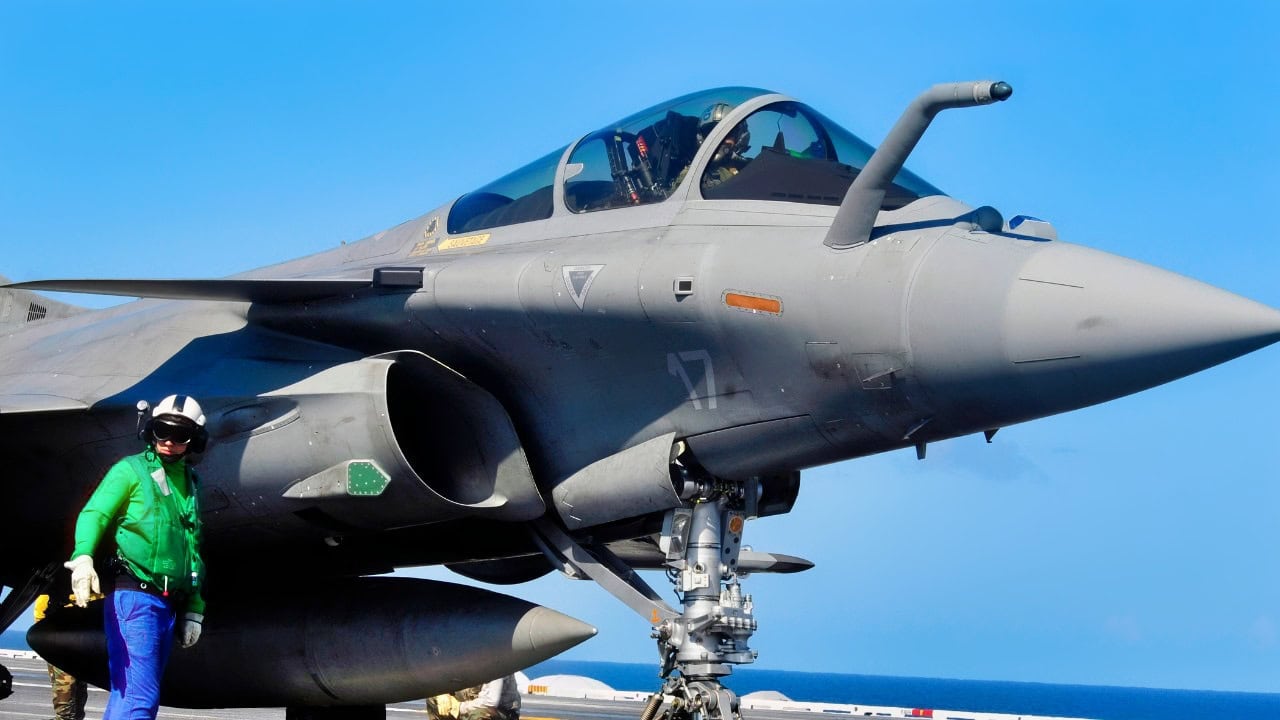
080719-N-3218H-011
ATLANTIC OCEAN (July 19, 2008) A French F-2 Rafale fighter prepares to launch during combined French and American carrier qualifications aboard the aircraft carrier USS Theodore Roosevelt (CVN 71). This event marks the first integrated U.S. and French carrier qualifications aboard a U.S. aircraft carrier. The Theodore Roosevelt Carrier Strike Group is participating in Joint Task Force Exercise “Operation Brimstone” off the Atlantic coast until the end of July. (U.S. Navy photo by Mass Communication Specialist 3rd Class Christopher Hall/Released)
Meanwhile, the Eurofighter Typhoons involved in the dogfights flew without external weapons or tanks, improving their maneuverability during the close-range engagements. These conditions essentially turned the scenario into a classic dogfight and not a modern stealth engagement.
What Happens When a Stealth Fighter Is Forced Into a Dogfight
Stealth aircraft are designed to win fights before they reach dogfighting range. Exercises over the past two decades have repeatedly shown the advantage stealth provides in beyond-visual-range combat, and in earlier large-force exercises, F-22 units achieved extremely lopsided kill ratios with opposing aircraft.
In one early major exercise in Alaska, Raptors achieved a 144-to-0 simulated kill ratio against opposing fighters like the F-15 and F/A-18.
Later exercises also produced similarly good results, with reports of 241 simulated kills against just two losses in large-force engagements involving mixed aircraft types.
Those results illustrate why stealth fighters are so valuable, and the doctrine behind them: they detect the enemy first, launch the missiles from a distance, and avoid close-range maneuvering flights entirely.
But the Red Flag dogfights showed that if the fight doesn’t reach a point where both aircraft meet in close quarters, traditional fighter characteristics like maneuverability and pilot skill can still play a major role in achieving a win.
The Lesson for Modern Air Combat
The 2012 exercise did not prove that the Eurofighter Typhoon is superior to the F-22, but it did highlight an important lesson about air combat. Even the most advanced aircraft can be placed in situations where their advantages are reduced or neutralized. That is precisely why exercises such as Red Flag deliberately create difficult scenarios for pilots.
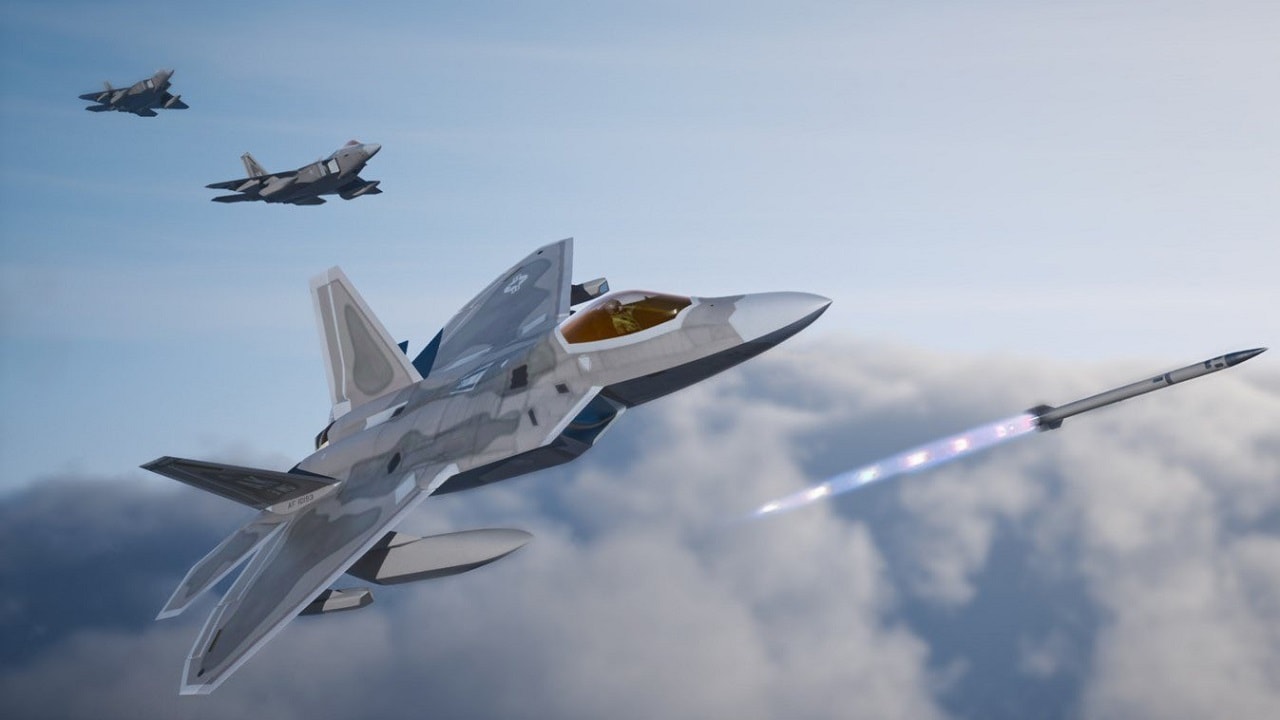
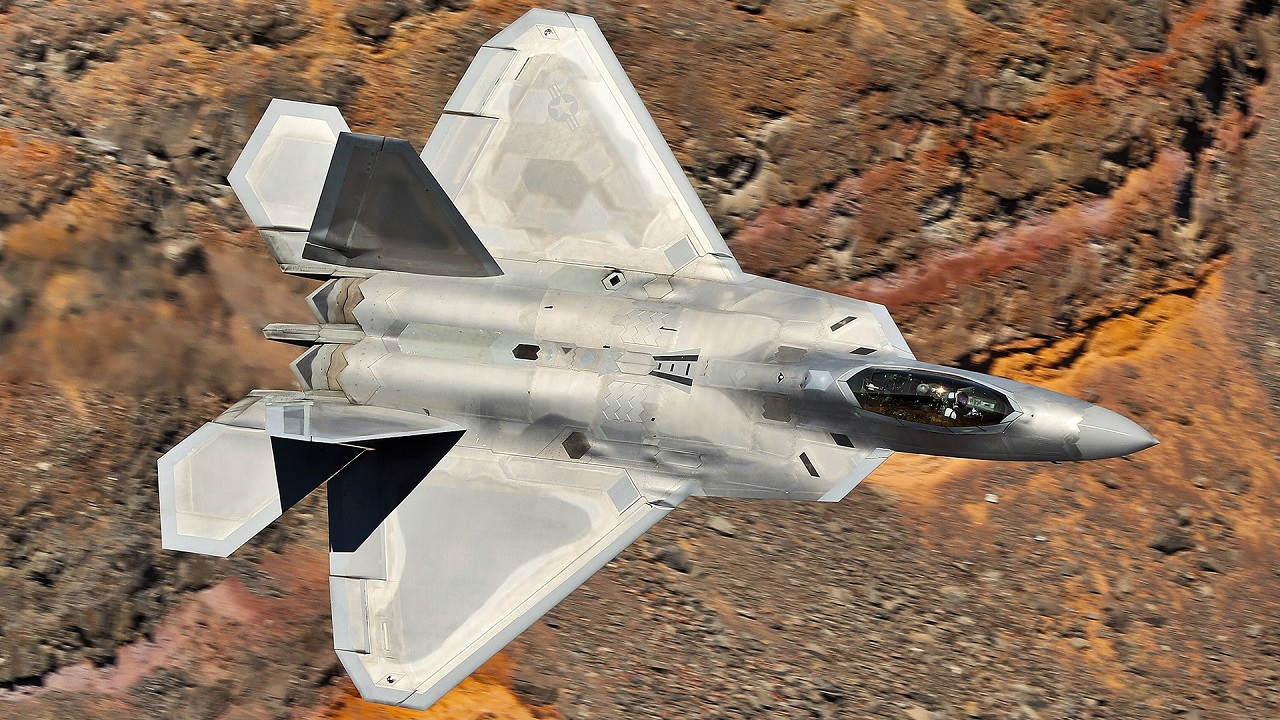
F-22 Raptor. Image Credit: U.S. Air Force Social Media.
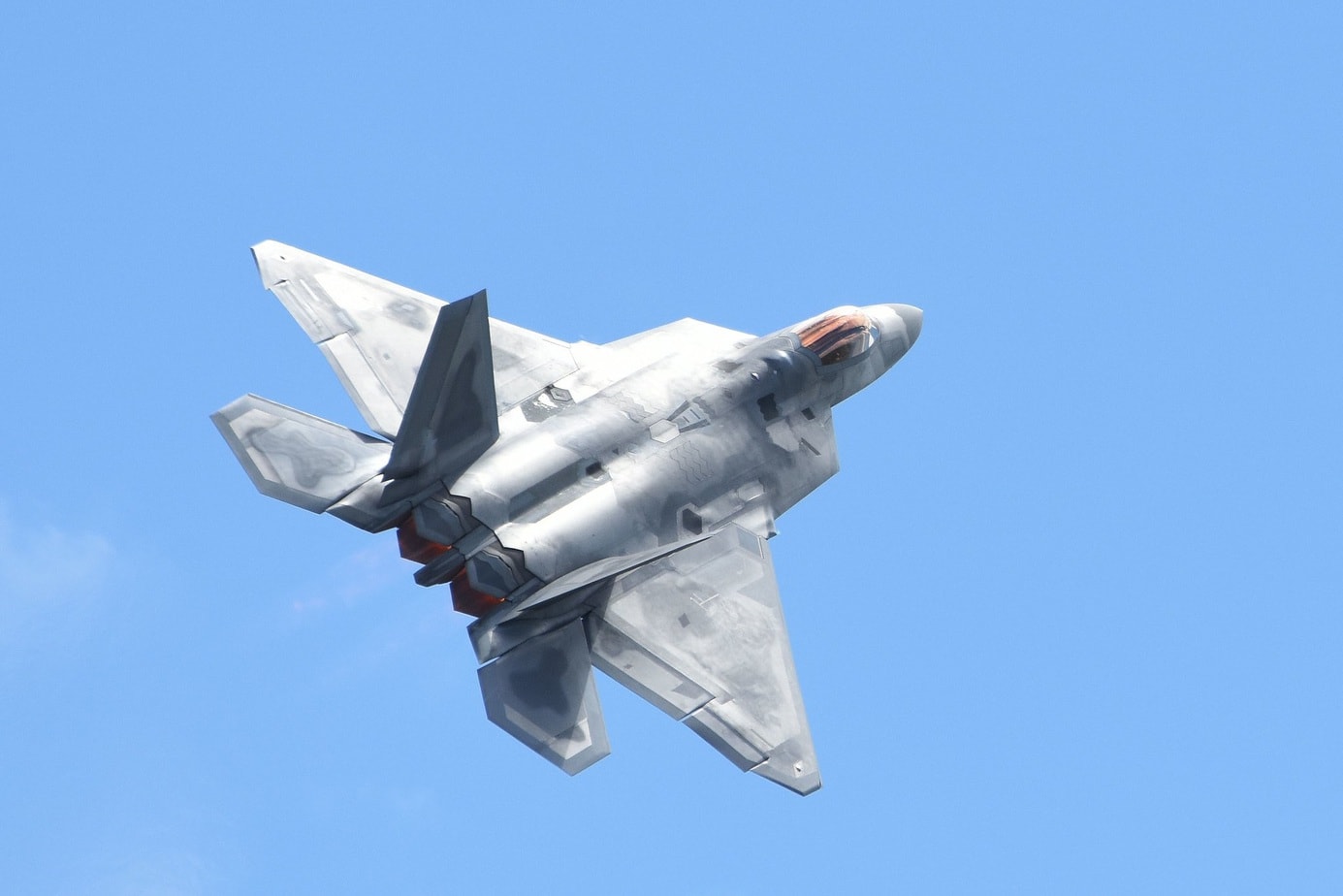
F-22 Raptor. Image Credit: U.S. Air Force.
The F-22 was designed as a stealth air-superiority fighter capable of combining low radar visibility and advanced sensors with high performance to dominate the skies and compete with increasingly capable adversaries.
But the training exercises are meant to challenge these aircraft as much as possible, including putting them in close-range engagement scenarios so that they can learn how to fight and survive even when technology alone does not guarantee victory.
The brief moment when Eurofighter pilots managed to score simulated kills against the Raptor, therefore, says less about the aircraft themselves than about the unpredictable nature of aerial combat. Even the world’s most advanced fighter is not invincible once the fight gets close.
About the Author: Jack Buckby
Jack Buckby is a British researcher and analyst specialising in defence and national security, based in New York. His work focuses on military capability, procurement, and strategic competition, producing and editing analysis for policy and defence audiences. He brings extensive editorial experience, with a career output spanning over 1,000 articles at 19FortyFive and National Security Journal, and has previously authored books and papers on extremism and deradicalisation.