
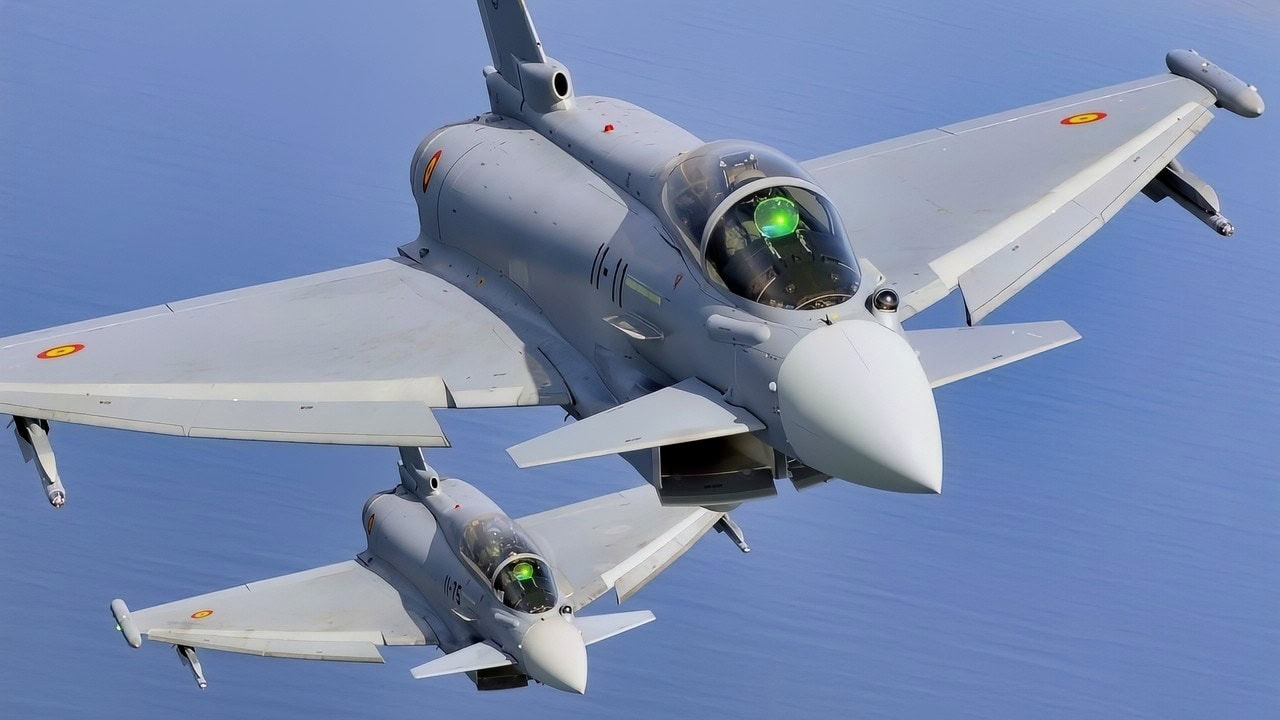
Summary and Key Points: Christian D. Orr, a senior defense editor and former Air Force Security Forces officer, evaluates the Eurofighter Typhoon‘s transition into the “Super Typhoon” era.
-Developed by a consortium of BAE Systems, Airbus, and Leonardo, the platform is receiving massive upgrades, including the Captor-E / ECRS Mk2 AESA radar and the Striker II helmet.
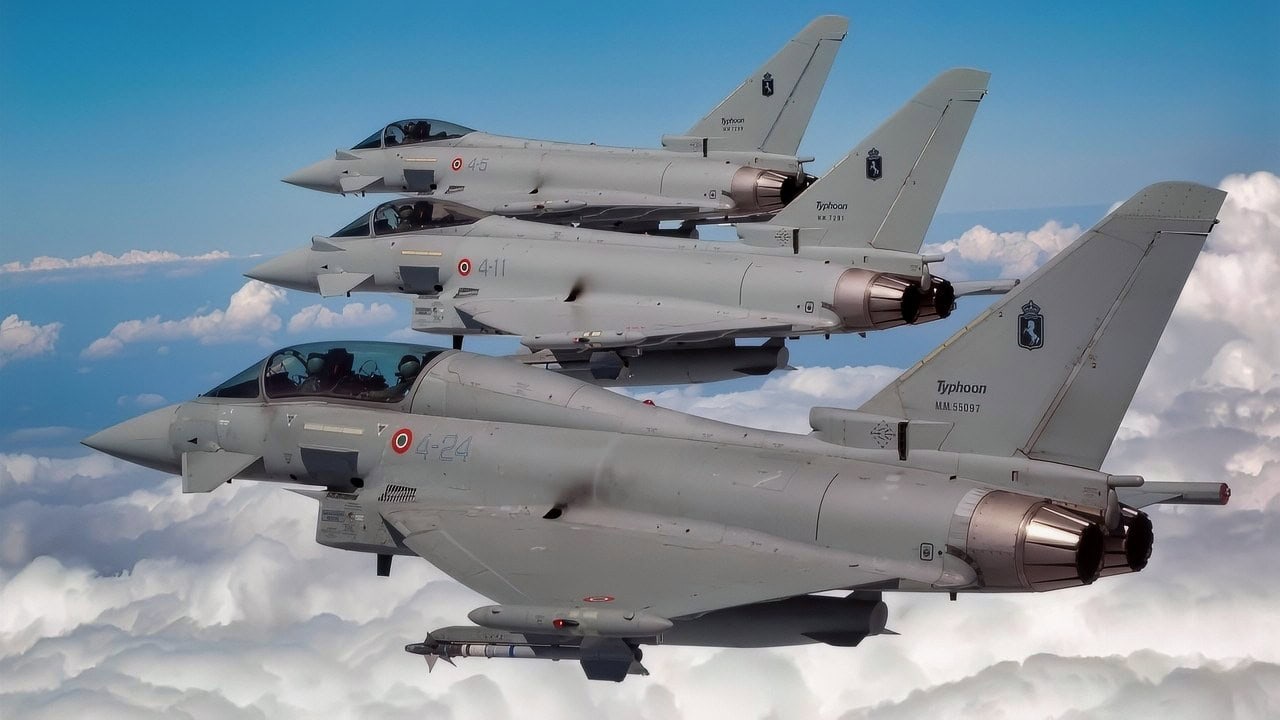
Eurofighter Typhoon Aircraft NATO. Image Credit: Creative Commons.
-This 19FortyFive report analyzes the MBDA Meteor missile’s 60km “No-Escape Zone” and the Aerodynamic Modification Kit (AMK), exploring how recent 20-jet orders from Germany and Türkiye ensure the Typhoon remains a vital operational bridge until the 2040s.
-However, none of this can replace or replicate the stealth capabilities of fifth-generation fighters like the F-22 or F-35.
The Super Typhoon: How the ECRS Mk2 Radar is Transforming the Eurofighter into a 6th-Gen Bridge
The Eurofighter Typhoon is a 4.5-generation jet fighter built by a multinational consortium consisting of Britain’s BAE Systems, France’s Airbus, and Italy’s Leonardo S.p.A.
It will never be as sophisticated as the current fifth-generation stealth fighters or the upcoming sixth-generation fighters. Moreover, in the 2021 edition of the air combat simulator Modern Air Combat Environment (MACE), the Eurofighter is an awful performer.
It consistently gets waxed even by third-generation jets, which makes one wonder if the designers of MACE have some personal bias against the plane.
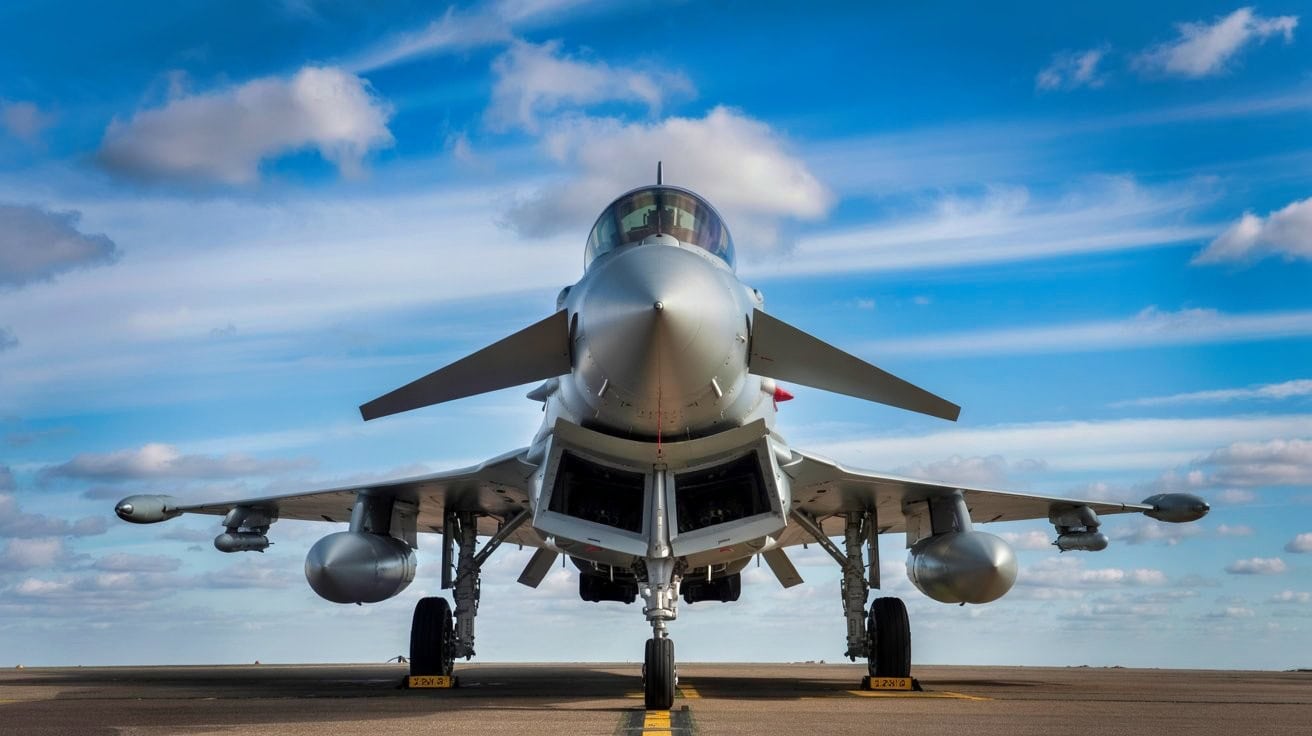
Eurofighter Typhoon. Image Created by Ideogram.
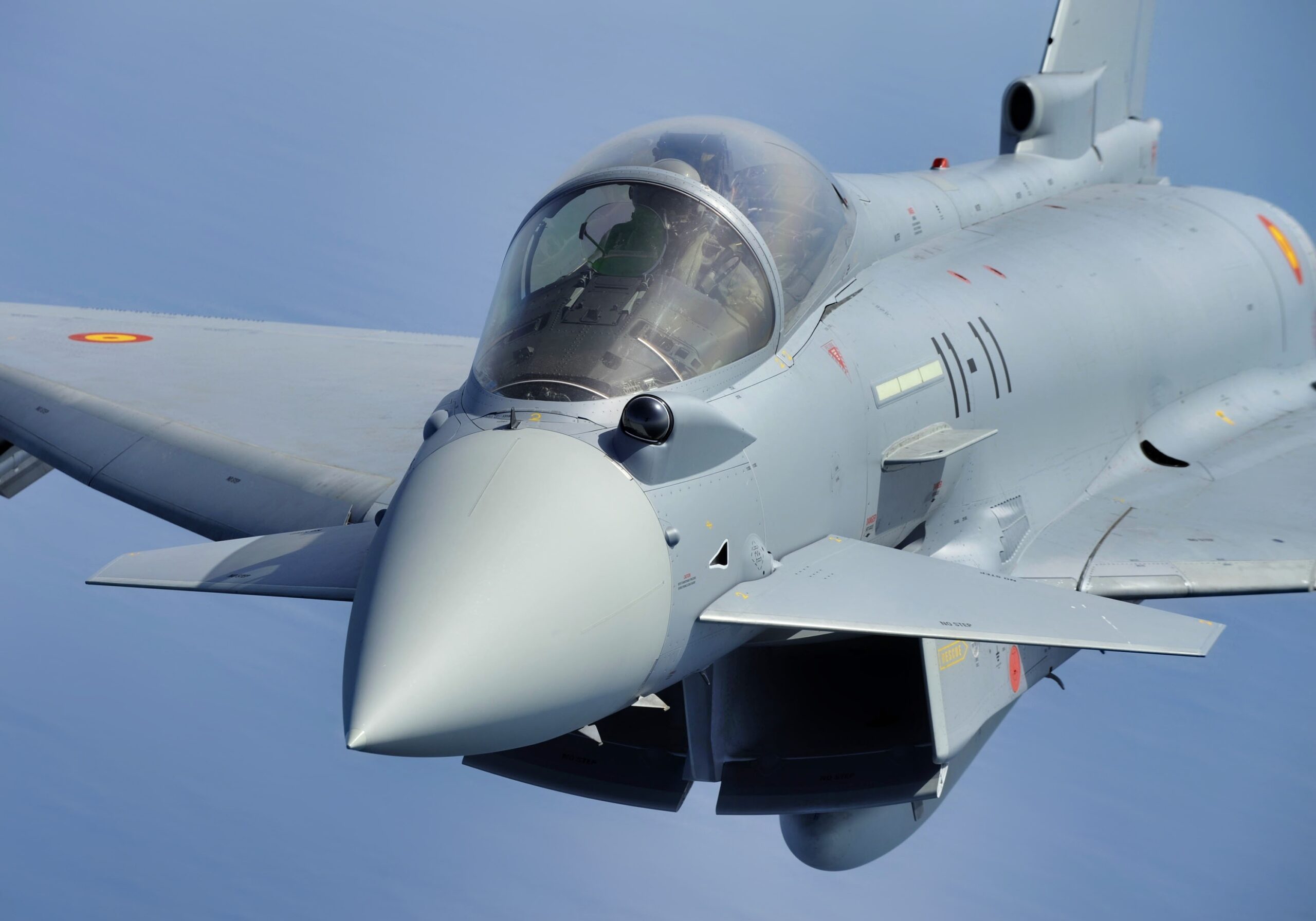
Eurofighter Typhoon Fighter. Image Credit: Creative Commons.
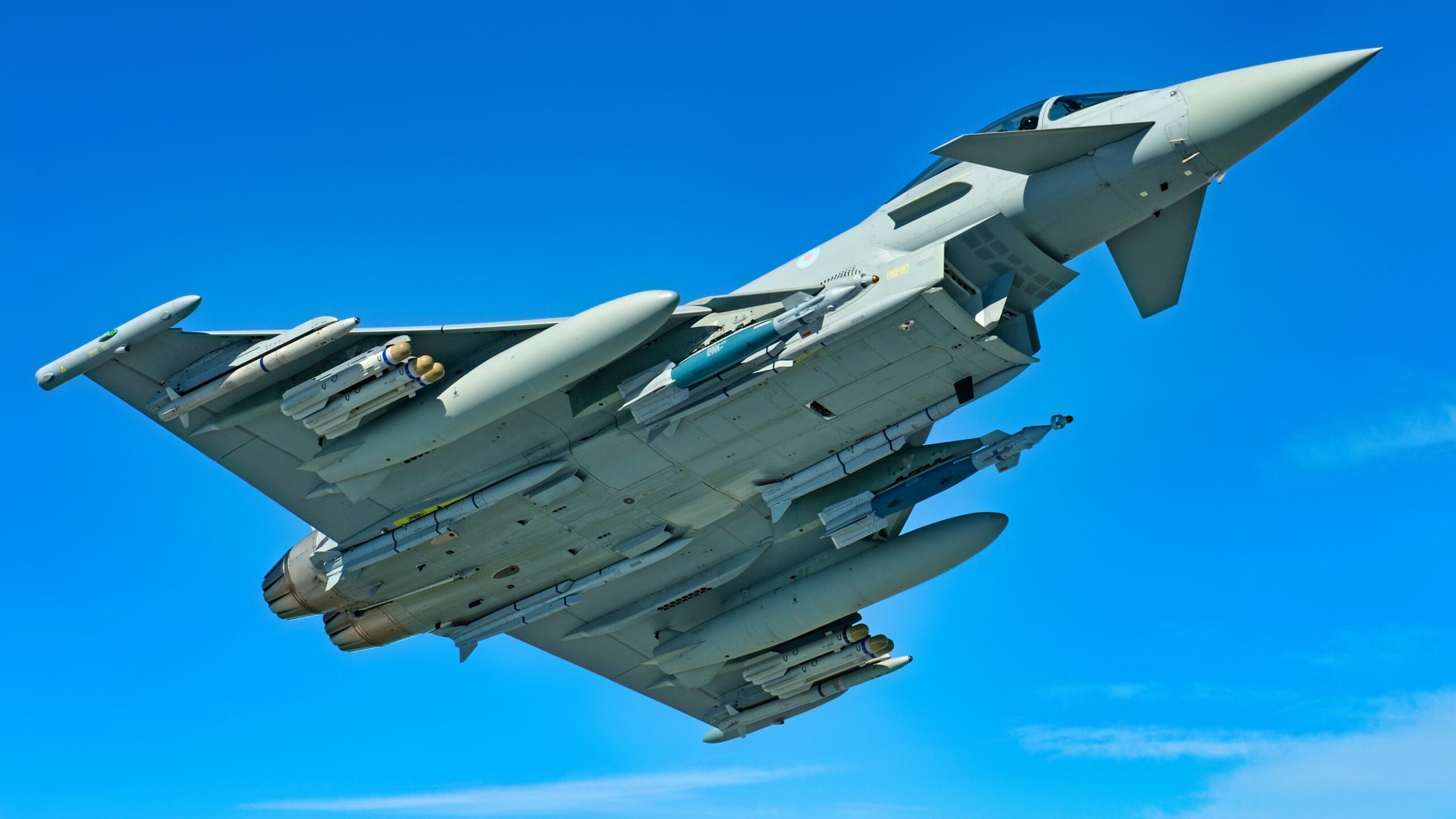
Eurofighter Typhoon. Image Credit: Creative Commons.
Lack of stealth and unflattering video game depictions notwithstanding, the Typhoon remains an extremely deadly and capable warbird in real-world combat, as has been demonstrated by Britain’s Royal Air Force in places such as Libya and Syria, and the Royal Saudi Air Force in their campaign against the Houthis group in Yemen.
Any adversary who underestimates the Eurofighter does so at his or her own peril.
That shouldn’t be terribly surprising. After all, the 4.5-generation F-15EX Eagle II and F-16V “Viper” are also still going strong.
And like its U.S. counterparts, the Typhoon isn’t remaining frozen in time; it has received continual upgrades and improvements, and the Eurofighter’s manufacturing partners are reaping the rewards of those upgrades through more orders.
Eurofighter Upgrades: The “Super Typhoon”
The anonymous admin of the flyafighterjet.com website elaborates on the upgrades:
“The “Super Typhoon” concept refers to a series of major upgrades to the Eurofighter Typhoon, focusing on the Captor-E / ECRS AESA radar (Mk0, Mk1, Mk2), the integration of the Meteor long-range air-to-air missile, and a complete modernization of the avionics, electronic warfare systems, and, ultimately, the engines. The stated objective is clear: to keep the aircraft combat-ready until the 2040s, as an operational bridge between 4th generation fighter fleets and future 6th generation systems such as FCAS or GCAP. With a large AESA antenna, an expanded field of view, and active jamming capabilities, the Captor-E/ECRS Mk2 is set to transform the Typhoon into a 4.5+ generation multi-role platform capable of long-range detection, electronic attack, and ‘no escape zone’ firing with Meteor.”
Furthermore, the unnamed author adds a few paragraphs further down, “A specialist article mentions, for this ‘Super Eurofighter’ generation, a 200-fold increase in the computing power of the avionics, accompanied by improved data links, the integration of the Striker II helmet and an upgrade of the Praetorian DASS [Defense Aids Sub-System] defensive system. The aim is to transform the Typhoon from a mere air superiority fighter into a true swing-role aircraft, capable of switching very quickly from a long-range air-to-air mission to a precision air-to-ground strike in a contested environment.”
The upgrades are keeping the Eurofighter Typhoon viable even in era when stealth planes are all the rage.
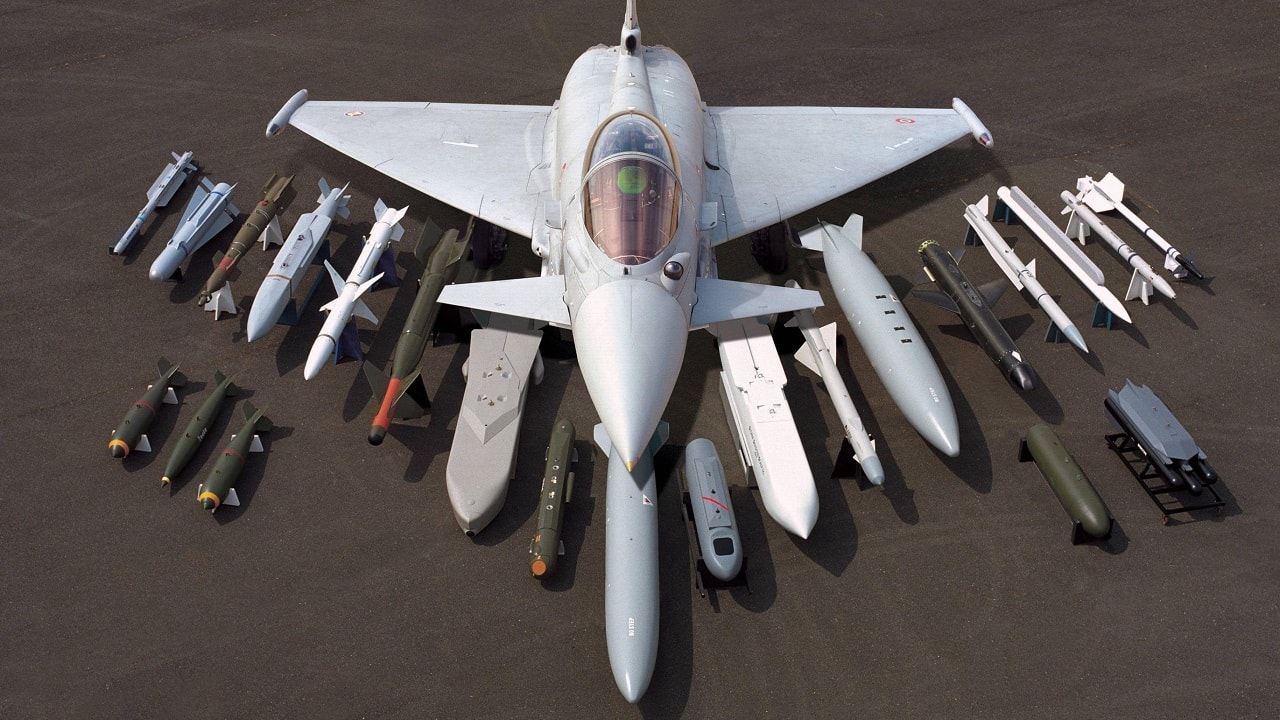
Eurofighter Typhoon. Image Credit: Creative Commons.
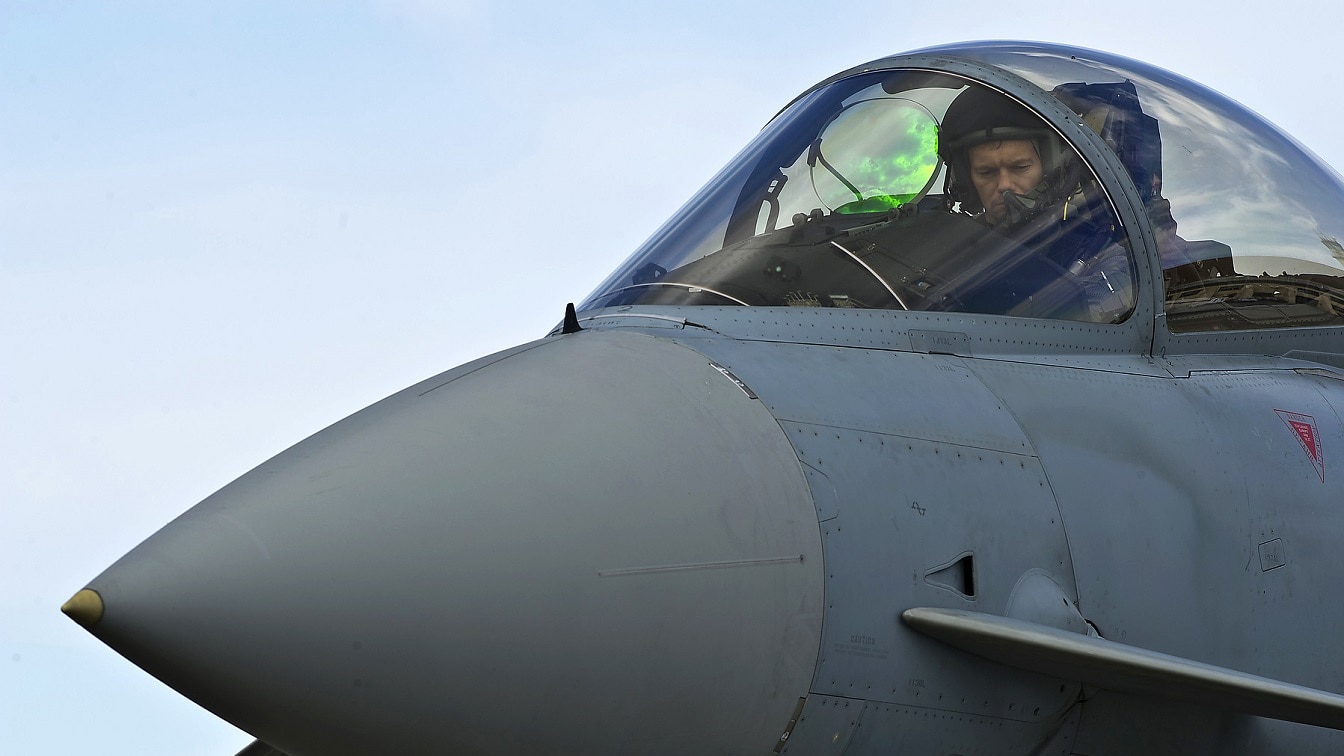
A German Air Force Pilot conducts preflight checks from the cockpit of a GAF Eurofighter Typhoon before a combat training mission during Red Flag-Alaska 12-2 June 11, 2012, at Eielson AFB, Alaska. Red Flag-Alaska is a Pacific Air Forces-sponsored, joint/coalition, tactical air combat employment exercise which corresponds to the operational capability of participating units. The entire exercise takes place in the Joint Pacific Range Complex over Alaska as well as a portion of Western Canadian for a total airspace of more than 67,000 square miles. (Department of Defense photo by U.S. Air Force Tech. Sgt. Michael R. Holzworth/Released)
About that Meteor Missile
The Meteor is an impressive munition. It is an active radar-guided beyond-visual-range air-to-air missile built by MBDA, a European multinational defense firm.
MBDA came into existence in December 2001 via a merger of three of Europe’s most prominent missile-system makers: the French Aérospatiale Matra Missiles, the British-French tandem Matra BAE Dynamics, and the missile division of Italy’s Alenia Marconi Systems.
As MBDA’s official product info page states, “METEOR has been developed by a group of European partners led by MBDA to meet the needs of six European nations: the UK, Germany, Italy, France, Spain and Sweden. All with a common need to defeat the threats of today and in the future…This ‘ramjet’ motor provides the missile with thrust all the way to target intercept, providing the largest No Escape Zone of any air-to-air missile system, several times greater than current MRAAMs. The fragmentation warhead ensures maximum lethality.”
That so-called “No-Escape Zone” is approximately 60 kilometers, and the official maximum range of the missile is 120 kilometers—but unofficially, the Meteor can reach out and touch an adversary much farther than that, perhaps as far away as 200 kilometers.
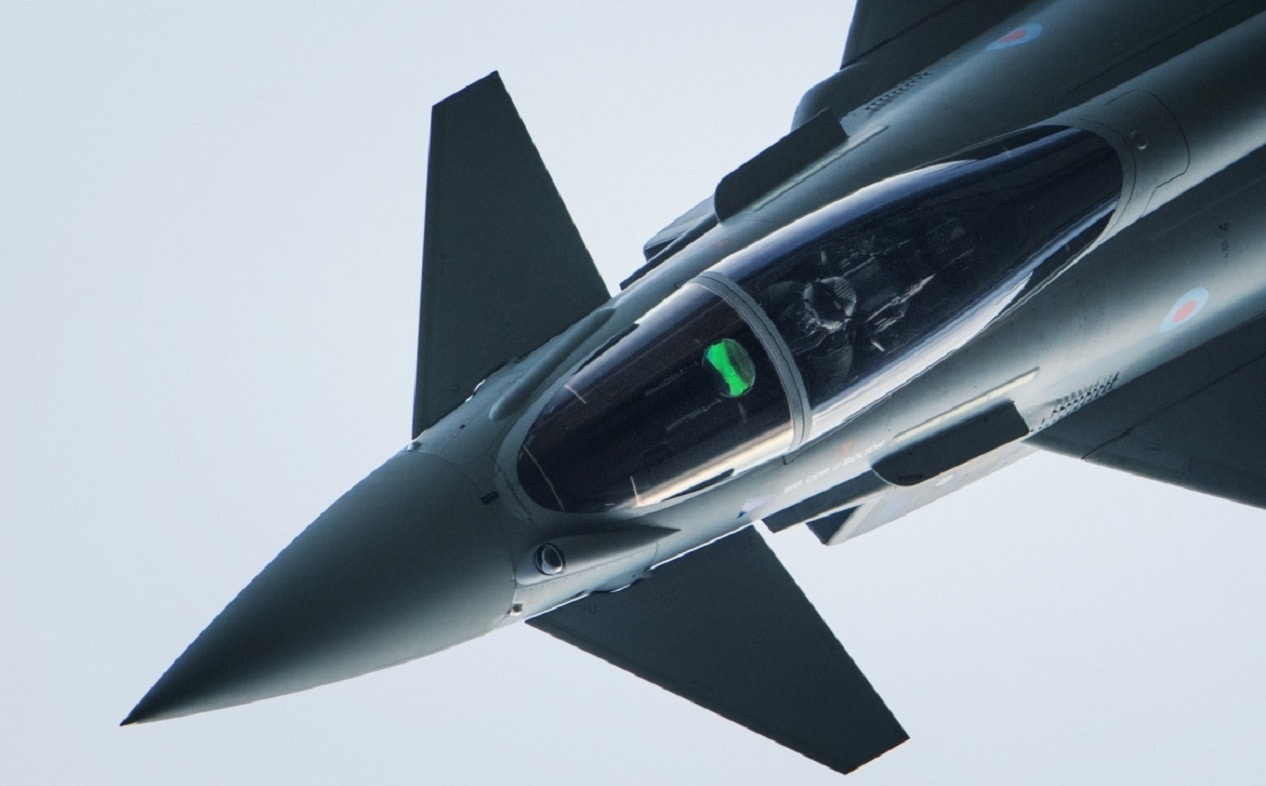
Eurofighter Typhoon.
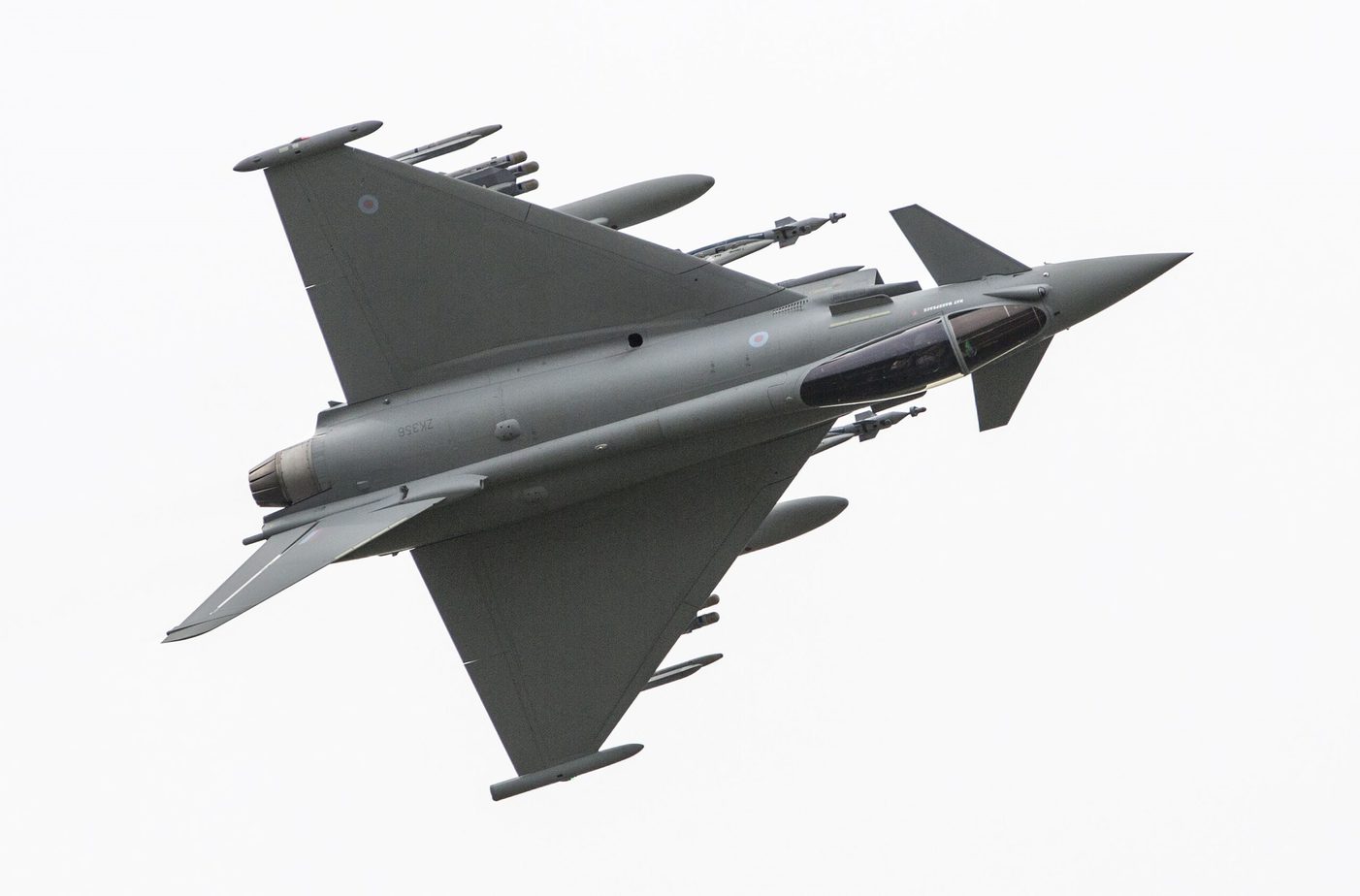
Pictured is a Royal Air Force Typhoon FGR4 performing a display during the 2016 RIAT Royal International Air Tattoo.
For comparison, the U.S. F-14 Tomcat’s legendary AIM-54 Phoenix missile had a range of 185 kilometers, while the present-day AIM-120 Advanced Medium Range Air-to-Air Missile (AMRAAM) reaches 179 kilometers.
Additional tech specs and vital stats of the MBDA Meteor include a weight of 190 kilograms, a length of 3.7 meters, a diameter of 178 millimeters, and a max airspeed of Mach 4.
Reaping the Rewards
Going over to the Eurofighter News segment of the Eurofighter.Com website, we see the following juicy headlines (going in reverse chronological order):
-“Eurofighter and NETMA Sign Contract To Progress Aerodynamic Modification Kit (AMK)” (dated February 5, 2026)
-“TÜRKİYE ORDERS 20 TYPHOON JETS” (dated October 27, 2025)
-“Germany Places Order for 20 Eurofighter Jets” (dated October 15, 2025)
Let’s dive deeper into those headlines, in order:
-Sifting through all that acronymic alphabet soup, NETMA stands for the NATO Eurofighter and Tornado Management Agency.
The purpose of the AMK is to allow faster integration of new weapons and certification of new external loads, including future anti-radar missiles, which enable the suppression of enemy air defenses mission carried out by U.S. counterparts such as the Air Force’s F-16 “Wild Weasel” variants and the Navy’s EA-18G Growlers. AMK will also provide enhanced target acquisition and improved close-quarters combat (CQC) capabilities
-In the words of Jorge Tamarit-Degenhardt, chief executive officer of Eurofighter: “As a proud member of the Eurofighter family, Türkiye will join our four core nations and five partner nations in working together to protect our skies and strengthen security across Europe with a vital role in covering the Black Sea flank.” (He seems to be conveniently glossing over Turkish President Recep Tayyip Erdogan’s buddy-buddy relationship with Russian President Vladimir Putin, but I digress.)
-These 20 airframes are set to be delivered between 2031 and 2034, will replace part of the Luftwaffe Bundeswehr’s aging Panavia Tornado fleet that will be retired from service in the coming years.
The order for the 20 warbirds come in an addition to the 38 Eurofighters ordered by Germany as part of Project Quadriga.
About the Author: Christian D. Orr, Defense Expert
Christian D. Orr is a Senior Defense Editor. He is a former Air Force Security Forces officer, Federal law enforcement officer, and private military contractor (with assignments worked in Iraq, the United Arab Emirates, Kosovo, Japan, Germany, and the Pentagon). Chris holds a B.A. in International Relations from the University of Southern California (USC) and an M.A. in Intelligence Studies (concentration in Terrorism Studies) from American Military University (AMU). He is also the author of the newly published book “Five Decades of a Fabulous Firearm: Celebrating the 50th Anniversary of the Beretta 92 Pistol Series.”