
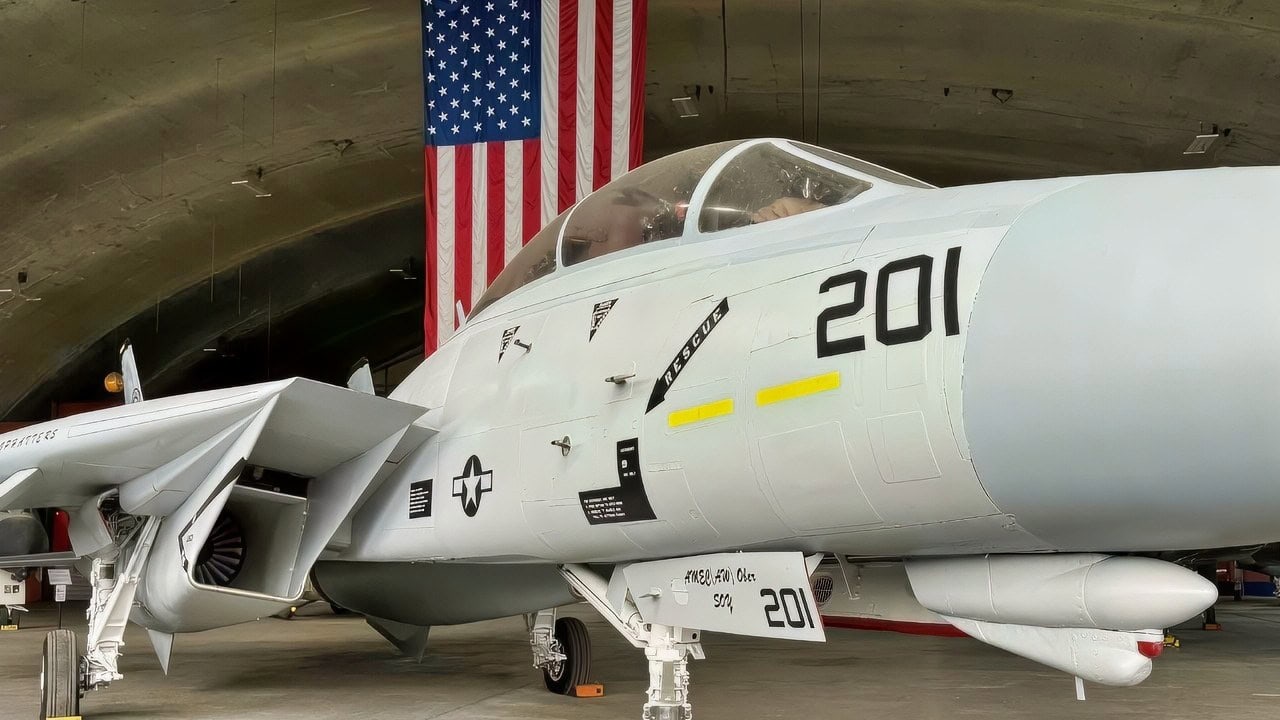
Summary and Key Points: Christian D. Orr, a senior defense editor and former Air Force officer, explores the “hidden” history of the F-14 Tomcat as a multirole strike platform.
-Despite its 2006 retirement, the Tomcat was originally engineered with the AWG-15 fire-control system and CCIP (Constantly Computed Impact Point) mode for air-to-ground ordnance.
-This 19FortyFive report analyzes the “Bombcat” transition during Operation Deliberate Force, evaluating the aircraft’s ability to carry heavy loads of Paveway II laser-guided bombs and Mk-84 “dumb” bombs while maintaining a superior carrier-landing weight margin compared to the early F/A-18 Hornet.
Meet the F-14 Tomcat Bombcat Fighter That Could Be a Bomber
The U.S. Navy’s F-14 Tomcat and the U.S. Air Force’s F-15 Eagle are two of the most legendary fourth-generation jet fighters. The Tomcat made its maiden flight on September 22, 1974, and the Eagle on January 9, 1976. The big difference between the two is that the Eagle hasn’t been retired yet.
It continues to fight for the Air Force in its 4.5-generation iteration, the Boeing F-15EX Eagle II; meanwhile, the Navy officially retired the Tomcat on October 4, 2006.
A major reason why the Eagle II remains viable is its ability to act as a “bomb truck,” following in the footsteps of the F-15E Strike Eagle (AKA the “Mud Hen”) with its ability deliver air-to-ground ordnance with devastating accuracy, in addition to being a superb air superiority fighter. As for the Tomcat, the Navy didn’t bother using it as a “Bombcat” until the twilight of its career.
However, what almost gets lost in the shuffle of history is the fact that the F-14 had actually been envisioned to carry bombs right from the get-go.
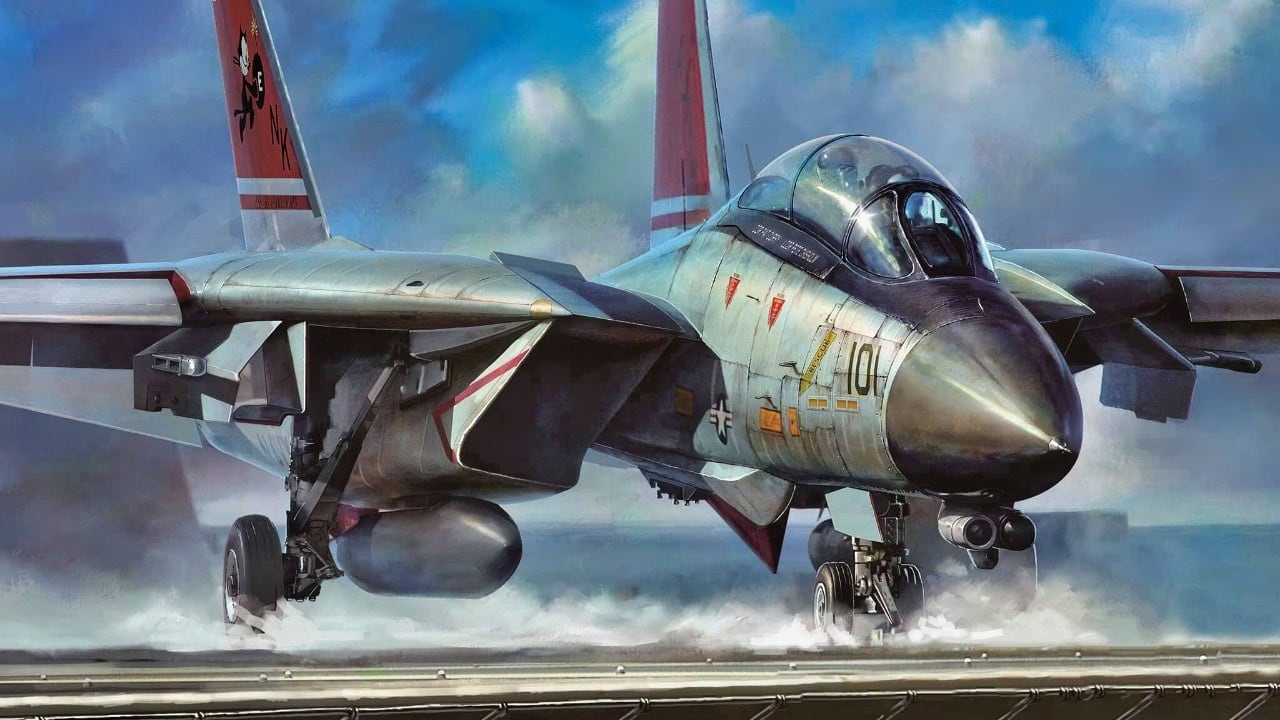
F-14 Tomcat Fighters. Image Credit: Creative Commons.

F-14 Tomcat
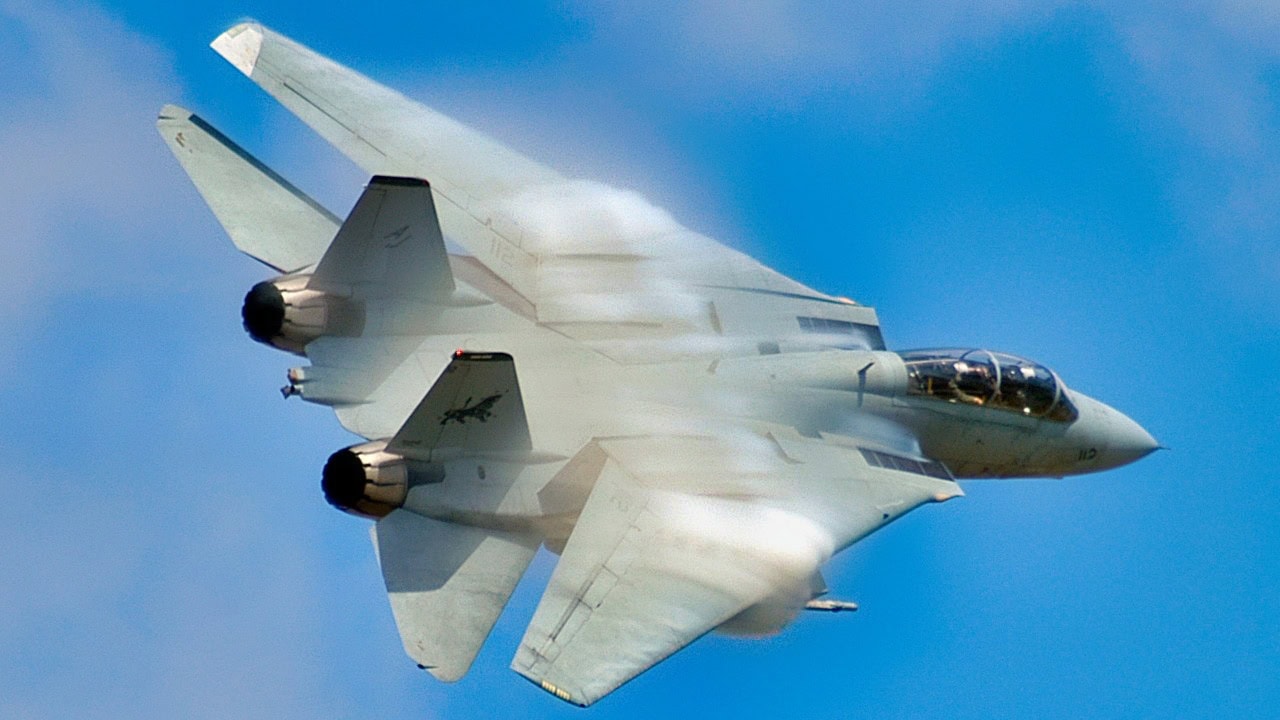
Naval Air Station Oceana, Va. (Sept. 25, 2004) – An F-14D Tomcat assigned to the “Black Lions” of Fighter Squadron Two One Three (VF-213), conducts a high-speed pass at the conclusion of the tactical air power demonstration at the 2004 “In Pursuit of Liberty,” Naval Air Station Oceana Air Show. The demonstration showcased multiple F-14 Tomcats and F/A-18 Hornets displaying various maneuvers and simulated bomb and staffing passes in front of the crowd. The air show, held Sept. 24-26, showcased civilian and military aircraft from the Nation’s armed forces, which provided many flight demonstrations and static displays. U.S. Navy photo by Photographer’s Mate 2nd Class Daniel J. McLain (RELEASED).
The Nearly Forgotten Basic Backstory
A highly useful source of information for this story is an article for The Aviationist by Tom Cooper:
“But even though the Tomcat performed the air-to-ground role only in her twilight years, the AWG-15 fire-control system of the F-14A Tomcat was always equipped with the CCIP [constantly computed impact point ] mode, and the jet was always capable of deploying ‘dumb’ bombs.
“Indeed, Grumman ran the related flight-testing in 1973-1974, as can be seen in the main photo of this post (showing one of 10+1 prototypes armed with Mk.82s, AIM-7 Sparrows and AIM-9 Sidewinders). Indeed, VF-32 Squadron of the USN even run some exercises with bombs, shortly after its conversion to the new jet, in 1973-1974.”
About Iran’s F-14 Tomcats
For anybody wondering why Iran flies the Tomcat—the Iranian F-14s are a carryover from happier times for U.S.-Iran relations during the reign of Shah Mohammad Reza Pahlavi, who was not only a staunch American ally, but staunchly pro-Israel as well.
As Cooper continues, “That’s also why all the 80 F-14As made for Iran were all manufactured and delivered (minus one that was never delivered) equipped with the CCIP-mode plus all the shackles and other equipment necessary to carry and deploy bombs in combat (i.e. this was no ‘Iranian modification, even if, yes, the Iranians were the first to deploy the F-14A as a ‘bomber’ – either in 1982 or in 1986, seems even they cannot agree about this).”
When placing the orders for the F-14, the Shah-led Iranian government also tried to procure the Rockwell International AGM-53 Condor, a TV-guided missile with a range of about 60 km under development for the U.S. Nav since the late 1960s.
Alas, the Condor was cancelled before the Iranians could get their hands on any Condors, due to its exorbitant cost, which exceeded that of the F-14’s vaunted AIM-54 Phoenix missile.
Enter The Bombcat (Finally)
Eventually the F-14 was “cleared hot” to carry bombs and therefore live up to its potential as a multirole fighter—just like the F-15 and F-16. Initially, the “Bombcat” could only carry unguided free-fall “dumb bombs,” such the 500-lb Mk-82, both low-drag and Snakeye or BSU-86 high-drag configurations, and the equivalent 1,000-lb Mk-83 bomb and 2,000-lb Mk-84 bombs.
Soon, cluster bombs were added to the mix, including the anti-armour Mk-20, Mk-99 and Mk-100 Rockeye and the CBU-78 Gator, finally followed by precision-guided munitions such as the GBU-12, GBU-16, and GBU-10 Paveway II laser-guided bombs.
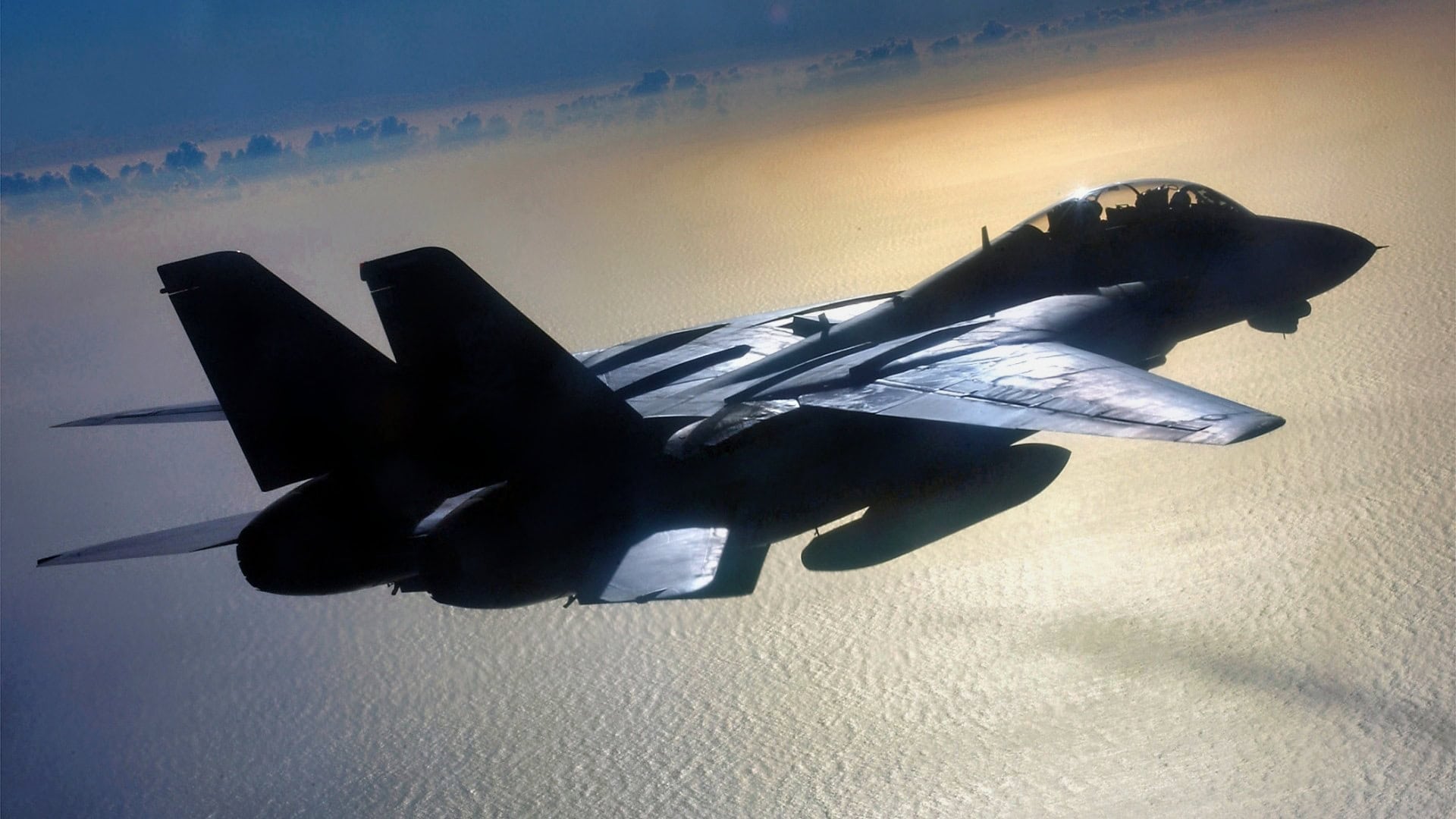
F-14 Tomcat Fighter. Image Credit: Creative Commons.
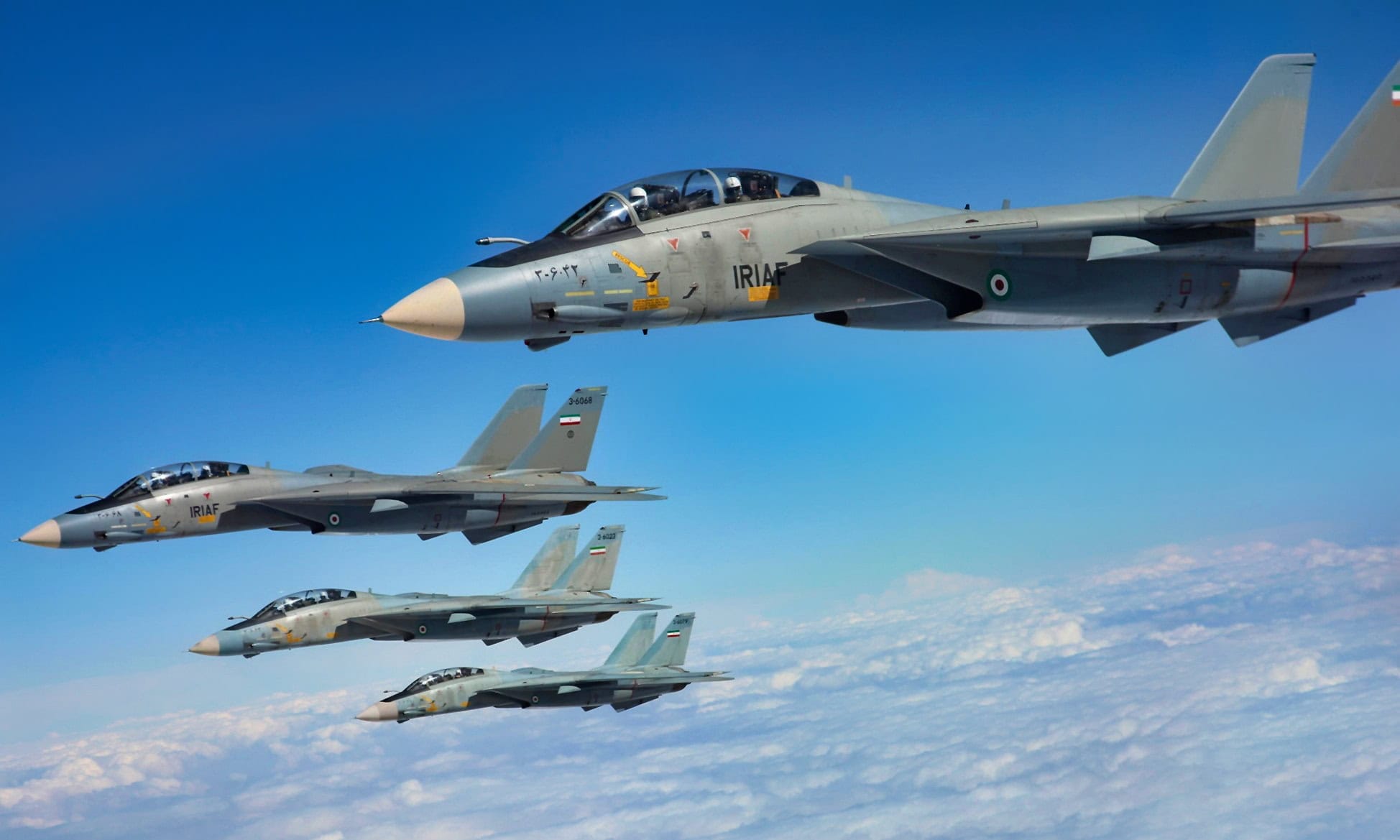
F-14 Tomcat. Image Credit: Creative Commons.
The Bombcat finally proved its worth in combat during Operation Deliberate Force in 1995—directed against Bosnian Serbs under the command of Radovan Karadzic and Gen. Ratko Mladic, who were committing atrocities against Bosnia’s Muslim majority. The warbirds flown by VF-41 employed both “dumb bombs” and precision-guided munitions. As noted by Tom Cooper’s Aviationist colleague, Stefano D’Urso, “At that time the Bombcat was missing a self-designating capability, so they flew in mixed sections of F/A-18s and F-14s, with the Hornets buddy-lasing the targets. One major benefit that the Tomcat had was its capability to bring it back aboard the carrier its entire heavy load of laser-guided munitions if they weren’t used in combat, while the Hornet was forced to jettison them to meet the weight requirements before landing back on the carrier.”
Not Claiming to be Prescient, But…
Okay, childhood flashback time.
Way back when I was in the 6th grade (1986-1987), my classmates and I were tasked with writing a children’s book. I teamed up with my then-best friend to write a sci-fi/action adventure story titled “Infamy Prevented,” wherein the two protagonists take their F-14s back in time to stop the Pearl Harbor attack. Our book basically drew elements and inspiration from three different 1980s action films:
–The Final Countdown, which was also a Pearl Harbor time travel story. Difference was, in that movie, the time warp was unintentional, and the protagonists ultimately decide not to stop the Imperial Japanese Navy’s attack; by contrast, our book’s heroes deliberately made the time warp and moreover did carry out the preventive strike against the IJN.
-Top Gun, where we got the idea for the F-14 Tomcats. The Tom Cruise film that was all the rage at the time we wrote our book.
-Iron Eagle, even though it involved Air Force F-16s and not Navy Tomcats, is still relevant to this article, because we took the fictitious “Hades Bomb” from that film and our armed our heroes’ F-14s with it.
It’s pretty wild to think that eight years later, the Tomcat would indeed be used as a “Bombcat” (albeit with ordnance a tad less destructive and dramatic than the mythical Hades bomb).
About the Author: Christian D. Orr, Defense Expert
Christian D. Orr is a Senior Defense Editor. He is a former Air Force Security Forces officer, Federal law enforcement officer, and private military contractor (with assignments worked in Iraq, the United Arab Emirates, Kosovo, Japan, Germany, and the Pentagon). Chris holds a B.A. in International Relations from the University of Southern California (USC) and an M.A. in Intelligence Studies (concentration in Terrorism Studies) from American Military University (AMU). He is also the author of the newly published book “Five Decades of a Fabulous Firearm: Celebrating the 50th Anniversary of the Beretta 92 Pistol Series.”