
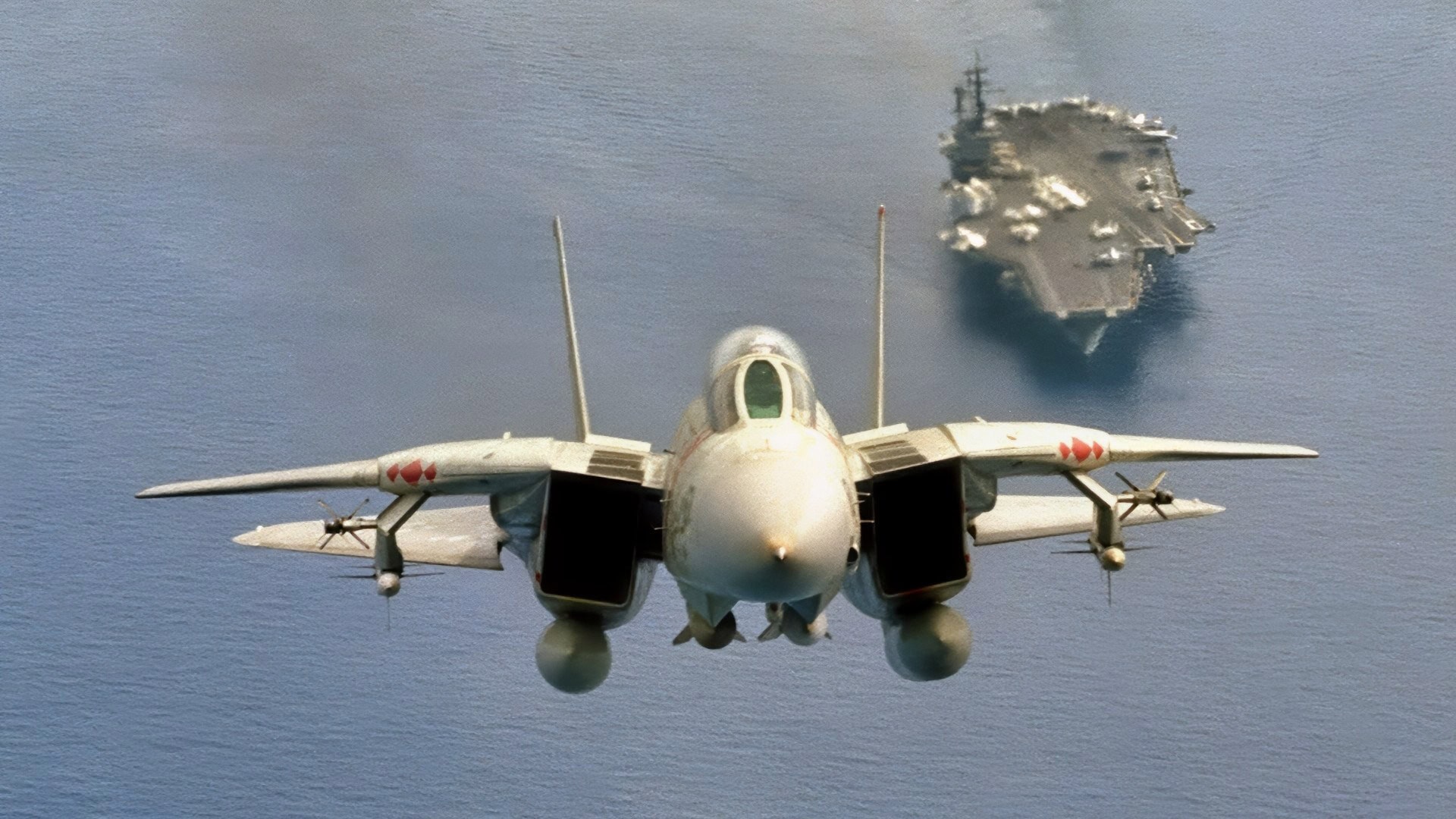
Summary and Key Points: The old AT&T slogan fits air combat: win by getting to the fight and striking first from standoff range. The F-14D Tomcat excelled at both, pairing strong reach with the AIM-54 Phoenix—an interceptor credited with roughly 100-nautical-mile engagement range, high speed, and multi-target capability.
-Compared with today’s carrier fighters, the Tomcat’s cited ferry and combat ranges still resonate in the Indo-Pacific’s long distances, even as newer jets bring other advantages.
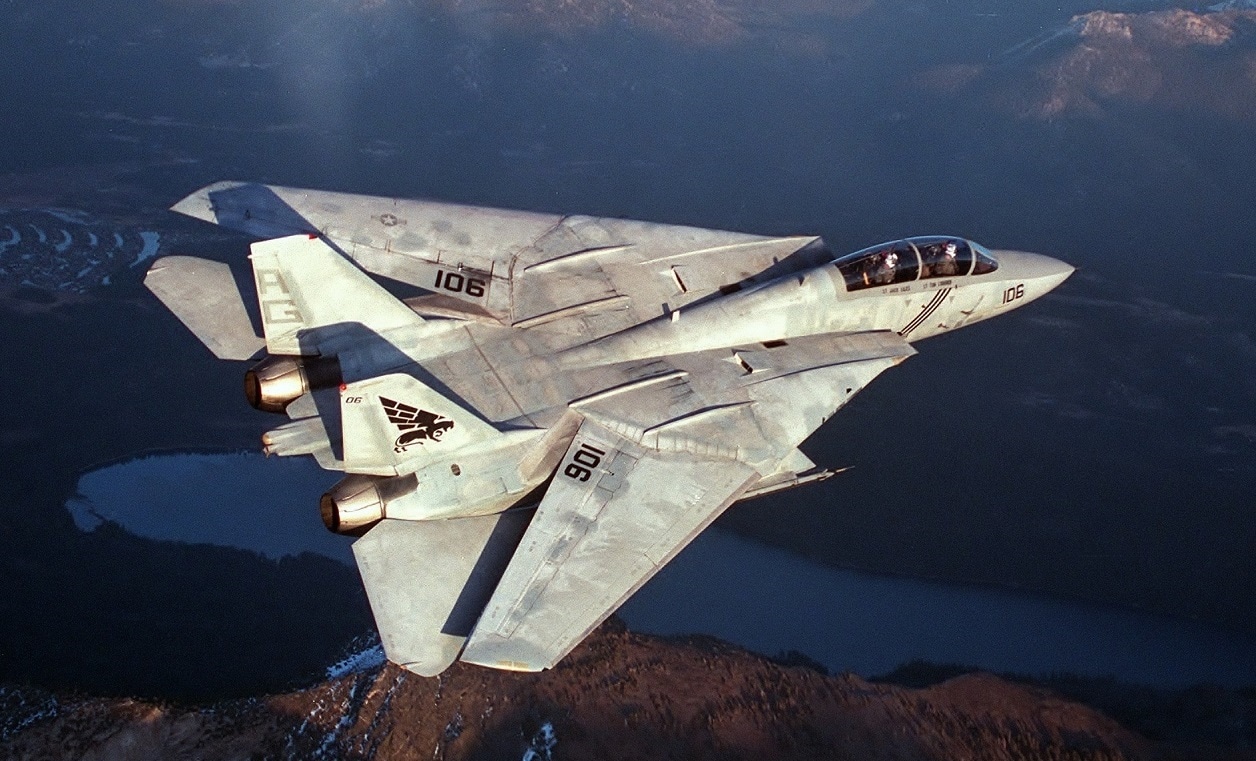
Right rear overhead view of an F-14AB Tomcat aircraft of Fighter Squadron 143 (VF-143), the Pukin’ Dogs, in flight over desert terrain.
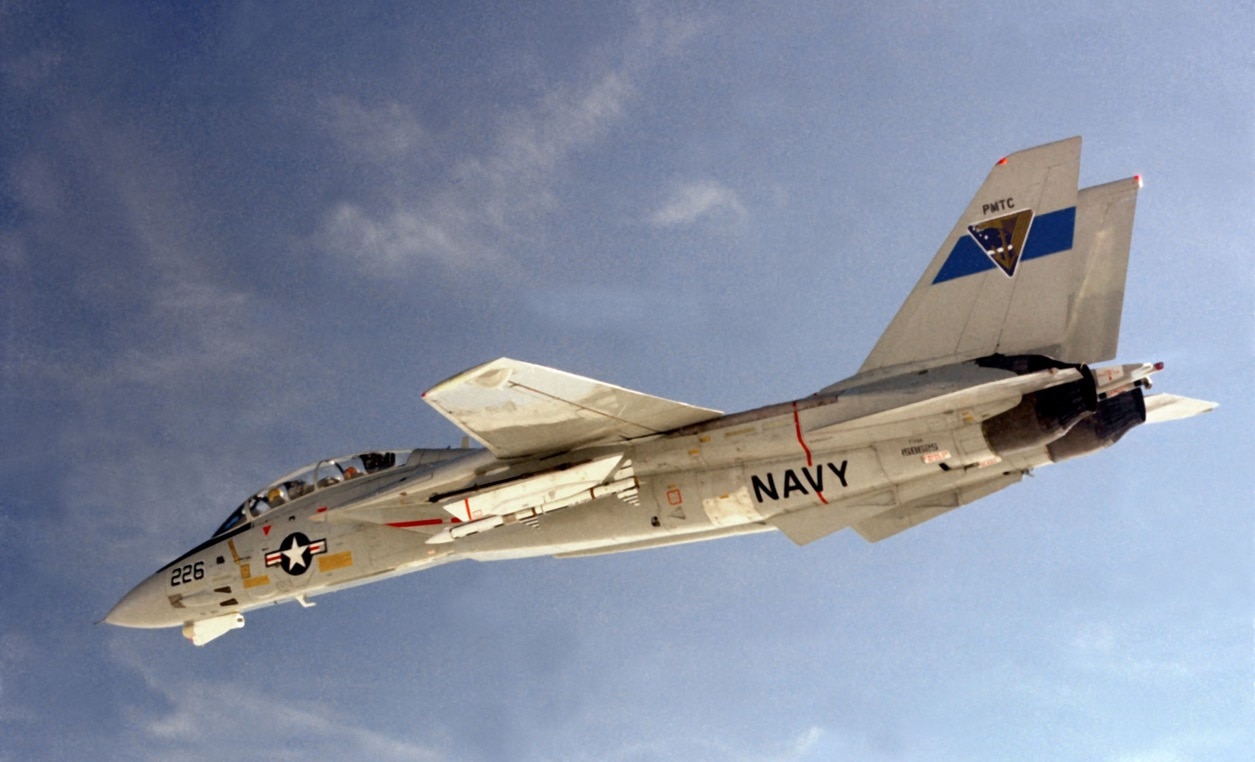
F-14 Tomcat. Image: Creative Commons.
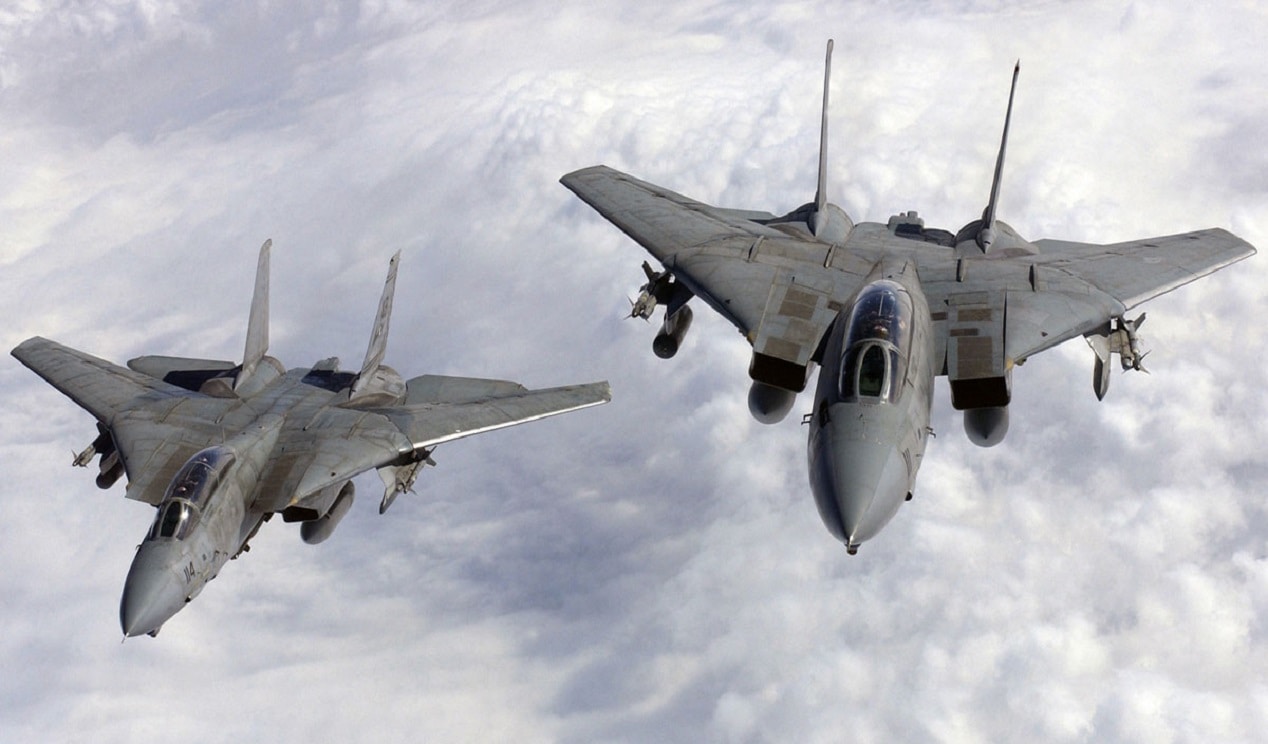
Images of two F-14 Tomcats. Image Credit: US Navy.
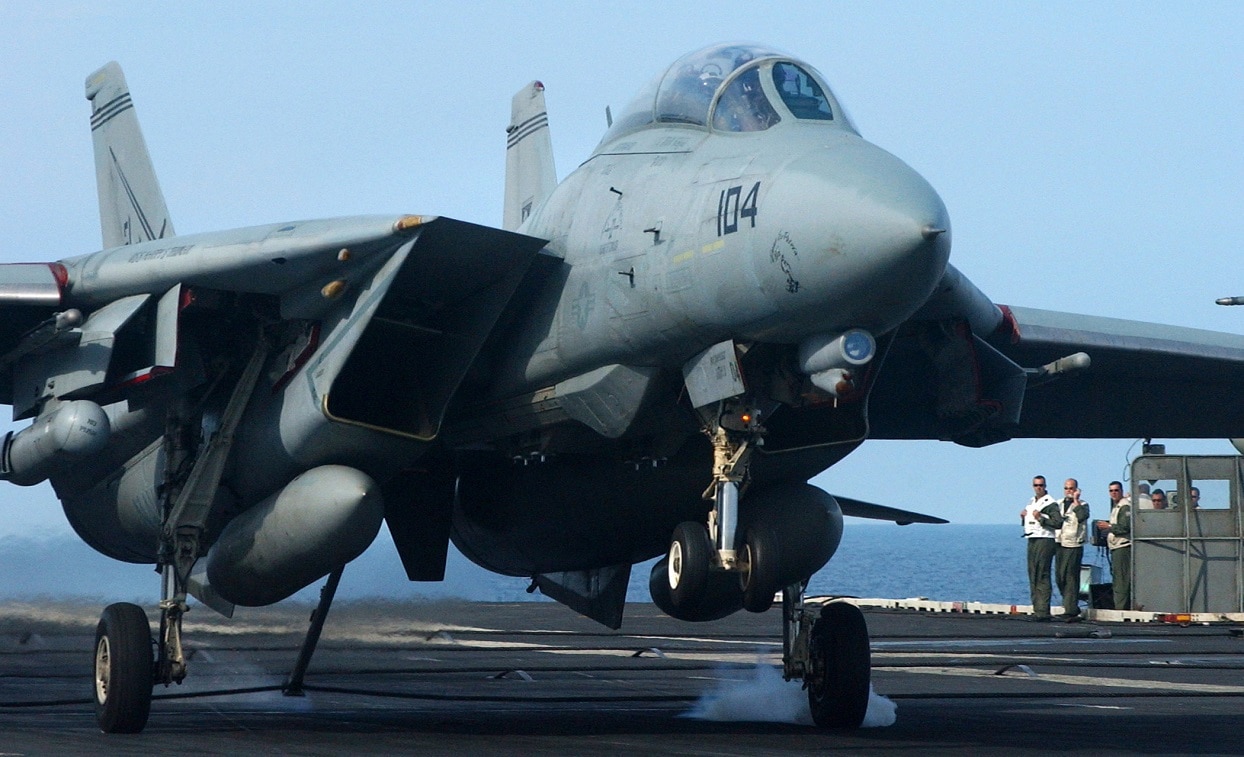
F-14 Tomcat landing. Image Credit: US Navy.
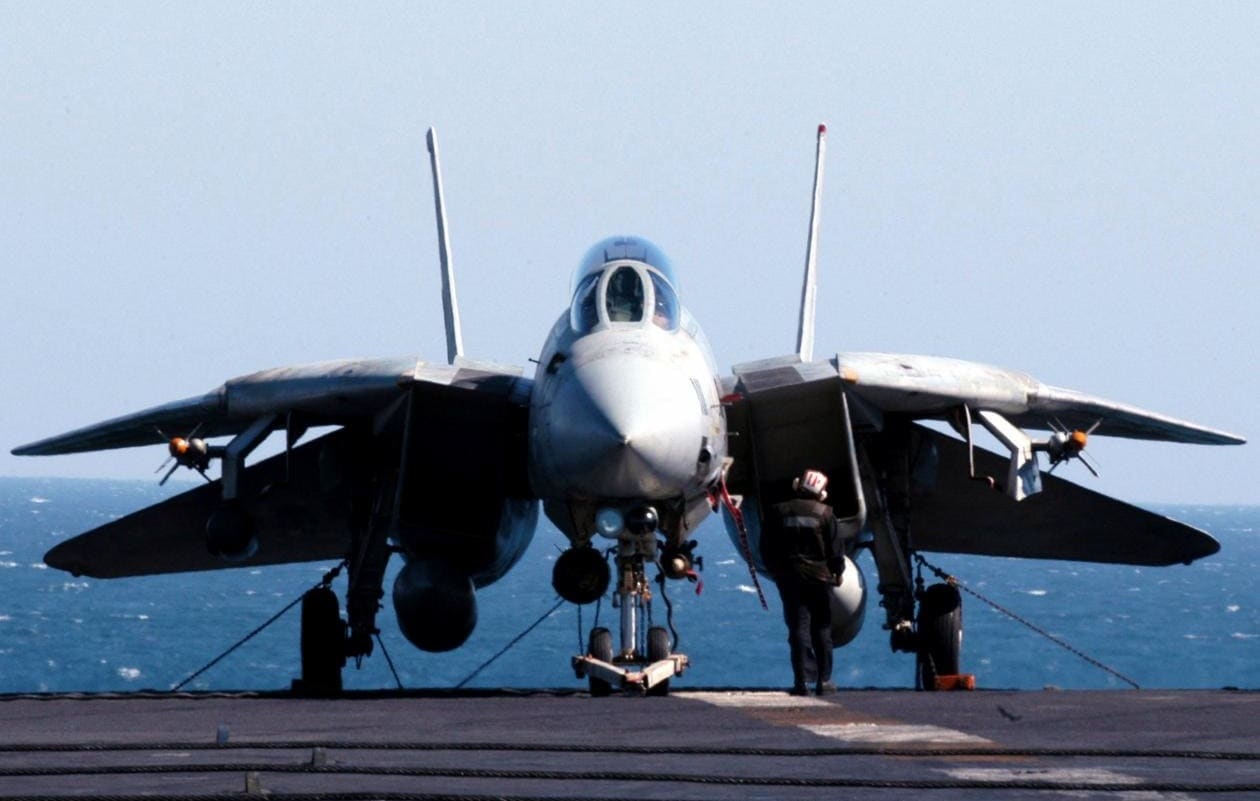
Image: Creative Commons.
-The F-14 Tomcat was retired for real reasons—maintenance burden, reliability, and safety—but a modernized “Super Tomcat” might have bridged looming gaps as the Super Hornet winds down and a sixth-generation successor remains uncertain.
Why the U.S. Navy Retired the F-14 Tomcat—And What It Lost with the Phoenix
“Reach out and touch someone,” went the advertising jingle of Bell Systems/AT&T back in the 1970s and 1980s. The ad extolled the virtues of long-distance dialing. Back in the era of rotary-dial landline telephones, being able to make an international call was kind of a big deal.
The ability to reach out and touch someone has a more immediate meaning in military operations: It refers to the ability to reach and kill your enemy before he does so to you.
In ground operations, it as an ethos held by snipers, with famous examples such as U.S. Marine Corps Gunnery Sergeant Carlos Hathcock (2,500-yard sniper kill), Canadian Forces Corporal Rob Furlong (2,657-yard sniper kill), and an anonymous sniper with Canada’s elite Joint Task Force 2 who tallied a 3,540-meter sniper kill.
In the airpower context, the old slogan applies to two virtues: the ability of your warplane to get to the fight and penetrate deeper into the warzone, and the ability to engage enemy warbirds from standoff attack range.
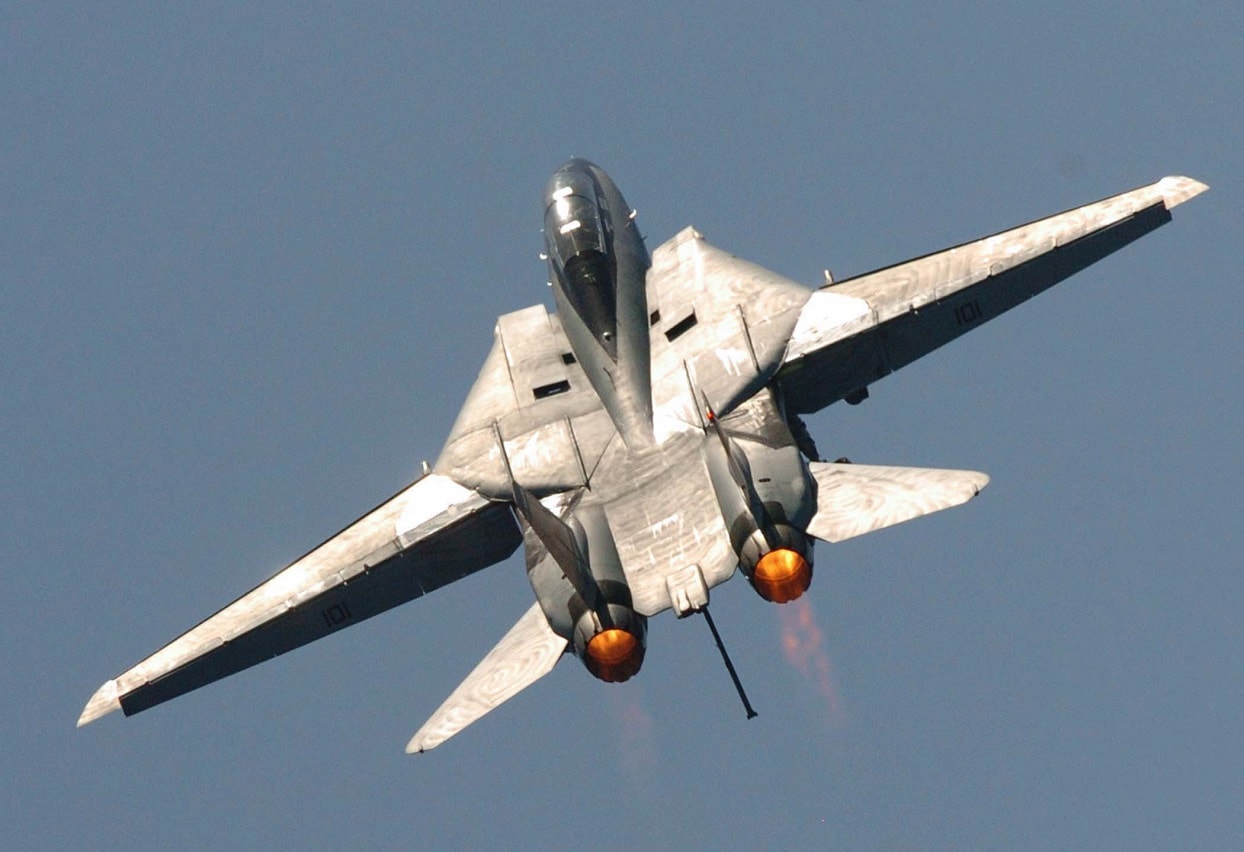
An F-14 Tomcat pulls up after performing a fly-by past the aircraft carrier USS Dwight D. Eisenhower (CVN 69) as the ship operates in the Atlantic Ocean on June 19, 2006. DoD photo by Petty Officer 2nd Class Miguel A. Contreras, U.S. Navy. (Released)
That brings us to what the U.S. Navy misses the most about the F-14D Tomcat.
Airframe Range Advantages: F-14 vs. F/A-18 and F-35
Let’s start by comparing the ferry range and combat range of the now-retired Tomcat with the U.S. Navy’s current fighter jets, namely the Boeing F/A-18E/F Super Hornet and the F-35C Lightning II stealth jet.
F-14D: Ferry range of 1,600 nautical miles (nm), combat range of 503 nm
F/A-18E/F: Ferry range of 1,275 nm, combat range of 489 nm
F-35C: Ferry range of 1,200 nm, combat range of 670 nm
Given the vast distances involved in the Indo-Pacific region, range matters.
Weaponry Advantage: Phoenix vs. Slammer
The Tomcat’s famed AIM-54 Phoenix missile could reach all the way out to 100 nm, traversing that distance at Mach 5 (thereby attaining borderline hypersonic weapon status) and delivering a devastating payload with a 135-lb. high-explosive warhead.
As for the AIM-120 Advanced Medium Range Air-to-Air Missile (AMRAAM, or “Slammer”) wielded by both the Super Hornet and the Lightning II, its range tops off at 86 nm.
The Phoenix also could engage multiple targets simultaneously. On January 21, 1973, an F-14A crewed by Commander John R. “Smoke” Wilson Jr. and radar intercept officer Lieutenant Commander Jack Hawver fired six Phoenix missiles against six different target drones simultaneously. Since Russia or China in any future conflict might try to use sheer numbers to negate U.S. advantages in aerial technology and training quality—sending the aerial equivalent of human wave attacks—this could be kind of a big deal.
“Swing-Wing” Savings Superiority
One of the reasons that the F-14D airframe had such excellent range was its variable-sweep wings.
As the Pilot Institute elaborates, “At high speeds, especially near or above the speed of sound, swept-back wings actually lessen aerodynamic drag by delaying the formation of shock waves. …This reduction in drag leads to better fuel economy and allows for higher maximum speeds without requiring structural modifications. The improved stability at high speeds also contributes to steady flight, and overall better performance. …Because these wings can adjust more naturally during flight, they can reduce drag and even save fuel.”
Why was the F-14 Retired?
As awesome as the F-14 was in combat, it required constant, intensive maintenance and had reliability and safety issues. (Goose’s tragic death scene in the original 1986 Top Gun was art imitating life). The F/A-18 Super Hornet resolved all those issues.
Were the F-14 and AIM-54 Retired Too Early?
There’s an argument to be made for the idea that the F-14 could have served longer. The F/A-18E/F has officially been slated for retirement. The final fuselages are now being built, with the production run projected to end in 2027.
The program to develop its sixth-generation successor, the F/A-XX, faces budgetary obstacles from the Pentagon, Congress, and defense contractors alike. (Boeing and Northrop Grumman are considered the leading candidates for the bid.)
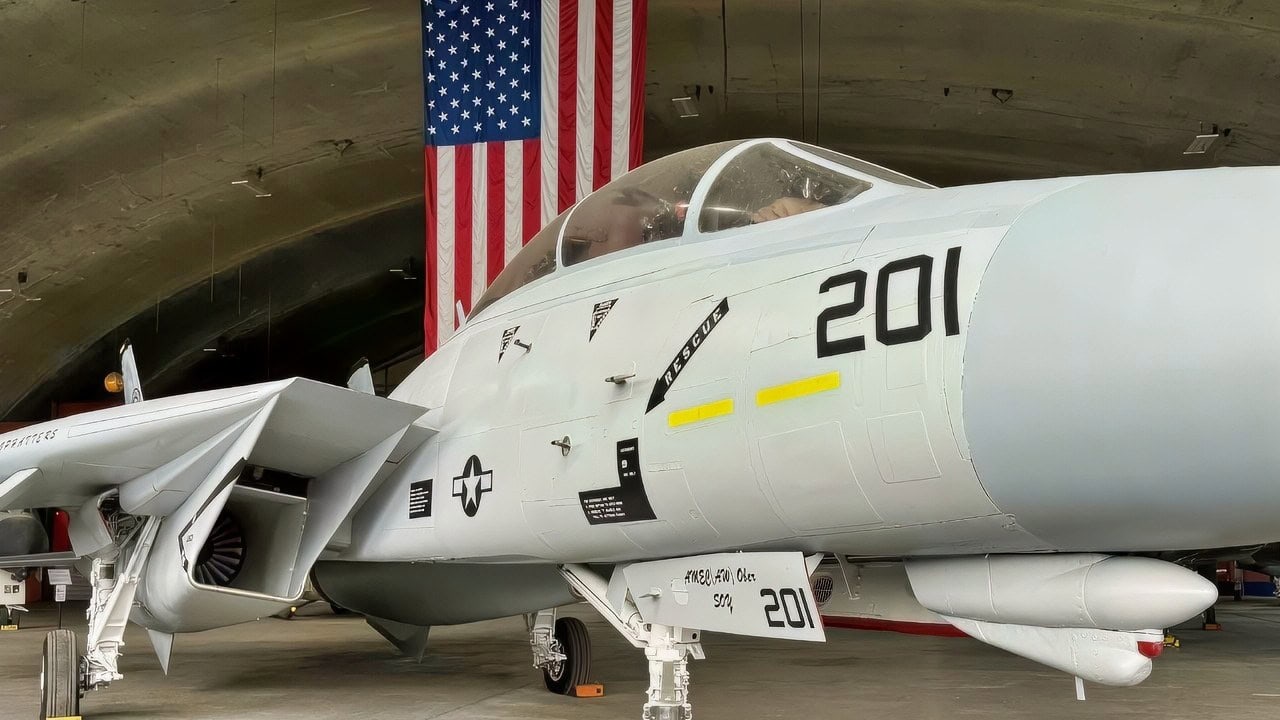
F-14 Tomcat Fighter U.S. Navy. 19FortyFive Field Research Image.

F-14 Tomcat in Museum. Image was taken by Jack Buckby for 19FortyFive.com. All rights reserved.
In this circumstance, a hypothetical 4.5-generation version of the would-be Super Tomcat (somewhat akin to the Boeing F-15EX Eagle II) could have filled the gap while the Navy slowly brought its F-35Cs online.
As for reliability and safety, who’s to say the brain trust at Northrop Grumman couldn’t have figured out the way to address those issues?
Coulda, shoulda, woulda.
About the Author: Christian D. Orr, Defense Expert
Christian D. Orr is a Senior Defense Editor. He is a former Air Force Security Forces officer, Federal law enforcement officer, and private military contractor (with assignments worked in Iraq, the United Arab Emirates, Kosovo, Japan, Germany, and the Pentagon). Chris holds a B.A. in International Relations from the University of Southern California (USC) and an M.A. in Intelligence Studies (concentration in Terrorism Studies) from American Military University (AMU). He is also the author of the newly published book “Five Decades of a Fabulous Firearm: Celebrating the 50th Anniversary of the Beretta 92 Pistol Series.”