
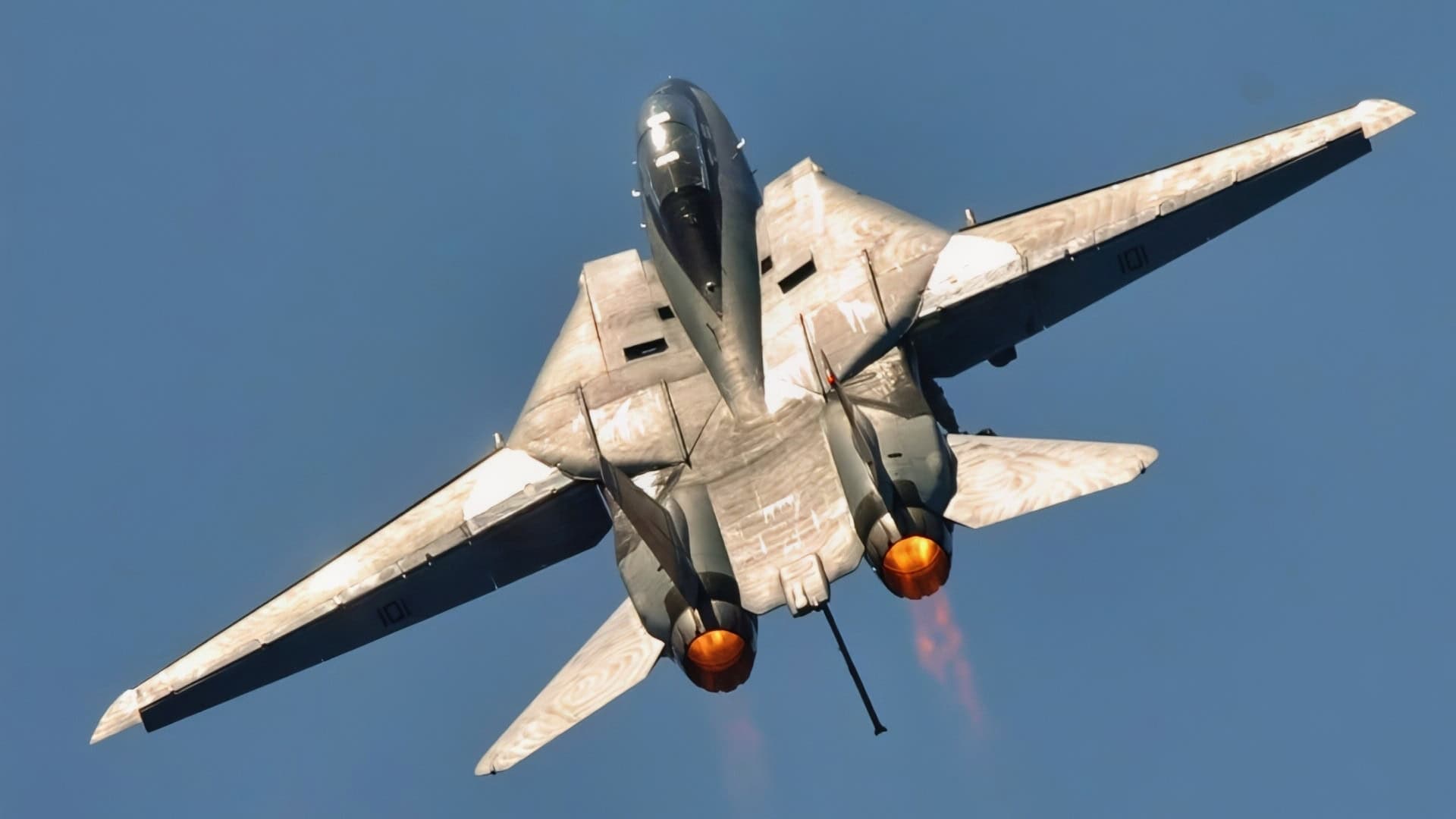
In August 1990, two U.S. Navy F-14 Tomcats intercepted what they thought was a hostile high-speed aircraft over the Red Sea—only to discover it was a British Airways Concorde flying at Mach 2 above 60,000 feet. The Tomcat’s Radar Intercept Officer snapped a photograph that turned out to be the only known image of a Concorde flying at Mach 2 in operational service.
The F-14 Tomcat vs. the Concorde
The much-loved F-14 Tomcat was designed to be an elite fleet defender, engaging and defeating threats to the Navy’s ships at extended ranges, long before they posed a threat to the fleet.
The Tomcat excelled as a dogfighter, especially in later variants with improved engines (such as the F110), leveraging its variable-sweep wings for high-speed performance, excellent radar, and a two-person crew for situational awareness.
The Tomcat featured excellent low-speed handling, though it struggled against lighter, dedicated gunfighters in sustained turning battles unless flown skillfully to exploit its strengths, such as vertical energy or its overwhelming BVR (Beyond Visual Range) missile capability.
In August 1990, during Operation Desert Shield, US Navy F-14 Tomcats from VF-32 intercepted a British Airways Concorde over the Red Sea. The Concorde was flying at high speed and altitude, prompting a cruiser to mistake it for a potential threat and prompting a swift, close-up identification by the F-14 crew.

F-14 Tomcat at Aviation Museum of Kentucky. Taken on March 1, 2026. By Christian D. Orr.

F-14 Tomcat Fighter In a Museum Hanger
Background On The Encounter
In a piece by the AviationGeekClub.com, the US Navy guided-missile frigate USS Stark (FFG-31) suffered 37 sailors killed when the ship was slammed by two Exocet anti-ship missiles on May 17, 1987. An additional 21 sailors were wounded in the attack.
The missiles were fired by an Iraqi French-made Dassault 50 Business jet (code-named Suzanna) modified with the nose radar of a Mirage F-1. The Navy officially reported that Iraq’s Air Force had attacked the Stark with a Mirage, but was also acutely aware that the aircraft had been a modified business passenger jet.
After the attack on the Stark, the Navy would take no further chances in the Gulf, and from that point on, any US Navy ship operating in the region would be protected by rigorous combat air patrols (CAPs) flown by Navy F-14 Tomcats.
The article states the Navy was concerned that Iraq might deploy it via Jordan and into the northern Red Sea, and attack one of the US Navy’s warships there. The Navy was concerned over the threat that another modified business jet could pose to any ship operating in the Red Sea, especially after Saddam Hussein invaded Kuwait in August of 1990.
The Encounter With The F-14s
During that night in August 1990, a pair of Tomcats from VF-32 were just returning from a training exercise over Saudi Arabia when one of the American Aegis cruisers reported a possible threat of a high-speed aircraft approaching from the north.
David ‘Hey Joe’ Parsons, a Radar Intercept Officer (RIO), was in the rear cockpit of one of two F-14As returning from the training sortie over Saudi Arabia. He recalled the incident, as quoted by the article.
“We were well to the north-east of the ships and, from what I could tell, in the best position to execute an intercept. Thus, I checked in and advised the controller that we were ready, willing, and able to do so.
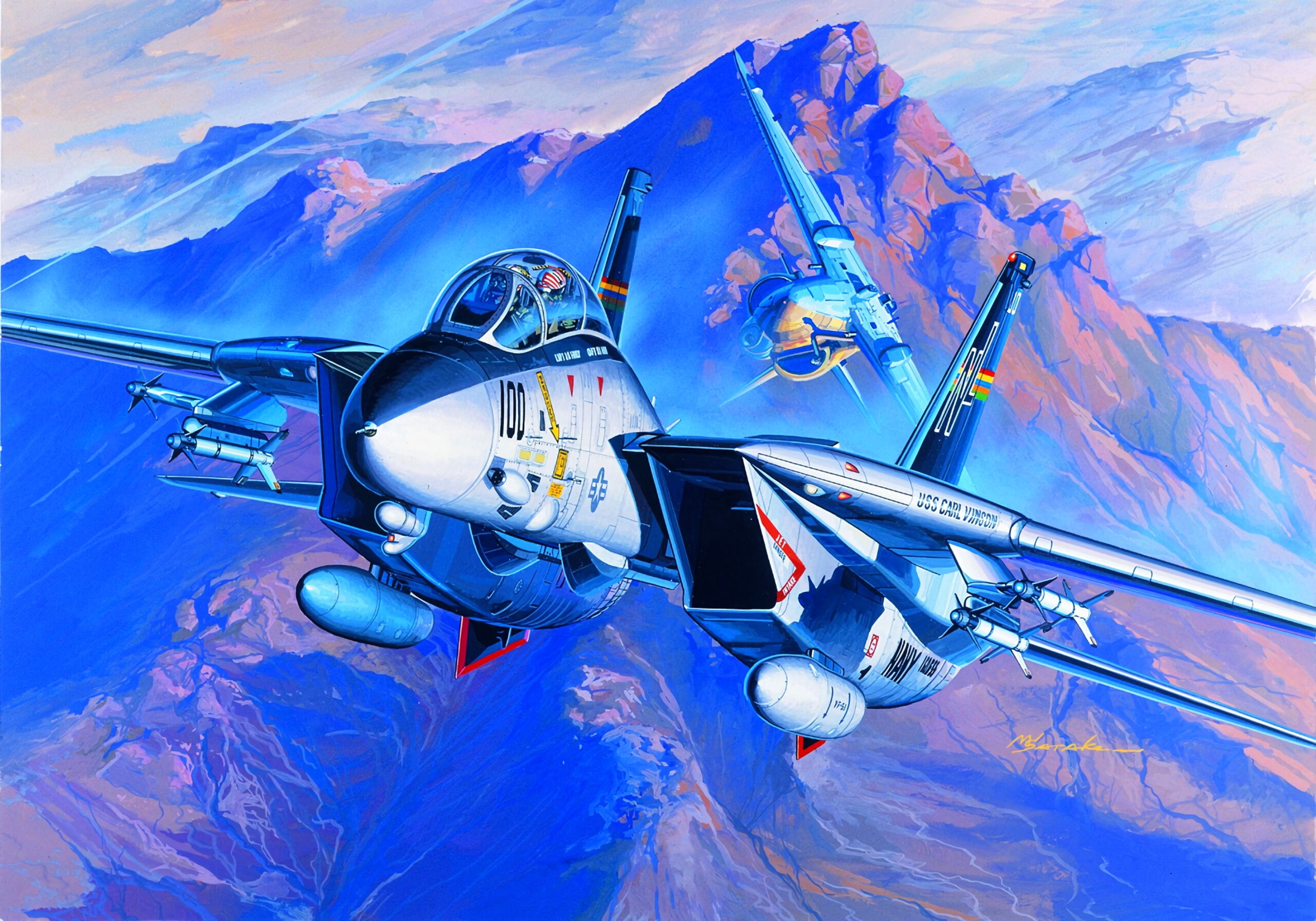
F-14 Fighter. Image Credit: Creative Commons.

F-14 Tomcat. Image Credit: Creative Commons.
“The TAO’s (Tactical Action Officer) voice was several octaves higher than normal, and they were going into “warning red, weapons tight”. As we swung our nose toward the vector we got, I immediately locked on to an extremely fast, high-flying aircraft.
The TCS could not resolve the identification, but I had a 300mm camera lens in my bag and broke it out. The AWG-9 was giving us a huge lead via the steering cue, so I was looking out the starboard side as we spotted a white contrail high above us. As I twisted the lens, the beautiful silhouette of the Concorde came into focus…”
The aircraft, oblivious of the Tomcats, was allowed to proceed without incident. But the photo that Powers took is the only known photo of a Concorde flying at Mach 2. The F-14s then flew back to their carrier.
Meet The F-14 Tomcat
The Navy instituted the VFX program to address the F-111 naval variant’s failure. Grumman designed its Model 303, which proposed a variable-geometry, two-seat, twin-engined design built around the Hughes AWG-9 weapons system.
Grumman had gained considerable experience with “swing-wing” technology from its earlier XF10F Jaguar, which was built only as a prototype. However, the A-6 Intruder’s wing design greatly influenced the F-14’s technology.
US Navy pilots loved the F-14 Tomcat for its unmatched long-range fleet defense capabilities, its high-speed, high-altitude interceptor performance with powerful AIM-54 Phoenix missiles, and its versatile variable-sweep wings that provided both agility for dogfights and speed for high-speed flight.
Its powerful (AWG-9) radar, capable of tracking multiple targets simultaneously, and the two-man crew, allowing for enhanced situational awareness with a dedicated Radar Intercept Officer (RIO), made it a dominant air superiority fighter.
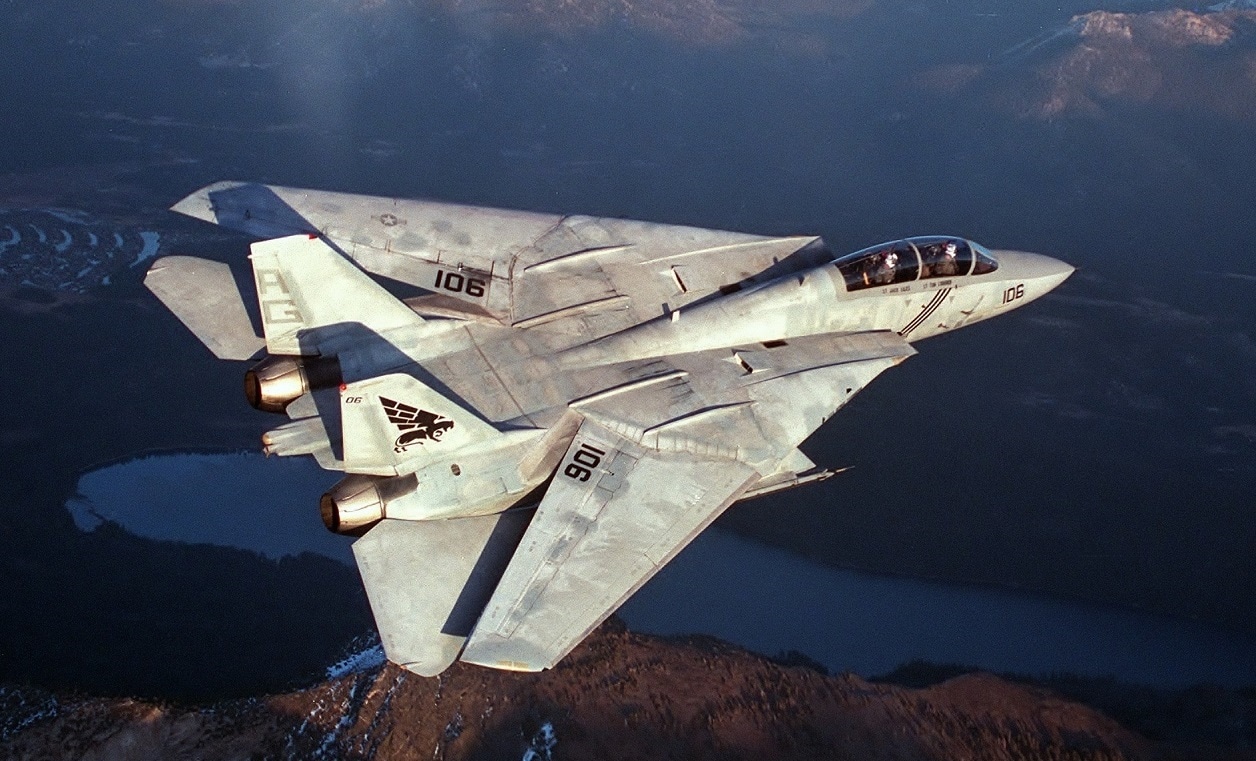
Right rear overhead view of an F-14AB Tomcat aircraft of Fighter Squadron 143 (VF-143), the Pukin’ Dogs, in flight over desert terrain.
Cockpit visibility & structure were outstanding, providing excellent all-around visibility and a robust twin-engine design that enhanced survivability and enabled aggressive maneuvers. The twin GE F-110 engines each produced 29,000 pounds of thrust, propelling the aircraft to Mach 2.34 (1,795.4 mph).
The variable-sweep wing design, combined with advanced fire-control systems and the AIM-54 Phoenix missile, made the F-14 capable of engaging multiple targets at long distances while still performing close-in combat and engaging in dogfights.
The F-14 Was The Navy’s Best Recruiting Tool
The F-14 Tomcat was fast enough to intercept Soviet bombers, had radar and missiles capable of detecting and shooting them down at long range, and had the maneuverability to engage in dogfights and defeat agile enemy fighters.
It was one of the world’s best fighters at the time.
It saw considerable duty in Libya, the Gulf War, Iraq, and Afghanistan. The last F-14 retired from active service with VF-213 in 2006.
One of the more intriguing aspects of the F-14 was that it saw the most combat of all US fighters since Vietnam, yet it shot down only five enemy fighters.
However, the Iranians, who owned 78 F-14s that were purchased from the United States back when the Shah was still in power, claimed that during the Iran-Iraq War, they had shot down dozens of Iraqi Soviet-made aircraft with the Tomcats.
The Hollywood film “Top Gun” centered around the pilot played by Tom Cruise, but the actual star of the film was the Tomcat. Navy recruiting skyrocketed due to the film, and it remains an icon of American military war films.
About the Author: Steve Balestrieri
Steve Balestrieri is a National Security Columnist. He served as a US Army Special Forces NCO and Warrant Officer. In addition to writing on defense, he covers the NFL for PatsFans.com and is a member of the Pro Football Writers of America (PFWA). His work was regularly featured in many military publications.