
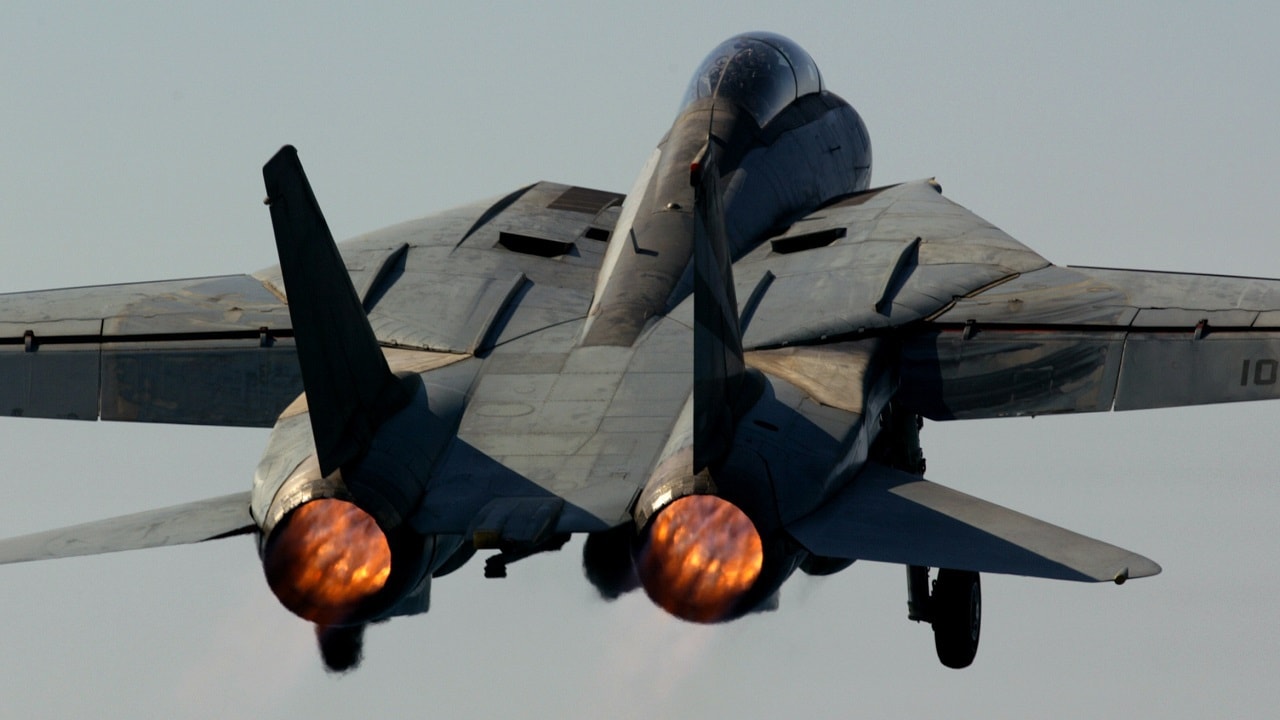
Key Points and Summary – The F-14D Tomcat represented the pinnacle of the legendary fighter’s evolution, transforming a Cold War interceptor into a sophisticated digital weapons system.
-By replacing the troublesome TF30 engines with powerful General Electric F110s and integrating the advanced AN/APG-71 radar, the “D” model solved early reliability issues while vastly expanding combat capabilities.
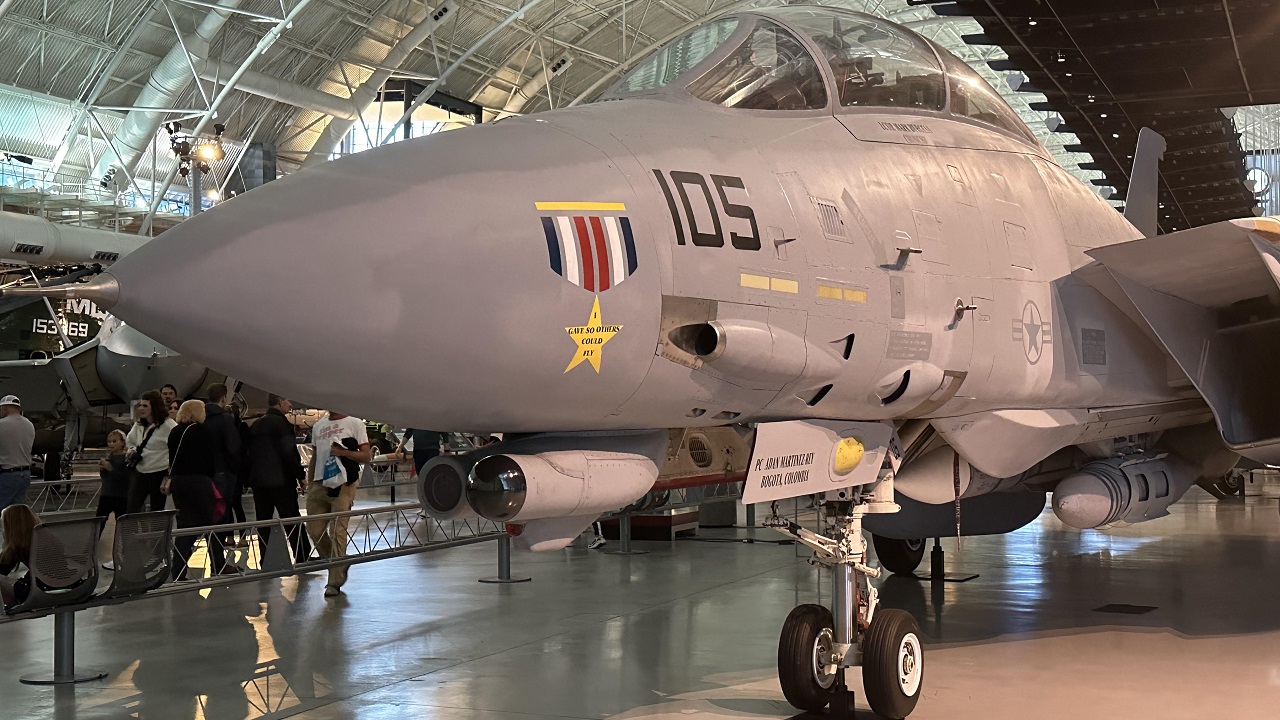
F-14 Tomcat. Image taken at National Air and Space Museum on October 1, 2022. Image by 19FortyFive.

F-14 Tomcat. Image taken at National Air and Space Museum on October 1, 2022. Image by 19FortyFive.
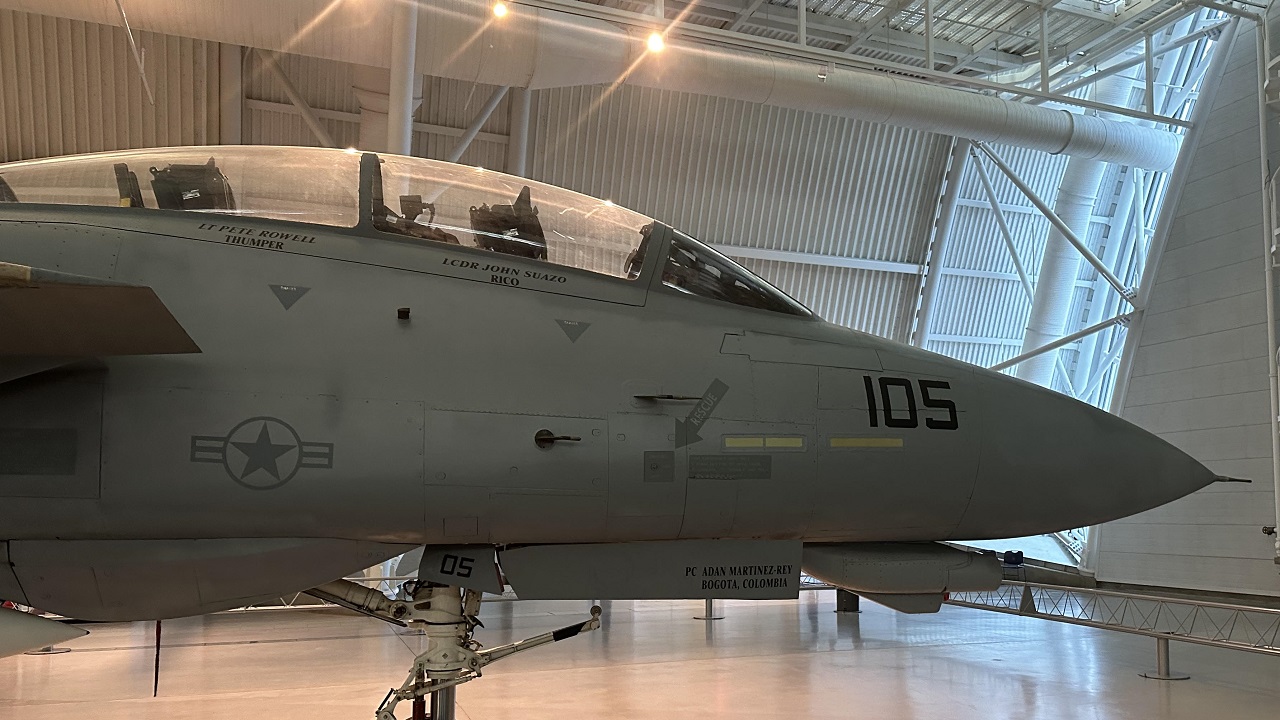
F-14 Tomcat. Image taken at National Air and Space Museum on October 1, 2022. Image by 19FortyFive.
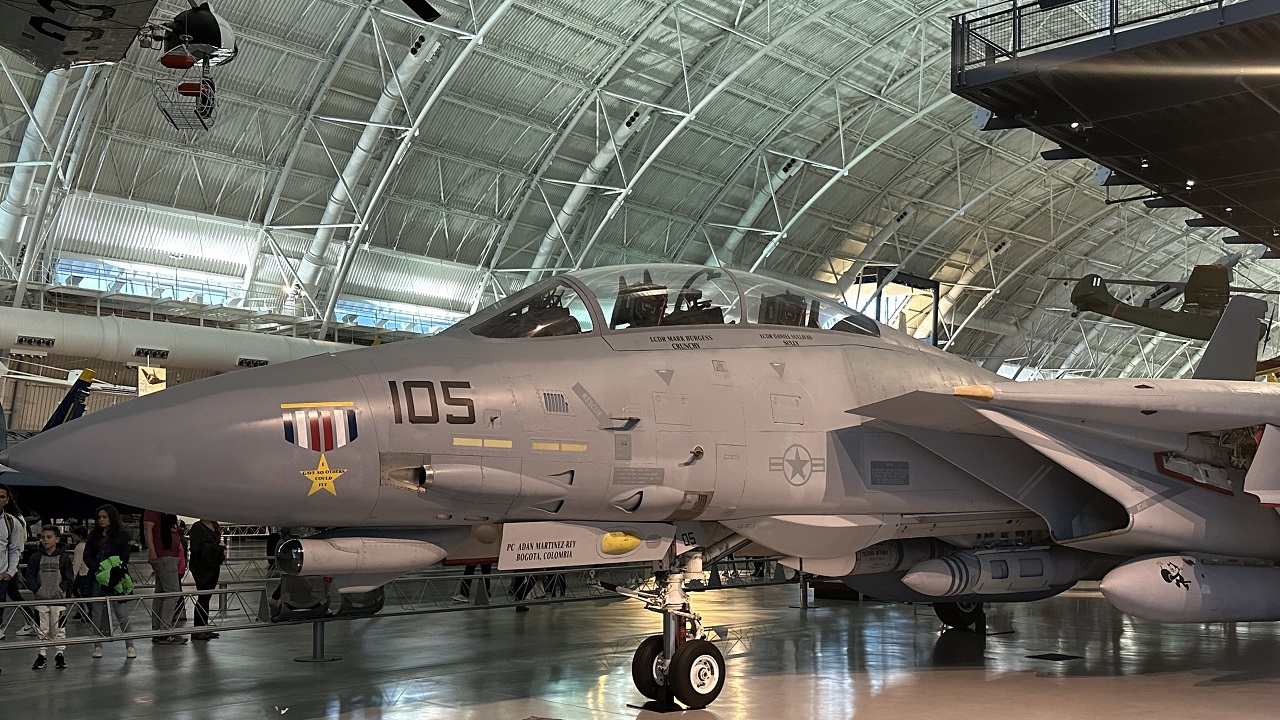
F-14 Tomcat. Image Taken at U.S. Air and Space Museum outside of Washington, D.C. Image Credit: 19FortyFive.com
-This final variant also introduced a glass cockpit and LANTIRN targeting pods, allowing the Tomcat to excel as a multirole precision striker in conflicts from Iraq to Afghanistan before its retirement.
The ‘Ultimate’ Tomcat: How the F-14D Fixed the Navy Fighter’s Biggest Flaw
The F-14 Tomcat is one of the most beloved American aircraft of the Cold War period. Its high speeds, long range, and durable airframe made it ideal for carrier operations, making the US Navy’s aircraft of choice. Initially, the Tomcat was designed for fleet defense.
The idea was to use the F-14 to intercept any aircraft carrying missiles that may pose a threat to the carrier strike group. However, later variants expanded the F-14’s capabilities, making it a true multirole fighter.
The F-14D was the last iteration of the Tomcat before its untimely demise. This iteration revamped the F-14’s power plant and modernized many of its avionics, making it the most advanced version of the aircraft.
From F-14A to F-14D
The original F-14A entered service in the mid-1970s. It immediately made an impression with its variable-geometry wings, large radar, and two-crew configuration consisting of a pilot and a Radar Intercept Officer. However, while the concept was sound and the aircraft was undeniably powerful, early Tomcats suffered from serious propulsion problems.
The Pratt & Whitney TF30 engines were underpowered for the role and prone to compressor stalls, especially during high-angle-of-attack maneuvering. These shortcomings plagued the aircraft throughout its early service life, contributing to accidents, increased maintenance burdens, and operational restrictions.
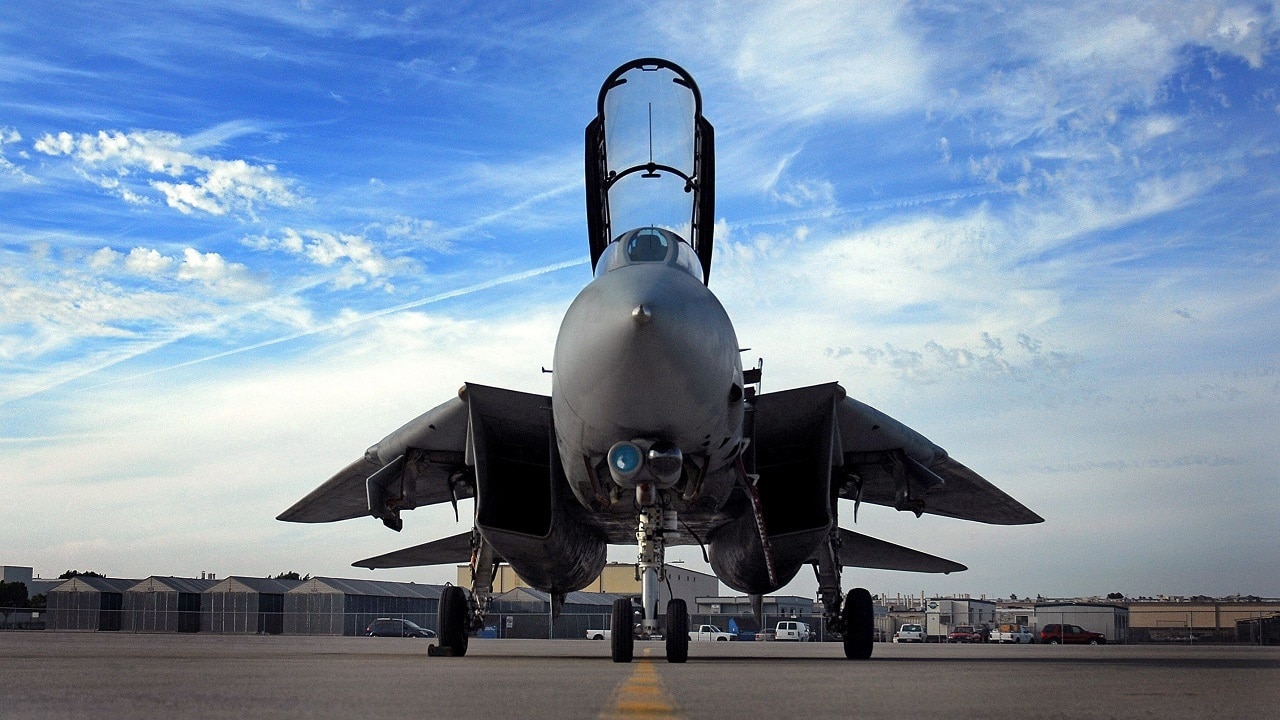
A U.S. Navy F-14D Tomcat aircraft from Fighter Squadron 31, sits on the flight line after completing its final flight at Naval Base North Island, San Diego, Calif., on Sept. 29, 2006. After 36 years of service, the Tomcat is being replaced by the F/A-18E/F Super Hornet aircraft.
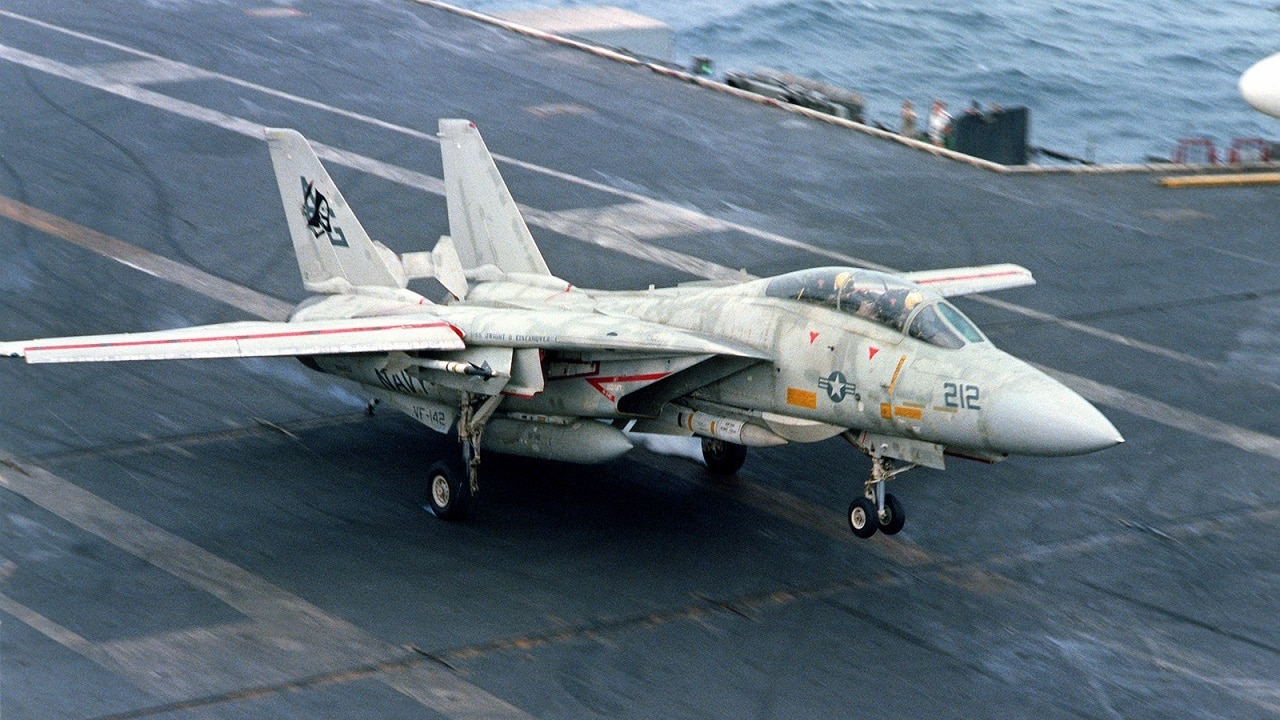
An F-14 Tomcat aircraft makes an arrested landing on the flight deck of the nuclear-powered aircraft carrier USS DWIGHT D. EISENHOWER (CVN-69). The F-14 is assigned to Fighter Squadron 142 (VF-142).
The introduction of the F-14B in the 1980s significantly improved the type by replacing the TF30 with the General Electric F110 engine, transforming the Tomcat’s performance and reliability. Yet the Navy recognized that incremental upgrades were not enough to fully modernize the aircraft.
By the late Cold War, sensors, avionics, electronic warfare, and digital processing were becoming as important as raw aerodynamic performance. The answer was the F-14D, a variant that fundamentally reimagined the Tomcat as a digital weapons system rather than a mechanically sophisticated but electronically dated interceptor.
F-14D: What’s the Difference?
From the outside, the F-14D looks like any other Tomcat, although there are a few external changes.
The aircraft retained the unmistakable variable-sweep wings, twin vertical tails, and broad fuselage that housed its powerful radar. The aircraft still relied on its unique wing mechanism to provide exceptional flexibility across the flight envelope. With wings extended, the Tomcat excelled in low-speed carrier operations and sustained turning engagements.
With wings swept aft, it became a high-speed interceptor capable of exceeding Mach 2 at altitude. This adaptability remained one of the Tomcat’s defining strengths, and the F-14D benefited from structural refinements that improved durability and fatigue life after years of hard fleet use.
The most immediately noticeable change in the F-14D was its propulsion. Unlike earlier models, the D variant was built from the start with General Electric F110-GE-400 engines, delivering dramatically increased thrust, vastly improved throttle response, and far greater reliability.
These engines gave the aircraft explosive acceleration, formidable climb performance, and confidence-inspiring behavior at high angles of attack. Pilots frequently remarked that the F-14D finally flew the way the aircraft had always been meant to fly, freeing it from the caution and compromise imposed by earlier engines.
Improved Avionics
Equally important was the dramatic overhaul of the cockpit and avionics. Earlier Tomcats were famous for their reliance on analog instruments and densely packed panels, particularly in the rear cockpit.
The F-14D introduced a largely glass cockpit, especially for the Radar Intercept Officer, whose role had become increasingly complex as sensors and weapons grew more sophisticated. Multiple digital displays replaced many traditional gauges, providing clearer situational awareness and mission management.
The pilot’s cockpit was also modernized, easing workload and improving safety during demanding operations such as night carrier landings and adverse-weather missions.
At the heart of the F-14D’s combat effectiveness was the AN/APG-71 radar. This system was a digital evolution of the legendary AWG-9 radar that had defined the Tomcat’s role as a fleet defender.
While retaining the same physical antenna, the APG-71 introduced vastly improved signal processing, reliability, and resistance to electronic countermeasures. It preserved the Tomcat’s unique ability to track dozens of targets simultaneously over enormous distances while guiding multiple missiles toward separate threats. In an era before widespread active electronically scanned array radars, this capability remained extraordinary, even by modern standards.
This radar worked in conjunction with the AIM-54 Phoenix missile, a weapon often considered as remarkable as the aircraft that carried it. Designed to engage large, fast bombers at extreme range, the Phoenix allowed an F-14D to threaten targets well beyond visual range and long before they could launch their own weapons.
Although advancing technology reduced the likelihood of such engagements, the combination of the APG-71 radar and the Phoenix missile made it one of the most powerful long-range air defense systems at the time.
The Last Ride of the Tomcat
However, by the 1990s, the F-14D’s role expanded from an interceptor to a full-on multirole aircraft. As the Soviet threat diminished and regional conflicts became the focus of U.S. military operations, the Navy increasingly demanded flexibility from its plane.
In response, the Tomcat was adapted for precision-strike missions by integrating the Low Altitude Navigation and Targeting Infrared for Night system. With this capability, the F-14D could deliver laser-guided bombs with exceptional accuracy, transforming it into a highly effective multirole platform.
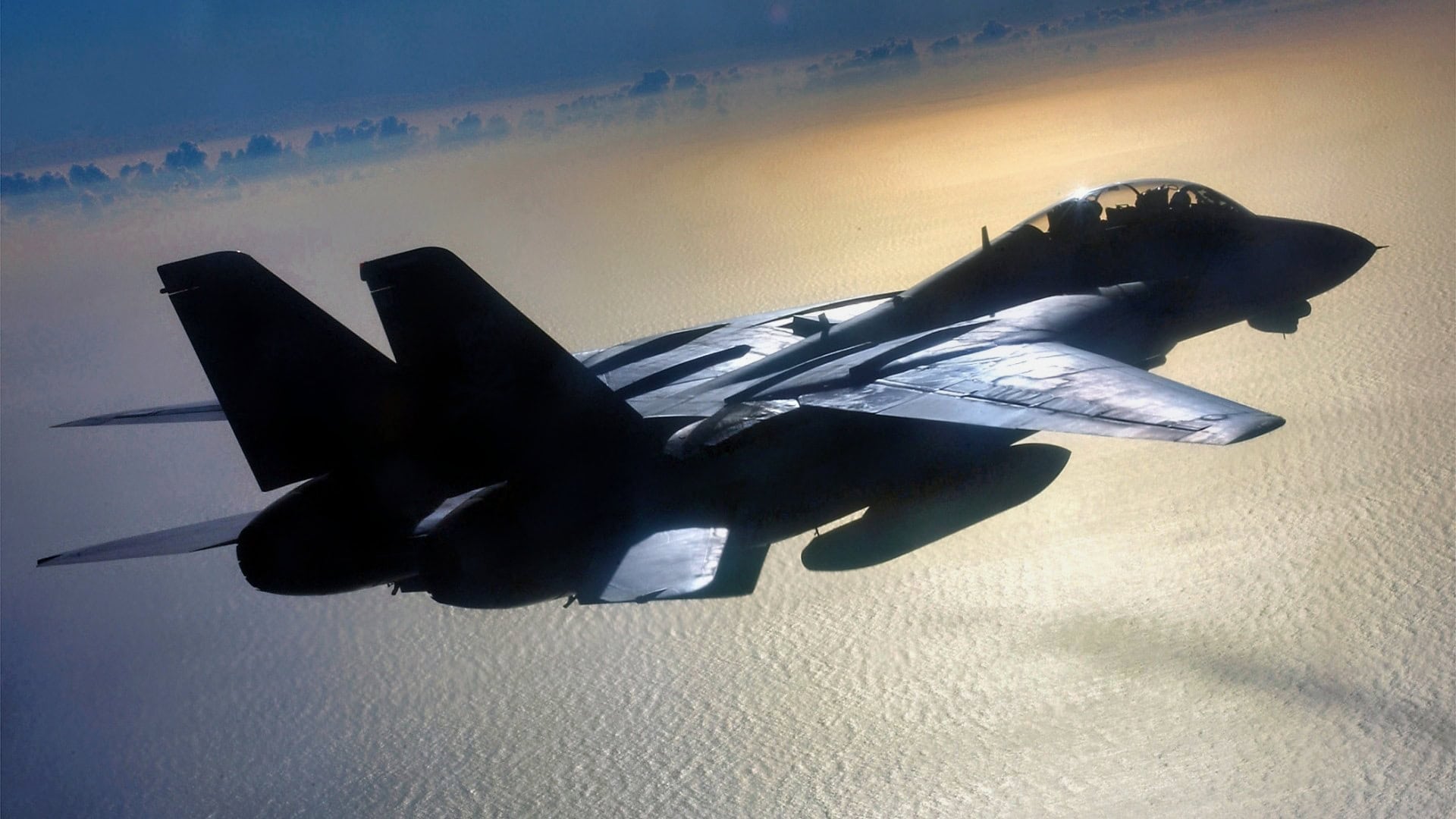
F-14 Tomcat Fighter. Image Credit: Creative Commons.
In combat operations over the Balkans, Afghanistan, and Iraq, F-14Ds routinely performed missions that blended air superiority, reconnaissance, and close air support. They could provide long loiter times, carry heavy ordnance loads, and serve as airborne command platforms due to their large cockpit, crew coordination, and powerful sensors.
This versatility earned the aircraft a new reputation and extended its relevance far beyond its original Cold War purpose.
About the Author: Isaac Seitz
Isaac Seitz, a Defense Columnist, graduated from Patrick Henry College’s Strategic Intelligence and National Security program. He has also studied Russian at Middlebury Language Schools and has worked as an intelligence Analyst in the private sector.