
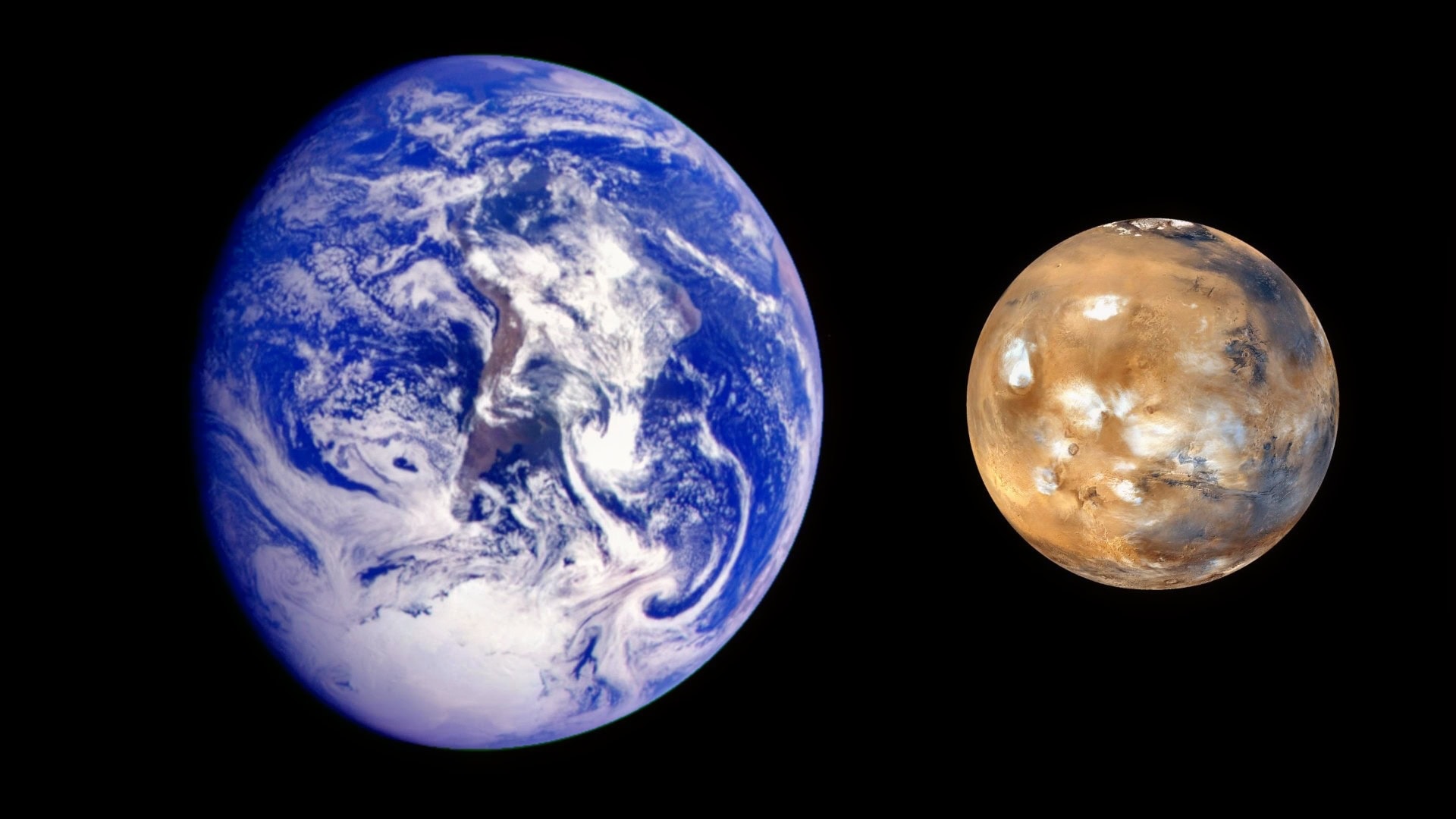
Mars wasn’t always frozen and barren. Billions of years ago, evidence suggests that Mars featured flowing rivers, lakes, and possibly oceans.
So why did these liquid features disappear? One reason is that Mars lost its global magnetic field early in its history, and without that invisible protective shield, the planet became increasingly exposed to the solar wind, which allowed much of the planet’s atmosphere to gradually escape into space, transforming Mars into the cold, thin-aired desert seen today.
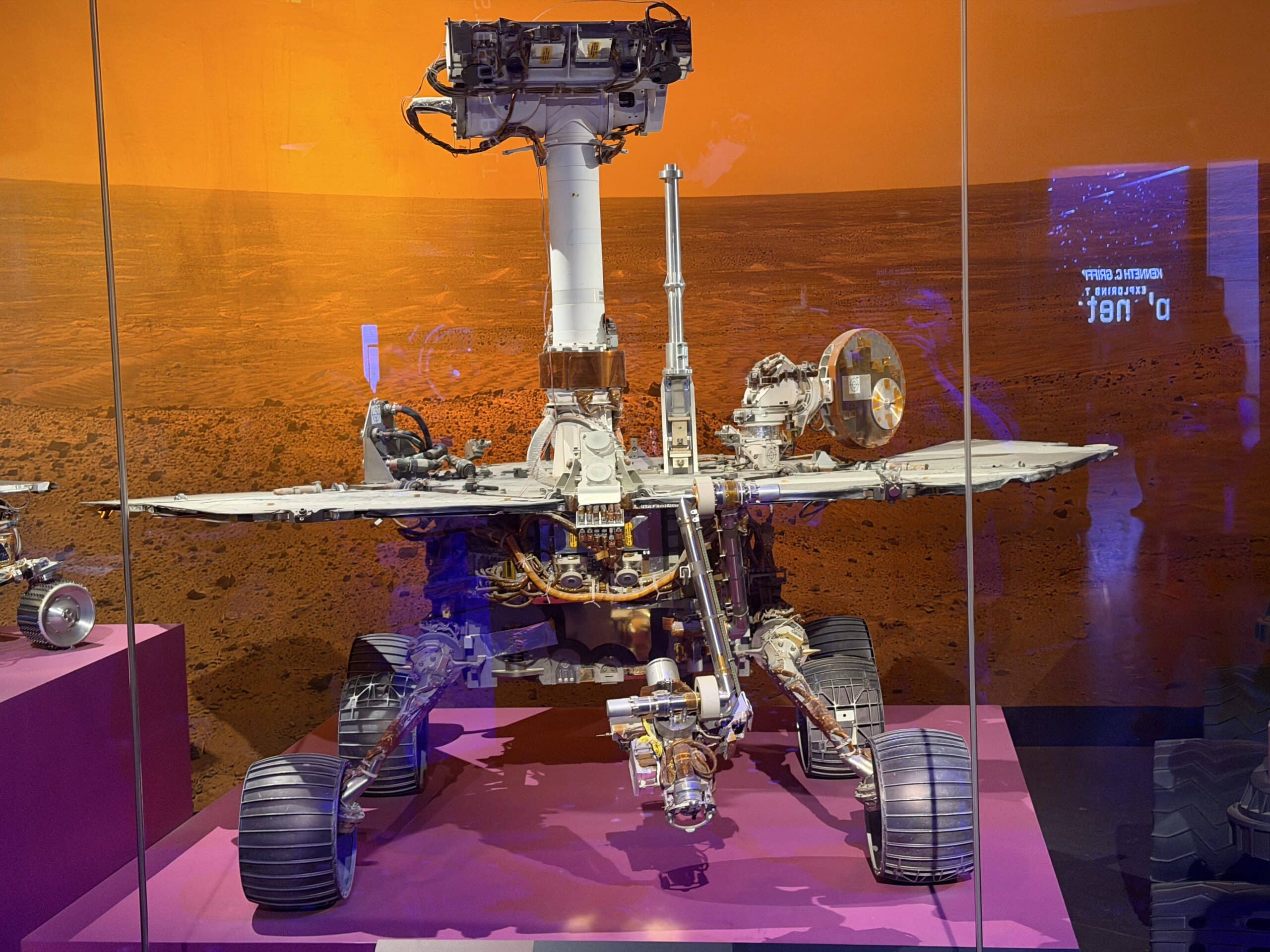
Mars Pathfinder at the Smithsonian on July 1, 2026 image taken by 19FortyFive.
What is a Magnetic Field
Earth benefits from its magnetic field, an invisible force field that surrounds the planet and extends far into space.
Generated naturally by the movement of electrically conductive liquid metal inside a planet’s core, the magnetic field relies on the same basic physics as a bar magnet—only on a planetary scale.
Scientists refer to Earth’s magnetic “bubble” as the magnetosphere, which extends tens of thousands of miles into space.
And although the magnetosphere is invisible, it can be detected because it affects charged particles and causes compass needles to point north.
So why does Earth have a magnetic field and Mars does not? Earth has one because it is layered—with a solid inner core, a liquid outer core, a rocky mantle, and a thin crust.
The outer core consists primarily of molten iron and nickel, with interior temperatures exceeding 5,000 degrees Celsius, which keep it molten.
When heat escapes from Earth’s interior, it causes the liquid metal to circulate by convection (similar to boiling water). Then, the Earth’s rotation twists and organizes these flows.
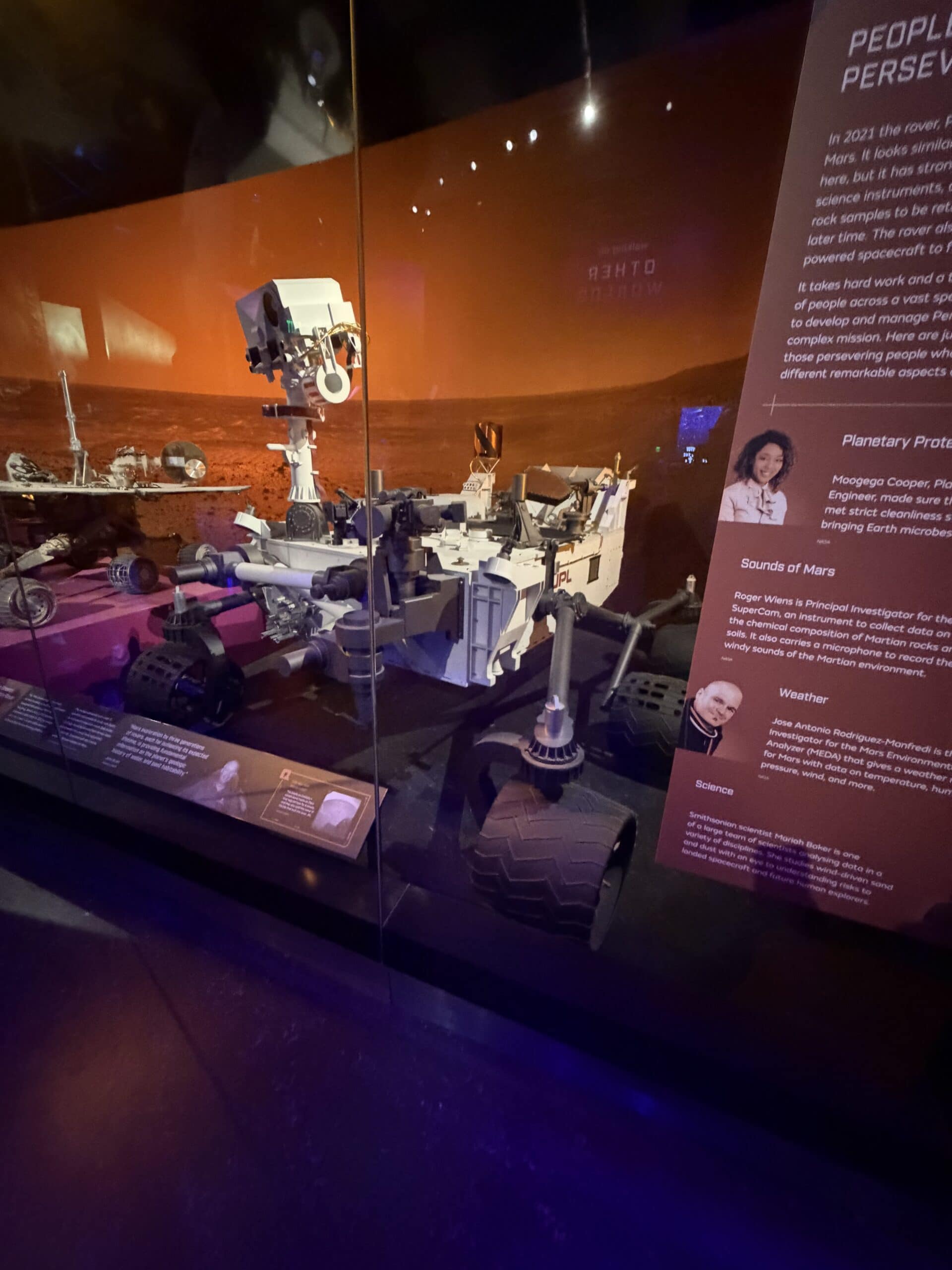
Mars Pathfinder at the Smithsonian on July 1, 2026 image taken by 19FortyFive.
And because molten iron conducts electricity, moving metal generates electrical currents.
Those electrical currents generate a magnetic field, a process known as the geodynamo. As long as the core remains molten and convects, Earth continues to produce a global magnetic field.
The Importance of the Magnetic Field
The Sun constantly emits a stream of charged particles known as the solar wind, which consists mainly of electrons and protons traveling at hundreds of kilometers per second.
When these charged particles encounter Earth’s magnetic field, most are deflected around the planet rather than striking the atmosphere directly. Instead, magnetic field lines guide many of the particles towards the poles.
And while some particles become trapped within Earth’s Van Allen radiation belts, a small number enter near the poles, collide with atmospheric gases, and produce the aurora borealis and aurora australis.
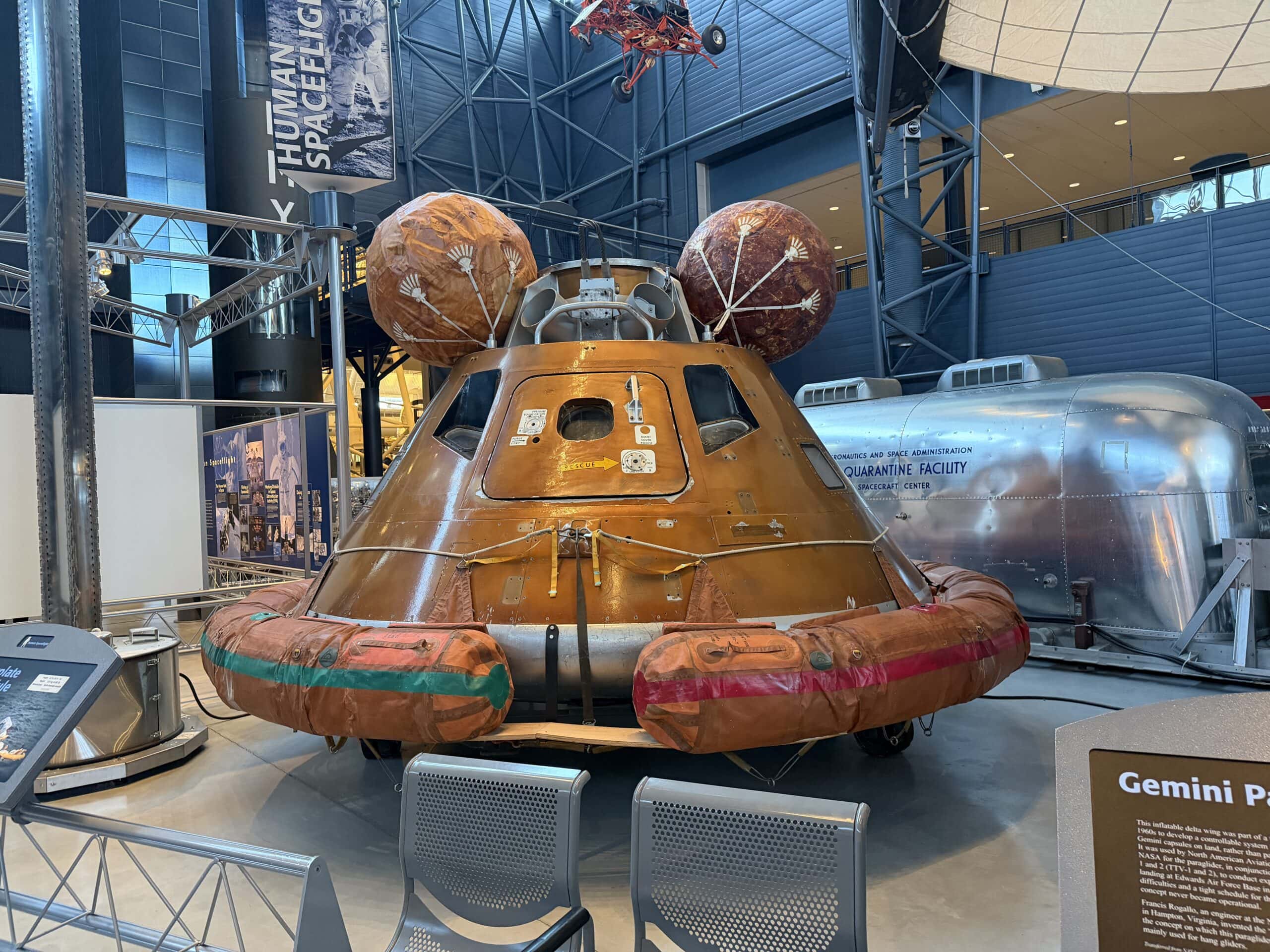
Gemini Capsule. Smithsonian Photo in Washington, DC. 19FortyFive.com Image
The magnetic field is vital because it serves as Earth’s first line of defense against the solar wind, helping to prevent the gradual erosion of the atmosphere by deflecting charged particles.
At the planet’s surface, radiation exposure is reduced. And the atmosphere that supports liquid water and life is preserved, allowing for long-term climate stability over billions of years.
The magnetic field is one reason Earth is far more hospitable than planets without one.
Mars and the Lost Magnetic Field
Mars likely had a similar magnetic field more than 4 billion years ago.
But because Mars is much smaller than Earth, Mars cooled more quickly—its molten core became less active, shutting down the planetary dynamo. And without a global magnetic field, the solar wind began stripping away Mars’ atmosphere.
As a result, today, Mars has only isolated patches of crustal magnetism rather than a planet-wide magnetic shield.
Over hundreds of millions, and eventually billions, of years, the loss of Mars’ magnetic field allowed the solar wind to gradually erode much of the planet’s atmosphere.
As NASA’s MAVEN mission has observed, atmospheric particles are still escaping into space today, though at a slower rate than in Mars’ earlier history.
For Mars, as the atmosphere thinned, the surface air pressure dropped dramatically. Today, Mars’ atmosphere is less than one percent as dense as Earth’s, making stable liquid water on the surface virtually impossible under normal conditions.
The thinner atmosphere also weakened the planet’s greenhouse effect, allowing more heat to escape into space and causing average surface temperatures to fall to -81 degrees Fahrenheit—transforming Mars into the frigid world it is today. Indeed, the collapse of Mars’ magnetic shield altered the long-term evolution.
About the Author: Harrison Kass
Harrison Kass is a writer and attorney focused on national security, technology, and political culture. His work has appeared in Tablet, City Journal, The Hill, The Spectator, and The Cipher Brief. He holds a JD from the University of Oregon and a master’s in Global & Joint Program Studies from NYU. More at harrisonkass.com.