
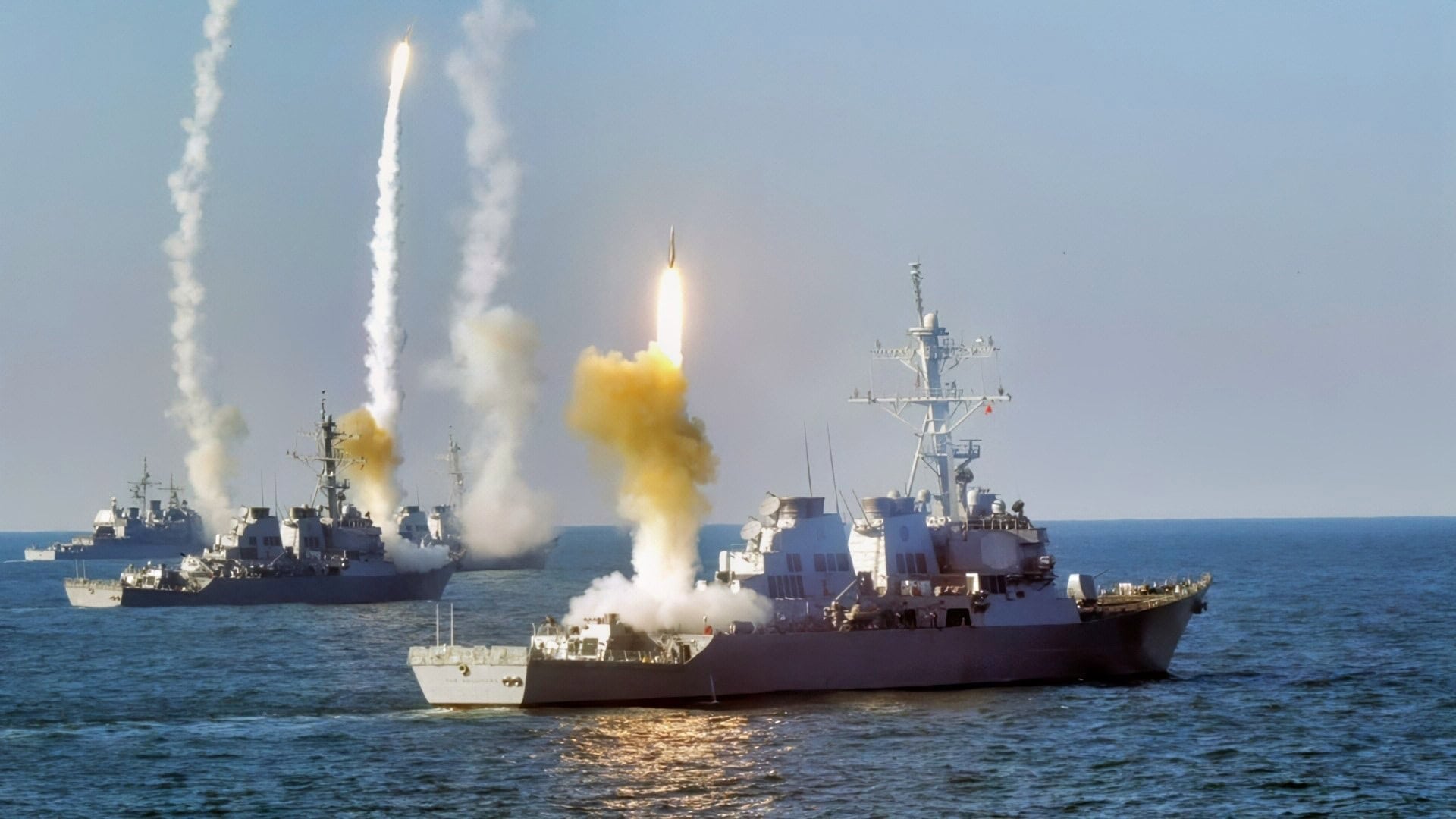
Summary and Key Points: While aircraft carriers and battleships command the headlines, the Arleigh Burke-class destroyer is the true backbone of the U.S. Navy.
-These multi-mission workhorses deploy more frequently and absorb more combat missions than any other surface vessel.
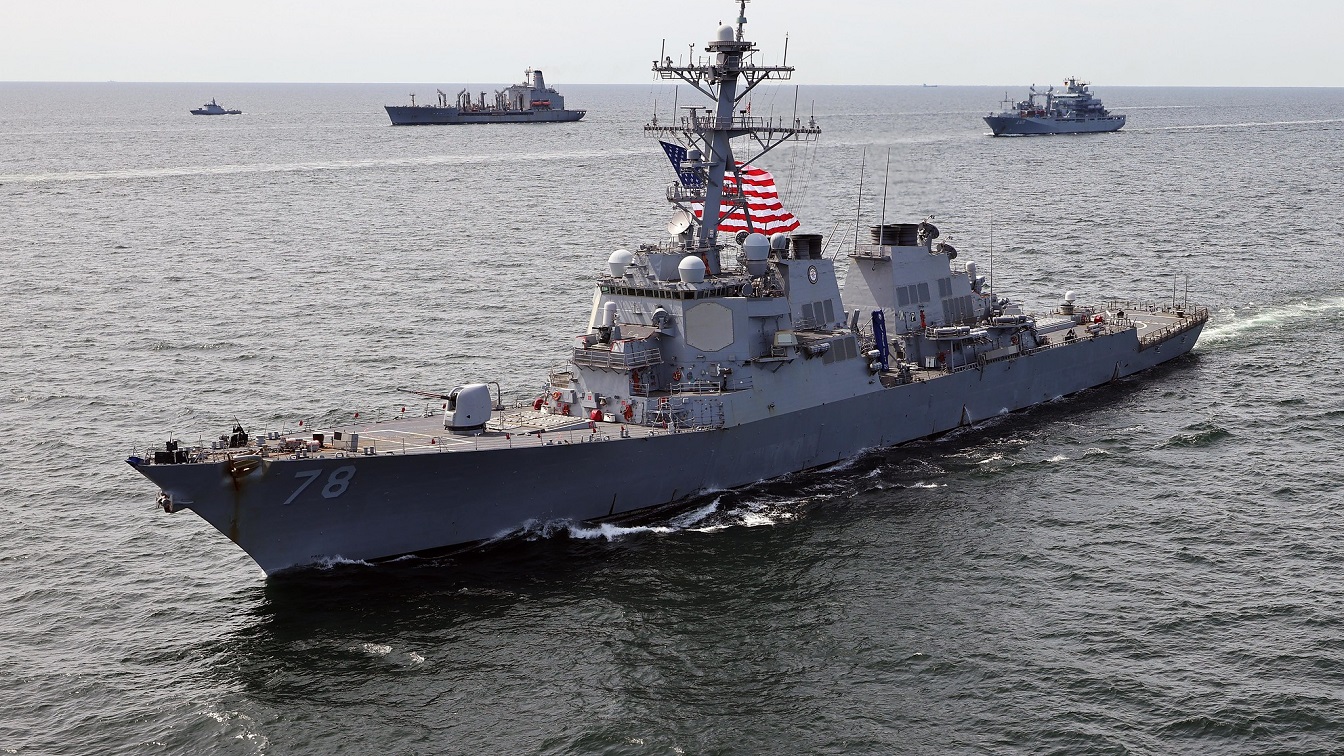
BALTIC SEA (June 6, 2022) The Arleigh Burke-class guided-missile destroyer USS Porter (DDG 78) sails in formation in the Baltic Sea, June 6, 2022, during exercise BALTOPS22. BALTOPS 22 is the premier maritime-focused exercise in the Baltic Region. The exercise, led by U.S. Naval Forces Europe-Africa, and executed by Naval Striking and Support Forces NATO, provides a unique training opportunity to strengthen combined response capabilities critical to preserving freedom of navigation and security in the Baltic Sea. (U.S. Navy photo) 220606-N-NO901-3008
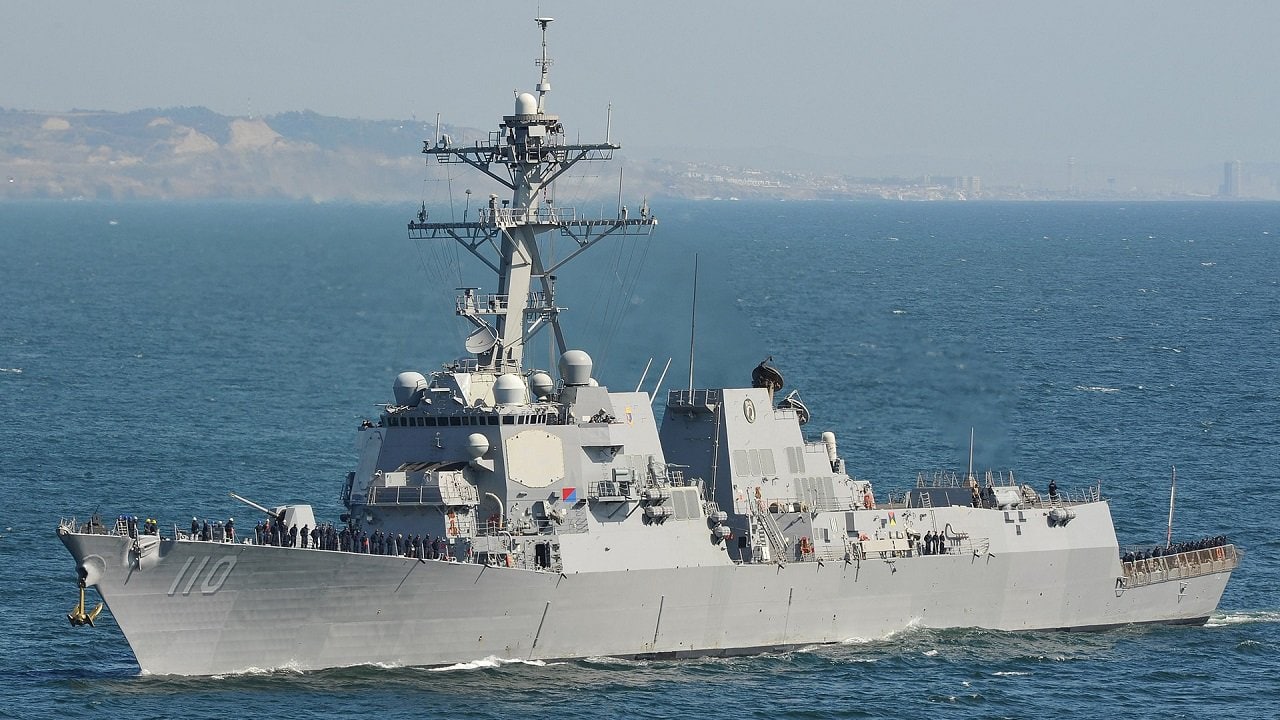
PACIFIC OCEAN (May 4, 2015) – The guided-missile destroyer USS William P. Lawrence (DDG 110) steams toward San Diego Harbor. (U.S. Navy photo by Mass Communication Specialist 3rd Class Nathan Burke/Released)
-Built around the advanced Aegis combat system and the SPY-6 radar, the Burke-class provides critical ballistic missile defense and surface warfare capabilities via its 96-cell Vertical Launch System.
-Although not stealthy and increasingly vulnerable to Chinese hypersonic missiles, its redundant systems and armored hull ensure survivability in contested waters.
-Serving through the 2050s, the Arleigh Burke remains the fleet’s indispensable fighting core.
96 Missiles and Zero Glamour: Why the Arleigh Burke-Class Is the Navy’s True Fighting Core
When people think of US naval power, they typically picture aircraft carriers. However, in practice, the ship that does the most fighting, deploys the most often, and absorbs the most missions is the Arleigh Burke-class. These durable, multi-mission surface combatants are the true workhorse of the US Navy.
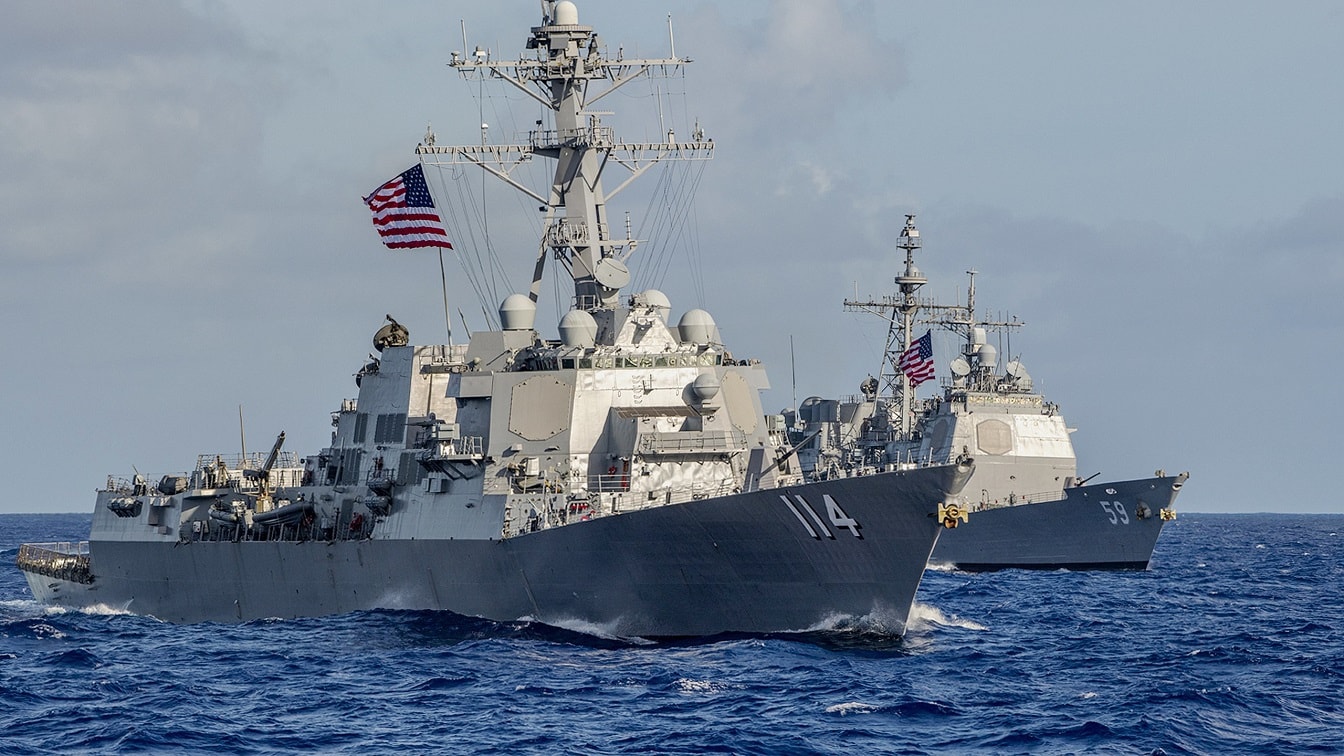
The Arleigh Burke-class guided-missile destroyer USS Ralph Johnson (DDG 114) and the Ticonderoga-class guided-missile cruiser USS Princeton (CG 59) steam in formation during dual carrier operations with the Nimitz and Theodore Roosevelt Carrier Strike Groups (CSG). Dual carrier operations unify the tactical power of two individual CSG, providing fleet commanders with an unmatched, unified credible combat force capable of operating indefinitely. The CSGs are on a scheduled deployments to the Indo-Pacific.
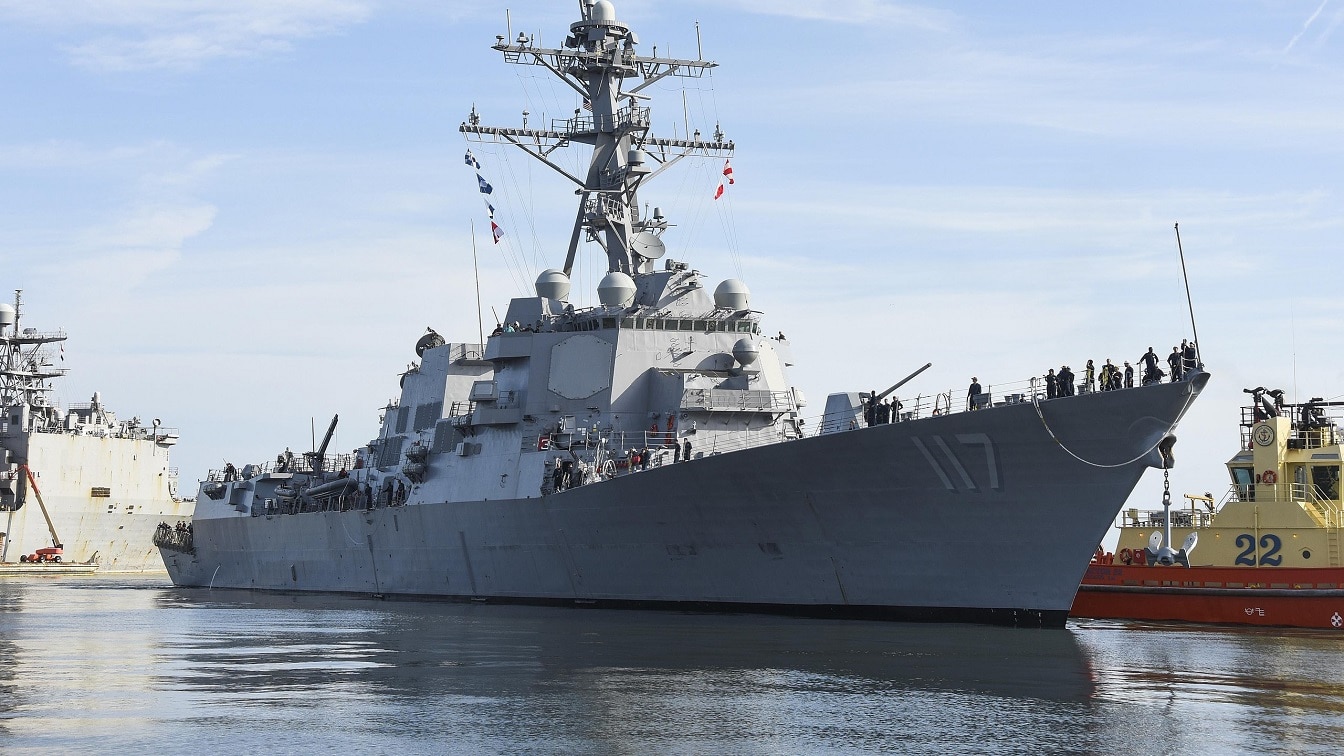
190731-N-ED185-1017 MAYPORT, Fla. (July 31, 2019) The Arliegh Burke-class guided-missile destroyer USS Paul Ignatius (DDG 117) prepares to moor at Naval Station Mayport. Paul Ignatius, the Navy’s newest Arleigh-Burke-class destroyer, was commissioned at Fort Lauderdale, Florida on July 27, 2019 and will call Naval Station Mayport its new home. (U.S. Navy photo by Mass Communication Specialist1st Class Brian G. Reynolds/Released)
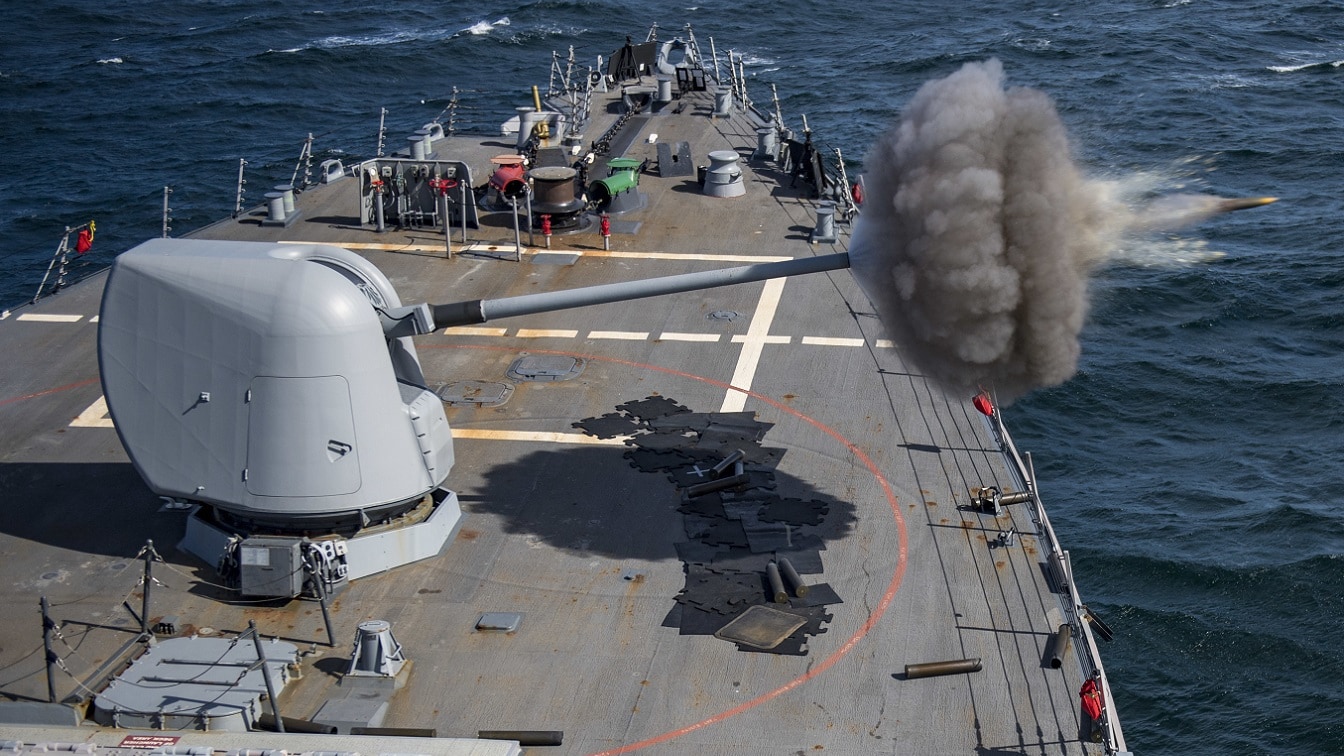
(Jan. 14, 2018) The Arleigh Burke-class guided-missile destroyer USS Ross (DDG 71) fires its 5-inch gun during a naval surface fire support exercise with the Royal Moroccan Navy as part of exercise African Sea Lion. Among African Sea Lion’s objectives is to test and evaluate US and Moroccan ability to conduct coordinated, combined naval surface fire support exercises on the Tan Tan firing range. Ross, forward-deployed to Rota, Spain, is on its sixth patrol in the U.S. 6th Fleet area of operations in support of regional allies and partners and U.S. national security interests in Europe and Africa. (U.S. Navy photo by Mass Communication Specialist 1st Class Kyle Steckler/Released)
Origins of the Burke-class
Designed late in the Cold War to counter Soviet cruise missiles, saturation attacks, and blue-water naval threats, the Arleigh Burke was built around survivability, redundancy, and combat persistence. Fittingly, the ship was named after an admiral known for aggression and toughness. The Burke-class emphasizes a robust hull design, redundant systems, and armor around vital areas. Unlike more specialized platforms, Burkes are expected to operate independently. They are designed to withstand impacts and continue fighting.
Technical Anatomy
The Burkes’ steel hull displaces between 9,000 and 10,000 tons, with extensive compartmentalization for damage control. For propulsion, the vessel relies on four LM2500 turbines, each delivering 100,000 shaft horsepower, enabling sustained high-speed operations and rapid maneuvering. The Burke can hit 30-plus knots and achieve global range, all without reliance on nuclear propulsion.
The SPY-1 radar has evolved into the SPY-6, which offers substantially improved sensitivity, discrimination, and ballistic-missile tracking. The Aegis integrates sensors, weapons, and command-and-control decision-making in real time.
Built Around Aegis
The Burke-class features the Aegis combat system, which provides air defense, missile defense, and surface warfare capabilities. With integrated radar, sensors, and weapons, the Burke can dominate the battle space. Indeed, a single Burke can defend itself and other ships, as well as entire task groups.
The Burkes’ firepower is further amplified with the Vertical Launch System (VLS), which can carry Sm-2/Sm-6 air defense missiles, Tomahawk cruise missiles, and ASROC anti-submarine weapons. The VLS has a 90-96 cell capacity, configurable per mission. This firepower is flexible, reconfigurable, and long-range. This replaces the fixed-gun paradigm of older battleships. Five-inch deck guns remain relevant for naval gunfire support and surface threat suppression.
Multi-Mission Capable
Burkes routinely perform ballistic-missile defense, sea control, land-attack, and anti-submarine warfare missions. No other surface combatant does all of this as consistently. Accordingly, they are the default answer to almost every naval problem.
The Navy maintains a continuous Burke presence; there are more Burkes than any other major surface combatant, and they are forward-deployed, always on patrol, and typically the first ships sent into contested waters. This makes the Burke the de facto backbone of the fleet.
Survivability and Endurance
The Burke is highly compartmentalized, designed to withstand damage. The crew is trained in combat repair, thereby further enhancing the vessel’s ability to continue fighting. Unlike carriers, which are precious, losing a Burke (despite the seriousness of the loss) would not cripple national strategy. Carriers are by far more expensive, politically sensitive, and scarce. Burke’s escort carriers—but also operate alone. In the modern threat environment, which is missile-saturated, dispersed combat power and quantity are important factors. Burkes provide distributed lethality and redundant strike and defense nodes. This is reminiscent of how battleships used to function: spread out across the fleet.
Strategic Implications
The Navy’s reliance on Burke-class ships reveals a shift away from single, decisive platforms toward layered, networked firepower. If war comes, Burke will absorb initial contact, provide defense, and deliver a sustained strike.
The Burke does, however, suffer from a set of legitimate limitations. The vessel is not stealthy, has a finite magazine depth, and is still vulnerable to submarines and hypersonic missiles. Still, the Burke-class anchors the fleet, fights constantly, and carries decisive firepower. It is not glamorous, but it is indispensable.
Future Role
Forthcoming upgrades position the Burke as a frontline missile defense node against hypersonic and ballistic threats. Increasingly, the Burke is expected to serve as a sensor hub, distributed shooter, and command-and-control relay. The vessel is expected to remain in service into the 2050s, long after many of its contemporaries have retired. And as future fleets disperse to survive missile saturation, the Burke will likely become more relevant, not less, ensuring that the vessel will remain the Navy’s workhorse for the foreseeable future. In essence, the Burke is anything but a stopgap ship—it’s the Navy’s enduring fighting core.
About the Author: Harrison Kass
Harrison Kass is an attorney and journalist covering national security, technology, and politics. Previously, he was a political staffer and candidate, as well as a US Air Force pilot selectee. He holds a JD from the University of Oregon and a master’s in global journalism and international relations from NYU.