
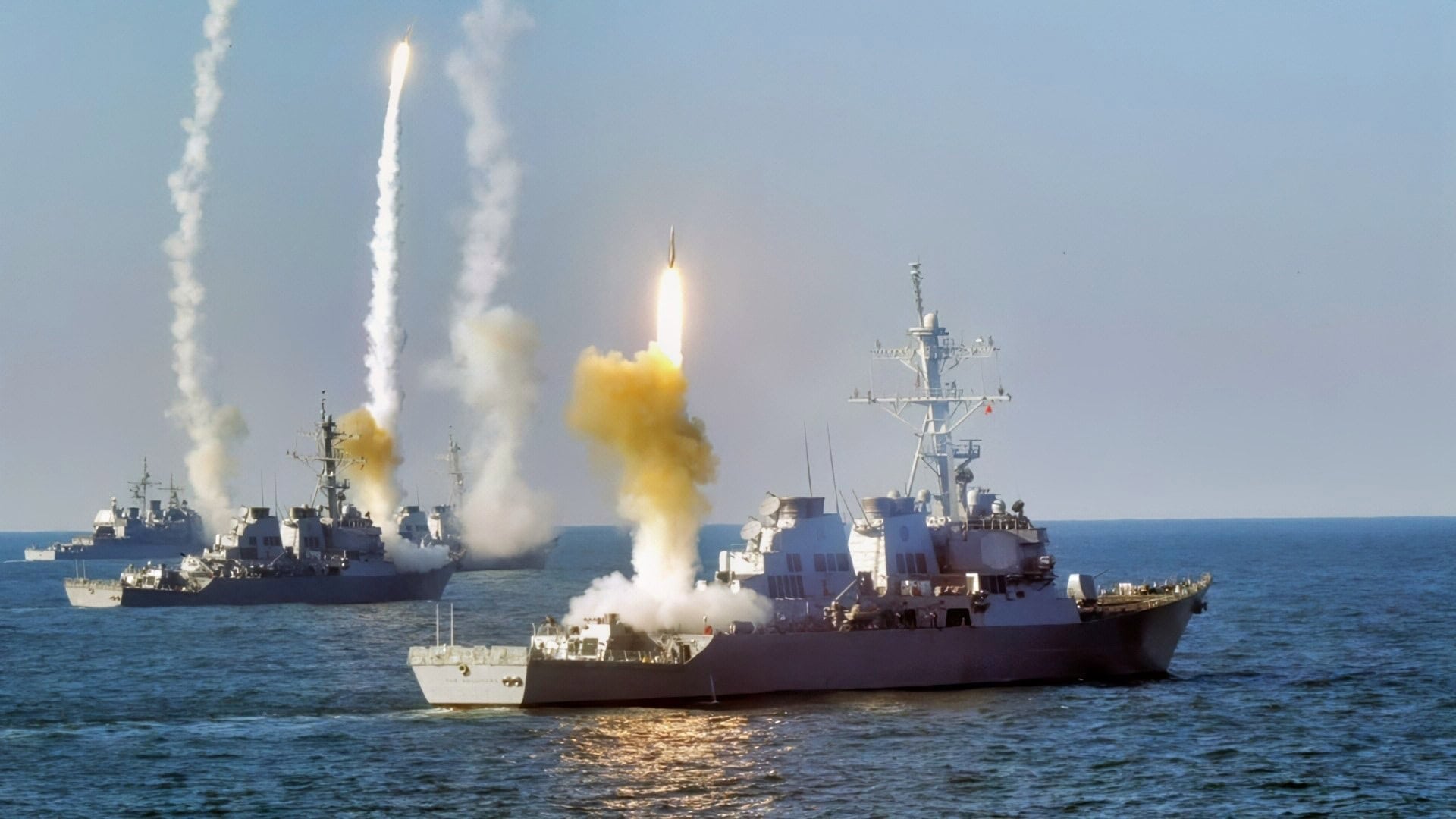
Summary and Key Points: Arleigh Burke Flight III destroyers succeed by pairing a proven hull with a generational sensor-and-combat-system leap. While the Trump-class battleships might be getting all the headlines, the Arleigh Burkes might be the real workhorse the Navy needs now.
-The AN/SPY-6(V)1 AESA radar delivers dramatically higher sensitivity and better tracking of complex threats, while Aegis Baseline 10 turns that raw detection into integrated air and missile defense with improved raid handling and smarter engagements.
-Flight III also adds power and cooling margin to support SPY-6 today and future growth tomorrow.
-Critically, it keeps the familiar 96-cell Mk 41 VLS and multi-mission flexibility that makes the Burke the backbone escort for carrier strike groups.
Arleigh Burke Flight III, Summed Up in 1 Thing: SPY-6 Changes Everything
The US Navy has had some incredible destroyer classes during its history. Today, we’re looking at the Arleigh Burke Block III destroyers and why they are so successful.
Known for their speed, versatility, and maneuverability, destroyers have always hit well above their weight class. Affectionately known as “tin cans,” destroyers typically protect larger vessels, particularly aircraft carriers, as part of the Navy’s carrier strike groups.
The Arleigh Burke-class is praised for its advanced technology and multi-mission capabilities.
Meet The Arleigh Burke-class Destroyers
Why it’s considered the best: The Arleigh Burke class of guided-missile destroyers (DDGs) is a United States Navy class of destroyers centered around the Aegis Combat System and the SPY-1D multifunction passive electronically scanned array radar. It is considered the backbone of the Navy’s surface fleet.
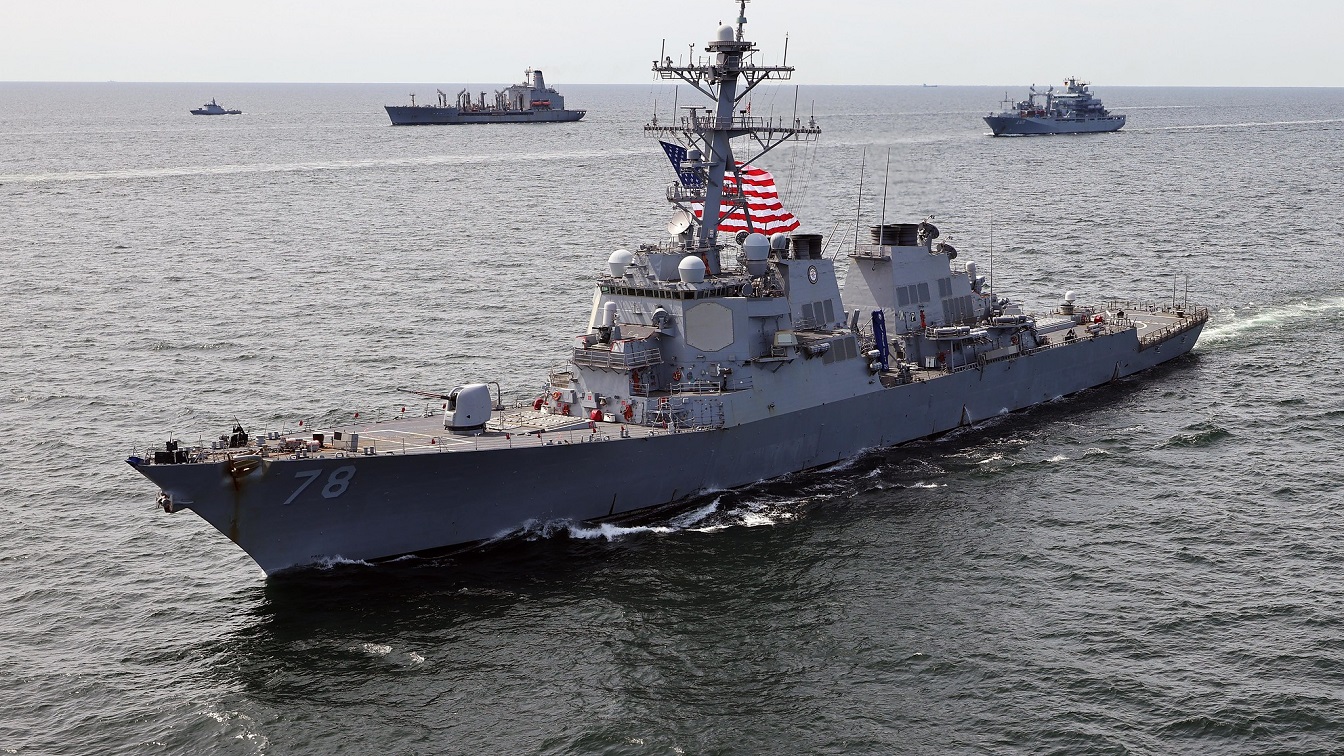
BALTIC SEA (June 6, 2022) The Arleigh Burke-class guided-missile destroyer USS Porter (DDG 78) sails in formation in the Baltic Sea, June 6, 2022, during exercise BALTOPS22. BALTOPS 22 is the premier maritime-focused exercise in the Baltic Region. The exercise, led by U.S. Naval Forces Europe-Africa, and executed by Naval Striking and Support Forces NATO, provides a unique training opportunity to strengthen combined response capabilities critical to preserving freedom of navigation and security in the Baltic Sea. (U.S. Navy photo) 220606-N-NO901-3008
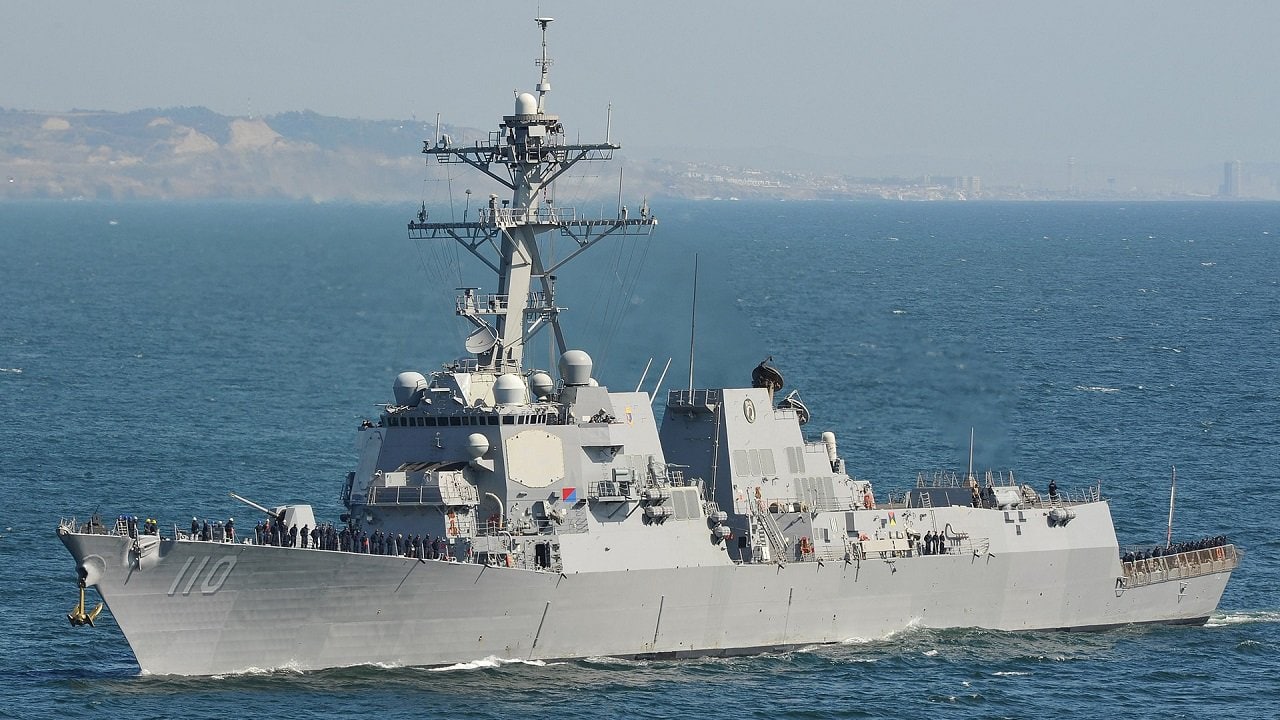
PACIFIC OCEAN (May 4, 2015) – The guided-missile destroyer USS William P. Lawrence (DDG 110) steams toward San Diego Harbor. (U.S. Navy photo by Mass Communication Specialist 3rd Class Nathan Burke/Released)
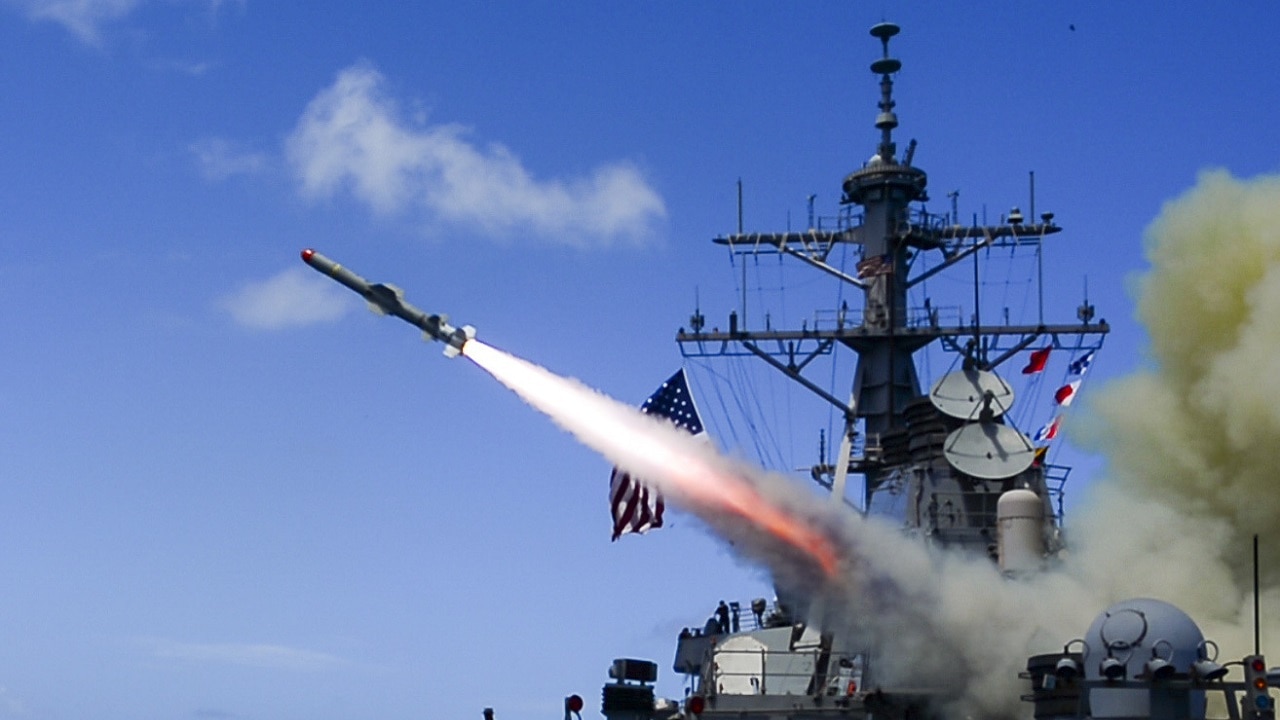
WATERS NEAR GUAM (Mar. 10, 2016) – Arleigh Burke-class guided missile destroyer USS Fitzgerald (DDG 62) conducts a live fire of a harpoon missile during Multi-Sail 2016. Multi Sail is a bilateral training exercise aimed at interoperability between the U.S. and Japanese forces. This exercise builds interoperability and benefits from realistic, shared training, enhancing our ability to work together to confront any contingency. (U.S. Navy photo by Mass Communication Specialist 3rd Class Eric Coffer/Released)
Key features include advanced radar, missile defense systems, and a large fleet, making it a cornerstone of the post-Cold War Navy.
Arleigh Burke destroyers provide multi-mission offensive and defensive capabilities. Destroyers can operate independently or as part of carrier strike groups, surface action groups, amphibious ready groups, and underway replenishment groups.
Armaments include the Standard Missile (SM-2MR); Vertical Launch ASROC missiles; Tomahawk; 6x MK-46 torpedoes; Close In Weapon System; 5-inch Mk45 Gun; Evolved Sea Sparrow Missile, Propulsion: 4x General Electric LM 2500-30 gas turbines, two shafts Speed: 30 knots Crew: 276
The Arleigh Burke-class Flight III destroyers are exceptionally successful due to their integration of the advanced AN/SPY-6(V)1 radar, upgraded Aegis Baseline 10 combat system, and significantly enhanced power/cooling capabilities.
They merge a proven, mature hull design with next-generation sensor technology, offering superior ballistic missile defense, increased raid-handling, and future adaptability for high-energy weapons.
What Is The AN/SPY-6(V)1 Radar
The primary upgrade, this Active Electronically Scanned Array (AESA) radar provides 30 times more sensitivity than previous models, enabling the tracking of smaller, faster, and more complex threats.
SPY-6 is a fully digital, gallium nitride–based S-band radar built from modular Radar Modular Assemblies (RMAs). It is part of the U.S. Navy family of radars that performs air and missile defense on seven classes of ships and is a giant leap in capability for the fleet.
SPY-6 radars are integrated, meaning they can simultaneously defend against ballistic, cruise, and hypersonic missiles, as well as hostile aircraft and surface ships. They offer many advantages over legacy radars, such as greater detection range, increased sensitivity, and more accurate discrimination.
Aegis Combat System Baseline 10
The Aegis Weapon System is a centralized, automated command-and-control (C2) and weapons-control system designed as a total weapon system, from detection to kill.
Aegis Baseline 10 is the integration layer that turns SPY-6’s raw performance into IAMD—simultaneous anti-air warfare and ballistic missile defense, with smarter track management, larger raid handling, and more efficient weapon-target pairing.
The Aegis Combat System is an advanced weapon control system comprised of sensors, control elements, and weapons to detect, track, engage, and destroy adversary targets. The Aegis Combat System’s key components include:
-an Aegis Weapon System that includes the AN/SPY-1 three-dimensional multifunction radar;
a Phalanx Close-In Weapon System;
-a 5-inch diameter gun system;
The Vertical Launch System that can launch Tomahawk missiles, SM-2, SM-3, and SM-6, Evolved Sea Sparrow Missiles, and Vertical Launch Anti-Submarine
This system manages the vast data from SPY-6 to provide integrated air and missile defense (IAMD), simultaneously tackling air threats and ballistic missiles.
Power and Cooling Upgrades
To support the high-energy demands of the new radar, Flight III vessels feature updated generators (AG9160) and enhanced cooling systems, providing capacity for future growth.
Made by Rolls-Royce, the AG9160RF uses the MT5S-HE+ gas turbine: a single-shaft, high-pressure-ratio gas turbine with a fourteen-stage axial compressor and boost compressor module. A four-stage gas turbine is supported on a roller-bearing structure for optimal reliability.
It features a unique, redundant, independent mechanical start system using a M250-KS4 gas turbine as a mechanical starter, enabling a black ship start from two 12V batteries.
Proven Design & Capability
The Flight III retains the core 96-cell Mark 41 Vertical Launch System (VLS), maintaining the high firepower, versatility, and reliability of the Arleigh Burke platform.
The Flight III Arleigh Burke class offers a reliable and cost-effective alternative to experimental designs, providing superior, immediate, and scalable combat capability.
These enhancements make Flight III destroyers essential for modern, high-end naval warfare, particularly for defending carrier strike groups.
The Navy Plans On Adding Up To 24 Arleigh Burke Flight III Destroyers
A total of 24 Arleigh Burke Flight III destroyers have been ordered, with 15 ships either currently under construction or under contract.
Some of the ships will be built by General Dynamics’ Bath Iron Works, headquartered in Bath, Maine, while Ingalls Shipbuilding will build the others. So far, three of them have been launched:
–USS Patrick Gallagher (DDG-127), launched on July 27, 2024, with an expected commissioning sometime in the spring of 2026.
-USS Ted Stevens (DDG-128), launched on August 15, 2023.
-USS Jeremiah Denton (DDG-129), launched on March 26, 2025.
It isn’t perfect, but it fulfills the Navy’s needs today, with numbers and costs the Navy can build and crew.
About the Author: Steve Balestrieri
Steve Balestrieri is a National Security Columnist. He served as a US Army Special Forces NCO and Warrant Officer. In addition to writing on defense, he covers the NFL for PatsFans.com and is a member of the Pro Football Writers of America (PFWA). His work was regularly featured in many military publications.