
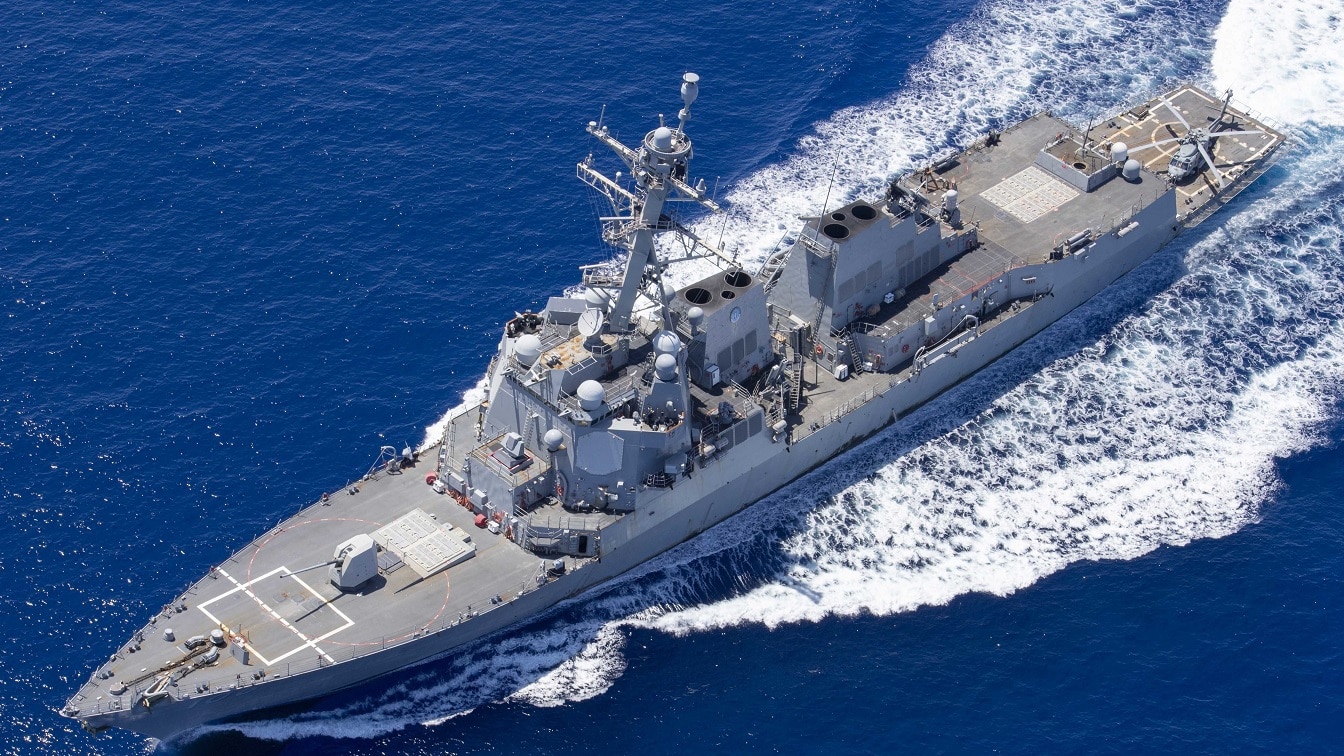
Summary and Key Points: The U.S. Navy has forward-deployed eight Arleigh Burke-class destroyers across the Middle East, a move President Trump has characterized as an “armada” preparing for potential confrontation with Iran.
-Supporting the USS Abraham Lincoln Carrier Strike Group, these warships—including the USS McFaul in the Strait of Hormuz and USS Spruance in the Arabian Sea—are positioned to provide a “kill box” of offensive and defensive capabilities.
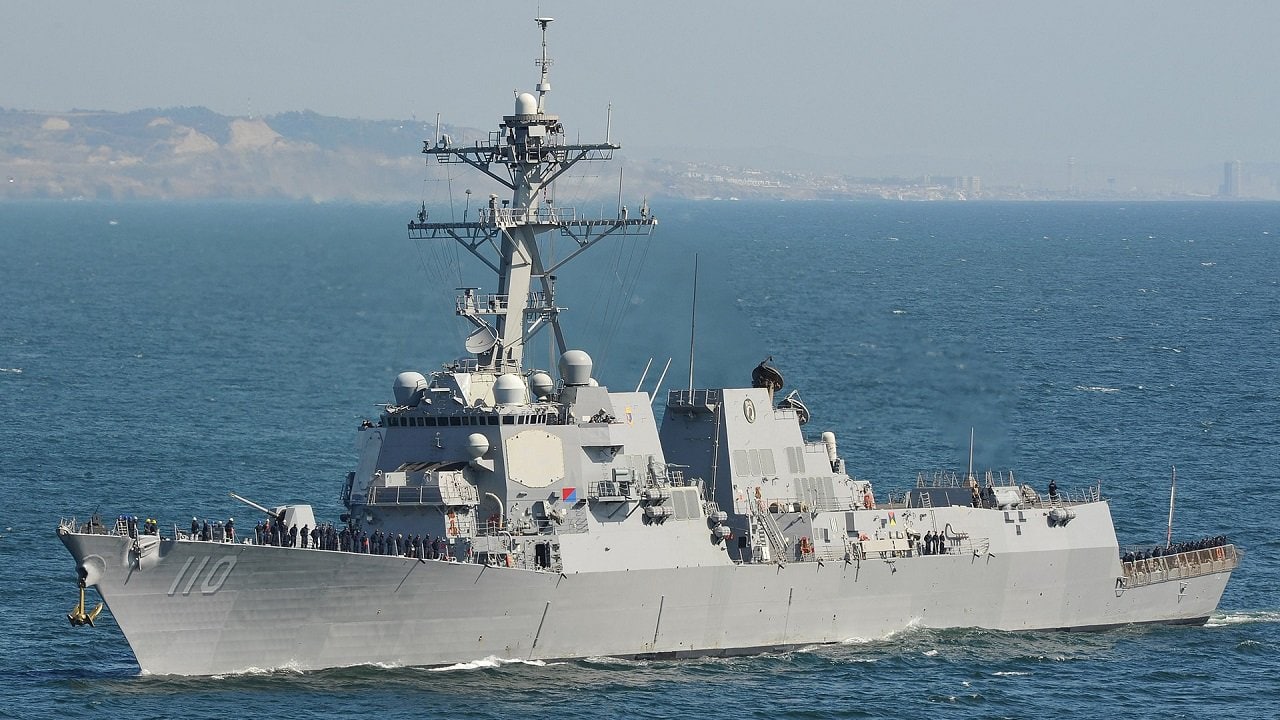
PACIFIC OCEAN (May 4, 2015) – The guided-missile destroyer USS William P. Lawrence (DDG 110) steams toward San Diego Harbor. (U.S. Navy photo by Mass Communication Specialist 3rd Class Nathan Burke/Released)
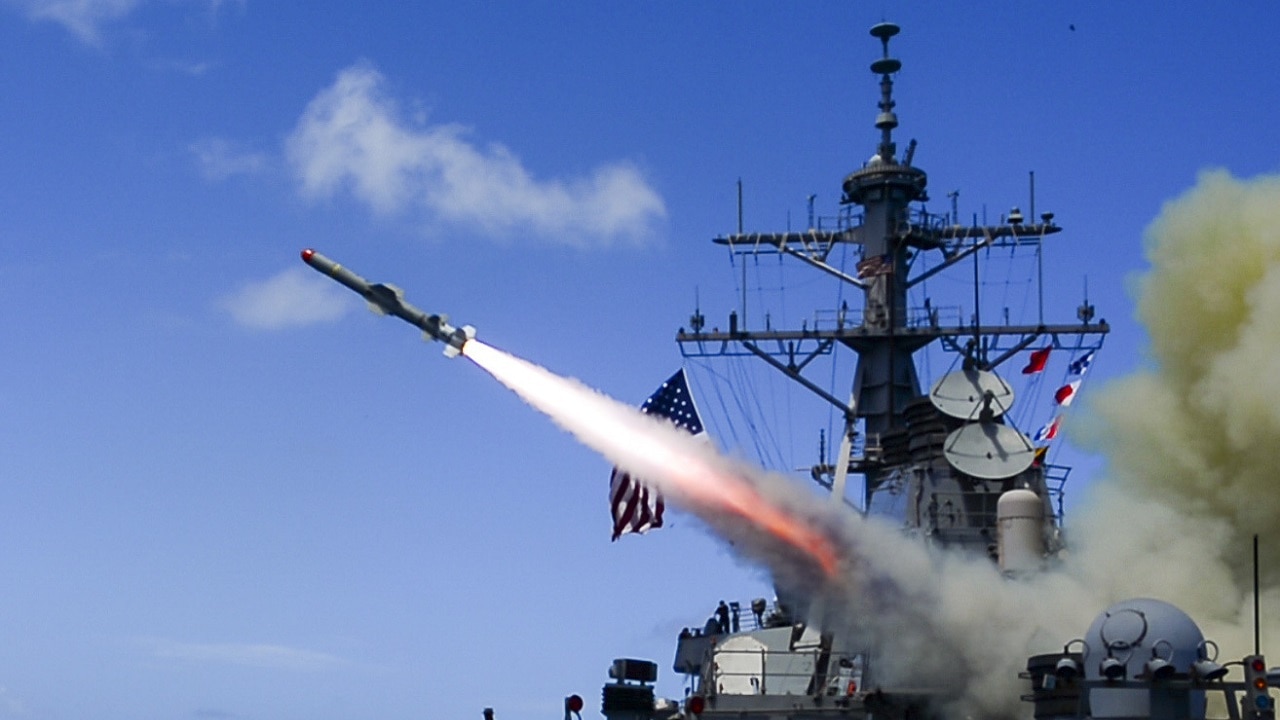
WATERS NEAR GUAM (Mar. 10, 2016) – Arleigh Burke-class guided missile destroyer USS Fitzgerald (DDG 62) conducts a live fire of a harpoon missile during Multi-Sail 2016. Multi Sail is a bilateral training exercise aimed at interoperability between the U.S. and Japanese forces. This exercise builds interoperability and benefits from realistic, shared training, enhancing our ability to work together to confront any contingency. (U.S. Navy photo by Mass Communication Specialist 3rd Class Eric Coffer/Released)
-Armed with Tomahawk cruise missiles for deep land strikes and SM-6 interceptors for missile defense, this force posture represents one of the most aggressive U.S. build-ups in the region since the 2025 strikes on Iranian nuclear sites.
-Reports indicate the sheer scale of this encirclement has forced Tehran to “talk seriously” despite public threats of “all-out war.”
Arleigh Burke-Class Destroyers Prepare for Confrontation With Iran
The United States Navy has forward-positioned eight Arleigh Burke-class guided-missile destroyers across the Middle East amid growing fears of a direct confrontation with Iran.
The force posture strongly indicates that the Navy is preparing for operations against Iran following a force buildup that now includes the nuclear-powered aircraft carrier USS Abraham Lincoln and its accompanying strike group.
The deployments come as U.S. President Donald Trump publicly warns that Washington’s “armada” is in place and ready, with reports now indicating that Tehran is “talking seriously” with the United States.
Such a large concentration of naval power – and in particular, the forward positioning of eight Arleigh Burke destroyers capable of both land-attack and air-missile defense – marks one of the most aggressive U.S. military postures in the Middle East since the strikes on Iranian nuclear sites in mid-2025.
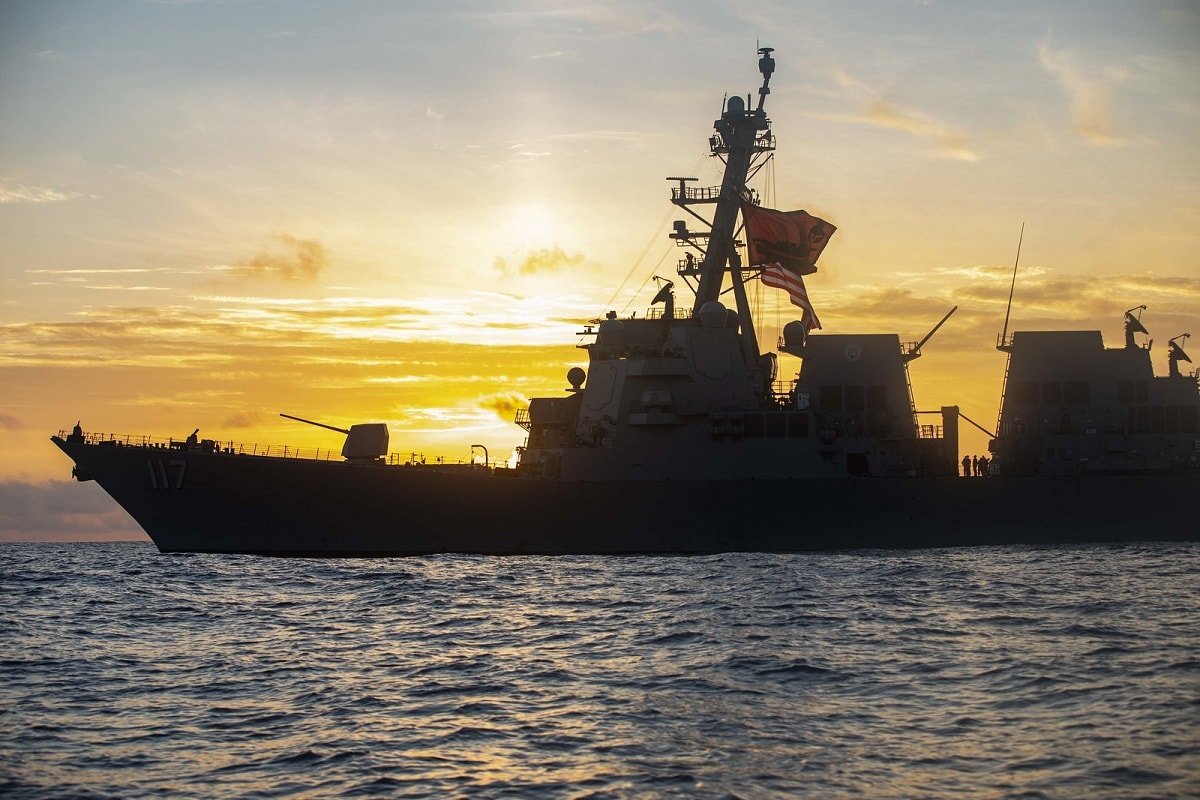
ATLANTIC OCEAN (June 12, 2021) The Arleigh Burke-class guided-missile destroyer USS Paul Ignatius (DDG 117) transits the Atlantic Ocean, June 12, 2021. Paul Ignatius is operating in the Atlantic Ocean in support of U.S. 6th Fleet’s full spectrum of joint and naval operations, often in concert with allied, joint, and interagency, partners, in order to advance U.S. national interests and security and stability in Europe and Africa. (U.S. Navy photo by Mass Communication Specialist 2nd Class Nathan T. Beard) 210612-N-QI061-1430
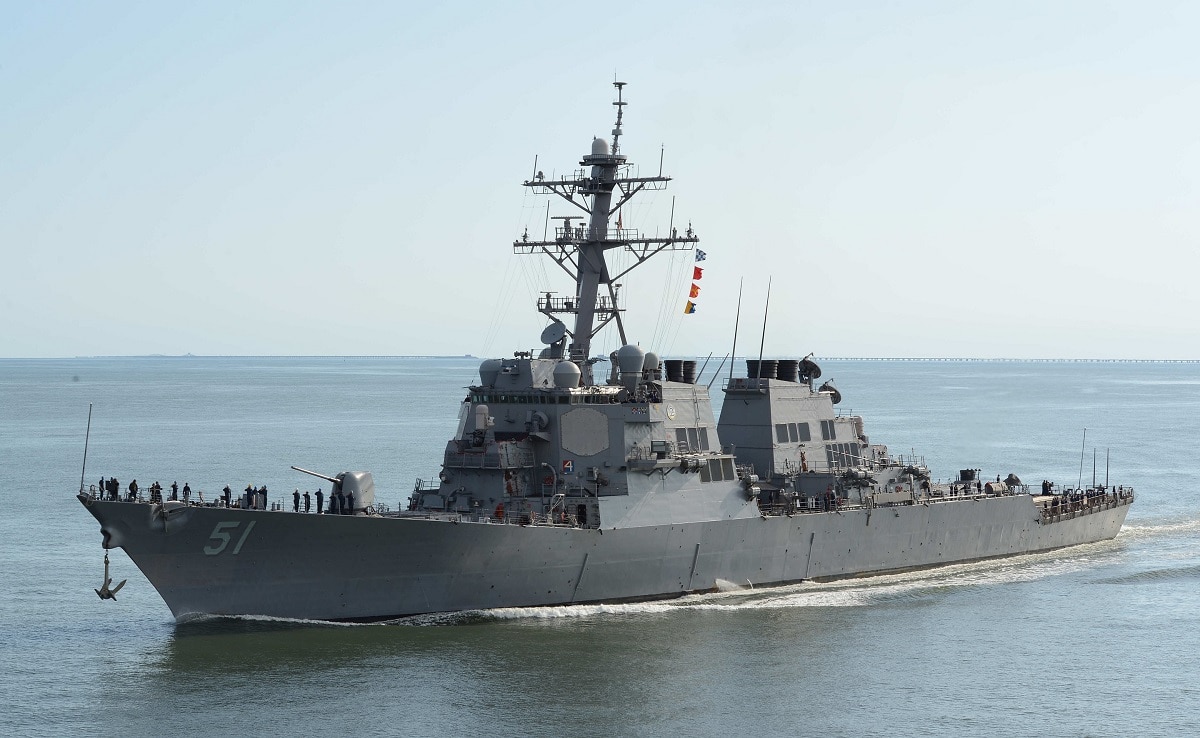
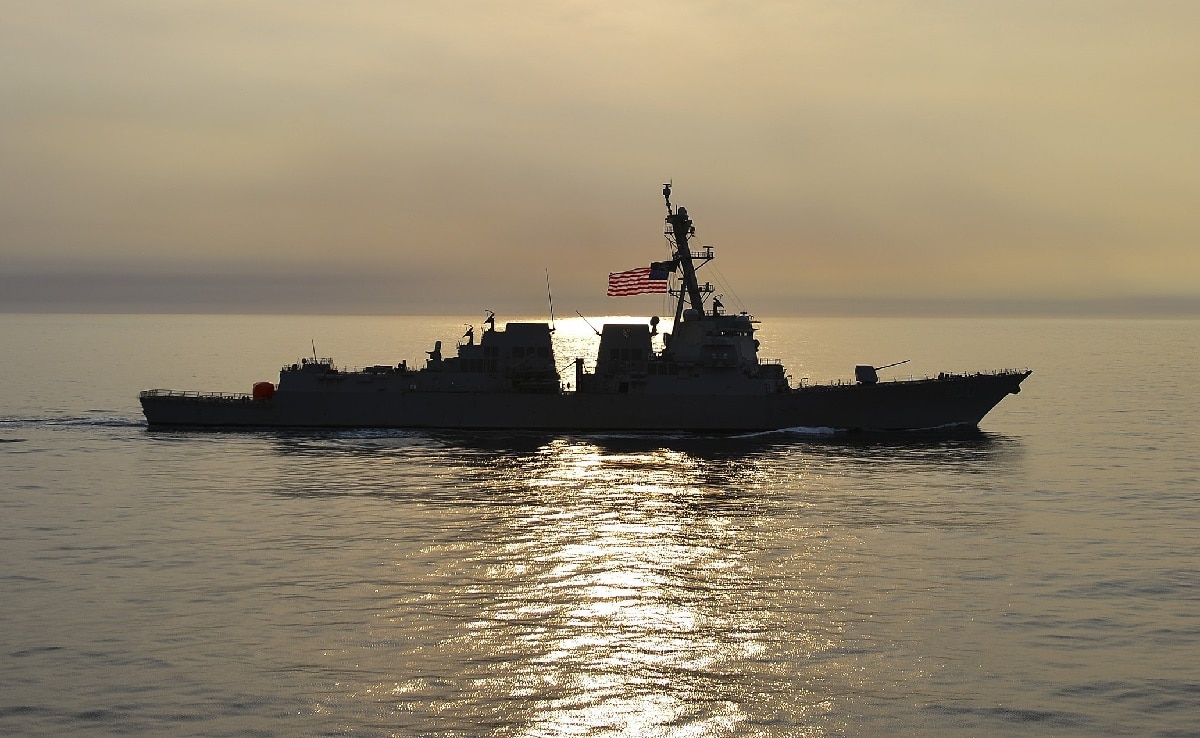
Arleigh Burke Destroyers
171207-N-JH929-039 PACIFIC OCEAN (Dec. 7, 2017) The Arleigh Burke-class guided-missile destroyer USS Kidd (DDG 100) prepares to perform a sea-power demo alongside the aircraft carrier USS Nimitz (CVN 68) during Tiger Cruise 2017, Dec. 7, in the Pacific Ocean. The Nimitz Carrier Strike Group is on a regularly scheduled deployment to the Western Pacific. The U.S. Navy has patrolled the Indo-Asia-Pacific region routinely for more than 70 years promoting peace and security. (U.S. Navy photo by Mass Communication Specialist 3rd Class Cole Schroeder/Released).
How Tehran chooses to respond now – whether through diplomacy with Washington or by following through on their threat of “all-out war” – will decide the next moves.
How We Got Here
The U.S. military has maintained a pretty broad presence in the Middle East across land, sea, and air domains for decades. Recent force movements, however, go well beyond the baseline and indicate that the U.S. Navy is preparing for a potential conflict.
In late January, the USS Abraham Lincoln Carrier Strike Group, including multiple destroyers and air wings equipped with F-35 and F/A-18 fighter jets, entered the Middle Eastern theater after redeploying from the South China Sea and other areas.
Three of the forward-positioned destroyers – USS Frank E. Petersen Jr., USS Spruance, and USS Michael Murphy – are operating with the Lincoln strike group in the North Arabian Sea, providing layered air-defense and offensive strike capabilities.
Other destroyers, such as USS Bulkeley and USS Roosevelt, have taken up positions in the Eastern Mediterranean, providing a platform to contribute to missile defense over allied territory. USS McFaul and USS Mitscher, meanwhile, are operating near the Strait of Hormuz – a critical chokepoint that connects the world with Persian Gulf energy exports. The USS Delbert D. Black was also reported to be in the Red Sea, where it can be used as a flexible platform that can be repositioned as needed.
That’s why President Trump calls the buildup an “armada”: Iran is now surrounded by naval, air, and missile defense assets that are moving into place across the region. The pace and scale at which the buildup has occurred has prompted speculation that Washington is preparing options for a range of contingencies, from operating as a deterrence mission to engaging in strike action.
Why the Destroyers Matter In A Potential Iran Conflict
The Arleigh Burke class – the U.S. Navy’s main surface combatant – carries a deadly combination of sensors and weapons supported by dozens of vertical launch system (VLS) cells capable of firing Tomahawk land-attack cruise missiles, as well as SM-3 and SM-6 surface-to-air missiles.
In a conflict scenario, the ships would provide the offensive strike options necessary to take out Iranian targets while also providing defense coverage for high-value assets like allied regional bases or the carrier strike group.
Because of their flexibility, destroyers are central to the U.S. Navy’s ability to strike from thousands of miles away without exposing valuable aircraft carriers to risk. Tomahawks, for example, offer stand-off precision strike capability against hardened (protected) targets across Iran’s territory, while the SM-6 can play a role in intercepting anti-ship missiles or ballistic threats directed at U.S. or allied forces.
While Iran’s air force leaves a lot to be desired, it has developed a large ballistic missile arsenal and has a burgeoning drone program powered in part by business from Russia – both of which are intended to deter Western action. Tehran’s leaders have reiterated (repeatedly) that any strikes would be met with “all-out war” with the United States.
Should that occur, however, it’s unclear how Iran would respond; its short- and medium-range missiles could technically cause damage, but between U.S. defensive systems and strike capacity, the Iranian government could quickly collapse, and defensive efforts fail.
What Happens Now?
Based on statements from the White House and the pattern of deployments, there are several plausible operational aims behind the U.S. Navy’s current posture.
The most restrained scenario is that the United States seeks to deter Iranian escalation by presenting a credible threat of overwhelming force.
We already know those efforts have brought Tehran to the table in recent days, likely because the regime in Iran knows – after the arrest of Nicolas Maduro – that President Trump is willing to engage in military action against adversaries.
A second possibility is that the United States is positioning to do exactly that: move forward with calculated, limited strikes in specific Iranian military infrastructure or missile systems should provocations escalate. Naval destroyers and carrier aircraft offer precision strike options that could be used to weaken Iranian defenses and create additional diplomatic leverage.
The most aggressive scenario, however, would be that the United States engages in sustained strike operations intended to significantly degrade Iranian military capabilities. Should this take place, the U.S. Navy would likely require additional air and missile power and potentially allied cooperation.
While there is no public indication that such a plan has been formally adopted, the scale of the current buildup suggests the option is available to the U.S. However, conducting extensive (or even limited) strikes against Iran would require extreme confidence from Washington that larger powers like China or Russia will not interfere to defend Iranian interests.
Whatever happens next, it will likely involve some form of climbdown on the Iranian side.
About the Author:
Jack Buckby is a British researcher and analyst specialising in defence and national security, based in New York. His work focuses on military capability, procurement, and strategic competition, producing and editing analysis for policy and defence audiences. He brings extensive editorial experience, with a career output spanning over 1,000 articles at 19FortyFive and National Security Journal, and has previously authored books and papers on extremism and deradicalisation.