
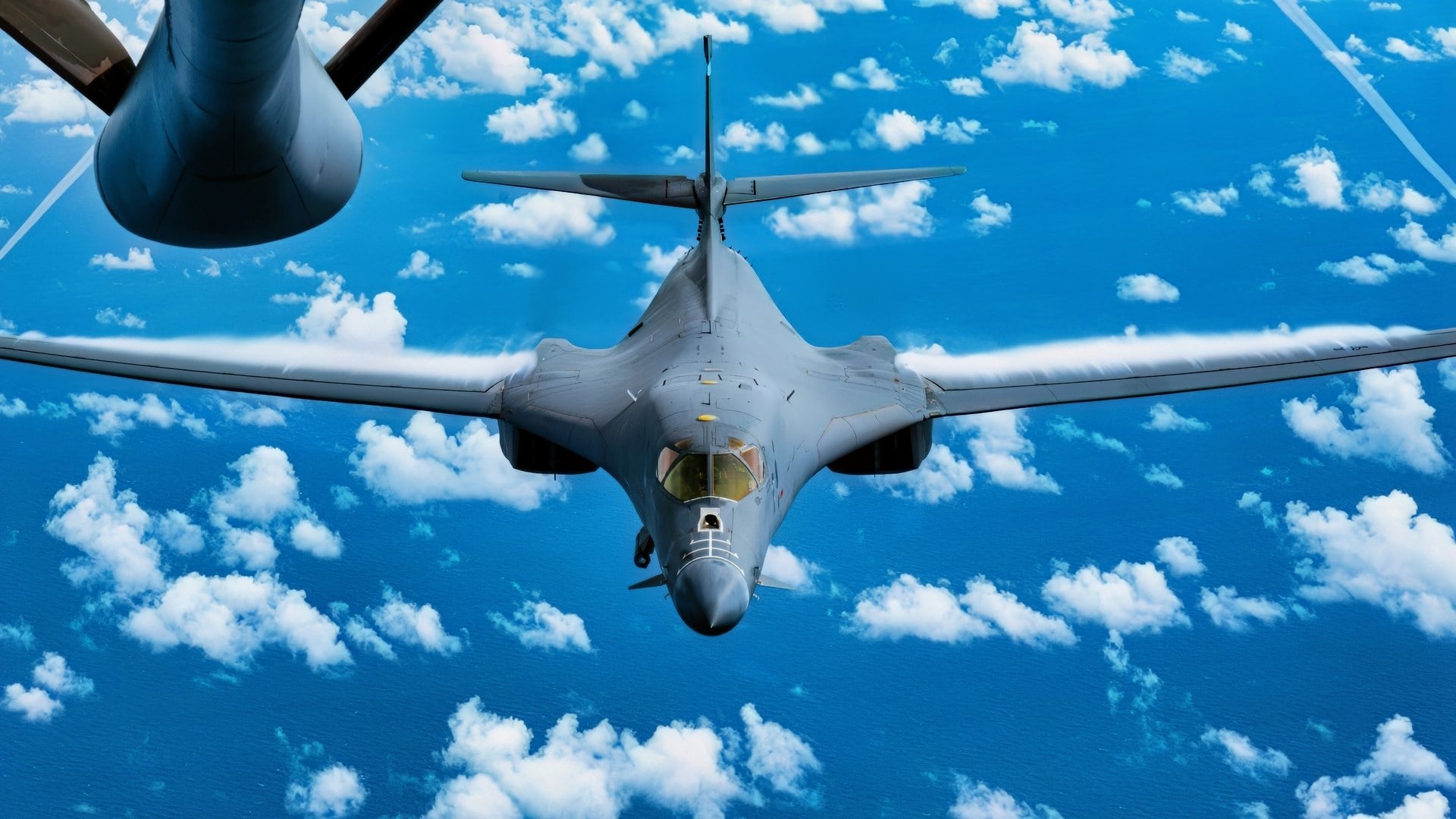
Summary and Key Points: Dr. Brent M. Eastwood breaks down the diplomatic friction fracturing NATO during the 2026 Operation Epic Fury. On March 18, a USAF B-1B Lancer (tail number 86-0120) returning to RAF Fairford was forced into a massive, fuel-draining detour over the Atlantic after France, Spain, and Portugal closed their airspace to American offensive strike missions.
-Dr. Eastwood examines how the Trump administration’s lack of coalition-building translates into severe logistical strain, forcing bombers onto low-altitude transit routes just as rumors of a potential ceasefire emerge.
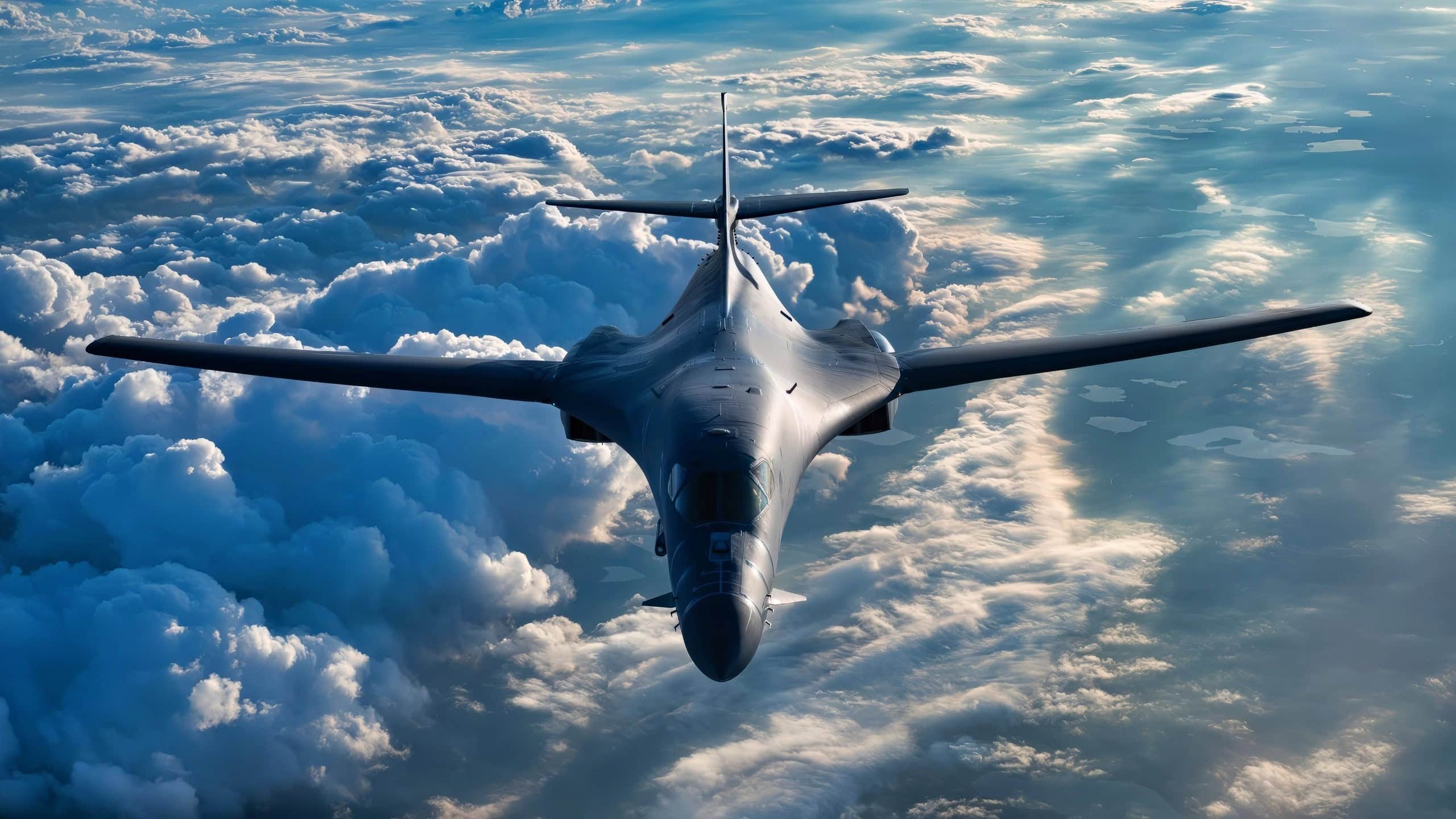
A U.S. Air Force B-1B Lancer assigned to the 34th Expeditionary Bomb Squadron, Ellsworth Air Force Base, South Dakota, flies over the United States, July 2, 2025. The B-1B is a heavy bomber with up to a 75,000 pound payload. (U.S. Air National Guard photo by Airman Spencer Strubbe)
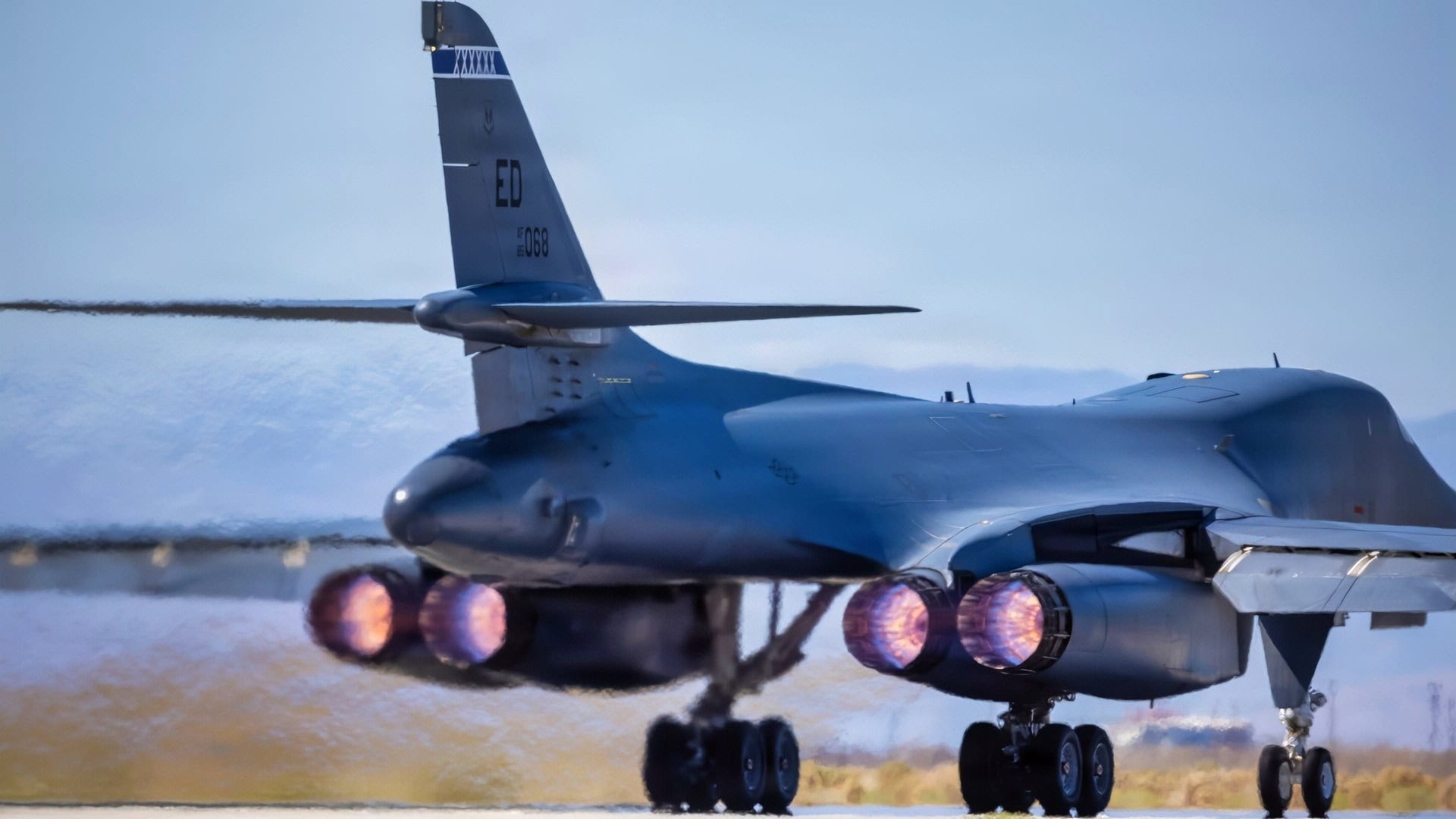
A B-1B Lancer departs for a test mission at Edwards Air Force Base, California on September 11, 2025. The supersonic multi-mission heavy bomber continues developmental testing with the 419th Flight Test Squadron to increase lethality across several domains. The aircraft is helping bridge advanced capability for Global Strike Command ahead of the B-21 Raider’s arrival. The 412th Test Wing at Edwards is the only installation to host all four USAF bomber aircraft. (U.S. Air Force photo by Todd Schannuth)

B-1B Lancer Getting Closer. Image Credit: Creative Commons.
The Scenic Route: Why NATO Allies Closed Airspace to the B-1B Lancer
Most of the time when the United States goes to war, it expects support and cooperation from its allies. This happened to great success during Operation Desert Storm in 1991, when 35 foreign nations offered to fashion an international coalition to push Saddam Hussein’s forces out of Kuwait. Diplomacy to form a similar robust coalition was less successful during the Second Gulf War, which was seen as a conflict of choice to depose Hussein in 2003. Many European countries that would normally be partners refused to support the invasion of Iraq.
A Few NATO Partners Are Not Cooperating
Now, with the U.S. and Israeli war against Iran, few European allies are cooperating with the effort. Normally, the U.S. Air Force can fly over the airspace of NATO allies. That is not happening, and American bombers are now making circuitous long-range flights that require more refueling without enabling direct tracking to the target.
The Circuitous Flight of a B-1B Lancer Bomber
Aviation intelligence website Air Live traced the flight of an American B-1B Lancer that attacked Iran on March 18. The “Bone” bomber definitely took the “scenic route” to Iran and not a straight shot as the crow flies. This added hundreds of miles to the trip and burned a significant amount of extra fuel due to the need for aerial refueling, perhaps more than would have been required.
The Mission Took Longer Than Normal
The bomber, known by its tail number, 86-0120, landed at RAF Fairford in the United Kingdom at 5:05 am UTC last Wednesday. The B-1B had a successful mission, dropping or launching all its munitions, likely causing significant damage in Iran, but this was no milk run. The Lancer had a longer-than-necessary flight path back to England.
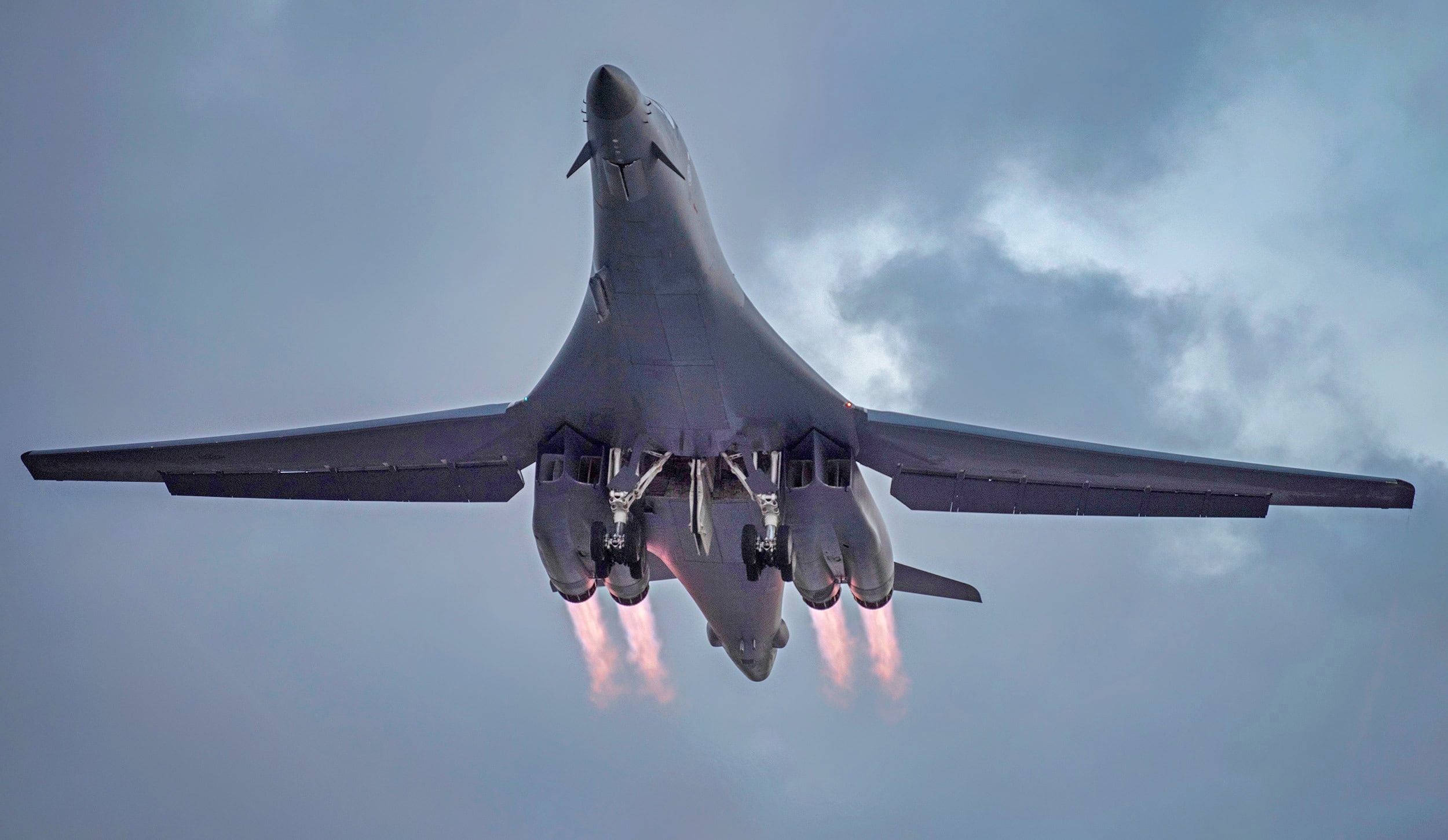
B-1B Lancer Bomber. Image Credit: Creative Commons.

A B-1B Lancer assigned to Ellsworth Air Force Base, S.D, takes off in support of a Bomber Task Force mission at Naval Support Facility Diego Garcia, Nov. 2, 2021. Bomber missions provide opportunities to train and work with our allies and partners in joint and coalition operations and exercises. (U.S. Air Force photo by Staff Sgt. Hannah Malone)
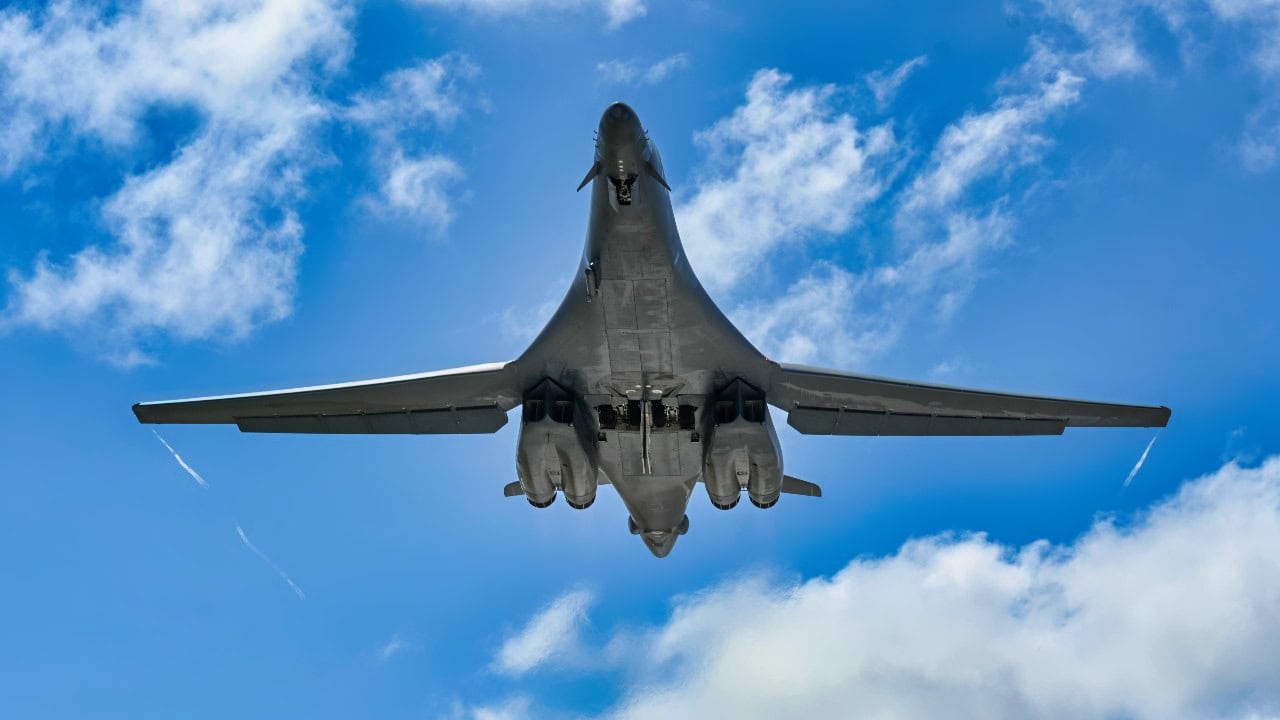
A U.S. Air Force B-1B Lancer assigned to the 34th Expeditionary Bomb Squadron takes off for a mission in support of Bomber Task Force 25-1, at Andersen Air Force Base, Feb. 16, 2025. Bomber Task Force missions demonstrate lethality and interoperability in support of a free and open Indo-Pacific. (U.S. Air Force photo by Airman 1st Class Alec Carlberg)
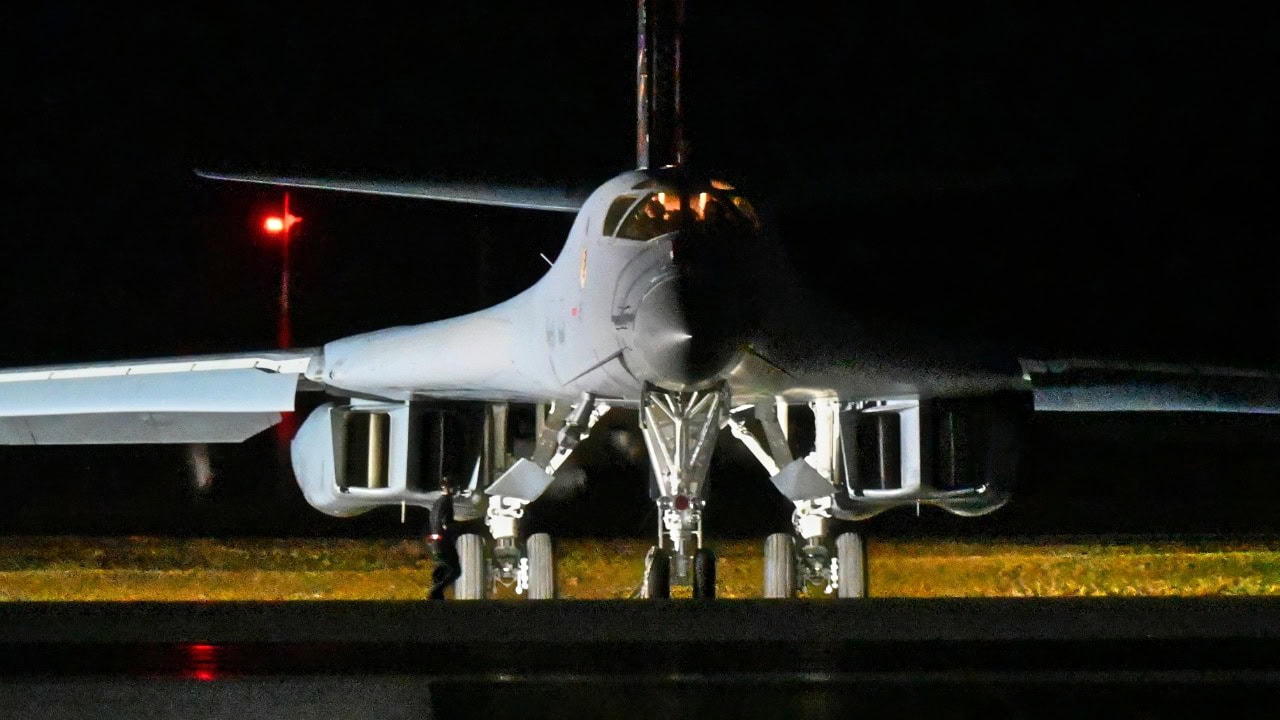
A U.S. Air Force B-1B Lancer assigned to the 34th Expeditionary Bomb Squadron, Ellsworth Air Force Base, S.D., runs final checks before takeoff of a training mission in support of Bomber Task Force 25-1 at Andersen Air Force Base, Guam, Feb. 24, 2025. The BTF missions are designed to showcase the Pacific Air Force’s ability to deter, deny, and dominate any influence or aggression from adversaries or competitors. (U.S. Air Force photo by Tech. Sgt Robert M. Trujillo)
Not the Usual Flight Path
The B-1B left Iran at night, but it had to avoid the airspace of several countries that are normally friendly to the United States, showing that not all U.S. allies support Operation Epic Fury. First, the B-1B took a turn and flew through the Mediterranean Sea and then turned sharply as it headed north over the Atlantic Ocean.
Portugal, Spain, and France Closed for Business
This is when the airplane had to avoid NATO countries like Portugal, Spain, and France – all nations that should have allowed the B-1B to fly over their airspace. The Lancer simply did not violate these countries’ sovereignty. It is probably a good thing that the B-1B is not stealthy, and flying in that airspace without permission could have created an accident in which air defenses or fighter jets could have attacked the B-1B. A friendly fire accident happened earlier in the war when a Kuwaiti F/A-18 reportedly shot down three American F-15E Strike Eagles. It is probably better for the B-1B to avoid this airspace to prevent a potential friendly-fire incident.
Flying Low and Slow
While making the trip back to England, the B-1B flew at an altitude of between 17,000 and 25,000 feet. This was lower than normal, likely to save fuel. The crew probably did not want to set off any air defense alarms that would have put intercepting aircraft in a position to challenge it.
France Says ‘No Dice’
France has stopped allowing U.S. warplanes to fly over its airspace. “France has closed its airspace to any aircraft engaged in offensive missions against Iran,” a diplomatic source quoted by Air Live said. “This restriction is specific to the mission profile; it does not apply to cargo, humanitarian efforts, or non-combat transport, but specifically to the execution of strikes.”
Did the U.S. Make a Diplomatic Mistake?
This is disappointing for U.S. efforts to fight in Iran. What could President Donald Trump have done differently? Did he alert allies that attacks against Tehran would be inevitable? There may have been a perception by American partners that the United States preferred to go it alone and pursue a unilateral effort (aside from working with Israel). The Americans did not consult with the United Nations or pursue additional diplomatic efforts with Iran.
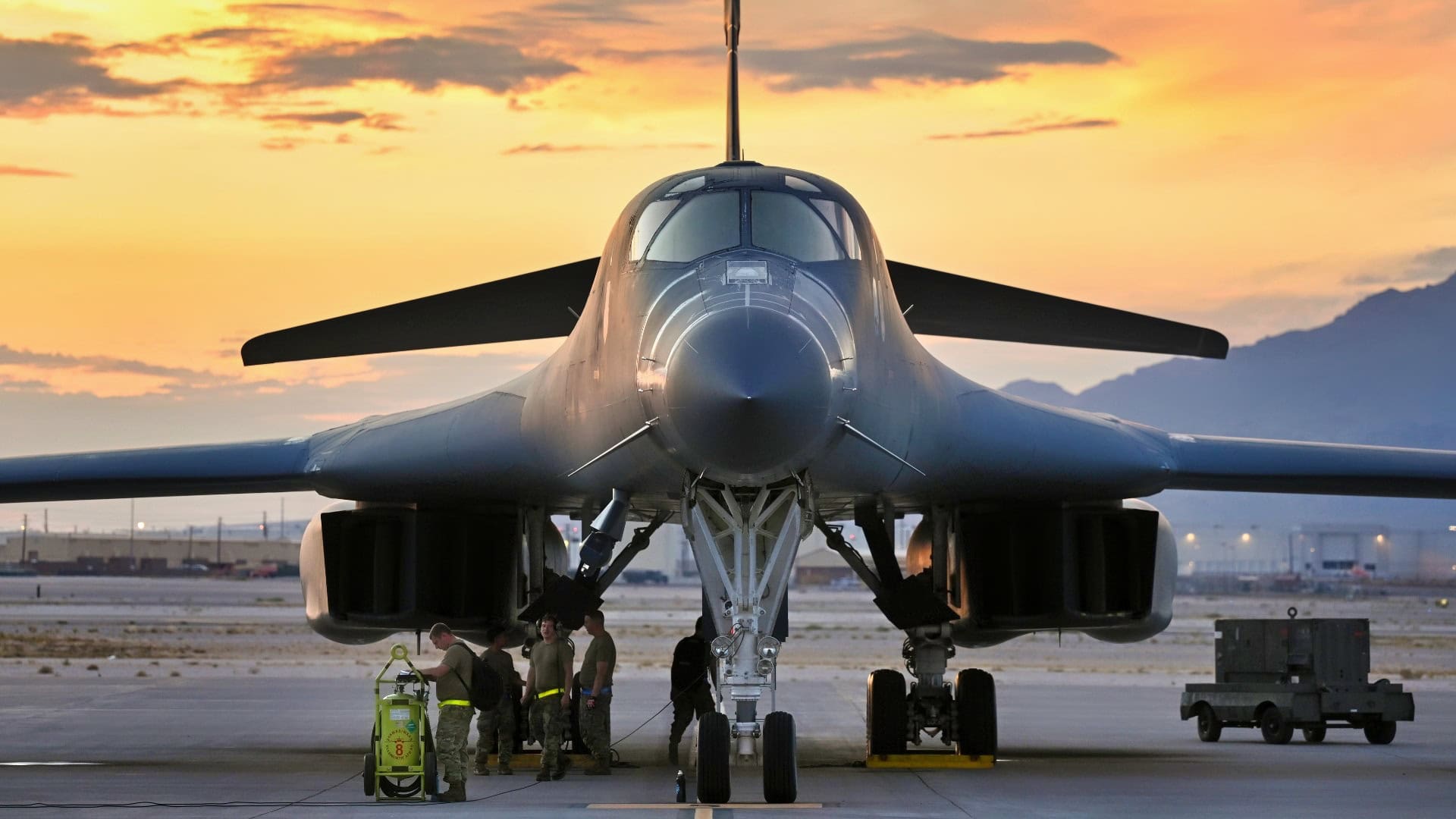
A U.S. Air Force B-1B Lancer assigned to the 34th Bomb Group undergoes maintenance at Nellis Air Force Base, Nev., July 23, 2024. Five B-1Bs flew from Ellsworth AFB, S.D., to participate in Red Flag 24-3, an exercise that provides Airmen and Guardians with the opportunity to work alongside allied air forces in a realistic combat training environment. (U.S. Air Force photo by Airman 1st Class Brittany Kenney)
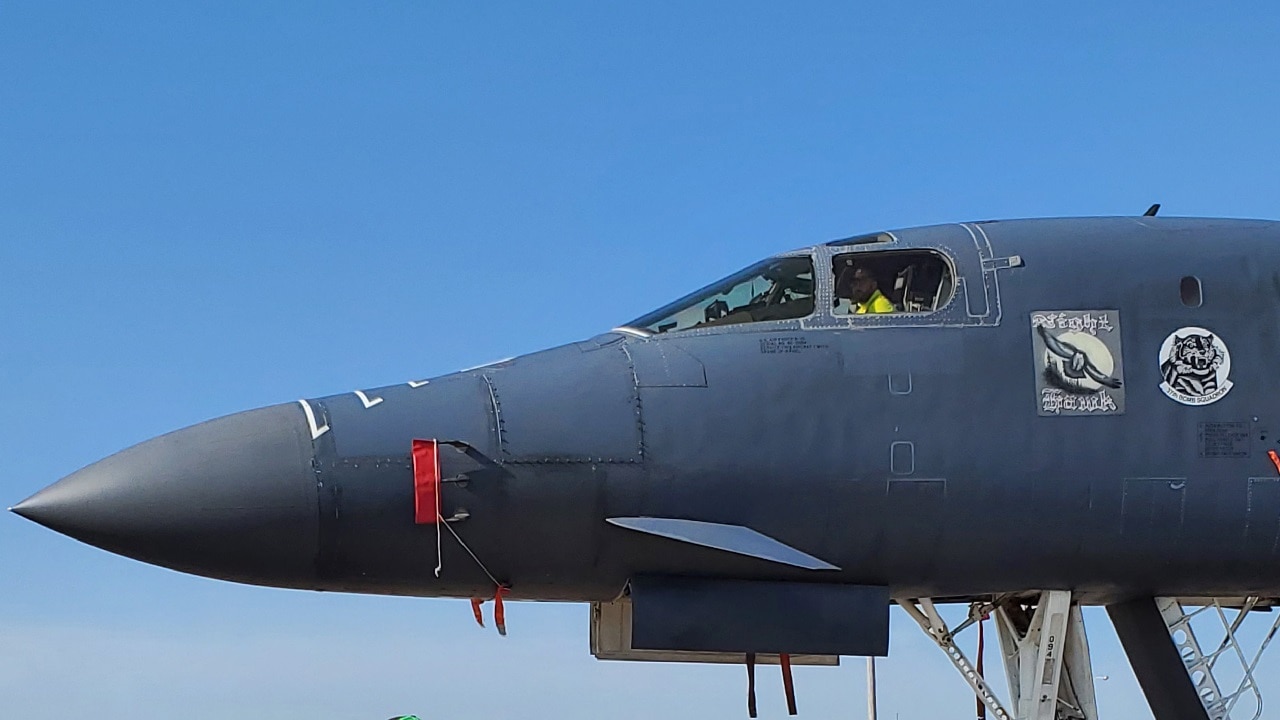
A B-1B Lancer, tail number 86-0094, is moved across Douglas Blvd. to the Maintenance Repair and Overhaul Technology Center (MROTC) to receive an initial portion of Gate 1 of programmed depot maintenance April 21. 567th AMXS personnel will perform three days of maintenance which include single system checks on 40 individual actuators validating voltage outputs as
well as interrogating each actuator for hydraulic leaks. After single systems are completed, the horizontal stabilizers will be removed from the aircraft. This is the first time that horizontal stabilizers have ever been removed at the MROTC. Once complete, the aircraft and horizontal stabilizers will be brought back across Douglas to the 569th AMXS strip facility for plastic media blasting. Once stripped, the horizontal stabilizers will be routed to the 76th Commodities Maintenance Group for overhaul and repairs. (U.S. Air Force photo/Kelly White)
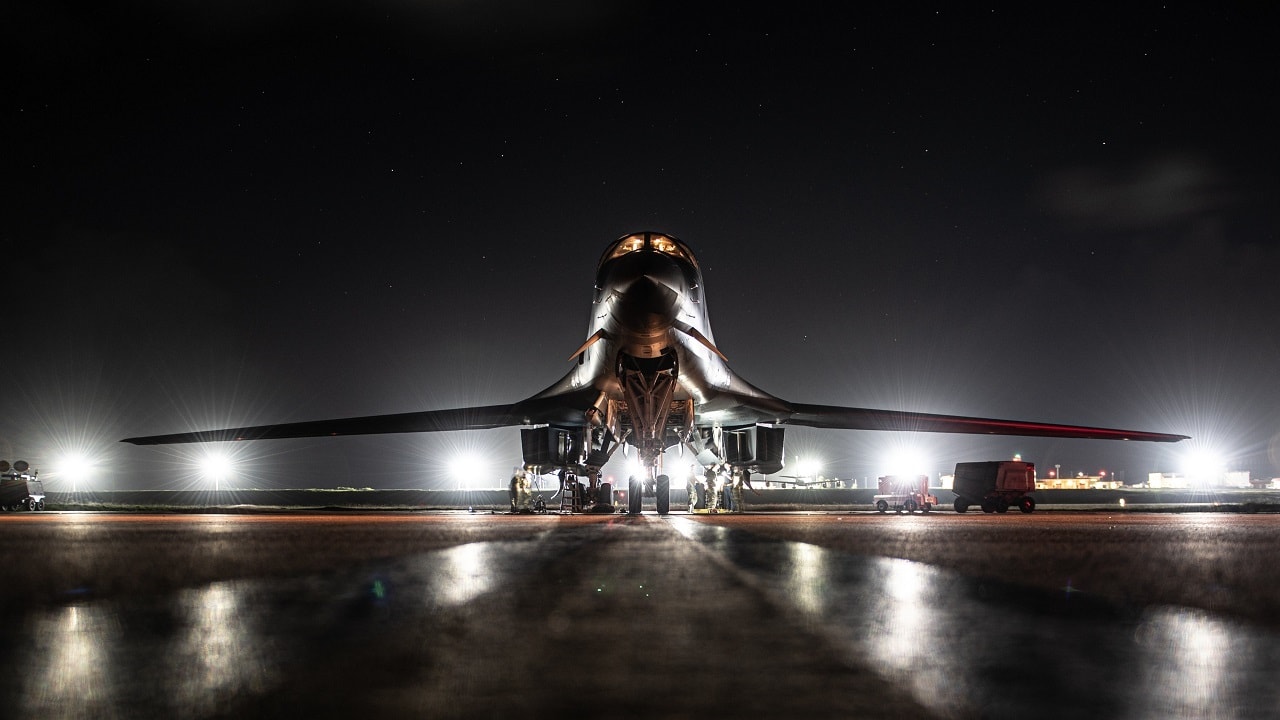
B-1B Lancer Bomber. Image Credit: U.S. Air Force.
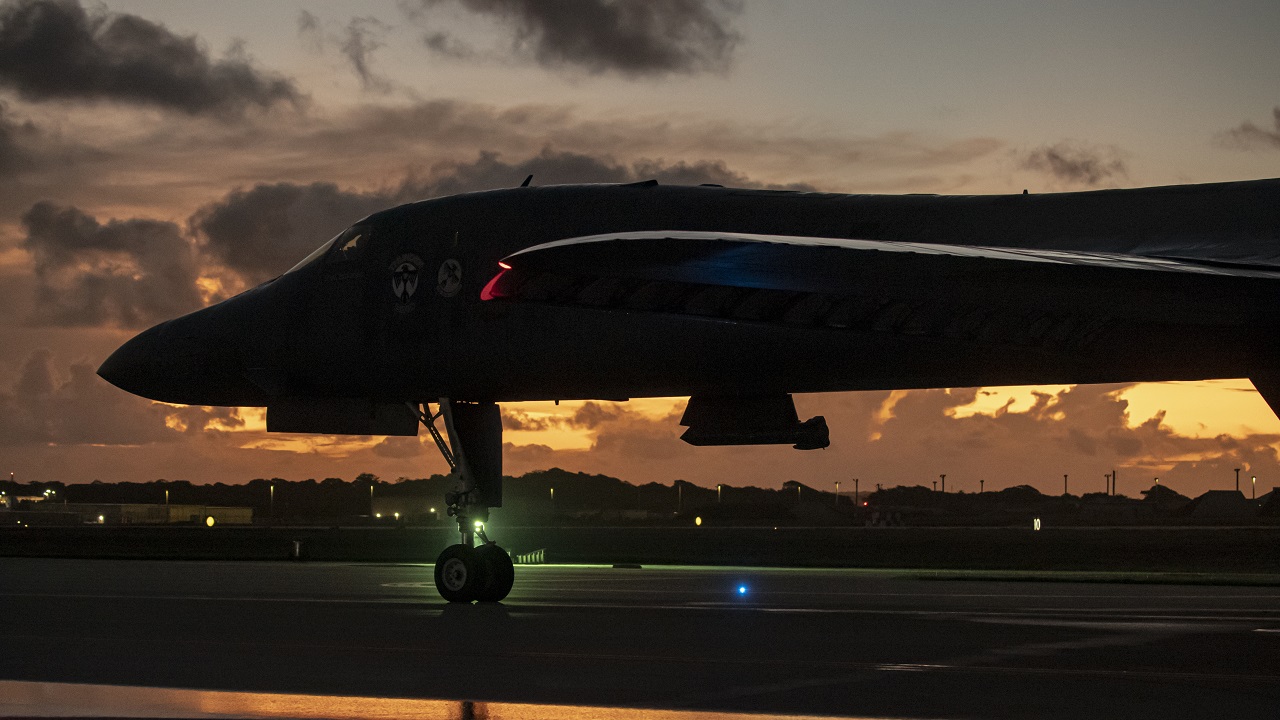
A U.S. Air Force B-1B Lancer attached to the 34th Expeditionary Bomb Squadron, Ellsworth Air Force Base, South Dakota, prepares to park as the sun sets at Anderson Air Force Base, Guam, June 8, 2022. Bomber Task Force missions strengthen the collective ability of the U.S. and our allies and partners to maintain a free and open Indo-Pacific. (U.S. Air Force Photo by Tech. Sgt. Chris Hibben)
Let’s Work Tightly Together
It may have been better to coordinate with NATO allies before the attacks on Iran. But it also seems that the United States is being unfairly targeted by its European partners.
The British have been cooperative, but it is frustrating that France, Portugal, and Spain are not allowing U.S. warplanes to operate in ways that would benefit the United States.
NATO Countries Are Suspicious of Trump’s Capricious Nature
NATO has been a thorn in the side of Trump since his first administration started in 2017. He wants NATO countries to spend more on defense – up to five percent of GDP – to help the allies engage in self-help for their collective defense.
While the B-1B story is disappointing for the U.S. Air Force, do not expect Trump’s national security or diplomatic team to change the hardened stances of unwilling U.S. allies.
There are reports on March 23 that Trump will attempt more diplomatic activity with Iran that could create a ceasefire, and U.S. bombers would not have to fly for several days.
But it is still frustrating that some NATO partners are not cooperating.
Perhaps next time the Americans can better coordinate with allies before they make a unilateral attack against a sovereign nation.
The Europeans prefer unity in response to international crises, and Trump did not create a coalition of the willing.
This can be chalked up to a failed act of diplomacy that could have been avoided.
About the Author: Brent M. Eastwood
Author of now over 3,000 articles on defense issues, Brent M. Eastwood, PhD, is the author of Don’t Turn Your Back On the World: a Conservative Foreign Policy and Humans, Machines, and Data: Future Trends in Warfare , plus two other books. Brent was the founder and CEO of a tech firm that predicted world events using artificial intelligence. He served as a legislative fellow for US Senator Tim Scott and advised the senator on defense and foreign policy issues. He has taught at American University, George Washington University, and George Mason University. Brent is a former US Army Infantry officer. He can be followed on X @BMEastwood.