
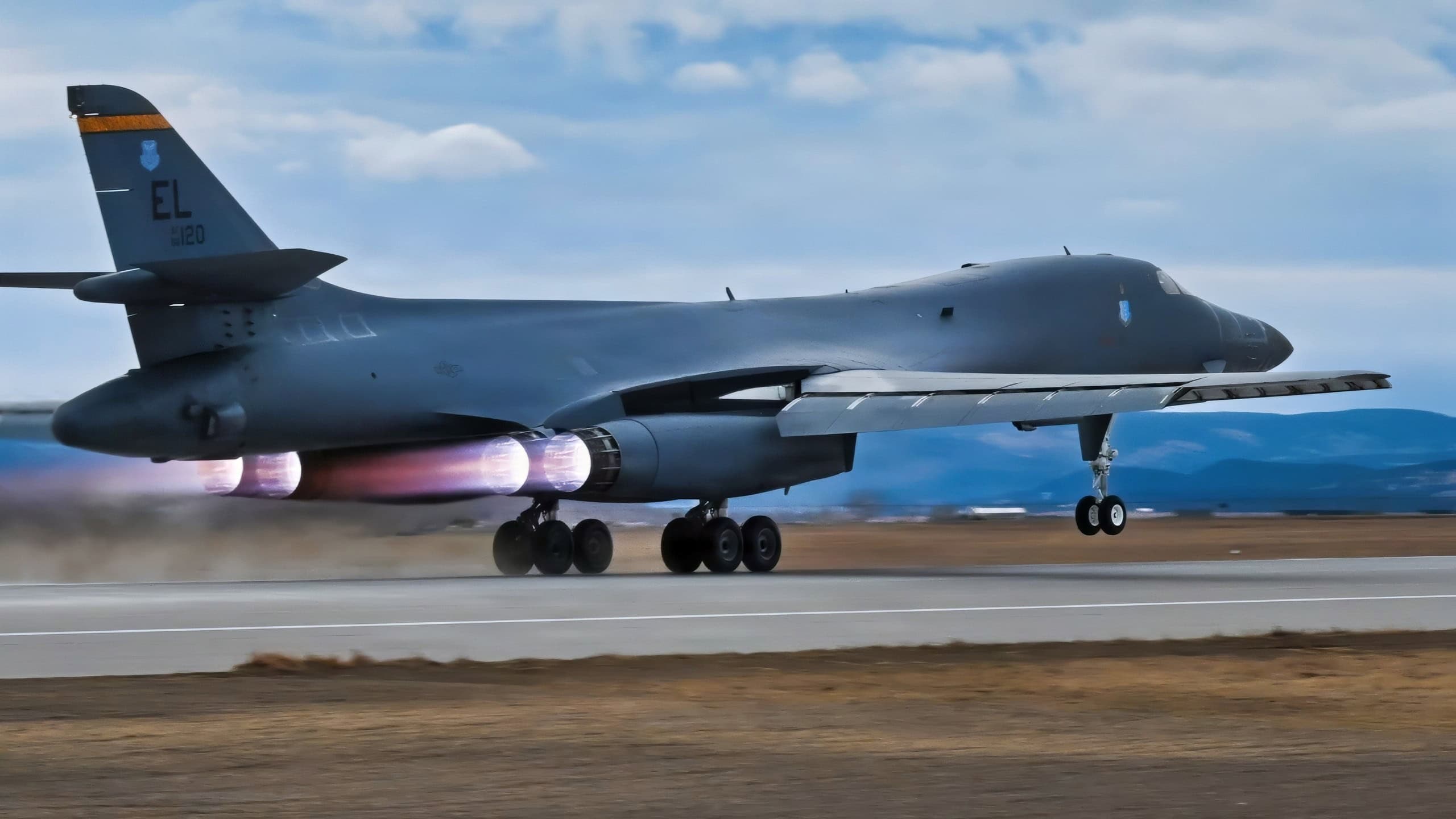
Summary and Key Points: Defense expert Dr. Brent M. Eastwood evaluates the transition to mini-MOP munitions as Operation Epic Fury intensifies.
-With 12 B-1B Lancers and three B-52s now operating from RAF Fairford, the U.S. is utilizing GBU-31 JDAMs with BLU-109 warheads to target hardened industrial complexes and command bunkers.
-This report analyzes the March 11 strike on the Taleghan 2 nuclear facility and the ongoing effort to degrade Iran’s loitering munition networks.
-Eastwood explores the strategic use of non-stealth bombers in “cleared” airspace, concluding that these high-volume strikes are critical for preventing Iran from reinforcing its buried nuclear assets.
The Mini-MOP Offensive: Why the B-1B Lancer is Now the U.S. Air Force’s Primary Bunker Buster in Iran
We know that the B-2 Spirit is the only airplane that can drop 30,000-pound GBU-57/B Massive Ordnance Penetrator (MOP) bunker buster bombs. These can be devastating, and they are being used against hardened, underground nuclear infrastructure in Iran.
The MOP may have been deployed on March 11 against the Taleghan 2 site near Tehran (although Israel claimed they struck the facility too).
But there are other ways to utilize bunker busters. While the MOP is likely the most effective means to wipe out underground facilities, the U.S. Air Force has another way to conduct deep, penetrating strikes.
New Development with ‘Mini-MOPS’
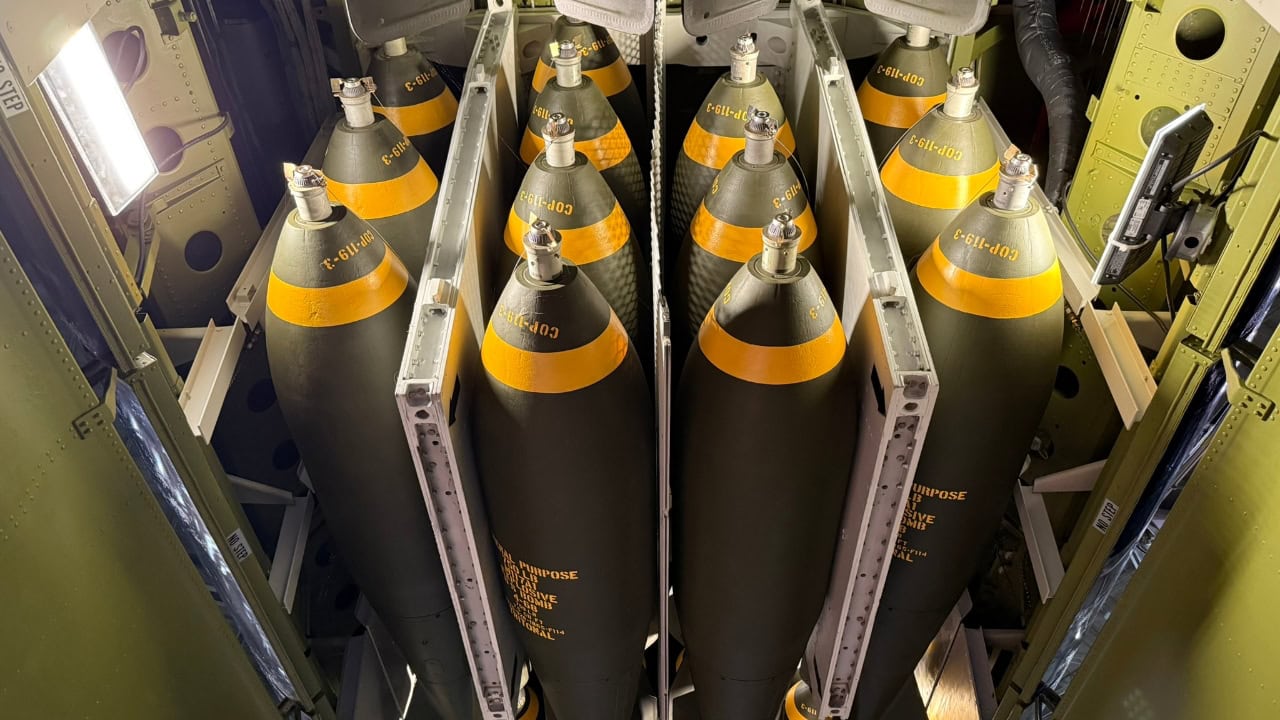
The Air Force is now outfitting GBU-31 Joint Direct Attack Munitions (JDAMs) with BLU-109 2,000-lb bunker buster warheads. These “mini-MOPs” will be carried by B-1B Lancers flying out of Royal Air Force Fairford in the United Kingdom.
This is a good sign for the Air Force and could be an example of how it is confident that the B-1B can conduct precision strikes against hardened nuclear infrastructure sites. The Americans and Israelis may have eliminated and suppressed enemy air defenses to the point that they are regularly able to use the non-stealth B-1B Lancer.
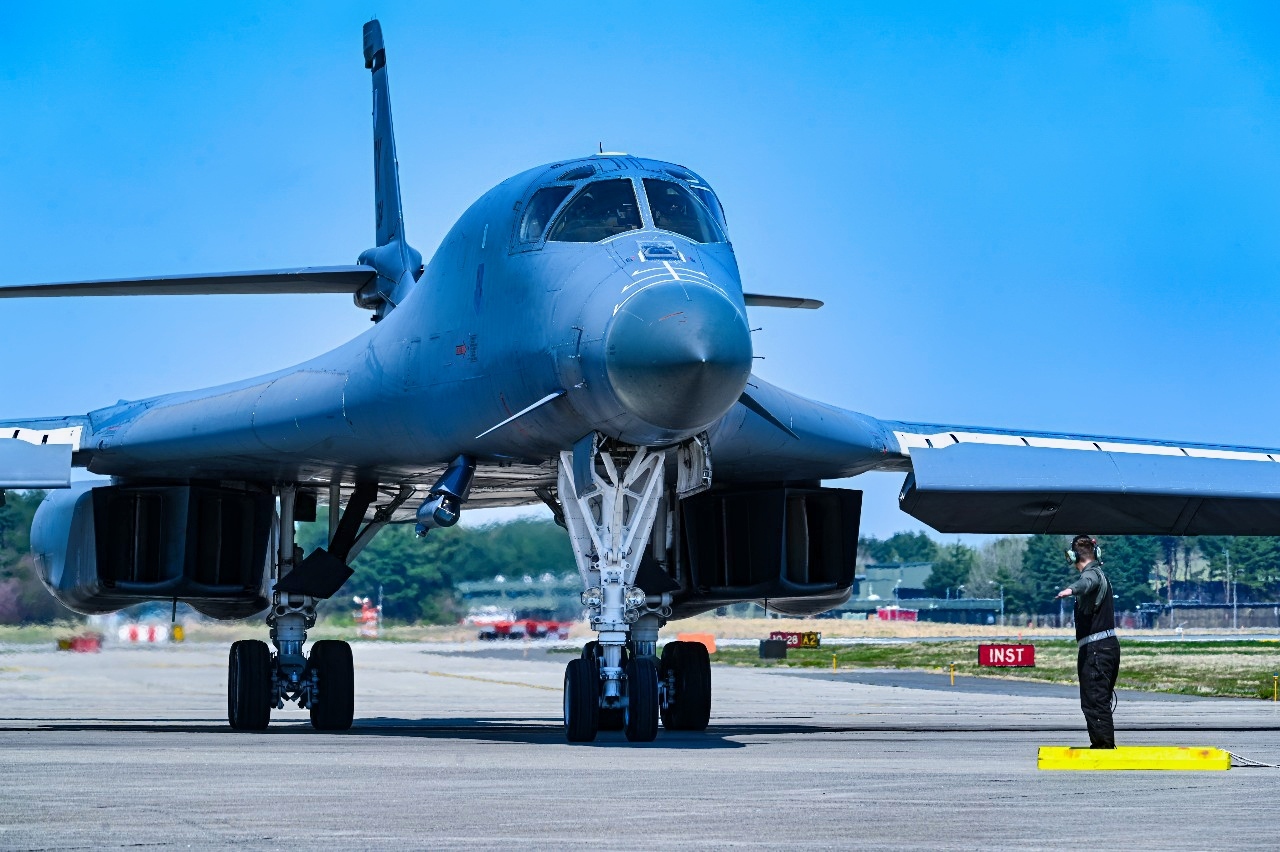
U.S. Air Force Senior Airman Colby Delia, 9th Expeditionary Bomb Squadron crew chief, marshals a B-1B Lancer on a flight line during Bomber Task Force 25-2 at Misawa Air Base, Japan, May 3, 2025. BTF 25-2 demonstrates Allied strength by forging strong alliances, showcasing our resolve, and deterring aggression, while also supporting global stability and security and strengthening military capabilities. (U.S. Air Force photo by Airman 1st Class Mattison Cole)
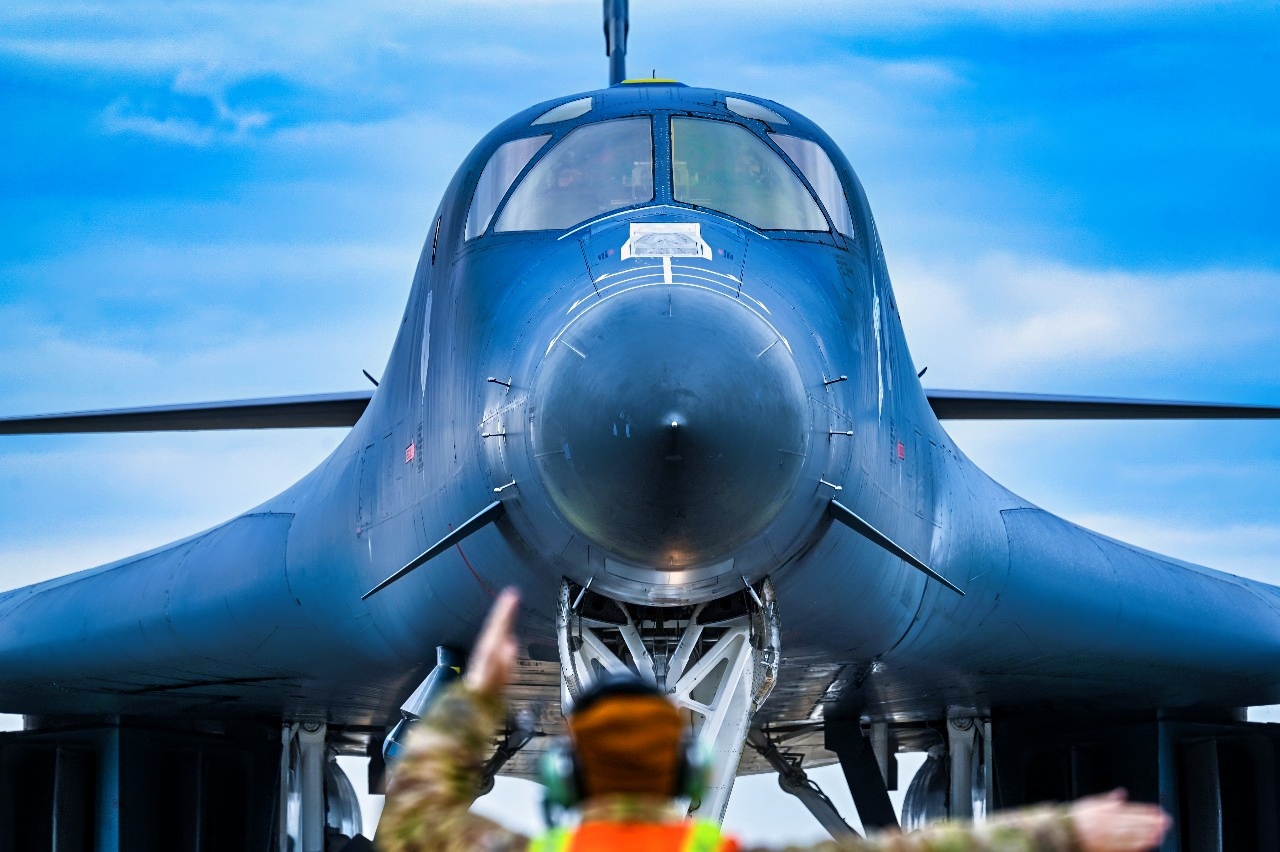
An Airman assigned to the 9th Expeditionary Bomb Squadron marshals a B-1B Lancer, preparing for take off during Bomber Task Force 25-2 at Misawa Air Base, Japan, May 3, 2025. BTF 25-2 is a demonstration of Allied strength, unity, and commitment to global security. By projecting force, reinforcing strong partnerships, and showing our unwavering resolve, it aims to deter aggression and uphold peace and stability in the Indo-Pacific region and beyond. (U.S. Air Force photo by Airman 1st Class Mattison Cole)
The Iranians Will Not Quit Working on a Nuclear Device
Iran has not completely curtailed its nuclear weapons program after Israel’s 12-day War and the United States’ Operation Midnight Hammer last year. The Trump administration claimed that all Iranian nuclear infrastructure had been eliminated, but satellite imagery from civilian spatial intelligence firms has shown that Iran added concrete, soil, and sand over the tops of existing facilities. That means bunker busters are still needed. It is not clear if the penetrating warheads on the 2,000-pound JDAMs are large enough to destroy underground sites, but they are likely easier and cheaper to produce than regular MOPs.
“Missile delivery systems are being removed from the B1 Lancers at RAF Fairford this afternoon, to be replaced by JDAM bombs. For those asking, the US Air Force has positioned these aircraft close to the fence in full view of the media,” according to an X post by Richard Gaisford.
The Americans Are Not Trying to Hide Their B-1Bs and B-52s
Since the Air Force was conducting the load-out in broad daylight, out in the open, they do not seem worried that Internet sleuths have revealed their deployment. That could mean that the United States is sending a message to Iran that the air strikes will not stop until all of Tehran’s nuclear sites have been decimated.
There are now 15 American bombers at Fairford – three B-52s and 12 B-1Bs. It is likely that the bunker-busting JDAMs will also be deployed on B-52s if air superiority is assured. The Americans may be confident that the bombing runs from Stratofortresses are safe enough at this point in the war to drop the BLU-109 mini-MOPs. That’s a good development for the future of Operation Epic Fury. The more airplanes that can deploy bunker busters, the better.
B-52 Bomber. Image Credit: 19FortyFive.com Taken at the National Museum of the Air Force.
It’s a Target Rich Environment
“Potential targets include large industrial complexes used for long-range weapons production and development, command and control bunkers, nuclear-program related sites, and, maybe most likely, keeping Iran’s underground ‘missile cities’ entombed by bombing their entrances so that the weapons that are housed inside cannot be put to use. Potential targets include large industrial complexes used for long-range weapons production and development, command and control bunkers, nuclear-program related sites, and, maybe most likely, keeping Iran’s underground ‘missile cities’ entombed by bombing their entrances so that the weapons that are housed inside cannot be put to use,” according to the War Zone.
The Iranian Drone Network Must Be Destroyed
One group of targets that the Americans and Israelis desperately need to destroy is enemy drone production and launching facilities. The ballistic missile launchers have been mostly eliminated, but loitering and kamikaze drones have become a problem. There are just not enough interceptors to destroy all the one-way drones proliferating across the Middle East.

A B-52 Stratofortress assigned to the 2nd Bomb Wing takes off for a Red Flag 21-3 training mission at Nellis Air Force Base, Nevada, July 21, 2021. RF-Nellis 21-3 is unlike any previous Red Flags, as the 414th Combat Training Squadron builds upon the most challenging Red Flags in recent history. (U.S. Air Force photo by Tech. Sgt. Alexandre Montes)

A U.S. Air Force B-52H Stratofortress strategic bomber assigned to the 69th Expeditionary Bomb Squadron flies within the U.S. Central Command area of responsibility, Nov. 15, 2024. The B-52H provides strategic options and flexibility to U.S. and coalition senior leaders with the aircraft’s ability to employ a wide range of weapons with precision and deliver a decisive response to adversaries who threaten peace and security across the region. (U.S. Air Force photo)
Can Lasers Save the Day?
The Americans are desperately trying to deploy lasers to fry incoming drones, but that technology is not fully mature and is still being tested. Meanwhile, the Israelis have been using the Iron Beam directed energy system that has been successful at guarding the country, but overall, Iranian drones are still effective against other countries in the U.S. Central Command area of responsibility.
Bomb Western Iran into Submission
The B-52 and B-1B missions will likely focus on the western side of Iran, where enemy air defenses have been most degraded. Targets in the eastern portion of the country will be handled by stealth airplanes. Still, the use of B-52s and B-1Bs comes at a good time.
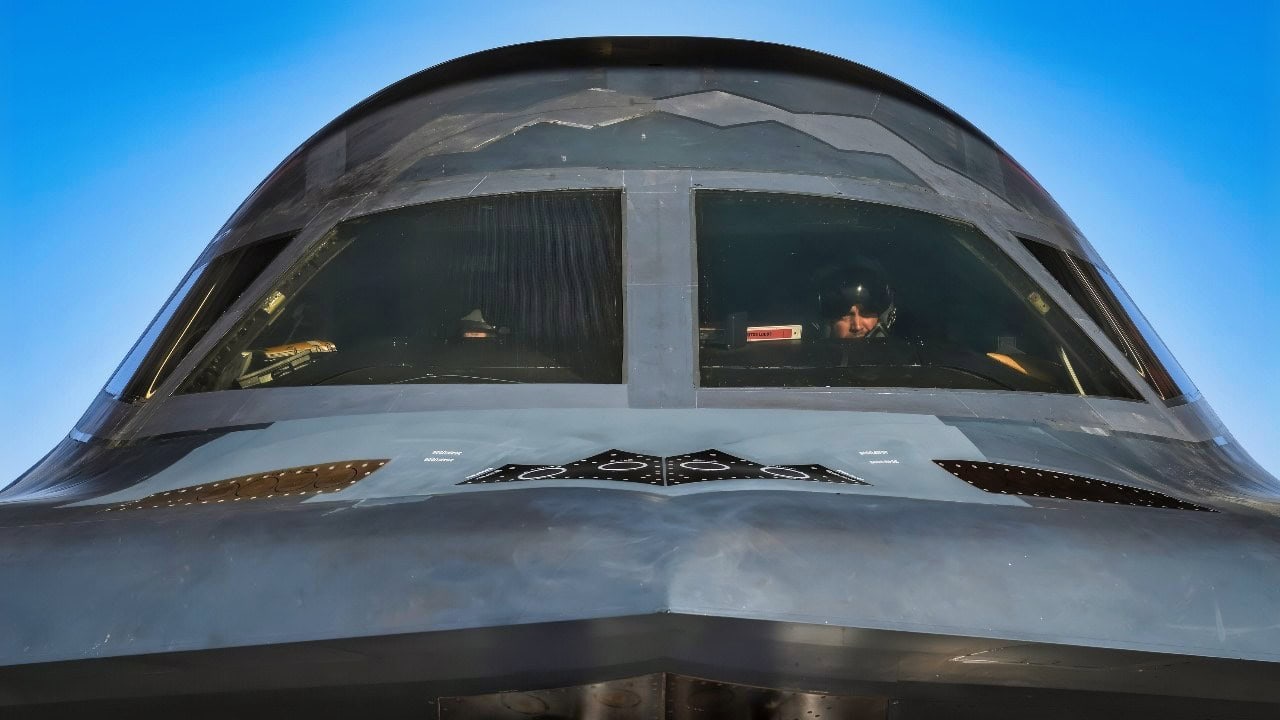
A U.S. Air Force B-2 Spirit aircrew performs pre-flight checks in the cockpit of their aircraft at Whiteman Air Force Base, Missouri, March 8, 2020. The B-2 took off from Whiteman AFB to support U.S. Strategic Command Bomber Task Force operations in Europe. The 131st Bomb Wing is the total-force partner unit to the 509th Bomb Wing. (U.S. Air Force photo by Tech. Sgt. Alexander W. Riedel)
The Americans want to keep pounding nuclear sites until they are permanently eliminated. Smaller bunker busters, which are easier and cheaper to produce, will help this activity.
Did the U.S. and Israel Declare Victory Too Quickly?
However, the Americans and Israelis may have been overconfident that they had destroyed all of Iran’s nuclear infrastructure in previous operations last year. The Iranians have done yeoman’s work in reinforcing existing facilities.
That could prolong the war until all sites are destroyed this time around. Another difficulty is battle damage assessment. How do the friendly forces know that they have completely wiped out a nuclear complex?
This means that satellite imagery will be highly important to measure how much new Iranian efforts to add concrete, dirt, and sand to existing centers of nuclear weapons production.
But having B-52s and B-1Bs in the mix helps the American war effort, and we will have to see if that bunker-busting mission will be completely effective against Iran.
About the Author: Brent M. Eastwood
Author of now over 3,000 articles on defense issues, Brent M. Eastwood, PhD, is the author of Don’t Turn Your Back On the World: A Conservative Foreign Policy and Humans, Machines, and Data: Future Trends in Warfare, plus two other books. Brent was the founder and CEO of a tech firm that predicted world events using artificial intelligence. He served as a legislative fellow for US Senator Tim Scott and advised the senator on defense and foreign policy issues. He has taught at American University, George Washington University, and George Mason University. Brent is a former US Army Infantry officer. He can be followed on X @BMEastwood.