
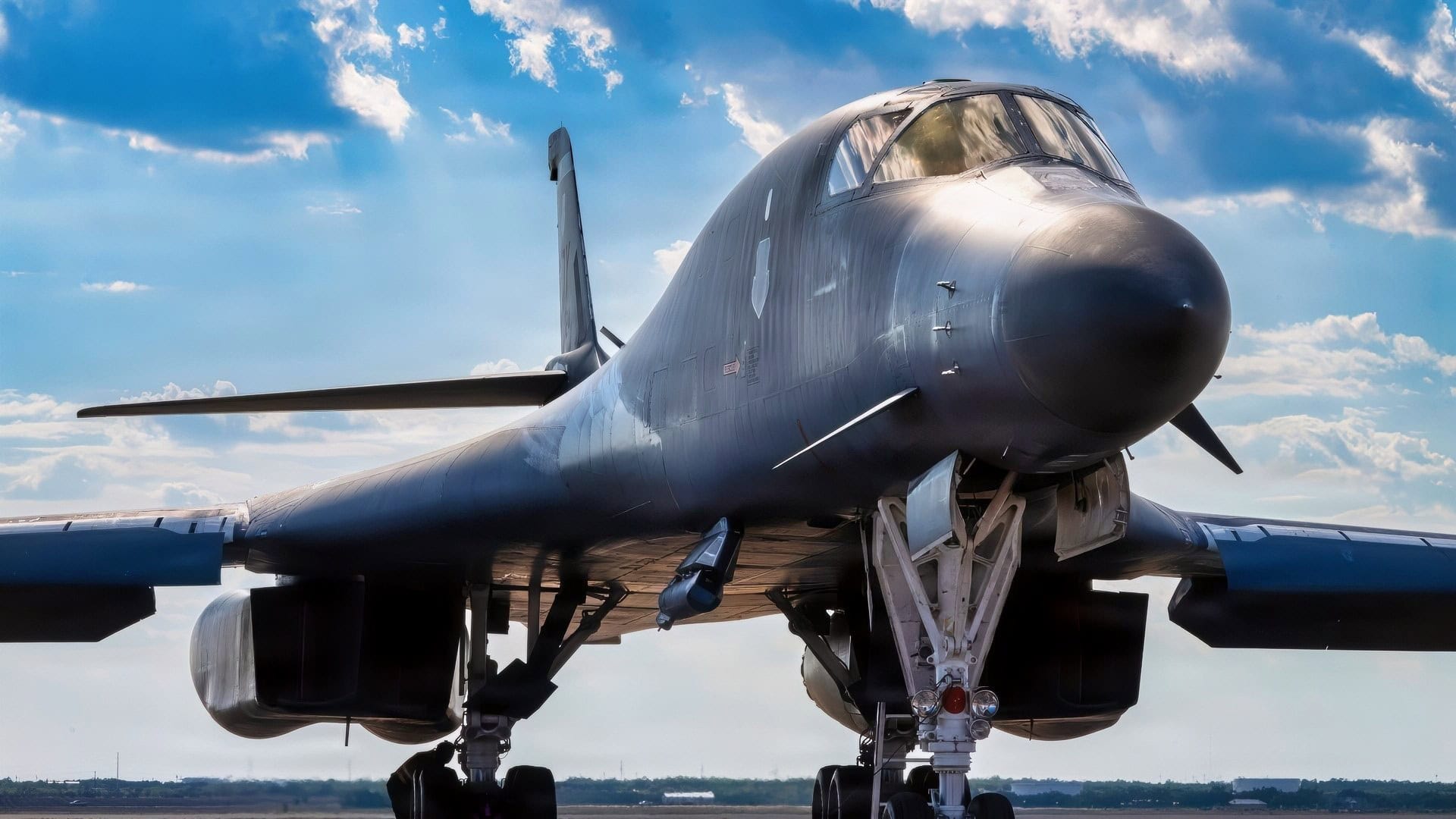
Summary and Key Points: The Air Force is pursuing roughly $50 million in FY 2026 funding to add External Heavy-Stores Pylons to the B-1B Lancer, expanding its ability to carry standoff weapons and deliver a higher “volume of fires” from safer ranges.
-The upgrade is framed as a fast-install bridge until the B-21 Raider becomes fully operational.
-With external pylons, the B-1B could carry weapons like the Long-Range Anti-Ship Missile and AGM-158 JASSM, while budget language also points to hypersonic integration work, including captive-carry testing of a 5,000-pound-class store from a Load Adaptable Modular pylon.
B-1B Lancer, Summed Up in 1 Thing: A “Super” Weapons-Truck Upgrade
The U.S. Air Force’s iconic B-1B Lancer strategic bomber first took to the skies decades ago. While this aging platform may have been surpassed by newer and technically more capable bombers, the Lancer continues to serve the cause of deterrence. In fact, the legendary aircraft is expected to receive yet another round of enhancements in the 2026 fiscal year, helping it retain its warfighting edge. In fact, some experts are even calling this a sort of ‘super’ B-1B Lancer bomber.
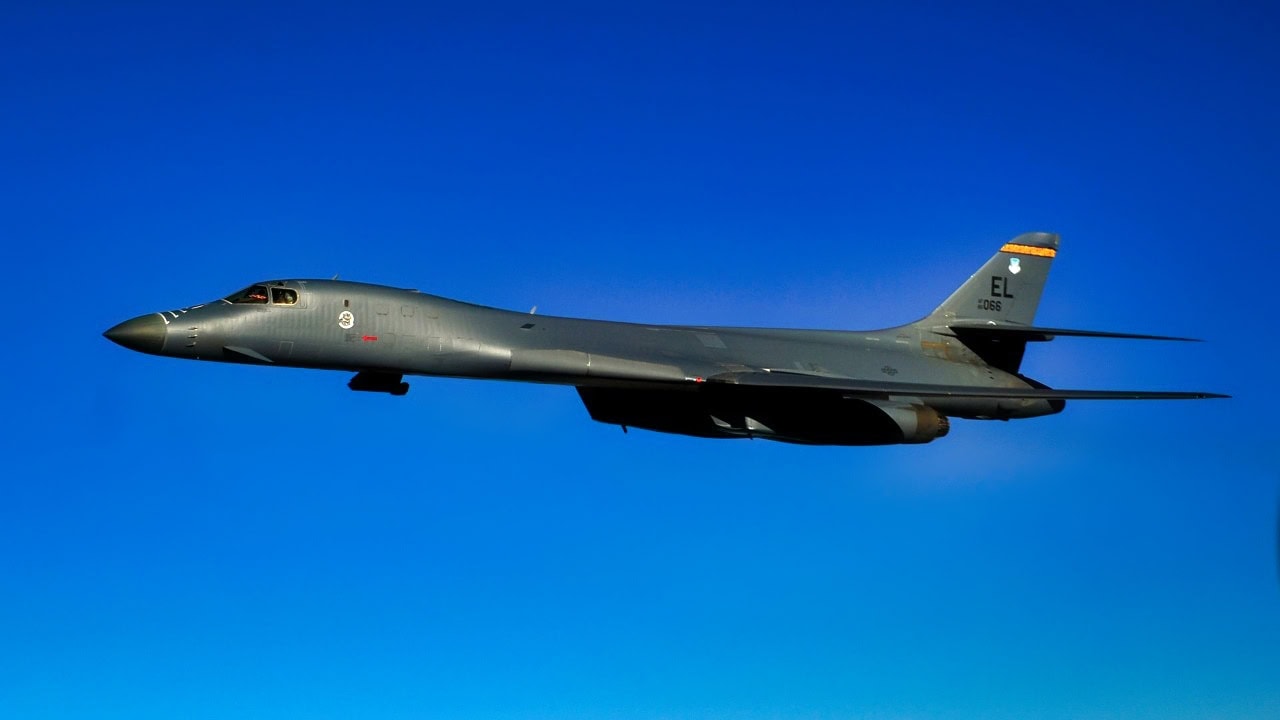
B-1B Lancer Bomber. Image Credit: Creative Commons.
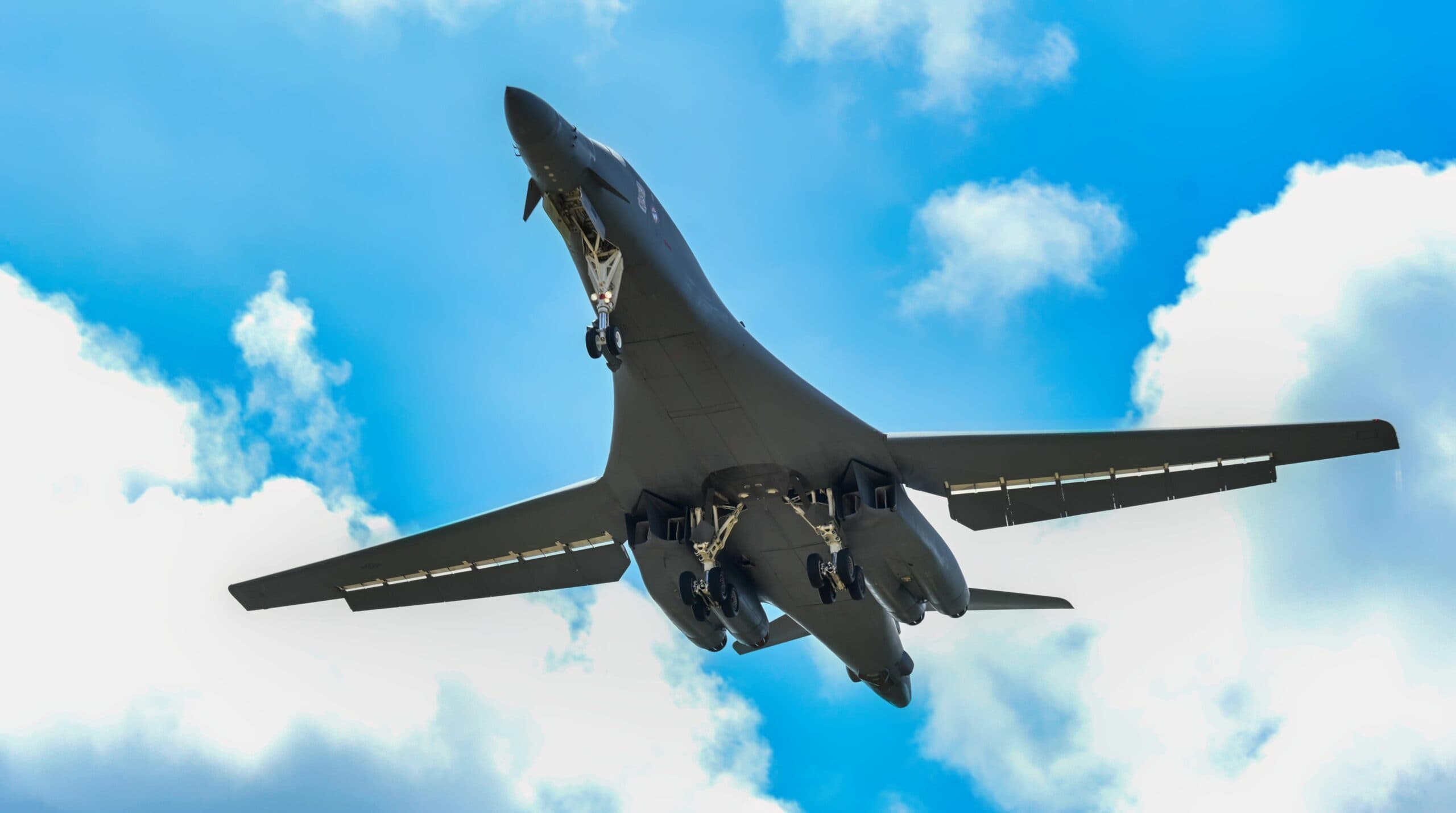
A U.S. B-1B Lancer assigned to the 34th Expeditionary Bomb Squadron, Ellsworth Air Force Base, S.D., ascends into the sky after conducting a “touch and go” maneuver during Bomber Task Force 25-1 at Andersen Air Force Base, Guam, Feb. 24, 2025. Bomber Task Force missions provide opportunities to train and work with our Allies and partners in joint and coalition operations and exercises. (U.S. Air Force photo by Airman 1st Class Alec Carlberg)
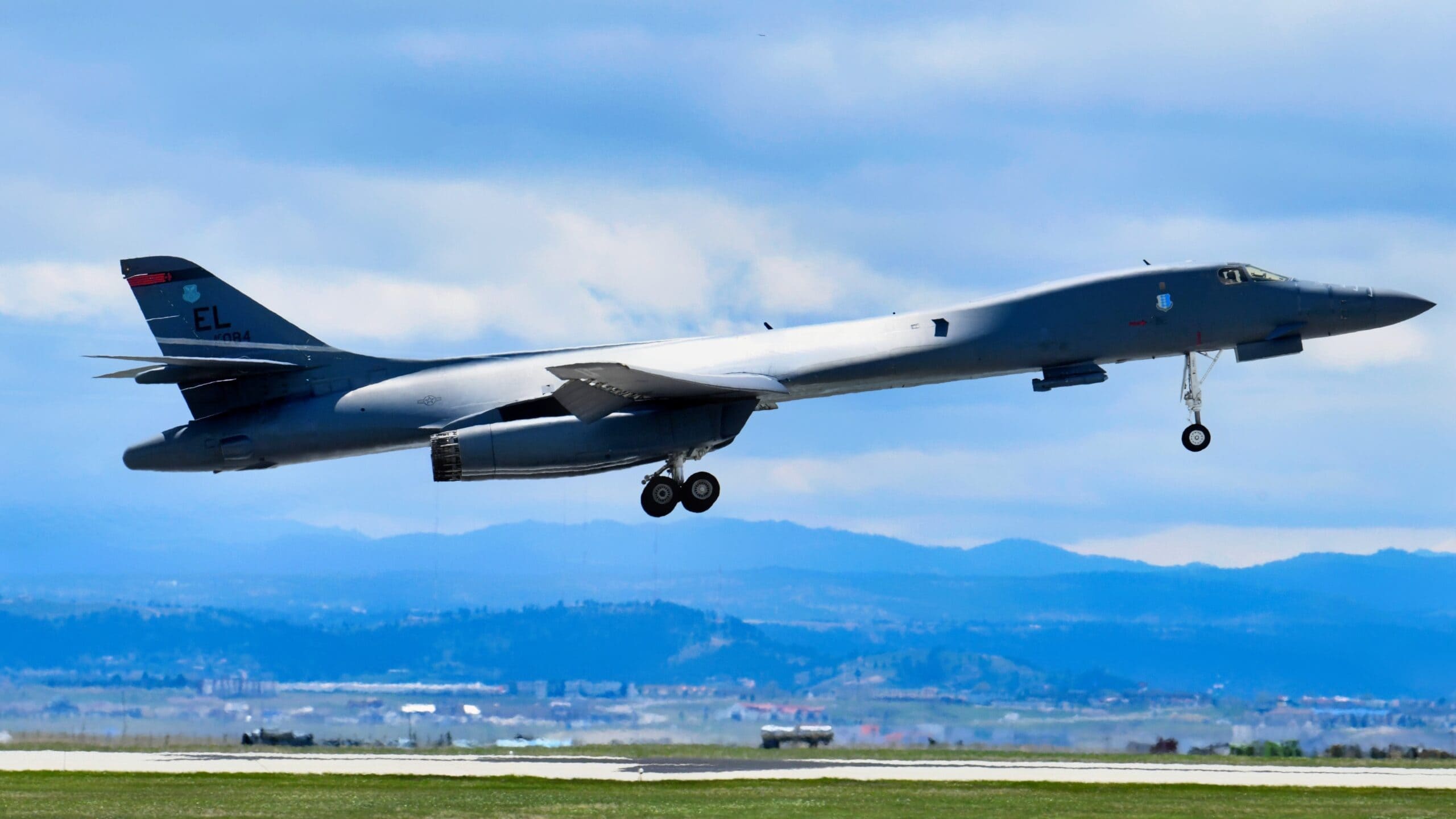
B-1B Lancer Bombers. Image Credit: Creative Commons.
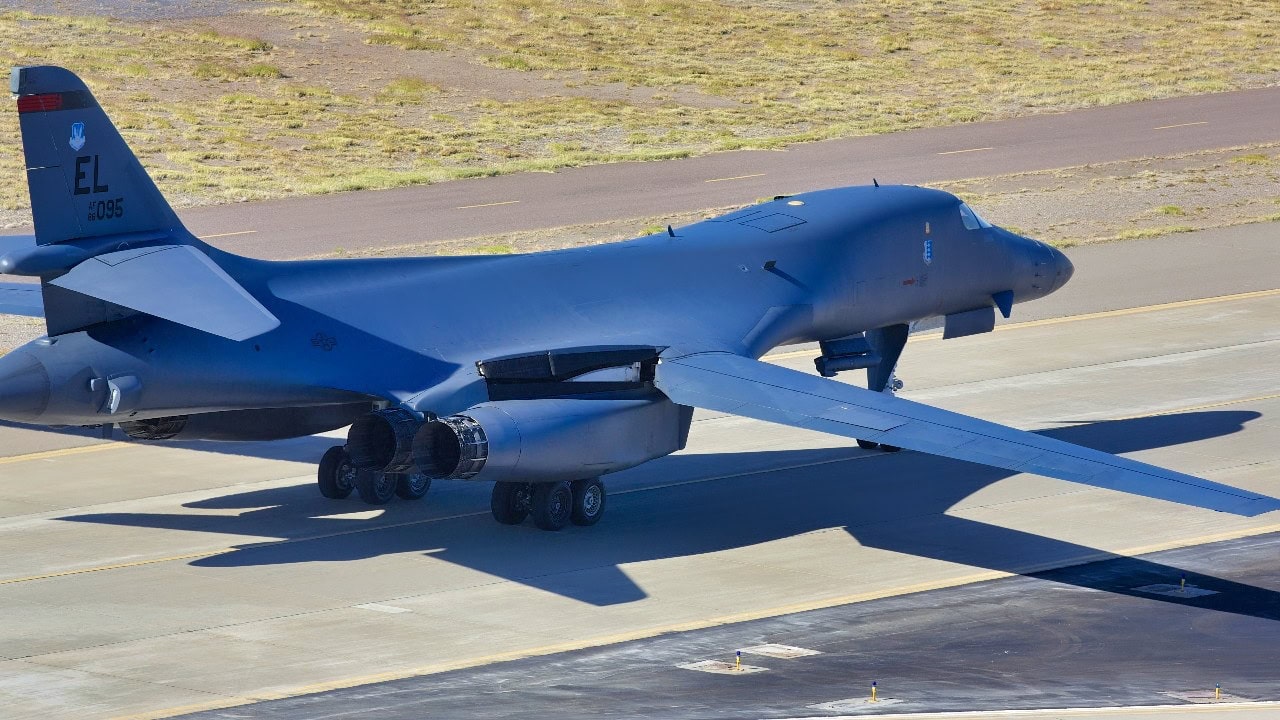
B-1B Lancer Bomber. Image Credit: Creative Commons.
What We Know About the External Pylons on the B-1B Bomber
According to reports, the Air Force is seeking to secure roughly $50 million in funding in the FY 2026 budget for the Lancer’s External Heavy-Stores Pylon program.
The update will provide “increased carriage capacity of standoff munitions on B-1B aircraft.”
The service also noted that this “increased volume of fires” on the B-1B can be quickly installed.
The addition of external pylons will extend the Lancer’s overall versatility.
Specifically, the bomber would be able to lug the Long-Range Anti-Ship Missile and the AGM-158 Joint Air-to-Surface Standoff Missile.
The budget proposal adds that, “Maximum carriage of existing standoff munitions on the B-1B provides near-term increased volume of fires from standoff ranges and serves to mitigate transition risk of the Air Force bomber fleet prior to the emergence of the B-21 as a combat bomber.”
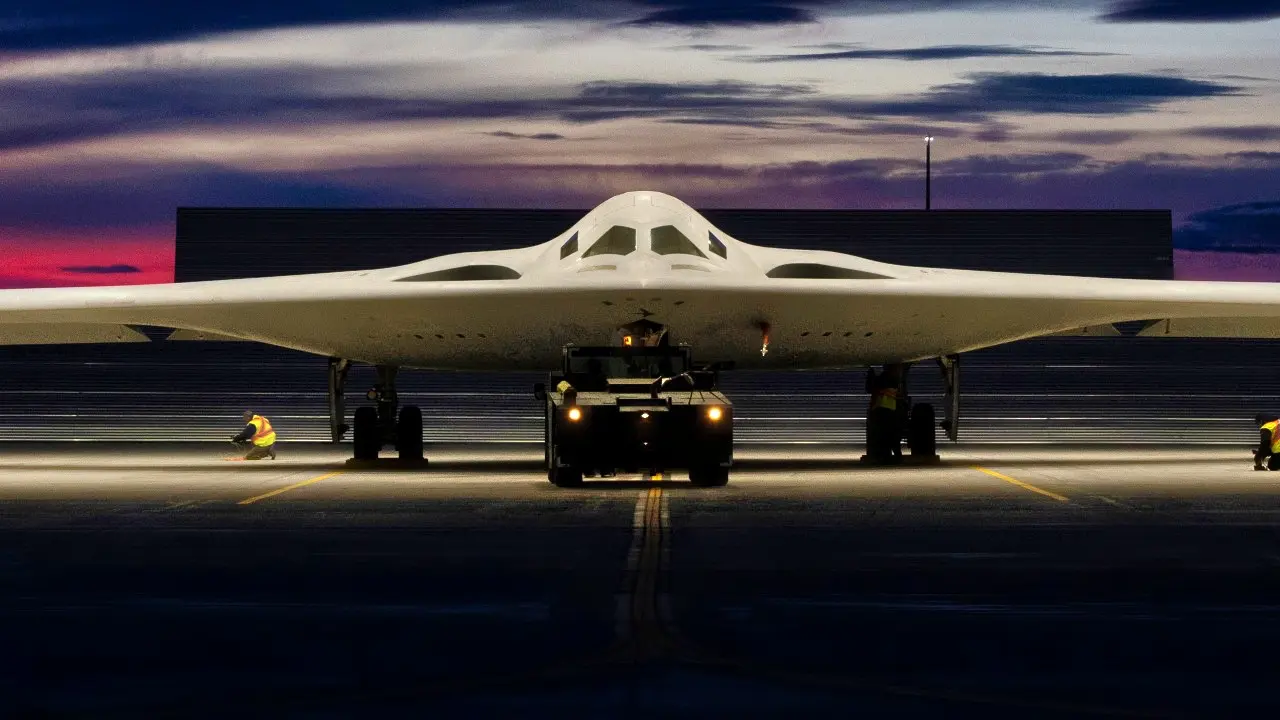
B-21 Raider Stealth Bomber.
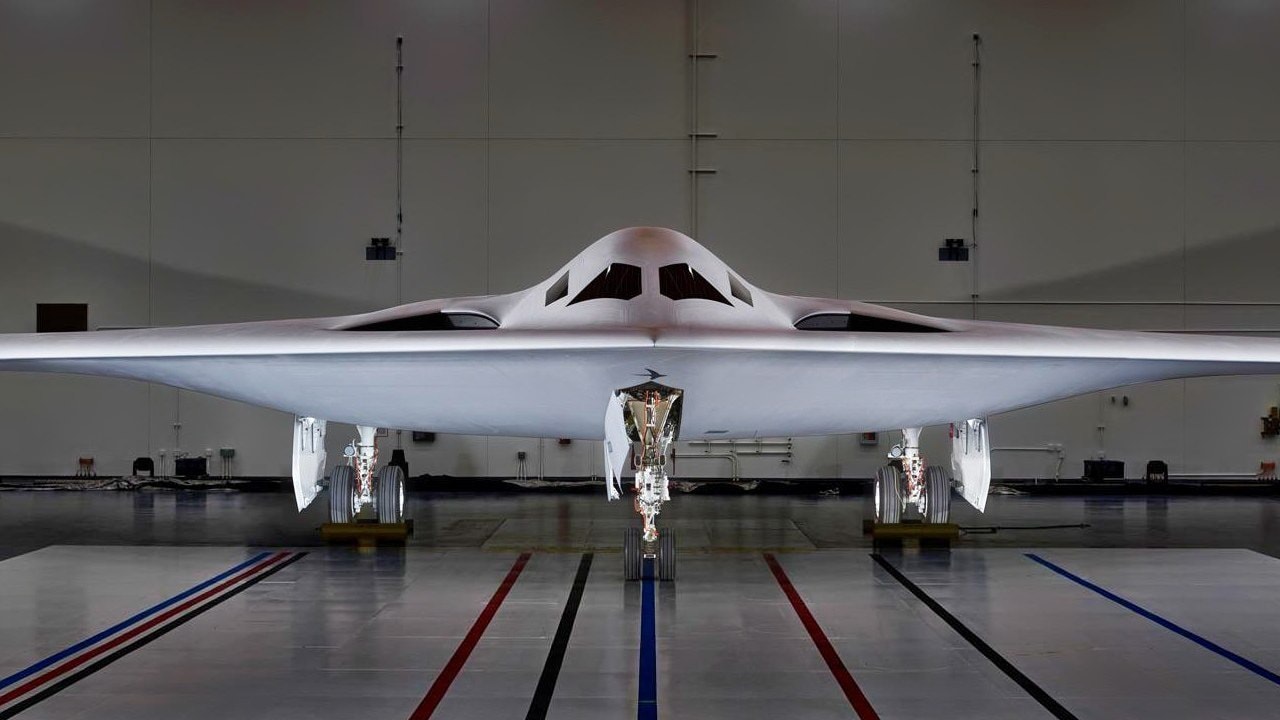
B-21 Raider Bomber U.S. Air Force.
Until the service’s next-generation B-21 Raider reaches operational capacity, the Air Force wants to ensure its existing Lancer fleet is a top-flight aircraft.
The War Zone reported that the FY 2026 budget also referenced the “Hypersonic Integration Program,” which apparently showcased the Lancer’s ability to “execute a captive carry of a 5,000-pound class store and the release of a proven weapon shape from a Load Adaptable Modular (LAM) pylon.”
The AGM-183A Air-Launched Rapid Response Weapon is a hypersonic weapon that uses a boost-glide system, meaning that when it returns to Earth after achieving near-space altitudes, it reaches speeds greater than Mach 5.
In short, the external pylons will bolster the B-1B Lancer’s performance until the Raider series is ready for service.
Introducing the B-1B Lancer platform
Toward the end of the Second World War, the Air Force required a new bomber that could match the top speed of its Convair B-58 Hustler and the payload of the Boeing B-52 Stratofortress. The original B-1A bomber program was ultimately nixed, however, due to capability issues.
Essentially, by the time the prototype was ready for production, American engineers better understood the Soviet Union’s ability to detect low-level penetration aircraft via look-down/shoot-down radar. Since the B-1A would not necessarily be able to match this capability, the program was considered to be a waste.
Years later, in the 1980s under the Ronald Reagan administration, the B-1 program was revived.
The B-1B prototype was a considerable advance over the original, and more affordable—but also slower. As detailed by Flying Mag, it had “an additional structure to increase payload by 74,000 pounds, an improved radar and reduction of the radar cross-section by an order of magnitude. The changes led to a reduction in maximum speed to Mach 1.2.”
Like many of the Air Force’s older platforms, the Lancer has undergone several modernization overhauls over the years to ensure its relevance among younger peers. In 2025, the B-1B received a modernized Identification Friend or Foe system, updated mass data storage, a new defensive avionics system, and Link 16 tactical data communications capability.
How Will the B-1B Raider Bomber compare?
The Lancer’s coming upgrades should ensure its usefulness in the Air Force’s bomber squad for years to come.
However, the service’s upcoming B-21 Raider program is expected to outperform its existing fleet. The sixth-generation platform will feature all the latest and greatest technologies, making it the “future of long-range strike.” Although progress on the platform’s development front appears to be moving along, China and Russia are also working to develop their own next-generation bomber counterparts, meaning time is of the essence.
About the Author: Maya Carlin
Maya Carlin, national security writer with 19FortyFive, is an analyst with the Center for Security Policy and a former Anna Sobol Levy Fellow at IDC Herzliya in Israel. She has over 1,000 articles published over the last several years on various defense issues. Carlin has bylines in many publications, including The National Interest, Jerusalem Post, and Times of Israel. You can follow her on Twitter: @MayaCarlin.