
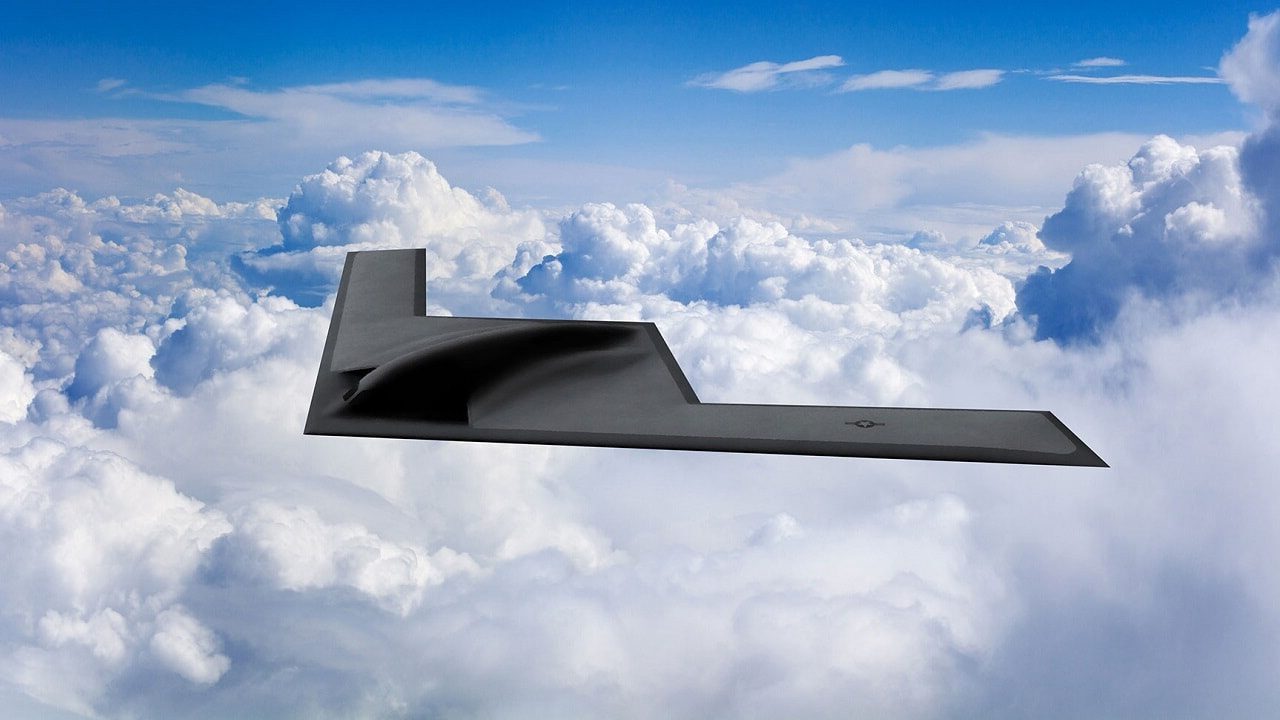
Summary and Key Points: Chinese researchers affiliated with the China Aerodynamics Research and Development Centre (CARDC) claim to have identified aerodynamic and stability limitations in the U.S. Air Force’s B-21 Raider using a new software platform called PADJ-X.
-Published in the peer-reviewed journal Acta Aeronautica et Astronautica Sinica, the study utilized “adjoint optimization” to simulate the bomber’s performance based on public imagery, reportedly achieving a 15% increase in lift-to-drag ratio and stabilizing the aircraft’s pitching moment in virtual tests.
-However, the study relies on theoretical models rather than classified data, missing critical real-world factors like radar-absorbent materials and internal systems.
-While the B-21 continues flight testing at Edwards AFB, this development suggests China is using advanced simulation to accelerate its own aerospace competitiveness.
Chinese Scientists Claim to Find “Limitations” in B-21 Raider Design
Chinese aerospace researchers are claiming that a new high-end aircraft design tool allows them to identify potential aerodynamic and stability limitations in publicly inferred configurations of the U.S. Air Force’s B-21 Raider stealth bomber.
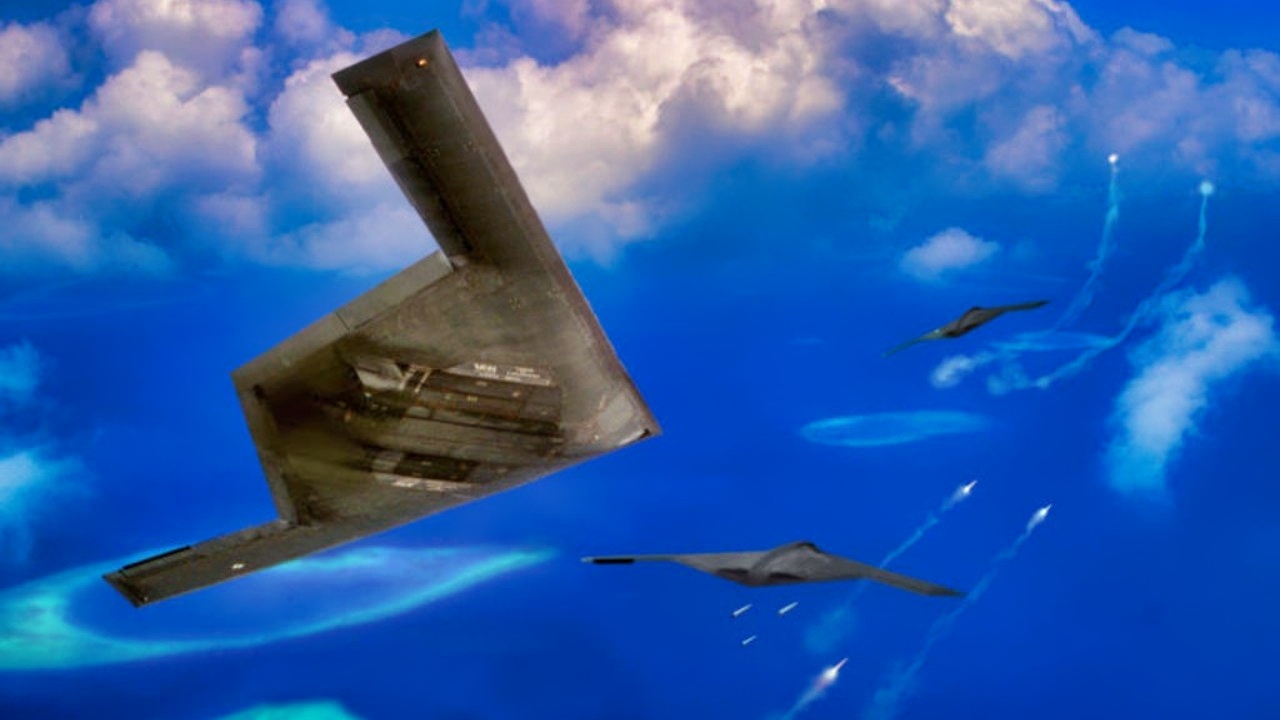
B-21 Raider Bomber. Artist Rendition/Creative Commons.

B-21 Raider. Image Credit: Creative Commons.
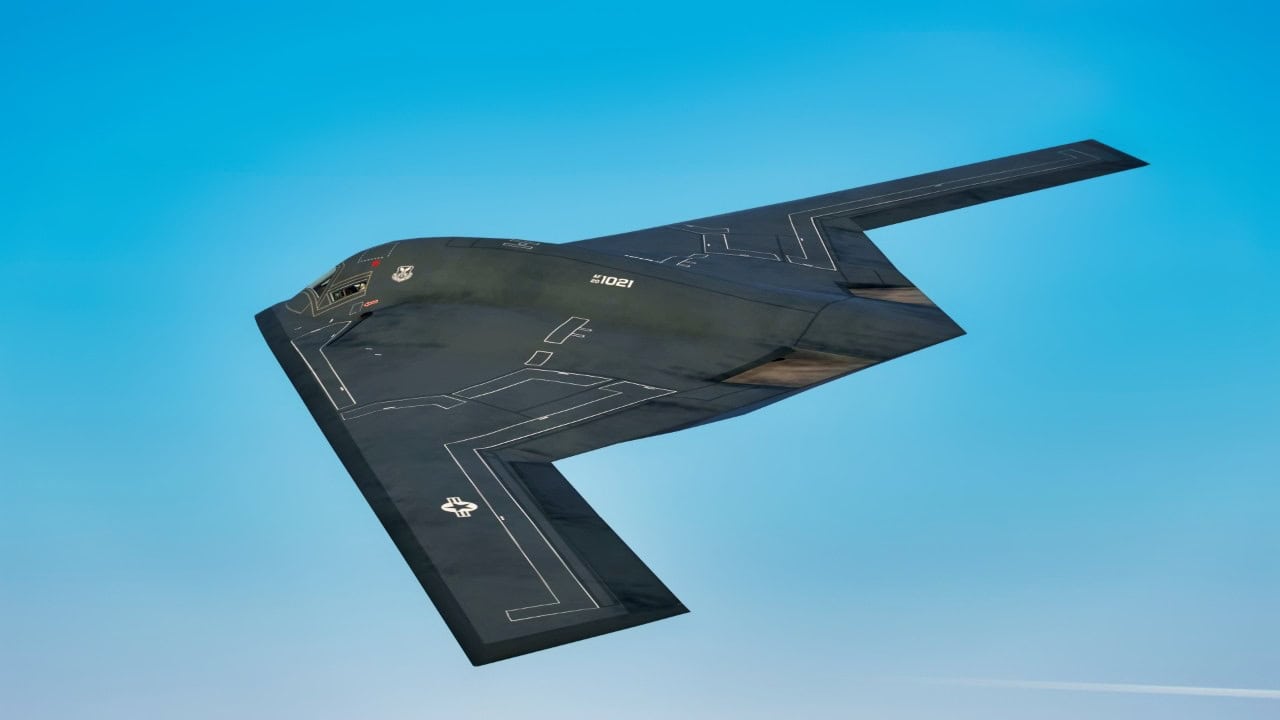
B-21 Raider Artist Rendering.
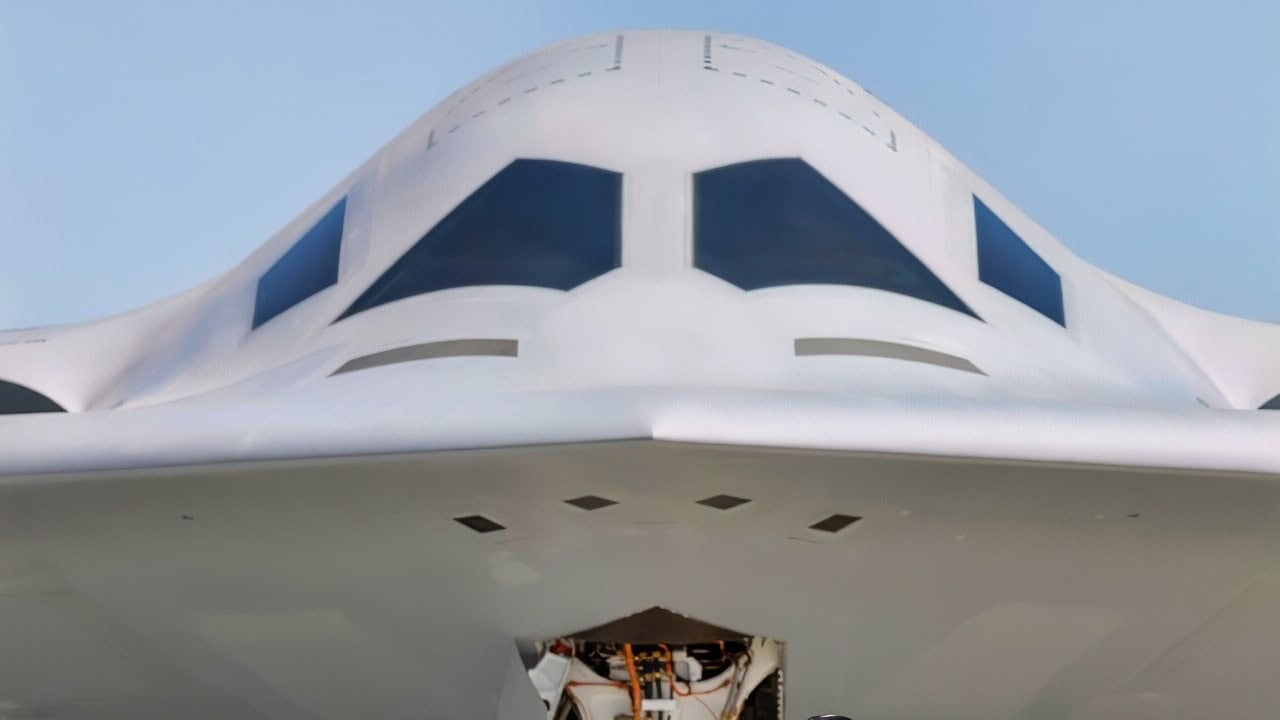
U.S. Air Force Airmen with the 912th Aircraft Maintenance Squadron prepare to recover the second B-21 Raider to arrive for test and evaluation at Edwards AFB, Calif., Sept. 11, 2025. The arrival of a second test aircraft provides maintainers valuable hands-on experience with tools, data and processes that will support future operational squadrons. (U.S Air Force photo by Kyle Brasier)
The claims, published ia n peer-reviewed Chinese journal Acta Aeronautica et Astronautica Sinica, have attracted attention because they suggest that advanced simulation techniques could increasingly shape how rival states assess next-generation military aircraft.
The research centers on a software platform, PADJ-X, developed by scientists affiliated with the China Aerodynamics Research and Development Centre (CARDC).
According to its authors, the system integrates multiple engineering disciplines into a single optimization framework, allowing engineers to adjust hundreds of design parameters simultaneously rather than iteratively refining them through traditional trial-and-error simulation methods.
The B-21 Raider, developed by Northrop Grumman for the U.S. Air Force, is currently in flight testing and is intended to replace portions of the B-1 and B-2 fleets as the backbone of America’s long-range nuclear and conventional strike capability.
Its precise aerodynamic and stealth characteristics remain highly classified – but if these researchers are right, possibly not for much longer.
What PADJ-X Is – and What It’s Not
According to a research paper published in Acta Aeronautica et Astronautica Sinica, PADJ-X is built on adjoint optimization, a mathematical technique that calculates how small changes across thousands of design variables affect overall system performance.
Unlike conventional computational fluid dynamics (CFD) optimization, in which engineers test one variable at a time, adjoint methods allow sensitivity across the entire design space to be calculated simultaneously. The method dramatically reduces computing time while enabling trade-offs between competing requirements such as lift, drag, stability, and stealth shaping.
The PADJ-X framework reportedly integrates five disciplines: aerodynamics, propulsion, electromagnetics (radar signature), infrared signature, and sonic boom effects. The authors of the study argue that their method avoids the compartmentalized optimization burdens common with legacy design workflows, which can produce gains in one area while degrading performance elsewhere.
Adjoint-based tools like this are not actually new, either: NASA has used similar methods for decades, including within its FUN3D suite and during the development of the X-59 low-boom demonstrator. European aerospace institutions have also fielded comparable tools for military and civil aircraft research.
What the Researchers Claim
To demonstrate PADJ-X, the research team applied the software to conceptual aircraft shapes derived from publicly observable features of the B-21 Raider, including planform geometry and blended-wing-body characteristics visible in official imagery.
Using 288 adjustable parameters, the simulations reportedly increased the lift-to-drag ratio of the inferred design by approximately 15 percent while reducing shock-wave effects at higher speeds. The researchers also claim that the aircraft’s pitching moment – a measure of longitudinal stability – was reduced from 0.07 to near zero.

B-21 Raider Stealth Bomber. Image Credit: Industry Handout.
In short, a pitching moment that is almost neutral suggests that an aircraft requires less continuous control input to maintain level flight, potentially improving fuel efficiency and extending the aircraft’s range.
It’s important to note, however, that the paper states that the findings do not reflect classified B-21 data and are instead based on theoretical modeling of an infrared configuration – and the authors explicitly acknowledge that the real aircraft’s flight control materials, internal structure, and mission systems remain unknown.
What Do Simulation Claims Really Mean?
The news is shocking, but it’s worth noting that stealth aircraft performance is also defined by integration of technologies, which is heavily classified.
Geometry alone cannot determine it. Radar-absorbent materials, internal edge alignment, inlets, flight control software, and various mission-specific loadouts (combinations of weapons, fuel tanks, and pods) all shape an aircraft’s real-world survivability in ways that simulations cannot reliably infer.
U.S. Air Force officials have repeatedly emphasized that the B-21’s advantage lies not only in low observability, but in its role as part of a broader, networked strike system that includes secure communications, electronic warfare support, and off-board sensing.
If PADJ-X proves as capable as its developers claim, its most significant impact may be on China’s own aircraft development, rather than on exposing vulnerabilities in foreign systems.
Accelerated design cycles, reduced reliance on wind tunnels, and lower prototyping costs would represent a meaningful advantage in an increasingly competitive aerospace environment.
Whether PADJ-X’s simulated gains translate into improved operational aircraft performance remains an open question, however, one that can only be answered through flight testing.
B-21 Moves Toward Deployment
As China’s researchers close in on the B-21’s secrets, America’s next-generation stealth bomber is steadily moving from concept to operational status. The U.S. Air Force confirmed in 2023 that the Raider had begun flight testing, with multiple test aircraft now flying as part of a phased campaign at Edwards Air Force Base. Officials have stated that initial operational capability is expected sometime later this decade, and potentially as soon as the mid-2020s.
In September 2025, the U.S. Air Force confirmed that the second B-21 Raider flight test aircraft arrived at Edwards Air Force Base and began expanded testing into weapons and mission system integration – a major milestone for the program.
About the Author:
Jack Buckby is a British researcher and analyst specialising in defence and national security, based in New York. His work focuses on military capability, procurement, and strategic competition, producing and editing analysis for policy and defence audiences. He brings extensive editorial experience, with a career output spanning over 1,000 articles at 19FortyFive and National Security Journal, and has previously authored books and papers on extremism and deradicalisation.