
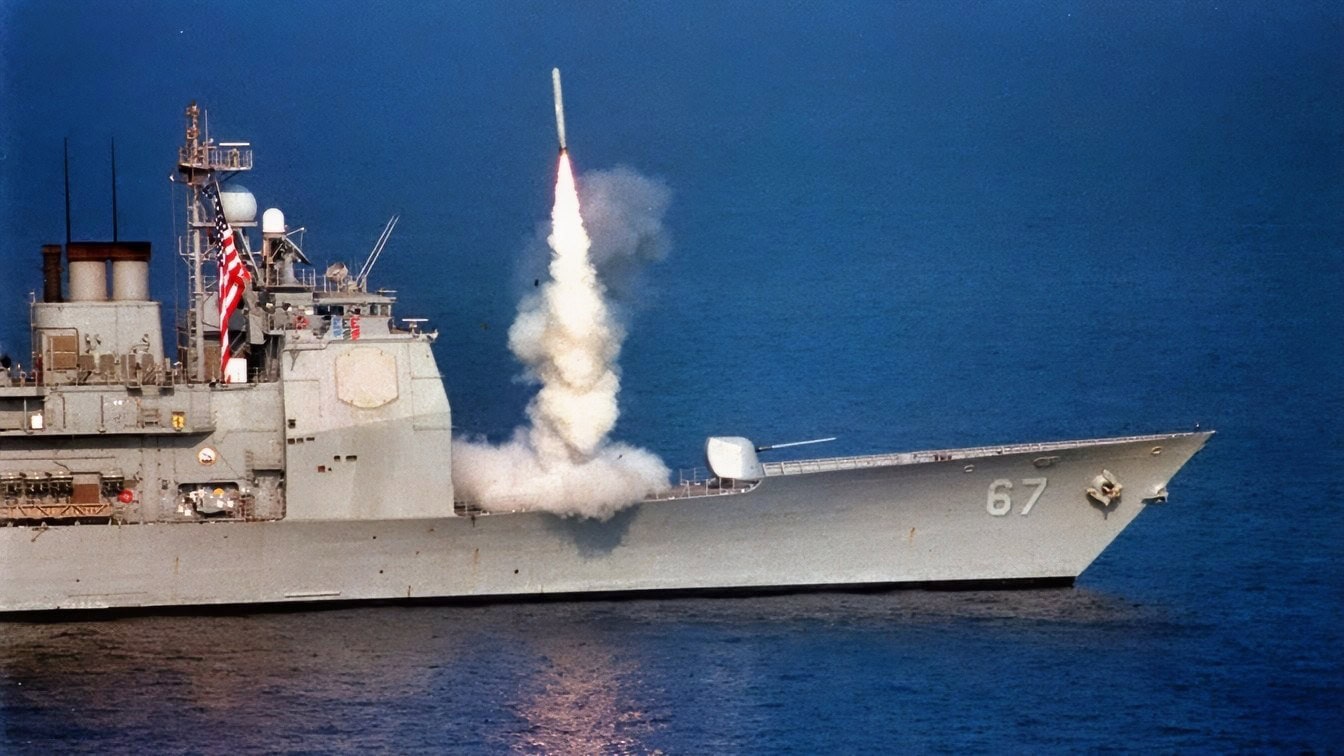
Ticonderoga Retirement Means Less Tomahawk Missiles – Summary and Key Points:
- Harrison Kass — national security attorney, journalist, and former U.S. Air Force pilot selectee holding a JD from the University of Oregon and a master’s from NYU — analyzes the strategic fallout from retiring the Ticonderoga-class guided missile cruiser.
- Each Ticonderoga carries 122 Vertical Launch System cells capable of firing Tomahawk cruise missiles, SM-2, SM-6, and ballistic missile defense interceptors.
- As the Navy transitions to the 96-cell Arleigh Burke-class destroyer, cumulative VLS losses number in the hundreds.
- Combined with Ohio-class SSGN retirement — each carrying 154 Tomahawks — the Pentagon faces a compounding long-range strike gap with serious Indo-Pacific and China deterrence implications.
The U.S. Navy’s Tomahawk Missile Crisis Just Got Worse — and China Is Paying Attention
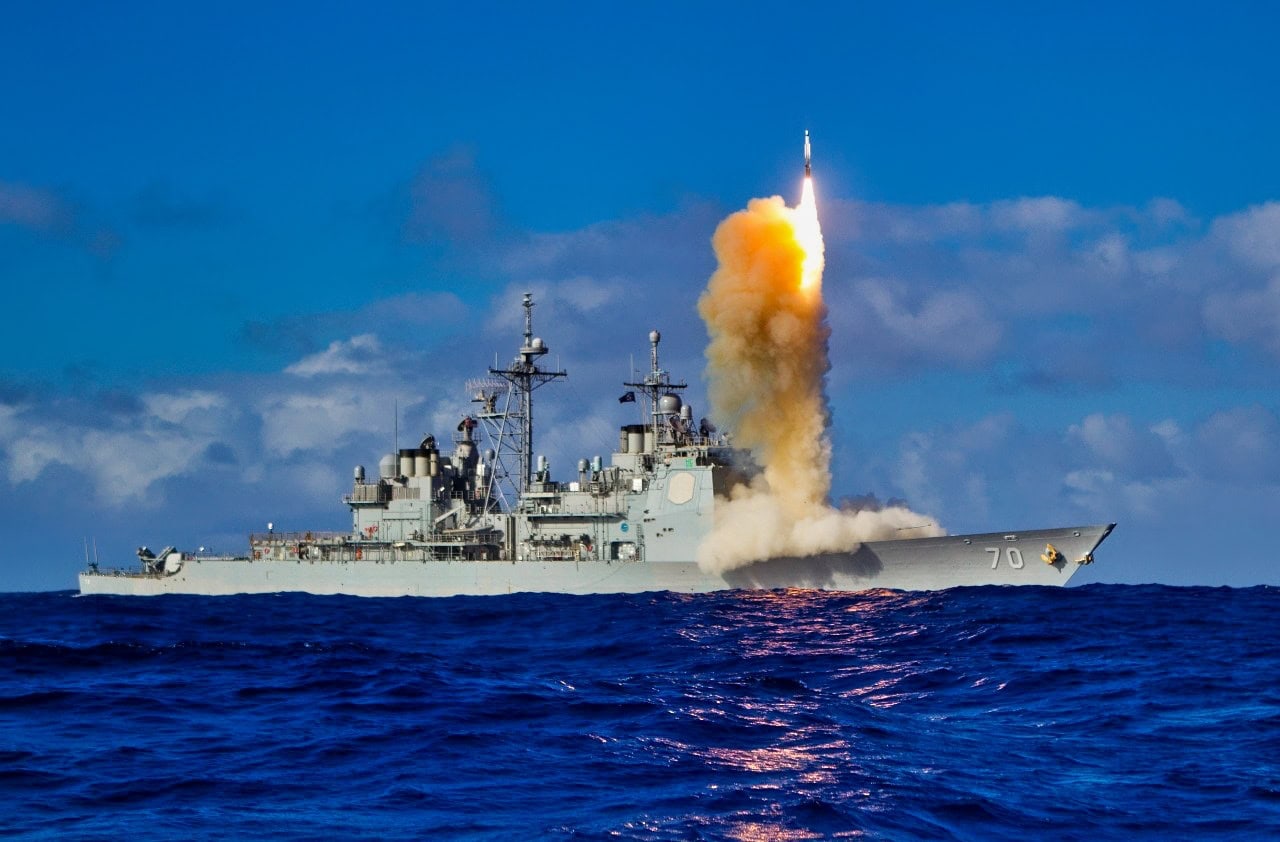
Ticonderoga-Class US Navy. Image Credit: Creative Commons.
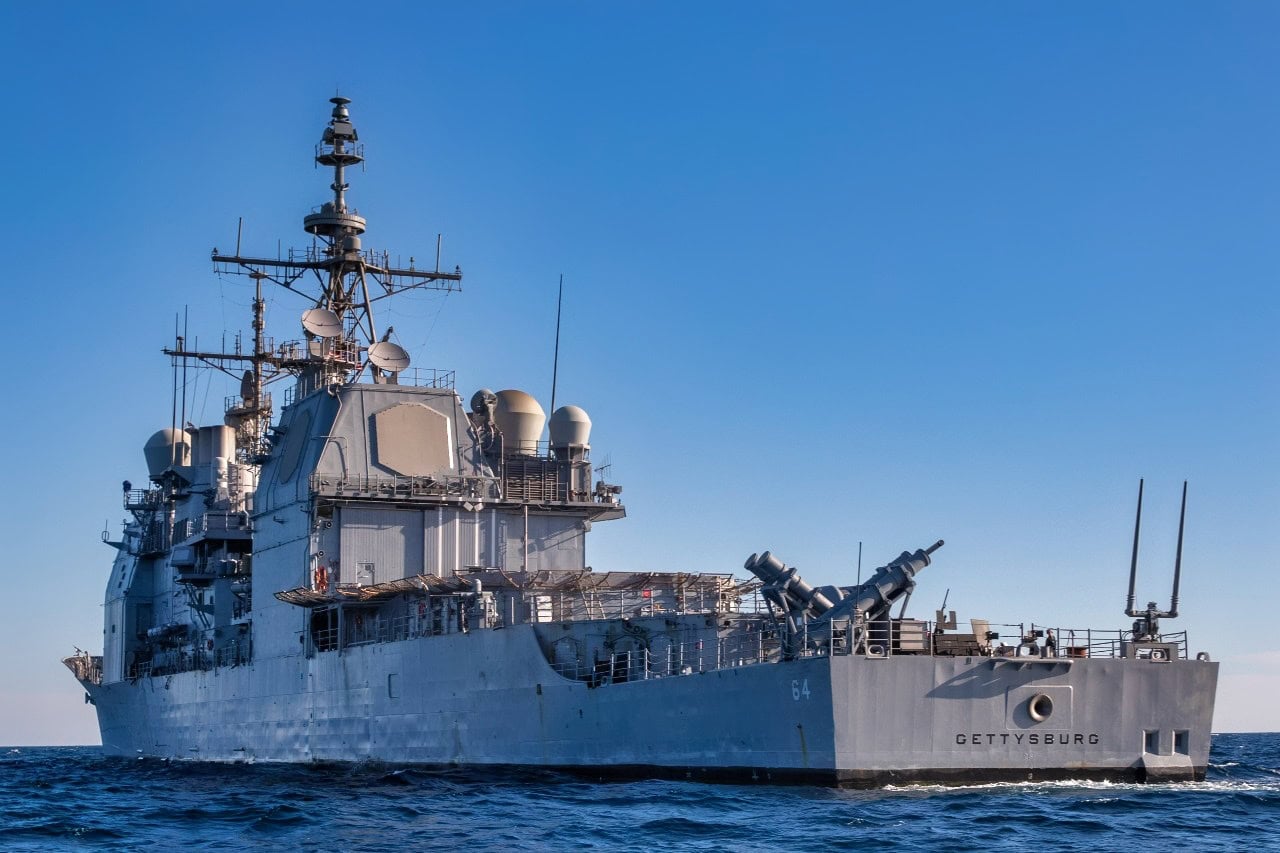
(Feb. 18, 2025) The Ticonderoga-class guided-missile cruiser USS Gettysburg (CG 64) sails in the U.S. Central Command area of responsibility. (Official U.S. Navy photo)
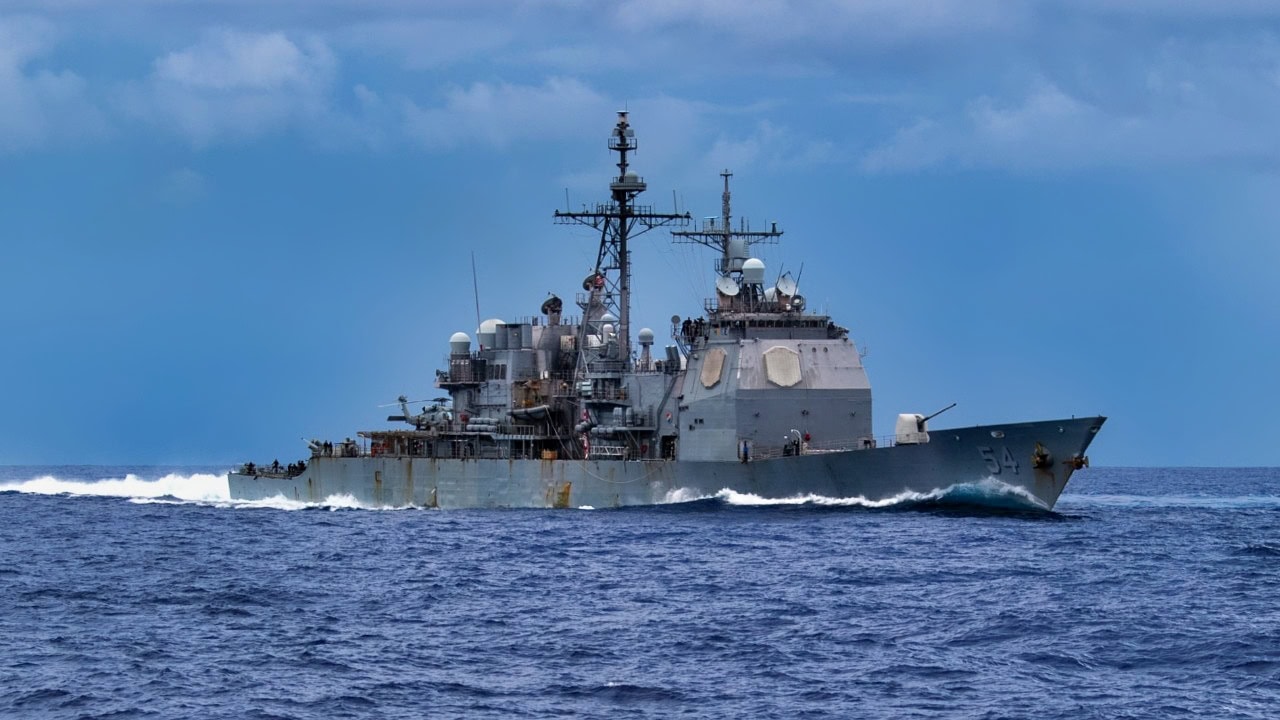
PACIFIC OCEAN (Sept. 14, 2020) The Ticonderoga-class guided-missile cruiser USS Antietam (CG 54) moves in formation during exercise Valiant Shield 2020. Valiant Shield is a U.S. only, biennial field training exercise (FTX) with a focus on integration of joint training in a blue-water environment among U.S. forces. This training enables real-world proficiency in sustaining joint forces through detecting, locating, tracking, and engaging units at sea, in the air, on land, and in cyberspace in response to a range of mission areas. (U.S. Navy photo by Mass Communication Specialist 2nd Class Nick Bauer)
The Ticonderoga-class guided missile cruiser is slated for retirement—but the retirement promises to exacerbate an already pronounced problem: the Navy’s shortage of missile launch capacity.
The Ticonderoga has been among the Navy’s most heavily armed surface combatants, equipped with Vertical Launch System (VLS) cells that allowed for the efficient firing of Tomahawk cruise missiles and other weapons.
But as the Ticonderoga leave service, the Navy is losing that large volume of missile launch capacity, without an immediate replacement, raising concerns about a potential gap in Tomahawk missile coverage—at a time when long-range strike capability is increasingly important (as the opening salvo of Operation Epic Fury demonstrated).
The retirement is unavoidable, given the Ticonderoga’s age and rising maintenance costs.
But the strategic consequences are potentially significant.
Built for the Cold War
The Ticonderoga-class, first commissioned in the 1980s, was originally designed as a carrier battle group air defense commander.
Built around the Aegis combat system, these ships could track and engage large numbers of air threats simultaneously.
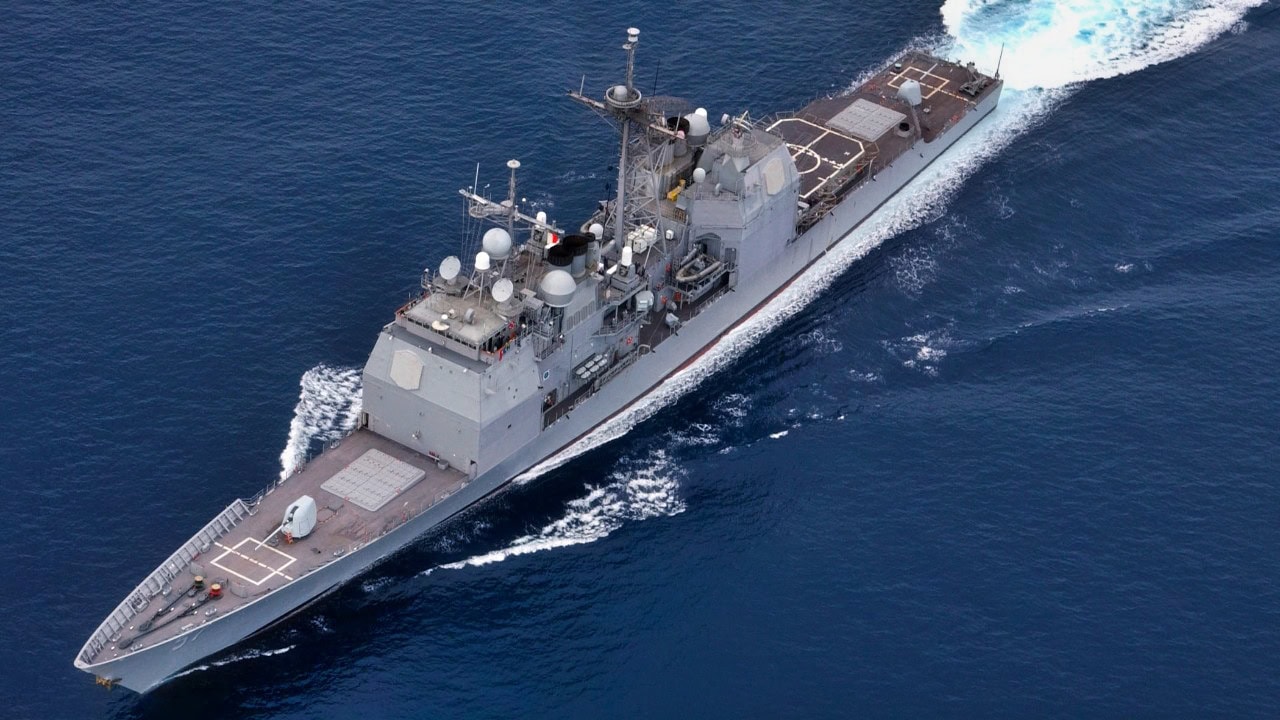
Ticonderoga-Class.
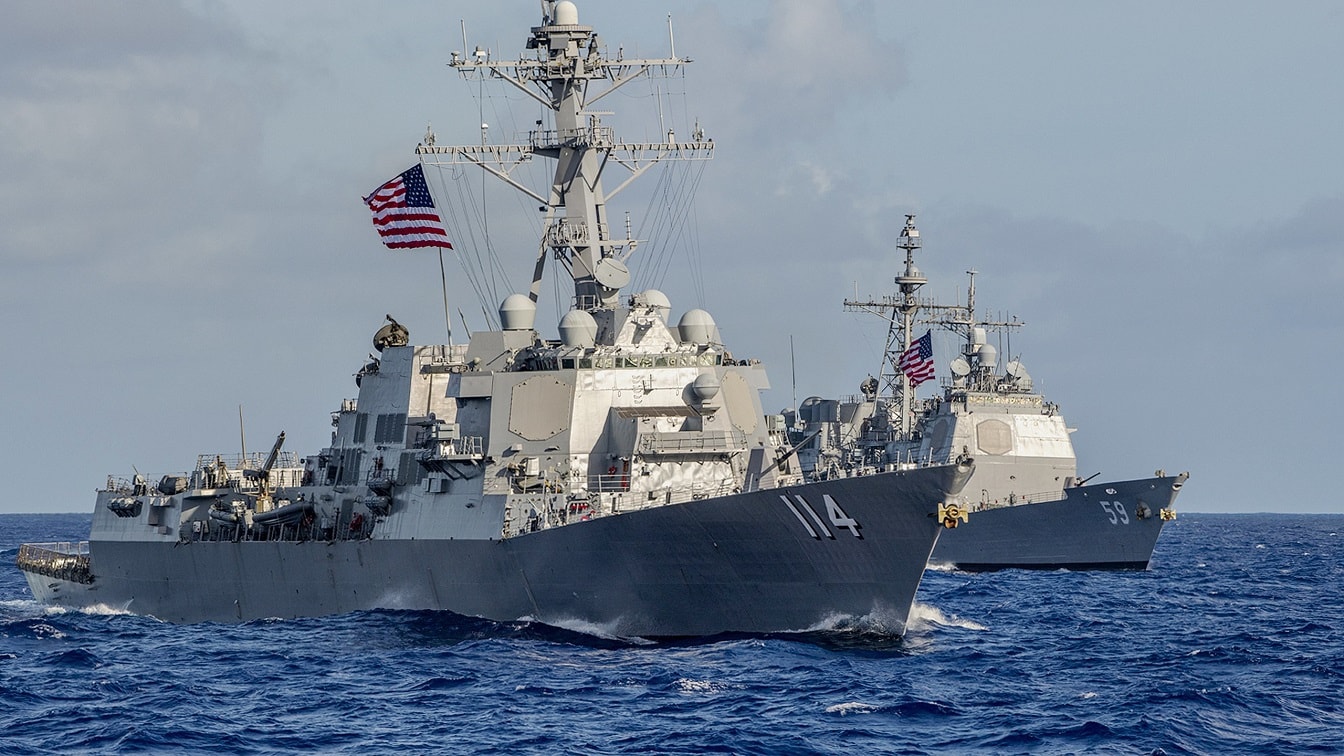
The Arleigh Burke-class guided-missile destroyer USS Ralph Johnson (DDG 114) and the Ticonderoga-class guided-missile cruiser USS Princeton (CG 59) steam in formation during dual carrier operations with the Nimitz and Theodore Roosevelt Carrier Strike Groups (CSG). Dual carrier operations unify the tactical power of two individual CSG, providing fleet commanders with an unmatched, unified credible combat force capable of operating indefinitely. The CSGs are on a scheduled deployments to the Indo-Pacific.
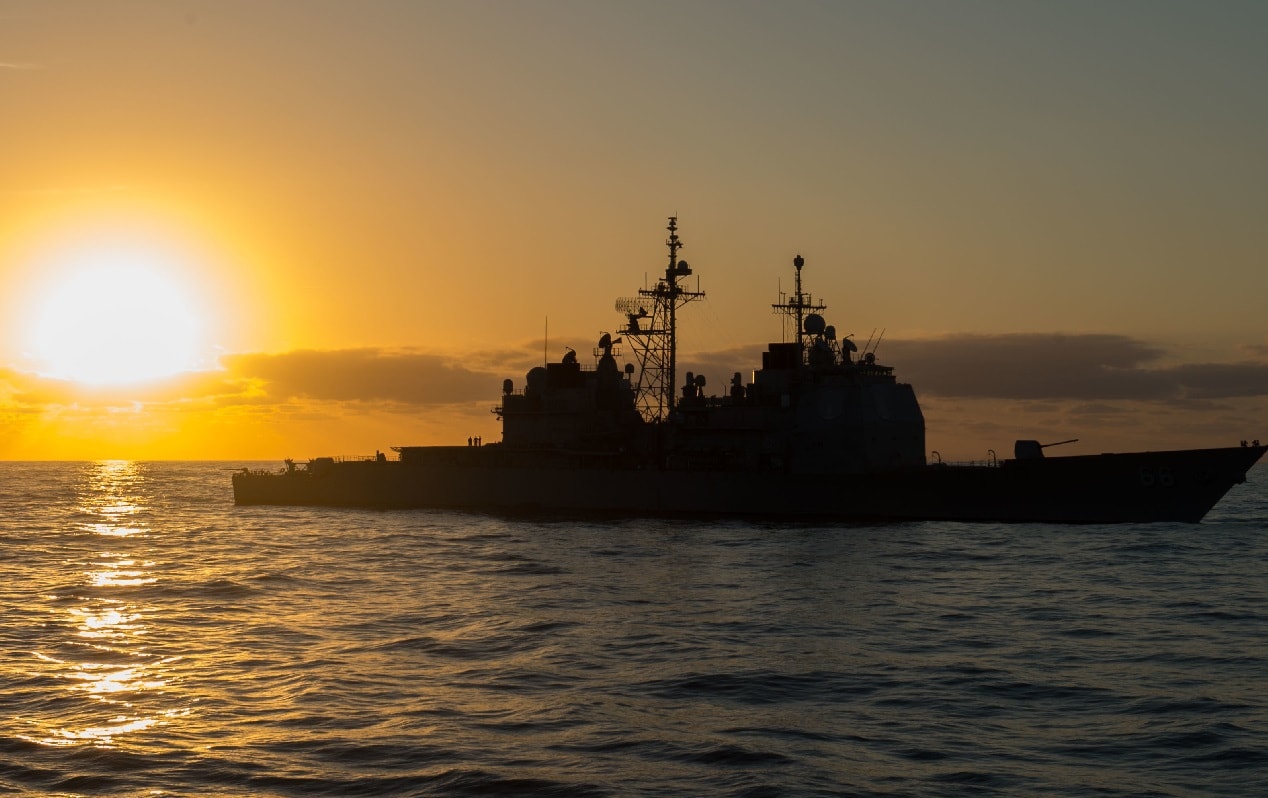
The sun rises over the Ticonderoga-class guided-missile cruiser USS Hue City (CG 66) in the Atlantic Ocean March 28, 2018. Hue City is underway supporting Carrier Strike Group Four Task Force Exercise 18-2. (U.S. Navy photo by Mass Communication Specialist 3rd Class Danny Ray Nuñez Jr.)
But beyond air defense, the cruisers evolved into something even more valuable: missile trucks capable of launching enormous numbers of weapons. With a length of 576 feet and a displacement of 9,800 tons, the Ticonderoga and its 330-sailor crew punched above its weight class—thanks in large part to the
122 VLS cells per ship.
VLS, the Ticonderoga, and the Tomahawk
The most important aspect of the Ticonderoga is its missile capacity. Each cruiser carries 122 VLS cells. And each VLS cell can carry Tomahawk cruise missiles, SM-2/SM-6 air defense missiles, anti-submarine rockets, and ballistic missile defense interceptors.
That’s a lot of firepower per ship. And with more than 20 ships originally built, the class at large provided a huge portion of the Navy’s surface-launched strike capacity.
But the Navy has been steadily retiring the Ticonderoga cruisers over the past several years, with only a handful still remaining in service, and all expected to be mothballed before the decade ends. Each retirement removes 122 VLS cells, and no other platform can replace that missile capacity.
For example, the Arleigh Burke-class destroyer carries just 96 VLS cells, so replacing a cruiser with a destroyer, in this case, results in 26 fewer launch cells per ship. The loss of just 26 launch cells isn’t a strategic game changer, necessarily, but when several cruisers are retired, the cumulative loss of hundreds of VLS cells becomes substantial.
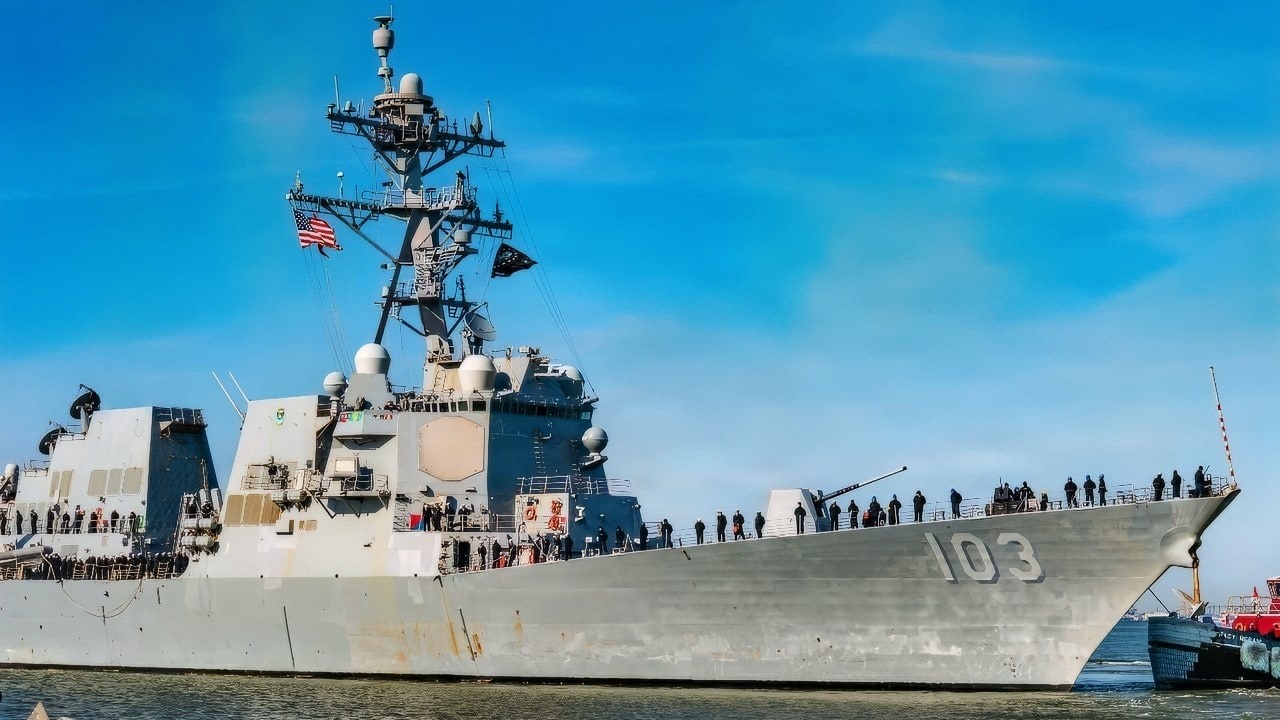
(Feb. 3, 2026) – The Arleigh Burke-class guided missile destroyer USS Truxtun (DDG 103) departed Naval Station Norfolk for a scheduled deployment on Feb. 3, 2026. The ship’s company includes approximately 300 Sailors, with an additional 26 embarked air wing personnel assigned to the “Valkyries” of Helicopter Maritime Strike Squadron 50. U.S. 2nd Fleet, reestablished in 2018 in response to the changing global security environment, develops and employs maritime ready forces to fight across multiple domains in the Atlantic and Arctic in order to ensure access, deter aggression and defend U.S., allied, and partner interests. (U.S. Navy photo by Mass Communication Specialist 2nd Class Derek Cole)
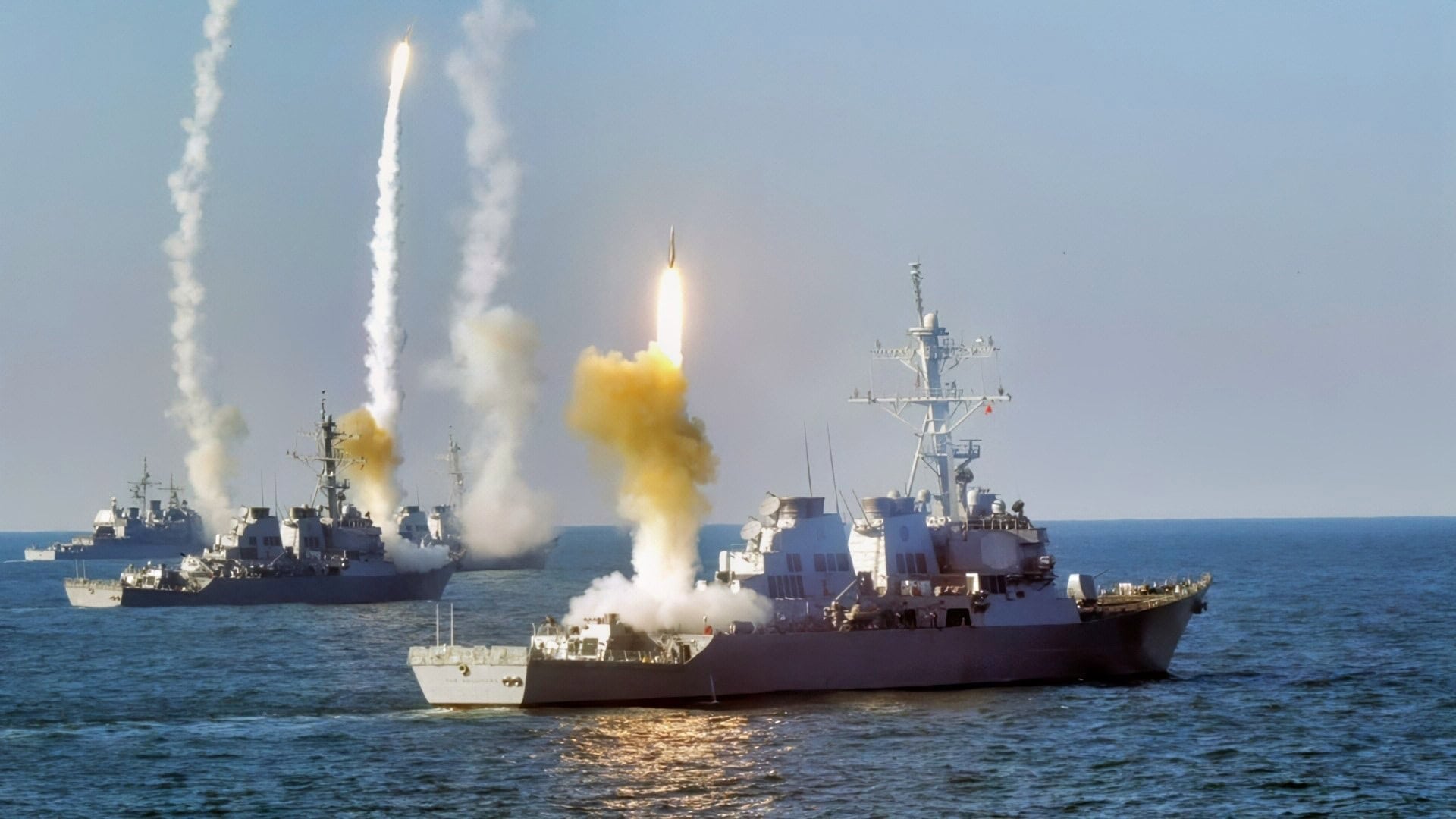
Arleigh Burke Class Destroyer US Navy. Image Credit: Creative Commons.
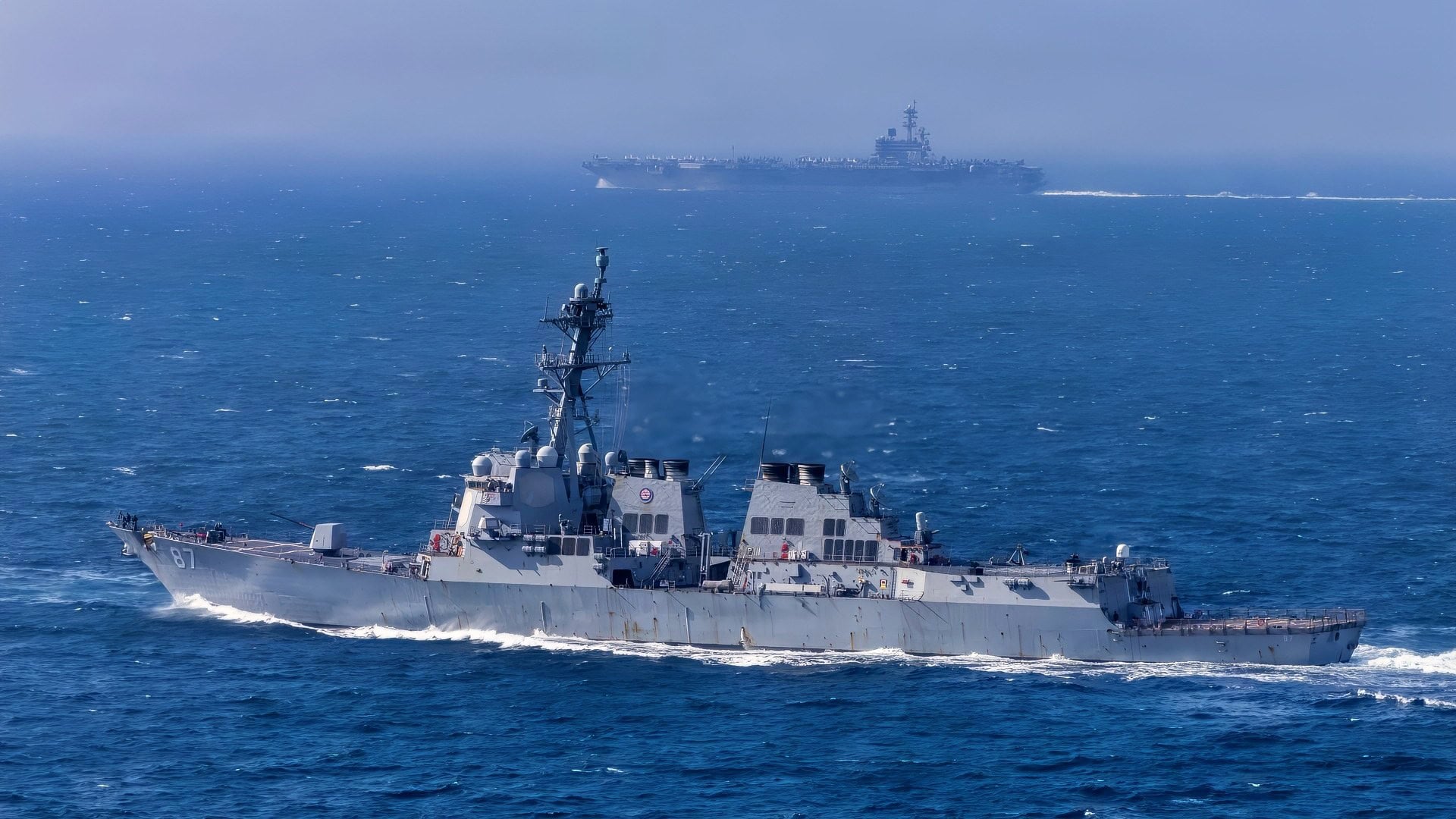
The Arleigh Burke-class guided-missile destroyer USS Mason (DDG 87) transits alongside the Nimitz-class aircraft carrier USS George H.W. Bush in the Atlantic Ocean, Feb. 21, 2026. The George H.W. Bush Carrier Strike Group is at sea training as an integrated warfighting team. Composite Training Unit Exercise (COMPTUEX) is the Joint Force’s most complex integrated training event and prepares naval task forces for sustained high-end Joint and combined combat. Integrated naval training provides combatant commanders and America’s civilian leaders highly capable forces that deter adversaries, underpin American security and economic prosperity, and reassure Allies and partners. (U.S. Navy photo by Mass Communication Specialist 2nd Class Jayden Brown)
Bridging the Gap
The shortage of VLS cells is a problem. Even if the Navy still has large numbers of Tomahawk missiles in storage (Tomahawk production and supply is another issue entirely), having fewer ships available means having fewer launch platforms, meaning the hypothetical and realized Tomahawks in storage are backlogged from serving their design purpose.
The retirement of the Ohio-class SSGN submarine compounds the issue; each Ohio can carry 154 Tomahawk missiles. So the combined cruiser and submarine retirements could potentially remove thousands of launch cells over the next decade, which, of course, would have significant strategic consequences.
Retirement is Inevitable
But retirement is inevitable. Despite their firepower, the Ticonderoga-class ships are extremely old. Many were commissioned in the late 1980s and early 1990s.
Problems are mounting—and they are about what you would expect for ships that have been at sea for a generation, including structural fatigue, hull corrosion, and obsolete tech.
Repairs and modernization would be prohibitively expensive, with some cruisers requiring hundreds of millions of dollars in repair just to remain deployable.
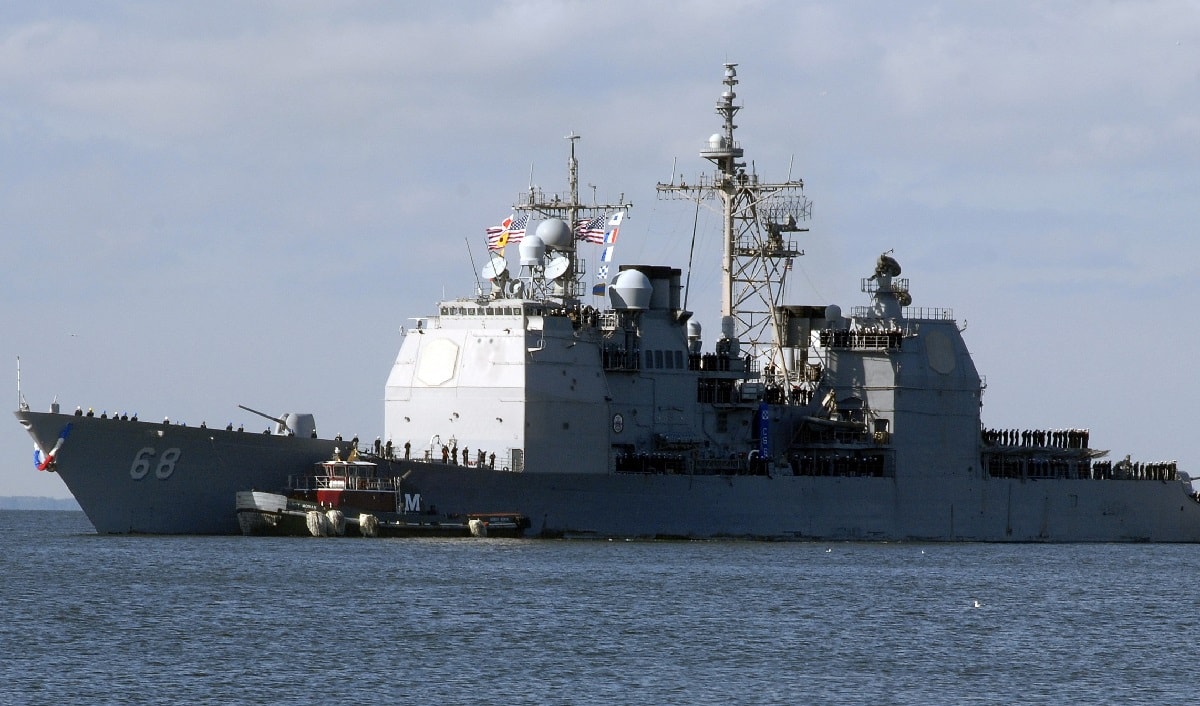
The Ticonderoga-class guided-missile cruiser USS Anzio (CG 68) returns to Naval Station Norfolk after completing a six-month deployment in the U.S. 5th and 6th Fleet areas of responsibility. Anzio served off the Horn of Africa as the flagship of the international anti-piracy task force, Combined Task Force (CTF) 151. (U.S. Navy photo by Mass Communication Specialist 3rd Class John Suits/Released).
And even then, the investment only gets you a seaworthy, long-outdated ship. At that point, a clean-sheet investment begins to make more sense financially and strategically. Still, this creates a problem in terms of missile capacity.
Indo-Pacific Implications
The missile shortage is particularly significant in terms of the Indo-Pacific theater and competition with China. In a potential conflict with China, US forces could be forced to operate far from land bases, where naval platforms would likely carry much of the long-range strike burden.
Accordingly, Tomahawk missiles would be one of the few weapons capable of striking targets thousands of miles away from sea-based launchers. So, losing large numbers of launch cells reduces the Navy’s ability to sustain long-range strike campaigns.
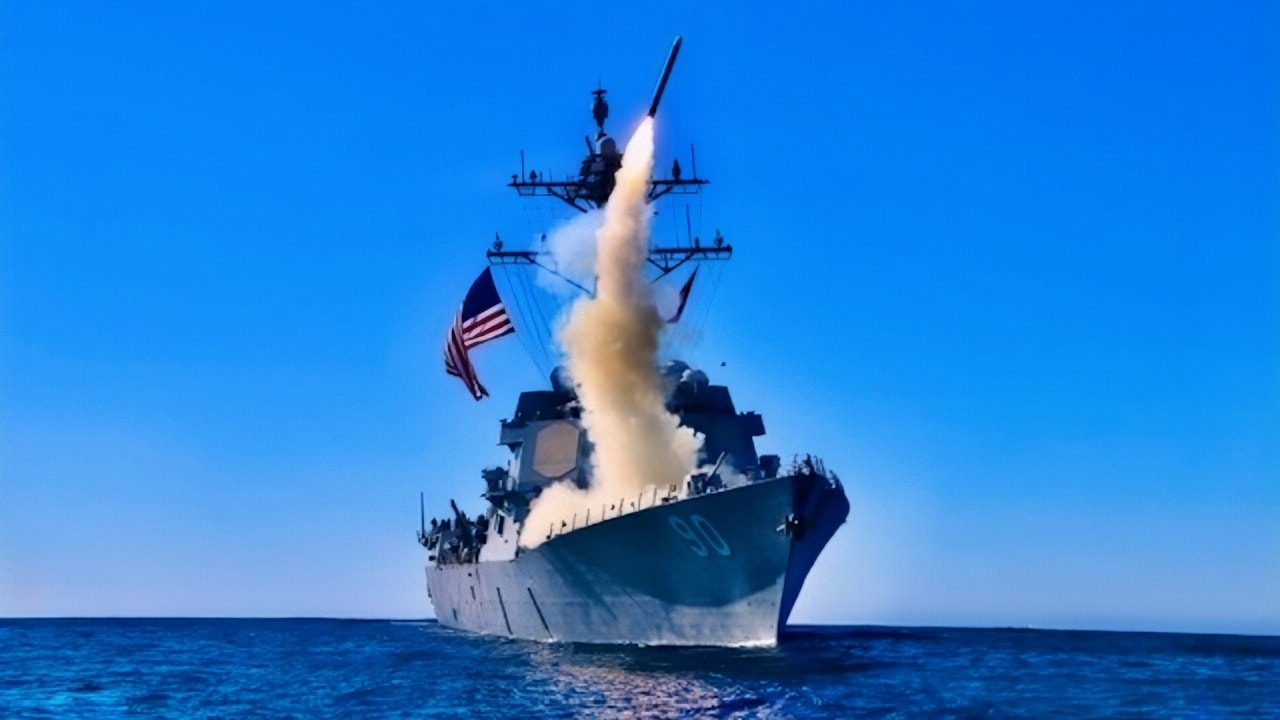
(Dec. 01, 2020) – The guided-missile destroyer USS Chafee (DDG 90) launches a Block V Tomahawk, the weapon’s newest variant, during a missile exercise. This event marked the first time a Block V Tomahawk missile was operationally tested, marking the Navy’s transition to a more advanced capability for the fleet. Block V includes an upgrade that will enhance navigation performance and provide robust and reliable communications. Chafee is currently assigned to Carrier Strike Group ONE and is homeported in Pearl Harbor. (U.S. Navy photo by Ens. Sean Ianno/Released)
The Bottom Line
The Ticonderoga retirement is not surprising—ships can’t sail forever. But the retirement creates a temporary gap in missile-launch capacity at a time when long-range strike power is increasingly important. The challenge for the Navy will be replacing firepower before a major conflict demands it.
About the Author: Harrison Kass
Harrison Kass is an attorney and journalist covering national security, technology, and politics. Previously, he was a political staffer and candidate, and a US Air Force pilot selectee. He holds a JD from the University of Oregon and a master’s in global journalism and international relations from NYU.