Summary and Key Points: Defense expert Kris Osborn evaluates the Ohio-class USS Florida (SSGN-728) and its historic two-year deployment spanning from Guam to Greece.
-Originally an Ohio-class ballistic missile sub, the Florida was converted into a guided-missile submarine (SSGN), capable of carrying 154 Tomahawk cruise missiles and supporting Navy SEAL teams.
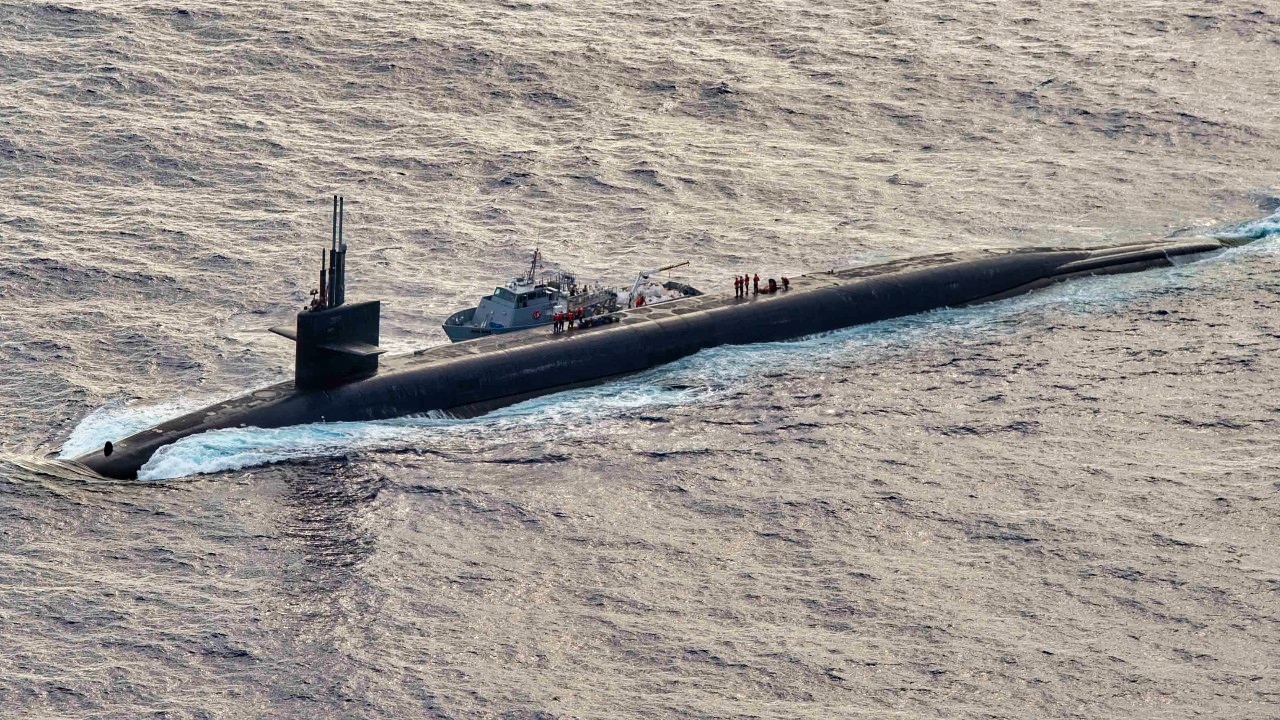
The Ohio-class ballistic missile submarine USS Kentucky (SSBN 737) sails alongside a submarine support vessel during a routine armed air escort (AAE) exercise, April 24, 2025. AAEs are designed to improve interoperability between our services, increasing lethalitythrough multi-domain integration.. Commander, Submarine Group (SUBGRU) 9, exercises administrative control authority for assigned submarine commands and units in the Pacific Northwest providing oversight for shipboard training, personnel, supply and material readiness of submarines and their crews. SUBGRU-9 is also responsible for nuclear submarines undergoing conversion or overhaul at Puget Sound Naval Shipyard in Bremerton, Washington. (U.S. Navy photo by Mass Communication Specialist 1st Class Ryan Riley)
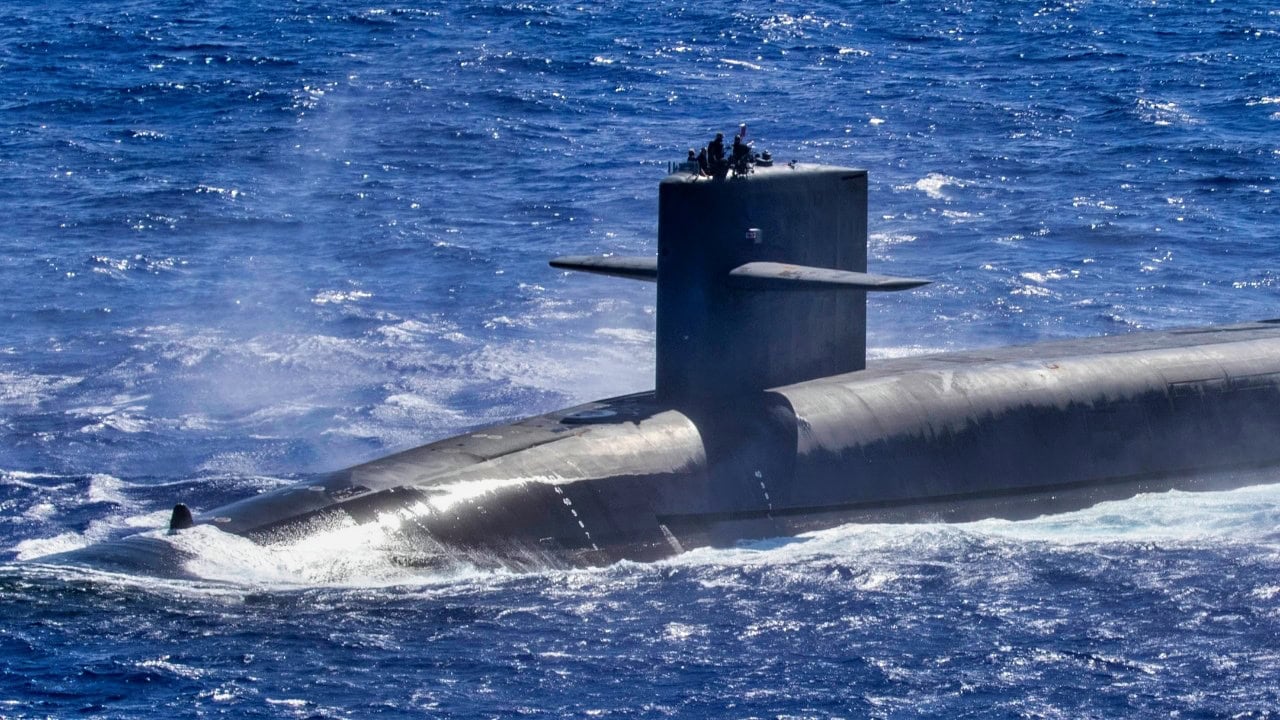
PACIFIC OCEAN (June 28, 2024) – An AS-332 Super Puma assigned to the Lewis and Clark-class dry cargo ship USNS Cesar Chavez (T-AKE 14) delivers supplies to the Ohio-class ballistic missile submarine USS Louisiana (SSBN 743) during a vertical replenishment at sea, June 28, 2024. The presence of the SSBN in the Pacific demonstrates the flexibility, survivability, readiness, and capability of the U.S. Navy submarine forces and complements the many exercises, training, operations, and other military cooperation activities conducted by Strategic Forces to ensure they are available and ready to operate around the globe at any time. Homeported in Bangor, Washington and currently assigned to Submarine Squadron 17, Louisiana is an undetectable launch platform for submarine-launched ballistic missiles, providing the United States with its most survivable leg of the nuclear triad. (U.S. Navy Photo by Mass Communication Specialist Seaman Andrew McPeek)
-This report analyzes the Blue and Gold crew rotation and the nuclear propulsion system that allows for indefinite underwater endurance.
-Osborn explores the life-support systems—including onboard oxygen generation and seawater desalination—concluding that the Florida represents the ultimate mobile, invisible deterrent in the 2026 strategic landscape.
727-Day Patrol: Why the Ohio-class USS Florida’s Two-Year Deployment is the New Navy Standard
The USS Florida (SSGN-728) guided-missile submarine accomplished many missions when it embarked on a successful two-year, historic deployment from 2022 to 2024.
Yet, the most significant factor lies in crew adaptability and intelligence planning.
The long-term deployment resulted in a sustained, mobile forward presence for the U.S. Navy spanning dispersed geographic areas from Guam to Greece to Diego Garcia.
One key variable that helped ensure the submarine could remain deployed for such an extended period lies in its nuclear propulsion system.
Unlike conventional diesel-electric submarines, which must frequently surface or snorkel to recharge batteries, nuclear-powered submarines generate their own power from onboard reactors.
This allows them to operate underwater for months without refueling. The reactor aboard the USS Florida can operate for many years before requiring refueling, removing one of the major logistical limitations that conventional vessels face.
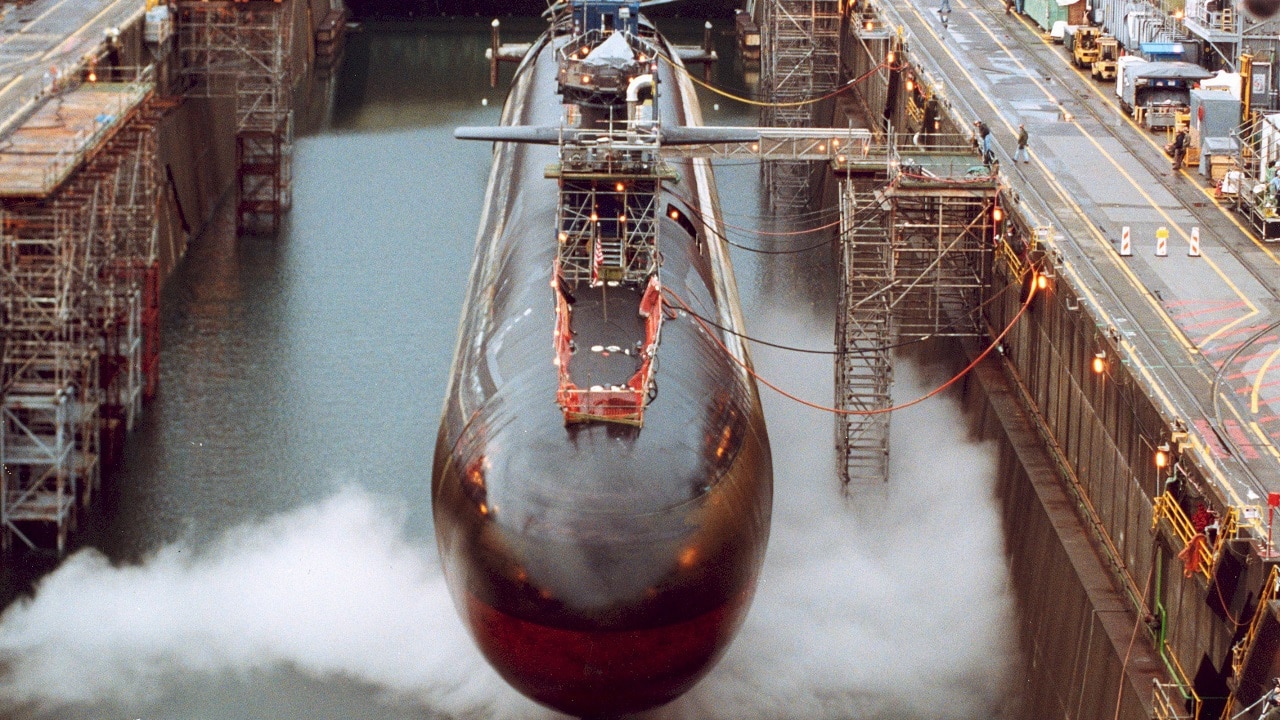
Puget Sound Naval Shipyard, Wash. (Aug. 14, 2003) — USS Ohio (SSGN 726) is in dry dock undergoing a conversion from a Ballistic Missile Submarine (SSBN) to a Guided Missile Submarine (SSGN) designation. Ohio has been out of service since Oct. 29, 2002 for conversion to SSGN at Puget Sound Naval Shipyard. Four Ohio-class strategic missile submarines, USS Ohio (SSBN 726), USS Michigan (SSBN 727) USS Florida (SSBN 728), and USS Georgia (SSBN 729) have been selected for transformation into a new platform, designated SSGN. The SSGNs will have the capability to support and launch up to 154 Tomahawk missiles, a significant increase in capacity compared to other platforms. The 22 missile tubes also will provide the capability to carry other payloads, such as unmanned underwater vehicles (UUVs), unmanned aerial vehicles (UAVs) and Special Forces equipment. This new platform will also have the capability to carry and support more than 66 Navy SEALs (Sea, Air and Land) and insert them clandestinely into potential conflict areas. U.S. Navy file photo. (RELEASED)
As a result, the submarine’s endurance is primarily determined by food supplies, maintenance requirements, and crew endurance rather than by fuel availability.
Dual-Crew Rotation
Another major factor enabling the 727-day deployment was the Navy’s use of a dual-crew rotation system. Like other Ohio-class submarines, the Florida operates with two separate crews, known as the Blue Crew and the Gold Crew.
Each crew consists of highly trained sailors and officers capable of operating the vessel independently.
During extended missions, one crew operates the submarine while the other rests, trains, and prepares to take over later.
When a rotation occurs, the submarine can remain forward-deployed while the crews swap places at a friendly port.
The United States Navy’s forward-deployed infrastructure also played a critical role in sustaining the mission.
Submarines operating far from home ports rely on allied bases and logistical hubs for resupply, maintenance checks, and crew exchanges.
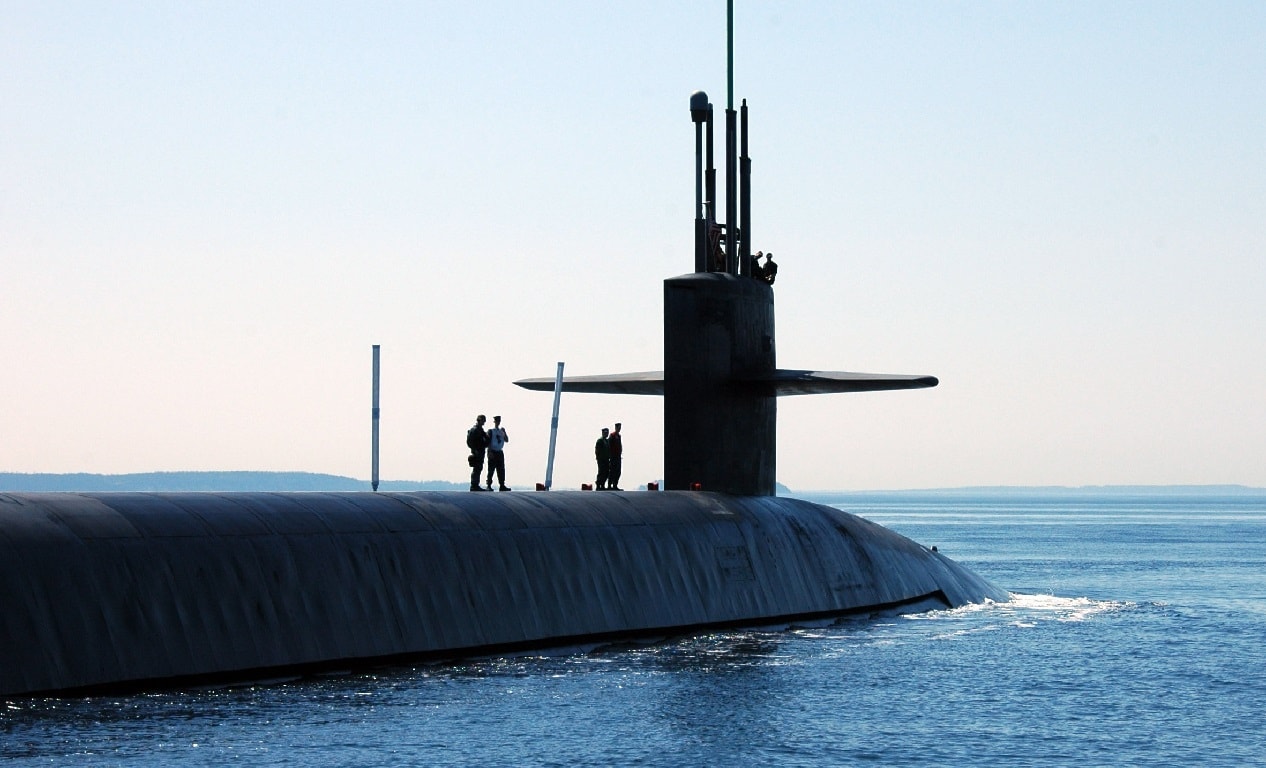
STRAIT OF JUAN DE FUCA, Wash. (Aug. 12, 2012) The Ohio-class ballistic missile submarine USS Nebraska (SSBN 739) prepares to conduct a personnel transfer as it returns to its homeport of Naval Base Kitsap-Bangor, Wash. (U.S. Navy photo by Lt. Ed Early/Released)
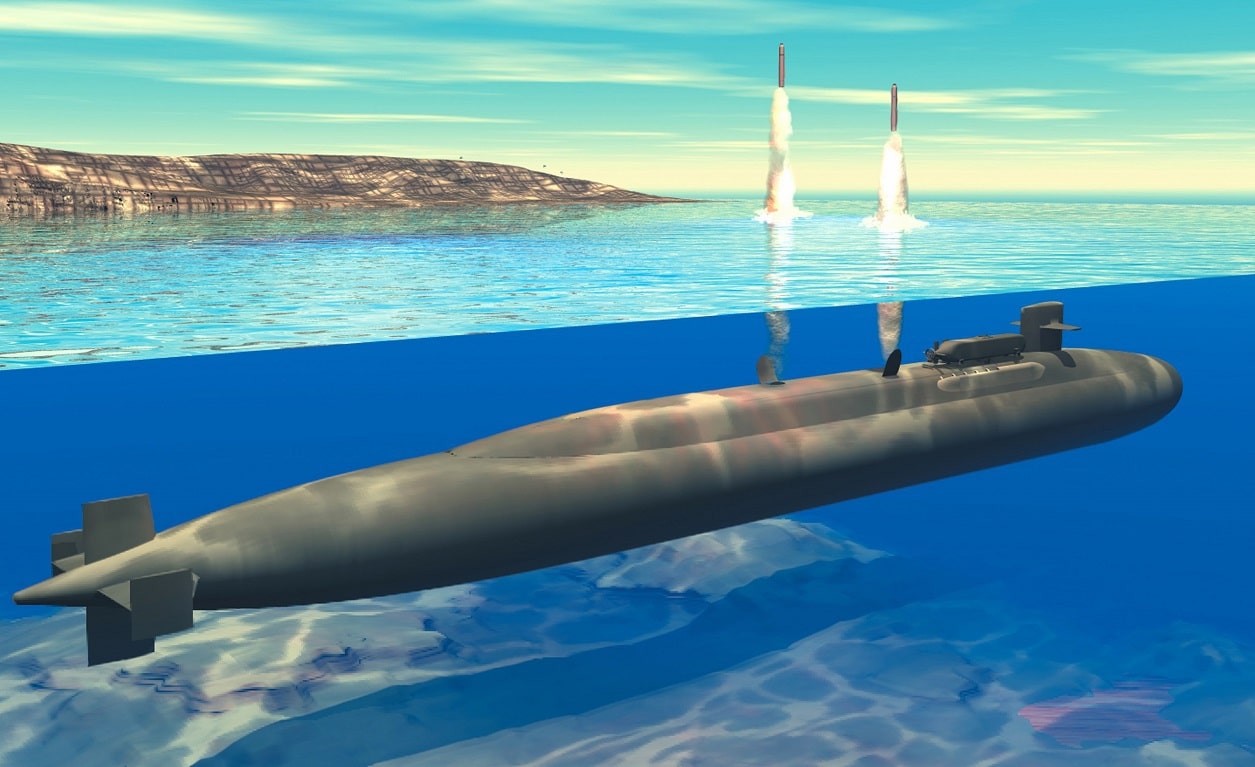
Ohio-Class Ballistic Missile Submarine. Image Credit: US Navy
During long deployments, a submarine like the USS Florida can periodically visit secure ports to load food, spare parts, and other essential supplies.
These stops are typically brief and carefully coordinated to ensure the submarine can quickly return to its operational patrol area.
The submarine’s mission profile also contributes to its ability to remain deployed for long periods. Florida is not a traditional ballistic missile submarine but rather a guided missile submarine.
Originally built as a ballistic missile submarine during the Cold War, it was later converted to carry large numbers of conventional cruise missiles and to support special operations forces. This transformation allowed the submarine to serve as a flexible platform for precision strikes, intelligence gathering, and special operations support.
Surviving Beneath the Sea
The submarine’s design also supports extended missions through efficient use of space and advanced life-support systems. Submarines recycle air, purify water, and carefully manage supplies to support their crews for long durations underwater.
Oxygen can be generated onboard, carbon dioxide can be removed from the atmosphere, and seawater can be desalinated to produce fresh water for drinking and hygiene. These systems allow sailors to live and work underwater for extended periods without frequent surface intervals.
Crew discipline and training are equally important factors in sustaining such a long deployment. Submarine service is widely regarded as one of the most demanding roles in the military. Sailors operate in confined spaces, follow strict routines, and perform complex technical tasks while remaining vigilant at all times.
Maintaining morale and operational efficiency over extended periods requires strong leadership, teamwork, and a well-structured schedule of duties, maintenance, and rest.
Equipment Monitoring
In addition to operational tasks, submarines must also conduct regular equipment checks and preventative maintenance to ensure that all systems remain reliable.
Engineers, technicians, and other specialists on board the USS Florida continuously monitor propulsion, weapons, navigation, and life-support systems.
The success of a long deployment naturally depends heavily on its ability to detect and resolve issues before they develop into serious problems.
The strategic importance of such extended deployments cannot be overstated.
By maintaining submarines on station for long periods, the United States Navy ensures a constant presence in critical regions around the world. Submarines provide intelligence, deterrence, and strike capabilities while remaining largely invisible to potential adversaries.
A deployment lasting 727 days demonstrates the Navy’s ability to sustain global operations and maintain readiness across multiple theaters simultaneously.
About the Author: Kris Osborn
Kris Osborn is the President of Warrior Maven – Center for Military Modernization. Osborn previously served at the Pentagon as a highly qualified expert in the Office of the Assistant Secretary of the Army—Acquisition, Logistics & Technology. Osborn has also worked as an anchor and on-air military specialist at national TV networks. He has appeared as a guest military expert on Fox News, MSNBC, The Military Channel, and The History Channel. He also has a Masters Degree in Comparative Literature from Columbia University.